
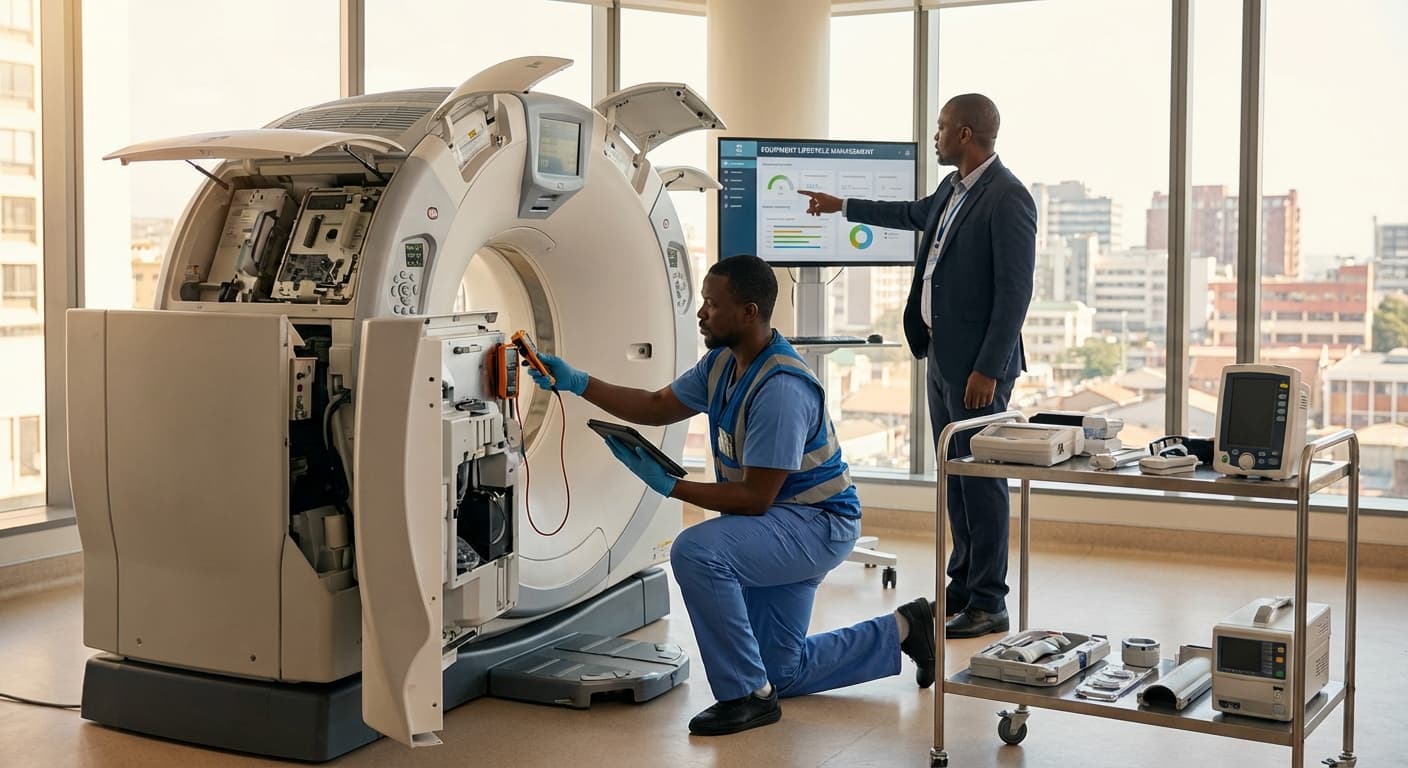
Equipment Replacement Planning & Obsolescence Strategy Service in Mauritius
Engineering Excellence & Technical Support
Equipment Replacement Planning & Obsolescence Strategy Service High-standard technical execution following OEM protocols and local regulatory frameworks.
Proactive Obsolescence Mitigation
Leveraging advanced data analytics to identify critical equipment at risk of obsolescence, enabling timely replacement planning and minimizing operational disruptions for Mauritian businesses.
Lifecycle Cost Optimization
Developing comprehensive equipment lifecycle cost models, factoring in maintenance, repair, and replacement expenses to drive cost-effective strategic decisions for Mauritian industries.
Smart Inventory & Spares Management
Implementing cloud-based inventory systems and advanced forecasting for spare parts, ensuring availability and reducing carrying costs for critical operational equipment in Mauritius.
What Is Equipment Replacement Planning & Obsolescence Strategy Service In Mauritius?
Equipment Replacement Planning & Obsolescence Strategy Service in Mauritius refers to a specialized consultancy that assists organizations in developing and executing comprehensive plans for the timely and cost-effective replacement of their physical assets. This service addresses the inherent lifecycle limitations of equipment, driven by factors such as wear and tear, technological advancements, and evolving regulatory or operational requirements. It encompasses a strategic approach to identifying when equipment should be retired, replaced, or upgraded to mitigate risks associated with failure, reduced efficiency, and obsolescence, thereby optimizing operational continuity, minimizing downtime, and maximizing return on investment (ROI).
The service involves a systematic evaluation of an organization's existing equipment portfolio, encompassing inventory, condition assessment, performance monitoring, maintenance history, and future operational demands. Key activities include developing predictive maintenance schedules, quantifying remaining useful life (RUL), analyzing total cost of ownership (TCO) for various replacement scenarios, forecasting capital expenditure requirements, and implementing strategies to manage obsolete assets ethically and environmentally responsibly. Furthermore, it integrates with supply chain management to ensure the availability of replacement parts and new equipment, and often considers the impact of new technologies and industry best practices on asset utilization.
| Who Needs This Service? | Typical Use Cases |
|---|---|
| Manufacturing Companies: Businesses with significant investments in production machinery, automation, and process equipment. | Preventing production line stoppages due to unexpected equipment failures. Optimizing production capacity by upgrading to more efficient machinery. Managing the lifecycle of specialized manufacturing tools and molds. |
| Energy and Utilities Sector: Organizations managing power generation facilities, transmission networks, and water treatment plants. | Ensuring the reliability and safety of critical infrastructure. Planning for the replacement of aging turbines, transformers, and distribution networks. Complying with stringent environmental regulations for older equipment. |
| Transportation and Logistics: Companies operating fleets of vehicles, aircraft, or marine vessels. | Determining optimal fleet replacement cycles to minimize maintenance costs and maximize operational availability. Managing the obsolescence of navigation systems and engine components. Ensuring compliance with safety standards. |
| Healthcare Institutions: Hospitals and clinics with advanced medical equipment. | Ensuring the availability and accuracy of diagnostic and therapeutic medical devices. Planning for the replacement of imaging equipment (MRI, CT scanners) and surgical robots. Managing the lifecycle of laboratory instruments. |
| Information Technology (IT) Departments: Businesses managing servers, network infrastructure, and end-user computing devices. | Planning for server refresh cycles to maintain performance and security. Managing the lifecycle of network switches and routers. Developing strategies for end-of-life hardware disposal and data security. |
| Industrial and Heavy Industry: Mining, construction, and chemical processing operations. | Managing the replacement of heavy-duty machinery such as excavators, crushers, and pumps. Planning for the upgrade of process control systems in chemical plants. Ensuring the safety and reliability of equipment in hazardous environments. |
| Public Sector and Government Agencies: Organizations responsible for public infrastructure and services. | Planning for the replacement of municipal vehicles and public works equipment. Managing the lifecycle of IT systems within government departments. Ensuring the continued operation of essential public services. |
Key Components of Equipment Replacement Planning & Obsolescence Strategy Service
- Asset Inventory and Auditing: Comprehensive cataloging of all relevant equipment.
- Condition Assessment and Performance Monitoring: Evaluating the current state and operational efficiency of assets.
- Remaining Useful Life (RUL) Estimation: Forecasting the operational lifespan of equipment.
- Failure Mode and Effects Analysis (FMEA): Identifying potential failure points and their consequences.
- Total Cost of Ownership (TCO) Analysis: Calculating the full lifecycle cost of assets.
- Replacement/Upgrade Threshold Determination: Establishing criteria for initiating replacement actions.
- Capital Expenditure (CAPEX) Forecasting: Planning for future investment in new equipment.
- Obsolescence Management: Strategies for handling outdated or end-of-life assets.
- Technology Scouting and Integration: Identifying and incorporating emerging technologies.
- Risk Assessment and Mitigation: Evaluating and addressing risks associated with equipment failure and obsolescence.
- Maintenance Strategy Optimization: Aligning maintenance practices with replacement planning.
- Vendor and Supplier Management: Ensuring timely procurement of new equipment and parts.
- Environmental, Social, and Governance (ESG) Considerations: Responsible disposal and recycling of obsolete equipment.
Who Needs Equipment Replacement Planning & Obsolescence Strategy Service In Mauritius?
Equipment Replacement Planning & Obsolescence Strategy services are crucial for organizations in Mauritius aiming to optimize asset lifecycle management, mitigate risks associated with aging infrastructure, and ensure operational continuity. This involves proactively identifying when equipment is nearing the end of its useful life, evaluating the potential impact of obsolescence on operations, and developing strategic plans for replacement, upgrade, or disposal. These services are essential for maintaining competitiveness, managing capital expenditure effectively, and adhering to regulatory and safety standards. The primary goal is to move from reactive, costly breakdowns to proactive, planned investments that support long-term business objectives.
| Target Customer Segment | Key Departments Involved |
|---|---|
| Manufacturing Companies | Operations, Maintenance, Engineering, Procurement, Finance, IT |
| Telecommunications Providers | Network Operations, Engineering, Asset Management, IT, Finance, Procurement |
| Energy & Utilities Sector | Operations, Maintenance, Engineering, Asset Management, Safety, Finance, Procurement |
| Transportation & Logistics | Fleet Management, Operations, Maintenance, Engineering, Procurement, Finance |
| Hospitality Industry | Facilities Management, Engineering, IT, Procurement, Finance |
| Healthcare Institutions | Biomedical Engineering, Facilities Management, IT, Procurement, Finance, Clinical Departments |
| Government & Public Sector | Public Works, Municipal Services, IT, Procurement, Finance, Operations |
| Financial Institutions | IT Operations, Infrastructure Management, Risk Management, Procurement, Finance |
| Information Technology (IT) Service Providers | Infrastructure Management, Operations, Procurement, Finance |
Target Customers in Mauritius
- Manufacturing Companies (Food & Beverage, Textiles, Electronics, Pharmaceuticals)
- Telecommunications Providers
- Energy & Utilities Sector (Power Generation, Water Management)
- Transportation & Logistics Companies (Aviation, Shipping, Road Freight)
- Hospitality Industry (Large Hotels, Resorts with complex infrastructure)
- Healthcare Institutions (Hospitals, Diagnostic Centers with medical equipment)
- Government & Public Sector Organizations (Infrastructure, Municipal Services)
- Financial Institutions (Data Centers, ATM networks)
- Information Technology (IT) Service Providers
Equipment Replacement Planning & Obsolescence Strategy Service Process In Mauritius
This document outlines the service process for Equipment Replacement Planning & Obsolescence Strategy in Mauritius, guiding clients from their initial inquiry to the successful execution of the strategy. This structured approach ensures a comprehensive understanding of client needs, thorough analysis, and the delivery of tailored, actionable solutions.
| Stage | Description | Key Activities | Deliverables/Outcomes | Typical Timeline (Mauritius Context) |
|---|---|---|---|---|
| The client expresses interest in optimizing their equipment lifecycle and mitigating obsolescence risks. | Initial contact (phone, email, website). Understanding of client's core business, industry, and general concerns regarding equipment. | Clear understanding of client's objectives. Agreement on next steps. | 1-3 business days |
| A deep dive into the client's current equipment inventory, operational needs, and future plans. | Site visits (if applicable). Inventory audits, condition assessments, maintenance records review. Discussions on production targets, technological advancements, regulatory changes, and budget constraints. | Detailed equipment register. Comprehensive understanding of existing infrastructure and challenges. Identification of critical equipment and potential obsolescence hotspots. | 1-3 weeks (depending on scale) |
| Utilizing the gathered data to perform a thorough analysis and formulate a strategic plan. | Cost-benefit analysis of replacement vs. refurbishment. Risk assessment for obsolescence. Forecasting of technological evolution. Development of phased replacement schedules, maintenance optimization strategies, and sourcing plans for new equipment. Identification of potential vendors and service providers in Mauritius. | Obsolescence risk report. Strategic equipment replacement roadmap. Recommended maintenance and upgrade plans. Business case for investment. | 2-4 weeks |
| Presenting the developed strategy and securing client approval. | Formal presentation of the strategy, including proposed timelines, budgets, and expected ROI. Negotiation and finalization of service agreement. Definition of key performance indicators (KPIs). | Approved Equipment Replacement & Obsolescence Strategy. Signed service contract. Defined project scope and responsibilities. | 1-2 weeks |
| Putting the approved strategy into action. | Procurement of new equipment. Coordination of installation and decommissioning of old assets. Implementation of new maintenance protocols. Training of personnel. Managing vendor relationships. | Successful replacement/upgrade of identified equipment. Optimized maintenance schedules. Deployed new technologies. Trained workforce. Reduced operational downtime. | Variable (dependent on scope, can range from months to years for large-scale projects) |
| Ensuring the strategy remains effective and adapting to changing circumstances. | Regular performance monitoring against KPIs. Periodic reviews of equipment performance and obsolescence status. Updates to the strategy based on technological advancements, market changes, and operational feedback. Ongoing support and consultancy. | Performance reports. Updated obsolescence forecasts. Refined strategic recommendations. Continuous improvement of equipment lifecycle management. | Ongoing (e.g., quarterly or annual reviews) |
Service Process Workflow
- Inquiry & Initial Consultation
- Needs Assessment & Data Gathering
- Analysis & Strategy Development
- Proposal & Agreement
- Execution & Implementation
- Monitoring & Review
Equipment Replacement Planning & Obsolescence Strategy Service Cost In Mauritius
Planning for equipment replacement and developing obsolescence strategies are crucial for businesses in Mauritius to ensure operational efficiency, mitigate risks, and optimize capital expenditure. This service helps organizations forecast the end-of-life of their assets, plan for timely replacements, and manage the transition to newer technologies, thereby avoiding costly downtime and outdated infrastructure. The cost of such a service in Mauritius is influenced by several key factors, leading to a range of potential investment levels.
| Service Component | Typical Range (MUR) | Notes |
|---|---|---|
| Initial Assessment & Data Gathering | MUR 50,000 - MUR 200,000 | Covers initial asset inventory review, data collection, and preliminary analysis. Varies with asset volume. |
| Obsolescence Risk Assessment | MUR 75,000 - MUR 300,000 | Analysis of technology trends, vendor support lifecycles, and potential risks associated with aging equipment. |
| Replacement Forecasting & Financial Modeling | MUR 100,000 - MUR 400,000 | Development of replacement schedules, TCO (Total Cost of Ownership) analysis, and budget forecasting. Depends on complexity and number of assets. |
| Strategy Development & Recommendations | MUR 125,000 - MUR 500,000 | Creation of a strategic roadmap for replacement, disposal, and technology adoption, including risk mitigation plans. |
| Full Project Management & Implementation Support | MUR 200,000 - MUR 1,000,000+ | Comprehensive service from planning to supporting the execution of the replacement strategy. Highly dependent on scale and duration. |
| Retainer-Based Advisory Services | MUR 20,000 - MUR 80,000 per month | Ongoing expert advice, periodic reviews, and support for evolving asset management needs. |
Key Factors Influencing Equipment Replacement Planning & Obsolescence Strategy Service Costs in Mauritius
- {"title":"Scope and Complexity of the Project","description":"A comprehensive assessment covering a large and diverse asset portfolio (e.g., IT equipment, manufacturing machinery, vehicles, facilities) will naturally incur higher costs than a focused study on a specific asset class. The number of assets, their interdependencies, and the criticality of each to business operations significantly impact the effort required."}
- {"title":"Data Availability and Quality","description":"The ease with which a service provider can access accurate and complete data (purchase dates, maintenance history, vendor information, performance metrics, warranty status) directly affects the time and resources needed. Poor data quality may require additional investigative work, increasing costs."}
- {"title":"Service Provider's Expertise and Reputation","description":"Consulting firms with a proven track record, specialized expertise in asset management and obsolescence, and a strong reputation in Mauritius will likely command higher fees. Their methodologies, tools, and intellectual property contribute to their value."}
- {"title":"Depth of Analysis and Deliverables","description":"The level of detail in the analysis, the sophistication of the forecasting models used, and the comprehensiveness of the final report and recommendations will influence pricing. Services may range from basic inventory assessments to detailed lifecycle cost analyses and implementation roadmaps."}
- {"title":"Technology and Tools Utilized","description":"The use of advanced asset management software, predictive analytics tools, or specialized obsolescence management platforms can impact the service cost. Some providers may include software licensing or access fees in their proposals."}
- {"title":"Engagement Model and Duration","description":"Whether the service is a one-off project, a retainer-based advisory service, or an ongoing managed service will affect the overall cost. Shorter, discrete projects will have different pricing structures than long-term partnerships."}
- {"title":"Client's Internal Resources and Involvement","description":"The extent to which the client's internal team can contribute data, insights, and validation can influence the external consultant's workload and, consequently, the cost. A highly engaged client may reduce the external service provider's time investment."}
Affordable Equipment Replacement Planning & Obsolescence Strategy Service Options
Our Affordable Equipment Replacement Planning & Obsolescence Strategy Service offers a comprehensive approach to managing your asset lifecycle, ensuring you avoid costly downtime and disruptive, last-minute replacements. We focus on proactive planning to optimize your capital expenditures and mitigate the risks associated with outdated or failing equipment. By understanding your operational needs and the inherent risks of obsolescence, we develop tailored strategies that deliver significant long-term value and cost savings.
| Value Bundle | Description | Cost-Saving Strategies Addressed | Typical Investment Level |
|---|---|---|---|
| Essential Planning | Covers core asset inventory, basic obsolescence risk identification, and a foundational replacement schedule. Ideal for organizations seeking a starting point for asset management. | Avoids emergency purchases, identifies major upcoming replacements, reduces ad-hoc decision-making. | Low |
| Strategic Lifecycle Management | Includes detailed risk assessment, multi-year replacement roadmaps, maintenance optimization recommendations, and vendor analysis. A robust option for proactive asset management. | Optimizes maintenance spend, extends asset life where feasible, leverages bulk purchasing opportunities, minimizes disruptive downtime. | Medium |
| Comprehensive Obsolescence Mitigation | Encompasses all aspects of Strategic Lifecycle Management, plus advanced technology monitoring, alternative solution scouting, and detailed financial modeling for replacement scenarios. For organizations prioritizing long-term resilience and competitive advantage. | Secures supply chain continuity, capitalizes on technological advancements, achieves economies of scale, maximizes ROI on asset investments, prevents production halts due to unavailable parts. | High |
Key Service Components
- Comprehensive Asset Inventory & Assessment
- Obsolescence Risk Analysis (Technical & Commercial)
- Proactive Replacement Planning & Budgeting
- Vendor & Technology Landscape Monitoring
- Maintenance & Upgrade Optimization
- Disposal & Recycling Strategy Development
- Customized Reporting & Performance Dashboards
Verified Providers In Mauritius
In the evolving landscape of healthcare, ensuring you are receiving services from verified and credentialed providers is paramount. In Mauritius, Franance Health stands out as a beacon of trust and quality. This document outlines their credentials and explains why they represent the best choice for your healthcare needs.
| Credential Type | Verification Method | Significance for Patients |
|---|---|---|
| Medical Licenses | Official registration with the Medical Council of Mauritius. | Confirms the provider is legally permitted to practice medicine. |
| Professional Certifications | Review of specialist board certifications and advanced training. | Ensures expertise in specific medical fields. |
| Educational Qualifications | Verification of degrees and diplomas from recognized institutions. | Confirms foundational medical education. |
| Accreditations | Checks for hospital or clinic accreditations (e.g., ISO standards). | Indicates adherence to international quality and safety benchmarks. |
| Continuing Professional Development (CPD) | Evidence of ongoing training and knowledge updates. | Guarantees providers are current with the latest medical advancements. |
| Patient Feedback & Reputation | Systematic collection and analysis of patient testimonials and reviews. | Provides insights into patient satisfaction and care quality. |
Franance Health Credentials and Why They Matter
- {"title":"Rigorous Provider Vetting Process","description":"Franance Health employs a multi-stage vetting process for all its healthcare partners. This includes verification of medical licenses, professional certifications, educational qualifications, and any necessary accreditations. This ensures that only qualified and legitimate healthcare professionals are part of their network."}
- {"title":"Commitment to Quality Standards","description":"Beyond basic credentials, Franance Health assesses providers based on their adherence to established quality of care standards. This involves looking at patient feedback, clinical outcomes where applicable, and their participation in continuing professional development programs."}
- {"title":"Focus on Patient Safety and Ethics","description":"A core tenet of Franance Health is the unwavering commitment to patient safety and ethical practices. They ensure all providers adhere to strict ethical guidelines and have robust patient safety protocols in place, offering peace of mind to their clients."}
- {"title":"Comprehensive Range of Specialties","description":"Franance Health partners with a diverse array of healthcare providers across various specialties. This comprehensive network means that whether you need a general practitioner, a specialist surgeon, a mental health professional, or allied health services, Franance Health can connect you with verified experts."}
- {"title":"Technological Integration for Efficiency","description":"Franance Health leverages technology to streamline healthcare access and management. This includes easy appointment booking, secure access to patient records (with consent), and efficient communication channels, enhancing the overall patient experience."}
- {"title":"Dedicated Support and Advocacy","description":"Choosing Franance Health means gaining access to a dedicated support team. They act as your advocate, assisting with navigating the healthcare system, understanding treatment options, and ensuring you receive the best possible care. This personalized approach is a significant differentiator."}
Scope Of Work For Equipment Replacement Planning & Obsolescence Strategy Service
This Scope of Work (SOW) outlines the services to be provided for Equipment Replacement Planning & Obsolescence Strategy. The objective is to develop a comprehensive strategy for identifying, prioritizing, and executing the replacement of aging and obsolete equipment, ensuring operational continuity, cost optimization, and technological advancement. The services will encompass an assessment of current equipment inventory, analysis of obsolescence risks, development of a prioritized replacement roadmap, and the establishment of a proactive obsolescence management framework.
| Technical Deliverable | Description | Standard Specification / Format |
|---|---|---|
| Equipment Inventory Database | A comprehensive, structured database detailing all critical equipment, including specifications, purchase dates, installation dates, warranty information, maintenance history, and expected end-of-life (EOL) dates. | Microsoft Excel (XLSX) or CSV format. Database structure will include fields for: Asset ID, Equipment Name, Manufacturer, Model Number, Serial Number, Location, Purchase Date, Installation Date, Warranty Expiry, Supplier, Current Condition Rating, Estimated Remaining Useful Life (RUL), Criticality Rating, Obsolescence Risk Score, Maintenance Cost Trend, EOL Date (Manufacturer), End-of-Support (EOS) Date (Manufacturer), Planned Replacement Date, Replacement Cost Estimate, Project Status. |
| Obsolescence Risk Register | A prioritized list of equipment at risk of obsolescence, detailing the specific obsolescence drivers (e.g., component availability, software support, parts availability) and their potential impact on operations. | Microsoft Excel (XLSX) or CSV format. Fields will include: Asset ID, Equipment Name, Obsolescence Driver, Risk Level (High/Medium/Low), Impact Assessment (Operational Disruption, Cost Increase, Safety Hazard), Mitigation Options, Recommended Action, Timeline. |
| Replacement Strategy Document | A formal document outlining the strategic approach to equipment replacement, including criteria for prioritization, financial considerations, risk mitigation, and alignment with business objectives. | Microsoft Word (.docx) format. Sections will cover: Executive Summary, Introduction, Current State Analysis Findings, Obsolescence Risk Summary, Replacement Criteria & Prioritization Methodology, Financial Planning & Budgeting Approach, Risk Management Strategy, Technology Refresh Strategy, Procurement Strategy, Roles & Responsibilities, Governance Framework. |
| Equipment Replacement Roadmap | A visual and chronological plan detailing scheduled equipment replacements over a defined period (e.g., 3-5 years), including timelines, budget allocations, and dependencies. | Microsoft Project (.mpp) file or Gantt chart visualization (e.g., in PDF or PNG format). Tasks will include: Assessment, Risk Identification, Strategy Development, Funding Approval, Procurement, Installation, Testing, Decommissioning. Dependencies and critical path will be clearly identified. |
| Obsolescence Management Policy & Procedures | A documented framework for ongoing monitoring, identification, and management of equipment obsolescence, including defined roles, responsibilities, and regular review processes. | Microsoft Word (.docx) format. Content will include: Policy Statement, Scope, Definitions, Roles and Responsibilities (e.g., Equipment Manager, Maintenance Team, Procurement), Obsolescence Identification Process, Risk Assessment Methodology, Mitigation and Replacement Planning Process, Communication Protocols, Review and Update Frequency. |
| Training Materials | Materials designed to educate relevant personnel on the new obsolescence management processes and the use of developed tools. | Microsoft PowerPoint (.pptx) for presentations, and concise user guides in PDF format for specific tools or processes. |
| Final Project Report | A comprehensive report summarizing the project activities, findings, developed deliverables, and recommendations for ongoing equipment management. | Microsoft Word (.docx) format. |
Key Service Components
- Phase 1: Current State Assessment & Inventory Analysis
- Phase 2: Obsolescence Risk Assessment & Impact Analysis
- Phase 3: Development of Replacement Strategy & Roadmap
- Phase 4: Obsolescence Management Framework & Process Definition
- Phase 5: Implementation Support & Training
Service Level Agreement For Equipment Replacement Planning & Obsolescence Strategy Service
This Service Level Agreement (SLA) outlines the terms and conditions for the Equipment Replacement Planning & Obsolescence Strategy Service, focusing on response times for critical issues and uptime guarantees for the associated support platform.
| Service Component | Uptime Guarantee (Support Platform) | Response Time (Critical Issues) | Resolution Time (Critical Issues) |
|---|---|---|---|
| Equipment Replacement Planning & Obsolescence Strategy Platform | 99.5% Monthly Uptime | Within 2 Business Hours (for critical system alerts/platform accessibility issues) | Within 8 Business Hours (for critical system alerts/platform accessibility issues, target resolution) |
| Strategic Consultation & Planning Sessions | N/A (Scheduled) | Within 1 Business Day (for scheduling requests) | N/A (dependent on client availability and scope of planning) |
| Obsolescence Risk Assessment & Reporting | N/A (Data processing) | Within 2 Business Days (for urgent report generation requests) | N/A (dependent on data complexity and volume) |
| General Inquiries & Non-Critical Support | 99.5% Monthly Uptime (Support Platform) | Within 4 Business Hours | Within 2 Business Days (target resolution) |
Key Service Objectives
- To provide proactive planning and strategic guidance for equipment lifecycle management.
- To minimize business disruption caused by equipment obsolescence and failure.
- To ensure timely support and resolution for issues related to the service.
- To maintain high availability of the support platform.
Frequently Asked Questions

Ready when you are
Let's scope your Equipment Replacement Planning & Obsolescence Strategy Service in Mauritius project in Mauritius.

Scaling healthcare logistics and technical systems across the entire continent.