
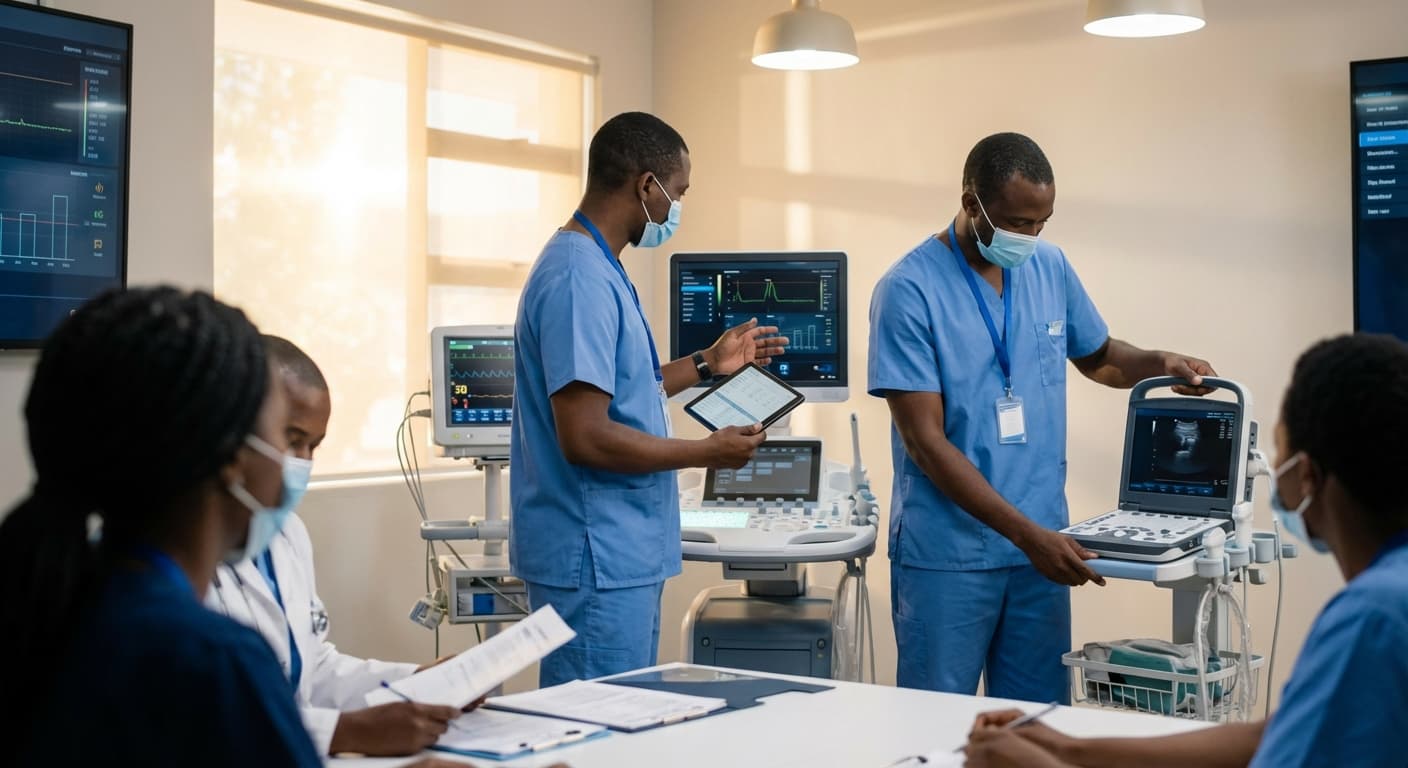
Clinical Needs Assessment for Medical Equipment in Mauritius
Engineering Excellence & Technical Support
Clinical Needs Assessment for Medical Equipment High-standard technical execution following OEM protocols and local regulatory frameworks.
Data-Driven Needs Identification
Leveraging historical patient data, disease prevalence trends, and existing equipment utilization metrics in Mauritius to accurately identify critical equipment gaps and prioritize procurement based on demonstrable clinical impact and patient outcomes.
Clinical Workflow Optimization
Conducting in-depth on-site assessments of clinical workflows across various healthcare facilities in Mauritius, from primary care clinics to tertiary hospitals, to understand functional requirements and ensure new equipment seamlessly integrates to enhance efficiency and patient care pathways.
Technological Suitability & Sustainability
Evaluating the technical specifications, maintenance infrastructure, local technical expertise, and long-term cost of ownership for medical equipment suitable for the Mauritian context, ensuring sustainable adoption and minimal reliance on external support.
What Is Clinical Needs Assessment For Medical Equipment In Mauritius?
A Clinical Needs Assessment for Medical Equipment in Mauritius is a systematic and data-driven process designed to identify, prioritize, and quantify the medical equipment requirements of healthcare facilities. It involves a comprehensive evaluation of current healthcare service delivery, patient demographics, disease prevalence, technological advancements, existing equipment inventory, and operational constraints. The primary objective is to ensure that healthcare providers possess the appropriate medical devices and technologies to deliver safe, effective, and efficient patient care in alignment with national health policies and standards. This assessment informs strategic procurement, resource allocation, infrastructure development, and human resource planning within the Mauritian healthcare sector. It is a critical step in optimizing the utilization of financial resources and improving health outcomes.
| Who Needs It? | Typical Use Cases | |||||
|---|---|---|---|---|---|---|
| Ministry of Health and Wellness (MOHW): For national health planning, resource allocation, and policy development regarding medical technology acquisition and deployment across public healthcare facilities. | Public Hospitals and Regional Hospitals: To identify critical equipment shortages, upgrade outdated systems, and plan for new service expansions or specialized units (e.g., ICU, Oncology, Cardiology). | Primary Healthcare Centers (Community Health Centers): To ensure adequate diagnostic and basic treatment equipment for local communities, reducing the need for referrals. | Private Healthcare Providers (Hospitals, Clinics, Diagnostic Centers): For strategic investment decisions, market analysis, and ensuring compliance with regulatory standards for equipment. | Non-Governmental Organizations (NGOs) and Charitable Trusts: When involved in healthcare service provision or equipment donation programs, to ensure procured items meet actual clinical needs. | Tertiary Referral Centers: To identify advanced diagnostic and therapeutic equipment requirements for complex medical cases and specialized procedures. | New Healthcare Facility Development: To guide the initial equipment procurement strategy for greenfield projects and ensure alignment with the facility's intended scope of services. |
| Establishing a new diagnostic imaging department: Determining the types and specifications of X-ray, CT, MRI, and ultrasound machines required based on anticipated patient load and referral patterns. | Upgrading an existing Intensive Care Unit (ICU): Assessing the need for advanced ventilators, patient monitoring systems, infusion pumps, and defibrillators. | Introducing a new surgical specialty: Identifying specialized surgical instruments, operating room equipment, and anesthesia machines necessary for specific procedures. | Expanding access to primary healthcare services: Determining the essential diagnostic tools and basic therapeutic equipment for community health centers to manage common ailments. | Responding to emerging public health challenges (e.g., pandemics): Rapidly assessing the need for specific equipment like PCR machines, ventilators, and personal protective equipment (PPE). | Developing a national equipment maintenance and calibration strategy: Understanding the lifecycle and serviceability requirements of existing and planned equipment. | Evaluating the effectiveness of previous equipment procurements: Analyzing utilization rates, breakdown frequency, and user feedback to inform future purchasing decisions. |
Key Components of a Clinical Needs Assessment for Medical Equipment in Mauritius
- Service Gap Analysis: Evaluating the current services provided against the needs of the population and identifying areas where equipment is lacking or inadequate.
- Demand Forecasting: Projecting future equipment needs based on epidemiological data, demographic trends, and anticipated changes in healthcare delivery models.
- Technology Assessment: Reviewing the suitability and availability of appropriate medical technologies, considering factors like cost-effectiveness, maintenance, and user training.
- Infrastructure Evaluation: Assessing the existing physical and environmental conditions within healthcare facilities to ensure they can support the proposed equipment (e.g., power, space, ventilation).
- Operational Efficiency Review: Analyzing workflows, staffing levels, and existing protocols to determine how new equipment will integrate and impact overall efficiency.
- Budgetary and Financial Planning: Developing realistic cost estimates for acquisition, installation, training, maintenance, and eventual replacement of equipment.
- Risk Assessment and Mitigation: Identifying potential challenges associated with equipment procurement and implementation, and developing strategies to address them.
- Stakeholder Consultation: Engaging with clinicians, administrators, biomedical engineers, IT personnel, and patients to gather diverse perspectives and ensure buy-in.
Who Needs Clinical Needs Assessment For Medical Equipment In Mauritius?
A thorough clinical needs assessment for medical equipment in Mauritius is crucial for optimizing healthcare delivery. It ensures that procured equipment aligns with the specific patient demographics, disease prevalence, and the operational capabilities of healthcare facilities. This systematic process identifies gaps in existing equipment, prioritizes acquisitions based on clinical impact and cost-effectiveness, and ultimately contributes to improved patient outcomes, enhanced service quality, and efficient resource allocation within the Mauritian healthcare system.
| Department | Key Needs Addressed | Examples of Equipment Areas |
|---|---|---|
| Emergency Medicine/Casualty | Immediate life-saving interventions, trauma care, rapid diagnostics. | Defibrillators, ventilators, advanced cardiac monitors, portable ultrasound, trauma kits. |
| Intensive Care Unit (ICU) | Continuous patient monitoring, life support, advanced respiratory care. | Ventilators, advanced patient monitors, infusion pumps, dialysis machines, ECMO (where applicable). |
| Surgery (Various Specialties) | Surgical procedures, minimally invasive techniques, sterile environment. | Surgical lights, operating tables, anesthesia machines, electrosurgical units, laparoscopic equipment, surgical instruments. |
| Internal Medicine/General Wards | Diagnosis and management of common illnesses, patient comfort, basic monitoring. | Patient beds with specialized features, vital signs monitors, ECG machines, nebulizers, basic diagnostic tools. |
| Cardiology | Diagnosis and treatment of heart conditions, interventional procedures. | ECG machines, Holter monitors, echocardiography machines, stress test equipment, cardiac catheterization labs (for larger facilities). |
| Radiology/Imaging | Diagnostic imaging for a wide range of conditions. | X-ray machines, CT scanners, MRI scanners, ultrasound machines, mammography units, PACS systems. |
| Laboratory Services (Pathology/Biochemistry) | Diagnostic testing of blood, urine, and tissue samples. | Automated analyzers (hematology, biochemistry), microscopes, centrifuges, PCR machines, immunoassay analyzers. |
| Obstetrics & Gynecology (O&G) | Maternal and infant care, reproductive health services. | Fetal monitors, ultrasound machines (obstetric), delivery tables, incubators, phototherapy units, gynecological examination tables. |
| **Pediatrics | Healthcare for infants, children, and adolescents. | Pediatric ventilators, incubators, specialized monitoring equipment, pediatric diagnostic tools, infusion pumps. |
| **Oncology | Diagnosis and treatment of cancer. | Linear accelerators, brachytherapy units, chemotherapy infusion pumps, specialized imaging equipment. |
| **Rehabilitation Medicine | Physical therapy, occupational therapy, speech therapy. | Treadmills, exercise equipment, therapeutic pools, electrotherapy units, assistive devices. |
| **Anesthesiology | Administration of anesthesia during surgical and medical procedures. | Anesthesia machines, vaporizers, breathing circuits, advanced patient monitoring systems. |
| **Outpatient Clinics/Primary Care | Initial diagnosis, basic treatment, health screening. | Basic diagnostic equipment (e.g., ECG, spirometry), vital signs monitors, minor procedure equipment. |
Target Customers and Departments for Clinical Needs Assessment in Mauritius
- Public Hospitals: Comprehensive assessments are vital for all public hospitals across Mauritius, from tertiary care centers to district hospitals.
- Private Healthcare Providers: Clinics, diagnostic centers, and private hospitals need to ensure their equipment meets patient demand and regulatory standards.
- Specialized Medical Centers: Facilities focusing on specific areas like cardiology, oncology, or diagnostics require tailored assessments.
- Rural Health Centers: Ensuring adequate and appropriate equipment for remote areas is a key consideration.
- Emergency Services: Ambulatory services and emergency departments need to be equipped for critical care situations.
- Rehabilitation Centers: Facilities focusing on physical and occupational therapy require specialized assessments.
Clinical Needs Assessment For Medical Equipment Process In Mauritius
This document outlines the standard workflow for a Clinical Needs Assessment for Medical Equipment in Mauritius, detailing the process from initial inquiry to the final execution of acquiring and implementing the necessary equipment. The assessment aims to ensure that healthcare facilities have access to appropriate, functional, and well-maintained medical equipment that aligns with patient care needs, clinical best practices, and national health priorities. The process involves multiple stakeholders and stages, emphasizing collaboration and thorough evaluation.
| Stage | Description | Key Activities | Responsible Parties | Key Deliverables |
|---|---|---|---|---|
| Inquiry & Initial Request | The process begins with a recognized need for new or upgraded medical equipment within a healthcare facility. | Identification of a clinical gap or need; Submission of an initial request to the relevant authority (e.g., Ministry of Health and Wellness, hospital administration). | Healthcare Facility Staff (Clinical Personnel, Department Heads), Hospital Administration. | Formal request document, initial statement of need. |
| Needs Identification & Prioritization | This stage involves a comprehensive understanding of the specific clinical requirements and their urgency. | Detailed assessment of patient demographics, disease prevalence, existing equipment limitations, and future service demands; Prioritization of needs based on clinical impact, patient safety, and resource availability. | Clinical Specialists, Department Heads, Needs Assessment Committee (if established). | Prioritized list of required equipment, statement of clinical justification. |
| Information Gathering & Data Collection | Collecting detailed information about the identified needs to inform equipment selection. | Review of patient records, clinical guidelines, performance data of existing equipment, and consultation with end-users (clinicians, technicians). | Needs Assessment Team, Clinical Staff, Biomedical Engineers. | Detailed clinical requirements, technical specifications outline, usage patterns, projected patient load. |
| Equipment Specification & Market Research | Translating clinical needs into specific technical requirements and exploring available options in the market. | Development of detailed technical specifications (performance, safety, compatibility, etc.); Identification of potential manufacturers and suppliers; Preliminary research on available technologies and models. | Biomedical Engineers, Procurement Officers, Clinical Specialists. | Detailed technical specifications for each equipment item, preliminary list of potential suppliers/models. |
| Evaluation & Validation | Assessing the suitability of identified equipment against the defined specifications and clinical needs. | Review of manufacturer proposals and datasheets; Site visits to facilities using similar equipment (if possible); Consultation with technical experts and end-users; Consideration of total cost of ownership (acquisition, maintenance, consumables). | Needs Assessment Committee, Biomedical Engineers, Procurement Officers, Clinical Representatives. | Evaluated list of suitable equipment options, recommendation report, justification for chosen models. |
| Procurement Planning & Budgeting | Developing a comprehensive plan for acquiring the selected equipment and securing necessary funding. | Cost estimation for selected equipment, including installation, training, and consumables; Development of a procurement plan (timeline, method); Budget allocation and approval process. | Procurement Department, Finance Department, Ministry of Health and Wellness. | Procurement plan, approved budget, financial justification. |
| Procurement Process | The formal process of acquiring the medical equipment according to government regulations and institutional policies. | Tendering/bidding process; Evaluation of bids; Contract negotiation; Purchase order issuance. | Procurement Department, Legal Department, Tender Board. | Signed contract, purchase order, confirmed delivery schedule. |
| Installation & Commissioning | Ensuring the equipment is correctly installed, calibrated, and ready for clinical use. | Delivery and unpacking of equipment; Professional installation by authorized technicians; Calibration and performance testing; Verification against specifications; Site acceptance. | Suppliers/Manufacturers, Biomedical Engineering Department, Clinical Users. | Installed and commissioned equipment, installation reports, calibration certificates. |
| Training & Capacity Building | Equipping healthcare professionals with the knowledge and skills to operate and maintain the new equipment. | On-site training for clinical staff and technicians; Development of user manuals and training materials; Ongoing support and refresher courses. | Suppliers/Manufacturers, Biomedical Engineering Department, Clinical Educators. | Trained personnel, training records, accessible user manuals. |
| Post-Implementation Review & Maintenance | Evaluating the effectiveness of the new equipment and establishing long-term maintenance protocols. | Monitoring equipment performance and utilization; Gathering user feedback; Developing and implementing a preventative maintenance schedule; Establishing a plan for repairs and spare parts. | Biomedical Engineering Department, Clinical Users, Quality Assurance Department. | Post-implementation review report, established maintenance schedule, spare parts inventory. |
Clinical Needs Assessment Workflow Stages
- Inquiry & Initial Request
- Needs Identification & Prioritization
- Information Gathering & Data Collection
- Equipment Specification & Market Research
- Evaluation & Validation
- Procurement Planning & Budgeting
- Procurement Process
- Installation & Commissioning
- Training & Capacity Building
- Post-Implementation Review & Maintenance
Clinical Needs Assessment For Medical Equipment Cost In Mauritius
This document outlines a clinical needs assessment for medical equipment costs in Mauritius, focusing on identifying critical equipment, understanding pricing factors, and providing estimated cost ranges in Mauritian Rupees (MUR). The aim is to inform procurement strategies and budget allocation for healthcare facilities in Mauritius, ensuring access to essential medical technology while managing costs effectively.
| Equipment Category | Typical Components/Examples | Key Pricing Factors | Estimated Price Range (MUR) |
|---|---|---|---|
| Diagnostic Imaging | X-ray Machine (Fixed/Mobile), Ultrasound Machine (Basic/3D/4D), CT Scanner (Low/Medium/High Slice) | Technology sophistication, brand, model, warranty, installation, training, service contracts, import duties, taxes | X-ray Machine: MUR 300,000 - MUR 2,000,000+ Ultrasound Machine: MUR 150,000 - MUR 1,500,000+ CT Scanner: MUR 10,000,000 - MUR 50,000,000+ |
| Surgical Equipment | Operating Table, Surgical Lights, Basic Instrument Sets, Laparoscopic Sets | Automation, features (e.g., imaging integration), material quality, number of instruments, brand, import costs | Operating Table: MUR 500,000 - MUR 5,000,000+ Surgical Lights: MUR 100,000 - MUR 1,000,000+ Instrument Sets: MUR 50,000 - MUR 500,000+ |
| Patient Monitoring | Vital Signs Monitor, ECG Machine (12-lead, portable) | Number of parameters, portability, display technology, software features, brand, consumables | Vital Signs Monitor: MUR 50,000 - MUR 300,000 ECG Machine: MUR 30,000 - MUR 150,000 |
| Laboratory Equipment | Hematology Analyzer (3-part/5-part), Biochemistry Analyzer (Small/Medium/Large throughput) | Throughput, automation level, number of parameters, reagent compatibility, brand, service contracts | Hematology Analyzer: MUR 200,000 - MUR 1,000,000+ Biochemistry Analyzer: MUR 300,000 - MUR 2,500,000+ |
| Anesthesia Machines | Basic/Advanced Anesthesia Workstation | Integrated ventilation, vaporizers, monitoring capabilities, gas flow control, brand, safety features | MUR 500,000 - MUR 3,000,000+ |
| Ventilators | Basic ICU Ventilator, Advanced Ventilator with various modes | Invasiveness, modes of ventilation, patient population suitability (adult/pediatric), portability, monitoring, brand | MUR 200,000 - MUR 1,500,000+ |
| Sterilization Equipment | Autoclave (Benchtop/Large Capacity) | Capacity, cycle types, automation, safety features, brand, energy efficiency | MUR 100,000 - MUR 1,000,000+ |
| Basic Medical Consumables & Disposables | Syringes, Needles, Gloves, Masks, Catheters, Dressings | Volume purchased, material quality, brand, supplier, bulk discounts, import costs | Highly variable based on volume and type. Monthly expenditure can range from MUR 50,000 to MUR 500,000+ per facility. |
| Dental Equipment | Dental Chair, X-ray Unit, Autoclave, Handpieces | Features, ergonomics, brand, integrated systems, import costs | Dental Chair: MUR 150,000 - MUR 800,000 Dental X-ray: MUR 50,000 - MUR 300,000 |
| Rehabilitation Equipment | Treadmills, Exercise Bikes, Physiotherapy Aids | Functionality, adjustability, durability, brand, import costs | MUR 20,000 - MUR 200,000+ per item |
Key Medical Equipment Categories Identified
- Diagnostic Imaging (X-ray, Ultrasound, CT Scanners)
- Surgical Equipment (Operating Room lights, Tables, Instruments)
- Patient Monitoring (Vital signs monitors, ECG machines)
- Laboratory Equipment (Hematology analyzers, Biochemistry analyzers)
- Anesthesia Machines
- Ventilators
- Sterilization Equipment (Autoclaves)
- Basic Medical Consumables and Disposables
- Dental Equipment
- Rehabilitation Equipment
Affordable Clinical Needs Assessment For Medical Equipment Options
Conducting a thorough clinical needs assessment is crucial for making informed decisions about medical equipment. This process ensures that procured equipment directly addresses patient care requirements, operational efficiency, and budget constraints. Affordable assessments focus on maximizing value by identifying essential needs, exploring cost-effective alternatives, and leveraging strategic purchasing practices. Understanding 'value bundles' and implementing targeted cost-saving strategies are key to achieving this balance.
| Value Bundle Concept | Description | Cost-Saving Strategy | Implementation Example |
|---|---|---|---|
| Integrated Solutions | Purchasing a package of complementary equipment or software that works seamlessly together, often offering greater functionality than individual components. | Negotiate bundled discounts; reduce integration costs and time; leverage pre-configured systems. | Acquiring an ultrasound machine with an integrated PACS viewer and reporting software as a single unit, rather than purchasing them separately. |
| Service & Training Packages | Bundling initial training, extended warranties, preventive maintenance, and spare parts with the equipment purchase. | Secure favorable long-term service rates; reduce unexpected repair costs; ensure staff proficiency. | Negotiating a five-year service contract with guaranteed response times and included preventive maintenance for a new MRI scanner. |
| Consumables & Reagents Included | Including initial or ongoing supplies of necessary consumables or reagents as part of the equipment acquisition. | Benefit from bulk purchasing power; establish predictable operating costs; ensure immediate usability. | A new diagnostic analyzer that comes with a six-month supply of essential reagents and calibration standards. |
| Leasing & Outcome-Based Agreements | Exploring leasing options or contracts where payment is tied to specific performance metrics or patient outcomes. | Lower upfront capital expenditure; shift financial risk to the vendor; ensure technology is up-to-date. | Leasing high-end imaging equipment with an agreement that includes all maintenance and upgrades, with payments adjusted based on equipment utilization rates. |
| Strategic Sourcing & Group Purchasing Organizations (GPOs) | Leveraging the collective buying power of multiple healthcare organizations through GPOs for better pricing and contract terms. | Access to pre-negotiated discounts; streamlined procurement process; reduced administrative burden. | Participating in a GPO's contract for surgical instruments or laboratory supplies, achieving significant price reductions compared to individual purchasing. |
| Refurbished & Pre-Owned Equipment | Considering high-quality, certified refurbished medical equipment as a cost-effective alternative to new models, especially for non-critical or less frequently used items. | Substantially lower initial purchase price; extended lifespan through refurbishment; often come with warranties. | Purchasing a refurbished anesthesia machine or an older model EKG machine for a satellite clinic or training purposes. |
| Standardization & Fleet Management | Adopting a standardized approach to certain types of equipment across the organization to leverage volume discounts and simplify training and maintenance. | Volume discounts for purchasing multiple units; simplified inventory management; reduced training costs. | Standardizing on a single brand of vital signs monitors for all patient rooms and critical care units. |
Key Components of an Affordable Clinical Needs Assessment
- Needs Identification: Clearly define the clinical problems the equipment aims to solve, the patient populations served, and the desired clinical outcomes.
- Workflow Analysis: Map current and future workflows to understand how new equipment will integrate and identify potential efficiencies.
- Technology Evaluation: Research a range of equipment options, considering not just initial purchase price but also maintenance, consumables, training, and potential obsolescence.
- Total Cost of Ownership (TCO): Analyze all costs associated with the equipment over its lifecycle, not just the upfront acquisition cost.
- Stakeholder Engagement: Involve clinicians, IT, biomedical engineering, finance, and procurement in the assessment process to ensure all perspectives are considered.
- Risk Assessment: Evaluate potential risks associated with new technology, including integration challenges, cybersecurity threats, and training needs.
Verified Providers In Mauritius
In the increasingly complex landscape of healthcare, ensuring you are connected with verified and reputable providers is paramount. For residents and visitors in Mauritius seeking top-tier medical services, understanding the credentials of healthcare entities like Franance Health is crucial. This document outlines why Franance Health stands out as a premier choice, highlighting their commitment to quality, patient care, and adherence to international standards.
| Aspect | Franance Health's Standing | Why it Matters for Patients |
|---|---|---|
| Verification & Licensing | Fully licensed and registered with Mauritian health authorities; undergoes regular inspections. | Ensures legal compliance and adherence to local medical standards, guaranteeing a safe and regulated environment. |
| Specialist Expertise | Employs a diverse team of board-certified specialists in fields like cardiology, oncology, orthopedics, and more. | Provides access to specialized knowledge and cutting-edge treatments for complex medical conditions. |
| Technology & Equipment | Invests in the latest medical technology, including advanced imaging, surgical, and laboratory equipment. | Facilitates accurate diagnoses, minimally invasive procedures, and more effective treatment outcomes. |
| Patient Safety & Quality | Implements strict infection control measures, patient safety protocols, and quality assurance programs. | Minimizes risks, prevents medical errors, and ensures the highest standards of care are consistently delivered. |
| International Standards | Aligns its practices with international best practices and guidelines, often exceeding local requirements. | Offers a level of care comparable to leading healthcare providers globally, instilling confidence and trust. |
Key Credentials and Advantages of Franance Health:
- Accreditation by recognized international healthcare bodies, signifying adherence to rigorous quality and safety protocols.
- Highly qualified and experienced medical professionals, including specialists with international training and expertise.
- State-of-the-art medical facilities equipped with advanced diagnostic and treatment technologies.
- A comprehensive range of medical services, catering to diverse healthcare needs across multiple specialties.
- Commitment to patient-centric care, emphasizing personalized treatment plans and compassionate support.
- Strong partnerships with leading global healthcare institutions for referrals and specialized treatments.
- Robust data security and privacy measures to protect patient information.
- Proactive engagement in medical research and continuous professional development for their staff.
Scope Of Work For Clinical Needs Assessment For Medical Equipment
This Scope of Work (SOW) outlines the requirements for conducting a comprehensive Clinical Needs Assessment for Medical Equipment. The objective is to identify, prioritize, and specify the medical equipment necessary to meet the current and future clinical demands of [Healthcare Facility Name/Department]. This assessment will ensure that procured equipment is clinically appropriate, cost-effective, and aligned with the facility's strategic goals and patient care objectives. The project will involve a detailed analysis of clinical workflows, patient populations, existing equipment inventory, and projected service demands. The successful completion of this SOW will result in a prioritized list of medical equipment needs with detailed technical specifications and justification.
| Deliverable | Description | Format | Timeline (Relative to SOW Start) |
|---|---|---|---|
| Project Kick-off Meeting Minutes | Summary of initial meeting, confirmed objectives, stakeholders, and project plan. | Document (PDF) | Week 1 |
| Stakeholder Engagement Plan | Identified stakeholders, communication strategy, and engagement methods. | Document (PDF) | Week 2 |
| Existing Equipment Inventory Analysis Report | Detailed breakdown of current equipment, condition, utilization, and maintenance status. | Document (PDF) & Spreadsheet | Week 4 |
| Clinical Workflow Analysis Summary | Overview of mapped workflows, identified gaps, and opportunities for improvement. | Document (PDF) & Flowcharts | Week 6 |
| Prioritized Equipment Needs List | Ranked list of recommended equipment based on agreed-upon criteria. | Document (PDF) & Spreadsheet | Week 8 |
| Detailed Technical Specifications Document | Comprehensive specifications for each prioritized equipment item, including performance, safety, integration, and usability requirements. | Document (PDF) | Week 10 |
| Final Clinical Needs Assessment Report | Consolidated report of findings, analysis, prioritized needs, technical specifications, and recommendations. | Document (PDF) | Week 12 |
| Presentation of Findings | Executive summary and detailed presentation of the assessment findings and recommendations. | Presentation Slides (PPTX/PDF) | Week 12 |
Key Activities and Deliverables
- Define the scope and objectives of the clinical needs assessment in collaboration with key stakeholders.
- Identify and engage all relevant clinical departments, user groups, and administrative personnel.
- Conduct a thorough review of existing medical equipment inventory, including age, condition, maintenance history, and utilization.
- Analyze current and projected patient demographics, disease prevalence, and service line growth to anticipate future equipment needs.
- Map current clinical workflows for key patient pathways and identify areas for improvement or equipment enhancement.
- Conduct interviews, surveys, and focus groups with clinical end-users to gather input on current equipment performance, desired functionalities, and unmet needs.
- Research industry best practices, emerging technologies, and innovative equipment solutions relevant to the facility's specialty areas.
- Identify regulatory requirements, accreditation standards, and safety guidelines pertinent to medical equipment.
- Develop a prioritization framework for identified equipment needs based on clinical impact, patient safety, cost-effectiveness, and strategic alignment.
- Define detailed technical specifications for prioritized equipment, including performance requirements, safety features, connectivity needs, and compatibility with existing infrastructure.
- Prepare a comprehensive Clinical Needs Assessment Report documenting findings, prioritized recommendations, and detailed technical specifications.
- Present findings and recommendations to stakeholders for review and approval.
Service Level Agreement For Clinical Needs Assessment For Medical Equipment
This Service Level Agreement (SLA) outlines the guaranteed response times and uptime for the Clinical Needs Assessment services provided by [Your Company Name] for medical equipment. This SLA is designed to ensure timely and effective support for our clients, enabling them to maintain optimal operational efficiency of their medical devices. The scope of this SLA specifically covers the process of identifying, documenting, and prioritizing clinical requirements for new or existing medical equipment, including consultation, data gathering, and reporting.
| Service Component | Response Time Guarantee (Business Hours) | Uptime Guarantee (for Assessment Tools/Platforms, if applicable) |
|---|---|---|
| Initial Needs Assessment Consultation Request (Email/Portal) | 4 Business Hours | N/A |
| Follow-up Consultation/Question within an Active Assessment Project | 8 Business Hours | N/A |
| Delivery of Draft Requirement Documentation | 3 Business Days (post-data completion) | N/A |
| Response to Feedback on Draft Documentation | 2 Business Days | N/A |
| Delivery of Final Needs Assessment Report | 5 Business Days (post-client approval of draft) | N/A |
| Access to Needs Assessment Portal/Tools (if applicable) | N/A | 99.5% Uptime (Scheduled maintenance excluded) |
Key Service Components
- Needs Assessment Consultation: Initial meetings and ongoing discussions with clinical staff to understand current workflows, patient care requirements, and desired equipment functionalities.
- Data Gathering & Analysis: Collection of relevant data, including usage statistics, maintenance records, patient demographics, and feedback from clinical users.
- Requirement Documentation: Creation of detailed, actionable documents outlining functional, technical, and performance requirements for medical equipment.
- Prioritization & Recommendation: Assistance in prioritizing identified needs based on clinical impact, cost-effectiveness, and strategic goals, along with recommendations for equipment solutions.
- Reporting & Presentation: Delivery of comprehensive reports and presentations summarizing the findings and recommendations of the needs assessment.
Frequently Asked Questions

Ready when you are
Let's scope your Clinical Needs Assessment for Medical Equipment in Mauritius project in Mauritius.

Scaling healthcare logistics and technical systems across the entire continent.