
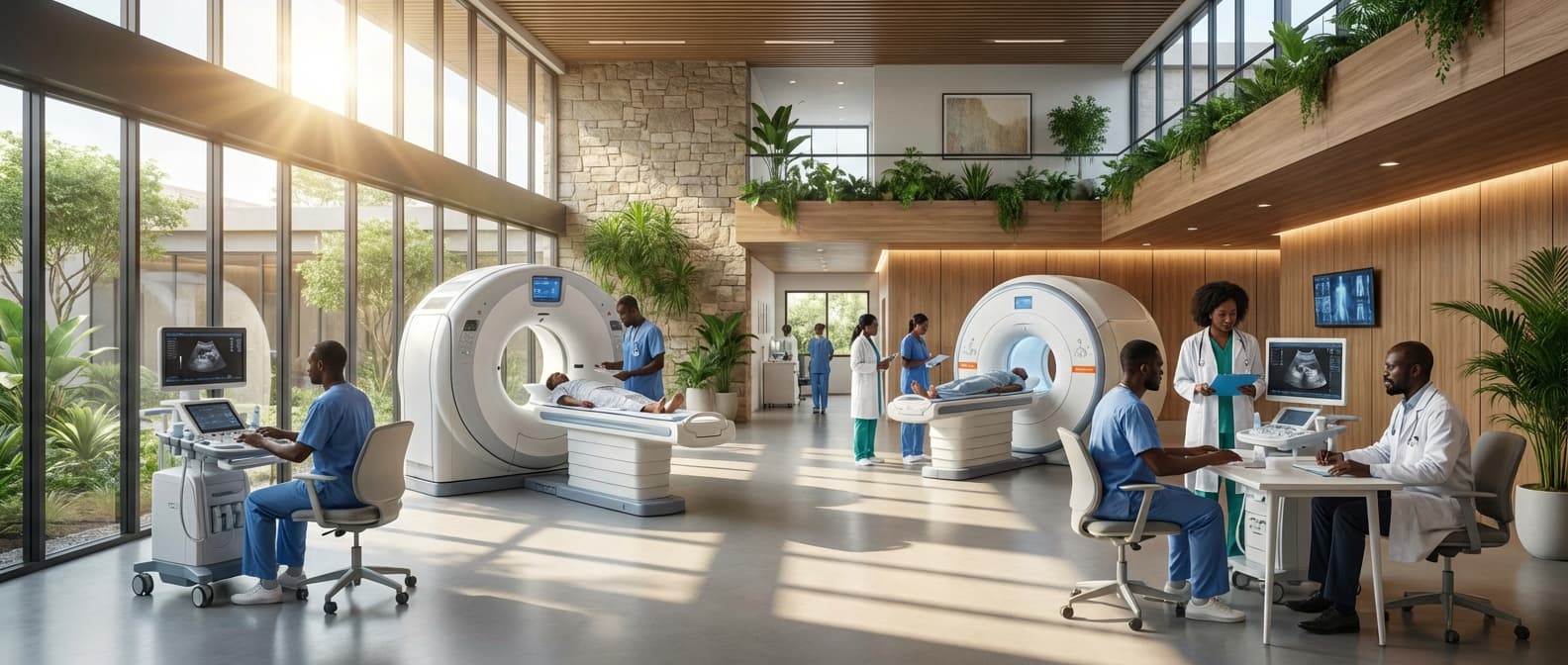
Diagnostic Imaging in Mauritius
Engineering Excellence & Technical Support
High-resolution imaging systems including CT scanners, MRI, X-ray, and ultrasound technology for accurate clinical diagnosis. High-standard technical execution following OEM protocols and local regulatory frameworks.
AI-Powered Diagnostic Assistance
Leveraging cutting-edge AI algorithms, our diagnostic imaging solutions provide automated anomaly detection and prioritization, enhancing radiologist efficiency and diagnostic accuracy for a faster, more precise patient care pathway in Mauritius.
Secure Cloud-Based PACS Integration
Implementing a robust, cloud-based Picture Archiving and Communication System (PACS) ensures secure, remote access to imaging studies for specialists across Mauritius, facilitating seamless collaboration and timely consultations, even in remote areas.
Advanced Low-Dose Imaging Technologies
Adopting the latest advancements in low-dose imaging techniques for CT and X-ray scans minimizes patient radiation exposure without compromising diagnostic quality, prioritizing patient safety and well-being in all diagnostic procedures within Mauritius.
What Is Diagnostic Imaging In Mauritius?
Diagnostic imaging in Mauritius refers to the medical specialty and practice of employing various imaging technologies to visualize the internal structures of the human body for the purpose of diagnosis, monitoring, and guiding treatment of diseases and injuries. This service encompasses a range of non-invasive and minimally invasive techniques that generate cross-sectional or planar images. The core objective is to provide detailed anatomical and physiological information that is often unobtainable through physical examination alone. The interpretation of these images is performed by qualified radiologists and other medical specialists.
| Who Needs Diagnostic Imaging? | Typical Use Cases |
|---|---|
| Patients presenting with unexplained pain or symptoms (e.g., abdominal pain, headaches, joint pain). | Trauma patients requiring assessment of fractures, internal bleeding, or organ damage. |
| Individuals undergoing routine health check-ups or cancer screening programs (e.g., mammography for breast cancer screening). | Monitoring the progression of diseases (e.g., tumor growth, effectiveness of treatment) and post-operative follow-up. |
| Patients with suspected infections, inflammation, or organ dysfunction. | Guiding interventional procedures such as biopsies, drainages, or angioplasty. |
| Pregnant women requiring evaluation of fetal development and maternal health (ultrasound). | Patients with neurological conditions (e.g., stroke, tumors, degenerative diseases) requiring brain imaging (MRI, CT). |
| Individuals with cardiovascular concerns requiring assessment of blood vessels or heart function (CT angiography, MRI, echocardiography). | Patients with suspected musculoskeletal injuries or degenerative joint diseases (X-ray, MRI). |
Key Diagnostic Imaging Modalities in Mauritius
- X-ray Radiography (Conventional & Fluoroscopy): Utilizes electromagnetic radiation to create images of internal structures, particularly bones and dense tissues. Fluoroscopy allows for real-time imaging.
- Computed Tomography (CT): Employs X-rays and computer processing to generate detailed cross-sectional images (slices) of the body, offering superior visualization of soft tissues and bone detail compared to conventional radiography.
- Magnetic Resonance Imaging (MRI): Uses strong magnetic fields and radio waves to produce highly detailed images of soft tissues, organs, and the central nervous system. It does not involve ionizing radiation.
- Ultrasound (Sonography): Employs high-frequency sound waves to create images of internal organs and structures. It is particularly useful for soft tissues, blood flow assessment, and in obstetrics.
- Mammography: A specialized X-ray technique for imaging breast tissue, primarily used for breast cancer screening and diagnosis.
- Nuclear Medicine Imaging (e.g., PET-CT, SPECT-CT): Involves the administration of radioactive tracers to assess organ function and detect disease at a molecular level. Often combined with CT for anatomical correlation.
Who Needs Diagnostic Imaging In Mauritius?
Diagnostic imaging services in Mauritius cater to a diverse range of patients and healthcare providers. The demand for these services is driven by the need for accurate diagnosis, monitoring of treatment efficacy, and surgical planning. Identifying the key consumers of these services is crucial for understanding market penetration and strategic development.
| Department/Specialty | Key Imaging Needs | Patient Population Examples |
|---|---|---|
| Radiology | X-ray, CT scans, MRI, Ultrasound, Mammography, Fluoroscopy | All patient demographics requiring diagnostic imaging |
| Cardiology | Echocardiography (Ultrasound), Cardiac CT, Cardiac MRI | Patients with suspected heart disease, arrhythmias, valve issues, coronary artery disease |
| Neurology | MRI Brain, CT Brain, EEG (sometimes correlated) | Patients with stroke, epilepsy, brain tumors, multiple sclerosis, headaches |
| Oncology | CT scans, MRI, PET scans (limited availability, often referral abroad), X-ray, Ultrasound | Patients with suspected or diagnosed cancers, for staging, treatment monitoring, and follow-up |
| Orthopedics | X-ray, MRI, CT scans, Ultrasound | Patients with fractures, joint pain, sports injuries, degenerative conditions, bone tumors |
| Gastroenterology | Abdominal Ultrasound, CT Abdomen, MRI Abdomen, Barium studies (less common) | Patients with abdominal pain, liver disease, kidney stones, inflammatory bowel disease |
| Pulmonology | Chest X-ray, CT Chest | Patients with pneumonia, lung nodules, COPD, tuberculosis, interstitial lung disease |
| Emergency Medicine | X-ray, CT scans, Ultrasound (FAST scans) | Patients with trauma, acute abdominal pain, suspected fractures, stroke alerts |
| Obstetrics & Gynecology | Pelvic Ultrasound, Obstetrical Ultrasound (2D, 3D/4D) | Pregnant women for fetal monitoring and dating; women with gynecological concerns (fibroids, ovarian cysts) |
| Urology | Renal Ultrasound, CT Urography, X-ray KUB | Patients with kidney stones, urinary tract infections, prostate issues, bladder abnormalities |
Target Customers & Departments for Diagnostic Imaging in Mauritius
- Primary care physicians referring patients for investigations.
- Specialist physicians across various disciplines.
- Surgeons requiring pre-operative imaging.
- Emergency departments for acute conditions.
- Oncologists for cancer diagnosis and staging.
- Radiologists interpreting the images.
- Patients undergoing routine health check-ups.
- Patients with chronic conditions requiring ongoing monitoring.
- Sports medicine practitioners and physiotherapists.
- Public hospitals and clinics.
- Private hospitals and clinics.
- Specialized medical centers (e.g., cardiac centers, neurological centers).
Diagnostic Imaging Process In Mauritius
The diagnostic imaging process in Mauritius involves a structured workflow designed to efficiently guide patients from initial inquiry to the successful completion of their imaging examinations. This process typically begins with a referral, followed by scheduling, preparation, the imaging procedure itself, and finally, the interpretation and reporting of results. The aim is to ensure accurate diagnoses and timely treatment for patients across the island nation.
| Stage | Description | Key Actors | Common Modalities |
|---|---|---|---|
| Patient Referral and Inquiry | A medical professional (GP, specialist) identifies the need for diagnostic imaging and provides a referral. The patient or their representative contacts the imaging center for information and to initiate the process. | Referring Physician, Patient/Representative, Imaging Center Reception/Administration | N/A (Pre-imaging) |
| Scheduling and Appointment Booking | The imaging center receives the referral and books an appointment for the patient, considering the requested modality, urgency, and patient availability. Information regarding preparation and necessary documents is provided. | Imaging Center Administration/Scheduler, Patient | N/A (Pre-imaging) |
| Patient Preparation | Depending on the imaging modality, patients may need to follow specific instructions such as fasting, avoiding certain medications, wearing specific clothing, or drinking contrast agents. | Patient, Referring Physician, Imaging Center Technologist (for instructions) | N/A (Pre-imaging) |
| Imaging Examination Execution | The patient arrives at the imaging center, confirms identity, and undergoes the scheduled imaging procedure performed by a qualified radiographer/technologist. This is the core diagnostic phase. | Patient, Radiographer/Technologist, Physician (if required for procedure) | X-ray, Ultrasound, CT Scan, MRI, Mammography, Fluoroscopy, BMD |
| Image Processing and Archiving | Acquired images are processed, enhanced (if necessary), and stored securely in a Picture Archiving and Communication System (PACS) for future access and analysis. | Radiographer/Technologist, PACS Administrator | All modalities |
| Radiologist Interpretation and Reporting | A qualified radiologist reviews the images, interprets the findings, and generates a comprehensive diagnostic report detailing the observations and potential diagnoses. | Radiologist | All modalities |
| Result Delivery and Follow-up | The diagnostic report is communicated to the referring physician. The patient may be advised to follow up with their doctor to discuss the results and subsequent treatment plan. | Radiologist, Referring Physician, Patient | N/A (Post-imaging) |
Diagnostic Imaging Workflow in Mauritius
- Patient Referral and Inquiry
- Scheduling and Appointment Booking
- Patient Preparation
- Imaging Examination Execution
- Image Processing and Archiving
- Radiologist Interpretation and Reporting
- Result Delivery and Follow-up
Diagnostic Imaging Cost In Mauritius
Diagnostic imaging plays a crucial role in modern healthcare, aiding in the diagnosis, monitoring, and treatment of a wide range of medical conditions. In Mauritius, the cost of these essential services can vary significantly due to a multitude of factors, impacting affordability for patients. Understanding these pricing determinants is vital for both individuals seeking medical care and healthcare providers.
Several key factors influence the pricing of diagnostic imaging procedures in Mauritius:
- Type of Imaging Modality: Different imaging techniques, such as X-rays, ultrasounds, CT scans, and MRIs, have vastly different equipment costs, operational expenses, and technical expertise requirements. More advanced and complex modalities generally command higher prices.
- Complexity of the Procedure: Simple, routine scans will be less expensive than those requiring contrast agents, specialized protocols, or longer scan times to visualize specific anatomical structures or pathologies.
- Location and Type of Facility: Hospitals, whether public or private, often have different pricing structures. Private clinics and specialized imaging centers may have higher overhead costs (rent, advanced equipment maintenance, specialized staff salaries) contributing to their pricing. Public healthcare, while subsidized, might still involve nominal fees or indirect costs.
- Radiologist and Technician Expertise: The qualifications, experience, and reputation of the radiologists interpreting the images and the technicians operating the equipment can also influence pricing. Highly specialized or experienced professionals may charge more for their services.
- Geographic Location within Mauritius: While less pronounced than in larger countries, there might be minor variations in pricing between facilities in urban centers (like Port Louis) and more remote areas, influenced by operational costs and local market dynamics.
- Insurance Coverage: The presence and extent of medical insurance coverage significantly impact the out-of-pocket cost for patients. Procedures fully covered by insurance will have a different perceived cost than those requiring significant co-pays or full payment.
- Technology and Equipment: The age, sophistication, and maintenance of the imaging equipment itself play a role. Facilities with state-of-the-art technology may justify higher prices due to enhanced image quality, faster scan times, and reduced radiation exposure.
- Operational Overheads: Beyond direct procedure costs, facilities incur expenses for power consumption, maintenance, consumables, administrative staff, and regulatory compliance, all of which are factored into the final price.
It is important to note that these are estimated ranges, and actual costs can fluctuate. Patients are strongly advised to inquire directly with specific healthcare providers for the most accurate and up-to-date pricing information.
| Imaging Modality | Estimated Price Range (MUR) | Notes |
|---|---|---|
| X-ray (e.g., Chest X-ray) | 800 - 2,500 | Prices vary based on the number of views and body part. |
| Ultrasound (e.g., Abdominal, Pelvic, OB/GYN) | 1,200 - 3,500 | Prices can differ for specialized ultrasounds like Doppler. |
| CT Scan (e.g., Head, Abdomen) | 4,000 - 12,000 | Higher costs for scans with contrast agents or more complex regions. |
| MRI Scan (e.g., Brain, Spine, Knee) | 8,000 - 25,000+ | Generally the most expensive modality, with prices increasing for contrast and specific sequences. |
| Mammography | 1,500 - 4,000 | Standard screening or diagnostic mammograms. |
Factors Influencing Diagnostic Imaging Costs in Mauritius
- Type of Imaging Modality (X-ray, Ultrasound, CT, MRI)
- Complexity of the Procedure
- Location and Type of Facility (Public Hospital, Private Hospital, Clinic)
- Radiologist and Technician Expertise
- Geographic Location within Mauritius
- Insurance Coverage
- Technology and Equipment Used
- Operational Overheads of the Facility
Affordable Diagnostic Imaging Options
Navigating the healthcare system for diagnostic imaging can be a significant financial concern. Fortunately, there are affordable options and strategies to help manage these costs. This guide explores value bundles and various cost-saving techniques, empowering you to make informed decisions about your diagnostic imaging needs.
| Imaging Service Example | Potential Cost Range (Uninsured/Self-Pay) | Notes & Saving Tips |
|---|---|---|
| X-Ray (e.g., Chest X-Ray) | $50 - $300 | Often one of the most affordable imaging types. Compare prices across independent imaging centers. |
| Ultrasound (e.g., Abdominal Ultrasound) | $150 - $600 | Prices can vary based on the complexity and area being scanned. Outpatient centers are usually cheaper than hospitals. |
| CT Scan (e.g., CT Abdomen/Pelvis) | $300 - $1,500+ | Significant price differences exist. Ask about self-pay discounts and compare at least 3-5 facilities. Consider a full body scan package if appropriate and offered at a discount. |
| MRI (e.g., MRI Brain) | $400 - $2,500+ | Generally the most expensive. Thoroughly compare prices. Some centers offer off-peak or early bird discounts. 'Value bundles' may include interpretation by a radiologist. |
| Mammogram (Screening) | $75 - $400 | Many screening mammograms are covered by insurance at 100%. If not, compare prices and look for centers with specific women's imaging packages. |
Key Cost-Saving Strategies for Diagnostic Imaging
- Understand Your Insurance Coverage: Before any procedure, thoroughly review your insurance policy. Know your deductible, copay, coinsurance, and any pre-authorization requirements for imaging services.
- Compare Prices: Don't accept the first quote you receive. Prices for the same imaging procedure can vary significantly between different facilities and even within the same network. Use online tools or call facilities directly to compare costs.
- Inquire About Self-Pay Discounts: If you don't have insurance or your insurance has a high deductible, ask facilities about their self-pay or cash pricing. These discounts can often be substantial.
- Consider Outpatient Imaging Centers: Imaging services at independent outpatient centers are often more affordable than those performed in hospital settings. While quality is generally comparable, the overhead is lower, leading to cost savings.
- Ask About Package Deals/Value Bundles: Some imaging providers offer "value bundles" or package deals for multiple related diagnostic tests or for patients undergoing specific treatments.
- Negotiate with Providers: Don't hesitate to discuss costs with the imaging facility or your healthcare provider. In some cases, negotiation might be possible, especially for out-of-pocket expenses.
- Explore Telehealth Options: For certain follow-up consultations or to discuss imaging results, telehealth appointments can be a cost-effective alternative to in-person visits.
- Ask About Generic Alternatives (if applicable): While less common in imaging, in some medical contexts, there might be more affordable generic alternatives for contrast agents or other consumables. Inquire if this is a possibility.
- Look for Grants and Financial Assistance: If you are facing financial hardship, research local or national organizations that offer grants or financial assistance for medical procedures, including diagnostic imaging.
- Utilize Health Savings Accounts (HSAs) or Flexible Spending Accounts (FSAs): If you have an HSA or FSA, use these pre-tax dollars to pay for your imaging services, which can provide significant tax savings.
Verified Providers In Mauritius
In the realm of healthcare, selecting a provider with verified credentials is paramount. In Mauritius, Franance Health stands out as a beacon of trust and excellence, offering a comprehensive network of medical professionals and institutions that meet the highest standards. This commitment to verification ensures that patients receive safe, effective, and quality care. Understanding Franance Health's credentialing process and the benefits it brings empowers individuals to make informed decisions about their health and well-being.
| Credential Component | Franance Health's Verification Standard | Benefit to Patient |
|---|---|---|
| Medical Licenses | Up-to-date and valid licenses from the relevant Mauritian medical council are meticulously checked. | Ensures providers are legally qualified and authorized to practice medicine. |
| Professional Qualifications & Education | Verification of degrees, diplomas, and specialized training from accredited institutions. | Confirms providers have the fundamental knowledge and expertise in their respective fields. |
| Experience & Competence | Thorough review of past performance, surgical outcomes (where applicable), and peer references. | Indicates a proven track record and the ability to handle diverse medical situations effectively. |
| Professional Memberships | Confirmation of membership in reputable professional medical associations. | Suggests adherence to ethical standards and ongoing professional development. |
| Background Checks | Standard background checks are conducted to ensure ethical conduct and patient safety. | Provides an additional layer of assurance regarding the provider's integrity. |
| Continuing Medical Education (CME) | Requirement to demonstrate ongoing commitment to learning and staying updated with medical advancements. | Guarantees patients are receiving care informed by the latest medical knowledge and techniques. |
Why Franance Health Represents the Best Choice:
- Rigorous Credentialing Process: Franance Health employs a stringent vetting process for all its affiliated providers, ensuring they possess the necessary qualifications, licenses, and experience.
- Commitment to Quality Care: Verification by Franance Health signifies a provider's dedication to upholding best practices and delivering exceptional patient outcomes.
- Access to Trusted Professionals: Patients can be confident in the expertise and integrity of healthcare professionals within the Franance Health network.
- Enhanced Patient Safety: The emphasis on verified credentials minimizes risks and promotes a safer healthcare experience.
- Comprehensive Network: Franance Health connects you with a diverse range of specialists and facilities, catering to various medical needs.
- Peace of Mind: Knowing you are choosing a verified provider offers invaluable peace of mind during your healthcare journey.
Scope Of Work For Diagnostic Imaging
This Scope of Work (SOW) outlines the requirements for providing comprehensive diagnostic imaging services, including the delivery of technical reports, standard specifications for image quality, and associated data management. The aim is to ensure accurate, timely, and high-quality imaging services that support optimal patient care and clinical decision-making.
| Deliverable | Description | Standard Specification/Requirement | Format/Delivery Method |
|---|---|---|---|
| Radiology Report | Written interpretation of diagnostic images, including findings, impressions, and recommendations. | Adherence to ACR (American College of Radiology) guidelines; inclusion of patient demographics, procedure details, findings, and a clear impression. Reports to be signed and dated by a board-certified radiologist. | Electronic (PACS accessible, PDF export), within 24-48 hours of scan completion (or as per urgency). |
| Raw Image Data | Digital images acquired during the diagnostic procedure. | DICOM (Digital Imaging and Communications in Medicine) standard format. Minimum resolution and bit depth as per modality best practices. | Secure electronic transfer to hospital PACS, or archival on secure server for retrieval. |
| Quality Control (QC) Logs | Records of daily/weekly/monthly equipment checks and calibration. | Documentation of QC parameters, results, and any corrective actions taken. Compliance with manufacturer specifications and regulatory standards (e.g., ACR, FDA). | Digital logbooks, accessible for review upon request. |
| Equipment Performance Reports | Periodic reports detailing the operational status and performance of imaging equipment. | Analysis of uptime, downtime, service calls, and preventative maintenance. Comparison against baseline performance metrics. | Quarterly or semi-annual reports, provided electronically. |
| Protocol Library Updates | Revised or new imaging protocols for various examinations. | Protocols developed or updated based on current medical literature, clinical needs, and equipment capabilities. Includes parameters for imaging, reconstruction, and post-processing. | Electronic distribution via email or secure portal. |
| ACR Accreditation Documentation | Supporting documentation for maintaining ACR accreditation for relevant modalities. | Includes QC data, personnel qualifications, and policy documents as required by ACR guidelines. | Provided as requested for accreditation cycles. |
Key Service Components
- Diagnostic Imaging Modalities: Covering X-ray, CT, MRI, Ultrasound, Nuclear Medicine, and Mammography.
- Image Acquisition: Performance of all imaging procedures according to established protocols.
- Image Interpretation: Radiologist review and interpretation of all acquired images.
- Diagnostic Reporting: Generation of detailed, timely, and clinically relevant reports.
- Data Management: Secure storage, retrieval, and transfer of imaging data (DICOM format).
- Quality Assurance: Implementation of ongoing quality control and assurance programs.
- Technical Support: Maintenance and calibration of imaging equipment.
- Training and Education: Provision of training for facility staff on new technologies and protocols.
Service Level Agreement For Diagnostic Imaging
This Service Level Agreement (SLA) outlines the performance standards and guarantees for diagnostic imaging services provided by [Provider Name] to [Client Name]. This SLA covers response times for critical procedures and ensures a high level of system uptime for uninterrupted service delivery.
| Service Component | Performance Metric | Target Uptime/Response Time | Measurement Method | Remedy for Failure | Exclusions |
|---|---|---|---|---|---|
| Urgent/STAT Imaging Interpretations | Interpretation Turnaround Time (TAT) | Within 90 minutes of study completion and availability of prior studies/clinical information. | Automated system logs tracking report generation time against study completion time. | Service credit of 5% of monthly imaging interpretation fees for each instance of exceeding the TAT by more than 30 minutes. | Cases requiring complex multi-disciplinary consultation; known delays in prior study availability. |
| Routine Imaging Interpretations | Interpretation Turnaround Time (TAT) | Within 8 business hours of study completion and availability of prior studies/clinical information. | Automated system logs tracking report generation time against study completion time. | Service credit of 2% of monthly imaging interpretation fees for each instance of exceeding the TAT by more than 2 hours. | Complex cases requiring extensive review; availability of prior studies. |
| Diagnostic Imaging Equipment Availability | System Uptime | 99.5% uptime (excluding scheduled maintenance) | Monitoring of PACS, RIS, and imaging modality operational status. | Service credit of 1% of monthly imaging service fees for every 0.1% decrease in uptime below 99.5% in a given month. | Scheduled maintenance windows; Force Majeure events; third-party network outages. |
| PACS/RIS System Availability | System Uptime | 99.8% uptime (excluding scheduled maintenance) | Monitoring of PACS and RIS server and application availability. | Service credit of 0.5% of monthly PACS/RIS fees for every 0.05% decrease in uptime below 99.8% in a given month. | Scheduled maintenance windows; Force Majeure events; third-party network outages. |
Key Service Objectives
- To ensure timely interpretation of diagnostic imaging studies, prioritizing urgent and emergent cases.
- To maintain high availability of diagnostic imaging equipment and associated IT infrastructure.
- To provide clear and measurable metrics for performance evaluation.
- To establish a framework for issue resolution and service restoration.
- To foster a collaborative and transparent relationship between [Provider Name] and [Client Name].
Frequently Asked Questions

Ready when you are
Let's scope your Diagnostic Imaging in Mauritius project in Mauritius.

Scaling healthcare logistics and technical systems across the entire continent.