
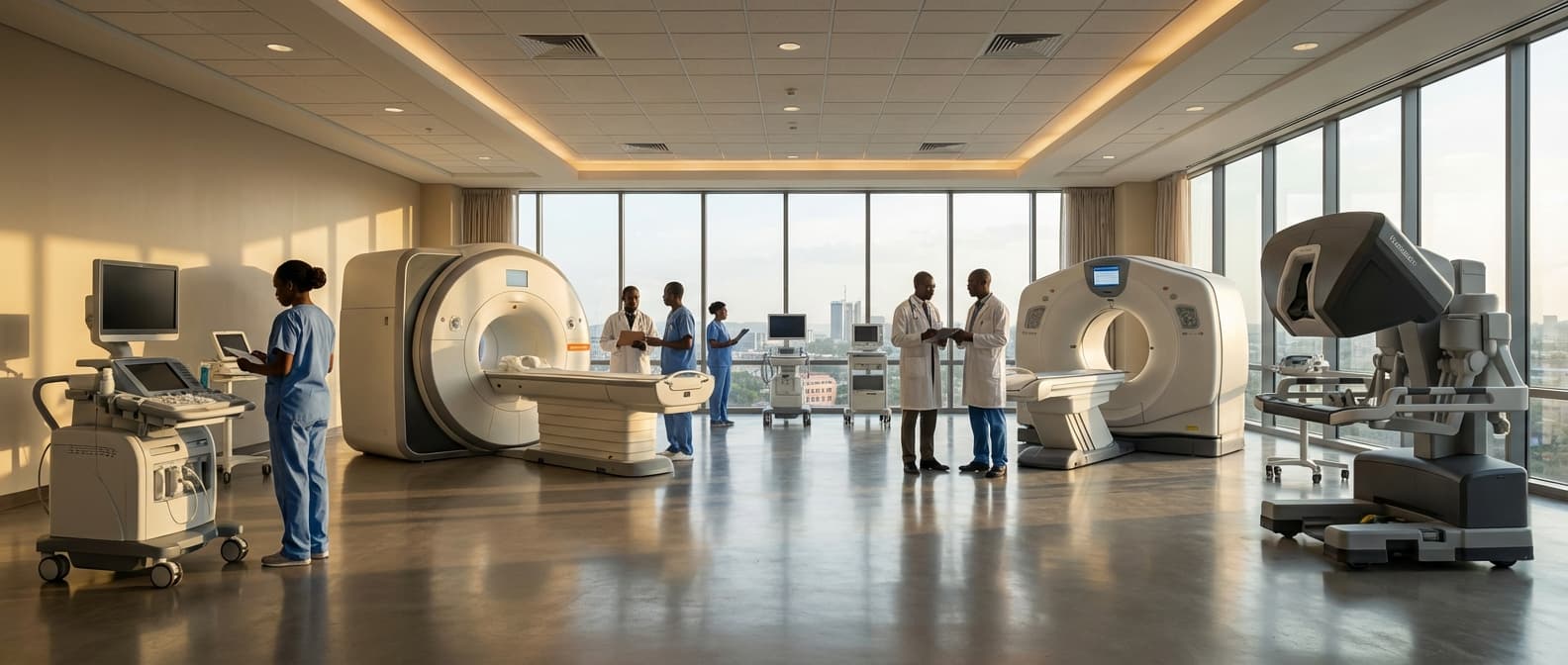
Renal Solutions in Mauritius
Engineering Excellence & Technical Support
Complete dialysis systems and renal care equipment designed to deliver safe, effective, and patient-centered kidney treatment. High-standard technical execution following OEM protocols and local regulatory frameworks.
Advanced Dialysis Technology
Renal Solutions is equipped with state-of-the-art hemodialysis machines and water treatment systems, ensuring safe, efficient, and comfortable treatment for patients with kidney failure. Our technology adheres to international standards for dialysis care.
Comprehensive Diagnostic Services
We offer a full spectrum of laboratory tests essential for renal health monitoring, including glomerular filtration rate (GFR) assessment, electrolyte balance, and screening for underlying causes of kidney disease. Our diagnostics aid in early detection and personalized treatment plans.
Expert Nephrology Consultation
Our dedicated team of highly skilled nephrologists provides expert medical advice, diagnosis, and management for all types of kidney diseases. We focus on patient education and empowerment, fostering a collaborative approach to long-term kidney health.
What Is Renal Solutions In Mauritius?
Renal Solutions, within the Mauritian healthcare landscape, refers to a comprehensive suite of services and products designed for the diagnosis, management, and treatment of kidney diseases, commonly known as renal diseases. This encompasses a spectrum of offerings from preventative screening and diagnostic procedures to advanced therapeutic interventions and ongoing patient care. The primary objective is to address the growing burden of chronic kidney disease (CKD) and end-stage renal disease (ESRD) through accessible and effective renal care.
| Who Needs Renal Solutions? | Typical Use Cases |
|---|---|
| Individuals with diagnosed Chronic Kidney Disease (CKD) across all stages. | Management of progressive kidney function decline, preventing complications like fluid overload, electrolyte disturbances, and anemia. |
| Patients with End-Stage Renal Disease (ESRD) requiring Renal Replacement Therapy (RRT). | Initiation and maintenance of hemodialysis or peritoneal dialysis to sustain life when native kidney function is insufficient. |
| Individuals with risk factors for kidney disease, such as diabetes mellitus, hypertension, cardiovascular disease, obesity, and a family history of kidney disease. | Early screening and proactive management to prevent or delay the onset of kidney damage. |
| Patients experiencing acute kidney injury (AKI). | Hospital-based management and temporary dialysis to support kidney recovery. |
| Individuals with a compatible donor for kidney transplantation. | Pre-transplant workup, surgical procedure, and comprehensive post-operative care and immunosuppression. |
| Caregivers and families of patients with kidney disease. | Education, emotional support, and training for home-based care (e.g., home hemodialysis or peritoneal dialysis). |
Key Components of Renal Solutions in Mauritius
- Diagnostic Services: Includes laboratory tests (e.g., serum creatinine, estimated glomerular filtration rate - eGFR, urinalysis, kidney biopsy analysis), and imaging techniques (e.g., renal ultrasound, CT scan, MRI) to assess kidney structure and function.
- Medical Management: Physician consultations, pharmacotherapy for managing hypertension, diabetes, anemia, and electrolyte imbalances, dietary counseling, and education for patients regarding kidney health.
- Renal Replacement Therapies (RRT): This is a core component and includes: * Hemodialysis: Extracorporeal blood purification using artificial kidneys. This involves in-center hemodialysis units and potentially home hemodialysis support. * Peritoneal Dialysis: Intraperitoneal administration of dialysis fluid for waste removal, including both continuous ambulatory peritoneal dialysis (CAPD) and automated peritoneal dialysis (APD). * Kidney Transplantation: Surgical implantation of a donor kidney, requiring pre-transplant evaluation, post-transplant immunosuppression management, and long-term follow-up.
- Specialized Renal Clinics and Centers: Dedicated facilities offering integrated care for patients with various stages of kidney disease.
- Patient Support and Education Programs: Empowering patients with knowledge about their condition, treatment adherence, and lifestyle modifications.
- Equipment and Consumables: Supply chain management for dialysis machines, disposables (dialyzers, tubing, solutions), and transplant medications.
Who Needs Renal Solutions In Mauritius?
In Mauritius, the demand for specialized renal care and solutions is growing due to the increasing prevalence of kidney-related diseases. "Renal Solutions" is a broad term encompassing a range of services and products designed to address the needs of individuals and healthcare facilities dealing with kidney health. This includes everything from diagnostic tools and treatments to dialysis services and patient education.
| Target Department/Entity | Specific Needs/Roles |
|---|---|
| Nephrology Departments (Hospitals) | Diagnosis, treatment, management of kidney diseases, specialized medical staff, access to advanced diagnostic tools, dialysis facilities. |
| General Hospital Wards | Management of patients with kidney complications, coordination of care with nephrologists, provision of basic renal support. |
| Dialysis Centers | Provision of regular dialysis treatments, patient monitoring, staff training, maintenance of dialysis machines, supply of dialysis consumables. |
| Primary Healthcare Clinics | Screening for kidney disease risk factors, early detection, referral to specialists, patient education on kidney health. |
| Ministry of Health and Wellness | Policy development, public health campaigns, resource allocation for renal care, oversight of healthcare services, managing national kidney registries. |
| Pharmaceutical Companies | Development and distribution of medications for kidney disease, hypertension, and diabetes; providing educational materials for healthcare professionals. |
| Medical Equipment Suppliers | Provision of dialysis machines, filters, syringes, laboratory diagnostic equipment, and other essential renal care technology. |
| Non-Governmental Organizations (NGOs) | Patient advocacy, support groups for kidney patients and families, awareness programs, potential fundraising for patient assistance. |
| Research Institutions | Conducting studies on kidney disease prevalence, treatment efficacy, and development of new therapeutic approaches. |
| Insurance Providers | Developing comprehensive health insurance plans that cover renal treatments and services, managing claims for dialysis and other renal procedures. |
Target Customers for Renal Solutions in Mauritius
- Individuals diagnosed with Chronic Kidney Disease (CKD) or Acute Kidney Injury (AKI)
- Patients undergoing dialysis (hemodialysis or peritoneal dialysis)
- Kidney transplant recipients and their caregivers
- Individuals with risk factors for kidney disease (e.g., diabetes, hypertension)
- General practitioners and family physicians referring patients for nephrological assessment
- Hospitals and clinics requiring renal care equipment and consumables
- Dialysis centers and nephrology units
- Pharmaceutical companies developing and distributing kidney-related medications
- Medical device manufacturers and distributors of renal equipment
- Healthcare administrators and procurement managers
- Government health agencies and public health initiatives focused on chronic disease management
Renal Solutions Process In Mauritius
This document outlines the typical workflow for renal solutions processes in Mauritius, from initial inquiry to the successful execution of services. This process is crucial for patients requiring dialysis, kidney transplants, or other related nephrological interventions, ensuring timely and efficient access to care.
| Stage | Description | Key Activities | Involved Parties | Key Outcomes |
|---|---|---|---|---|
| Initial Inquiry & Registration | The first point of contact where a patient or their representative expresses a need for renal services. | Contacting a renal unit/hospital, providing initial information, scheduling a consultation, patient registration. | Patient/Family, Renal Unit Receptionist, Medical Social Worker. | Patient officially registered, initial appointment scheduled. |
| Medical Assessment & Eligibility Screening | A comprehensive evaluation to determine the patient's medical condition, suitability for specific treatments, and insurance/financial coverage. | Nephrologist consultation, diagnostic tests (blood work, imaging), review of medical history, assessment of dialysis suitability (e.g., AV fistula/catheter needs), transplant evaluation (if applicable). | Nephrologist, Nurses, Lab Technicians, Radiologists, Medical Social Worker, Insurance/Financial Officer. | Diagnosis confirmed, treatment options identified, patient deemed eligible for specific renal solution. |
| Treatment Plan Development | Based on the assessment, a personalized treatment plan is formulated. | Discussion of treatment options (e.g., hemodialysis, peritoneal dialysis, transplant), selection of modality, setting treatment frequency and duration, patient and family education. | Nephrologist, Patient, Family, Transplant Coordinator (if applicable). | Personalized treatment plan agreed upon, patient educated on treatment. |
| Pre-Treatment Preparations | Steps taken before the commencement of treatment to ensure readiness. | Surgical creation of access (e.g., AV fistula/graft, peritoneal dialysis catheter insertion), patient education on self-care and medication, procurement of necessary supplies, scheduling of first treatment. | Surgeons, Nurses, Patient, Pharmacy. | Patient has functional access for treatment, all necessary supplies and medications are in place. |
| Treatment Execution | The actual delivery of the renal solution as per the established plan. | Dialysis sessions (hemodialysis or peritoneal dialysis), post-transplant care, administration of medications. | Nurses, Nephrologists, Technicians, Patient. | Effective management of kidney disease, improvement in patient's physiological parameters. |
| Post-Treatment Monitoring & Follow-up | Ongoing assessment of the patient's response to treatment and overall health. | Regular check-ups with nephrologist, laboratory monitoring, assessment of treatment effectiveness, management of complications, adjustment of treatment plan as needed. | Nephrologist, Nurses, Lab Technicians, Dietitian. | Long-term management of kidney condition, optimized patient well-being, early detection and management of complications. |
| Administrative & Billing Processes | Handling of all non-clinical aspects of the renal solution. | Insurance claims processing, billing, appointment scheduling, record keeping, coordination with other healthcare providers. | Administrative Staff, Billing Department, Insurance Providers, Medical Records Department. | Efficient financial management, accurate patient records, seamless operational flow. |
Renal Solutions Process Workflow
- Initial Inquiry & Registration
- Medical Assessment & Eligibility Screening
- Treatment Plan Development
- Pre-Treatment Preparations
- Treatment Execution
- Post-Treatment Monitoring & Follow-up
- Administrative & Billing Processes
Renal Solutions Cost In Mauritius
The cost of renal solutions in Mauritius can vary significantly based on several factors, including the type of solution required (e.g., peritoneal dialysis solutions, hemodialysis concentrates), the brand, the volume purchased, and the specific healthcare provider or pharmacy. It's essential to consult with local healthcare professionals and suppliers for the most accurate and up-to-date pricing. However, general price ranges can be estimated in Mauritian Rupees (MUR).
| Renal Solution Type (Estimated) | Estimated Price Range (MUR) | Notes |
|---|---|---|
| Peritoneal Dialysis Solution (e.g., 2L bag) | MUR 800 - MUR 1,500+ | Dextrose-based solutions are common. Icodextrin may be at the higher end. |
| Hemodialysis Concentrates (e.g., per session/batch) | MUR 1,000 - MUR 2,500+ | Prices can vary widely based on specific electrolyte composition and preparation. |
| Dialysis Salts/Bags (for preparation) | MUR 150 - MUR 400+ | Used in conjunction with other components for dialysis solutions. |
| Specialty Solutions (e.g., for specific conditions) | MUR 1,200 - MUR 3,000+ | May be higher due to specialized formulations and limited availability. |
Key Pricing Factors for Renal Solutions in Mauritius:
- Type of Renal Solution: Peritoneal dialysis solutions (e.g., icodextrin, dextrose-based) will have different price points than hemodialysis concentrates.
- Brand and Manufacturer: Established international brands may command higher prices than generic or locally produced alternatives, if available.
- Volume and Packaging: Larger volumes or multi-dose packaging often offer a more economical per-unit cost.
- Supplier and Retailer: Prices can differ between hospitals, private clinics, specialized pharmacies, and direct distribution channels.
- Import Duties and Taxes: As many renal solutions are imported, import duties, taxes, and shipping costs contribute to the final price.
- Insurance Coverage: The extent of coverage provided by local health insurance plans or government subsidies will impact the out-of-pocket expenses for patients.
- Prescription and Consultation Fees: While not the cost of the solution itself, associated consultation fees with nephrologists and prescription costs can add to the overall financial burden.
Affordable Renal Solutions Options
Navigating the complexities of kidney disease treatment can be financially daunting. Fortunately, there are affordable renal solutions and strategies to help manage costs. This section explores the concept of value bundles and outlines various cost-saving strategies for individuals seeking comprehensive and economical renal care.
| Cost-Saving Strategy | Description | Potential Impact on Costs |
|---|---|---|
| Generic Medications | Utilizing generic versions of prescribed medications, which are chemically identical to brand-name drugs but significantly cheaper. | Substantial reduction in medication expenses. |
| Home Dialysis Options | Pursuing peritoneal dialysis (PD) or home hemodialysis (HHD) instead of in-center hemodialysis. These can often be more cost-effective in the long run, considering reduced facility fees and patient time. | Lower overall treatment costs, potential for insurance benefits for home use. |
| Insurance Negotiation & Review | Actively reviewing insurance plans for the best coverage for renal care. Negotiating with insurance providers for better rates or payment plans for out-of-pocket expenses. | Reduced co-pays, deductibles, and potential for negotiated discounts. |
| Preventive Care & Lifestyle Modifications | Implementing lifestyle changes such as dietary adjustments (low sodium, controlled potassium/phosphorus), regular exercise, and managing co-existing conditions like diabetes and hypertension. This can slow disease progression and reduce the need for more intensive treatments. | Delayed or reduced need for costly interventions and treatments. |
| Participate in Clinical Trials | Enrolling in approved clinical trials for new treatments or therapies. This can provide access to cutting-edge care at no cost, and sometimes patients receive compensation for their time and travel. | Free access to experimental treatments and potential financial reimbursement. |
| Patient Assistance Programs (PAPs) | Leveraging manufacturer-sponsored or non-profit PAPs for prescription medications, especially for those who are uninsured or underinsured. | Significant reduction or elimination of medication costs. |
| Outpatient vs. Inpatient Services | Prioritizing outpatient services and procedures whenever possible, as they are generally less expensive than inpatient hospital stays. | Lower overall healthcare utilization costs. |
| Bundled Payment Models | Exploring healthcare systems or insurers that offer bundled payment models for specific renal procedures or comprehensive care plans. | Predictable costs and potential for overall savings through coordinated care. |
Value Bundles in Renal Care
- Definition: Value bundles are integrated service packages that combine multiple medical services, treatments, and medications related to kidney disease management into a single, often discounted, price. These bundles aim to improve patient outcomes by ensuring coordinated care and can offer cost predictability.
- Components: Common components include dialysis treatments (in-center or home), physician consultations, laboratory tests, medications (e.g., erythropoiesis-stimulating agents, phosphate binders, iron supplements), and potentially nutritional counseling or social work support.
- Benefits: By pre-negotiating prices for a defined set of services, value bundles can lead to significant cost savings compared to paying for each service individually. They also streamline billing and can incentivize providers to focus on efficient and effective care delivery.
- Considerations: Patients should carefully review the specific services included in a bundle, understand any limitations or exclusions, and compare them with their anticipated needs. Transparency in pricing and service scope is crucial.
Verified Providers In Mauritius
In Mauritius, ensuring you receive quality healthcare is paramount. When seeking medical services, it's crucial to partner with verified providers who demonstrably uphold the highest standards. Franance Health stands out as a beacon of trust and excellence in this regard. Their rigorous credentialing process and unwavering commitment to patient well-being make them the undisputed best choice for your healthcare needs. Franance Health meticulously vets its network, ensuring that all affiliated healthcare professionals and facilities meet stringent criteria for expertise, ethical practice, and patient safety. This dedication to verification translates directly into peace of mind for their clients, knowing they are in capable and trustworthy hands.
| Provider Type | Franance Health Verification Standard | Key Benefits for Patients |
|---|---|---|
| Doctors & Specialists | Board certification, peer reviews, continuing education verification, license checks. | Access to highly qualified and up-to-date medical expertise. Reduced risk of misdiagnosis or ineffective treatment. |
| Hospitals & Clinics | Accreditation by recognized bodies, adherence to safety protocols, quality of care audits. | Safe and sterile environments. Access to advanced medical technology and facilities. Consistent high-quality patient care. |
| Diagnostic Laboratories | ISO certification, quality control measures, proficiency testing. | Accurate and reliable test results. Trustworthy diagnostic information for effective treatment planning. |
| Pharmaceutical Services | Licensing by regulatory authorities, adherence to dispensing standards, quality assurance. | Access to safe and effective medications. Professional guidance on prescriptions and drug interactions. |
Why Franance Health is the Premier Choice:
- Uncompromising credential verification for all practitioners.
- Commitment to ethical medical practices and patient confidentiality.
- Access to a comprehensive network of specialized healthcare services.
- Focus on continuous improvement and adherence to international quality standards.
- Exceptional patient-centric approach, prioritizing individual needs and comfort.
Scope Of Work For Renal Solutions
This Scope of Work (SOW) outlines the technical deliverables and standard specifications for the Renal Solutions project. The project aims to develop and implement a comprehensive digital platform for managing patient renal health data, optimizing treatment plans, and improving healthcare provider workflows. This document details the expected outputs, quality standards, and technical requirements necessary for the successful completion of the project.
| Specification Area | Standard/Requirement | Description |
|---|---|---|
| Programming Language | Modern, Statically Typed | e.g., Java, C#, Python (with type hinting) |
| Web Framework | Robust and Scalable | e.g., Spring Boot (Java), ASP.NET Core (C#), Django/Flask (Python) |
| Database | Relational or NoSQL | e.g., PostgreSQL, MySQL, MongoDB, chosen based on scalability and data structure needs |
| API Design | RESTful, JSON-based | Adherence to OpenAPI (Swagger) specifications for documentation |
| Frontend Framework | Component-based | e.g., React, Angular, Vue.js |
| Data Security | HTTPS/TLS encryption | Encryption at rest and in transit |
| Authentication | OAuth 2.0 / OpenID Connect | Secure user authentication and authorization |
| Compliance | HIPAA, GDPR | Strict adherence to relevant healthcare data privacy regulations |
| Testing Coverage | Minimum 80% unit test coverage | Comprehensive testing across all modules |
| Performance | Response time < 2 seconds for critical operations | Scalable architecture to handle increasing user load |
| Code Quality | Adherence to coding standards and best practices | Static code analysis and code reviews |
| Logging and Monitoring | Comprehensive logging of events and errors | Integration with monitoring tools (e.g., Prometheus, Grafana) |
Technical Deliverables
- 1. Core Platform Development:
- Modular web-based application accessible via secure login.
- User management and role-based access control.
- Patient profile creation and management (demographics, medical history, lab results).
- Treatment plan management (dialysis schedules, medication administration, fluid intake monitoring).
- Lab result integration and visualization (trend analysis, anomaly detection).
- Reporting and analytics dashboard for patient outcomes and operational efficiency.
- Secure data storage compliant with HIPAA and relevant data privacy regulations.
- Audit trail for all data modifications and access.
- 2. Data Integration Module:
- APIs for seamless integration with existing Electronic Health Records (EHR) systems.
- FHIR (Fast Healthcare Interoperability Resources) compliant data exchange capabilities.
- Mechanisms for importing and exporting data in standard formats (CSV, XML, JSON).
- Data validation and cleansing processes.
- 3. User Interface (UI) / User Experience (UX) Design:
- Intuitive and user-friendly interface designed for healthcare professionals.
- Responsive design for accessibility across various devices (desktops, tablets).
- Customizable dashboards and reporting views.
- Clear data visualization with charts and graphs.
- 4. Security and Compliance:
- Implementation of robust security measures (encryption, authentication, authorization).
- Compliance with HIPAA, GDPR, and other relevant data protection laws.
- Regular security audits and penetration testing.
- Disaster recovery and business continuity plan.
- 5. Documentation:
- Comprehensive technical documentation (architecture, API specifications, database schema).
- User manuals and training materials.
- Deployment and installation guides.
- 6. Testing and Quality Assurance:
- Unit testing, integration testing, and system testing.
- User Acceptance Testing (UAT) plan and execution.
- Performance and load testing.
- Security testing.
- 7. Deployment and Support:
- Deployment scripts and procedures.
- Post-deployment support and maintenance plan.
- Bug fixing and patch management.
Service Level Agreement For Renal Solutions
This Service Level Agreement (SLA) outlines the performance standards and guarantees that Renal Solutions commits to its clients for its renal care services. It defines response times for critical issues and specifies uptime guarantees for our digital platforms and services.
| Service Component | Response Time Guarantee (Critical) | Uptime Guarantee (Monthly) | Definition of Critical Issue |
|---|---|---|---|
| Emergency Patient Support (e.g., acute distress requiring immediate clinician contact) | 15 minutes | N/A (24/7 availability expected) | Patient experiencing severe, life-threatening symptoms or requiring immediate medical intervention related to their renal condition. |
| Urgent Clinical Inquiry (e.g., urgent question regarding treatment plan, medication adjustment) | 1 hour | N/A (24/7 availability expected) | Non-life-threatening but requires prompt clinician attention within the same business day to prevent adverse outcomes. |
| Routine Clinical Inquiry (e.g., general questions about appointments, lab results) | 4 business hours | N/A (Business hours: Monday-Friday, 8 AM - 5 PM local time) | Inquiries that do not pose an immediate risk to patient health and can be addressed within a standard business day. |
| Patient Portal / Mobile App Access | 2 hours for initial response to outage report | 99.9% | Any event that prevents a majority of users from accessing their medical records, appointment scheduling, or secure messaging features. Maintenance windows are excluded. |
| Telehealth Platform Availability | 1 hour for initial response to outage report | 99.8% | Any event that prevents scheduled telehealth appointments from commencing or continuing for a significant duration. Scheduled maintenance is excluded. |
| Remote Patient Monitoring System Data Transmission | 4 hours for initial response to data loss report | 99.7% | Failure of the system to transmit critical patient data (e.g., vital signs, treatment adherence data) from the patient's device to Renal Solutions' platform for a prolonged period, impacting clinical review. |
Key Performance Indicators and Guarantees
- This SLA applies to all clients utilizing Renal Solutions' standard service offerings.
- Renal Solutions will monitor service performance continuously to ensure adherence to these standards.
- Any deviations from these agreed-upon levels will be communicated proactively, and remedial actions will be initiated promptly.
- This SLA is effective as of the date of the service agreement's execution.
Frequently Asked Questions

Ready when you are
Let's scope your Renal Solutions in Mauritius project in Mauritius.

Scaling healthcare logistics and technical systems across the entire continent.