
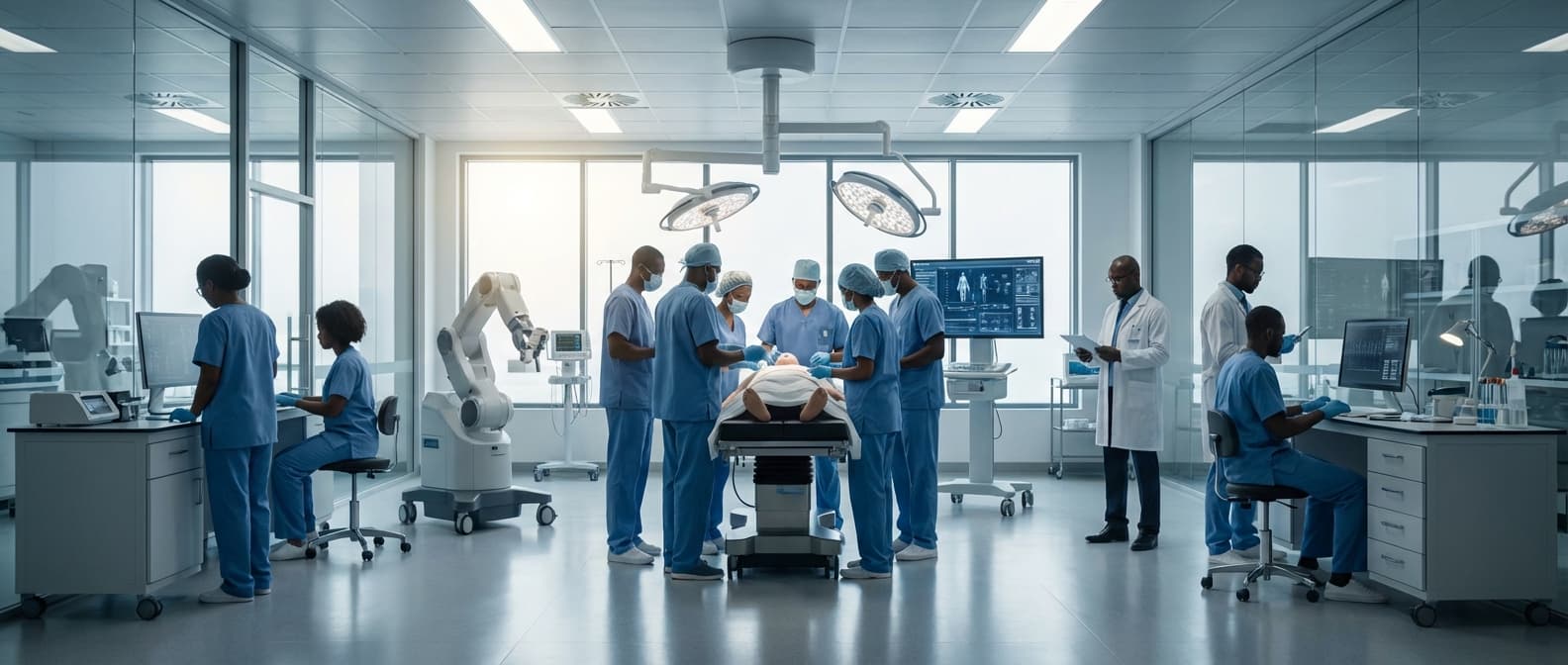
Calibration & Electrical Safety Testing in Mauritius
Engineering Excellence & Technical Support
Equipment calibration and IEC safety testing High-standard technical execution following OEM protocols and local regulatory frameworks.
Precision Calibration for Critical Industries
Ensuring the accuracy and reliability of vital measurement instruments across Mauritius's key sectors, including manufacturing, healthcare, and food processing. Our rigorous calibration services guarantee compliance with international standards, minimizing operational risks and maximizing product quality.
Comprehensive Electrical Safety Assessments
Protecting lives and assets through thorough electrical safety testing and inspections. We identify potential hazards in industrial, commercial, and residential settings, providing certified reports and recommendations to prevent electrical accidents and ensure a safe working and living environment throughout Mauritius.
Regulatory Compliance & Certification Experts
Navigating the complex landscape of Mauritian electrical safety regulations and international calibration standards. We offer expert guidance and certification services, empowering businesses to meet all legal requirements and demonstrate a commitment to safety and quality, fostering trust and operational excellence.
What Is Calibration & Electrical Safety Testing In Mauritius?
Calibration and Electrical Safety Testing are critical services for ensuring the accuracy, reliability, and safe operation of electrical and electronic equipment within Mauritius. These services are mandated by regulatory bodies and industry best practices to mitigate risks associated with faulty equipment, prevent electrical hazards, and maintain compliance with national and international standards. Calibration involves the comparison of a measuring instrument's readings against a known, traceable standard to identify and correct any deviations. Electrical Safety Testing, conversely, focuses on verifying the integrity of electrical insulation, grounding, and fault protection mechanisms to prevent electric shock, fire, and other electrical hazards. These services are essential across a wide spectrum of industries in Mauritius, from manufacturing and healthcare to telecommunications and utilities.
| Who Needs Calibration & Electrical Safety Testing? | Typical Use Cases in Mauritius | |||
|---|---|---|---|---|
| Manufacturing and Industrial Facilities: |
|
|
|
|
| Healthcare Institutions: |
|
|
|
|
| Telecommunications and IT Sector: |
|
|
|
|
| Utilities (Power, Water, Gas): |
|
|
|
|
| Construction and Building Management: |
|
|
|
|
| Research and Development Laboratories: |
|
|
| |
| Government and Regulatory Agencies: |
|
|
Key Components of Calibration & Electrical Safety Testing
- Calibration:
- Verification of Accuracy: Ensuring that instruments provide readings within specified tolerances.
- Adjustment: Correcting deviations to bring instruments back into compliance.
- Traceability: Establishing a documented link between the instrument's calibration and national or international standards (e.g., through NMI or international laboratories).
- Calibration Certificates: Issuance of documented proof of calibration, including measurement results, uncertainties, and traceability information.
- Electrical Safety Testing:
- Insulation Resistance Testing: Measuring the resistance of insulating materials to detect degradation or defects.
- Earth Continuity Testing: Verifying the integrity and low resistance of the protective earth connection.
- Leakage Current Testing: Measuring the current that flows through unintended paths to earth or accessible parts.
- Dielectric Strength (Hi-Pot) Testing: Applying a high voltage to test the insulation's ability to withstand electrical stress.
- Visual Inspection: Non-destructive examination for obvious damage, loose connections, or improper wiring.
- Functional Testing: Observing the equipment's operation under load to identify safety-related anomalies.
Who Needs Calibration & Electrical Safety Testing In Mauritius?
Calibration and electrical safety testing are critical for ensuring the accuracy, reliability, and safety of a wide range of equipment and systems. In Mauritius, businesses and institutions across various sectors rely on these services to meet regulatory requirements, maintain operational efficiency, and protect their employees and customers. This document outlines the key entities and departments that require these essential services.
| Department/Sector | Primary Needs (Calibration) | Primary Needs (Electrical Safety Testing) |
|---|---|---|
| Healthcare | Medical devices (infusion pumps, ventilators, ECG machines), laboratory equipment (analyzers, centrifuges) | Medical equipment, operating theatre electrical systems, general hospital electrical installations |
| Manufacturing/Industrial | Measuring instruments (thermometers, pressure gauges, scales), process control equipment, torque wrenches | Machinery, electrical panels, factory lighting, emergency exits |
| R&D Institutions | Spectrometers, pH meters, chromatographs, environmental chambers, precision scales | Laboratory equipment, fume hoods, electrical outlets, general lab safety |
| Food & Beverage | Temperature probes, humidity sensors, pressure gauges, weighing scales, timers | Processing machinery, refrigeration units, kitchen appliances, electrical wiring |
| Pharmaceuticals/Chemicals | Chromatographs, titrators, reactors, environmental monitoring systems, balances | Process equipment, hazardous area electricals, ventilation systems, general lab safety |
| Telecommunications | Signal generators, spectrum analyzers, power meters, network testers | Base stations, data centers, network equipment, power supplies |
| Energy & Utilities | Flow meters, pressure transmitters, temperature sensors, voltage/current meters | Power generation equipment, substations, distribution networks, control systems |
| Hospitality | Oven temperature, refrigeration units, weighing scales, electrical safety of appliances | Kitchen equipment, guest room appliances, lighting, general electrical wiring |
| Construction | Surveying equipment (total stations, levels), concrete testers, material strength testers | Site power distribution, temporary installations, heavy machinery electricals |
| Government/Public Sector | Environmental monitoring equipment, traffic control sensors, laboratory instruments | Public buildings, street lighting, transportation infrastructure electricals |
| Automotive | Emission analyzers, diagnostic tools, wheel balancers, brake testers | Workshop machinery, diagnostic equipment, vehicle electrical systems |
| Education | Scientific instruments (microscopes, oscilloscopes), technical training equipment | Laboratory equipment, workshops, general classroom electricals |
Target Customers and Departments in Mauritius Requiring Calibration & Electrical Safety Testing
- {"title":"Healthcare Sector","description":"Hospitals, clinics, diagnostic laboratories, and dental practices rely heavily on accurate medical equipment. Ensuring the correct functioning and safety of these devices is paramount for patient care and regulatory compliance."}
- {"title":"Manufacturing and Industrial Sector","description":"Production facilities across industries such as food and beverage, textiles, electronics, and automotive require calibrated measuring instruments for quality control. Electrical safety testing is crucial for machinery and factory environments to prevent accidents."}
- {"title":"Research and Development (R&D) Institutions","description":"Universities, research centers, and private R&D labs depend on precise instruments for experiments and data collection. Maintaining the integrity of their research through regular calibration is vital."}
- {"title":"Food and Beverage Industry","description":"Strict hygiene and quality standards necessitate the calibration of temperature, humidity, and pressure monitoring equipment. Electrical safety checks on processing machinery and kitchens are also essential."}
- {"title":"Pharmaceutical and Chemical Industries","description":"High precision is critical in these sectors for product efficacy and safety. Calibration of analytical instruments, reactors, and environmental monitoring systems is mandatory. Electrical safety is paramount due to potentially hazardous environments."}
- {"title":"Telecommunications Sector","description":"Companies involved in telecommunications require calibrated testing equipment for network performance and signal integrity. Electrical safety testing of their infrastructure and equipment is also a priority."}
- {"title":"Energy and Utilities Sector","description":"Power generation plants, electricity distribution companies, and water treatment facilities rely on calibrated control systems, meters, and safety equipment. Electrical safety testing of all operational equipment is non-negotiable."}
- {"title":"Hospitality and Tourism Sector","description":"Hotels and resorts have extensive electrical systems and appliances that require regular safety checks to ensure guest and staff safety. Kitchen equipment also needs periodic calibration for consistent food preparation."}
- {"title":"Construction and Civil Engineering","description":"Construction companies utilize various measuring instruments (e.g., surveying equipment, concrete testers) that require calibration for accuracy. Site electrical safety is also a major concern."}
- {"title":"Government and Public Sector","description":"Various government departments, including those responsible for environmental monitoring, public health, and transportation, require calibrated equipment for their operations. Electrical safety in public buildings and facilities is also regulated."}
- {"title":"Automotive Sector","description":"Garages, repair shops, and automotive manufacturers need calibrated diagnostic tools, emission testing equipment, and safety testing devices. Electrical systems in vehicles also require attention."}
- {"title":"Educational Institutions","description":"Schools, colleges, and vocational training centers use a variety of scientific and technical equipment that requires calibration for effective teaching and learning. Electrical safety in laboratories and workshops is crucial."}
Calibration & Electrical Safety Testing Process In Mauritius
This document outlines the comprehensive workflow for Calibration and Electrical Safety Testing processes in Mauritius, covering the stages from initial inquiry to the final execution and reporting. The process is designed to ensure that electrical equipment and measuring instruments meet required standards for accuracy, reliability, and safety, adhering to relevant Mauritian regulations and international best practices.
| Phase | Stage | Description | Key Activities | Responsible Party | Deliverables/Outcomes |
|---|---|---|---|---|---|
| Phase 1: Initiation | Inquiry and Initial Consultation | The client expresses interest in calibration and/or electrical safety testing services. | Client contacts service provider, outlines needs (type of equipment, quantity, specific tests required). Provider gathers preliminary information. | Client & Service Provider | Understanding of client's requirements, preliminary scope definition. |
| Phase 1: Initiation | Quotation and Agreement | Based on the initial consultation, a formal proposal is generated. | Service provider prepares a detailed quotation including scope of work, testing standards, timeline, and pricing. Client reviews and accepts the quotation. Formal agreement or Purchase Order is issued. | Service Provider & Client | Formal quotation, accepted agreement/PO. |
| Phase 2: Planning | Scheduling and Logistics | Arrangements are made for the commencement of testing. | Service provider and client agree on testing dates, times, and location (on-site or off-site). Necessary permits or access arrangements are confirmed. | Service Provider & Client | Agreed testing schedule, confirmed logistics. |
| Phase 2: Planning | Pre-testing Preparation (Client) | Client ensures equipment is ready and accessible for testing. | Client ensures equipment is available at the scheduled time, powered up (if required), and that authorized personnel are present to provide access and information. | Client | Equipment ready for testing, access granted. |
| Phase 3: Execution | On-site or Off-site Testing Execution | The actual calibration and/or electrical safety testing takes place. | Technicians arrive at the designated location or equipment is transported to the service provider's facility. Initial visual inspection and functional checks are performed. | Service Provider | Testing commenced, initial assessment complete. |
| Phase 3: Execution | Calibration/Testing Procedure | Systematic procedures are followed to perform tests. | For calibration: instruments are compared against traceable standards, adjustments made if necessary. For electrical safety testing: tests like insulation resistance, earth continuity, hi-pot, and leakage current are performed according to relevant standards (e.g., IEC 60601, IEC 62353, local regulations). | Service Provider | Test results recorded, identification of any non-conformities. |
| Phase 4: Reporting | Documentation and Reporting | All findings and results are meticulously documented. | Detailed test reports are generated, including equipment identification, test parameters, results, standards used, date of testing, and technician's details. Any identified issues or non-conformities are clearly stated. | Service Provider | Comprehensive test reports. |
| Phase 4: Reporting | Certification and Issuance | Official documentation is provided to the client. | Upon successful completion of tests and confirmation of compliance, calibration certificates and/or electrical safety test certificates are issued. These certificates confirm the equipment's status. | Service Provider | Calibration certificates, Electrical Safety Test certificates. |
| Phase 5: Follow-up | Post-Testing Follow-up | Ensuring client satisfaction and addressing any outstanding matters. | Service provider may follow up to ensure client received and understood the reports and certificates. May offer advice on corrective actions for failed tests or scheduling of re-testing. | Service Provider & Client | Client satisfaction, ongoing support. |
Calibration & Electrical Safety Testing Workflow in Mauritius
- Inquiry and Initial Consultation
- Quotation and Agreement
- Scheduling and Logistics
- Pre-testing Preparation (Client)
- On-site or Off-site Testing Execution
- Calibration/Testing Procedure
- Documentation and Reporting
- Certification and Issuance
- Post-Testing Follow-up
Calibration & Electrical Safety Testing Cost In Mauritius
Calibration and electrical safety testing are crucial for ensuring the reliability and safety of various equipment and installations in Mauritius. The cost of these services can vary significantly based on several factors. Understanding these factors is key to budgeting effectively for these essential maintenance procedures. This discussion outlines the primary pricing determinants and provides estimated cost ranges in Mauritian Rupees (MUR).
| Service Type | Estimated Cost Range (MUR) | Notes |
|---|---|---|
| Basic Calibration (e.g., Multimeter, Clamp Meter) | MUR 1,500 - MUR 4,000 | Per instrument. Basic accuracy checks and adjustment if needed. Includes a certificate. |
| Advanced/Specialized Calibration (e.g., Oscilloscope, Power Meter, Temperature Calibrator) | MUR 3,000 - MUR 10,000+ | Per instrument. Higher precision requirements, specialized equipment. |
| Electrical Safety Testing (Single Phase Appliance/Equipment) | MUR 800 - MUR 2,500 | Includes earth continuity, insulation resistance, and leakage current tests. Per item. |
| Electrical Safety Testing (Three Phase Industrial Equipment/Motor) | MUR 2,000 - MUR 7,000 | More complex testing procedures. Per item. |
| Full Electrical Installation Safety Testing (Small Commercial/Office) | MUR 10,000 - MUR 30,000+ | Covers wiring, RCDs, distribution boards. Depends heavily on size and complexity. |
| Full Electrical Installation Safety Testing (Industrial/Large Commercial) | MUR 30,000 - MUR 100,000+ | Extensive testing of complex systems. Price highly variable. |
| On-site Service Call-out Fee (Calibration/Testing) | MUR 2,000 - MUR 7,000+ | May be per visit or per hour, plus the cost of the actual service. |
| Volume Discount (e.g., >10 items) | Negotiable, typically 10-25% reduction | Applied to per-item costs. |
Factors Influencing Calibration & Electrical Safety Testing Costs in Mauritius
- Type of Equipment/Instrument: The complexity and specificity of the equipment being calibrated or tested are primary cost drivers. Simple multimeters will be less expensive than highly specialized industrial sensors or medical devices.
- Number of Instruments: Service providers often offer volume discounts. The more items you need tested or calibrated at once, the lower the per-item cost might be.
- Calibration/Testing Standard: The required accuracy and traceability of the calibration (e.g., to national or international standards) will influence the cost. Higher precision requirements generally mean higher costs.
- On-site vs. Off-site Service: Having technicians perform testing at your location (on-site) can be more convenient but may incur additional travel and logistical charges compared to sending equipment to the service provider's lab (off-site).
- Urgency of Service: Rush or expedited services are typically more expensive than standard turnaround times.
- Service Provider Reputation and Expertise: Established and accredited calibration and testing laboratories with a strong track record may charge a premium for their expertise and assurance of quality.
- Complexity of Electrical Systems (for Safety Testing): Testing of simple domestic circuits will be less involved and thus cheaper than comprehensive testing of complex industrial electrical installations, switchboards, or specialized machinery.
- Report and Certificate Requirements: The level of detail and accreditation required for the calibration certificates or safety test reports can also affect the price. Accredited reports are often more expensive.
- Frequency of Testing: Regular, scheduled testing might be bundled into service agreements with potentially lower per-visit costs.
Affordable Calibration & Electrical Safety Testing Options
Ensuring your electrical equipment is calibrated and safe is crucial for operational efficiency, compliance, and personnel protection. Finding affordable options without compromising quality can be a challenge. This guide explores value bundles and cost-saving strategies for calibration and electrical safety testing services, helping you maximize your budget while maintaining high standards.
| Strategy/Bundle | Description | Cost-Saving Benefit | Best For |
|---|---|---|---|
| Multi-Equipment Calibration Bundle | Negotiate a package deal for calibrating several pieces of equipment at once. This can include a mix of critical and less critical instruments. | Discounted per-item pricing, reduced scheduling/logistics overhead. | Organizations with a diverse range of equipment requiring regular calibration. |
| Annual Service Contracts | Secure an annual contract that covers scheduled calibration and electrical safety testing for a set period, often with priority scheduling. | Predictable budgeting, potential for volume discounts, and reduced administrative effort. | Businesses with ongoing and predictable testing needs. |
| Combined Calibration & Safety Testing | Book calibration and electrical safety testing for the same equipment in a single service visit. | Reduced travel costs for technicians, minimized equipment downtime. | Equipment that requires both calibration and safety verification. |
| Off-Peak Scheduling Discounts | Schedule services during slower periods (e.g., weekends, evenings, or less busy seasons) which some providers may offer at a reduced rate. | Lower service fees by aligning with vendor's capacity. | Operations that can tolerate temporary equipment unavailability outside of peak hours. |
| Tiered Service Levels | Understand if providers offer different service tiers (e.g., standard, expedited, premium) and select the level that meets your urgent needs without overspending. | Pay only for the service level required, avoiding premium charges for non-urgent tasks. | Companies with varying degrees of urgency for their testing requirements. |
| Long-Term Partnership Discounts | Develop a strong relationship with a trusted provider and negotiate loyalty discounts for consistent business over several years. | Cumulative savings through sustained patronage. | Established businesses looking for reliable, long-term calibration and testing partners. |
| Preventive Maintenance Packages | Some providers bundle basic preventive maintenance checks with calibration, which can identify minor issues before they become costly problems. | Early detection of issues prevents more expensive repairs or failures. | Equipment-intensive operations aiming to minimize unexpected downtime. |
Key Considerations for Affordable Calibration & Electrical Safety Testing
- Understanding Calibration & Safety Testing Needs: Accurately identify which equipment requires calibration, the required accuracy levels, and the specific safety tests needed. Over-specifying can lead to unnecessary costs.
- Regular Maintenance: Proactive maintenance can prevent equipment failure, reducing the need for emergency recalibration or costly repairs.
- In-House vs. Outsourced: Evaluate the feasibility and cost-effectiveness of performing some basic tests or calibrations in-house with trained personnel and appropriate equipment.
- Vendor Reputation & Accreditation: Choose reputable service providers with relevant accreditations (e.g., ISO 17025) to ensure quality, even when seeking cost-effective solutions.
- Lead Times: Planning in advance and scheduling services during off-peak times can often result in better pricing and less disruption.
Verified Providers In Mauritius
In Mauritius, ensuring you access reliable and high-quality healthcare services is paramount. When seeking medical assistance, particularly from international or specialized providers, it's crucial to verify their credentials. Franance Health stands out as a premier gateway for accessing a network of rigorously vetted healthcare providers in Mauritius. Their commitment to transparency and quality assurance makes them the best choice for individuals and families seeking exceptional medical care.
| Credential Type | Verification Standard | Franance Health Assurance |
|---|---|---|
| Medical Licenses | Legally required permits to practice medicine in Mauritius. | Franance Health verifies current and valid licenses with the Medical Council of Mauritius. |
| Professional Certifications | Specialized training and qualifications in specific medical fields. | Franance Health confirms relevant board certifications and accreditations from reputable international and local bodies. |
| Educational Background | Academic qualifications from recognized institutions. | Franance Health reviews diplomas and degrees from accredited medical schools and universities. |
| Professional Experience | Years of practice and experience in relevant medical areas. | Franance Health assesses a minimum number of years in practice and relevant clinical experience. |
| Reputation and Ethics | Patient feedback and adherence to professional ethical codes. | Franance Health considers patient testimonials and ensures providers adhere to a strict code of conduct. |
Why Franance Health is Your Best Choice for Verified Providers in Mauritius:
- Rigorous Vetting Process: Franance Health employs a stringent credentialing process for all its partner providers. This includes verifying medical licenses, professional certifications, educational backgrounds, and professional experience.
- Quality Assurance: Beyond initial verification, Franance Health maintains ongoing quality assurance protocols to ensure that providers consistently meet high standards of patient care and ethical practice.
- Access to Specialized Expertise: Through their network, Franance Health provides access to a diverse range of medical specialists, ensuring you can find the right expertise for your specific health needs.
- Transparency and Trust: Franance Health prioritizes transparency, providing patients with clear information about the qualifications and experience of the healthcare professionals they connect them with, fostering trust and confidence.
- Streamlined Access to Care: Navigating healthcare systems can be complex. Franance Health simplifies the process, offering a curated list of verified providers and facilitating appointments and communication.
Scope Of Work For Calibration & Electrical Safety Testing
This Scope of Work (SOW) outlines the requirements for the calibration and electrical safety testing of specified equipment. The objective is to ensure that all equipment is functioning within its specified tolerances and meets relevant electrical safety standards for reliable and safe operation. This SOW details the technical deliverables, standard specifications, and procedures to be followed by the service provider.
| Activity | Description | Standard Specifications / Reference | Deliverables |
|---|---|---|---|
| Calibration | Performing calibration on specified equipment (e.g., oscilloscopes, multimeters, power supplies) to ensure accuracy and performance within specified tolerances. | Manufacturer's calibration procedures, ISO 17025, ANSI/NCSL Z540-1, or equivalent accredited standards. | Calibrated equipment, Calibration Certificate with traceability to national/international standards, Calibration Report detailing measured values and adjustments. |
| Electrical Safety Testing | Conducting electrical safety tests (e.g., insulation resistance, dielectric strength, ground continuity, leakage current) on specified electrical equipment. | IEC 60601 series (for medical devices), IEC 61010 series (for measurement, control, and laboratory use), UL 60601, or equivalent relevant safety standards. | Electrical Safety Test Report, Pass/Fail certification, Labeling of tested equipment indicating compliance. |
| Documentation and Reporting | Providing comprehensive documentation for all performed activities, including calibration certificates, test reports, and any corrective actions taken. | Clear, concise, and auditable documentation. | Master log of all calibrated and tested equipment, including unique identifiers and history. |
| Traceability | Ensuring that all calibration measurements are traceable to national or international standards. | Traceability statements on Calibration Certificates. | Access to standards used for calibration. |
| Environmental Conditions | Performing calibration and testing under controlled environmental conditions as recommended by manufacturers and standards. | Temperature and humidity control as per standard requirements. | Confirmation of environmental conditions during testing. |
Key Objectives
- Verify and adjust equipment to meet manufacturer's specifications and industry standards.
- Assess the electrical safety of equipment to prevent hazards to users and the environment.
- Provide documented evidence of calibration and safety test results.
- Ensure compliance with relevant regulatory and quality management system requirements.
Service Level Agreement For Calibration & Electrical Safety Testing
This Service Level Agreement (SLA) outlines the commitment for calibration and electrical safety testing services provided by [Your Company Name] to [Client Company Name]. It defines the expected response times for critical issues and the uptime guarantees for the calibration and testing services.
| Service Level | Response Time | Resolution Target | Uptime Guarantee | Notes |
|---|---|---|---|---|
| Critical Issue (e.g., major equipment failure impacting safety or production) | Within 4 business hours | Within 24 business hours (for initial assessment and plan) | N/A (Service is event-driven) | Includes priority scheduling for repair/recalibration. May incur additional charges for emergency service. |
| High Priority Issue (e.g., significant deviation from calibration spec, failed safety test) | Within 8 business hours | Within 48 business hours (for initial assessment and plan) | N/A (Service is event-driven) | Focus on identifying cause and scheduling necessary actions. |
| Scheduled Calibration & Testing Appointment | As per agreed schedule | N/A | 98% scheduled availability of technicians | Refers to the ability of our technicians to arrive for scheduled appointments. Actual service duration varies by equipment complexity. |
| Routine Inquiry/Support Request | Within 24 business hours | Within 48 business hours | N/A | For questions regarding reports, scheduling, or general service information. |
Scope of Services
- Scheduled calibration of [Specify equipment types, e.g., multimeters, oscilloscopes, power supplies].
- Scheduled electrical safety testing of [Specify equipment types, e.g., medical devices, laboratory equipment, industrial machinery].
- On-demand calibration and electrical safety testing (subject to availability and additional charges).
- Provision of detailed calibration certificates and safety test reports.
- Management of calibration schedules and reminders.
Frequently Asked Questions

Ready when you are
Let's scope your Calibration & Electrical Safety Testing in Mauritius project in Mauritius.

Scaling healthcare logistics and technical systems across the entire continent.