
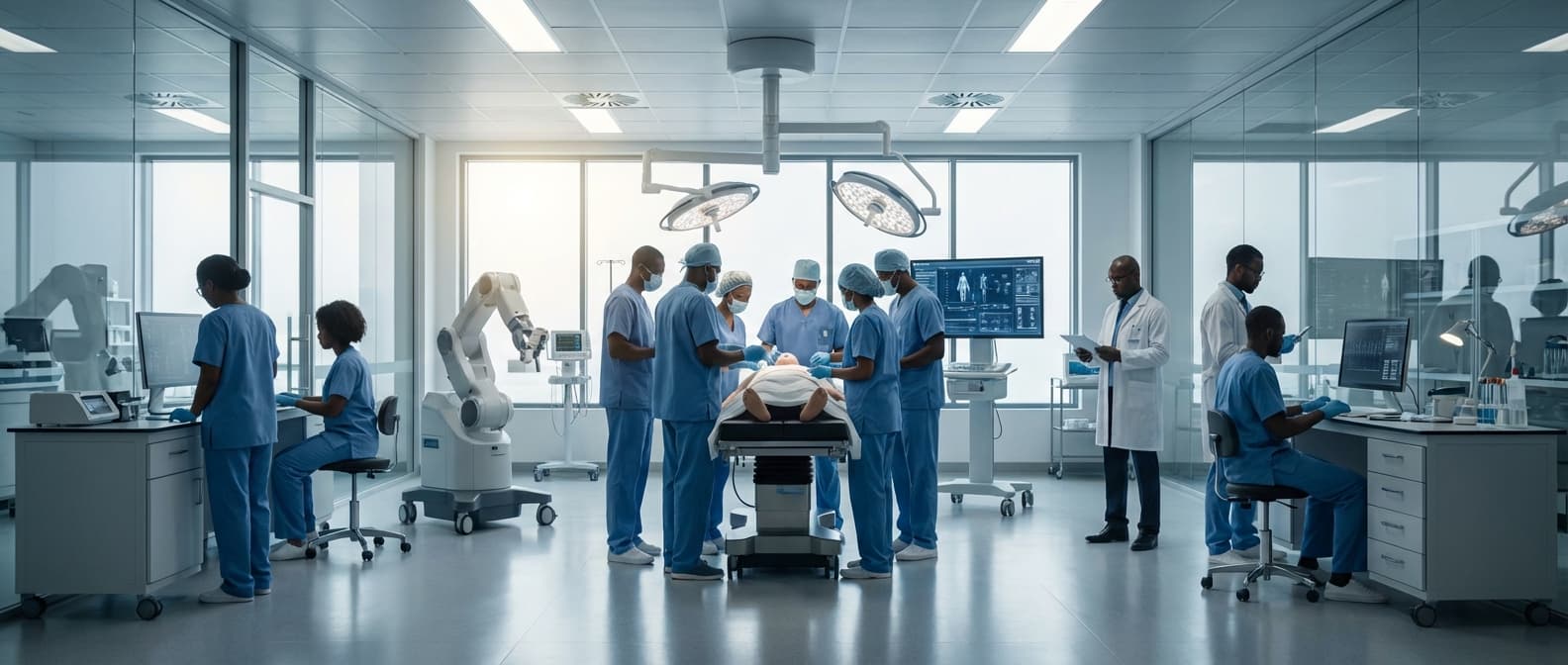
Biomedical Engineering Consulting in Mauritius
Engineering Excellence & Technical Support
Equipment selection, procurement and implementation consulting High-standard technical execution following OEM protocols and local regulatory frameworks.
AI-Powered Diagnostic Imaging Enhancement
Leveraging cutting-edge artificial intelligence algorithms to optimize the accuracy and efficiency of diagnostic imaging modalities (e.g., MRI, CT scans) for healthcare providers in Mauritius. Our solutions improve image quality, reduce scan times, and aid in the early detection of diseases, enhancing patient outcomes.
Custom Medical Device Design & Validation
Providing bespoke design, prototyping, and rigorous validation services for innovative medical devices tailored to the specific needs of the Mauritian healthcare sector. From point-of-care diagnostics to rehabilitation equipment, we ensure compliance with international regulatory standards and local requirements.
Biomaterial Integration & Tissue Engineering Solutions
Expertise in the application of advanced biomaterials for regenerative medicine and implantable devices. We consult on the selection, characterization, and integration of biocompatible materials, supporting the development of novel therapeutic solutions and improving the longevity of medical implants within the Mauritian context.
What Is Biomedical Engineering Consulting In Mauritius?
Biomedical Engineering Consulting in Mauritius refers to the provision of specialized technical expertise and strategic advice by qualified biomedical engineers to organizations operating within or interacting with the healthcare and life sciences sectors in the Republic of Mauritius. This service encompasses a broad spectrum of activities aimed at optimizing the design, implementation, utilization, and management of medical devices, equipment, and healthcare technologies. Consultants leverage their understanding of engineering principles, clinical applications, regulatory frameworks, and economic considerations to address complex challenges and facilitate innovation. The core objective is to enhance patient care, improve operational efficiency, ensure regulatory compliance, and drive technological advancement within the Mauritian healthcare ecosystem.
| Entity Requiring Service | Typical Needs Addressed | Illustrative Use Cases |
|---|---|---|
| Hospitals and Clinics (Public & Private) | Equipment procurement strategy, maintenance program optimization, infection control protocols for equipment, implementation of new diagnostic or therapeutic technologies, regulatory compliance audits, facility design for new wings or departments. | A private hospital seeks to upgrade its surgical suite with new minimally invasive robotic systems, requiring expertise in system integration, training, and compliance with international safety standards. A public hospital needs to establish a robust preventative maintenance schedule for its aging imaging equipment to minimize downtime. |
| Medical Device Manufacturers and Distributors | Product registration and market access, quality system implementation (ISO 13485), clinical validation studies, post-market surveillance strategies, regulatory submission preparation, supply chain optimization. | A local distributor of diagnostic equipment needs assistance navigating the Mauritian regulatory approval process for a new range of in-vitro diagnostic kits. An international manufacturer planning to export to Mauritius requires guidance on local labelling and documentation requirements. |
| Government Health Ministries and Agencies | National health technology assessment frameworks, procurement policies for medical equipment, development of clinical guidelines and standards, infrastructure development planning, workforce training needs assessment. | The Ministry of Health requires assistance in developing a national strategy for the adoption of Artificial Intelligence (AI) in diagnostic imaging. A health agency needs to establish a framework for evaluating the cost-effectiveness of new pharmaceutical delivery devices. |
| Research Institutions and Universities | Design and development of novel biomedical devices, grant proposal support for biomedical research, intellectual property protection, setting up specialized laboratories, material selection for biocompatibility. | A university research team is developing a novel prosthetic limb and requires consultation on biomaterial selection and mechanical design optimization. A research institute needs guidance on setting up a sterile manufacturing environment for early-stage medical device prototypes. |
| Insurance Companies and Third-Party Payers | Assessment of the clinical and economic value of medical devices and procedures, development of reimbursement policies, fraud detection related to medical equipment and services. | An insurance provider is evaluating the justification for covering a new high-cost therapeutic device by assessing its clinical efficacy and long-term economic impact compared to existing treatments. |
Key Components of Biomedical Engineering Consulting in Mauritius
- Medical Device Lifecycle Management: Guidance on selection, procurement, installation, validation, calibration, maintenance, and decommissioning of medical equipment.
- Regulatory Affairs and Compliance: Assistance with adherence to national and international standards (e.g., ISO 13485, MDR/IVDR), local regulatory body requirements, and quality management systems.
- Healthcare Technology Assessment (HTA): Evaluation of the clinical effectiveness, cost-effectiveness, and safety of new and existing medical technologies for informed decision-making.
- Facility Planning and Design: Input on the engineering aspects of hospital and clinic infrastructure, including medical gas systems, sterile processing departments, and imaging suites.
- Risk Management and Patient Safety: Development and implementation of strategies to identify, assess, and mitigate risks associated with medical device use and clinical workflows.
- Biomaterials and Device Development: Support for research and development of novel biomedical devices, prosthetics, and implants, including material selection and design optimization.
- Information Technology Integration: Advising on the integration of medical devices with hospital information systems (HIS), electronic health records (EHRs), and telemedicine platforms.
- Training and Education: Providing specialized training for healthcare professionals on the safe and effective use of medical equipment and technologies.
- Quality Assurance and Auditing: Establishing and maintaining robust quality management systems for medical device manufacturers and healthcare providers.
Who Needs Biomedical Engineering Consulting In Mauritius?
Biomedical engineering consulting in Mauritius serves a vital role in advancing healthcare technology, infrastructure, and operational efficiency. Our expertise bridges the gap between cutting-edge medical science and practical application within the Mauritian healthcare landscape. We cater to a diverse range of clients, from established medical institutions to emerging healthcare providers and government bodies, all striving to enhance patient care and medical innovation.
| Target Customer/Department | Key Needs & Services Provided |
|---|---|
| Hospitals & Clinics (Public & Private) | Procurement strategy for medical equipment, equipment lifecycle management, maintenance and repair optimization, clinical engineering department setup and training, technology assessment, space planning for new facilities, compliance with international standards, infection control technology integration. |
| Medical Device Manufacturers & Distributors | Market entry strategy, regulatory affairs guidance (local and international standards), product lifecycle management, technical support infrastructure development, sales and distribution channel optimization, post-market surveillance planning. |
| Research Institutions & Universities | Setting up and equipping research laboratories, selection of specialized research instrumentation, development of research protocols involving medical devices, grant proposal support for technology-related projects, interdisciplinary collaboration facilitation. |
| Government Health Ministries & Regulatory Bodies | Development of national healthcare technology strategies, establishment of medical device regulations and standards, procurement guidelines for public health facilities, health technology assessment frameworks, capacity building for regulatory personnel, public health infrastructure planning. |
| Healthcare Technology Startups | Product design and development consultation, prototyping and testing support, intellectual property strategy, regulatory pathway navigation, business plan development, market validation, fundraising support, manufacturing partnerships. |
| Insurance Companies | Risk assessment for medical equipment claims, evaluation of technology obsolescence, expert opinion on device malfunctions, cost-benefit analysis of new medical technologies for reimbursement, development of insurance policies related to medical devices. |
| Radiology Departments | Equipment selection (MRI, CT, X-ray, Ultrasound), radiation safety protocols and compliance, PACS/RIS integration, workflow optimization, maintenance contracts negotiation. |
| Surgical Departments | Operating room design and equipment planning, integration of surgical robotics and minimally invasive tools, sterile processing equipment optimization, surgical simulation training development. |
| Intensive Care Units (ICUs) | Selection and integration of life support systems, patient monitoring solutions, data management for critical care, alarm management systems, staff training on complex equipment. |
| Diagnostic Laboratories | Automated analyzers selection and implementation, quality control systems, laboratory information system (LIS) integration, biosafety cabinet installation and maintenance. |
Who Needs Biomedical Engineering Consulting in Mauritius?
- Hospitals and Clinics (Public & Private)
- Medical Device Manufacturers & Distributors
- Research Institutions & Universities
- Government Health Ministries & Regulatory Bodies
- Healthcare Technology Startups
- Insurance Companies (for risk assessment & claims)
Biomedical Engineering Consulting Process In Mauritius
Biomedical engineering consulting in Mauritius follows a structured workflow to ensure client needs are met effectively and efficiently, from the initial inquiry to the final execution of projects. This process is designed to provide expert advice and solutions across a range of healthcare technology and facility development needs.
| Phase | Key Activities | Deliverables |
|---|---|---|
| Inquiry & Initial Consultation | Client contact, needs assessment, proposal outline, NDA signing | Preliminary project scope, understanding of client needs |
| Proposal Development & Agreement | Detailed scope of work, cost estimation, negotiation, contract signing | Formal proposal, signed service agreement |
| Project Planning & Kick-off | Team assembly, detailed project plan, kick-off meeting, information gathering | Project plan, defined communication protocols, initial data |
| Execution & Analysis | Data collection & analysis, design & development, implementation support, testing & validation | Technical analyses, designs, implementation guidance, test results |
| Reporting & Recommendations | Interim reports, final report, presentation of findings, technical documentation | Comprehensive final report, actionable recommendations, project deliverables |
| Implementation Support & Handover | Assistance with implementation, training, project closure | Implemented solutions, trained personnel, project closure report |
| Post-Project Follow-up | Ongoing support, future consultations | Continued client satisfaction, potential for new engagements |
Biomedical Engineering Consulting Process in Mauritius
- 1. Inquiry & Initial Consultation:
- Client Contact: A potential client (e.g., hospital, clinic, government agency, medical device manufacturer) reaches out with a specific need or problem.
- Needs Assessment: The consulting firm gathers preliminary information about the client's requirements, objectives, and scope of the project.
- Proposal Outline: A basic understanding of the project's nature is established, leading to a preliminary scope of work and potential services.
- Confidentiality Agreement (NDA): If sensitive information is to be shared, an NDA is typically signed.
- 2. Proposal Development & Agreement:
- Detailed Scope of Work: The consulting firm develops a comprehensive proposal outlining the project objectives, deliverables, methodologies, timelines, and team expertise.
- Cost Estimation: A detailed breakdown of costs, including professional fees, expenses, and any other associated charges, is provided.
- Technical Specification Review: If applicable, the proposal will address the technical aspects and specifications of the project.
- Negotiation & Refinement: The client reviews the proposal, and discussions may occur to refine the scope, timeline, or budget.
- Contract Signing: Once both parties agree, a formal contract or service agreement is signed, legally binding the engagement.
- 3. Project Planning & Kick-off:
- Project Team Assembly: The consulting firm assigns a dedicated project team with the relevant expertise.
- Detailed Project Plan: A granular project plan is developed, including milestones, key performance indicators (KPIs), and risk management strategies.
- Kick-off Meeting: A formal meeting with the client and the project team to officially launch the project, align on goals, and establish communication protocols.
- Information Gathering & Site Visits: The team begins collecting detailed information, conducting site assessments, and understanding the existing infrastructure or operational context.
- 4. Execution & Analysis:
- Data Collection & Analysis: The core of the consulting work involves gathering relevant data, performing technical analyses, and evaluating options.
- Design & Development: If the project involves design (e.g., medical equipment procurement, facility layout), this phase focuses on creating and refining designs.
- Implementation Support: For projects involving the integration of new technologies or systems, the consultants provide guidance and support during implementation.
- Testing & Validation: Rigorous testing and validation are conducted to ensure solutions meet specifications and quality standards.
- Regular Progress Updates: The consulting team provides regular status updates to the client, highlighting progress, challenges, and upcoming activities.
- 5. Reporting & Recommendations:
- Interim Reports: As needed, interim reports are submitted to keep the client informed of findings and preliminary conclusions.
- Final Report & Deliverables: A comprehensive final report is prepared, detailing the project's outcomes, findings, analysis, and proposed solutions or recommendations.
- Presentation of Findings: The consulting team presents the final report and recommendations to the client, facilitating discussion and decision-making.
- Technical Documentation: All relevant technical documentation and specifications are provided to the client.
- 6. Implementation Support & Handover:
- Assistance with Implementation: The consultants may provide further support during the actual implementation of recommended solutions.
- Training & Knowledge Transfer: If required, training sessions are conducted for client staff on new equipment, systems, or processes.
- Project Closure: Once all deliverables are met and accepted by the client, the project is formally closed.
- Post-Project Review: A review may be conducted to assess the project's success and identify lessons learned for future engagements.
- 7. Post-Project Follow-up (Optional):
- Ongoing Support: In some cases, extended support or maintenance agreements may be established.
- Future Consultations: The client may engage the firm for future needs or follow-up projects based on the successful completion of the current engagement.
Biomedical Engineering Consulting Cost In Mauritius
Biomedical engineering consulting costs in Mauritius can vary significantly based on several key factors. These factors influence the overall pricing structure and the range of fees charged by consulting firms or individual experts. Understanding these elements is crucial for businesses and institutions seeking specialized biomedical engineering advice within the Mauritian context. The local currency, the Mauritian Rupee (MUR), is the standard for quoting these services. Common services range from device design and validation to regulatory affairs, quality management system implementation, and market access strategies within the Mauritian healthcare landscape.
| Service Type/Complexity | Typical Hourly Rate (MUR) | Typical Project Fee Range (MUR) |
|---|---|---|
| Initial Consultation & Needs Assessment (Simple) | 800 - 1,500 | 10,000 - 30,000 |
| Regulatory Strategy & Guidance (Standard Device) | 1,200 - 2,000 | 30,000 - 80,000 |
| Quality Management System (QMS) Setup (Basic) | 1,500 - 2,500 | 50,000 - 150,000 |
| Medical Device Design & Development (Conceptual/Early Stage) | 1,800 - 3,000 | 100,000 - 300,000+ |
| Validation & Verification Planning/Execution (Complex Device) | 2,000 - 3,500 | 150,000 - 500,000+ |
| Market Access & Business Development Strategy | 1,500 - 2,800 | 60,000 - 200,000 |
| Expert Witness / Litigation Support | 2,500 - 5,000+ | Negotiable / Per case basis |
Key Pricing Factors for Biomedical Engineering Consulting in Mauritius
- Scope and Complexity of the Project: Larger, more intricate projects requiring extensive research, development, or analysis will naturally command higher fees. This includes tasks like novel medical device design, comprehensive risk management analysis, or extensive clinical trial design.
- Consultant's Experience and Expertise: Senior biomedical engineers with a proven track record, specialized knowledge (e.g., in AI in healthcare, specific medical device categories, or advanced biomaterials), and a strong reputation will typically charge more than junior consultants.
- Project Duration: The estimated time required to complete the project is a primary driver of cost. Projects that are expected to take longer will incur higher overall fees, often billed on an hourly or daily basis.
- Regulatory Landscape Complexity: Navigating the regulatory pathways in Mauritius (e.g., for medical device registration, clinical investigations) can be complex and time-consuming, influencing consultant fees. This is especially true for novel or high-risk devices.
- Deliverables Required: The nature and volume of deliverables expected (e.g., detailed reports, design specifications, validation protocols, regulatory submissions) will impact the cost. The level of detail and polish required can also play a role.
- Resource Requirements: If the consultant needs to procure specialized equipment, software, or engage subcontractors, these costs will be factored into the overall price.
- Travel and Accommodation (if applicable): For on-site consultations or project-specific visits within Mauritius, travel and accommodation expenses will be added.
- Urgency of the Project: Expedited projects often come with a premium fee due to the need for rapid resource allocation and prioritization.
- Client's Size and Budget: While not always explicitly stated, established organizations with larger budgets might be quoted different rates than startups or smaller clinics, though ethical consulting practices aim for fair pricing.
- Intellectual Property Considerations: If the consulting work involves the creation of intellectual property, the terms and conditions surrounding ownership and licensing will influence the contract and cost.
Affordable Biomedical Engineering Consulting Options
Biomedical engineering consulting can be a significant investment for startups and established companies alike. Fortunately, there are various affordable options and strategies to maximize value. Understanding "value bundles" and employing smart cost-saving tactics are crucial for accessing expert guidance without breaking the bank. Value bundles group services together, often at a discounted rate, providing a more comprehensive and cost-effective solution than purchasing individual services. Cost-saving strategies involve careful planning, leveraging existing resources, and exploring alternative engagement models.
| Value Bundle Example | Included Services | Potential Cost Savings | Ideal For |
|---|---|---|---|
| Early-Stage Product Development Bundle | Feasibility assessment, prototyping guidance, initial regulatory pathway identification, market analysis overview | 10-20% reduction compared to individual service procurement | Startups and companies exploring new product concepts |
| Regulatory Compliance Accelerator | FDA/CE Mark submission strategy, design control documentation review, QMS implementation guidance, pre-submission meeting preparation | 15-25% reduction, streamlined regulatory process | Companies preparing for market entry or needing to address compliance gaps |
| Clinical Trial Readiness Package | Protocol development assistance, CRO selection guidance, site identification support, data management strategy | 10-15% reduction, faster trial initiation | Companies preparing to conduct clinical trials |
| Quality System Optimization | Gap analysis of existing QMS, SOP development/review, internal audit preparation, CAPA process enhancement | 10% reduction, improved operational efficiency | Companies seeking to improve their quality management system |
Affordable Biomedical Engineering Consulting Options & Strategies
- Value Bundles Explained: Grouping related services (e.g., regulatory strategy, product development, clinical trial design) into packages that offer a holistic approach and potential cost savings.
- Tiered Service Packages: Offering different levels of service (e.g., basic, standard, premium) to cater to varying budgets and needs, with lower tiers providing foundational support.
- Project-Based Consulting: Engaging consultants for specific, well-defined projects with clear deliverables and timelines, allowing for controlled expenditure.
- Retainer Agreements: For ongoing needs, a fixed monthly fee for a set number of hours or access to expertise, often more cost-effective than ad-hoc consulting for consistent support.
- Equity-Based Compensation (with caution): In some early-stage scenarios, consultants may accept a portion of their fee in equity, sharing in the company's future success.
- Freelance Platforms & Marketplaces: Utilizing platforms connecting businesses with independent biomedical engineering consultants, often offering competitive rates.
- University Partnerships & Student Projects: Collaborating with university research groups or sponsoring capstone projects for specific, lower-complexity tasks.
- On-Demand Expertise: Accessing specialized knowledge for short bursts of time through virtual consultations or micro-consulting services.
- Remote Consulting: Eliminating travel costs by engaging consultants who can provide services remotely.
- Clear Scope Definition: Precisely outlining project requirements and deliverables to avoid scope creep and unexpected charges.
- Leveraging Existing Internal Resources: Identifying tasks that can be handled internally to reduce the reliance on external consultants.
- Phased Project Approach: Breaking down large projects into smaller, manageable phases with distinct milestones and deliverables, allowing for reassessment and budget adjustments.
- Thorough Consultant Vetting: Researching and comparing multiple consultants to ensure competitive pricing and a strong fit for your needs.
- Pilot Projects: Starting with a small, low-risk pilot project to test a consultant's capabilities and refine the engagement model before committing to larger initiatives.
- Knowledge Transfer & Training: Ensuring consultants actively transfer knowledge to your internal team, building long-term capabilities and reducing future external dependencies.
Verified Providers In Mauritius
In Mauritius, a growing emphasis on quality healthcare has led to an increased demand for verified providers. Franance Health stands out as a leader in this space, offering a comprehensive network of credentialed healthcare professionals. Their rigorous vetting process ensures that all listed providers meet stringent quality and ethical standards, providing patients with peace of mind and access to reliable medical services. Choosing a verified provider through Franance Health means opting for expertise, safety, and a commitment to patient well-being. Their dedication to transparency and excellence makes them the premier choice for navigating the Mauritian healthcare landscape.
| Provider Type | Franance Health Verification | Benefits for Patients |
|---|---|---|
| Doctors (General Practitioners & Specialists) | Verification includes medical license, specialisation certifications, and peer reviews. | Access to qualified and experienced medical professionals, ensuring accurate diagnosis and effective treatment. |
| Hospitals & Clinics | Verification covers accreditation status, facility standards, equipment quality, and patient care protocols. | Safe and well-equipped healthcare facilities with a focus on high standards of patient care and hygiene. |
| Dentists | Verification includes dental board registration, specialisation (if any), and practice hygiene. | Reliable dental care from qualified professionals adhering to strict safety and sterilization protocols. |
| Pharmacists & Pharmacies | Verification checks for pharmacy licenses, adherence to dispensing regulations, and drug sourcing practices. | Ensures access to authentic medications dispensed by licensed and knowledgeable pharmacists. |
| Therapists & Allied Health Professionals | Verification includes relevant certifications, professional body memberships, and training. | Access to specialized therapeutic services from accredited and competent practitioners. |
Why Franance Health Credentials Matter:
- Rigorous Verification Process: Each provider undergoes a thorough background check and credential validation.
- Commitment to Quality: Ensures access to highly skilled and experienced healthcare professionals.
- Patient Safety Focus: Prioritizes the well-being and security of all patients.
- Transparency and Trust: Provides clear information about provider qualifications.
- Comprehensive Network: Offers a wide range of medical specialities to meet diverse needs.
Scope Of Work For Biomedical Engineering Consulting
This Scope of Work (SOW) outlines the services to be provided by [Consulting Firm Name] (hereinafter referred to as 'Consultant') to [Client Name] (hereinafter referred to as 'Client') for Biomedical Engineering Consulting. This SOW details the objectives, tasks, technical deliverables, and standard specifications for the engagement.
| Phase | Task Description | Technical Deliverables | Standard Specifications/References |
|---|---|---|---|
| Phase 1: Discovery & Requirements Gathering | Conduct in-depth interviews with Client stakeholders to understand project goals, existing infrastructure, and user needs. Review relevant documentation, including market research, existing designs, and regulatory landscape. Define detailed technical requirements and functional specifications. | Project Charter, Detailed Requirements Document (DRD), Stakeholder Analysis Report, Risk Identification Matrix | ISO 13485:2016 (Quality Management Systems for Medical Devices), FDA 21 CFR Part 820 (Quality System Regulation), IEC 60601 Series (Medical Electrical Equipment Standards) |
| Phase 2: Conceptual Design & Feasibility Study | Develop preliminary design concepts and explore various technological approaches. Conduct feasibility studies, including technical viability, cost-benefit analysis, and potential regulatory hurdles. Evaluate material selection and component sourcing options. Perform initial risk assessment of proposed concepts. | Conceptual Design Report, Feasibility Study Report, Preliminary Bill of Materials (BOM), Initial Risk Management Plan | Relevant IEEE Standards (e.g., IEEE 11073 for Medical Device Communication), ASTM Standards (e.g., for biomaterials and testing), Good Manufacturing Practices (GMP) |
| Phase 3: Detailed Design & Prototyping | Translate conceptual designs into detailed engineering specifications. Develop CAD models, schematics, and manufacturing drawings. Design and build functional prototypes. Conduct initial performance testing and validation of prototypes. Refine design based on prototype testing results. | Detailed Design Specifications, CAD Models and Drawings, Prototype Build Report, Initial Test Protocols and Reports, Updated Risk Management File | ASME Y14 Series (Dimensioning and Tolerancing), IPC Standards (e.g., for electronic assemblies), ISO 14971:2019 (Application of Risk Management to Medical Devices) |
| Phase 4: Verification & Validation (V&V) | Develop and execute comprehensive verification and validation test plans. Conduct bench testing, simulated use testing, and potentially animal studies (if applicable). Document all V&V activities and results. Prepare for regulatory submissions. | Verification and Validation (V&V) Plan, V&V Test Reports, Traceability Matrix, Final Risk Management Report, Draft Regulatory Submission Documentation | IEC 62304 (Medical device software – Software life cycle processes), IEC 60601-1-2 (Electromagnetic Compatibility), Specific user-specific validation protocols |
| Phase 5: Regulatory Support & Documentation | Assist the Client in preparing and compiling regulatory submission documentation. Provide technical input for regulatory inquiries. Ensure all documentation adheres to specified regulatory standards. Support the Client during regulatory agency reviews. | Technical Files, Regulatory Submission Packages (e.g., 510(k), PMA), Response to Regulatory Agency Inquiries, Final Design History File (DHF) Recommendations | Specific regulatory agency guidelines (e.g., FDA, EMA, CE Marking requirements), National and international standards relevant to the medical device classification |
Project Objectives
- To provide expert biomedical engineering analysis and recommendations for [Specific Project/Product].
- To ensure the proposed biomedical engineering solutions meet regulatory requirements and industry best practices.
- To identify potential risks and propose mitigation strategies throughout the project lifecycle.
- To facilitate knowledge transfer and empower the Client's internal team with relevant expertise.
Service Level Agreement For Biomedical Engineering Consulting
This Service Level Agreement (SLA) outlines the response times and uptime guarantees provided by [Consulting Company Name] for its Biomedical Engineering Consulting services. This SLA is an integral part of the Master Service Agreement (MSA) between [Consulting Company Name] and [Client Name].
| Service Tier/Request Type | Response Time Guarantee | Target Resolution Time (Initial Contact) | Uptime Guarantee (If applicable to specific systems/platforms) |
|---|---|---|---|
| Emergency Support | Within 1 hour (24/7/365) | Within 4 hours (initial assessment/plan) | N/A (Focus on immediate response) |
| Urgent Support | Within 4 business hours | Within 8 business hours (initial assessment/plan) | N/A (Focus on prompt response) |
| Standard Support | Within 1 business day | Within 2 business days (initial assessment/plan) | N/A (Focus on timely consultation) |
| Platform/System Uptime (e.g., dedicated client portal, remote monitoring tools) | N/A | N/A | 99.5% (excluding Scheduled Maintenance) |
Definitions
- Emergency: A critical failure of medical equipment, device, or system that poses an immediate risk to patient safety or significantly disrupts critical healthcare operations.
- Urgent Request: A request for assistance with a medical device, system, or process that requires prompt attention but does not pose an immediate threat to patient safety.
- Standard Request: A request for consultation, advice, or analysis that does not fall under Emergency or Urgent categories.
- Downtime: The cumulative period during which a service or system is unavailable and cannot be accessed by the Client due to reasons within the control of [Consulting Company Name].
- Response Time: The maximum time elapsed between [Consulting Company Name] receiving a request from the Client and acknowledging receipt of that request, initiating investigation or action.
- Resolution Time: The time elapsed between [Consulting Company Name] acknowledging a request and successfully resolving the issue or completing the requested service.
- Uptime: The percentage of time that the contracted consulting services or associated systems (if applicable) are available and functional.
- Scheduled Maintenance: Pre-announced periods during which services may be temporarily unavailable for updates, upgrades, or essential maintenance. This will be communicated at least [Number] business days in advance.
Frequently Asked Questions

Ready when you are
Let's scope your Biomedical Engineering Consulting in Mauritius project in Mauritius.

Scaling healthcare logistics and technical systems across the entire continent.