
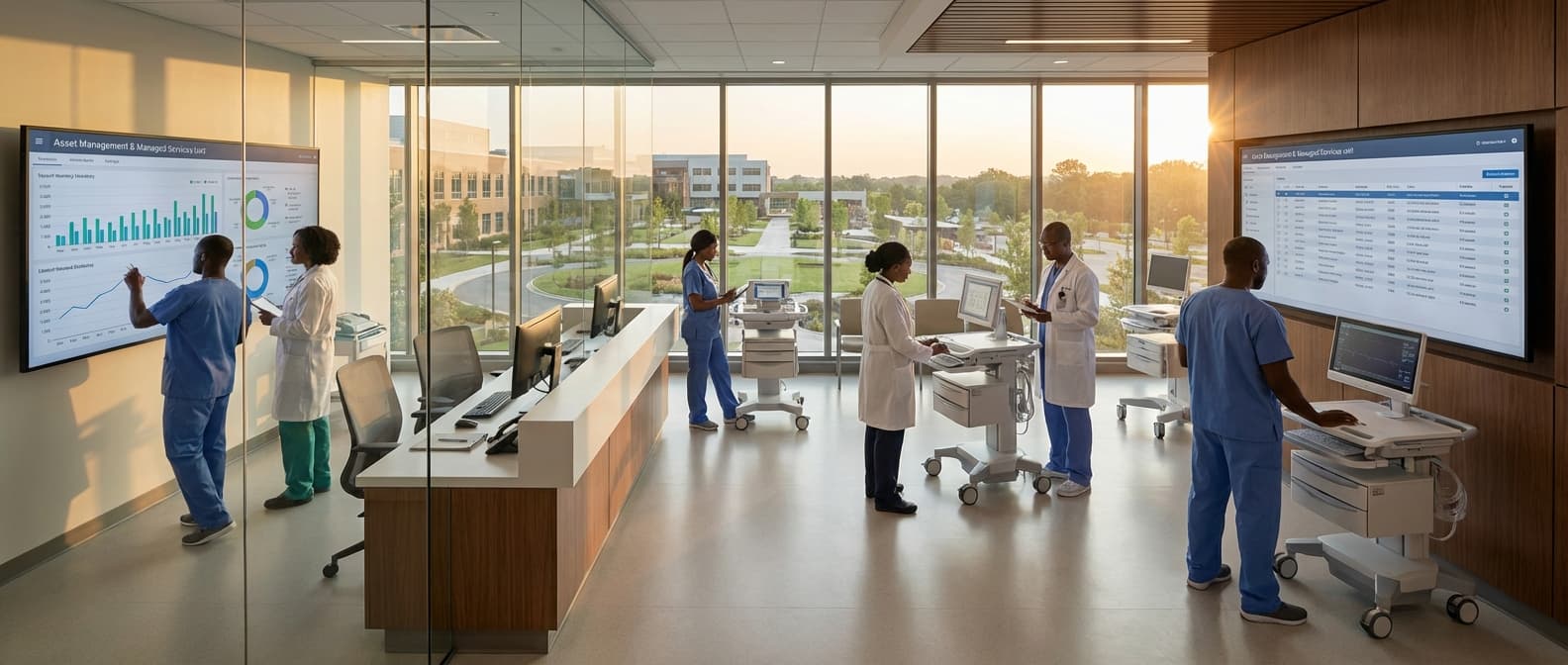
Maintenance KPI Reporting Service (Uptime/MTBF/MTTR) in Mauritius
Engineering Excellence & Technical Support
Maintenance KPI Reporting Service (Uptime/MTBF/MTTR) High-standard technical execution following OEM protocols and local regulatory frameworks.
Real-time Uptime Monitoring
Gain instant visibility into your asset uptime across all your operations in Mauritius. Our service provides live dashboards, empowering you to proactively identify and address disruptions, minimizing costly downtime and maximizing production output.
Actionable MTBF Insights
Unlock the power of Mean Time Between Failures (MTBF) analytics for your Mauritian assets. We deliver detailed reports that pinpoint recurring issues and equipment vulnerabilities, enabling data-driven maintenance strategies to prevent future breakdowns and extend asset lifespan.
Optimized MTTR Reduction
Streamline your repair processes with our Mean Time To Repair (MTTR) optimization features. Our reports highlight bottlenecks in your maintenance workflow, facilitating faster diagnoses and quicker resolutions for your teams in Mauritius, leading to reduced repair times and increased operational efficiency.
What Is Maintenance Kpi Reporting Service (Uptime/mtbf/mttr) In Mauritius?
Maintenance KPI Reporting Service (Uptime/MTBF/MTTR) refers to a specialized offering focused on the systematic collection, analysis, and presentation of key performance indicators (KPIs) related to the operational availability and reliability of assets and systems. In the Mauritian context, this service caters to organizations that rely on the continuous functioning of their infrastructure, equipment, or software. The core objective is to provide actionable insights into maintenance effectiveness, identify areas for improvement, and drive strategic decisions to optimize operational uptime and reduce costly downtime. This involves the definition, measurement, and reporting of critical metrics such as Uptime (percentage of time a system is operational), Mean Time Between Failures (MTBF - average time a repairable system operates between breakdowns), and Mean Time To Repair (MTTR - average time it takes to repair a failed system).
| Who Needs This Service | Typical Use Cases | ||||||
|---|---|---|---|---|---|---|---|
| Manufacturing Plants: Facilities with production lines, machinery, and complex operational processes where continuous operation is paramount for meeting production targets and minimizing waste. | Telecommunications Providers: Companies responsible for maintaining the uptime of critical network infrastructure (base stations, data centers, fiber optic networks) to ensure uninterrupted service delivery to customers. | Power Generation and Distribution Companies: Utilities managing power plants, substations, and transmission grids, where service reliability and minimizing outages are critical for public welfare and economic stability. | Logistics and Transportation Companies: Organizations operating fleets of vehicles, warehouses, and distribution centers, requiring high asset availability for efficient movement of goods. | Information Technology (IT) Departments: Businesses relying on server farms, cloud infrastructure, and critical business applications that demand high availability and rapid recovery from failures. | Healthcare Institutions: Hospitals and clinics requiring continuous operation of medical equipment, life support systems, and IT infrastructure to provide uninterrupted patient care. | Hospitality and Tourism Sector: Hotels and resorts dependent on the reliable functioning of HVAC systems, elevators, electrical infrastructure, and IT systems for guest satisfaction and operational efficiency. | Water and Wastewater Treatment Facilities: Municipalities and private entities managing essential infrastructure where continuous operation is vital for public health and environmental protection. |
| Downtime Reduction Initiatives: Identifying the primary causes of equipment failures and implementing targeted maintenance strategies to increase Mean Time Between Failures (MTBF). | Improving Maintenance Efficiency: Analyzing Mean Time To Repair (MTTR) to streamline repair processes, optimize spare parts inventory, and enhance technician skillsets. | Asset Performance Management: Tracking the overall health and performance of critical assets to make informed decisions about refurbishment, replacement, or decommissioning. | Budgetary Planning and Optimization: Providing data-driven insights to forecast maintenance costs, justify budget allocations, and identify areas for cost savings. | Service Level Agreement (SLA) Compliance: Monitoring and reporting on Uptime to ensure adherence to contractual obligations with clients or service providers. | Risk Management: Assessing the impact of potential failures and implementing preventative measures to mitigate operational and financial risks. | Capital Expenditure Justification: Using historical performance data to support investment decisions in new equipment or upgrades based on projected improvements in reliability and uptime. | Lean Manufacturing and Operational Excellence: Integrating KPI data into broader continuous improvement programs to enhance overall operational efficiency and productivity. |
What This Service Involves:
- Data Acquisition: Implementing robust mechanisms for collecting real-time or historical data from various sources, including sensor networks, SCADA systems, enterprise resource planning (ERP) systems, incident logs, and manual operator inputs.
- KPI Definition and Configuration: Establishing precise definitions for Uptime, MTBF, MTTR, and other relevant maintenance KPIs, tailored to the specific industry and operational context of the client in Mauritius.
- Data Processing and Analysis: Employing statistical methods and analytical tools to process raw data, calculate KPIs, identify trends, detect anomalies, and perform root cause analysis of failures.
- Reporting and Visualization: Generating comprehensive reports, dashboards, and visualizations that clearly communicate KPI performance, historical trends, and areas of concern to stakeholders.
- Benchmarking and Performance Evaluation: Comparing performance against industry benchmarks or internal targets to assess effectiveness and identify opportunities for optimization.
- Predictive Analytics (Optional but Recommended): Integrating predictive modeling techniques to forecast potential failures, enabling proactive maintenance interventions and further enhancing uptime.
- Consultation and Recommendations: Providing expert advice and actionable recommendations based on the analyzed data to improve maintenance strategies, spare parts management, technician training, and overall asset lifecycle management.
Who Needs Maintenance Kpi Reporting Service (Uptime/mtbf/mttr) In Mauritius?
In Mauritius, businesses across various sectors recognize the critical importance of maintaining operational efficiency and minimizing costly downtime. A robust Maintenance KPI Reporting Service, focusing on metrics like Uptime, Mean Time Between Failures (MTBF), and Mean Time To Repair (MTTR), is essential for optimizing asset performance, reducing operational expenses, and ensuring customer satisfaction. This service provides actionable insights, enabling organizations to proactively address potential issues, improve maintenance strategies, and ultimately enhance their bottom line. Companies that rely heavily on their physical assets to generate revenue, or where equipment failure can have significant safety or financial repercussions, are prime candidates for this service.
| Target Customer Segment | Key Departments Benefiting | Primary Needs & Benefits |
|---|---|---|
| Manufacturing | Production, Maintenance, Operations, Quality Assurance | Maximize production uptime, reduce unexpected breakdowns, optimize spare parts inventory, improve overall equipment effectiveness (OEE). |
| Energy & Utilities | Operations, Maintenance, Asset Management, Safety | Ensure continuous power/water supply, minimize service interruptions, extend asset lifespan, enhance grid reliability, comply with regulatory standards. |
| Telecommunications | Network Operations, Field Maintenance, Infrastructure Management | Guarantee network availability, minimize service outages for subscribers, improve call/data quality, optimize response times for repairs. |
| Transportation & Logistics | Fleet Management, Operations, Maintenance, Safety | Ensure timely delivery of goods and services, minimize vehicle/equipment downtime, reduce operational costs, enhance safety for personnel and public. |
| Hospitality & Tourism | Facilities Management, Engineering, Operations | Maintain guest comfort and satisfaction, ensure reliable operation of amenities (HVAC, elevators, kitchens), reduce impact of breakdowns on guest experience. |
| Healthcare Facilities | Biomedical Engineering, Facilities Management, Operations | Ensure uninterrupted operation of critical medical equipment, maintain patient safety, reduce downtime of life-support systems, optimize equipment lifecycle management. |
| Large-Scale Agriculture | Farm Management, Operations, Equipment Maintenance | Maximize crop yields by ensuring continuous operation of machinery, reduce losses due to equipment failure, optimize maintenance schedules for planting and harvesting seasons. |
| Construction & Mining | Operations, Plant & Fleet Management, Maintenance | Keep project timelines on track, minimize costly delays due to equipment breakdown, ensure operator safety, optimize utilization of heavy machinery. |
| Financial Institutions | IT Operations, Infrastructure Management, Business Continuity Planning | Ensure 24/7 availability of critical IT systems (ATMs, trading platforms, core banking), minimize financial losses from system downtime, maintain customer trust. |
| Government & Public Service | Infrastructure Management, Public Works, Emergency Services | Ensure reliable provision of essential services (transportation networks, utilities, waste management), maintain public safety, optimize public asset performance. |
Target Customers & Departments in Mauritius Needing Maintenance KPI Reporting Service
- Manufacturing Plants & Factories
- Energy & Utilities (Power Generation, Water Treatment)
- Telecommunications Providers
- Transportation & Logistics Companies (Ports, Airports, Shipping)
- Hospitality & Tourism (Hotels, Resorts)
- Healthcare Facilities (Hospitals, Clinics)
- Large-Scale Agricultural Operations
- Construction & Mining Companies
- Financial Institutions (for critical IT infrastructure)
- Government & Public Service Infrastructure
Maintenance Kpi Reporting Service (Uptime/mtbf/mttr) Process In Mauritius
This document outlines the standard workflow for the Maintenance KPI Reporting Service (Uptime/MTBF/MTTR) provided in Mauritius, from initial client inquiry through the successful execution and delivery of reports. This process ensures clarity, efficiency, and accurate reporting of critical maintenance performance indicators.
| Stage | Description | Key Activities | Responsible Party | Deliverables | Timeline (Typical) |
|---|---|---|---|---|---|
| Client expresses interest in the Maintenance KPI Reporting Service. | Receive and acknowledge inquiry. Schedule initial consultation. Understand client's specific needs, existing data sources, and reporting requirements (KPIs, frequency, format). Discuss service scope, pricing, and contract terms. | Service Provider (Sales/Consultant) | Initial proposal, scope of work document, pricing quote. | 1-3 business days |
| Formalizing the service agreement based on the consultation. | Submit a detailed proposal outlining service deliverables, KPIs to be reported, data collection methods, reporting frequency, technology platform (if applicable), and cost. Client reviews and approves the proposal. Contract negotiation and signing. | Service Provider (Sales/Legal), Client | Signed Service Agreement/Contract. | 3-7 business days |
| Understanding the client's current data landscape. | Identify and assess existing data sources (CMMS, SCADA, ERP, manual logs, IoT sensors). Determine data accessibility, format, and quality. Plan data integration strategy, including any necessary API configurations or data mapping. | Service Provider (Technical Team), Client (IT/Maintenance) | Data source inventory, data integration plan, mapping documents. | 5-10 business days |
| Establishing the infrastructure for data flow. | Implement data connectors or establish data transfer mechanisms (e.g., SFTP, API integration, direct database access). Configure reporting dashboards or templates within the service platform. Set up user access for the client. | Service Provider (Technical Team) | Configured data pipelines, reporting platform setup, user accounts. | 7-14 business days |
| Populating the system with historical and ongoing data. | Ingest historical data as per agreement. Begin collecting real-time or scheduled data. Perform initial data validation and cleansing to ensure accuracy and completeness. Resolve any data discrepancies. | Service Provider (Technical Team) | Validated initial dataset, data quality reports. | 5-10 business days |
| Processing data to derive meaningful insights. | Automate the calculation of defined KPIs (Uptime, MTBF, MTTR) based on ingested data. Generate reports in the agreed-upon format (dashboards, PDF, Excel, etc.) for the specified reporting period. | Service Provider (Reporting Engine/Software) | Calculated KPI data, draft reports. | Ongoing (daily/weekly/monthly as per agreement) |
| Presenting the findings to the client. | Review generated reports for accuracy and clarity. Deliver reports to the client through the agreed-upon channel (email, secure portal, presentation). Schedule and conduct review meetings to discuss findings, trends, and anomalies. | Service Provider (Account Manager/Analyst), Client | Finalized KPI reports, meeting minutes, action items. | 1-2 business days after generation |
| Ensuring client satisfaction and optimizing the service. | Gather feedback from the client on the reports and service. Identify areas for improvement in data collection, calculation, or reporting. Implement adjustments to enhance service delivery and reporting accuracy. | Service Provider (Account Manager/Technical Team), Client | Service improvement plan, updated reporting configurations (if necessary). | Ongoing |
Key Maintenance KPIs Explained
- Uptime: The percentage of time a piece of equipment or system is available and operational. Calculated as (Total Operational Time - Downtime) / Total Operational Time * 100%.
- Mean Time Between Failures (MTBF): The average time elapsed between inherent failures of a repairable system during normal operation. Calculated as Total Operational Time / Number of Failures.
- Mean Time To Repair (MTTR): The average time taken to repair a failed component or system. Calculated as Total Downtime / Number of Repairs.
Maintenance Kpi Reporting Service (Uptime/mtbf/mttr) Cost In Mauritius
The cost of a Maintenance KPI Reporting Service (Uptime, Mean Time Between Failures (MTBF), Mean Time To Repair (MTTR)) in Mauritius can vary significantly depending on several factors. This service is crucial for optimizing operational efficiency, minimizing downtime, and improving the longevity of assets. Factors influencing the pricing include the complexity of the systems being monitored, the volume of data generated, the level of customization required, the vendor's expertise and reputation, and the specific reporting features and analytical capabilities offered. For instance, monitoring a few critical machines will be less expensive than a comprehensive system for an entire factory. Similarly, basic dashboards with standard reports will differ in price from advanced predictive analytics and AI-driven insights. The pricing is typically structured on a subscription basis (monthly or annually), or sometimes as a project-based fee for initial setup and customization.
| Service Level/Scope | Estimated Monthly Cost (MUR) | Typical Features Included |
|---|---|---|
| Basic Reporting (Uptime, MTBF, MTTR for a few assets) | MUR 8,000 - MUR 25,000 | Standard dashboards, basic data visualization, historical data (e.g., 1 year), email alerts. |
| Standard Reporting with Customization (Multiple assets, some integration) | MUR 25,000 - MUR 70,000 | Customizable reports, integration with one or two systems (e.g., CMMS), user-defined KPIs, multi-user access, advanced historical data retention. |
| Advanced Analytics and Enterprise Solutions (Extensive assets, complex integration, predictive capabilities) | MUR 70,000 - MUR 200,000+ | Predictive maintenance algorithms, AI-driven insights, root cause analysis tools, seamless ERP/CMMS integration, real-time monitoring, dedicated account management, mobile access, extensive data warehousing. |
| One-Time Setup & Integration Fee (Highly variable) | MUR 50,000 - MUR 500,000+ | Dependent on the complexity of integration, custom development, and initial data migration. |
Key Pricing Factors for Maintenance KPI Reporting Services in Mauritius
- {"name":"Scope and Scale of Monitoring","description":"The number and type of assets or systems being monitored directly impacts cost. More assets and complex systems require more data collection points and processing power."}
- {"name":"Data Volume and Frequency","description":"Higher volumes of data and more frequent data collection (e.g., real-time vs. daily updates) increase the cost of storage, processing, and analysis."}
- {"name":"Customization and Integration Needs","description":"Tailoring reports to specific business needs, integrating with existing ERP or CMMS systems, and developing custom dashboards will add to the overall expense."}
- {"name":"Level of Analytics and Features","description":"Basic reporting of Uptime, MTBF, and MTTR is standard. Advanced features like predictive maintenance, root cause analysis, trend forecasting, and AI-driven recommendations will command higher prices."}
- {"name":"Vendor Expertise and Support","description":"Reputable vendors with a proven track record, specialized knowledge in industrial maintenance, and comprehensive customer support will typically charge more."}
- {"name":"Implementation and Training","description":"Initial setup, configuration, and user training are often separate costs that can vary based on the complexity of the solution and the vendor's approach."}
- {"name":"Contract Length and Service Level Agreements (SLAs)","description":"Longer contract terms might offer discounts, while stringent SLAs guaranteeing specific uptime and response times can influence pricing."}
Affordable Maintenance Kpi Reporting Service (Uptime/mtbf/mttr) Options
Our Affordable Maintenance KPI Reporting Service provides businesses with crucial insights into their operational efficiency, focusing on key metrics like Uptime, Mean Time Between Failures (MTBF), and Mean Time To Repair (MTTR). We offer flexible value bundles and cost-saving strategies to ensure you get the data you need without breaking the bank. Understanding these KPIs is vital for proactive maintenance, minimizing downtime, and optimizing resource allocation, ultimately leading to significant cost reductions and improved productivity.
| Feature/Metric | Bronze Tier | Silver Tier | Gold Tier |
|---|---|---|---|
| Uptime Reporting | Basic Monthly Reports | Weekly Reports + Trend Analysis | Real-time Dashboards + Predictive Alerts |
| MTBF Calculation | Standard Calculation | Root Cause Analysis Support | Advanced Root Cause Analysis Tools |
| MTTR Calculation | Standard Calculation | Bottleneck Identification | Automated Repair Workflow Recommendations |
| Data Visualization | Standard Charts & Graphs | Customizable Dashboards | Interactive & Drill-down Reports |
| Reporting Frequency | Monthly | Weekly/Monthly | Real-time & On-Demand |
| Support Level | Email Support | Email & Phone Support | Dedicated Account Manager |
| Cost-Saving Strategies Enabled | Downtime Identification | Resource Optimization | Proactive Maintenance Planning, Reduced Spare Parts Inventory |
Value Bundles & Features
- {"title":"Bronze Tier: Essential Insights","description":"Ideal for small businesses or those new to KPI reporting. Focuses on core metrics and basic visualization."}
- {"title":"Silver Tier: Comprehensive Analysis","description":"Suitable for growing businesses requiring deeper dives. Includes trend analysis and comparative reporting."}
- {"title":"Gold Tier: Advanced Optimization","description":"For larger organizations demanding strategic insights. Offers predictive analytics, custom dashboards, and integration capabilities."}
- {"title":"Custom Bundle: Tailored Solutions","description":"We can design a package specifically to meet your unique reporting needs and budget constraints."}
Verified Providers In Mauritius
In Mauritius, ensuring you receive quality healthcare means choosing providers with verified credentials. Franance Health stands out as a premier network, meticulously vetting its healthcare professionals to guarantee a high standard of care. Their commitment to transparency and excellence makes them the best choice for your health needs. This section will delve into what makes Franance Health's credentials so significant and why they represent a superior option in the Mauritian healthcare landscape.
| Credential Type | Verification Standard | Franance Health Assurance |
|---|---|---|
| Medical Licenses | Current, valid and recognized by Mauritian authorities. | Franance Health confirms active and uncompromised licenses for all practitioners. |
| Educational Qualifications | Accredited institutions, relevant degrees and specializations. | Verification of degrees and diplomas from reputable medical schools globally. |
| Professional Certifications | Specialty-specific certifications and board approvals. | Confirmation of all relevant certifications for specialized medical services. |
| Professional History | Clean disciplinary record, substantial experience. | Thorough background checks and reference verifications for all providers. |
| Continuing Medical Education (CME) | Participation in ongoing training and development. | Franance Health promotes and monitors CME participation to ensure up-to-date knowledge. |
Why Franance Health Credentials Matter
- Rigorous Verification Process: Franance Health employs a stringent multi-step verification for all its affiliated providers. This includes checking medical licenses, educational qualifications, certifications, and professional histories to ensure they meet the highest benchmarks.
- Specialized Expertise: The network prioritizes providers with proven expertise in their respective fields, from general practitioners to highly specialized surgeons and therapists. This ensures you're matched with the right professional for your specific health concern.
- Commitment to Continuous Improvement: Franance Health encourages and often mandates ongoing professional development for its network. This means providers stay updated with the latest medical advancements and treatment protocols.
- Patient-Centric Approach: Verified providers within the Franance Health network are committed to a patient-centric approach, focusing on personalized care, clear communication, and ethical medical practices.
- Trust and Reliability: The "verified" status by Franance Health offers a significant layer of trust and reliability, alleviating the burden of patients having to independently research and validate a provider's credentials.
Scope Of Work For Maintenance Kpi Reporting Service (Uptime/mtbf/mttr)
This Scope of Work (SOW) outlines the requirements for a Maintenance KPI Reporting Service, focusing on critical metrics such as Uptime, Mean Time Between Failures (MTBF), and Mean Time To Repair (MTTR). The service aims to provide accurate, timely, and actionable insights into asset reliability and maintenance effectiveness. The technical deliverables will include a structured reporting framework, data processing capabilities, and visualization tools, all adhering to standard specifications for data integrity and performance. This service is crucial for optimizing maintenance strategies, reducing operational downtime, and improving overall asset performance.
| Deliverable Type | Description | Standard Specifications | Format/Tools |
|---|---|---|---|
| Data Collection & Integration Framework | Establish a robust mechanism for collecting relevant data from various sources (e.g., CMMS, SCADA, IoT sensors) related to asset operation, failures, and maintenance activities. | Data integrity checks, validation rules, automated data ingestion, real-time or near real-time data availability, secure data transfer protocols (e.g., SFTP, API). | Custom scripts, ETL tools, API integrations, secure databases. |
| KPI Calculation Engine | Develop and implement algorithms for accurate calculation of Uptime, MTBF, and MTTR based on collected data. | Predefined calculation logic adhering to industry best practices, handling of edge cases (e.g., planned downtime, partial failures), auditable calculation steps. | SQL stored procedures, Python/R scripts, dedicated BI calculation engines. |
| Reporting Dashboard | Design and develop interactive dashboards for visualizing the calculated KPIs. | User-friendly interface, customizable views, drill-down capabilities, clear graphical representations (charts, graphs), performance metrics (e.g., load times < 5 seconds). | Business Intelligence (BI) platforms (e.g., Tableau, Power BI, QlikView), custom web applications. |
| Historical Data & Trend Analysis | Provide access to historical KPI data and tools for trend analysis to identify patterns and forecast future performance. | Configurable historical data retention policies (e.g., 2 years minimum), trend line visualization, anomaly detection highlighting. | BI platforms, historical data warehouses. |
| Automated Alerting System | Implement an alerting mechanism to notify stakeholders of significant deviations from target KPIs or critical failure events. | Configurable thresholds, customizable notification channels (email, SMS, in-app), notification frequency controls. | BI platform alerting features, integration with notification services. |
| Documentation & Training | Provide comprehensive documentation for the reporting system, including data sources, calculation logic, and user guides. Offer training sessions for end-users. | Clear, concise, and up-to-date documentation, user manuals, administrator guides, multi-format training materials (presentations, videos). | PDF documents, online knowledge bases, live training sessions. |
| Regular Report Generation | Deliver periodic reports (e.g., daily, weekly, monthly) summarizing KPI performance and key insights. | Standardized report templates, ability to export reports in various formats (PDF, CSV, Excel), scheduled report delivery. | BI platform reporting features, automated report scheduling. |
| Data Security & Access Control | Ensure the security of all collected and processed data, implementing role-based access control. | Encryption of data at rest and in transit, regular security audits, compliance with relevant data protection regulations (e.g., GDPR, CCPA). | Database security features, network security measures, authentication/authorization protocols. |
Key Performance Indicators (KPIs) to be Reported
- Uptime: The percentage of time that a system or asset is operational and available for use. This is a primary indicator of asset reliability and operational readiness.
- Mean Time Between Failures (MTBF): The average time elapsed between inherent failures of a repairable system or component during normal operation. A higher MTBF indicates greater reliability.
- Mean Time To Repair (MTTR): The average time it takes to repair a failed system or component and return it to operational status. A lower MTTR indicates efficient maintenance and repair processes.
Service Level Agreement For Maintenance Kpi Reporting Service (Uptime/mtbf/mttr)
This Service Level Agreement (SLA) outlines the terms and conditions for the Maintenance KPI Reporting Service, specifically focusing on Uptime, Mean Time Between Failures (MTBF), and Mean Time To Repair (MTTR). It defines the expected performance standards, response times, and uptime guarantees provided by the service provider to the client.
| Service Component | Uptime Guarantee | Response Time (Incident Reported) | Resolution Time Target |
|---|---|---|---|
| Reporting Service Availability (Core Functionality) | 99.9% | 1 Business Hour | 4 Business Hours |
| Data Ingestion and Processing | 99.5% | 2 Business Hours | 6 Business Hours |
| Report Generation and Delivery | 99.0% | 2 Business Hours | 8 Business Hours |
Key Performance Indicators (KPIs) and Definitions
- Uptime: The percentage of time the Reporting Service is operational and accessible to the client. Calculated as (Total Time - Downtime) / Total Time.
- Mean Time Between Failures (MTBF): The average time elapsed between inherent failures of a repairable system during normal operation. For this service, it refers to the average time the reporting system is fully functional between reported incidents.
- Mean Time To Repair (MTTR): The average time required to repair a system or component that has failed. For this service, it refers to the average time taken to resolve a reported incident and restore full reporting functionality.
Frequently Asked Questions

Ready when you are
Let's scope your Maintenance KPI Reporting Service (Uptime/MTBF/MTTR) in Mauritius project in Mauritius.

Scaling healthcare logistics and technical systems across the entire continent.