
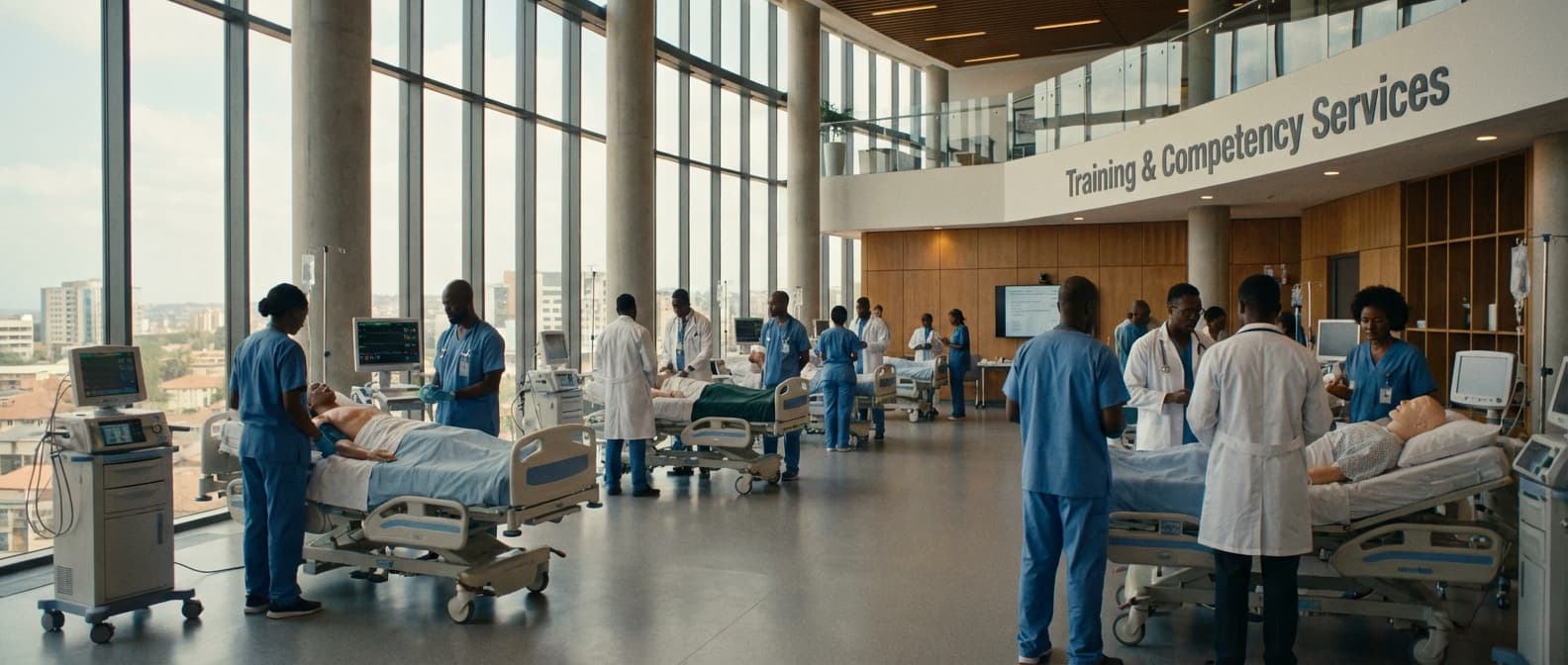
Ventilator User Training Service (Nurses) in Mauritania
Engineering Excellence & Technical Support
Ventilator User Training Service (Nurses) High-standard technical execution following OEM protocols and local regulatory frameworks.
Mastering Ventilator Setup and Configuration
Gain proficiency in the rapid and accurate setup of various ventilator models common in Mauritanian healthcare settings, including initial settings, alarm parameter configuration, and pre-use checks, ensuring patient safety and optimal ventilation from the outset.
Optimizing Ventilation Modes for Diverse Patient Needs
Understand and expertly apply key ventilation modes (e.g., AC, SIMV, CPAP) to tailor respiratory support for a wide range of Mauritanian patient populations, considering factors like respiratory drive, lung mechanics, and underlying pathologies.
Advanced Patient Monitoring and Troubleshooting
Develop skills in continuously monitoring ventilator waveforms, patient-ventilator synchrony, and physiological parameters to detect early signs of distress or complications, and confidently troubleshoot common ventilator alarms and malfunctions.
What Is Ventilator User Training Service (Nurses) In Mauritania?
Ventilator User Training Service (Nurses) in Mauritania refers to a specialized educational program designed to equip registered nurses with the essential knowledge and practical skills required for the safe and effective operation, monitoring, and management of mechanical ventilators in a clinical setting within the Republic of Mauritania. This service is critical for ensuring patient safety, optimizing therapeutic outcomes, and addressing the healthcare workforce's competency gaps in advanced respiratory support.
| Target Audience | Rationale for Need | Typical Use Cases |
|---|---|---|
| Registered Nurses (RNs) in Mauritania, particularly those working in Critical Care Units (ICUs), Emergency Departments (EDs), Operating Rooms (ORs), and Neonatal Intensive Care Units (NICUs). | To ensure competent and safe management of patients requiring mechanical ventilation, thereby reducing patient morbidity and mortality. Addresses a potential shortage of highly specialized critical care nursing staff. Facilitates the adoption of advanced medical technologies and adherence to international standards of care. Supports healthcare infrastructure development and self-sufficiency in critical care provision. | Post-operative patients requiring respiratory support. Patients with severe pneumonia, Acute Respiratory Distress Syndrome (ARDS), exacerbations of Chronic Obstructive Pulmonary Disease (COPD), or asthma. Neonates and pediatric patients with respiratory distress. Patients undergoing surgical procedures requiring controlled ventilation. Emergency response situations involving mass casualties or respiratory epidemics. |
Key Components of Ventilator User Training Service (Nurses) in Mauritania:
- Foundational Principles of Mechanical Ventilation: Understanding respiratory physiology, pathophysiology of respiratory failure, and the mechanics of breathing.
- Ventilator Modes and Settings: Comprehensive instruction on various ventilation modes (e.g., Volume Control, Pressure Control, Assist Control, Synchronized Intermittent Mandatory Ventilation), including initiation, adjustment, and interpretation of settings.
- Interface Management: Training on the selection, application, and maintenance of different patient interfaces such as endotracheal tubes, tracheostomy tubes, and non-invasive ventilation masks.
- Monitoring and Assessment: Protocols for continuous patient monitoring, including vital signs, blood gases, waveform analysis, and alarm management.
- Troubleshooting and Problem-Solving: Scenario-based training for identifying and resolving common ventilator-related complications and equipment malfunctions.
- Weaning and Extubation: Strategies and criteria for the safe and timely discontinuation of mechanical ventilation.
- Infection Control and Hygiene: Adherence to best practices for preventing ventilator-associated pneumonia (VAP) and maintaining equipment sterility.
- Documentation and Communication: Accurate recording of ventilator settings, patient responses, and effective interdisciplinary communication.
Who Needs Ventilator User Training Service (Nurses) In Mauritania?
This document outlines the critical need for Ventilator User Training Services for nurses in Mauritania. Effective and safe utilization of ventilators is paramount for patient care, especially in critical settings. Training ensures nurses possess the necessary knowledge and skills to operate these complex devices, leading to improved patient outcomes and reduced risks.
| Customer Segment | Primary Department/Setting | Key Training Needs | Rationale for Training |
|---|---|---|---|
| Registered Nurses | Intensive Care Units (ICUs) | Ventilator modes, settings optimization, patient monitoring, alarm management, weaning protocols, troubleshooting. | Directly manage critically ill patients requiring mechanical ventilation, where precise operation is vital for survival and recovery. |
| Registered Nurses | Emergency Departments (EDs)/A&E | Rapid initiation of ventilation, understanding basic settings for initial stabilization, safe transport of ventilated patients. | Initial management of patients with acute respiratory failure, requiring quick and competent ventilator use. |
| Specialized Nurses (e.g., Respiratory) | Respiratory Therapy Departments/ICUs | Advanced ventilator management, complex ventilator graphics interpretation, initiation and management of specialized ventilation techniques (e.g., Non-Invasive Ventilation - NIV). | Expertise in respiratory care, requiring in-depth knowledge for optimal patient outcomes and complex cases. |
| Registered Nurses | Post-Operative Recovery Wards | Monitoring of patients recovering from surgery who may require short-term ventilation, understanding weaning parameters. | Ensuring safe transition from critical care or operating room to recovery, with potential need for ventilator support. |
| All Nurses | Hospitals and Clinics with Ventilator Equipment | Basic ventilator operation, infection control related to ventilators, recognizing signs of distress, emergency procedures. | Broad competence across various departments to ensure immediate readiness and safe handling of ventilators when needed, regardless of specialization. |
Target Customers and Departments for Ventilator User Training Service (Nurses) in Mauritania
- Nurses working in Intensive Care Units (ICUs).
- Nurses in Emergency Departments (EDs) or Accident & Emergency (A&E) units.
- Nurses in Respiratory Therapy departments (if applicable).
- Nurses in post-operative recovery wards where ventilation might be required.
- Nurses in any facility equipped with mechanical ventilators, including larger public hospitals, private clinics, and potentially specialized medical centers.
Ventilator User Training Service (Nurses) Process In Mauritania
This document outlines the workflow for the Ventilator User Training Service (Nurses) in Mauritania, from the initial inquiry to the successful execution of the training. The process is designed to ensure that nurses in Mauritania receive comprehensive and effective training on the operation and maintenance of ventilators, thereby improving patient care and safety.
| Stage | Description | Key Activities | Responsible Party | Deliverables |
|---|---|---|---|---|
| The process begins when a healthcare facility or relevant authority in Mauritania expresses a need for ventilator user training for their nursing staff. | Submit inquiry, specify training needs (e.g., specific ventilator models, number of nurses, desired outcomes), request for information regarding training services. | Healthcare Facility/Ministry of Health | Formal inquiry document, list of training requirements. |
| Potential training service providers are identified and evaluated based on their expertise, experience, and capacity to deliver the required training. | Research and identify training providers, review credentials and references, conduct interviews or request proposals, select a qualified training provider. | Healthcare Facility/Ministry of Health (Procurement Department) | List of shortlisted providers, evaluation reports, contract with selected provider. |
| The selected training provider develops or customizes a training program tailored to the specific needs identified, including curriculum, training materials, and practical exercises. | Review client's needs, develop training modules, create or adapt training manuals and presentations, design practical simulation scenarios, confirm learning objectives. | Selected Training Provider | Detailed training curriculum, training materials (manuals, presentations, handouts), list of practical exercises. |
| All necessary arrangements for the training sessions are made, including venue, equipment, and scheduling of participants and trainers. | Identify training venue (on-site or off-site), secure necessary training ventilators and simulation equipment, coordinate dates and times with the healthcare facility, communicate schedule to participants. | Selected Training Provider & Healthcare Facility | Confirmed training schedule, booked training venue, availability of equipment. |
| Qualified and experienced trainers are assigned to deliver the training. | Identify and assign qualified trainers, ensure trainers have necessary expertise in ventilator operation and adult education, brief trainers on the specific training program and context. | Selected Training Provider | List of assigned trainers, trainer biographies/qualifications. |
| The actual training sessions are conducted, involving theoretical instruction, practical demonstrations, hands-on practice, and assessments. | Deliver theoretical lectures, conduct live demonstrations, facilitate hands-on practice with ventilators, simulate clinical scenarios, conduct knowledge and skills assessments. | Assigned Trainers | Completed training sessions, participant engagement records, assessment results. |
| Follow-up support is provided to address any immediate questions or challenges, and the training effectiveness is evaluated. | Provide Q&A sessions, offer limited on-site or remote support post-training, collect feedback from participants and the facility, conduct a post-training assessment of skill retention (if applicable). | Selected Training Provider & Healthcare Facility | Feedback reports, post-training support logs, evaluation summary. |
| Upon successful completion of the training and assessments, participants receive certificates, and all relevant documentation is compiled. | Issue certificates of completion to successful participants, compile attendance records and assessment results, provide a comprehensive training report to the healthcare facility. | Selected Training Provider | Certificates of completion, training report, records of attended participants. |
Ventilator User Training Service (Nurses) Workflow in Mauritania
- Inquiry and Needs Assessment
- Service Provider Identification and Selection
- Training Program Development/Customization
- Logistics and Scheduling
- Trainer Mobilization
- Training Execution
- Post-Training Support and Evaluation
- Certification and Documentation
Ventilator User Training Service (Nurses) Cost In Mauritania
Providing accurate and up-to-date cost information for specialized services like Ventilator User Training for Nurses in Mauritania can be challenging due to several factors. The cost is not typically a fixed, publicly advertised price but rather determined on a case-by-case basis by training providers. However, we can discuss the key pricing factors and provide estimated ranges in Mauritanian Ouguiya (MRU).
| Training Scope | Estimated Cost Range (MRU per nurse) | Notes |
|---|---|---|
| Basic Ventilator Operation (e.g., 2-3 days) | 20,000 - 40,000 MRU | Covers fundamental principles, settings, and common alarm management. May include basic simulation. |
| Intermediate Ventilator Management (e.g., 4-5 days) | 40,000 - 70,000 MRU | Includes advanced modes, weaning strategies, and troubleshooting. Likely more hands-on simulation. |
| Advanced/Specialized Ventilator Training (e.g., 5+ days, specific models) | 70,000 - 150,000+ MRU | Focuses on critical care ventilation, specific ventilator brands, or niche patient populations. May involve manufacturer-specific training. |
| On-site Group Training (per day, estimate for a group of 10-15 nurses) | 100,000 - 250,000 MRU | This is a broad estimate for the provider's fee and materials, not per nurse. Travel and accommodation for trainers would be additional. |
Key Pricing Factors for Ventilator User Training in Mauritania:
- Provider Type and Reputation: Training can be offered by government-affiliated institutions, private healthcare training centers, or even directly by medical equipment manufacturers. More established and reputable providers, especially those with international affiliations, may command higher fees.
- Training Duration and Intensity: The length of the training program (e.g., a few days vs. a week or more) and the depth of the curriculum will directly impact the cost. Intensive, hands-on training with more simulation time will generally be more expensive.
- Number of Participants: The cost per participant often decreases with larger groups. Providers might offer bulk discounts for hospitals or institutions training multiple nurses.
- Location of Training: If the training is conducted on-site at a healthcare facility, the provider might factor in travel and accommodation costs for their trainers. Conversely, if nurses are required to travel to a training center, their travel and living expenses would be an additional burden not usually included in the training fee itself.
- Curriculum Content and Specialization: Basic ventilator operation training will likely be less expensive than specialized training on advanced ventilation modes, specific ventilator models, or patient populations (e.g., pediatric or neonatal ventilation).
- Materials and Resources: The cost of training materials, including manuals, handouts, access to simulation equipment, and any certification exams, will be incorporated into the overall price.
- Trainer Qualifications and Experience: Highly experienced and certified trainers, especially those with international expertise, may charge more for their services.
- Certification and Accreditation: Training programs that lead to recognized certifications or accreditations from professional bodies might have higher costs due to the associated administrative and examination fees.
- Government Subsidies or Partnerships: In some cases, government initiatives or partnerships with NGOs might subsidize training costs, making it more affordable for public healthcare facilities.
Affordable Ventilator User Training Service (Nurses) Options
This document outlines affordable ventilator user training service options for nurses, focusing on value bundles and cost-saving strategies to ensure competency without exceeding budget constraints. Effective training is crucial for patient safety and optimal ventilator utilization.
| Training Component | Cost-Saving Strategy | Value Proposition |
|---|---|---|
| Online Modules (Theory) | Self-paced learning, reduced instructor time | Flexible learning, accessible anytime, lower direct training costs |
| In-Person Practical Skills (Simulation) | Use of simulation manikins, shared equipment | Hands-on experience without risk to patients or equipment, repeated practice opportunities |
| Expert Instructor (On-site/Remote) | Train-the-trainer model, scheduled group sessions | Cost-effective knowledge transfer, builds internal expertise, optimized scheduling |
| Curriculum Customization | Modular approach, focus on specific equipment | Training tailored to facility needs, avoids paying for irrelevant content |
| Competency Assessment Tools | Online quizzes, simulation-based checklists | Efficient verification of learning, objective skill evaluation |
Value Bundles and Cost-Saving Strategies for Nurse Ventilator Training
- Tiered Training Packages: Offer different levels of training (e.g., Basic Operator, Advanced Modes, Troubleshooting) to cater to varying skill needs and budgets.
- Blended Learning Models: Combine online, self-paced modules with in-person practical sessions to reduce travel and instructor costs.
- Train-the-Trainer Programs: Empower experienced nurses to train their colleagues, creating a sustainable in-house training capacity.
- Simulation-Based Training: Utilize low-fidelity or high-fidelity simulation manikins for hands-on practice in a safe, controlled environment, reducing wear and tear on actual equipment.
- Group Discounts and Volume Pricing: Offer reduced rates for larger groups of nurses or for training multiple departments within a facility.
- Partnerships with Educational Institutions: Collaborate with nursing schools or community colleges for shared training resources and potentially subsidized training costs.
- On-Demand Webinars and Recorded Sessions: Provide access to recorded training materials for review and for nurses who cannot attend live sessions.
- Modular Curriculum Design: Allow facilities to select specific modules relevant to their patient population and equipment, avoiding unnecessary training costs.
- Focus on Core Competencies: Prioritize training on the most frequently used ventilator modes and essential troubleshooting skills.
- Post-Training Support and Refresher Courses: Offer affordable options for ongoing support, competency checks, and refresher training to maintain skills.
Verified Providers In Mauritania
In Mauritania, ensuring access to quality healthcare is paramount. When seeking medical services, it's crucial to identify 'Verified Providers' – those who meet stringent professional and ethical standards. Franance Health has emerged as a leading platform in this regard, diligently credentialing healthcare professionals and facilities across the nation. Their rigorous verification process not only validates the expertise and qualifications of practitioners but also assures patients of their commitment to patient safety and ethical conduct. Choosing a provider accredited by Franance Health signifies a commitment to receiving care from individuals and institutions that have undergone a thorough vetting process, offering peace of mind and confidence in the medical services received.
| Credentialing Aspect | Franance Health's Approach | Benefit to Patients |
|---|---|---|
| Medical Licensure & Certification | Thorough verification of all official documents and regulatory approvals. | Guarantees providers are legally authorized and meet minimum professional standards. |
| Educational Background | Validation of degrees, diplomas, and specialized training from recognized institutions. | Ensures providers have the foundational knowledge and specialized skills required. |
| Professional Experience | Review of past practice, including references and previous affiliations. | Confirms practical application of knowledge and experience in real-world scenarios. |
| Ethical Conduct & Patient Care | Screening for any reported ethical violations or patient complaints. | Provides assurance of a provider's commitment to patient well-being and respectful treatment. |
| Continuing Professional Development | Encourages and may verify ongoing training and education for practitioners. | Indicates providers are up-to-date with the latest medical advancements and techniques. |
Why Franance Health Credentials Represent the Best Choice:
- Rigorous Qualification Verification: Franance Health meticulously checks medical licenses, certifications, and educational backgrounds of all listed providers.
- Commitment to Ethical Practice: Providers are vetted for adherence to ethical medical guidelines and patient rights.
- Enhanced Patient Safety: The verification process includes checks for any history of malpractice or disciplinary actions, prioritizing patient well-being.
- Access to Expertise: Franance Health helps patients identify specialists and general practitioners with verified expertise in their respective fields.
- Trust and Transparency: The platform promotes transparency by clearly indicating verified providers, empowering patients to make informed decisions.
- Facilitates Quality Care: By focusing on accredited providers, Franance Health contributes to raising the overall standard of healthcare delivery in Mauritania.
Scope Of Work For Ventilator User Training Service (Nurses)
This Scope of Work (SOW) outlines the requirements for providing comprehensive user training services for medical ventilators specifically designed for nursing staff. The training will cover the operation, maintenance, troubleshooting, and clinical application of the specified ventilator models, ensuring safe and effective patient care.
| Section | Description | Technical Deliverables | Standard Specifications |
|---|---|---|---|
| Design and development of a structured training curriculum tailored to nursing staff, covering all aspects of ventilator use for the specified models. |
|
|
| Conducting training sessions for nursing staff using a combination of theoretical instruction, practical demonstrations, and hands-on exercises. |
|
|
| Provision of comprehensive training materials that support the learning objectives and are accessible to nurses. |
|
|
| Utilization of actual or simulated ventilator equipment and relevant accessories for practical training. |
|
|
| Evaluation of nursing staff's comprehension and practical skills to ensure competency in ventilator management. |
|
|
| Providing ongoing support and resources to nurses following the initial training to reinforce learning and address emergent questions. |
|
|
| Submission of comprehensive reports documenting the training activities, outcomes, and participant performance. |
|
|
Key Objectives
- To equip nursing staff with the knowledge and skills to safely operate and manage the specified ventilator models.
- To ensure nurses can effectively monitor patient response to ventilation and make appropriate adjustments.
- To enable nurses to identify and troubleshoot common ventilator-related issues.
- To reinforce infection control protocols related to ventilator use.
- To promote evidence-based ventilation practices within the healthcare facility.
Service Level Agreement For Ventilator User Training Service (Nurses)
This Service Level Agreement (SLA) outlines the guaranteed response times and uptime for the Ventilator User Training Service specifically tailored for nurses. This service aims to ensure that healthcare professionals have timely access to the necessary training to operate and manage ventilators effectively, thereby supporting patient care and safety.
| Service Component | Response Time (Business Hours) | Uptime Guarantee (Monthly) |
|---|---|---|
| Technical Support (Training Platform) | 2 Business Hours for critical issues (e.g., platform inaccessibility), 4 Business Hours for non-critical issues (e.g., minor bug reports) | 99.5% |
| Training Content Access (e.g., video streaming, module loading) | 99.0% | 99.8% |
| Scheduled Virtual Training Sessions (if applicable) | Cancellation/Reschedule notification at least 24 hours in advance | N/A (covered by scheduling policy) |
| Knowledge Base/FAQ Access | Continuous Availability | 99.9% |
Key Service Metrics
- Response times are critical for urgent training needs or technical support related to the training platform.
- Uptime guarantees ensure that the training platform and its resources are consistently available when nurses need them.
Frequently Asked Questions

Ready when you are
Let's scope your Ventilator User Training Service (Nurses) in Mauritania project in Mauritania.

Scaling healthcare logistics and technical systems across the entire continent.