
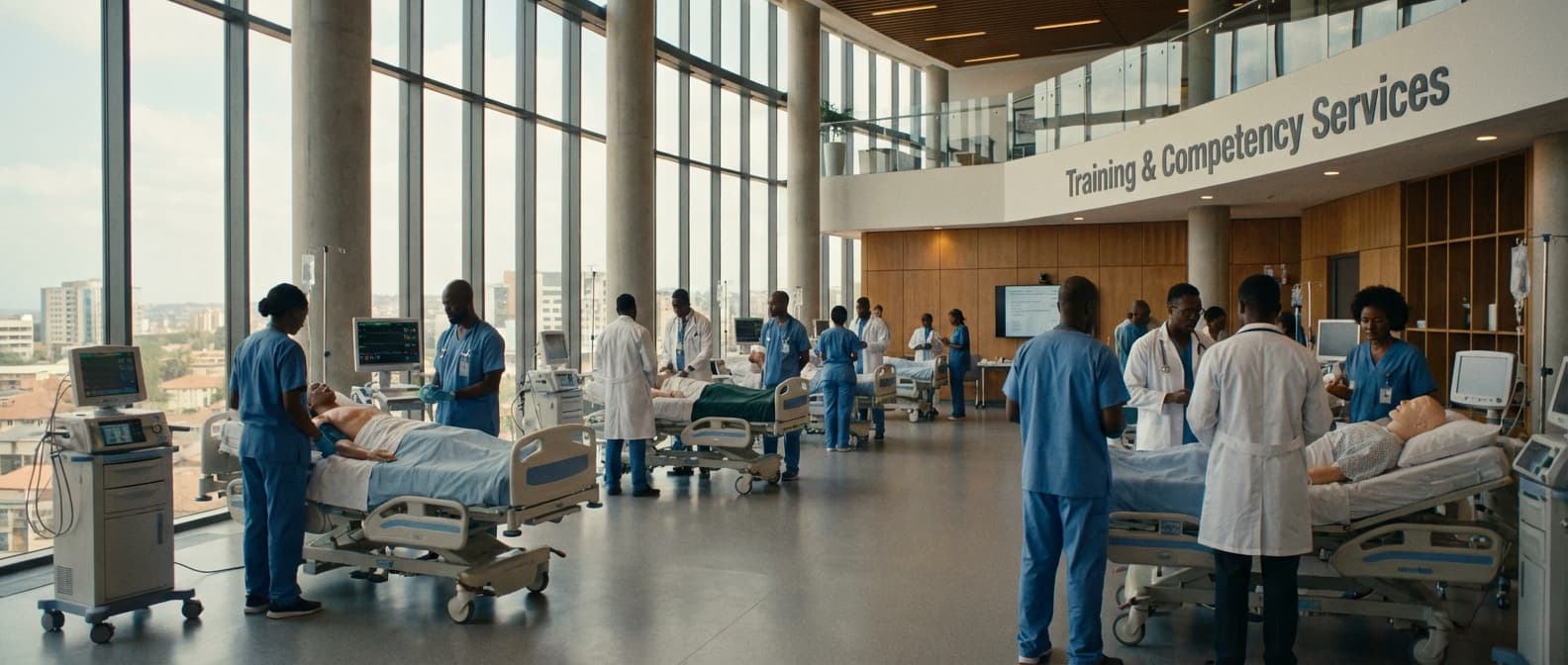
Ultrasound Application Training Service (Protocol-Based) in Mauritania
Engineering Excellence & Technical Support
Ultrasound Application Training Service (Protocol-Based) High-standard technical execution following OEM protocols and local regulatory frameworks.
Standardized Protocol Mastery
Gain proficiency in evidence-based ultrasound protocols specifically tailored for Mauritanian healthcare needs. Our training ensures consistent and accurate diagnostic workflows.
Context-Aware Clinical Application
Learn to apply ultrasound techniques effectively within the unique clinical environment of Mauritania, addressing common pathologies and resource considerations.
Hands-On Skill Enhancement
Develop practical ultrasound skills through guided, hands-on sessions utilizing standardized protocols, empowering healthcare professionals to deliver superior patient care.
What Is Ultrasound Application Training Service (Protocol-based) In Mauritania?
Ultrasound Application Training Service (Protocol-Based) in Mauritania refers to a structured educational program designed to equip healthcare professionals with the theoretical knowledge and practical skills necessary to perform and interpret diagnostic ultrasound examinations according to established clinical protocols. This service is crucial for standardizing ultrasound practice, ensuring diagnostic accuracy, and optimizing patient care within the Mauritanian healthcare landscape. The protocol-based approach emphasizes adherence to specific scanning sequences, image acquisition parameters, and interpretive guidelines for various anatomical regions and clinical indications. This systematic methodology aims to minimize inter-operator variability, enhance the reliability of diagnostic findings, and facilitate the integration of ultrasound into routine clinical workflows. The service typically involves a blend of didactic lectures, hands-on scanning sessions utilizing phantoms and/or simulated patient scenarios, case study reviews, and competency assessments.
| Who Needs the Service? | Typical Use Cases | ||||||||||
|---|---|---|---|---|---|---|---|---|---|---|---|
| Radiologists (including registrars and fellows seeking specialized training) | Obstetrics: Antenatal fetal assessment (dating scans, anomaly scans, growth monitoring). | Gynecology: Pelvic ultrasound for evaluation of uterine and ovarian pathology. | Abdominal Imaging: Assessment of liver, gallbladder, kidneys, spleen, pancreas, and aorta. | Vascular Imaging: Doppler assessment of carotid arteries, peripheral arteries, and veins. | Small Parts Imaging: Thyroid, breast, and scrotal examinations. | Emergency Medicine: Point-of-care ultrasound (POCUS) for trauma, FAST scans, and basic assessments. | Internal Medicine Physicians: For focused assessments and monitoring of conditions. | Sonographers (certified and aspiring): To enhance skills, learn new applications, and adhere to quality standards. | Physician Assistants and Nurse Practitioners: To expand diagnostic capabilities within their scope of practice. | Medical Technologists and Radiographers: To broaden their skillsets and contribute to diagnostic imaging services. | Healthcare Institutions: Hospitals, clinics, and diagnostic centers seeking to establish or improve their ultrasound services and ensure staff proficiency. |
Key Components of Ultrasound Application Training Service (Protocol-Based):
- Theoretical Instruction: Covers fundamental principles of ultrasound physics, instrumentation, image optimization, and safety protocols.
- Anatomical Review: Detailed study of relevant anatomy for each specific ultrasound application.
- Protocol Development and Adherence: Instruction on standardized scanning protocols for various organ systems (e.g., abdominal, obstetric, gynecological, small parts, vascular). Emphasis on systematic approach and comprehensive image acquisition.
- Image Acquisition Techniques: Hands-on training in manipulating transducers, optimizing gain and depth, and acquiring appropriate image planes and views.
- Image Interpretation: Training in recognizing normal and abnormal sonographic appearances, understanding artifact identification, and correlating findings with clinical context.
- Clinical Application and Workflow Integration: Understanding how to integrate ultrasound into diagnostic pathways and patient management.
- Case-Based Learning: Review of real-world ultrasound cases with discussion of findings, differential diagnoses, and management implications.
- Competency Assessment: Evaluation of practical scanning skills, image quality, and interpretive ability through direct observation, image review, and knowledge-based testing.
Who Needs Ultrasound Application Training Service (Protocol-based) In Mauritania?
This service provides comprehensive, protocol-based ultrasound application training to healthcare professionals in Mauritania. The training focuses on standardized scanning techniques and interpretation skills to ensure consistent and accurate diagnostic imaging across various medical specialties. By equipping practitioners with these specialized skills, we aim to improve diagnostic capabilities, enhance patient care, and contribute to the advancement of medical imaging within Mauritania.
| Target Customer Group | Primary Departments/Areas of Focus | Specific Roles Trained | Training Objectives | |
|---|---|---|---|---|
| Public Hospitals (National and Regional) | Radiology, Obstetrics & Gynecology, Cardiology, Emergency, Internal Medicine, Pediatrics | Radiologists, Sonographers, Gynecologists, Cardiologists, Emergency Physicians, Pediatricians, General Practitioners | Standardized protocol adherence for common diagnostic examinations, improved image acquisition and interpretation, enhanced diagnostic accuracy, identification of critical findings, reduction in misdiagnosis. | New equipment implementation, staff upskilling, quality assurance improvement. |
| Private Healthcare Facilities | Radiology, Obstetrics & Gynecology, Cardiology, Internal Medicine, Specialist Clinics | Radiologists, Sonographers, Gynecologists, Cardiologists, Internists, Specialist Physicians | Ensuring consistent quality across multiple sites, meeting international standards, optimizing workflow efficiency, specialized application training (e.g., musculoskeletal, interventional ultrasound). | Competitive advantage, patient satisfaction, revenue generation. |
| Rural and Remote Healthcare Centers | General Ultrasound Applications, Point-of-Care Ultrasound (POCUS) | General Practitioners, Nurses, Midwives, Clinical Officers | Basic diagnostic ultrasound skills for essential imaging in resource-limited settings, identifying urgent conditions, facilitating referral decisions, POCUS for rapid assessment in emergency situations. | Improved access to diagnostic services, early detection of diseases, reduced need for long-distance referrals. |
| Medical Education and Training Institutions | Medical Schools, Nursing Schools, Paramedical Training Centers | Medical Students, Nursing Students, Imaging Technicians in training, Faculty Members | Integrating standardized ultrasound protocols into curriculum, hands-on training for future healthcare professionals, developing foundational understanding of ultrasound physics and applications. | Producing competent and well-trained healthcare professionals, ensuring a skilled workforce for the future. |
| Government Health Initiatives and NGOs | Maternal and Child Health Programs, Public Health Screening Initiatives | Healthcare Workers involved in specific public health programs | Training on ultrasound protocols relevant to specific public health goals (e.g., antenatal care screening, basic abdominal scans for common diseases), capacity building for health surveillance. | Contribution to national health goals, improved maternal and child outcomes, disease burden reduction. |
Target Customers and Departments for Ultrasound Application Training Service (Protocol-Based) in Mauritania:
- Radiology Departments
- Obstetrics and Gynecology Departments
- Cardiology Departments
- Emergency Departments
- Internal Medicine Departments
- Pediatrics Departments
- Rural Health Clinics and Centers
- Medical Training Institutions
- Private Diagnostic Imaging Centers
Ultrasound Application Training Service (Protocol-based) Process In Mauritania
This document outlines the workflow for the Ultrasound Application Training Service (Protocol-Based) offered in Mauritania. The process begins with an inquiry from a client and concludes with the successful execution of the training program. The service emphasizes a structured, protocol-driven approach to ensure standardized and effective learning for ultrasound practitioners.
| Stage | Key Activities | Description | Deliverables/Outcomes |
|---|---|---|---|
| Initial Contact, Information Gathering, Requirement Definition | Potential clients (hospitals, clinics, training institutions) contact the service provider to express interest. A detailed discussion follows to understand specific training needs, target audience (e.g., radiologists, sonographers, nurses), desired ultrasound applications, current skill levels, and any existing protocols. Site visits may be conducted if necessary. | Understanding of client's training objectives, identified training gaps, confirmed target audience, and specific application areas. |
| Customized Training Plan, Quotation, Contract Negotiation | Based on the needs assessment, a detailed training proposal is developed. This includes the training curriculum, modules, duration, methodologies (lectures, hands-on sessions, case studies), trainer profiles, required equipment and materials, and a comprehensive quotation. The proposal is presented to the client for review and negotiation. Upon agreement, a formal contract is signed. | Formal training proposal, finalized training curriculum, agreed-upon quotation, signed service contract. |
| Logistics, Scheduling, Participant Onboarding, Material Preparation | This stage involves the logistical arrangements: scheduling training dates, booking venues (if not provided by the client), ensuring the availability of ultrasound machines and phantoms, preparing training materials (manuals, presentations, case files), and communicating the training schedule and requirements to the registered participants. Pre-training assessments might be administered. | Confirmed training schedule, prepared training environment, accessible training materials, registered participants, pre-assessment results (if applicable). |
| Delivery of Theoretical and Practical Sessions, Protocol Adherence, Interactive Learning | The core of the service. Certified trainers deliver the protocol-based training. This includes theoretical sessions covering ultrasound physics, anatomy, physiology, and specific application protocols (e.g., obstetric, abdominal, small parts). Practical sessions involve hands-on scanning on phantoms and/or models, with direct supervision and feedback. Case study discussions and troubleshooting are integral parts. | Completion of theoretical modules, demonstration of practical scanning skills, understanding of specific ultrasound protocols, participant engagement and feedback. |
| Assessment, Feedback Collection, Certification, Ongoing Consultation | After the training, participants undergo assessments (written and practical) to evaluate their comprehension and skill acquisition. Feedback surveys are collected from participants and clients to gauge satisfaction and identify areas for improvement. Successful participants receive certificates. A period of post-training support is often offered, including follow-up consultations, access to online resources, or refresher sessions. | Assessment results, participant feedback report, training completion certificates, established support channels for continued learning and problem-solving. |
Ultrasound Application Training Service (Protocol-Based) Workflow in Mauritania
- Inquiry and Needs Assessment
- Proposal Development and Agreement
- Pre-Training Preparations
- Training Execution
- Post-Training Evaluation and Support
Ultrasound Application Training Service (Protocol-based) Cost In Mauritania
Providing ultrasound application training services in Mauritania involves a range of costs influenced by several key factors. These factors dictate the final price, which is typically quoted in Mauritanian Ouguiya (MRU). The training is usually protocol-based, meaning it adheres to established guidelines for specific ultrasound examinations.
| Training Type/Scope | Estimated Price Range (MRU) | Notes |
|---|---|---|
| Basic Introduction to Abdominal Ultrasound (1-2 Days) | 30,000 - 60,000 | Covers fundamental protocols and image acquisition. |
| Obstetrics & Gynecology Ultrasound (3-5 Days) | 75,000 - 150,000 | Includes fetal biometry, anomaly scans, and gynecological imaging protocols. |
| Comprehensive General Radiology Ultrasound (5-7 Days) | 120,000 - 250,000 | Covers a wide range of applications like abdominal, pelvic, thyroid, and breast ultrasound. |
| Specialized Doppler Ultrasound Training (2-3 Days) | 60,000 - 120,000 | Focuses on vascular, cardiac, or other Doppler-intensive applications. |
| Advanced / Super-Specialized Training (Per Day Rate) | 20,000 - 40,000 | For niche areas or advanced techniques, often a daily rate for experienced trainers. |
| On-Site Training (Additional) | Variable (5,000 - 20,000+ per day) | Covers trainer travel, accommodation, and potential equipment rental if not provided by the client. |
Key Pricing Factors for Ultrasound Application Training in Mauritania:
- {"title":"Duration and Intensity of Training","description":"The total number of hours or days dedicated to the training significantly impacts the cost. More intensive, multi-day courses will naturally be more expensive than shorter, focused sessions."}
- {"title":"Scope of Ultrasound Applications","description":"Training covering a broader spectrum of ultrasound applications (e.g., general radiology, obstetrics & gynecology, cardiology, vascular) will command a higher price than training focused on a single specialty."}
- {"title":"Trainer's Expertise and Credentials","description":"Highly experienced and board-certified sonographers or radiologists with specialized expertise will charge more for their services."}
- {"title":"Training Location and Logistics","description":"Whether the training is conducted at the client's facility (requiring travel and accommodation for trainers) or at a dedicated training center will affect the overall cost. Travel expenses, venue rental, and equipment setup are all considerations."}
- {"title":"Number of Participants","description":"While some providers may offer a fixed per-day rate, others might have tiered pricing based on the number of participants. Larger groups might have a lower per-person cost, but the overall invoice will be higher."}
- {"title":"Training Materials and Resources","description":"The provision of comprehensive training manuals, case studies, simulation software access, and certificates of completion can add to the cost."}
- {"title":"Equipment Availability","description":"If the training requires specific ultrasound machines or phantom models that need to be sourced or rented, this will be factored into the price."}
- {"title":"Customization of Protocol","description":"While the training is protocol-based, if there's a need for customization to specific institutional protocols or equipment, this may incur additional charges."}
Affordable Ultrasound Application Training Service (Protocol-based) Options
Our Affordable Ultrasound Application Training Service (Protocol-Based) offers flexible and cost-effective learning solutions for individuals and institutions seeking to master ultrasound imaging techniques. We focus on standardized protocols to ensure efficient and reproducible learning, making advanced skills accessible without breaking the bank. Our tiered value bundles are designed to cater to various learning needs and budgets, while our cost-saving strategies make professional development more attainable.
| Cost-Saving Strategy | Description | Benefit |
|---|---|---|
| Early Bird Discounts | Register for training programs within a specified early period and receive a reduced fee. | Significant upfront cost reduction for proactive learners. |
| Bundle Discounts | Purchasing a Specialty or Comprehensive Bundle offers a lower per-module cost compared to individual module purchases. | Maximizes value and reduces overall expenditure for broader skill development. |
| Group Registration Incentives | Discounts applied for registering multiple individuals from the same institution or practice. | Encourages team-wide upskilling at a more affordable rate for the organization. |
| Referral Program | Receive a discount on your next training module or bundle for referring new paying customers. | Continuous learning at a reduced cost for satisfied clients. |
| Subscription Model (Coming Soon) | Access to a library of training modules on a recurring subscription basis. | Predictable monthly costs and continuous access to updated content for long-term skill development. |
| Free Resource Library Access | All registered users gain access to a selection of free resources, including basic protocol guides and introductory webinars. | Supplements paid training and provides foundational knowledge at no extra cost. |
Value Bundles Explained
- {"title":"Foundation Bundle","description":"Ideal for beginners or those needing a solid understanding of core ultrasound principles and basic protocols. Includes access to introductory modules, fundamental scan techniques, and essential anatomy correlation."}
- {"title":"Specialty Bundle","description":"Geared towards experienced sonographers or medical professionals focusing on specific applications (e.g., Abdominal, OB/GYN, Cardiac, Vascular). Offers in-depth training on advanced protocols, common pathologies, and interpretation nuances for the chosen specialty."}
- {"title":"Comprehensive Bundle","description":"Our most popular option, providing a complete learning experience. Combines foundational knowledge with multiple specialty modules, offering broad competency across various ultrasound applications. Includes advanced interpretation, troubleshooting, and best practice guidance."}
- {"title":"Institution Pack","description":"Customizable bundles for hospitals, clinics, and educational institutions. Designed for group training, offering bulk licenses, dedicated support, and tailored curriculum integration to meet organizational training objectives."}
Verified Providers In Mauritania
In the evolving landscape of healthcare services in Mauritania, the identification of Verified Providers is paramount for ensuring quality, safety, and reliability. Among these, Franance Health stands out as a leading entity, whose credentials and comprehensive approach solidify their position as the best choice for individuals and organizations seeking exceptional healthcare solutions. Franance Health has meticulously built a reputation for excellence by adhering to stringent international standards, fostering a culture of continuous improvement, and prioritizing patient well-being above all else. Their commitment extends from the recruitment of highly skilled and experienced medical professionals to the implementation of cutting-edge medical technologies and the maintenance of state-of-the-art facilities. This dedication to excellence makes Franance Health a trusted partner in navigating the complexities of healthcare in Mauritania, offering peace of mind and access to superior medical care.
| Credential Type | Description | Impact on Patient Care |
|---|---|---|
| International Accreditation (e.g., ISO, JCI) | Adherence to globally recognized benchmarks for healthcare quality and patient safety. | Ensures consistent high standards, reduces medical errors, and promotes patient confidence. |
| Licensing and Certification of Medical Staff | Verification of medical professionals' qualifications, expertise, and legal authorization to practice. | Guarantees that patients receive care from competent and authorized healthcare providers. |
| Partnerships with Reputable Medical Institutions | Collaborations with well-regarded local and international healthcare organizations and research bodies. | Facilitates knowledge exchange, access to specialized treatments, and adoption of best practices. |
| Advanced Technology Integration | Implementation of modern diagnostic and treatment equipment, and digital health solutions. | Enables accurate diagnoses, effective treatments, and improved efficiency in healthcare delivery. |
| Robust Quality Assurance Programs | Ongoing monitoring, evaluation, and improvement of all aspects of healthcare service delivery. | Proactively identifies and addresses areas for improvement to maintain and enhance care quality. |
| Patient Feedback and Grievance Mechanisms | Established systems for collecting patient feedback and addressing concerns effectively and promptly. | Empowers patients, drives service improvements based on patient experience, and fosters trust. |
Why Franance Health is the Best Choice for Verified Providers in Mauritania:
- Unwavering commitment to international quality and safety standards.
- Rigorous selection and continuous training of highly qualified medical professionals.
- Investment in advanced medical technology and equipment.
- State-of-the-art healthcare facilities designed for optimal patient care.
- Comprehensive range of specialized medical services to meet diverse needs.
- Patient-centric approach focused on personalized care and well-being.
- Strong ethical framework and transparent operational practices.
- Proven track record of successful patient outcomes and satisfaction.
Scope Of Work For Ultrasound Application Training Service (Protocol-based)
This document outlines the Scope of Work for a Protocol-Based Ultrasound Application Training Service. It details the technical deliverables and standard specifications required to ensure effective and standardized ultrasound training for healthcare professionals.
| Section | Description | Technical Deliverables | Standard Specifications |
|---|---|---|---|
| Creation of a structured, protocol-based ultrasound training curriculum tailored to specific medical specialties or applications. | • Comprehensive training manual (digital and/or print) • Standardized ultrasound protocols for key examinations • Multimedia training modules (videos, interactive simulations) • Case study library | • Content aligned with current best practices and professional guidelines. • Protocols clearly defined with step-by-step instructions, imaging parameters, and anatomical landmarks. • Training materials accessible on multiple platforms (e.g., LMS, dedicated portal). |
| Delivery of hands-on and theoretical training sessions by certified ultrasound instructors. | • Live demonstration of ultrasound techniques. • Supervised hands-on scanning sessions on phantoms and/or simulated patients. • Q&A sessions and interactive discussions. | • Instructor-to-trainee ratio to ensure adequate supervision (e.g., 1:6). • Training sessions conducted in a controlled environment with appropriate ultrasound equipment. • Clear learning objectives for each session. |
| Utilization of advanced ultrasound simulators for practicing complex scenarios and improving psychomotor skills. | • Access to high-fidelity ultrasound simulators. • Simulation scenarios designed to replicate real-world clinical situations. • Performance feedback reports generated by the simulator. | • Simulators capable of replicating various anatomical structures and pathologies. • Scenarios cover a range of difficulty levels. • Objective performance metrics tracked and reported. |
| Methods to assess trainee competency and provide feedback on their performance. | • Written examinations (theoretical knowledge). • Practical scanning assessments (demonstrating protocol adherence). • Case-based assessment. • Post-training feedback surveys. | • Assessment tools aligned with training objectives and established competency frameworks. • Objective scoring rubrics for practical assessments. • Confidential and constructive feedback provided to each trainee. |
| Provision of ongoing resources and support to trainees after the formal training program. | • Access to an online resource library (updated protocols, articles, webinars). • Expert helpline or email support for technical or clinical queries. • Opportunities for advanced or specialized training. | • Resource library regularly updated with the latest information. • Response time for support queries clearly defined (e.g., within 24 business hours). • Pathways for continuous professional development. |
| Comprehensive documentation of training activities, trainee progress, and overall program effectiveness. | • Training attendance records. • Individual trainee progress reports. • Summary report of overall program outcomes. • Certificate of completion for successful trainees. | • Reports are accurate, timely, and easily understandable. • Data privacy and confidentiality maintained for all trainee information. |
Key Objectives of the Training Service
- To equip trainees with a comprehensive understanding of ultrasound principles and operation.
- To ensure proficiency in performing ultrasound examinations according to established protocols.
- To enhance diagnostic accuracy and patient care through standardized ultrasound practices.
- To foster a culture of continuous learning and skill development in ultrasound applications.
Service Level Agreement For Ultrasound Application Training Service (Protocol-based)
This Service Level Agreement (SLA) outlines the response times and uptime guarantees for the Ultrasound Application Training Service, operating on a protocol-based model. This SLA is intended to ensure the consistent availability and timely support of the training platform and its associated services.
| Issue Classification | Definition | Initial Response Time | Target Resolution Time |
|---|---|---|---|
| Critical | Complete service outage preventing access to all or significant portions of the training platform. | 1 Hour | 4 Business Hours |
| High | Significant functional impairment impacting multiple users or core training functionalities. | 4 Business Hours | 1 Business Day |
| Medium | Minor functional issues, performance degradation affecting a subset of users, or incorrect data display. | 8 Business Hours | 3 Business Days |
| Low | General inquiries, feature requests, documentation clarifications, or non-critical cosmetic issues. | 24 Business Hours | 5 Business Days |
Key Service Level Objectives
- Uptime Guarantee: The Ultrasound Application Training Service will maintain an uptime of 99.5% averaged over a calendar month.
- Response Time for Critical Issues: For issues classified as 'Critical' (e.g., complete service outage preventing access to training modules), the initial response time will be within 1 hour.
- Response Time for High Issues: For issues classified as 'High' (e.g., significant functional impairment impacting multiple users or critical features), the initial response time will be within 4 business hours.
- Response Time for Medium Issues: For issues classified as 'Medium' (e.g., minor functional issues, performance degradation affecting a subset of users), the initial response time will be within 8 business hours.
- Response Time for Low Issues: For issues classified as 'Low' (e.g., general inquiries, feature requests, documentation clarification), the initial response time will be within 24 business hours.
Frequently Asked Questions

Ready when you are
Let's scope your Ultrasound Application Training Service (Protocol-Based) in Mauritania project in Mauritania.

Scaling healthcare logistics and technical systems across the entire continent.