
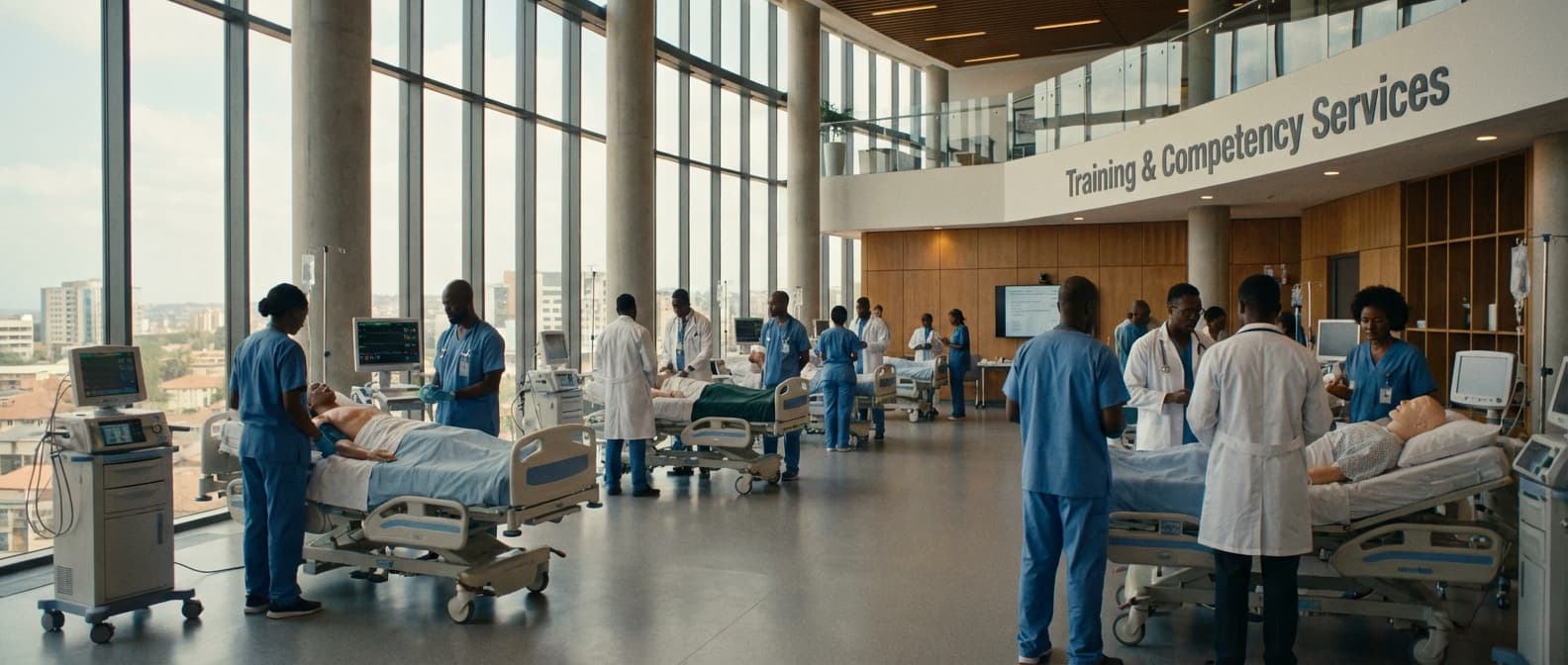
MRI Operator Training Service (Radiographers) in Mauritania
Engineering Excellence & Technical Support
MRI Operator Training Service (Radiographers) High-standard technical execution following OEM protocols and local regulatory frameworks.
Advanced MRI Sequence Mastery
Comprehensive training modules covering a wide spectrum of MRI sequences, including T1, T2, FLAIR, DWI, and contrast-enhanced scans, specifically tailored for anatomical variations and pathologies prevalent in Mauritania. Radiographers will gain proficiency in optimizing parameters for accurate diagnostic imaging.
Patient Safety & Protocol Adherence in Diverse Environments
Focus on stringent patient screening, contraindication identification, and safe handling of patients with implanted devices, addressing potential challenges in resource-limited or remote settings. Training emphasizes adherence to international safety standards and best practices for MRI procedures in Mauritania.
Image Quality Optimization & Artifact Reduction
In-depth training on techniques to maximize image resolution, minimize motion artifacts, and address common issues encountered with MRI equipment. Radiographers will learn to identify, troubleshoot, and correct artifacts to ensure the highest diagnostic quality images for effective patient care in Mauritania.
What Is Mri Operator Training Service (Radiographers) In Mauritania?
MRI Operator Training Service (Radiographers) in Mauritania refers to specialized educational programs designed to equip radiographers and other qualified healthcare professionals with the necessary knowledge and practical skills to safely and effectively operate Magnetic Resonance Imaging (MRI) scanners. This service encompasses theoretical instruction on MRI physics, safety protocols, image acquisition techniques, patient preparation, contrast agent administration, and image post-processing. It also includes hands-on training with MRI equipment, focusing on scanner operation, protocol selection, artifact identification and mitigation, and quality assurance procedures. The objective is to ensure competent and confident MRI operators who can produce diagnostic-quality images while prioritizing patient and staff safety within the Mauritanian healthcare context.
| Stakeholder/Audience | Need for Service | Typical Use Cases | ||
|---|---|---|---|---|
| Newly Qualified Radiographers (Mauritania): | Essential for entry-level competency in operating MRI scanners, enabling them to enter the workforce in diagnostic imaging departments. | Operating MRI scanners in public and private hospitals and diagnostic imaging centers to perform routine MRI examinations. | Assisting senior radiographers and radiologists in more complex scanning procedures. | |
| Experienced Radiographers Seeking Specialization/Upskilling: | To acquire specific expertise in advanced MRI techniques, new modalities, or to transition into an MRI operator role. | Implementing advanced MRI protocols (e.g., fMRI, diffusion tensor imaging, perfusion imaging). | Training on new generation MRI equipment with enhanced features and capabilities. | Taking on supervisory or training roles for junior staff. |
| Healthcare Facilities in Mauritania (Public and Private): | To ensure their imaging departments are staffed with adequately trained personnel, meeting regulatory requirements and providing high-quality diagnostic services. | Establishing or expanding MRI services within hospitals and clinics. | Meeting the increasing demand for MRI examinations within the national healthcare system. | Ensuring compliance with international standards of medical imaging practice. |
| Radiology Departments: | To maintain operational efficiency, reduce errors, and enhance diagnostic accuracy through skilled MRI operators. | Developing and standardizing MRI imaging protocols. | Implementing quality assurance programs for MRI services. | Facilitating efficient patient throughput and scheduling of MRI examinations. |
Key Components of MRI Operator Training Service (Radiographers) in Mauritania:
- MRI Physics Fundamentals: Principles of nuclear magnetic resonance, signal generation, gradient coils, radiofrequency pulses, and image reconstruction.
- Patient Safety and MRI Environment: Understanding of MRI contraindications (e.g., ferromagnetic implants, pacemakers), magnetic field interactions, radiofrequency heating, acoustic noise, and the implementation of strict safety screening protocols.
- MRI Scanner Operation: Hands-on proficiency with the specific MRI scanner hardware and software, including console operation, patient positioning, and scan parameter adjustments.
- Imaging Protocols and Techniques: Development and application of appropriate imaging sequences and protocols for various anatomical regions and clinical indications, including but not limited to neuroimaging, musculoskeletal imaging, abdominal imaging, and cardiac imaging.
- Contrast Agent Administration: Knowledge of different MRI contrast agents, indications for use, contraindications, administration routes, potential adverse reactions, and emergency management.
- Image Acquisition and Quality Control: Strategies for optimizing image quality, reducing artifacts, and performing routine quality assurance checks to ensure diagnostic reliability.
- Image Interpretation Fundamentals (for radiographers): Basic understanding of anatomical structures and common pathologies visualized with MRI to aid in image acquisition parameter selection and artifact recognition.
- Documentation and Reporting Support: Understanding of proper documentation for MRI procedures and contributions to the reporting process.
Who Needs Mri Operator Training Service (Radiographers) In Mauritania?
MRI Operator Training Service (Radiographers) in Mauritania is crucial for ensuring the effective and safe operation of Magnetic Resonance Imaging (MRI) equipment, leading to accurate diagnoses and improved patient care. This specialized training caters to professionals working with or aspiring to work with MRI technology within healthcare settings. The demand for such services is driven by the increasing adoption of advanced medical imaging technologies and the need for a skilled workforce to operate them proficiently.
| Customer Type | Primary Department/Role | Training Needs | Impact of Training |
|---|---|---|---|
| Hospitals (Public & Private) | Radiology Department, Imaging Unit | Basic & Advanced MRI Operation, Protocol Optimization, Image Quality Enhancement, Safety Procedures | Accurate Diagnosis, Reduced Scan Time, Improved Patient Throughput, Enhanced Safety |
| Diagnostic Imaging Centers | Imaging Technologists, Radiographers | Efficient Scan Execution, Diverse Modality Operation, Quality Assurance, Patient Comfort | High-Quality Imaging Services, Increased Patient Volume, Competitive Advantage |
| University Medical Departments | Radiology Residents, Radiography Students | Theoretical Foundations, Practical MRI Skills, Protocol Development, Emerging MRI Techniques | Producing Competent future MRI Operators, Research Contribution |
| Government Health Ministries | Public Health Facility Management, Medical Education Boards | Standardization of Training, Quality Control, Needs Assessment, Workforce Development | Nationwide Access to Quality MRI Services, Public Health Improvement |
| Medical Equipment Suppliers | Field Service Engineers, Application Specialists | Equipment Operation & Troubleshooting, Application Support, User Training | Successful Equipment Deployment, Customer Satisfaction, Reduced Downtime |
Target Customers & Departments for MRI Operator Training in Mauritania:
- Hospitals (Public & Private): Facilities that have invested in or are planning to acquire MRI scanners. This is the primary sector requiring trained radiographers.
- Diagnostic Imaging Centers: Standalone centers specializing in medical imaging, often serving multiple healthcare providers.
- University Medical Departments & Teaching Hospitals: For training future radiographers and radiologists on the latest MRI techniques and protocols.
- Government Health Ministries & Agencies: To ensure a baseline level of competency and standardization in MRI operation across the nation, especially in public health facilities.
- Radiology Departments: The core department within any healthcare institution that utilizes MRI. This includes radiographers, radiology technicians, and potentially trainee radiologists.
- Imaging Technologist Training Institutions: To equip their students with the specialized skills needed for MRI operation.
- Medical Equipment Suppliers & Manufacturers: Who may offer training as part of their service packages for purchased MRI equipment, or to enhance the skills of their support staff.
- Research Institutions: Involved in medical research utilizing MRI for diagnostic and investigative purposes.
- Healthcare Professionals Seeking Specialization: Individual radiographers or technologists looking to advance their careers by specializing in MRI.
Mri Operator Training Service (Radiographers) Process In Mauritania
This document outlines the typical workflow for an MRI Operator Training Service for Radiographers in Mauritania, from initial inquiry to the successful execution of the training program. The process is designed to be comprehensive, ensuring that all necessary steps are taken to deliver high-quality, relevant, and effective training.
| Phase | Key Activities | Responsible Parties | Deliverables/Outcomes | Estimated Timeline (Typical) |
|---|---|---|---|---|
| Inquiry & Initial Contact | Prospective client (e.g., Ministry of Health, hospital, training institution) expresses interest in MRI operator training. Service provider receives inquiry via phone, email, or website. | Prospective Client, Training Service Provider | Initial understanding of client's interest. | 1-3 days |
| Needs Assessment & Consultation | Detailed discussion to understand specific training needs, current skill levels of radiographers, existing MRI equipment, desired learning outcomes, number of participants, and budget. Site visit (if necessary) to assess infrastructure and equipment. | Training Service Provider (Sales/Technical Team), Prospective Client (HR, Training Dept., Radiology Dept.) | Comprehensive training needs analysis report. Understanding of project scope and requirements. | 3-7 days |
| Proposal Development & Quotation | Based on the needs assessment, the service provider develops a detailed proposal including curriculum outline, training methodology, trainer profiles, duration, cost breakdown, and proposed schedule. Formal quotation is provided. | Training Service Provider (Proposal/Sales Team) | Formal training proposal and quotation. | 5-10 days |
| Contract Negotiation & Agreement | Discussion and negotiation of terms and conditions, payment schedule, scope of work, and any specific clauses. Signing of a formal training contract or memorandum of understanding (MOU). | Training Service Provider (Legal/Sales Team), Prospective Client (Legal/Procurement Dept.) | Signed training contract/MOU. | 7-14 days |
| Curriculum Customization & Planning | Tailoring the training curriculum to align with the specific needs and equipment identified. Development of training materials (presentations, handouts, practical exercises, case studies). | Training Service Provider (Curriculum Developers, Technical Experts) | Finalized and customized training curriculum and materials. | 10-20 days |
| Logistics & Scheduling | Confirmation of training dates, venue (on-site or off-site), participant registration, accommodation, and travel arrangements (if applicable). Coordination with the client for necessary access and resources. | Training Service Provider (Logistics Team), Prospective Client (Admin/Logistics Dept.) | Confirmed training schedule and logistical arrangements. | 5-10 days |
| Trainer Mobilization & Preparation | Selection and briefing of qualified MRI trainers with relevant expertise. Trainers review curriculum and prepare for delivery. | Training Service Provider (Management, Trainers) | Prepared and mobilized training team. | 3-5 days |
| Training Delivery & Execution | Conducting theoretical sessions (lectures, discussions) and practical sessions (hands-on with MRI scanner, image interpretation). Ensuring active participation and engagement of radiographers. | Training Service Provider (Trainers) | Delivery of comprehensive MRI operator training. | Varies based on program duration (e.g., 5 days to 4 weeks) |
| Assessment & Evaluation | Assessing participant learning through theoretical tests, practical evaluations, and case study analysis. Gathering feedback from participants and the client on the training effectiveness and delivery. | Training Service Provider (Trainers, Evaluation Team), Participants | Participant assessment results. Training evaluation report. | During and immediately after training |
| Certification & Follow-up | Issuing certificates of completion to successful participants. Providing post-training support, such as troubleshooting advice or follow-up consultations (if agreed upon). Final reporting to the client. | Training Service Provider (Admin, Management), Participants | Certificates of completion. Final project report. | 5-7 days post-training |
MRI Operator Training Service Workflow (Radiographers) in Mauritania
- Inquiry & Initial Contact
- Needs Assessment & Consultation
- Proposal Development & Quotation
- Contract Negotiation & Agreement
- Curriculum Customization & Planning
- Logistics & Scheduling
- Trainer Mobilization & Preparation
- Training Delivery & Execution
- Assessment & Evaluation
- Certification & Follow-up
Mri Operator Training Service (Radiographers) Cost In Mauritania
Estimating the precise cost of MRI Operator Training services for radiographers in Mauritania requires a nuanced understanding of various contributing factors. Unlike standardized certifications, specialized training programs are often bespoke or delivered by specific institutions, leading to a range of pricing. Key elements influencing these costs include the duration and intensity of the training, the qualifications and experience of the instructors, the curriculum's depth and breadth (e.g., basic operation vs. advanced techniques, specific MRI sequences, patient care protocols), the chosen training provider (local institutions, international organizations with local presence, or outsourced specialized firms), and the administrative overhead associated with program delivery. Furthermore, the specific equipment used for hands-on training can also impact costs, with access to advanced or specialized MRI scanners potentially leading to higher fees. Geographical location within Mauritania and the need for any travel or accommodation for trainers or trainees can also be a significant factor. The current economic climate and demand for such specialized skills will also play a role in price setting by training providers.
| Training Type/Duration | Estimated Cost Range (MRU) |
|---|---|
| Basic MRI Operation & Safety (e.g., 1-2 weeks) | 75,000 - 150,000 |
| Intermediate MRI Techniques & Protocols (e.g., 3-4 weeks) | 150,000 - 300,000 |
| Advanced MRI Applications & Specializations (e.g., 1 month+ or modular) | 300,000 - 600,000+ |
| On-site/Customized Corporate Training (per day/program) | Negotiable (likely starting from 50,000+ per day) |
Key Pricing Factors for MRI Operator Training in Mauritania
- Training Duration and Intensity
- Instructor Qualifications and Experience
- Curriculum Scope and Specialization
- Training Provider Type (Local vs. International)
- Equipment Access for Practical Training
- Administrative and Logistical Costs
- Geographical Location and Travel Expenses
- Market Demand and Economic Conditions
Affordable Mri Operator Training Service (Radiographers) Options
Providing accessible and cost-effective MRI operator training is crucial for radiographers looking to expand their skill sets. This service focuses on delivering high-quality education without prohibitive financial barriers, making advanced imaging expertise attainable. We offer flexible learning pathways and strategic cost-saving measures to ensure value for both individual professionals and healthcare institutions.
| Cost-Saving Strategy | Description | Benefit |
|---|---|---|
| Early Bird Registration Discounts | Register for training courses well in advance of the start date to secure a reduced tuition fee. | Significant price reduction on tuition, especially for longer or more intensive programs. |
| Group/Institutional Rates | Organizations enrolling multiple radiographers receive discounted per-person rates. The more participants, the higher the discount. | Reduced overall training expenditure for facilities and increased accessibility for staff. |
| Online & Blended Learning Options | Leveraging virtual classrooms, self-paced online modules, and simulated practical sessions reduces overhead costs associated with physical infrastructure and travel. | Lower tuition fees, flexibility in scheduling, and reduced travel/accommodation expenses for trainees. |
| Subscription-Based Access | Offer tiered subscription plans for access to a library of MRI training modules, webinars, and resources for a recurring fee. | Predictable monthly/annual costs and continuous learning opportunities at a fraction of the cost of individual courses. |
| Partnerships with Professional Organizations | Collaborate with radiographer associations to offer member-exclusive discounts or co-branded training programs. | Access to specialized content and reduced costs for members of partner organizations. |
| Free Introductory Webinars & Resources | Provide complimentary access to introductory sessions, study guides, or basic MRI safety information to attract new trainees and demonstrate value. | Low-risk entry point for potential trainees and an opportunity to experience the quality of training. |
Value Bundles for MRI Operator Training
- {"title":"Core MRI Fundamentals Bundle","description":"Covers essential principles of MRI physics, pulse sequences, image acquisition, and safety protocols. Ideal for new entrants or those needing a refresher."}
- {"title":"Advanced Modality Specialization Bundle","description":"Focuses on specific MRI applications such as neuroimaging, musculoskeletal (MSK), cardiac, or abdominal imaging. Includes advanced techniques and interpretation."}
- {"title":"Comprehensive MRI Technologist Certification Prep Bundle","description":"A complete package designed to prepare trainees for professional MRI technologist certification exams (e.g., ARRT). Includes all core and relevant advanced modules, practice exams, and study resources."}
- {"title":"Institutional Training & Compliance Bundle","description":"Tailored for healthcare facilities, offering bulk training for multiple staff members, customized curriculum to meet specific institutional needs, and documentation for compliance purposes."}
Verified Providers In Mauritania
In Mauritania, ensuring you receive care from verified providers is paramount for your health and well-being. When seeking healthcare services, especially those involving specialized treatments or procedures, Franance Health stands out as a beacon of trust and quality. Their rigorous credentialing process and commitment to excellence make them the best choice for patients in Mauritania.
| Franance Health Credential Aspect | Benefit to Patients in Mauritania |
|---|---|
| Academic and Professional Qualifications | Ensures providers possess the foundational knowledge and theoretical understanding required for effective medical practice. |
| Clinical Experience and Track Record | Guarantees that providers have practical experience in diagnosing and treating a wide range of conditions, leading to better patient outcomes. |
| Board Certifications and Specializations | Confirms expertise in specific medical fields, crucial for complex or niche medical issues, offering advanced and targeted care. |
| Licensure and Regulatory Compliance | Verifies that providers adhere to all national and international medical regulations, ensuring ethical and legal practice. |
| Reputation and Peer Review | Incorporates feedback and assessments from other healthcare professionals, providing an additional layer of quality assurance and trust. |
| Commitment to Continuing Medical Education (CME) | Confirms that providers stay updated with the latest medical advancements and techniques, leading to cutting-edge treatment options. |
Why Franance Health Credentials Represent the Best Choice:
- Stringent Verification Process: Franance Health employs a multi-layered verification system that goes beyond basic licensing. They meticulously examine the qualifications, training, experience, and ethical standing of every healthcare professional and facility associated with them.
- Commitment to Excellence: Their credentialing is not just a formality; it's a commitment to upholding the highest standards of medical practice and patient care. This ensures that patients are treated by competent and compassionate professionals.
- Specialized Expertise: Franance Health actively seeks out and verifies providers with specialized skills and advanced training. This is crucial for complex medical needs, ensuring you are connected with the most qualified experts for your specific condition.
- Patient Safety and Trust: By partnering exclusively with verified providers, Franance Health prioritizes patient safety. This rigorous vetting process builds trust and provides peace of mind, knowing you are in capable hands.
- Access to Quality Care: Their network comprises a curated selection of the best healthcare providers in Mauritania. This means patients can access high-quality medical services without the uncertainty of searching for reliable options independently.
- Continuous Monitoring: Franance Health's commitment doesn't end with initial verification. They maintain ongoing monitoring of their providers to ensure continued adherence to their standards and best practices in healthcare.
Scope Of Work For Mri Operator Training Service (Radiographers)
This Scope of Work (SOW) outlines the requirements for providing comprehensive MRI Operator Training Services specifically tailored for Radiographers. The objective is to equip radiographers with the necessary knowledge and practical skills to safely and effectively operate MRI scanners, ensuring high-quality diagnostic imaging and patient care. This SOW details the technical deliverables, standard specifications, and expected outcomes of the training program.
| Deliverable | Description | Standard Specification | Acceptance Criteria |
|---|---|---|---|
| Training Curriculum Document | Detailed outline of all training modules, learning objectives, topics covered, and assessment methods. | Comprehensive, logically structured, and aligned with current MRI practice standards (e.g., ARRT, ISRRT). | Curriculum approved by the client before commencement of training. |
| Training Materials (Presentations, Handouts, Manuals) | High-quality educational materials used during training sessions. | Clear, concise, accurate, and visually engaging content. Includes theoretical explanations, practical guides, and reference materials. Latest version of relevant textbooks and guidelines. | Materials reviewed and approved by the client. Free from errors and omissions. |
| Hands-on Practical Training Sessions | Supervised practical sessions on an actual MRI scanner. | Minimum of [X] hours of supervised scanner time per participant. Covers patient positioning, protocol selection, image acquisition, and basic troubleshooting. | Demonstrated competency in core scanning procedures by each participant. Positive feedback from trainers and participants. |
| Competency Assessment Tools | Methods to evaluate the radiographers' understanding and practical skills. | Includes written examinations, practical skill evaluations, and case study analysis. Pass mark set at [Y]% for each assessment. | All participants successfully pass all competency assessments. |
| Training Certification | Official document certifying successful completion of the MRI Operator Training. | Issued to each participant who meets the defined competency criteria. Includes participant name, course dates, and brief description of training scope. | Certificates issued promptly upon successful completion of all training requirements. |
| Post-Training Support Plan | Outline of how ongoing support and knowledge reinforcement will be provided. | Includes access to trainers for a defined period, online resources, or refresher sessions. | Plan agreed upon by both parties. Support readily available as per the agreed terms. |
| Trainer Qualifications and Experience | Verification of the trainers' expertise in MRI operation and training. | Trainers must possess relevant certifications, extensive practical experience in MRI, and proven training delivery skills. Minimum of [Z] years of experience. | Curriculum Vitae (CVs) of trainers provided and approved by the client. |
| Training Report | Summary report of the training program's execution and outcomes. | Includes attendance records, assessment results, participant feedback, and trainer observations. Identifies areas of strength and areas for improvement. | Report submitted to the client within [N] days of training completion. |
Key Training Modules
- MRI Physics and Principles
- MRI Safety (Patient and Personnel)
- MRI Scanner Operation and Hardware
- Image Acquisition Techniques and Protocols
- Contrast Agents and Administration
- Artifact Identification and Correction
- Quality Assurance and Quality Control (QA/QC)
- Advanced Imaging Techniques (e.g., fMRI, Diffusion Tensor Imaging - DTI - if applicable)
- Image Post-processing and PACS Integration
- Clinical Applications and Indications
Service Level Agreement For Mri Operator Training Service (Radiographers)
This Service Level Agreement (SLA) outlines the terms and conditions for the provision of MRI Operator Training Services specifically for Radiographers. It details the expected response times for support requests and the guaranteed uptime of the training platform and associated resources.
| Service Level | Description | Target Response Time | Uptime Guarantee |
|---|---|---|---|
| Critical | Complete service outage or a significant issue impacting the core functionality of the training for all users. | Within 1 hour | 99.9% |
| High | A significant degradation of service or a core feature is unavailable, impacting a substantial portion of users. | Within 4 business hours | 99.9% |
| Medium | A functional issue affecting a limited number of users or a non-critical feature. | Within 1 business day | 99.9% |
| Low | General queries, requests for information, or minor cosmetic issues. | Within 2 business days | 99.9% |
Key Performance Indicators (KPIs)
- Response Time for Critical Issues
- Response Time for High-Priority Issues
- Response Time for Medium-Priority Issues
- Response Time for Low-Priority Issues
- Platform Uptime Guarantee
- Support Availability
Frequently Asked Questions

Ready when you are
Let's scope your MRI Operator Training Service (Radiographers) in Mauritania project in Mauritania.

Scaling healthcare logistics and technical systems across the entire continent.