
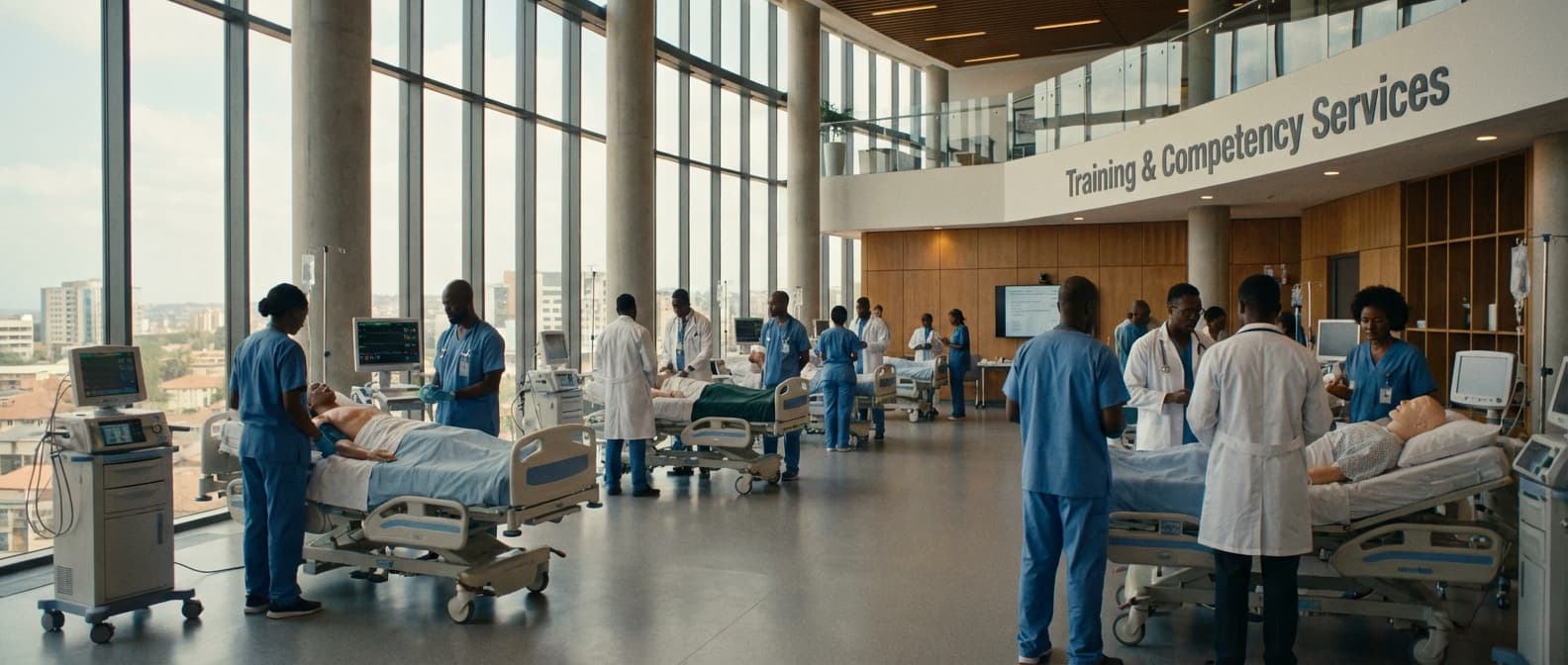
CT Operator Training Service (Radiographers) in Mauritania
Engineering Excellence & Technical Support
CT Operator Training Service (Radiographers) High-standard technical execution following OEM protocols and local regulatory frameworks.
Expert-Led Practical Workshops
Engage in hands-on training sessions led by seasoned radiographers, focusing on advanced CT scanning techniques, patient positioning, and image acquisition protocols specific to Mauritanian healthcare environments.
Radiation Safety & Optimization
Master best practices in radiation safety for both patients and staff, with modules covering dose reduction strategies, ALARA principles, and regulatory compliance relevant to CT operations in Mauritania.
Modern CT Software & Image Analysis
Develop proficiency in utilizing contemporary CT scanner interfaces and image processing software, including techniques for contrast administration, artifact reduction, and preliminary image interpretation to enhance diagnostic accuracy.
What Is Ct Operator Training Service (Radiographers) In Mauritania?
CT Operator Training Service (Radiographers) in Mauritania refers to specialized educational programs designed to equip qualified radiographers with the requisite knowledge, skills, and competencies to operate Computed Tomography (CT) imaging equipment effectively and safely within the Mauritanian healthcare system. This service focuses on the theoretical underpinnings of CT physics, image acquisition protocols, patient positioning, radiation safety principles, quality assurance procedures, and the interpretation of CT imaging artifacts. It aims to ensure that radiographers can independently perform diagnostic CT examinations, adhere to national regulatory standards, and contribute to accurate and timely patient diagnosis and management.
| Who Needs CT Operator Training | Typical Use Cases | ||||||||
|---|---|---|---|---|---|---|---|---|---|
| Newly qualified radiographers seeking to specialize in CT imaging. | Acquiring diagnostic images of the brain for stroke or trauma assessment. | Existing radiographers transitioning from conventional radiography or other imaging modalities to CT. | Imaging the thorax for lung diseases, pulmonary embolism, or malignancies. | Radiographers working in hospitals, diagnostic imaging centers, and specialized clinics in Mauritania. | Evaluating the abdomen and pelvis for conditions such as appendicitis, diverticulitis, or tumors. | Healthcare professionals involved in advanced imaging techniques requiring CT expertise. | Assessing skeletal structures for complex fractures, joint pathology, or oncological staging. | Radiographers aiming to enhance their professional development and career progression. | Performing CT angiography for vascular abnormalities, aneurysms, or dissections. |
Key Components of CT Operator Training Service:
- Theoretical Instruction: In-depth coverage of CT physics, including X-ray generation, beam attenuation, detector technology, slice reconstruction algorithms, and image processing.
- Equipment Operation: Hands-on training on the specific make and model of CT scanners prevalent in Mauritanian healthcare facilities, covering console operation, protocol selection, and parameter adjustment.
- Patient Management: Protocols for patient preparation, contraindication assessment, immobilization techniques, and contrast media administration (where applicable), emphasizing patient comfort and safety.
- Radiation Protection and Safety: Comprehensive training on ALARA (As Low As Reasonably Achievable) principles, dose monitoring, shielding techniques, and compliance with Mauritanian radiation safety regulations.
- Image Quality and Artifact Management: Understanding factors influencing image quality, identifying common imaging artifacts, and implementing strategies for their minimization and correction.
- Quality Assurance (QA) and Quality Control (QC): Procedures for routine equipment checks, calibration, and performance monitoring to ensure diagnostic image quality and operational reliability.
- Clinical Application and Protocol Development: Familiarization with common CT imaging protocols for various anatomical regions and pathologies, with an emphasis on adapting protocols to specific clinical needs.
- Emergency Procedures: Training on responding to equipment malfunctions, patient emergencies during scanning, and basic troubleshooting.
Who Needs Ct Operator Training Service (Radiographers) In Mauritania?
CT Operator Training Service for Radiographers in Mauritania is crucial for enhancing the quality and accessibility of diagnostic imaging. This specialized training ensures radiographers are proficient in operating CT scanners, managing patient safety protocols, and producing high-quality diagnostic images. The demand for such services is driven by the need to modernize healthcare infrastructure, expand specialized medical services, and ensure radiographers are equipped with the latest technological skills.
| Customer Type | Specific Needs Addressed by Training | Departmental Application |
|---|---|---|
Target Customers and Departments for CT Operator Training Service (Radiographers) in Mauritania
- {"items":["Public Hospitals","Private Hospitals","Radiology Clinics","Diagnostic Imaging Centers","Ministry of Health Facilities","International Aid Organizations providing healthcare support"],"title":"Target Customers"}
- {"items":["Radiology/Medical Imaging Departments","Outpatient Clinics (requiring diagnostic imaging)","Emergency Departments (for rapid diagnostics)","Surgical Departments (pre- and post-operative imaging needs)","Oncology Departments (for treatment monitoring)","Neurology Departments (for brain imaging)","Cardiology Departments (for cardiac CT)"],"title":"Target Departments"}
Ct Operator Training Service (Radiographers) Process In Mauritania
This document outlines the typical workflow for CT Operator Training Services specifically for radiographers in Mauritania, from the initial inquiry to the successful execution of the training program. The process is designed to ensure clarity, efficiency, and alignment with the specific needs of the radiographers and their institutions.
| Phase | Step | Description | Key Activities | Responsible Parties |
|---|---|---|---|---|
| Inquiry & Needs Assessment |
| The prospective client (e.g., hospital, clinic, government health agency) expresses interest in CT operator training. | Contacting the training provider, initial discussion of training needs and goals. | Client (Radiology Department/HR/Administration), Training Provider Sales/Consultant |
| Inquiry & Needs Assessment |
| A detailed understanding of the specific training requirements is gathered. | On-site or remote meeting, discussion of existing skill levels, specific CT equipment, desired learning outcomes, target audience size, and any special requirements (e.g., language, cultural considerations). | Client (Radiographers, Lead Radiologist, Department Manager), Training Provider Training Specialist/Consultant |
| Proposal & Agreement |
| Based on the needs assessment, a comprehensive proposal is prepared. | Defining training objectives, curriculum outline, methodology, duration, trainer profiles, equipment requirements, venue suggestions, and detailed cost breakdown. | Training Provider |
| Proposal & Agreement |
| The proposal is reviewed, and terms are finalized. | Discussions, adjustments to the proposal, formal agreement/contract signing, payment schedule confirmation. | Client, Training Provider |
| Curriculum Development & Customization |
| The training content is tailored to meet the identified needs. | Developing or adapting theoretical modules (CT physics, anatomy, imaging protocols, patient care, safety) and practical components (scanner operation, image acquisition, artifact management). | Training Provider (Instructional Designers, Subject Matter Experts) |
| Curriculum Development & Customization |
| All necessary training materials are created or gathered. | Creating presentations, handouts, case studies, practical exercises, assessment tools, and ensuring availability of relevant software/simulators if applicable. | Training Provider |
| Logistics & Scheduling |
| Ensuring a suitable environment for training. | Securing a training venue, confirming availability and functionality of CT scanners for hands-on practice (if applicable), arranging for audiovisual equipment and any specialized training aids. | Client, Training Provider |
| Logistics & Scheduling |
| Experienced trainers are assigned, and the schedule is finalized. | Selecting qualified trainers with relevant CT experience, confirming trainer availability, setting the training dates and times in coordination with the client's operational needs. | Training Provider, Client |
| Logistics & Scheduling |
| Radiographers are registered for the training program. | Client provides a list of participants, training provider confirms enrollment. | Client, Training Provider |
| Training Delivery |
| Knowledge transfer through lectures, discussions, and interactive sessions. | Presenting theoretical concepts, engaging participants in discussions, answering questions, and using visual aids. | Training Provider (Trainer) |
| Training Delivery |
| Hands-on experience with CT operation and imaging. | Demonstrating scanner functions, guiding participants through image acquisition protocols, practicing patient positioning and workflow, troubleshooting common issues. | Training Provider (Trainer), Client (Radiographers) |
| Training Delivery |
| Applying learned knowledge to real-world situations. | Analyzing various CT scans, discussing diagnostic challenges, simulating emergency protocols, and practicing decision-making. | Training Provider (Trainer), Client (Radiographers) |
| Assessment & Certification |
| Evaluating the participants' understanding and practical abilities. | Conducting written tests, practical evaluations (e.g., simulated scan acquisition, protocol selection), oral questioning, and observing performance during practical sessions. | Training Provider (Trainer/Assessor) |
| Assessment & Certification |
| Providing feedback and addressing any learning gaps. | Discussing assessment results with participants, offering constructive criticism, and providing additional support or remediation for those who need it. | Training Provider (Trainer/Assessor) |
| Assessment & Certification |
| Awarding certificates upon successful completion. | Issuing training certificates to participants who meet the required performance standards and criteria. | Training Provider |
| Post-Training Support & Evaluation |
| Offering continued support and gathering feedback. | Providing resources for further learning, answering follow-up questions, and offering limited on-site or remote support as per the agreement. | Training Provider, Client |
| Post-Training Support & Evaluation |
| Assessing the effectiveness of the training program. | Collecting feedback from participants and their supervisors on the training's relevance, impact, and overall satisfaction through surveys or interviews. Analyzing program outcomes against initial objectives. | Training Provider, Client |
CT Operator Training Service (Radiographers) Process in Mauritania
- Inquiry & Needs Assessment
- Proposal & Agreement
- Curriculum Development & Customization
- Logistics & Scheduling
- Training Delivery
- Assessment & Certification
- Post-Training Support & Evaluation
Ct Operator Training Service (Radiographers) Cost In Mauritania
The cost of CT operator training for radiographers in Mauritania can vary significantly based on several factors. These factors influence the overall price, from the duration and intensity of the program to the expertise of the trainers and the reputation of the training institution. Understanding these elements is crucial for organizations seeking to invest in quality CT operator training. The local currency in Mauritania is the Mauritanian Ouguiya (MRU).
| Training Program Type | Estimated Cost Range (MRU) |
|---|---|
| Basic CT Principles & Operation (Short Course, e.g., 2-3 days) | 30,000 - 70,000 MRU |
| Intermediate CT Imaging & Protocoling (e.g., 1 week) | 60,000 - 150,000 MRU |
| Advanced CT Techniques & Applications (e.g., 2-3 weeks, including practicals) | 120,000 - 300,000+ MRU |
| Customized On-site Training (per day/program, variable) | Negotiable (can range from 50,000 MRU/day upwards) |
Key Pricing Factors for CT Operator Training in Mauritania:
- Duration of the Training Program: Shorter, introductory courses will naturally be less expensive than comprehensive, multi-week programs covering advanced techniques and troubleshooting.
- Depth and Scope of Curriculum: Training that includes a broad range of CT imaging modalities, patient positioning, contrast administration, image optimization, and safety protocols will command a higher price than a narrowly focused course.
- Trainer Expertise and Qualifications: Highly experienced radiographers with specialized CT knowledge and extensive teaching experience often charge more for their services.
- Training Provider Reputation and Accreditation: Established institutions with a proven track record and any relevant accreditation may have higher fees due to their perceived quality and credibility.
- Location and Facility Costs: Training conducted at a dedicated facility with advanced simulation equipment or within a busy hospital setting might incur higher overheads reflected in the pricing.
- Inclusion of Practical/Hands-on Sessions: Programs offering significant supervised practical experience on actual CT scanners are generally more expensive than purely theoretical courses.
- Customization and On-site Training: Tailoring the curriculum to specific institutional needs or providing training at the client's location can influence the cost due to logistical considerations and specialized program design.
- Training Materials and Resources: The quality and quantity of provided learning materials, including textbooks, digital resources, and access to simulation software, can impact the overall price.
- Certification and Assessment: Courses leading to recognized certifications or including rigorous assessments will often have a higher cost than those offering simple attendance certificates.
- Group Size and Discounts: Larger groups may sometimes benefit from per-person discounts, while smaller, specialized training might have a higher individual cost.
Affordable Ct Operator Training Service (Radiographers) Options
Our Affordable CT Operator Training Service is specifically designed for radiographers seeking to enhance their skills and certifications in Computed Tomography. We understand the financial pressures faced by healthcare facilities and individual professionals, which is why we offer flexible and cost-effective training solutions. Our program focuses on providing comprehensive knowledge and practical skills required for safe and efficient CT operation, from fundamental principles to advanced protocols. We aim to empower radiographers to expand their service offerings and improve patient care without compromising on quality or breaking the budget. Explore our value bundles and cost-saving strategies below to find the perfect fit for your training needs.
| Cost-Saving Strategy | Description | Potential Savings |
|---|---|---|
| Early Bird Registration Discount | Register and pay for training at least 60 days in advance to secure a reduced rate. | 5-10% discount on chosen bundle. |
| Group Training Packages | Enroll 3 or more radiographers from the same facility and receive a discounted per-person rate. | Up to 15% discount per participant. |
| Online Learning Modules (Self-Paced) | Access theoretical content and lectures online at your own pace, reducing in-person training time and costs. | Reduced tuition fees, lower travel/accommodation expenses. |
| Bundled Course Discounts | Purchase multiple training bundles together for a significant overall saving compared to individual course fees. | 10-20% discount on the combined price of individual bundles. |
| Simulation-Only Practice Add-on | For facilities with existing classroom training, opt for our cost-effective simulation-only practice sessions to enhance hands-on skills. | Lower cost compared to full training programs, allowing for targeted skill development. |
| Referral Program | Refer a colleague who enrolls in our training program and receive a discount on your next course. | Variable discount (e.g., $50-$100 off). |
Value Bundles for Comprehensive CT Operator Training
- {"title":"Basic CT Operator Certification Bundle","description":"Ideal for radiographers new to CT or seeking foundational certification. Includes core curriculum, practical simulation modules, and exam preparation.","price_range":"$800 - $1200"}
- {"title":"Advanced CT Protocols & Applications Bundle","description":"For experienced CT operators looking to specialize. Covers advanced imaging techniques (e.g., cardiac CT, spectral CT), contrast administration guidelines, and troubleshooting.","price_range":"$1000 - $1600"}
- {"title":"CT Safety & Radiation Management Bundle","description":"Focuses on ALARA principles, patient and staff safety, dose reduction techniques, and regulatory compliance for CT procedures.","price_range":"$600 - $1000"}
- {"title":"Full CT Competency Package","description":"Our most comprehensive offering, combining basic certification, advanced protocols, and safety training for a well-rounded CT operator. Includes extensive hands-on practice and personalized feedback.","price_range":"$2000 - $3000"}
Verified Providers In Mauritania
Navigating healthcare in a foreign country can be challenging. For those seeking reliable and high-quality medical services in Mauritania, identifying verified providers is paramount. Franance Health stands out as a trusted partner, offering a network of credentialed professionals and facilities that meet stringent international standards. Their commitment to excellence ensures patients receive safe, effective, and compassionate care.
| Provider Type | Franance Health Verification Status | Key Benefits for Patients |
|---|---|---|
| Hospitals | Verified | Access to modern facilities, advanced equipment, and adherence to safety protocols. |
| Specialist Clinics | Verified | Expert care from board-certified physicians in various disciplines. |
| Diagnostic Centers | Verified | Reliable and accurate diagnostic testing with up-to-date technology. |
| General Practitioners | Verified | Trusted primary care providers for routine health needs and initial consultations. |
Why Franance Health Credentials Matter
- Rigorous Vetting Process: Franance Health employs a thorough credentialing process for all affiliated healthcare providers, ensuring they possess the necessary qualifications, licenses, and experience.
- International Standards Compliance: Their network adheres to globally recognized healthcare best practices and quality benchmarks, providing peace of mind to patients, especially expatriates and international travelers.
- Specialized Expertise: Franance Health partners with a diverse range of specialists, ensuring access to a broad spectrum of medical expertise tailored to various healthcare needs.
- Patient-Centric Approach: The emphasis is always on patient well-being, with a focus on clear communication, ethical practices, and a supportive healthcare journey.
- Seamless Healthcare Navigation: Franance Health simplifies the process of finding and accessing quality healthcare in Mauritania, acting as a reliable bridge between patients and approved providers.
Scope Of Work For Ct Operator Training Service (Radiographers)
This Scope of Work (SOW) outlines the requirements for providing comprehensive CT Operator Training Services specifically for Radiographers. The training aims to equip radiographers with the necessary theoretical knowledge and practical skills to operate CT scanners safely, efficiently, and effectively, producing high-quality diagnostic images while adhering to all relevant protocols and radiation safety standards. This document details the technical deliverables and standard specifications for the training program.
| Deliverable ID | Deliverable Name | Description | Standard Specification | Format/Medium |
|---|---|---|---|---|
| TDD-001 | Training Curriculum | Detailed outline of all modules, topics, learning objectives, and assessment methods for the CT operator training program. | Comprehensive, covering CT physics, anatomy, physiology, patient care, scanner operation, protocols, radiation safety, image processing, and quality assurance. Aligned with recognized professional standards (e.g., ARRT, relevant national guidelines). | Digital Document (PDF/Word) |
| TDD-002 | Training Manuals & Handouts | Written materials provided to trainees covering all aspects of the curriculum. | Clear, concise, and accurate information. Includes theoretical explanations, diagrams, flowcharts, and practical tips. Specific manuals for each scanner model if applicable. | Digital (PDF) and/or Printed Copies |
| TDD-003 | Presentation Slides | Visual aids used during lectures and theoretical sessions. | Professionally designed, visually engaging, and easy to follow. Includes key points, images, and relevant data. Tailored to the curriculum. | Digital (PowerPoint/PDF) |
| TDD-004 | Practical Simulation Sessions | Hands-on training utilizing CT simulator or actual scanner under supervision. | Includes patient positioning, protocol selection, scan acquisition, image manipulation, and basic troubleshooting. Sessions must be documented with trainee performance feedback. | On-site practical sessions, documented with observation checklists and performance reports. |
| TDD-005 | Case Studies & Scenarios | Real-world or simulated clinical scenarios to apply learned knowledge and skills. | Diverse range of common and complex CT examinations. Focus on protocol optimization, artifact identification, and problem-solving. | Digital Documents (PDF/Word) and/or Interactive Online Modules |
| TDD-006 | Assessment Tools | Methods for evaluating trainee comprehension and competency. | Includes pre-training assessments, in-session quizzes, practical skill evaluations, and final theoretical/practical examinations. Passing criteria clearly defined. | Digital (Online Quizzes/Forms) and/or Paper-based |
| TDD-007 | Post-Training Performance Reports | Individualized feedback on trainee performance after completion of the training program. | Includes assessment scores, areas of strength, areas for improvement, and recommendations for continued development. Signed by the instructor. | Digital Document (PDF) |
| TDD-008 | Training Certificates | Formal certification issued to trainees who successfully complete the program. | Includes trainee name, course name, date of completion, and issuing institution/instructor details. Compliant with industry recognition standards. | Digital (PDF) and/or Printed Copies |
| TDD-009 | Radiation Safety Protocol Documentation | Specific documentation on radiation safety principles and practices for CT. | Includes ALARA principles, shielding, dose monitoring, emergency procedures, and relevant regulatory guidelines. Integrated into curriculum and manuals. | Digital Document (PDF/Word) |
| TDD-010 | Quality Assurance (QA) & Quality Control (QC) Guidelines | Guidelines for routine QA/QC procedures for CT scanners. | Covers image quality checks, phantom scans, equipment performance testing, and documentation of results. Aligned with manufacturer recommendations and regulatory requirements. | Digital Document (PDF/Word) |
Key Training Objectives
- To ensure radiographers possess a thorough understanding of CT physics, image acquisition principles, and reconstruction techniques.
- To train radiographers in the safe and proper operation of various CT scanner models and associated hardware/software.
- To develop proficiency in patient preparation, positioning, and protocol selection for a wide range of CT examinations.
- To instill best practices in radiation dose optimization and patient safety management.
- To provide hands-on experience in troubleshooting common operational issues and performing basic quality control checks.
- To foster an understanding of image interpretation basics and artifact recognition.
- To ensure compliance with regulatory requirements and institutional policies related to CT imaging.
Service Level Agreement For Ct Operator Training Service (Radiographers)
This Service Level Agreement (SLA) outlines the response times and uptime guarantees for the CT Operator Training Service provided to Radiographers. It defines the expected performance standards and the remedies available should these standards not be met.
| Service Level | Target Response Time | Uptime Guarantee | Remedy for Failure |
|---|---|---|---|
Key Definitions
- {"term":"CT Operator Training Service","definition":"The comprehensive training program designed to equip radiographers with the knowledge and skills required to operate CT scanners effectively and safely."}
- {"term":"Response Time","definition":"The maximum time allowed for the service provider to acknowledge and begin addressing a reported incident or request."}
- {"term":"Uptime","definition":"The percentage of time the CT Operator Training Service is available and functional for use by authorized radiographers."}
- {"term":"Scheduled Downtime","definition":"Pre-planned periods for maintenance, upgrades, or system enhancements, communicated to the customer in advance."}
- {"term":"Unscheduled Downtime","definition":"Any period during which the service is unavailable due to unforeseen issues or failures."}
- {"term":"Incident","definition":"Any event that disrupts or degrades the normal functioning of the CT Operator Training Service."}
- {"term":"Critical Incident","definition":"An incident that renders the CT Operator Training Service completely unavailable, significantly impacting training delivery."}
- {"term":"Major Incident","definition":"An incident that severely degrades the performance of the CT Operator Training Service, causing significant but not complete disruption."}
- {"term":"Minor Incident","definition":"An incident that causes minimal disruption to the CT Operator Training Service or affects a limited number of users."}
Frequently Asked Questions

Ready when you are
Let's scope your CT Operator Training Service (Radiographers) in Mauritania project in Mauritania.

Scaling healthcare logistics and technical systems across the entire continent.