
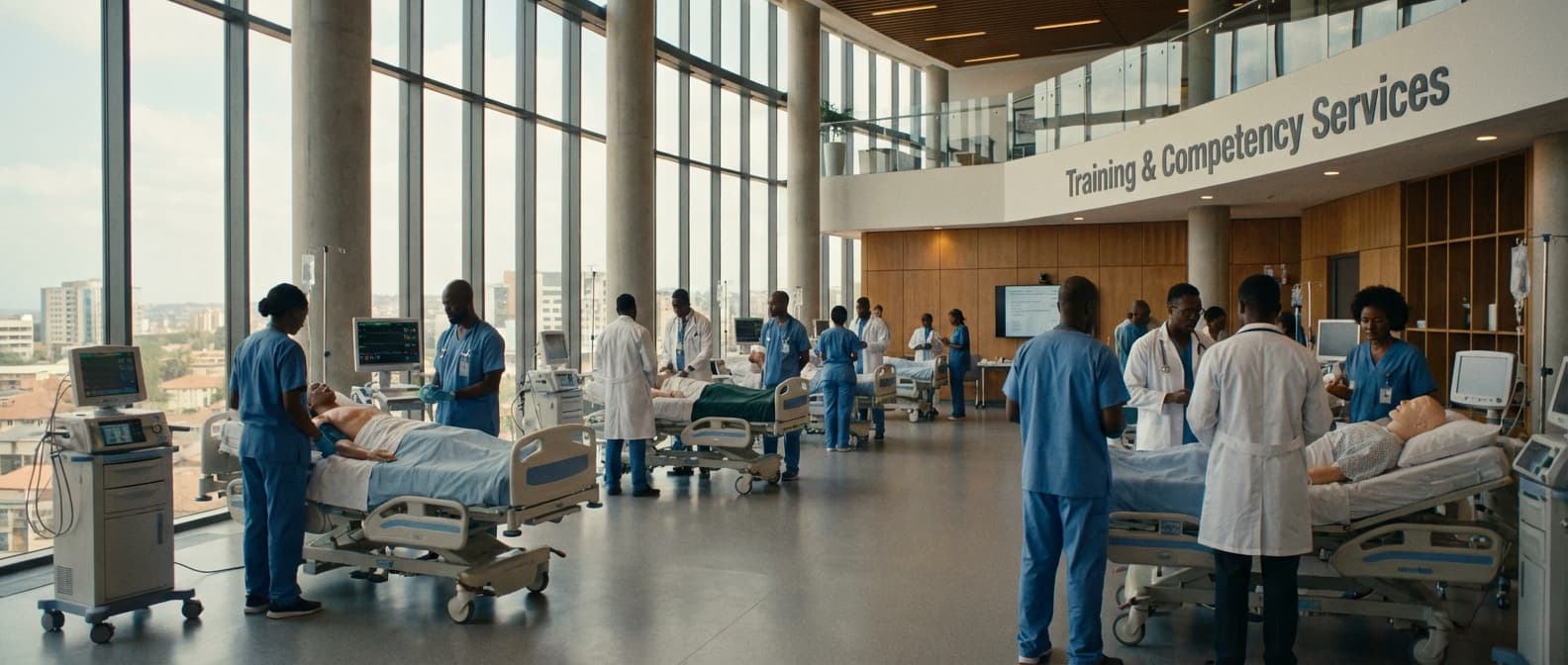
Biomedical Engineering First-Line Support Training Service in Mauritania
Engineering Excellence & Technical Support
Biomedical Engineering First-Line Support Training Service High-standard technical execution following OEM protocols and local regulatory frameworks.
Advanced Biomedical Equipment Diagnostics
Gain hands-on expertise in troubleshooting and repairing a wide range of critical biomedical devices, including imaging systems, patient monitors, and life support equipment, ensuring minimal downtime and optimal patient care in Mauritanian healthcare facilities.
Regulatory Compliance & Safety Protocols
Master the essential local and international regulations governing medical device maintenance and patient safety in Mauritania. Learn best practices for documentation, risk assessment, and implementing safety protocols to uphold the highest standards.
Remote Support & Network Integration
Develop proficiency in utilizing remote diagnostic tools and understanding network infrastructure crucial for modern biomedical equipment. Learn to support devices across geographically dispersed healthcare centers in Mauritania, enhancing efficiency and accessibility of technical expertise.
What Is Biomedical Engineering First-line Support Training Service In Mauritania?
Biomedical Engineering First-Line Support Training Service in Mauritania refers to a specialized educational program designed to equip individuals with the foundational knowledge and practical skills necessary to perform initial troubleshooting, basic maintenance, and routine operational checks on biomedical equipment within healthcare facilities across Mauritania. This service is crucial for ensuring the continuous availability and optimal performance of medical devices, thereby directly impacting patient care quality and safety.
| Target Audience | Needs Addressed | Typical Use Cases |
|---|---|---|
| Biomedical Technicians (Entry-Level): Individuals seeking to enter the field of biomedical equipment maintenance and support. | Develop foundational competence in the operation, basic maintenance, and initial troubleshooting of medical devices. | Performing daily equipment checks in hospital wards, responding to immediate equipment failure alerts, basic user training on device operation, ensuring equipment readiness for patient use. |
| Clinical Engineers (Junior/Associate): Professionals in the early stages of their biomedical engineering careers. | Enhance practical skills in device management, preventive maintenance, and immediate problem resolution to support clinical operations. | Supervising first-line support activities, conducting routine inspections, minor repairs and servicing of equipment, contributing to asset management. |
| Healthcare Facility Support Staff: Individuals responsible for the general upkeep and functionality of medical equipment in resource-limited settings. | Gain the ability to manage and maintain a basic inventory of medical devices, ensuring their safe and functional status with limited external technical resources. | Operating and maintaining essential medical equipment in rural clinics, ensuring functional continuity of devices in areas with limited access to specialized technicians, basic inventory management of consumables. |
| Biomedical Equipment Manufacturers/Distributors (Local Representatives): Personnel involved in product deployment and initial customer support. | Equip representatives with the skills to provide effective initial user training and basic on-site support, enhancing customer satisfaction and product reliability. | Installation and initial setup of new medical equipment, providing on-site training to healthcare professionals, performing initial troubleshooting during warranty periods, basic technical demonstrations. |
Key Components of Biomedical Engineering First-Line Support Training
- Introduction to Biomedical Equipment Fundamentals: Principles of operation for common medical devices (e.g., vital signs monitors, infusion pumps, ECG machines, basic diagnostic imaging equipment).
- Safety Standards and Regulations: Understanding of relevant Mauritanian healthcare regulations, international safety standards (e.g., IEC 60601 series), and principles of electrical safety for medical devices.
- Basic Troubleshooting Methodologies: Systematic approaches to identifying and resolving common equipment malfunctions, including error code interpretation and logical diagnostic sequences.
- Preventive Maintenance Procedures: Execution of routine checks, cleaning protocols, calibration verification, and minor component replacements as per manufacturer guidelines.
- User Interface and Operation: Proficiency in operating and configuring medical devices, including proper patient connections and parameter settings.
- Documentation and Reporting: Accurate recording of maintenance activities, incidents, and equipment status for traceability and quality assurance.
- Basic Tool Proficiency: Familiarity with common hand tools, multimeters, and diagnostic software used in first-line support.
- Communication and Escalation Protocols: Effective communication with clinical staff and clear procedures for escalating complex issues to higher-level technical support.
- Sterilization and Infection Control: Understanding of principles relevant to the handling and cleaning of biomedical equipment to prevent cross-contamination.
Who Needs Biomedical Engineering First-line Support Training Service In Mauritania?
In Mauritania, robust biomedical engineering first-line support is crucial for ensuring the optimal functioning and longevity of medical equipment, thereby directly impacting the quality of healthcare delivery. This training service aims to equip individuals with the foundational skills to perform routine maintenance, troubleshooting, and basic repairs of biomedical devices, preventing downtime and maximizing the utility of valuable healthcare assets. The target audience comprises individuals in roles directly responsible for the operation and upkeep of medical technology across various healthcare facilities.
| Customer Type | Specific Departments/Roles | Needs and Benefits of Training |
|---|---|---|
| Public Hospitals | Biomedical Engineering Departments, Technical Services Units, In-house Maintenance Teams, Clinical Staff (for basic equipment checks) | Minimize equipment downtime, reduce reliance on external technicians, extend equipment lifespan, improve patient safety, cost savings on repairs and replacements. |
| Private Clinics and Hospitals | Technical Support Staff, Facility Managers, Biomedical Technicians | Ensure operational efficiency, maintain high standards of care, competitive advantage through reliable equipment, faster resolution of minor issues. |
| Regional Health Centers | On-site technicians, General practitioners with technical responsibilities, Nursing supervisors | Empower local staff to handle common issues, reduce travel time and costs for specialized support, improve access to functional equipment in remote areas. |
| Ministry of Health | Procurement and Asset Management Units, Health Technology Assessment Teams, Training and Capacity Building Divisions | Develop a skilled local workforce, standardize maintenance practices, improve asset utilization, inform future equipment procurement decisions based on maintenance capabilities. |
| Medical Equipment Suppliers/Distributors | Field Service Technicians, Installation and Commissioning Teams, Customer Support Staff | Enhance customer satisfaction through prompt basic support, reduce the burden on specialized engineers for simple fixes, offer value-added services. |
| NGOs & Humanitarian Organizations | Logistics and Operations Staff, Healthcare Program Managers, Field Technicians | Ensure functionality of essential medical equipment in resource-limited settings, sustain healthcare programs, build local capacity for long-term impact. |
Target Customers and Departments in Mauritania
- Healthcare Facilities (Public and Private)
- Ministry of Health and its regional branches
- Medical Equipment Suppliers and Distributors
- Non-Governmental Organizations (NGOs) involved in healthcare
Biomedical Engineering First-line Support Training Service Process In Mauritania
This document outlines the workflow for the Biomedical Engineering First-Line Support Training Service provided in Mauritania. The process begins with an inquiry from a healthcare facility and concludes with the successful completion of the training, including post-training evaluation and feedback.
| Stage | Description | Key Activities | Responsible Party | Deliverables/Outcomes |
|---|---|---|---|---|
| The process starts when a healthcare facility expresses interest in the first-line support training for their biomedical engineering staff. | Contacting the training provider (e.g., via email, phone, website form). Providing initial information about training needs. | Healthcare Facility | Formal or informal request for training services. |
| Understanding the specific training requirements, equipment, and skill gaps of the requesting facility. | Consultation with the facility's biomedical engineering department. Identifying target audience and specific training modules. Developing a tailored training proposal. | Training Provider (Biomedical Engineering Department/Consultant) | Detailed training proposal outlining scope, objectives, curriculum, duration, costs, and learning outcomes. |
| Formalizing the training agreement and setting a mutually convenient schedule. | Review and approval of the proposal. Contract negotiation and signing. Finalizing training dates, location, and logistics. | Both Healthcare Facility and Training Provider | Signed training agreement. Confirmed training schedule. |
| Ensuring all necessary resources and materials are in place before the training begins. | Procuring training equipment and consumables. Preparing training materials (manuals, presentations, exercises). Communicating pre-training requirements to participants (e.g., prerequisites, materials to bring). Site preparation (if training is on-site). | Training Provider and Healthcare Facility | Ready training environment. Distributed pre-training materials. |
| Delivering the first-line support training program to the biomedical engineering staff. | Conducting theoretical sessions. Performing practical demonstrations and hands-on exercises. Troubleshooting common equipment issues. Q&A sessions and group discussions. On-site or remote delivery. | Training Provider (Trainers) | Trained biomedical engineering staff. Enhanced first-line support capabilities. |
| Assessing the effectiveness of the training and gathering feedback for improvement. | Administering knowledge tests and practical assessments. Collecting feedback from participants and their supervisors through surveys. Evaluating trainer performance. | Training Provider and Healthcare Facility | Assessment results. Participant feedback reports. Trainer evaluation reports. |
| Formalizing the training outcomes and providing comprehensive documentation. | Generating a final training report detailing participants, topics covered, assessment results, and recommendations. Issuing certificates of completion to participants. Archiving training records. | Training Provider | Comprehensive training report. Certificates of completion. Archived training documentation. |
| Ensuring long-term impact and identifying areas for future training enhancements. | Periodic follow-up with the facility to assess the application of learned skills. Identifying new training needs or requests. Incorporating feedback into future training programs. Offering advanced or specialized training modules. | Training Provider and Healthcare Facility | Sustained improvement in first-line support. Updated training offerings. Long-term partnership. |
Biomedical Engineering First-Line Support Training Service Workflow
- Inquiry Initiation
- Needs Assessment & Proposal Development
- Agreement & Scheduling
- Pre-Training Preparation
- Training Execution
- Post-Training Evaluation & Feedback
- Reporting & Documentation
- Follow-up & Continuous Improvement
Biomedical Engineering First-line Support Training Service Cost In Mauritania
Providing effective first-line support training for Biomedical Engineering technicians in Mauritania is crucial for ensuring the proper maintenance and functioning of medical equipment, ultimately impacting patient care. The cost of such training services is influenced by a variety of factors, leading to a range of potential price points in the local currency, Mauritanian Ouguiya (MRU).
| Training Service Type | Estimated Price Range (MRU) | Notes |
|---|---|---|
| Basic First-Line Support (Introduction to common medical devices, basic troubleshooting) | 25,000 - 60,000 MRU per participant | Typically 2-3 days, focuses on foundational knowledge and simple fixes. |
| Intermediate First-Line Support (Specific device categories, advanced troubleshooting) | 50,000 - 120,000 MRU per participant | Typically 5-7 days, includes hands-on practice with common medical equipment. |
| Advanced First-Line Support & Preventative Maintenance (Multiple device types, diagnostics, minor repairs) | 90,000 - 200,000+ MRU per participant | Can range from 1-2 weeks, often includes specialized modules and certifications. |
| On-site Group Training (Customized curriculum for a facility) | Negotiable based on group size, duration, and customization | Costs can vary significantly, often quoted as a package deal. |
| Online/Remote Training Modules (Self-paced or live webinars) | 15,000 - 70,000 MRU per participant | Depends on the comprehensiveness of content and interactivity. |
Key Pricing Factors for Biomedical Engineering First-Line Support Training in Mauritania:
- Training Scope and Curriculum: The depth and breadth of the training program significantly impact cost. This includes the number of medical device categories covered (e.g., diagnostic imaging, life support, laboratory equipment), the complexity of the troubleshooting and repair skills taught, and whether theoretical knowledge is combined with hands-on practical sessions.
- Duration of Training: Longer training programs naturally incur higher costs due to extended instructor time, facility usage, and resources allocated. A short, introductory course will be less expensive than an in-depth certification program.
- Trainer Expertise and Qualifications: The experience, certifications, and reputation of the trainers play a vital role. Highly specialized and experienced biomedical engineers with proven track records will command higher fees.
- Training Methodology: Whether the training is delivered online, in-person at a dedicated training facility, or on-site at the client's location will affect costs. On-site training may involve travel and accommodation expenses for trainers.
- Training Materials and Resources: The quality and quantity of training materials provided, such as manuals, simulators, practice equipment, and software licenses, contribute to the overall cost.
- Number of Participants: While often priced per participant, there might be volume discounts for larger groups. However, significantly large groups might necessitate additional trainers or a longer duration, which could increase total costs.
- Accreditation and Certification: Training programs that lead to recognized industry certifications or are accredited by relevant bodies often have higher costs due to the rigorous standards and validation processes involved.
- Customization Requirements: Tailoring the training curriculum to the specific needs and equipment prevalent in Mauritanian healthcare facilities can involve additional development and customization costs.
- Provider Reputation and Overhead: Established training providers with a strong reputation and significant operational overheads may charge more than smaller or newer entities.
- Logistics and Venue: For in-person training, the cost of the training venue, equipment rental, and any associated logistical arrangements (e.g., catering, transportation) will be factored in.
Affordable Biomedical Engineering First-line Support Training Service Options
This document outlines affordable biomedical engineering first-line support training service options, focusing on value bundles and cost-saving strategies. Effective first-line support is crucial for ensuring the reliable operation of medical equipment, minimizing downtime, and improving patient safety. Investing in cost-effective training empowers in-house teams to handle common issues, reducing reliance on external, often more expensive, specialized services. We explore different training modalities and package deals designed to maximize value for healthcare institutions.
| Value Bundle Option | Description | Target Audience | Key Features | Estimated Cost-Saving Potential |
|---|---|---|---|---|
| Core Skills Essentials Bundle | Covers fundamental principles of biomedical engineering, safety protocols, basic troubleshooting methodologies, and an introduction to common medical device categories. | New biomedical technicians, clinical support staff, and equipment operators. | Online modules, downloadable guides, interactive quizzes, basic virtual simulations. | 20-35% reduction in initial training costs compared to traditional classroom settings. |
| Device-Specific Proficiency Bundle (Tiered) | In-depth training on specific, high-impact medical devices (e.g., ventilators, infusion pumps, patient monitors). Offered in tiers: Basic (troubleshooting common alerts), Intermediate (minor repairs/calibration), Advanced (preventive maintenance). | Biomedical technicians with existing foundational knowledge. | Live remote instructor-led sessions, hands-on virtual labs, device-specific manuals and video tutorials, certification exams. | 30-45% reduction in external specialized service calls for covered devices. |
| Preventive Maintenance & Calibration Package | Focuses on standardized preventive maintenance procedures, calibration techniques, and documentation for a range of common equipment. | Experienced biomedical technicians and those seeking to expand their PM capabilities. | Workshops (in-person or virtual), practical exercises, access to calibration standards and templates, ongoing support forum. | 15-25% improvement in equipment uptime and reduced repair costs. |
| Train-the-Trainer & Internal Empowerment Program | Trains selected in-house personnel to become certified trainers, capable of delivering standardized first-line support training to new hires and ongoing staff development. | Senior biomedical technicians, lead engineers, and department managers. | Comprehensive curriculum design, adult learning principles, presentation skills training, assessment methodology, access to training materials for internal use. | Significant long-term savings by eliminating recurring external training fees and building internal expertise. |
Key Cost-Saving Strategies for Biomedical Engineering First-Line Support Training
- Leverage Online & Blended Learning: Utilize cost-effective online modules, webinars, and virtual labs to deliver foundational knowledge, reducing travel and instructor fees.
- Train-the-Trainer Programs: Equip experienced biomedical technicians or clinical engineers to train new staff, creating a sustainable internal training program.
- Focus on High-Frequency Equipment: Prioritize training for the most commonly used and prone-to-issue medical devices within your institution.
- Modular Training Packages: Break down training into specific modules for individual devices or skill sets, allowing for flexible and targeted investment.
- Group Discounts & Bulk Purchasing: Negotiate reduced rates for training multiple technicians or for ongoing service agreements that include training components.
- Partnerships with Training Providers: Collaborate with educational institutions or specialized training companies to access shared resources and potentially lower costs.
- Internal Knowledge Sharing Platforms: Foster a culture of knowledge sharing through internal wikis, forums, or regular case study reviews to learn from experienced personnel.
Verified Providers In Mauritania
In the evolving landscape of healthcare in Mauritania, ensuring access to verified and credentialed providers is paramount for individuals seeking quality medical services. Franance Health stands out as a leading organization dedicated to this mission, offering a robust network of healthcare professionals who have undergone rigorous verification processes. This commitment to credentialing not only guarantees the competence and legitimacy of their providers but also fosters trust and confidence among patients. Understanding Franance Health's credentialing process and its implications is crucial for anyone prioritizing reliable healthcare in Mauritania. Their emphasis on quality assurance, ethical practice, and continuous professional development positions them as the best choice for accessing skilled and trustworthy medical expertise.
| Credentialing Aspect | Franance Health Approach | Benefit to Patients |
|---|---|---|
| Educational Verification | Thorough checking of medical degrees and academic transcripts from accredited institutions. | Ensures providers have foundational medical knowledge and training. |
| Licensing and Registration | Verification of current and valid medical licenses issued by relevant authorities in Mauritania and/or internationally. | Confirms providers are legally authorized to practice medicine. |
| Professional Experience Review | Assessment of past work history, including roles, responsibilities, and duration of practice. | Indicates practical application of knowledge and acquired skills. |
| Background Checks | Inclusion of checks for disciplinary actions or malpractice claims. | Safeguards against providers with a history of misconduct. |
| Skills Assessment (where applicable) | May involve peer review or evaluation of specific procedural competencies. | Validates specialized skills and proficiency in certain medical areas. |
| Commitment to Standards | Adherence to Franance Health's internal quality and ethical standards. | Builds trust in the overall quality of care and professional integrity. |
Why Franance Health Credentials Represent the Best Choice:
- Rigorous Verification Process: Franance Health employs a comprehensive vetting system that includes educational background checks, licensing verification, and practice history reviews.
- Commitment to Quality: Their credentialing ensures that all listed providers meet high standards of clinical expertise and patient care.
- Enhanced Patient Safety: By partnering with verified professionals, Franance Health significantly reduces the risk of encountering unqualified or fraudulent practitioners.
- Promoting Ethical Practice: The credentialing process includes an assessment of ethical conduct and adherence to professional codes of conduct.
- Access to Trusted Professionals: Patients can have greater confidence in the medical advice and treatments received from Franance Health-affiliated providers.
- Continuous Professional Development: Franance Health often encourages or requires ongoing training and skill enhancement for its network members.
- Transparency and Accountability: The credentialing framework promotes transparency in provider qualifications and establishes a clear line of accountability.
Scope Of Work For Biomedical Engineering First-line Support Training Service
This Scope of Work (SOW) outlines the requirements for a Biomedical Engineering First-Line Support Training Service. The objective is to equip support personnel with the fundamental knowledge and practical skills necessary to effectively troubleshoot, diagnose, and resolve common issues with biomedical equipment, thereby improving first-contact resolution rates and reducing escalation to specialized engineering teams. The training will cover a broad range of common biomedical devices, focusing on practical application and user-centric problem-solving. This SOW details the technical deliverables, standard specifications, and key performance indicators for this training service.
| Technical Deliverable | Description | Standard Specification | Acceptance Criteria |
|---|---|---|---|
| Training Curriculum Development | Comprehensive curriculum covering theoretical concepts and practical exercises for first-line biomedical support. | Modular design, adaptable to different levels of prior knowledge. Includes detailed lesson plans, learning objectives, and assessment strategies. Covers at least 80% of commonly encountered first-line issues across specified device categories. | Curriculum submitted and approved by the client prior to training commencement. Demonstrates clear alignment with training objectives and covers the specified device categories. |
| Training Materials | Participant manuals, presentations, case studies, and practical exercise guides. | High-quality, easily understandable materials. Includes diagrams, flowcharts, and step-by-step instructions. Available in digital and/or print format. | Materials reviewed and approved by the client. Content is accurate, up-to-date, and relevant to first-line support tasks. |
| Hands-on Training Sessions | Practical sessions utilizing simulated or actual biomedical equipment for troubleshooting and basic maintenance. | Adequate simulation equipment or access to functional devices. Instructor-to-participant ratio not exceeding 1:10 for effective guidance. Sessions include practical troubleshooting scenarios and component identification. | Participants demonstrate proficiency in performing basic troubleshooting steps on at least 75% of practiced scenarios. Successful completion of practical assessments. |
| Assessment and Evaluation Tools | Quizzes, practical exams, and post-training surveys. | Assessments measure knowledge retention and practical skill application. Surveys gather feedback on training effectiveness and instructor performance. | Assessment results submitted to the client. Minimum pass rate of 80% for theoretical assessments and 70% for practical assessments. Survey feedback analyzed and summarized. |
| Trainer Qualification and Certification | Qualified and experienced instructors with expertise in biomedical engineering and adult learning principles. | Instructors possess relevant certifications (e.g., CBET or equivalent), a minimum of 5 years of experience in biomedical equipment support, and proven training delivery skills. | Resumes and certifications of all proposed trainers submitted for client approval. Client confirmation of trainer suitability. |
| Post-Training Support | Limited remote support or Q&A session for participants after the formal training. | One follow-up Q&A session or access to an online forum for a period of 30 days post-training. Focus on clarifying any lingering doubts or issues. | Scheduled Q&A session or access to forum established and promoted to participants. Feedback collected on the usefulness of the post-training support. |
| Training Report | Comprehensive report detailing training activities, participant performance, and feedback. | Includes attendee lists, assessment scores, summary of feedback, and recommendations for further training or skill development. Report submitted within 10 business days of training completion. | Report submitted in a clear, concise format. Contains all required information and is delivered within the specified timeframe. |
Training Objectives
- Understand fundamental principles of biomedical device operation and common failure modes.
- Develop proficiency in basic troubleshooting methodologies and diagnostic techniques.
- Learn to identify and document equipment malfunctions accurately.
- Gain hands-on experience with common tools and testing equipment.
- Understand safety protocols and procedures related to biomedical equipment handling and maintenance.
- Familiarize with escalation procedures for complex technical issues.
- Develop effective communication skills for interacting with end-users and reporting issues.
Service Level Agreement For Biomedical Engineering First-line Support Training Service
This Service Level Agreement (SLA) outlines the response times and uptime guarantees for the Biomedical Engineering First-Line Support Training Service. This training service is crucial for ensuring that frontline support personnel possess the necessary skills to address common issues with biomedical equipment, thereby minimizing downtime and ensuring patient safety. The following sections detail the performance standards expected of the training service provider.
| Service Component | Response Time Target | Uptime Guarantee | Measurement Method |
|---|---|---|---|
| Training Platform Availability (Online Portal) | N/A (Continuous Availability) | 99.5% per calendar month | Monitoring of server uptime and accessibility from multiple network locations. |
| Technical Support for Training Platform Issues (e.g., login problems, content access) | 3 business hours for initial acknowledgment, 8 business hours for resolution or workaround. | N/A (Response time driven) | Ticketing system logs and communication records. |
| Availability of Scheduled Virtual Training Sessions | N/A (Scheduled) | 100% for pre-booked sessions, with advance notice for rescheduling (minimum 24 hours). | Session attendance records and trainer availability logs. |
| Access to Training Materials (e.g., manuals, videos, simulations) | Instantaneous access upon authentication. | 99.0% availability of stored training materials. | Automated checks of file server and cloud storage accessibility. |
| Instructor Availability for Q&A during Scheduled Office Hours | Within 15 minutes of scheduled start time. | 95% during designated office hours. | Attendance logs and trainee feedback. |
Key Service Objectives
- To provide timely and effective first-line support training to Biomedical Engineering personnel.
- To ensure the availability of training resources and personnel as per agreed schedules.
- To achieve defined response times for technical assistance requests related to the training platform.
- To maintain high uptime for the online training portal and associated resources.
Frequently Asked Questions

Ready when you are
Let's scope your Biomedical Engineering First-Line Support Training Service in Mauritania project in Mauritania.

Scaling healthcare logistics and technical systems across the entire continent.