
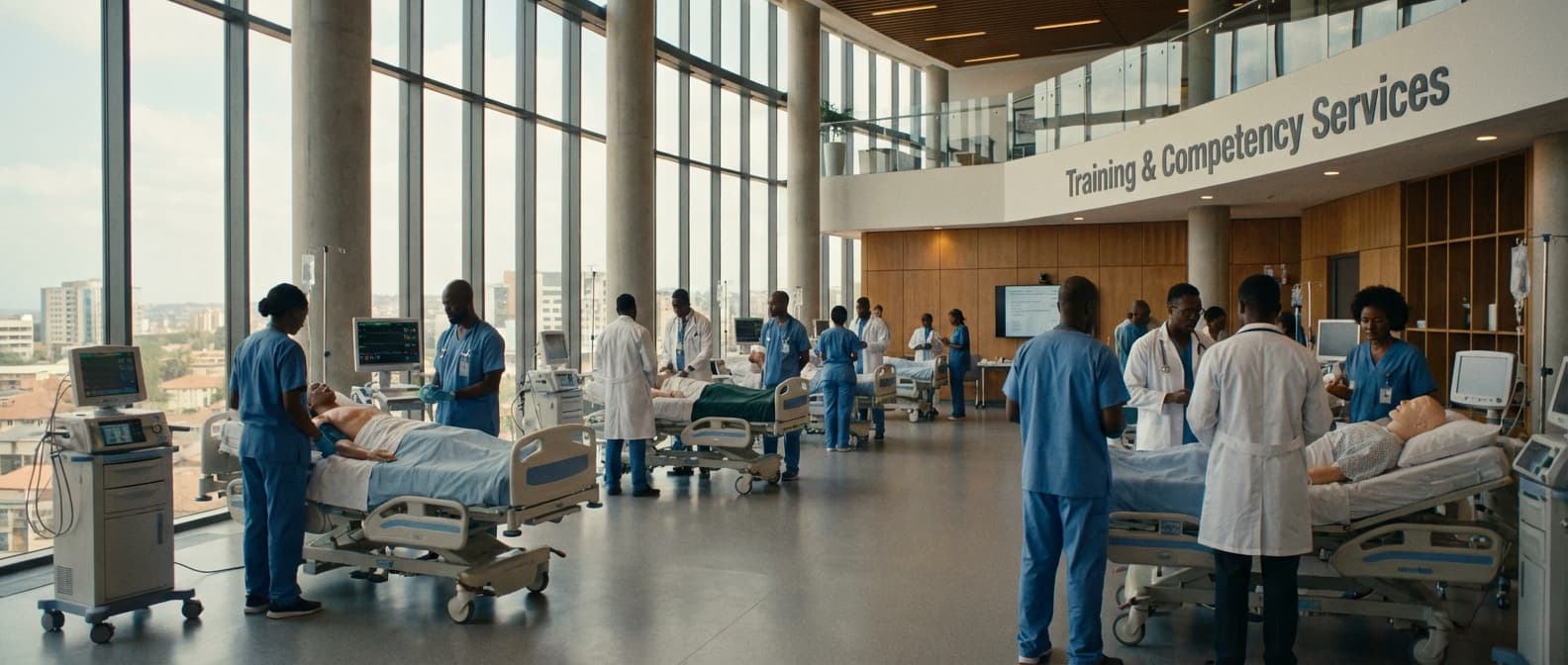
Anesthesia Workstation User Training Service in Mauritania
Engineering Excellence & Technical Support
Anesthesia Workstation User Training Service High-standard technical execution following OEM protocols and local regulatory frameworks.
Mastering Advanced Ventilation Modes
Gain hands-on proficiency in utilizing sophisticated ventilation modes (e.g., Pressure Support, Volume Control Plus, PRVC) tailored for diverse patient populations and surgical procedures, ensuring optimal respiratory support and patient safety.
Streamlining Anesthetic Delivery Workflows
Learn to configure and navigate the anesthesia workstation interface for efficient anesthetic agent delivery, vital signs monitoring, and rapid integration of perioperative data, minimizing setup time and reducing the risk of manual errors.
Proactive Troubleshooting & Alarms Management
Develop the skills to interpret complex alarm scenarios, perform rapid troubleshooting of workstation components, and implement preventative maintenance practices to ensure uninterrupted and reliable anesthetic delivery in critical care settings.
What Is Anesthesia Workstation User Training Service In Mauritania?
Anesthesia Workstation User Training Service in Mauritania refers to the structured educational programs designed to equip healthcare professionals with the knowledge and practical skills necessary to operate, maintain, and troubleshoot modern anesthesia workstations. These workstations are sophisticated medical devices that deliver anesthetic gases, monitor vital signs, and assist with ventilation during surgical and other medical procedures. The service aims to ensure safe, efficient, and effective utilization of this critical equipment, thereby optimizing patient care and minimizing risks associated with anesthesia delivery. Training focuses on device functionality, parameter interpretation, alarm management, troubleshooting common issues, and adherence to safety protocols and best practices relevant to the Mauritanian healthcare context. The service is typically delivered by qualified trainers, often in collaboration with equipment manufacturers or specialized training organizations, and may involve theoretical instruction, hands-on practice, and competency assessments.
| Target Audience | Justification | Typical Use Cases |
|---|---|---|
| Anesthesiologists | To master the full spectrum of advanced functionalities, optimize anesthetic delivery, and interpret complex monitoring data for improved patient outcomes. | Routine surgical procedures, complex anesthetic management, critical care scenarios, pain management interventions. |
| Anesthesia Residents and Fellows | To build foundational knowledge and practical skills in preparation for independent practice, ensuring safe and competent workstation operation. | Learning and simulation environments, supervised surgical cases, development of clinical decision-making skills. |
| Anesthesia Nurses and Technicians | To understand basic operations, perform pre-use checks, manage routine tasks, assist the anesthesiologist, and respond to immediate alarms. | Pre-anesthetic setup, intraoperative assistance, post-anesthetic care, routine equipment checks and cleaning. |
| Biomedical Engineers and Technicians | To acquire in-depth knowledge for calibration, preventive maintenance, troubleshooting complex technical issues, and ensuring device longevity and safety. | Device installation and commissioning, routine maintenance schedules, repair of malfunctioning units, quality assurance checks. |
| Hospital Administrators and Procurement Officers | To understand the technical capabilities, training requirements, and maintenance needs for informed purchasing decisions and resource allocation. | Evaluating new workstation acquisitions, developing service contracts, planning for training budgets and infrastructure. |
Key Components of Anesthesia Workstation User Training Service
- Device Familiarization and Hardware Operation
- Anesthetic Gas Delivery Systems and Monitoring
- Ventilator Modes and Settings
- Integrated Patient Monitoring and Data Interpretation
- Alarm Management and Troubleshooting
- Sterilization and Disinfection Procedures
- Preventive Maintenance and Basic Servicing
- Emergency Procedures and System Fail-Safes
- Regulatory Compliance and Best Practices
Who Needs Anesthesia Workstation User Training Service In Mauritania?
Anesthesia workstation user training services are crucial for ensuring the safe, effective, and efficient operation of complex anesthesia equipment. In Mauritania, the demand for such specialized training stems from a growing healthcare sector, the adoption of advanced medical technologies, and the continuous need to upskill medical professionals. This training is vital for minimizing risks, optimizing patient outcomes, and adhering to international standards of care.
| Customer Type | Relevant Departments | Key Needs Addressed by Training |
|---|---|---|
| Public Hospitals | Anesthesiology Department, Operating Rooms, Intensive Care Units (ICUs) | Ensuring all anesthesiologists, anesthetists, and O.R. nurses are proficient in using various anesthesia workstations. Improving patient safety during surgical procedures. Standardizing anesthetic practices. Compliance with national health regulations. |
| Private Hospitals & Clinics | Anesthesiology Department, Surgical Theaters, Recovery Rooms | Maximizing the return on investment in advanced anesthesia equipment. Offering high-quality patient care to attract and retain patients. Training new staff on specific workstation models. Maintaining equipment longevity through proper usage. |
| Specialized Medical Centers (e.g., Cardiology, Neurosurgery) | Anesthesiology Teams within specialized units | Training on advanced features and specific protocols for complex surgeries. Ensuring seamless integration of anesthesia workstations with other specialized monitoring equipment. Enhancing precision and control during critical procedures. |
| Medical Training Institutes & Universities | Anesthesiology Programs, Nursing Schools, Continuing Medical Education (CME) departments | Equipping future anesthesiologists and nurses with hands-on skills. Providing updated training on the latest workstation technologies. Fulfilling accreditation requirements for practical training. Developing standardized curricula. |
| Government Health Ministries | Procurement Departments, Professional Development Units, Quality Assurance Divisions | Ensuring national standards for anesthesia care. Facilitating the procurement of appropriate and user-friendly anesthesia workstations. Overseeing the quality of training provided to healthcare professionals. Developing guidelines for equipment maintenance and usage. |
Target Customers and Departments in Mauritania for Anesthesia Workstation User Training Services
- Hospitals (Public and Private)
- Clinics and Specialized Medical Centers
- Training and Educational Institutions for Healthcare Professionals
- Government Health Ministries and Regulatory Bodies
Anesthesia Workstation User Training Service Process In Mauritania
This document outlines the Anesthesia Workstation User Training Service Process implemented by [Your Company Name] for healthcare professionals in Mauritania. The process is designed to ensure efficient and effective training delivery, from initial inquiry to successful execution, empowering users to operate anesthesia workstations safely and competently.
| Stage | Key Activities | Responsible Party | Typical Duration |
|---|---|---|---|
| Initial contact, requirement gathering, understanding client needs. | Client, [Your Company Name] Sales/Training Coordinator | 1-3 Business Days |
| Developing training plan, outlining costs, submitting proposal. | [Your Company Name] Sales/Training Department | 2-5 Business Days |
| Negotiating terms, drafting and signing the service agreement. | Client, [Your Company Name] Legal/Sales Department | 3-7 Business Days |
| Logistics, material preparation, venue confirmation, trainer scheduling. | [Your Company Name] Training Coordinator/Logistics Team | 1-2 Weeks (depending on complexity) |
| Theoretical and practical training sessions. | [Your Company Name] Certified Trainer | Varies (e.g., 1-5 Days per group) |
| Participant competency checks, feedback collection. | [Your Company Name] Certified Trainer | Integrated within Training Execution |
| Issuing certificates, providing ongoing assistance. | [Your Company Name] Training Department | Ongoing as per agreement |
| Generating and sending invoices, receiving payment. | [Your Company Name] Finance Department | 1-3 Business Days post-training |
Anesthesia Workstation User Training Service Process - Mauritania
- {"title":"1. Inquiry & Needs Assessment","description":"Potential clients (hospitals, clinics, medical training institutions) express interest in anesthesia workstation user training. This phase involves understanding their specific needs regarding the number of trainees, target audience (e.g., anesthesiologists, nurses), preferred training dates, existing workstation models, and any particular areas of focus."}
- {"title":"2. Proposal & Quotation","description":"Based on the needs assessment, a tailored training proposal is developed. This includes the training curriculum outline, duration, proposed dates and location, trainer qualifications, required materials (if any), and a detailed cost quotation. This proposal is submitted to the client for review and approval."}
- {"title":"3. Contract & Agreement","description":"Upon client acceptance of the proposal, a formal training agreement or contract is drafted. This document outlines the scope of services, payment terms, responsibilities of both parties, confidentiality clauses, and any relevant legal or logistical considerations specific to operating in Mauritania."}
- {"title":"4. Pre-Training Preparations","description":"This critical phase involves meticulous planning. It includes confirming the training venue and ensuring it's equipped with necessary infrastructure (e.g., power, internet). If training is to be conducted on-site with client-owned workstations, coordination with the client to ensure workstation availability and functionality is paramount. For off-site training, arrangement for workstation provision will be made. Training materials (manuals, presentations, handouts) are prepared and translated if necessary. Trainer travel and accommodation arrangements are finalized."}
- {"title":"5. Training Execution","description":"The training commences as per the agreed schedule. The curriculum typically includes theoretical sessions covering workstation principles, safety features, modes of ventilation, and monitoring capabilities, followed by hands-on practical sessions using the anesthesia workstations. Emphasis is placed on interactive learning, case studies, and Q&A sessions."}
- {"title":"6. Assessment & Evaluation","description":"Throughout the training, participants' understanding and competency are assessed through practical demonstrations, quizzes, and observation. A formal evaluation of the training program itself is also conducted through participant feedback forms to identify areas for improvement."}
- {"title":"7. Certification & Post-Training Support","description":"Upon successful completion of the training and passing assessments, participants receive certificates of completion. Post-training support can be offered, which may include access to online resources, follow-up technical assistance, or scheduled refresher courses as per the service agreement."}
- {"title":"8. Billing & Invoicing","description":"Following the completion of the training service, an invoice is issued to the client based on the agreed-upon terms in the contract. Payment processing is then completed."}
Anesthesia Workstation User Training Service Cost In Mauritania
Providing user training for anesthesia workstations in Mauritania is a crucial service that ensures healthcare professionals can safely and effectively operate complex medical equipment. The cost of this specialized training is influenced by several factors, and pricing can vary significantly based on these considerations. Understanding these elements helps healthcare facilities budget appropriately for essential training programs. The local currency in Mauritania is the Mauritanian Ouguiya (MRU).
| Training Type/Scope | Estimated Cost Range (MRU) |
|---|---|
| Basic Familiarization & Operation (1-2 days, small group) | 50,000 - 100,000 MRU |
| Standard User Training (2-3 days, comprehensive, small to medium group) | 100,000 - 250,000 MRU |
| Advanced User Training & Troubleshooting (3-5 days, in-depth, specific models) | 200,000 - 400,000 MRU |
| On-site Training (additional for travel/accommodation) | Varies based on location, estimate +20-50% |
| Customized Training Program | Negotiable, can be significantly higher based on scope |
| Refresher/Update Training (1 day) | 40,000 - 80,000 MRU |
Key Factors Influencing Anesthesia Workstation User Training Costs in Mauritania
- Type and Complexity of the Anesthesia Workstation: More advanced and feature-rich workstations, such as those with integrated ventilators, advanced monitoring capabilities, and sophisticated software, generally require more in-depth and specialized training. Training for simpler models will likely be less expensive.
- Duration of the Training Program: The length of the training directly impacts the cost. A comprehensive program covering all aspects of the workstation, including theoretical knowledge, practical application, troubleshooting, and maintenance, will naturally be longer and more expensive than a brief introductory session.
- Number of Participants: Training is often priced on a per-participant basis or as a package for a group. Larger groups might secure a lower per-person rate, but the overall cost will be higher. Conversely, individual training sessions are typically the most expensive on a per-person basis.
- Trainer's Expertise and Qualifications: Highly experienced and certified trainers, particularly those with extensive clinical experience and specialized knowledge of specific workstation brands, command higher fees. The reputation and credentials of the training provider also play a role.
- Location and Logistics: If the training is conducted on-site at a healthcare facility in a remote or less accessible region of Mauritania, travel and accommodation expenses for the trainers will be factored into the overall cost. Training conducted at a centralized training center might be more cost-effective.
- Training Materials and Resources: The provision of high-quality training manuals, simulations, practice equipment, and post-training support materials can add to the overall cost of the service.
- Customization of Training Content: If a healthcare facility requires a customized training program tailored to their specific protocols, patient demographics, or existing equipment infrastructure, this will incur additional development and delivery costs.
- Ongoing Support and Certification: Some training packages may include post-training support, refresher courses, or certification exams, which will influence the final price.
- Provider Reputation and Demand: Established training providers with a strong reputation for quality and reliability may charge premium prices. High demand for such specialized training can also lead to increased costs.
Affordable Anesthesia Workstation User Training Service Options
This document outlines valuable service options for affordable anesthesia workstation user training, focusing on how to maximize value through bundled offerings and strategic cost-saving measures. Investing in comprehensive training ensures safe and efficient operation of anesthesia workstations, ultimately benefiting patient care and operational efficiency. We offer flexible packages designed to meet diverse institutional needs and budgets.
| Value Bundle Name | Key Components | Target Audience | Cost-Saving Strategy | Estimated Value/Benefit |
|---|---|---|---|---|
| Essential On-Site Package | On-site Instructor-Led Training (1-2 days), Basic E-Learning Module Access | New users, departments with minimal existing knowledge | Group discounts for multiple attendees, reduced travel costs compared to individual sessions | Ensures foundational competency for safe operation, immediate skill development |
| Comprehensive Remote Solution | Remote/Virtual Training Sessions (multiple sessions), Full E-Learning Module Library Access, Virtual Competency Checks | Remote facilities, cost-conscious institutions, refresher training | Eliminates travel expenses, scalable to larger groups, allows for flexible scheduling | Cost-effective knowledge dissemination, broad accessibility, consistent training delivery |
| Advanced Skill & Certification Bundle | On-site or Virtual Advanced Training, Competency Assessment & Certification, Access to Specialty Modules | Experienced users seeking advanced skills, preparation for specialized procedures, compliance requirements | Bundled assessment and certification saves per-component fees, focused training reduces overall time commitment | Enhances user expertise, ensures high-level proficiency, demonstrates commitment to quality care |
| Sustainability & Empowerment Program | Train-the-Trainer Program, Ongoing E-Learning Access, Annual Refresher Webinar | Institutions aiming for long-term training independence, large healthcare systems | Reduces reliance on external trainers over time, institutionalizes knowledge, proactive maintenance of skills | Long-term cost reduction, consistent in-house expertise, continuous improvement culture |
| Custom & On-Demand Training | Tailored curriculum development, flexible session formats (on-site/remote), as-needed support | Unique workstation configurations, specialized clinical needs, emergent training requirements | Pay-as-you-go flexibility, avoids overpaying for unused services, addresses specific pain points efficiently | Maximizes ROI by addressing precise training needs, minimizes disruption, optimizes resource allocation |
Core Training Service Components
- On-site Instructor-Led Training: Hands-on sessions conducted at your facility, tailored to your specific workstation models and clinical workflows.
- Remote/Virtual Training Sessions: Live, interactive training delivered online, offering flexibility for dispersed teams or immediate needs.
- E-Learning Modules: Self-paced online courses covering theoretical knowledge, basic functions, and common troubleshooting.
- Competency Assessment & Certification: Evaluation of user proficiency to ensure readiness for independent workstation operation.
- Refresher Training & Updates: Sessions focused on new features, software updates, or reinforcing core competencies.
- Customizable Training Curricula: Development of training programs based on specific departmental requirements or user roles.
- Train-the-Trainer Programs: Empowering your internal staff to become proficient educators for ongoing training needs.
Verified Providers In Mauritania
In Mauritania's evolving healthcare landscape, identifying reliable and credentialed providers is paramount for individuals seeking quality medical services. Franance Health stands out as a beacon of trust and excellence, offering a comprehensive network of verified healthcare professionals and facilities. This document outlines the rigorous credentialing process employed by Franance Health and elucidates why their network represents the optimal choice for patients in Mauritania.
| Why Franance Health is the Best Choice | Benefits for Patients | Key Differentiators |
|---|---|---|
| Access to a curated network of highly qualified and verified medical professionals. | Peace of mind knowing you are receiving care from trusted and credentialed providers. | Eliminates the guesswork and risk associated with selecting healthcare services. |
| Ensured adherence to international quality and safety standards in medical practice. | Improved patient outcomes due to the expertise and dedication of Franance Health's network. | A streamlined and reliable path to receiving effective medical treatment. |
| Comprehensive evaluation of both individual practitioners and healthcare facilities. | Enhanced patient experience through access to modern facilities and compassionate care. | Proactive approach to healthcare quality assurance, safeguarding patient well-being. |
| Ongoing monitoring and re-evaluation to maintain the highest standards. | Reduced risk of encountering substandard medical services or unqualified practitioners. | Commitment to continuous improvement and patient satisfaction. |
Franance Health Credentialing: A Commitment to Excellence
- Rigorous Verification Process: Franance Health implements a multi-layered vetting system for all its partner providers. This includes thorough background checks, verification of medical licenses and certifications with relevant authorities, and assessment of professional experience.
- Specialty Expertise: We ensure that providers within our network possess demonstrable expertise in their respective medical fields, often requiring specific certifications and a history of successful patient outcomes.
- Facility Standards: Beyond individual practitioners, Franance Health also evaluates healthcare facilities for adherence to stringent quality and safety standards, including equipment maintenance, hygiene protocols, and patient care infrastructure.
- Continuous Monitoring and Re-evaluation: Our commitment to quality is ongoing. Franance Health regularly monitors provider performance and undertakes periodic re-evaluations to ensure continued compliance with our high standards.
- Patient Feedback Integration: Patient experiences are a crucial component of our vetting. We actively solicit and incorporate patient feedback to identify areas of strength and opportunities for improvement within our network.
Scope Of Work For Anesthesia Workstation User Training Service
This Scope of Work (SOW) outlines the requirements for a comprehensive Anesthesia Workstation User Training Service. The objective is to ensure that all designated personnel are proficient in the safe and effective operation of the anesthesia workstation, encompassing its features, functionalities, maintenance, and troubleshooting. The training will cover theoretical knowledge and practical hands-on experience, adhering to industry best practices and the manufacturer's guidelines. This document specifies the technical deliverables and standard specifications required for the successful execution of this training service.
| Deliverable Item | Description | Standard Specification | Format/Method | Acceptance Criteria |
|---|---|---|---|---|
| Training Curriculum | Detailed outline of all training modules, learning objectives, and content breakdown for each module. | Must be aligned with manufacturer's training protocols and relevant clinical guidelines. Cover both theoretical and practical aspects. | Digital document (PDF) | Approved by Client's Clinical and Technical Review Committee. |
| Training Materials (Participant) | Comprehensive set of materials for each participant, including presentations, handouts, quick reference guides, and case studies. | High-quality, clear, and concise information. Multilingual options if required. | Digital (PDF, editable formats for customization) and/or printed copies. | Content accuracy verified. Usability assessed by pilot group. |
| Training Materials (Instructor) | Materials for the instructor, including facilitator guides, lesson plans, answer keys for exercises, and demonstration checklists. | Detailed guidance for effective delivery. Includes contingency plans for common issues. | Digital document (PDF, editable formats) | Content comprehensiveness and clarity for effective instruction. |
| Hands-on Training Sessions | Practical sessions utilizing actual anesthesia workstations or high-fidelity simulators. | Minimum participant-to-workstation ratio of 1:2. Sufficient time allocated for individual practice and Q&A. | In-person, facilitated sessions. | Observation of participant proficiency in performing key tasks. Successful completion of practical assessments. |
| Assessment Tools | Written/online quizzes, practical skill checklists, and case-based scenario assessments to evaluate learning. | Objective scoring mechanisms. Aligned with learning objectives. Validity and reliability established. | Digital (online platform) and/or paper-based formats. | Demonstrated ability of participants to meet predefined competency levels. |
| Competency Certificates | Formal certificates issued to participants who successfully complete the training and assessments. | Includes participant name, training date, workstation model, and issuing authority. Secure and verifiable. | Digital (PDF) and/or printed. | Issuance to all successfully assessed participants. |
| Training Report | Comprehensive report detailing training conducted, participant attendance, assessment results, and any identified areas for improvement. | Includes executive summary, detailed analysis of training effectiveness, and recommendations. Presented in an organized and easily digestible format. | Digital document (PDF) | Timely submission of accurate and actionable report post-training completion. |
| Post-Training Support (Optional) | Limited period of remote support for follow-up questions or minor troubleshooting after the formal training. | Defined support channels (email, phone) and response times. Duration of support clearly specified. | Remote communication (email, phone, video conference). | Resolution of reported issues within defined SLAs. |
| Trainer Qualifications | Documentation of trainers' expertise, relevant certifications, and experience in anesthesia workstation operation and training delivery. | Certified by manufacturer or equivalent recognized body. Minimum of X years of clinical experience. | Curriculum Vitae (CV) and certification copies. | Verification of qualifications by Client's HR/Technical Department. |
| Training Environment Setup | Ensuring the training venue is adequately equipped with functional anesthesia workstations, simulators (if applicable), projectors, and suitable seating. | Workstations are calibrated and in good working order. Adequate space for practical exercises. Stable internet connection if online components are used. | Physical setup and equipment verification. | Successful demonstration of all equipment functionalities during the training. |
Key Training Areas
- Anesthesia Workstation Overview and Components
- Patient Setup and Monitoring
- Ventilation Modes and Parameters
- Gas Delivery and Agent Control
- Alarm Management and Troubleshooting
- Drug Delivery Systems Integration
- Record Keeping and Data Management
- Routine Maintenance and Cleaning Procedures
- Emergency Procedures and Troubleshooting
- Software Updates and Calibration (if applicable)
Service Level Agreement For Anesthesia Workstation User Training Service
This Service Level Agreement (SLA) outlines the performance standards and guarantees for the Anesthesia Workstation User Training Service provided by [Your Company Name]. It defines the expected response times for support requests and the guaranteed uptime for the online training platform.
| Service Component | Service Level Objective (SLO) | Measurement | Remedy/Credit |
|---|---|---|---|
| Technical Support - Critical Issues (e.g., platform inaccessible, core functionality broken) | Acknowledge within 30 minutes, Resolution target within 4 business hours | Time from ticket submission to acknowledgement and subsequent resolution progress | 10% service credit for each instance of exceeding the resolution target after initial acknowledgement, capped at 50% of monthly training fees. |
| Technical Support - Standard Issues (e.g., minor bugs, feature questions) | Acknowledge within 2 business hours, Resolution target within 1 business day | Time from ticket submission to acknowledgement and subsequent resolution progress | 5% service credit for each instance of exceeding the resolution target after initial acknowledgement, capped at 25% of monthly training fees. |
| Anesthesia Workstation Training Platform Uptime | 99.5% Uptime (excluding scheduled maintenance) | Percentage of time the platform is accessible during the service period (monthly) | For every 30 minutes of unscheduled downtime exceeding 1 hour in a calendar month, a credit of 1% of the monthly training fees will be applied, capped at 10% of monthly training fees. |
| Scheduled Maintenance Notifications | Minimum 24 hours prior notice | Time between notification and commencement of scheduled maintenance | Not applicable (scheduled maintenance is expected and excluded from uptime calculations if properly notified). |
Key Performance Indicators (KPIs)
- Response Time: The maximum time allowed for a technical support representative to acknowledge and begin addressing a reported issue.
- Uptime Guarantee: The minimum percentage of time the online training platform will be available and accessible to users.
Frequently Asked Questions

Ready when you are
Let's scope your Anesthesia Workstation User Training Service in Mauritania project in Mauritania.

Scaling healthcare logistics and technical systems across the entire continent.