
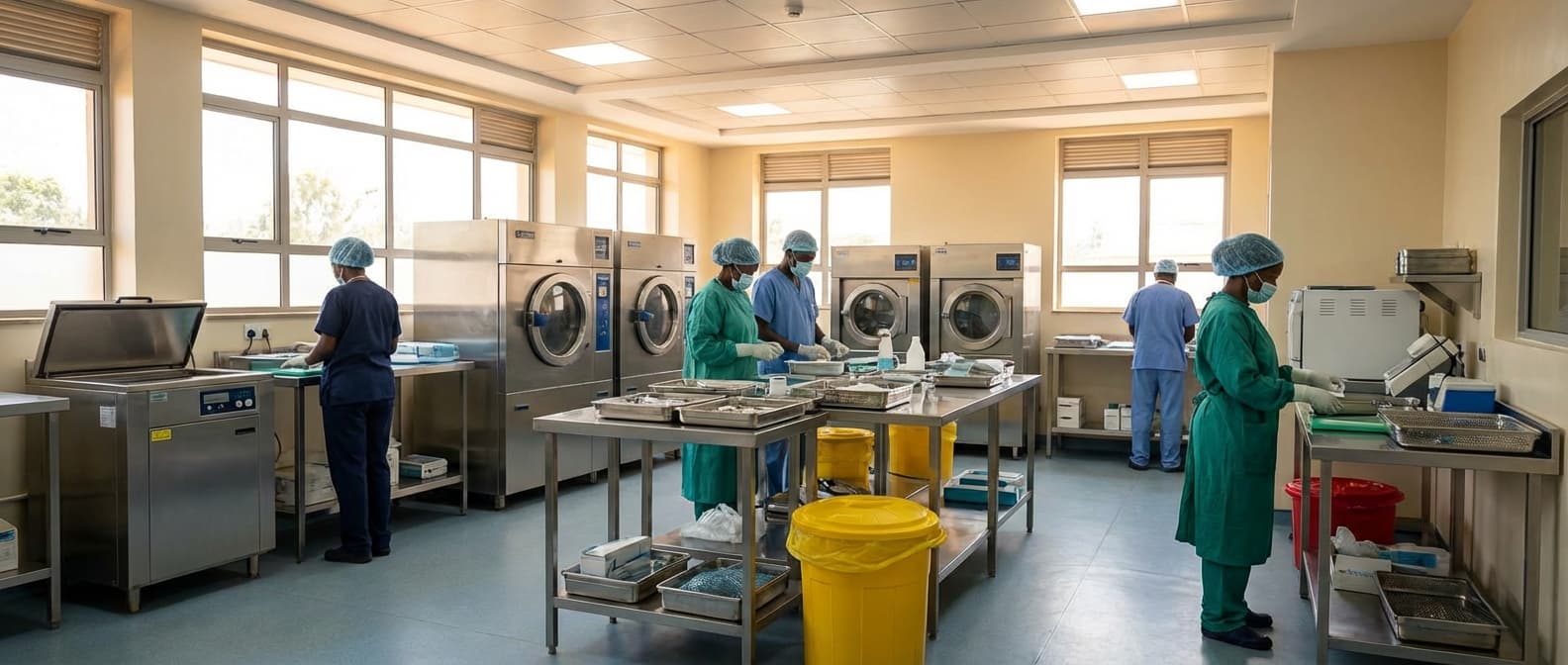
Infection-Control Readiness Support Service for Reusable Equipment in Mauritania
Engineering Excellence & Technical Support
Infection-Control Readiness Support Service for Reusable Equipment High-standard technical execution following OEM protocols and local regulatory frameworks.
Advanced Sterilization Validation & Monitoring
Implementing robust validation protocols and continuous monitoring systems for all sterilization processes of reusable medical equipment. This ensures adherence to international standards and eliminates the risk of microbial contamination, safeguarding patient health in Mauritania.
AI-Powered Risk Assessment for Contamination
Leveraging Artificial Intelligence to analyze equipment usage patterns, patient data, and environmental factors for proactive identification of high-risk reusable equipment and potential contamination outbreaks. This allows for targeted interventions and resource allocation.
Mobile Decontamination Units & Rapid Response
Deploying fully equipped mobile decontamination units to remote and underserved areas in Mauritania, ensuring immediate and effective sterilization of critical reusable equipment. This capability enables rapid response to outbreaks and maintains essential healthcare services.
What Is Infection-control Readiness Support Service For Reusable Equipment In Mauritania?
Infection-Control Readiness Support Service for Reusable Equipment in Mauritania refers to a comprehensive program designed to ensure that healthcare facilities possess the necessary infrastructure, protocols, trained personnel, and consumables to safely and effectively reprocess reusable medical devices. This service aims to minimize the risk of healthcare-associated infections (HAIs) transmitted through inadequately sterilized or disinfected equipment, thereby safeguarding patient and healthcare worker safety. It encompasses a multi-faceted approach, from initial assessment of existing capacities to ongoing monitoring and capacity building, tailored to the specific context and resource limitations often encountered in low-resource settings like Mauritania.
| Who Needs the Service? | Typical Use Cases | ||||||
|---|---|---|---|---|---|---|---|
| Public and Private Healthcare Facilities: Hospitals, clinics, health centers, and diagnostic laboratories that utilize reusable medical instruments and devices (e.g., surgical instruments, endoscopes, dental tools, respiratory therapy equipment). | Facilities with Aging or Inadequate Reprocessing Infrastructure: Healthcare settings where existing sterilization or disinfection equipment is outdated, malfunctioning, or insufficient to meet demand. | Healthcare Providers Implementing New Procedures or Expanding Services: Institutions adopting new surgical techniques or increasing their service offerings that require expanded reprocessing capabilities. | Facilities Experiencing a Rise in Healthcare-Associated Infections (HAIs): Sites where infection rates suggest potential issues with reusable equipment reprocessing. | Newly Established Healthcare Facilities: New institutions requiring the establishment of robust infection control programs from inception. | Government Health Ministries and Regulatory Bodies: To support national policies and standards for infection prevention and control in healthcare settings. | Non-Governmental Organizations (NGOs) and International Aid Agencies: Partnering with local healthcare providers to improve safety and quality of care. | |
| Routine Sterilization of Surgical Instruments: Ensuring all reusable surgical tools (scalpels, forceps, retractors, etc.) are properly cleaned, sterilized, and packaged before each use. | Disinfection and Sterilization of Endoscopes: Implementing strict protocols for reprocessing flexible and rigid endoscopes, which require specialized cleaning and high-level disinfection or sterilization due to their invasive nature. | Reprocessing of Anesthesia and Respiratory Therapy Equipment: Safely cleaning and disinfecting reusable components of ventilators, nebulizers, and anesthesia circuits to prevent airborne and contact transmission of pathogens. | Management of Dental Instruments: Ensuring adequate cleaning, disinfection, and sterilization of all reusable dental instruments (e.g., drills, probes, mirrors). | Implementation of Central Sterile Supply Department (CSSD) Best Practices: Establishing or optimizing a dedicated CSSD for efficient and safe processing of all reusable medical equipment. | Responding to Outbreaks or Emergencies: Rapidly assessing and enhancing reprocessing capacities in response to infectious disease outbreaks or natural disasters that strain healthcare resources. | Validation and Verification of Sterilization Processes: Conducting regular testing of autoclaves and other sterilization equipment to ensure efficacy and compliance with safety standards. | Training of New Staff on Reprocessing Techniques: Onboarding new healthcare workers to ensure they are competent in safe handling and reprocessing of reusable medical devices. |
Key Components of the Service
- Needs Assessment and Gap Analysis: Evaluation of current reprocessing practices, equipment inventory, infrastructure, water and power supply, waste management, and staff competency related to reusable equipment.
- Policy and Protocol Development/Revision: Establishment or refinement of Standard Operating Procedures (SOPs) for cleaning, disinfection, sterilization, and storage of various reusable medical devices, adhering to international guidelines and national regulations.
- Infrastructure Improvement and Equipment Procurement: Support in upgrading or establishing dedicated reprocessing areas, ensuring adequate ventilation, lighting, and workflow separation. Assistance with the selection and procurement of appropriate disinfection and sterilization equipment (e.g., autoclaves, washer-disinfectors, chemical sterilants).
- Training and Capacity Building: Comprehensive training programs for healthcare personnel involved in reprocessing, covering principles of infection control, proper handling of instruments, validation of sterilization cycles, and maintenance of equipment.
- Supply Chain Management: Ensuring a reliable supply of essential consumables such as detergents, disinfectants, packaging materials, and sterilization indicators.
- Quality Assurance and Monitoring: Implementation of robust monitoring systems, including routine testing of sterilizers, tracking of reprocessing cycles, and surveillance for HAIs related to reusable equipment.
- Technical Support and Maintenance: Provision of ongoing technical assistance for equipment troubleshooting, repair, and scheduled maintenance.
- Waste Management Integration: Ensuring safe and appropriate disposal of biohazardous waste generated during the reprocessing cycle.
Who Needs Infection-control Readiness Support Service For Reusable Equipment In Mauritania?
This service is crucial for any healthcare facility in Mauritania that utilizes reusable medical equipment and aims to prevent healthcare-associated infections (HAIs). Effective infection control for reusable items is a cornerstone of patient safety and operational efficiency.
| Department | Specific Needs for Reusable Equipment Infection Control Readiness Support |
|---|---|
| Sterilization and Central Sterile Supply Department (CSSD) | Ensuring proper cleaning, disinfection, and sterilization protocols for instruments; validation of sterilization processes; staff training on new technologies and best practices. |
| Operating Rooms (OR) | Maintaining sterility of surgical instruments and drapes; proper handling and transport of contaminated reusable items; availability of adequate and functional sterilization equipment. |
| Intensive Care Units (ICUs) | Managing reusable respiratory equipment (ventilator circuits, nebulizers); infection control for patient care devices (e.g., thermometers, stethoscopes); proper cleaning of shared equipment. |
| Emergency Department (ED) | Rapid and effective reprocessing of reusable equipment used in critical situations; ensuring availability of clean and sterile equipment; training on emergency disinfection procedures. |
| Infection Prevention and Control (IPC) Department/Committee | Developing and updating infection control policies and procedures for reusable items; monitoring compliance; conducting risk assessments; identifying areas for improvement. |
| Nursing Units (General Wards) | Proper cleaning and disinfection of patient care equipment (e.g., bedpans, urinals, commodes); safe handling and storage of reusable items; staff education on basic infection control for these items. |
| Anesthesia Department | Sterilization and maintenance of anesthesia equipment (e.g., breathing circuits, masks); adherence to strict protocols for reusable airway management devices. |
| Pharmacy (if applicable to compounding equipment) | Ensuring sterility and cleanliness of reusable equipment used in medication preparation and dispensing. |
| Laboratory Services | Sterilization and maintenance of reusable laboratory glassware and equipment; prevention of cross-contamination during sample processing. |
Target Customers and Departments
- Hospitals (Public and Private)
- Clinics and Health Centers
- Surgical Centers
- Maternity Wards
- Dental Clinics
- Emergency Medical Services (EMS)
- Veterinary Clinics (if applicable to specific reusable equipment)
- Laboratory Facilities
Infection-control Readiness Support Service For Reusable Equipment Process In Mauritania
This service focuses on bolstering infection-control readiness for the reuse of medical equipment in Mauritania. It encompasses a comprehensive workflow from the initial identification of a need to the successful implementation of support services. The process is designed to be collaborative, evidence-based, and tailored to the specific context of healthcare facilities in Mauritania. The ultimate goal is to minimize the risk of healthcare-associated infections (HAIs) linked to the reprocessing of reusable medical devices.
| Stage | Description | Key Activities | Stakeholders Involved | Expected Outcome |
|---|---|---|---|---|
| Inquiry and Needs Assessment | Initial contact and understanding of the healthcare facility's challenges regarding reusable equipment infection control. | Contacting relevant Ministry of Health officials or facility management; initial discussions about infection control practices; identifying perceived gaps and priorities. | Ministry of Health representatives, Hospital administrators, Infection Control Officers (ICOs), Heads of relevant departments (e.g., Surgery, Sterilization Units). | Clear understanding of the scope of support required and initial identification of target facilities. |
| Proposal Development and Agreement | Formulating a detailed proposal outlining the service's objectives, methodology, deliverables, timeline, and budget, followed by formal agreement. | Drafting the proposal based on the needs assessment; presenting the proposal to stakeholders; negotiating terms and conditions; signing Memoranda of Understanding (MoUs) or contracts. | Service provider (e.g., NGO, international organization, specialized consultancy), Ministry of Health, participating healthcare facilities. | Formal commitment to the service and a clear understanding of mutual responsibilities and expectations. |
| Site Assessment and Baseline Data Collection | Conducting in-depth evaluations of existing reusable equipment reprocessing workflows and collecting baseline data. | On-site visits to sterilization units and relevant departments; reviewing current protocols, standard operating procedures (SOPs), and equipment inventory; assessing infrastructure, availability of consumables and disinfectants; conducting audits of reprocessing practices; collecting data on HAIs related to reusable equipment. | Service provider technical experts (e.g., infection control specialists, biomedical engineers), facility staff (ICOs, nurses, technicians, cleaning staff), Ministry of Health representatives. | Comprehensive understanding of the current state of infection control for reusable equipment, identification of specific weaknesses, and measurable baseline data for impact assessment. |
| Development of Tailored Support Plan | Creating a customized plan for infection-control readiness support based on the site assessment findings. | Analyzing collected data to identify root causes of issues; defining specific, measurable, achievable, relevant, and time-bound (SMART) objectives; outlining interventions, resources required, and a detailed implementation schedule. | Service provider technical experts, in collaboration with facility leadership and ICOs. | A robust and actionable plan that addresses the identified needs and guides the implementation phase. |
| Implementation of Support Services | Putting the tailored support plan into action through a series of interventions. | Providing technical assistance for SOP development/revision; advising on optimal equipment maintenance and repair; facilitating access to appropriate disinfectants and consumables; supporting the establishment or strengthening of decontamination and sterilization processes; implementing quality control measures. | Service provider technical experts, facility staff, Ministry of Health. | Measurable improvements in the implementation of infection control practices for reusable equipment. |
| Training and Capacity Building | Equipping healthcare workers with the knowledge and skills necessary for effective infection control. | Conducting workshops and on-the-job training for relevant staff on proper cleaning, disinfection, sterilization, and handling of reusable medical devices; focusing on practical skills and understanding of infection transmission pathways. | Service provider trainers, facility staff (nurses, technicians, cleaning staff, ICOs). | Enhanced competency and confidence of staff in applying infection control principles. |
| Monitoring, Evaluation, and Feedback | Continuously tracking progress, assessing the effectiveness of interventions, and providing feedback for improvement. | Regular site visits for monitoring adherence to new protocols; collecting ongoing data to track changes in HAI rates and reprocessing quality; conducting periodic evaluations of the service's impact; providing constructive feedback to facilities and adjusting the plan as needed. | Service provider monitoring and evaluation team, facility management, ICOs, Ministry of Health. | Evidence of service impact, identification of areas for further refinement, and accountability for results. |
| Sustainability Planning and Handover | Ensuring the long-term adoption of improved practices and the eventual transition of responsibilities to local stakeholders. | Developing strategies for continued in-house monitoring and quality assurance; identifying champions within facilities; establishing mechanisms for ongoing procurement of essential supplies; formal handover of knowledge and resources to the Ministry of Health and facilities; planning for potential follow-up support if required. | Service provider, Ministry of Health, facility management, ICOs. | Sustained infection-control readiness for reusable equipment, reduced risk of HAIs, and capacity for independent management of reprocessing practices. |
Workflow Stages
- Inquiry and Needs Assessment
- Proposal Development and Agreement
- Site Assessment and Baseline Data Collection
- Development of Tailored Support Plan
- Implementation of Support Services
- Training and Capacity Building
- Monitoring, Evaluation, and Feedback
- Sustainability Planning and Handover
Infection-control Readiness Support Service For Reusable Equipment Cost In Mauritania
Ensuring effective infection control for reusable medical equipment in Mauritania is paramount for patient safety and public health. The 'Infection-Control Readiness Support Service' aims to provide essential guidance, training, and potentially on-site assessment to healthcare facilities to enhance their preparedness in managing reusable items. The cost of such a service in Mauritania is influenced by several factors, leading to a range of potential pricing. Local currency, the Mauritanian Ouguiya (MRU), is the basis for these estimates. Factors include the scope of services, the expertise of the support team, the duration of the engagement, and the geographical location within Mauritania. Smaller, more localized clinics might have different cost structures compared to larger hospitals in major urban centers like Nouakchott. The service could range from a one-time consultation to a comprehensive, multi-phase program. The pricing also considers the materials provided, such as training manuals and checklists, and any potential follow-up or remote support. Given the nascent stage of specialized support services for infection control in many regions of Mauritania, the pricing will reflect the balance between providing accessible and impactful services and ensuring the sustainability of the service providers.
| Service Component/Scope | Estimated Cost Range (MRU) |
|---|---|
| Initial Consultation & Needs Assessment (Half-day) | 20,000 - 40,000 MRU |
| On-site Training Workshop (1-day, basic protocols for 10-15 staff) | 50,000 - 100,000 MRU |
| Comprehensive Readiness Assessment (2-3 days, including site visit and report) | 100,000 - 250,000 MRU |
| Development of Customized Infection Control Policies & Protocols | 75,000 - 150,000 MRU |
| Multi-day Intensive Training Program (for larger teams, advanced topics) | 150,000 - 350,000 MRU |
| Monthly Retainer for Remote Support & Advisory Services | 40,000 - 80,000 MRU |
| On-site Verification & Auditing Visit (1-2 days) | 60,000 - 120,000 MRU |
Key Pricing Factors for Infection-Control Readiness Support Service (Reusable Equipment) in Mauritania
- Scope of Services: One-time consultation vs. comprehensive program, assessment, training, policy development.
- Expertise of Support Team: Local vs. international consultants, specific certifications and experience.
- Duration of Engagement: Short-term assessments vs. long-term capacity building.
- Geographical Location: Accessibility and logistical costs for on-site visits to different regions within Mauritania.
- Facility Size and Complexity: Number of reusable items, types of procedures, existing infrastructure.
- Training Modality: On-site workshops, remote training, development of training materials.
- Material Provision: Customization of protocols, checklists, and educational resources.
- Follow-up and Monitoring: Post-service assessments, ongoing remote support, performance tracking.
Affordable Infection-control Readiness Support Service For Reusable Equipment Options
Our Affordable Infection-Control Readiness Support Service provides essential expertise and resources to healthcare facilities focused on the safe and effective reprocessing of reusable medical equipment. Recognizing the financial constraints faced by many organizations, we've developed flexible value bundles and implemented strategic cost-saving measures to ensure high-quality infection control without burdensome expenses. This service aims to empower facilities to maintain patient safety, comply with regulations, and optimize operational efficiency through proactive infection prevention strategies.
| Cost-Saving Strategy | Description | Benefit |
|---|---|---|
| Preventative Maintenance Focus | Emphasizing proactive identification and resolution of potential reprocessing issues before they escalate into costly problems. | Reduces equipment downtime, prevents costly repairs or replacements, and minimizes the risk of patient harm due to ineffective reprocessing. |
| Streamlined Training Programs | Developing efficient, modular, and accessible training modules that can be delivered remotely or in person, reducing travel and time-away-from-work costs. | Ensures consistent competency across staff, improves adherence to protocols, and lowers training expenditure. |
| Resource Optimization | Providing guidance on optimizing the use of supplies, disinfectants, and sterilants, and recommending cost-effective yet high-performing reprocessing equipment and consumables. | Lowers operational costs by reducing waste and ensuring efficient utilization of critical resources. |
| Technology Integration & Automation Guidance | Advising on the strategic implementation of affordable tracking systems and automated reprocessing equipment where beneficial. | Enhances efficiency, reduces manual labor costs, improves traceability, and minimizes human error. |
| Regulatory Compliance Assurance | Proactive identification and mitigation of compliance risks, reducing the likelihood of costly fines, citations, and corrective action plans. | Saves significant financial resources and reputational damage associated with non-compliance. |
| Scalable Service Model | Our service can be scaled up or down based on facility needs and budget, allowing for flexible investment in infection control readiness. | Ensures that facilities can access necessary support at a manageable cost, adapting to changing financial landscapes. |
Value Bundles for Comprehensive Readiness
- Basic Readiness Bundle: Includes foundational policy and procedure development/review, staff training on core reprocessing principles, and access to our online knowledge base. Ideal for facilities seeking to establish or enhance their fundamental infection control framework.
- Standard Readiness Bundle: Builds upon the Basic bundle by adding on-site risk assessments, personalized training sessions, and routine regulatory compliance checks. This bundle offers more hands-on support for a robust infection control program.
- Premium Readiness Bundle: Encompasses all features of the Standard bundle, plus advanced training modules (e.g., specialized equipment reprocessing, outbreak preparedness), ongoing remote support and consultation, and data analytics for performance monitoring. Designed for facilities prioritizing a fully optimized and data-driven infection control strategy.
- Customizable Bundles: We understand that every facility has unique needs. We offer the flexibility to tailor bundles by selecting specific services from our comprehensive offerings, ensuring you only pay for what you need.
Verified Providers In Mauritania
In the evolving landscape of healthcare in Mauritania, identifying trusted and competent medical service providers is paramount. Franance Health has emerged as a beacon of reliability, offering a comprehensive network of verified providers. This commitment to quality assurance ensures that patients receive not only accessible but also exceptionally high-standard medical care. Franance Health's stringent credentialing process goes above and beyond basic qualifications, focusing on continuous professional development, ethical practices, and demonstrable patient-centric approaches. By choosing Franance Health-affiliated providers, individuals are opting for a level of care that prioritizes safety, efficacy, and a positive patient experience, making them the best choice for healthcare needs in Mauritania.
| Credential/Aspect | Franance Health Verification Standard | Benefit to Patients |
|---|---|---|
| Medical Licensure & Certification | Verified by relevant Mauritanian authorities and international standards. | Ensures providers are legally qualified and possess recognized expertise. |
| Professional Experience | Minimum years of practice and specific experience in chosen specialties. | Guarantees that providers have practical, hands-on knowledge. |
| Continuing Professional Development (CPD) | Mandatory participation in ongoing training and skill updates. | Keeps providers abreast of the latest medical advancements and techniques. |
| Patient Feedback & Outcomes | Regular monitoring of patient satisfaction and clinical results. | Promotes providers who consistently deliver excellent care and achieve positive outcomes. |
| Ethical Compliance | Strict adherence to medical ethics and patient rights charters. | Upholds the highest standards of integrity and patient-focused care. |
| Infrastructure & Equipment | Assessment of clinic/hospital facilities and diagnostic tools. | Ensures providers have the necessary resources for accurate diagnosis and effective treatment. |
Key Credentials and Advantages of Franance Health Verified Providers:
- Rigorous vetting of medical qualifications and licenses.
- Emphasis on continuous medical education and skill enhancement.
- Adherence to strict ethical and professional conduct guidelines.
- Demonstrated commitment to patient safety and well-being.
- Access to a diverse range of specialized medical services.
- Improved patient outcomes through evidence-based practices.
- Enhanced trust and confidence in healthcare delivery.
- Streamlined access to quality medical care across Mauritania.
Scope Of Work For Infection-control Readiness Support Service For Reusable Equipment
This Scope of Work (SOW) outlines the requirements for Infection-Control Readiness Support Services for reusable medical equipment. The objective is to ensure healthcare facilities maintain optimal infection prevention and control (IPC) practices for all reusable equipment, from sterilization processes to storage and handling. This SOW details the technical deliverables and standard specifications required to achieve and sustain a high level of readiness. Services will include assessment, training, policy development/review, process validation, and ongoing support.
| Deliverable | Description | Standard Specification/Requirement | Acceptance Criteria |
|---|---|---|---|
| Infection Control Readiness Assessment Report | A comprehensive report detailing the current state of infection control for reusable equipment, identifying gaps and areas for improvement. | Must include analysis of current workflows, equipment, policies, staff knowledge, and environmental controls. Based on relevant guidelines (e.g., CDC, WHO, AAMI). | Report is accurate, complete, and addresses all areas of reusable equipment reprocessing. Findings are clearly articulated with actionable recommendations. |
| Training Modules and Materials | Development and delivery of tailored training programs for all personnel involved in the decontamination, disinfection, and sterilization of reusable medical devices. | Modules must cover principles of microbiology, modes of transmission, cleaning methods, disinfection levels, sterilization processes, proper handling and storage, and waste management. Materials should be engaging and accessible. | Training materials are comprehensive and align with current best practices. Post-training assessments demonstrate a minimum of 85% competency for participants. |
| Revised/Developed Standard Operating Procedures (SOPs) | Creation or enhancement of clear, detailed, and easily understandable SOPs for all aspects of reusable equipment reprocessing. | SOPs must be specific to each type of equipment and reprocessing method, including detailed steps for pre-cleaning, cleaning, disinfection, rinsing, drying, inspection, assembly, packaging, sterilization, storage, and transport. Must reference manufacturer's instructions for use (IFUs) and relevant guidelines. | SOPs are logically structured, unambiguous, and cover all critical steps. Compliance with IFUs and regulatory requirements is evident. |
| Validation Report for Reprocessing Processes | Documentation and reporting of validation studies to confirm the efficacy of cleaning, disinfection, and sterilization processes for specific reusable equipment. | Includes protocols for cleaning efficacy testing (e.g., bioburden testing), disinfection efficacy testing (e.g., microbial challenge studies), and sterilization validation (e.g., biological and chemical indicator testing). Must demonstrate that processes achieve intended reduction in microbial load. | Validation studies are performed according to accepted protocols. Reports clearly demonstrate the effectiveness of each reprocessing step and the overall process. |
| Equipment Maintenance and Calibration Records Review Summary | Review and summary of records related to the maintenance, calibration, and performance testing of sterilization and other critical reprocessing equipment. | Analysis of preventive maintenance schedules, calibration certificates, and error logs for autoclaves, washer-disinfectors, and other relevant equipment to ensure optimal functionality. | Summary accurately reflects the completeness and currency of maintenance and calibration records. Identification of any equipment requiring immediate attention is highlighted. |
| Staff Competency Assessment and Verification Records | Development and implementation of a system to assess and verify the competency of staff performing reusable equipment reprocessing. | Includes initial competency assessments, periodic re-assessments, and documentation of ongoing training and performance evaluations. Records should demonstrate individual staff proficiency. | Competency assessments are conducted systematically and documented. Verification records are complete and demonstrate that all relevant staff meet required competency levels. |
| Recommendations Report for Process Improvement and Capital Investments | A report outlining strategic recommendations for improving IPC practices for reusable equipment, including potential capital investments. | Recommendations should be based on assessment findings, validation results, and industry best practices. May include suggestions for new equipment, technology upgrades, facility modifications, or staffing adjustments. | Recommendations are evidence-based, cost-effective, and aligned with organizational goals. Prioritization of recommendations is provided. |
| Periodic Compliance Monitoring and Reporting | Ongoing monitoring and reporting on the adherence to established IPC policies and procedures for reusable equipment. | Includes regular audits, observation of practices, review of quality control data (e.g., indicator results), and trend analysis. Reports should highlight compliance rates, deviations, and corrective actions taken. | Monitoring is conducted at agreed-upon intervals. Reports are timely, accurate, and provide clear insights into compliance status and areas needing further attention. |
Technical Deliverables
- Infection Control Readiness Assessment Report
- Training Modules and Materials (for staff involved in reusable equipment reprocessing)
- Revised/Developed Standard Operating Procedures (SOPs) for Reusable Equipment Reprocessing
- Validation Report for Reprocessing Processes (e.g., cleaning, disinfection, sterilization)
- Equipment Maintenance and Calibration Records Review Summary
- Staff Competency Assessment and Verification Records
- Recommendations Report for Process Improvement and Capital Investments
- Periodic Compliance Monitoring and Reporting
Service Level Agreement For Infection-control Readiness Support Service For Reusable Equipment
This Service Level Agreement (SLA) outlines the response times and uptime guarantees for the Infection-Control Readiness Support Service for Reusable Equipment. This service ensures that essential equipment is maintained in a state of readiness to prevent the spread of infections. The scope includes support for monitoring, maintenance, and rapid response for critical reusable medical devices as defined by the client organization.
| Service Level | Response Time Guarantee (for critical incidents) | Uptime Guarantee (for supported equipment) | Escalation Trigger (if response time is missed) |
|---|---|---|---|
| Platinum Support | 15 minutes | 99.9% | Immediate Senior Technician Assignment & Management Notification |
| Gold Support | 30 minutes | 99.5% | Senior Technician Assignment & Department Head Notification |
| Silver Support | 1 hour | 99.0% | Technician Assignment & Supervisor Notification |
Key Performance Indicators (KPIs)
- Response Time: The time elapsed from when a support request is logged until the support team begins active work on the issue.
- Uptime Guarantee: The percentage of time the supported reusable equipment is guaranteed to be in a functional and infection-control compliant state.
- Resolution Time: The time elapsed from when a support request is logged until the issue is fully resolved and the equipment is returned to service.
- Proactive Monitoring Success Rate: The percentage of potential issues identified and addressed before they impact equipment availability or infection control compliance.
Frequently Asked Questions

Ready when you are
Let's scope your Infection-Control Readiness Support Service for Reusable Equipment in Mauritania project in Mauritania.

Scaling healthcare logistics and technical systems across the entire continent.