
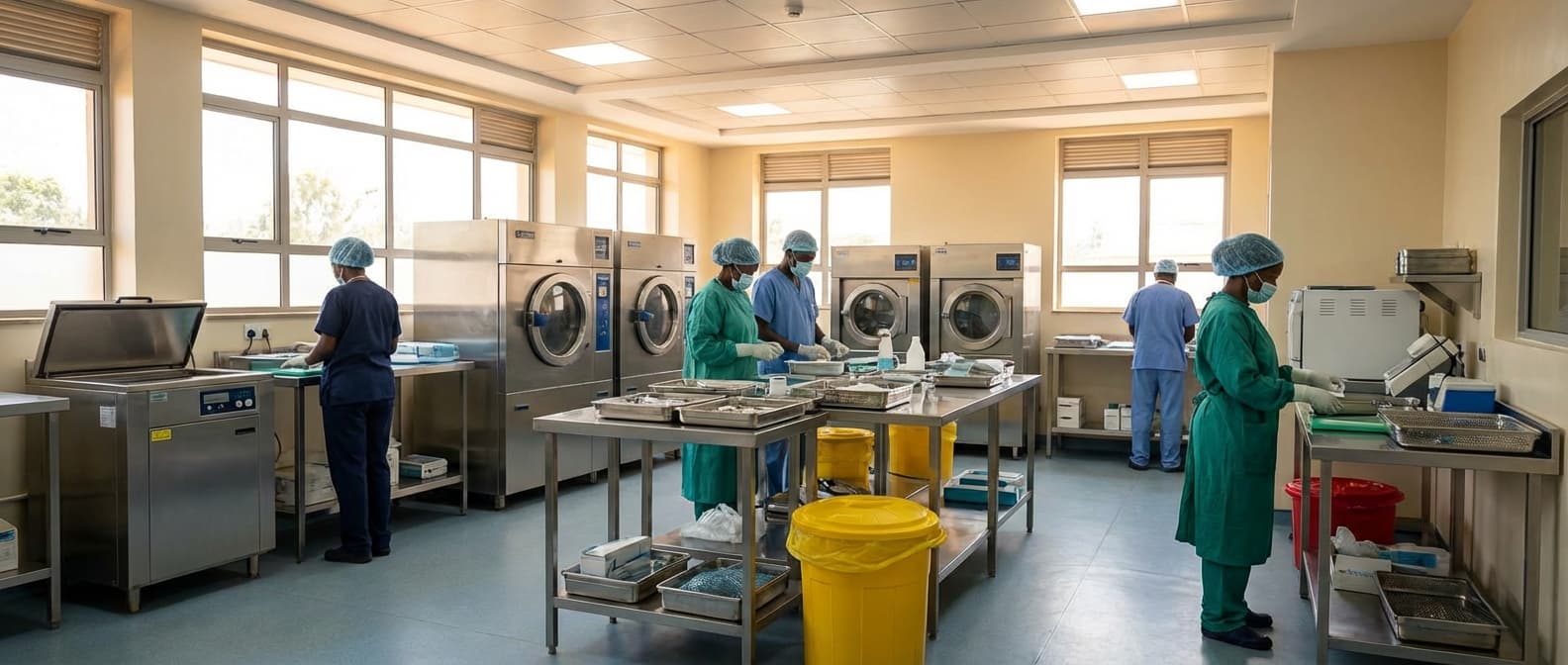
Endoscope Reprocessing Equipment Support Service in Mauritania
Engineering Excellence & Technical Support
Endoscope Reprocessing Equipment Support Service High-standard technical execution following OEM protocols and local regulatory frameworks.
Rapid On-Site Technical Support
Our Mauritanian technical teams provide swift, on-site maintenance and repair for all endoscope reprocessing equipment, minimizing downtime and ensuring uninterrupted patient care.
Expert Equipment Calibration & Validation
We offer precise calibration and validation services for your reprocessing equipment, guaranteeing optimal performance and adherence to international safety and efficacy standards.
Comprehensive Training & Troubleshooting
Empower your staff with expert training on equipment operation and troubleshooting. Our support extends beyond repairs to ensure your team is proficient in maintaining equipment integrity.
What Is Endoscope Reprocessing Equipment Support Service In Mauritania?
Endoscope reprocessing equipment support service in Mauritania refers to the provision of maintenance, repair, calibration, and validation services for automated endoscope reprocessors (AERs) and associated equipment. This service ensures that the machinery used to clean and disinfect flexible endoscopes operates optimally, adheres to stringent infection control standards, and maintains its functional integrity. The objective is to guarantee the safety and efficacy of the reprocessing cycle, thereby minimizing the risk of patient-to-patient transmission of pathogens.
| Who Needs the Service? | Typical Use Cases | |||||
|---|---|---|---|---|---|---|
| Hospitals and Clinics: All healthcare facilities that perform endoscopic procedures (gastroscopy, colonoscopy, bronchoscopy, laparoscopy, etc.) and utilize flexible endoscopes require this service to maintain their reprocessing infrastructure. | Routine reprocessing of flexible endoscopes between patient procedures to ensure patient safety and prevent healthcare-associated infections (HAIs). | Responding to equipment malfunctions that disrupt the reprocessing workflow and pose a risk to patient care. | Annual or bi-annual validation and calibration of AERs to meet accreditation and regulatory requirements. | Installation and commissioning of new AERs to ensure proper setup and initial performance. | Upgrading or replacing existing reprocessing equipment with ongoing support. | Facilities with a high volume of endoscopic procedures where equipment reliability is paramount. |
| Endoscopy Centers/Units: Specialized facilities dedicated to gastrointestinal and pulmonary endoscopy. | Ensuring compliance with infection control guidelines issued by national and international health organizations. | Maintaining operational efficiency and reducing the turnaround time for endoscope reprocessing. | Troubleshooting error codes or performance deviations identified during daily operation. | Preventing equipment failures that could lead to procedure cancellations or delays. | Managing the lifecycle of reprocessing equipment, including maintenance schedules and eventual replacement planning. | |
| Government Health Ministries and Regulatory Bodies: May contract or oversee such services to ensure consistent standards across healthcare facilities. | Public hospitals and healthcare networks operating under centralized procurement and maintenance contracts. | Private healthcare providers seeking to outsource specialized technical support to ensure compliance and operational excellence. |
Key Components of Endoscope Reprocessing Equipment Support Service:
- Preventive Maintenance: Scheduled inspections, cleaning, lubrication, and replacement of worn parts to avert equipment failure and extend lifespan.
- Corrective Maintenance and Repair: Diagnosis and resolution of malfunctions, including component replacement and troubleshooting.
- Calibration: Adjustment of critical parameters (e.g., temperature, pressure, flow rates, cycle times) to ensure adherence to manufacturer specifications and regulatory requirements.
- Validation: Verification that the reprocessing equipment consistently performs as intended, meeting established protocols for cleaning and disinfection efficacy. This may include performance qualification (PQ) and process challenge device (PCD) testing.
- Consumable Management: Support for the supply and management of necessary cleaning agents, disinfectants, detergents, and accessories.
- Technical Training: Instruction for biomedical technicians and reprocessing staff on the proper operation, routine maintenance, and basic troubleshooting of the equipment.
- Regulatory Compliance Assistance: Guidance and documentation to ensure that reprocessing practices and equipment meet national and international standards (e.g., ISO, local health regulations).
- Emergency Support: On-call services for urgent repairs and technical assistance to minimize downtime.
- Software Updates and Management: Ensuring the AER software is up-to-date and functioning correctly.
Who Needs Endoscope Reprocessing Equipment Support Service In Mauritania?
Ensuring the proper reprocessing of endoscopes is critical for patient safety and infection prevention in healthcare facilities. In Mauritania, where the demand for advanced medical procedures and the maintenance of high infection control standards are paramount, specialized support services for endoscope reprocessing equipment are indispensable. These services guarantee the functionality, longevity, and compliance of essential equipment, thereby safeguarding patient well-being.
| Target Customer Group | Key Departments Requiring Support | Reasons for Needing Support Service |
|---|---|---|
| Hospitals and Medical Centers | Endoscopy Suite, Central Sterile Services Department (CSSD), Infection Control Department, Biomedical Engineering Department | Maintaining operational readiness, ensuring patient safety, compliance with infection control standards, extending equipment lifespan, minimizing downtime. |
| Specialized Clinics | Endoscopy Unit, Clinical Operations Management | Ensuring procedural continuity, meeting regulatory requirements, managing specialized equipment needs, optimizing workflow efficiency. |
| Government and Public Healthcare Facilities | CSSD, Hospital Administration, Maintenance Departments | Affordable and reliable maintenance, capacity building for local staff, ensuring access to quality healthcare, managing limited budgets effectively. |
| Private Healthcare Providers | CSSD, Clinical Management, Procurement Department | Maintaining a high standard of care, protecting brand reputation, maximizing return on investment in advanced technology, ensuring compliance with international best practices. |
| International Aid Organizations and NGOs | Program Management, Logistics and Procurement, Technical Support Teams | Ensuring sustainability of medical programs, providing essential services in remote areas, overcoming local technical skill gaps, complying with donor requirements. |
| Manufacturers and Distributors | After-Sales Service, Technical Support, Customer Relations | Ensuring customer satisfaction, fulfilling warranty obligations, building long-term client relationships, maintaining equipment integrity and performance. |
Who Needs Endoscope Reprocessing Equipment Support Service in Mauritania?
- {"title":"Hospitals and Medical Centers","description":"These are the primary users of endoscope reprocessing equipment, performing a wide range of diagnostic and therapeutic procedures. They require ongoing maintenance, calibration, and repair services to ensure uninterrupted operations and to meet stringent infection control protocols."}
- {"title":"Specialized Clinics (Gastroenterology, Pulmonology, Urology, Gynecology, etc.)","description":"Clinics focusing on procedures requiring endoscopes rely heavily on their reprocessing equipment. Support services help them maintain peak performance and compliance with evolving regulatory standards."}
- {"title":"Government and Public Healthcare Facilities","description":"Public hospitals and health centers across Mauritania, regardless of size, need reliable support to maintain their endoscope reprocessing capabilities, especially in resource-constrained environments."}
- {"title":"Private Healthcare Providers","description":"As the private healthcare sector grows in Mauritania, these entities invest in advanced equipment and require specialized support to justify their investments and uphold service quality."}
- {"title":"International Aid Organizations and NGOs","description":"Organizations involved in healthcare initiatives and providing medical services in Mauritania often operate with limited local technical expertise. They benefit greatly from external support services for their reprocessing equipment."}
- {"title":"Manufacturers and Distributors of Endoscope Reprocessing Equipment","description":"These entities may offer or partner with support service providers to ensure their clients in Mauritania receive comprehensive after-sales service, including installation, training, maintenance, and repair."}
Endoscope Reprocessing Equipment Support Service Process In Mauritania
This document outlines the workflow for the Endoscope Reprocessing Equipment Support Service Process in Mauritania, detailing the steps from initial inquiry to the successful execution of the service. This process ensures efficient and effective maintenance and repair of critical medical equipment, minimizing downtime and upholding patient safety standards.
| Step | Description | Key Activities | Responsible Party | Timeline (Indicative) |
|---|---|---|---|---|
| The process begins when a healthcare facility in Mauritania contacts the support service provider regarding a malfunctioning or requiring maintenance endoscope reprocessing equipment. | Reception of email, phone call, or online form submission. | Support Service Provider (Reception/Service Desk) | Immediate |
| The received inquiry is assessed to understand the nature of the request, equipment details, and urgency. | Initial assessment of the issue, gathering equipment model/serial number, facility contact information, and description of the problem. | Support Service Provider (Service Coordinator) | 1-2 Business Days |
| A qualified technician is dispatched to the healthcare facility to physically inspect the equipment and diagnose the exact problem. | Travel to the facility, visual inspection, functional testing, diagnostic procedures, root cause analysis. | Support Service Provider (Field Service Technician) | 2-5 Business Days (depending on location and technician availability) |
| Based on the diagnosis, a detailed quotation for the repair/maintenance service, including parts and labor costs, is prepared and submitted to the client for approval. | Preparation of a formal quotation, including breakdown of costs, estimated time for completion, and warranty information. Submission to the client for review and approval. | Support Service Provider (Service Coordinator/Sales) | 1-3 Business Days (after diagnosis) |
| Once the quotation is approved, the necessary spare parts are procured and logistics for the service visit are arranged. | Ordering of required spare parts, coordination of shipping and customs clearance (if applicable), scheduling of the technician's return visit. | Support Service Provider (Logistics/Procurement Department) | Variable (depends on part availability and shipping times, can range from 1-4 weeks for specialized parts) |
| The technician performs the repair or maintenance work on the endoscope reprocessing equipment at the client's facility. | Repair of faulty components, replacement of worn parts, preventative maintenance procedures, cleaning and lubrication. | Support Service Provider (Field Service Technician) | 1-3 Business Days (depending on complexity of repair) |
| After the service is completed, the equipment is rigorously tested to ensure it is functioning correctly and meets all operational and safety standards. | Functional testing, performance verification, calibration, simulation of reprocessing cycles, adherence to manufacturer specifications. | Support Service Provider (Field Service Technician) & Client Representative | 0.5-1 Business Day |
| A formal service report is generated, documenting all activities performed, parts used, and testing results. This is signed off by both parties. | Completion of service report, obtaining client signature, archiving of service records. | Support Service Provider (Field Service Technician) | Within 1 Business Day of service completion |
| A follow-up is conducted to ensure client satisfaction and to gather feedback for continuous improvement of the service. | Post-service call or email to the client, soliciting feedback on the service experience, identifying any recurring issues. | Support Service Provider (Service Coordinator/Customer Service) | 3-7 Business Days after service completion |
Endoscope Reprocessing Equipment Support Service Process Workflow
- Inquiry Received
- Service Request Evaluation
- Site Visit and Diagnosis
- Quotation and Approval
- Parts and Logistics Arrangement
- On-site Service Execution
- Testing and Validation
- Service Completion and Documentation
- Follow-up and Feedback
Endoscope Reprocessing Equipment Support Service Cost In Mauritania
The cost of endoscope reprocessing equipment support services in Mauritania can vary significantly depending on several factors. These services are crucial for maintaining the functionality, safety, and longevity of sophisticated medical equipment like endoscopes, which are vital for diagnostic and therapeutic procedures. The pricing is generally determined by the type of service required, the complexity of the equipment, the vendor offering the service, and the geographical location within Mauritania where the service is performed. Due to the specialized nature of these services and the relatively limited market for such advanced medical equipment support in Mauritania, costs can be higher compared to more developed markets. It's essential for healthcare facilities to obtain detailed quotes from multiple reputable service providers to ensure competitive pricing and reliable service delivery. The local currency, the Mauritanian Ouguiya (MRU), is used for all transactions, and pricing is typically presented in MRU. While precise, universally applicable pricing ranges are difficult to pinpoint without specific service requests and vendor engagements, the following discussion outlines the key pricing factors and provides estimated ranges.
| Service Type | Estimated Price Range (MRU) |
|---|---|
| Routine Preventative Maintenance (Annual Contract for a Standard Washer-Disinfector) | 50,000 - 150,000 MRU |
| Emergency Repair Call-Out Fee (Excluding Parts & Labor) | 20,000 - 60,000 MRU |
| Hourly Labor Rate (Certified Technician) | 5,000 - 15,000 MRU per hour |
| Parts Replacement (e.g., Pump, Filter, Valve - Varies Widely) | 10,000 - 100,000+ MRU (depending on part and equipment) |
| Equipment Validation & Calibration (Per Unit) | 30,000 - 80,000 MRU |
| On-site Training (Per Day) | 40,000 - 100,000 MRU |
Key Pricing Factors for Endoscope Reprocessing Equipment Support Service in Mauritania
- Type of Service: Routine maintenance, emergency repairs, validation and calibration, software updates, and training all have different cost structures. Routine preventative maintenance is generally less expensive than reactive emergency repairs.
- Equipment Complexity and Age: More advanced and newer endoscope reprocessing systems (e.g., automated washer-disinfectors, leak testers, drying cabinets) often have higher service costs due to specialized components, software, and the expertise required for their upkeep. Older or simpler equipment might have lower service fees but could incur higher costs if parts are obsolete.
- Vendor and Service Level Agreement (SLA): Prices vary between original equipment manufacturers (OEMs) and third-party service providers. OEMs often command higher prices but may offer superior expertise and access to genuine parts. Third-party providers can sometimes offer more competitive rates, but the quality of service and parts needs careful evaluation. Service Level Agreements (SLAs) can offer bundled services at a potentially reduced overall cost, but they commit the facility to a specific provider.
- Geographic Location: Service calls to remote areas within Mauritania may incur additional travel and logistical costs for technicians, which will be reflected in the overall service price.
- Availability of Parts: If specialized or imported parts are required for a repair, the cost of procurement, shipping, and customs duties will significantly impact the service cost.
- Technician Expertise and Certification: Highly specialized technicians with specific certifications for endoscope reprocessing equipment will command higher hourly rates.
- Frequency of Service: Facilities opting for ongoing, scheduled maintenance plans might benefit from discounted rates compared to one-off emergency service calls.
- Scope of Work: The duration of the service call, the number of technicians involved, and the specific tasks performed will directly influence the final cost.
Affordable Endoscope Reprocessing Equipment Support Service Options
Providing effective and reliable endoscope reprocessing is critical for patient safety and operational efficiency. However, the cost of maintaining and servicing this specialized equipment can be a significant concern for healthcare facilities. This document outlines affordable endoscope reprocessing equipment support service options, focusing on value bundles and cost-saving strategies. By understanding these options, facilities can optimize their budget without compromising the quality of care or equipment functionality.
| Service Option | Description | Value Proposition | Potential Cost Savings |
|---|---|---|---|
| Preventive Maintenance Packages | Scheduled inspections, cleaning, calibration, and minor part replacement to ensure optimal equipment performance and prevent failures. | Reduces the likelihood of costly unexpected breakdowns, extends equipment lifespan, ensures compliance with manufacturer recommendations, and maintains operational readiness. | Lower overall repair costs by catching issues early; reduced downtime leads to fewer lost revenue opportunities or extended procedure times. |
| On-Demand Repair Services | Ad-hoc repair services for unexpected equipment malfunctions, typically on a per-incident billing basis. | Provides access to skilled technicians and parts when needed, minimizing extended downtime. | Can be more cost-effective than a comprehensive contract if equipment failure rates are low. Comparison shopping between providers is key. |
| Value Bundles (e.g., PM + Discounted Repairs) | Bundled service offerings that combine scheduled preventive maintenance with discounted rates on emergency or corrective repairs. Often includes priority response times. | Offers a predictable cost for essential maintenance while providing a cost advantage for unexpected issues. Simplifies budgeting and contract management. | Discounted repair rates can significantly reduce the expense of major component failures. Bundling can lead to better overall pricing than purchasing services separately. |
| Third-Party Service Providers | Independent companies specializing in servicing endoscope reprocessing equipment, often offering more flexible and competitive pricing than Original Equipment Manufacturers (OEMs). | Can provide significant cost savings due to lower overheads and competitive market pricing. Often have extensive experience with various brands and models. | Generally lower contract costs for similar service levels compared to OEM. Ability to negotiate terms more readily. |
| Training & In-House Support | Providing comprehensive training to in-house biomedical technicians or reprocessing staff on basic troubleshooting, maintenance, and minor repairs. | Empowers the facility to handle minor issues independently, reducing reliance on external service calls. Improves response times for simple problems. | Reduces the number of service calls and associated labor charges. Can extend the lifespan of equipment through proper user care. |
| Parts Management & Refurbished Options | Strategies for managing spare parts inventory to ensure availability while avoiding overstocking, and considering the use of certified refurbished parts for repairs. | Ensures critical parts are available when needed, reducing downtime. Refurbished parts offer a cost-effective alternative to new components. | Refurbished parts can be 30-70% cheaper than new parts. Optimized parts inventory reduces holding costs. |
Key Considerations for Affordable Endoscope Reprocessing Equipment Support
- Understanding your specific equipment needs and usage patterns.
- Evaluating the true cost of ownership, including maintenance, repairs, and downtime.
- Exploring different service level agreements (SLAs) to match your risk tolerance and budget.
- Leveraging preventive maintenance to minimize unexpected costly repairs.
- Considering third-party service providers as an alternative to OEM contracts.
- Investing in staff training to improve in-house troubleshooting and basic maintenance.
- Negotiating contract terms and exploring volume discounts if applicable.
Verified Providers In Mauritania
Navigating the healthcare landscape in a country like Mauritania can be challenging, and ensuring you receive quality care from trusted professionals is paramount. Franance Health has established itself as a leading platform for verified healthcare providers in Mauritania, offering a crucial service for both locals and expatriates seeking reliable medical assistance. Their rigorous credentialing process and commitment to transparency make them the best choice for accessing a network of highly qualified and vetted medical professionals.
| Benefit | Franance Health's Role | Impact on Patient Experience |
|---|---|---|
| Reduced Risk of Substandard Care | Thorough credential verification of all listed providers. | Increased patient safety and confidence in the medical professionals they choose. |
| Access to Specialized Expertise | Ensuring providers have legitimate qualifications and relevant experience in their fields. | Patients can find specialists best suited to their specific health conditions. |
| Enhanced Trust and Reliability | Openly sharing verified credentials and provider information. | Patients can make informed decisions without the guesswork involved in finding a reputable doctor. |
| Wider Healthcare Options | Building a comprehensive network of vetted medical facilities and practitioners. | Greater accessibility to a diverse range of healthcare services across Mauritania. |
| Empowered Healthcare Decisions | Providing transparent and verifiable information about providers. | Patients feel more in control of their healthcare journey. |
Why Franance Health Credentials Represent the Best Choice:
- Rigorous Verification Process: Franance Health doesn't simply list providers; they actively verify their credentials, licenses, certifications, and educational backgrounds. This meticulous approach significantly reduces the risk of encountering unqualified practitioners.
- Focus on Quality and Expertise: The verification goes beyond basic licensing, often including assessments of experience, specialization, and adherence to ethical medical practices. This ensures that patients are connected with providers who possess the relevant expertise for their specific needs.
- Transparency and Trust: By clearly displaying verified credentials and provider profiles, Franance Health fosters transparency, allowing users to make informed decisions with confidence. This builds a crucial layer of trust in a system where finding reliable healthcare can be difficult.
- Access to a Comprehensive Network: Franance Health curates a broad network of doctors, specialists, clinics, and hospitals across Mauritania, ensuring a wide range of healthcare services are accessible through their platform.
- Patient-Centric Approach: The emphasis on verified providers directly benefits patients by prioritizing their safety, well-being, and the quality of care they receive.
- Streamlined Access to Care: By providing a trusted and easily navigable platform, Franance Health simplifies the process of finding and booking appointments with qualified healthcare professionals.
Scope Of Work For Endoscope Reprocessing Equipment Support Service
This Scope of Work (SOW) outlines the requirements for providing comprehensive support services for Endoscope Reprocessing Equipment. The services encompass preventative maintenance, corrective maintenance, calibration, and technical consultation to ensure the optimal performance, reliability, and regulatory compliance of the specified endoscope reprocessing equipment. The objective is to minimize downtime, extend equipment lifespan, and maintain a safe and effective reprocessing environment.
| Technical Deliverable | Standard Specification / Description | Frequency | Documentation Required |
|---|---|---|---|
| Preventative Maintenance Visit | Comprehensive inspection, cleaning, lubrication, functional tests, and replacement of wear-and-tear parts as per manufacturer's PM checklist. | Annually per equipment unit (or as per manufacturer recommendation) | PM Service Report, updated equipment log |
| Corrective Maintenance Service | On-site diagnosis, repair, and functional testing of equipment malfunction. | As needed, upon customer request. | CM Service Report, replaced parts documentation, equipment log update |
| Equipment Calibration | Verification and adjustment of critical process parameters (e.g., temperature, pressure, flow rate, cycle times) against traceable standards. | Annually per equipment unit (or as per manufacturer/regulatory requirement) | Calibration Certificate, Calibration Report, updated equipment log |
| Performance Verification | Confirmation that the equipment is operating within specified performance tolerances and regulatory requirements. | Post-PM and post-CM, and as per calibration schedule. | Included in PM/CM reports, specific performance verification report if required. |
| Technical Consultation | On-site or remote advisory services on equipment operation, troubleshooting, and best practices. | As needed, upon customer request. | Record of consultation (e.g., email, meeting minutes) |
| Spare Parts Replacement | Use of genuine OEM or equivalent approved parts for all repairs and PMs. | As required during PM or CM. | Included in CM/PM Service Report with part numbers and quantities. |
| Training Session (Optional) | Basic operator training on equipment functions, routine cleaning, and minor troubleshooting. | As agreed upon. | Training attendance sheet, training material summary. |
Scope of Work for Endoscope Reprocessing Equipment Support Service
- 1. Equipment Identification: This SOW applies to the following endoscope reprocessing equipment installed at [Customer Site Name]:
- [Manufacturer Name] [Model Name/Number] - [Serial Number]
- [Manufacturer Name] [Model Name/Number] - [Serial Number]
- (Add all relevant equipment as needed)
- 2. Service Categories:
- 2.1 Preventative Maintenance (PM): Scheduled inspections, cleaning, lubrication, functional tests, and replacement of worn parts as per manufacturer recommendations to prevent potential failures.
- 2.2 Corrective Maintenance (CM): On-demand repair services to address equipment malfunctions, breakdowns, and performance issues. This includes diagnosis, part replacement, and testing to restore full functionality.
- 2.3 Calibration Services: Ensuring that critical parameters of the reprocessing equipment (e.g., temperature, pressure, flow rates, disinfection cycles) are accurately measured and adjusted to meet established standards and regulatory requirements.
- 2.4 Technical Consultation & Training: Providing expert advice on equipment operation, troubleshooting, and best practices for reprocessing. May include training for on-site personnel on basic maintenance and operational procedures.
- 2.5 Documentation & Reporting: Providing detailed service reports for all performed activities, including PM schedules, CM repairs, calibration certificates, and recommendations.
- 3. Service Responsibilities:
- 3.1 Service Provider Responsibilities:
- Dispatching qualified and trained technicians.- Performing all services in accordance with manufacturer's guidelines and relevant industry standards (e.g., AAMI, ISO, local regulations).- Using genuine or approved replacement parts.- Maintaining an inventory of common spare parts to minimize repair times.- Adhering to customer site safety protocols and access procedures.- Providing a dedicated point of contact for service requests.- Responding to urgent service requests within [e.g., 4] business hours.- 3.2 Customer Responsibilities:
- Providing safe and unimpeded access to the equipment and service areas.- Ensuring equipment is accessible and clean prior to technician arrival.- Providing necessary utilities (power, water, drainage) for equipment operation and testing.- Reporting any equipment malfunctions or performance issues promptly.- Maintaining a log of equipment usage and any observed anomalies.- Designating a point of contact for scheduling and coordination.- 4. Response Times and Service Levels:
- 4.1 Preventative Maintenance: To be scheduled in advance with the customer, generally during off-peak hours to minimize disruption.
- 4.2 Corrective Maintenance:
- **Emergency/Critical Failure:** Response within [e.g., 4] business hours for equipment critical to patient care.- **Standard Failure:** Response within [e.g., 8-16] business hours for non-critical equipment.- 4.3 Calibration: To be scheduled in advance, frequency as per regulatory requirements or manufacturer recommendations.
- 5. Exclusions:
- This SOW does not include the cost of replacement parts unless explicitly stated in a separate parts agreement or purchase order.
- Consumable supplies (e.g., cleaning agents, filters that are not part of the PM kit).
- Damage caused by misuse, accident, natural disasters, or unauthorized modifications.
- Relocation or installation of equipment.
- Software upgrades or significant system modifications unless specified.
- Performance issues arising from external factors not related to the equipment itself (e.g., water quality, power fluctuations).
- 6. Reporting and Documentation:
- 6.1 Preventative Maintenance Reports: Detailed logs of tasks performed, checks completed, parts replaced, and any recommendations.
- 6.2 Corrective Maintenance Reports: Comprehensive records of reported issues, diagnostic findings, actions taken, parts used, and verification of repair effectiveness.
- 6.3 Calibration Certificates: Documenting calibration procedures, results, measured values, and compliance with standards.
- 6.4 Service History Log: A cumulative record of all maintenance and repair activities for each equipment unit.
- 7. Compliance:
- All services shall be performed in compliance with current relevant regulations and guidelines, including but not limited to: [List relevant regulations, e.g., FDA, ISO 13485, AAMI ST58, local health authority guidelines].
- 8. Term and Renewal:
- This SOW shall be effective for a period of [e.g., one year] from the effective date.
- Renewal options will be discussed and agreed upon prior to the expiration of the current term.
- 9. Acceptance:
- This SOW is considered accepted upon signature by authorized representatives of both the Service Provider and the Customer.
Service Level Agreement For Endoscope Reprocessing Equipment Support Service
This Service Level Agreement (SLA) outlines the terms and conditions for the support services provided for endoscope reprocessing equipment. It defines the expected response times for technical issues and the guaranteed uptime for critical equipment functionalities.
| Service Level | Description | Response Time Target | Uptime Guarantee | Priority Level |
|---|---|---|---|---|
| Critical Failure | Complete loss of functionality of the endoscope reprocessor, rendering it unusable for reprocessing. | 1 Business Hour (Remote Diagnosis) | 98% Uptime (Monthly Average) | High |
| Major Malfunction | Significant impairment of a core reprocessing function, impacting workflow but not completely halting operations. | 2 Business Hours (Remote Diagnosis) | 99% Uptime (Monthly Average) | Medium |
| Minor Issue/Inquiry | Non-critical error messages, performance degradation, or user inquiries requiring clarification or minor adjustments. | 4 Business Hours (Remote Diagnosis) | N/A (System availability not directly impacted) | Low |
Key Components of the SLA
- Scope of Support Services
- Definitions
- Response Times
- Uptime Guarantees
- Exclusions
- Reporting and Escalation
- Service Credits
- Term and Termination
Frequently Asked Questions

Ready when you are
Let's scope your Endoscope Reprocessing Equipment Support Service in Mauritania project in Mauritania.

Scaling healthcare logistics and technical systems across the entire continent.