
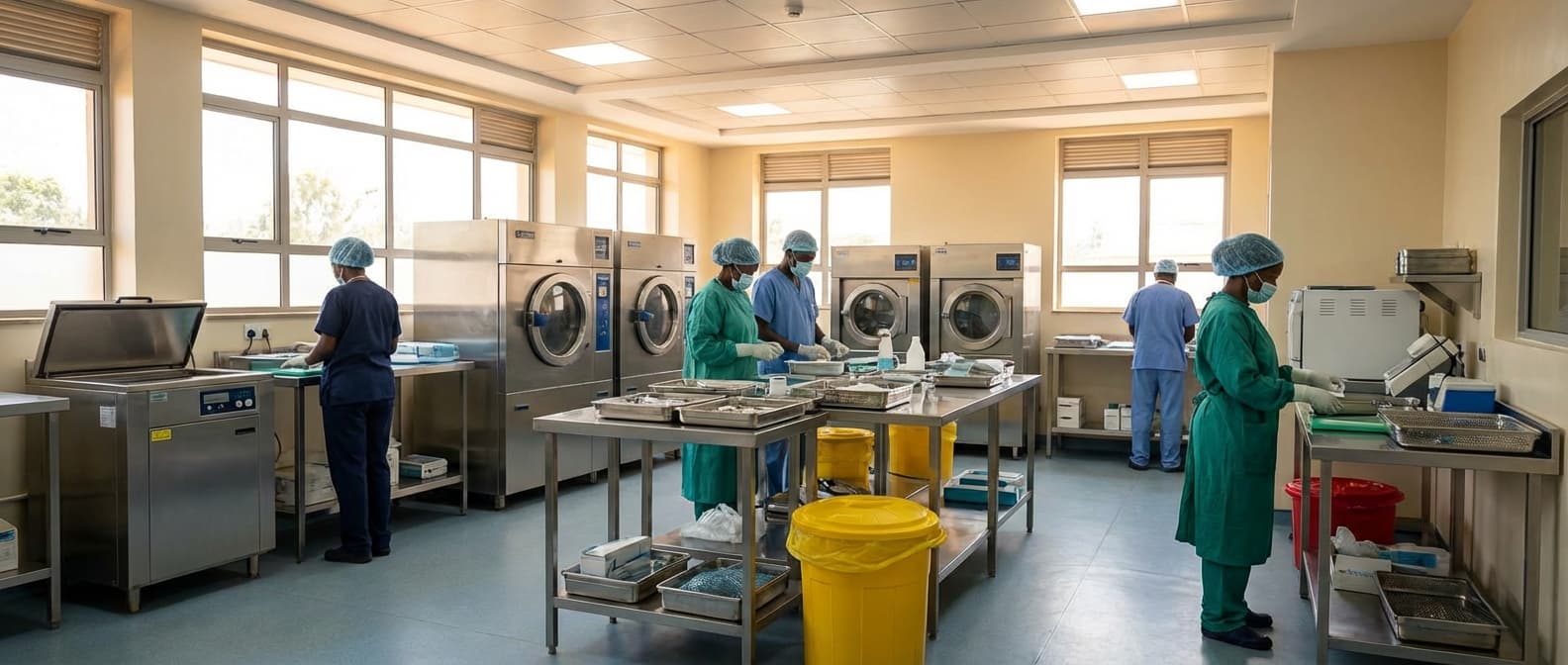
Autoclave Validation Support Service in Mauritania
Engineering Excellence & Technical Support
Autoclave Validation Support Service High-standard technical execution following OEM protocols and local regulatory frameworks.
ISO 17025 Accredited Validation
Our Autoclave Validation Support Service in Mauritania is backed by rigorous adherence to ISO 17025 standards, ensuring your sterilization processes meet international quality and precision benchmarks. We provide documented evidence and comprehensive reports, crucial for regulatory compliance and patient safety.
Advanced Calibration & Monitoring
Leveraging state-of-the-art calibrated sensors and data logging equipment, we perform precise temperature, pressure, and time monitoring for your autoclaves. Our service guarantees accuracy and reliability, essential for the effective inactivation of microorganisms in medical and laboratory settings across Mauritania.
Process Efficiency Optimization
Beyond routine validation, our Mauritanian technical team offers expert analysis of your sterilization cycles. We identify potential inefficiencies, suggest process improvements, and provide training to optimize autoclave performance, reduce cycle times, and minimize resource consumption, all while maintaining validated sterility assurance.
What Is Autoclave Validation Support Service In Mauritania?
Autoclave Validation Support Service in Mauritania refers to the specialized technical assistance provided to ensure that steam sterilization autoclaves operate effectively, reliably, and in compliance with relevant regulatory standards and best practices. This service is critical for healthcare facilities, pharmaceutical manufacturers, and research laboratories to guarantee the sterility of instruments and materials, thereby preventing healthcare-associated infections and ensuring product integrity. The validation process involves a series of documented tests and procedures to confirm that the autoclave consistently achieves and maintains the required sterilization parameters (temperature, pressure, time, and steam penetration) throughout its operational cycle.
| Who Needs Autoclave Validation Support Service? | Typical Use Cases | ||
|---|---|---|---|
| Hospitals and Clinics: For sterilization of surgical instruments, medical devices, and laboratory consumables. | Sterilization of reusable surgical instruments (scalpels, forceps, retractors). | Sterilization of dental instruments and equipment. | Sterilization of laboratory glassware and media for microbiological and chemical analysis. |
| Pharmaceutical and Biotechnology Manufacturers: For sterilization of manufacturing equipment, raw materials, and packaging components. | Sterilization of bulk drug substances and intermediates. | Sterilization of sterile filling equipment and components. | Sterilization of laboratory reagents and media for quality control and research. |
| Research and Development Laboratories: For sterilization of laboratory equipment, glassware, and biological materials. | Sterilization of biohazard waste. | Sterilization of cell culture media and consumables. | Decontamination of laboratory equipment. |
| Veterinary Clinics: For sterilization of surgical instruments and equipment. | Sterilization of instruments used in animal surgery and diagnostic procedures. |
Key Components of Autoclave Validation Support Service:
- Installation Qualification (IQ): Verifying that the autoclave is installed correctly according to manufacturer specifications and relevant standards.
- Operational Qualification (OQ): Testing the autoclave's functionality to ensure it operates within its defined operating parameters and ranges.
- Performance Qualification (PQ): Documenting the autoclave's ability to consistently achieve a validated sterilization cycle under typical and worst-case load conditions.
- Validation Protocol Development: Creating detailed, step-by-step plans for IQ, OQ, and PQ, outlining test methods, acceptance criteria, and required documentation.
- Installation and Calibration: Ensuring the autoclave is properly installed, configured, and calibrated by qualified personnel.
- Process Challenge Devices (PCDs): Utilizing biological and chemical indicators to challenge the sterilization process and demonstrate efficacy.
- Data Analysis and Reporting: Interpreting test results, generating comprehensive validation reports, and providing recommendations for ongoing monitoring and maintenance.
- Revalidation Services: Performing validation after significant repairs, modifications, or at predetermined intervals to maintain compliance.
- Consultancy and Training: Offering expert advice on sterilization best practices and training for facility personnel on autoclave operation and maintenance.
Who Needs Autoclave Validation Support Service In Mauritania?
The Autoclave Validation Support Service plays a crucial role in ensuring the safety and efficacy of sterilization processes in various healthcare and industrial settings. In Mauritania, like globally, these services are essential for organizations that rely on autoclaves for sterilizing medical instruments, laboratory equipment, and other critical materials. The validation process confirms that the autoclave is performing its sterilization cycle consistently and effectively, thereby preventing infections, ensuring product integrity, and meeting regulatory compliance.
| Target Customer | Key Departments Involved | Primary Needs/Concerns | Examples of Autoclave Usage |
|---|---|---|---|
| Hospitals & Large Clinics | Central Sterile Supply Department (CSSD), Operating Theatres, Infection Control Department, Maintenance Department | Ensuring patient safety through effective sterilization of surgical instruments, compliance with national and international healthcare standards, preventing hospital-acquired infections. | Sterilization of surgical tools, anesthesia equipment, linens, and other reusable medical devices. |
| Small Clinics & Dental Practices | Clinical Staff, Practice Manager | Maintaining a safe environment for patients, ensuring compliance with basic health regulations, efficient turnaround of instruments. | Sterilization of dental instruments, examination tools. |
| Research & Diagnostic Laboratories | Laboratory Technicians, Lab Manager, Quality Assurance Department | Maintaining the sterility of lab equipment and consumables for accurate experimental results, preventing contamination, ensuring biosafety. | Sterilization of glassware, petri dishes, culture media components, waste materials. |
| Pharmaceutical Manufacturers | Quality Control (QC) Department, Production Department, Sterilization Validation Team | Ensuring product sterility and shelf-life, meeting Good Manufacturing Practices (GMP) regulations, validating sterilization processes for drug production equipment. | Sterilization of manufacturing equipment, packaging materials, and in some cases, the final product (e.g., sterile injectables). |
| Food & Beverage Industry | Quality Assurance, Production, Sanitation Department | Ensuring product safety and preventing spoilage through effective sterilization of processing equipment and packaging materials, meeting food safety standards. | Sterilization of bottling equipment, food processing tools, packaging components. |
| Veterinary Clinics | Veterinarians, Veterinary Technicians | Ensuring the health and safety of animals undergoing procedures, sterilizing surgical instruments. | Sterilization of surgical instruments, animal care equipment. |
| Cosmetic & Beauty Salons | Salon Owner/Manager, Staff | Adhering to health and safety regulations for client protection, preventing cross-contamination of tools. | Sterilization of dụng cụ làm móng (nail tools), facial treatment instruments. |
Who Needs Autoclave Validation Support Service in Mauritania?
- Healthcare Facilities (Hospitals, Clinics, Dental Practices)
- Laboratories (Research, Diagnostic, Industrial)
- Pharmaceutical Manufacturers
- Food and Beverage Processing Plants
- Veterinary Clinics
- Cosmetic and Beauty Salons (where sterilization is mandated)
Autoclave Validation Support Service Process In Mauritania
This document outlines the Autoclave Validation Support Service process implemented in Mauritania, from the initial client inquiry to the successful execution and completion of the validation project. The service aims to ensure that autoclaves used in critical healthcare, pharmaceutical, and laboratory settings consistently achieve and maintain effective sterilization cycles, adhering to international standards and local regulations.
| Stage | Description | Key Activities | Deliverables/Outcomes | Typical Timeline (Weeks) |
|---|---|---|---|---|
| The client expresses interest in autoclave validation services. This stage involves understanding the client's needs, the type of autoclave, its application, and relevant regulatory requirements in Mauritania. | Initial contact, needs assessment, scope definition, discussion of regulatory landscape (e.g., Ministry of Health guidelines). | Understanding of client requirements, preliminary scope of work, identification of potential challenges. | 0.5 - 1 |
| Based on the initial consultation, a detailed proposal is prepared outlining the scope of services, methodology, timeline, personnel involved, and cost. | Site survey (if applicable), proposal drafting, cost estimation, negotiation, contract signing. | Formal proposal, signed service agreement/contract. | 1 - 2 |
| Detailed planning for the validation process, focusing on Installation Qualification (IQ) and Operational Qualification (OQ). This includes developing protocols and identifying necessary equipment. | Protocol development (IQ/OQ), calibration of validation equipment (temperature, pressure sensors), preparation of checklists, scheduling of personnel. | Approved IQ/OQ protocols, calibrated validation instruments, trained validation team. | 1 - 2 |
| Verification that the autoclave is installed correctly according to manufacturer specifications and relevant standards. This confirms the physical installation and basic functionality. | Verification of equipment installation, utility connections (power, water, steam), safety features, and manufacturer documentation review. | Completed IQ checklist, IQ report, confirmation of proper installation. | 1 - 2 |
| Testing to confirm that the autoclave operates consistently within its specified operating range and meets predefined performance parameters. | Running empty cycles at different parameters (temperature, time, pressure), testing safety interlocks, alarm functions, and control system verification. | Completed OQ test records, OQ report, confirmation of operational parameters and safety features. | 2 - 3 |
| The most critical phase, demonstrating that the autoclave consistently sterilizes loads effectively under normal operating conditions, using representative loads. | Running validation cycles with biological indicators (BIs) and chemical indicators (CIs) using actual or simulated product loads, repeat challenging cycles, data analysis. | Completed PQ test records, biological and chemical indicator results, PQ report, confirmation of effective sterilization. | 3 - 5 |
| Compilation of all data, protocols, and results into a comprehensive validation report that concludes on the autoclave's validated status. | Data compilation, report writing, review and approval of the validation report by the client and the service provider. | Final, approved Autoclave Validation Report, Certificate of Validation (if applicable). | 1 - 2 |
| Providing ongoing support, addressing any queries, and advising on revalidation schedules to maintain compliance. | Client follow-up, maintenance recommendations, scheduling of periodic revalidations (annual, biannual), troubleshooting. | Ongoing client relationship, proactive revalidation scheduling, continued compliance assurance. | Ongoing |
Key Stages of the Autoclave Validation Support Service Process
- Inquiry and Initial Consultation
- Proposal Development and Agreement
- Pre-Validation Activities (IQ/OQ Planning)
- Installation Qualification (IQ)
- Operational Qualification (OQ)
- Performance Qualification (PQ)
- Validation Report Generation
- Post-Validation Support and Revalidation Planning
Autoclave Validation Support Service Cost In Mauritania
Autoclave validation is a critical process to ensure that sterilization equipment operates effectively and consistently, meeting regulatory standards. In Mauritania, the cost of autoclave validation support services is influenced by several factors, leading to a range of pricing. These services are typically provided by specialized technical firms, calibration laboratories, or sometimes by manufacturers' representatives. The primary goal of validation is to demonstrate that the autoclave can achieve and maintain the required temperature, pressure, and time parameters for effective sterilization.
| Service Type | Estimated Price Range (MRU - Mauritanian Ouguiya) |
|---|---|
| Basic Autoclave Performance Qualification (PQ) | 50,000 - 150,000 MRU |
| Full Validation (IQ, OQ, PQ) for Standard Autoclave | 100,000 - 250,000 MRU |
| Full Validation for Large/Industrial Autoclaves | 200,000 - 400,000+ MRU |
| Annual Re-validation (PQ) | 40,000 - 120,000 MRU |
| Consultation and Report Review | 20,000 - 50,000 MRU |
Key Pricing Factors for Autoclave Validation Support Services in Mauritania
- Type and Size of Autoclave: Larger and more complex autoclaves (e.g., those used in large hospitals or industrial settings) generally incur higher validation costs due to the increased number of cycles to be monitored and the specialized equipment required for testing.
- Validation Parameters: The scope of validation significantly impacts cost. This can range from basic performance qualification (PQ) testing to more comprehensive validation protocols including installation qualification (IQ), operational qualification (OQ), and performance qualification (PQ). More parameters and extensive testing naturally increase the service fee.
- Frequency of Validation: While initial validation is a one-time cost for a new installation, routine re-validation (often annually or biannually) is crucial. The pricing for re-validation might be slightly lower than initial validation but still represents an ongoing expense.
- Geographic Location within Mauritania: While Mauritania has a relatively centralized economy, travel and logistics costs for technicians to reach more remote areas could slightly influence the overall price.
- Provider's Expertise and Reputation: Established and reputable service providers with a strong track record and certified technicians may command higher fees. Conversely, newer or smaller providers might offer more competitive pricing.
- Calibration and Equipment Used: The accuracy and certification of the calibration equipment used by the service provider are paramount. The cost of maintaining and calibrating this specialized equipment is factored into their service pricing.
- Documentation and Reporting Requirements: The level of detail and the format of the validation report can influence the cost. Clients requiring extensive documentation, including raw data logs and comprehensive analysis, may face higher charges.
- Urgency of Service: If a client requires validation on short notice or outside of standard business hours, emergency or expedited service fees may apply.
- Additional Services: Some providers may offer bundled services such as basic maintenance checks or minor repairs alongside validation, which would increase the overall cost but offer convenience.
Affordable Autoclave Validation Support Service Options
Acquiring affordable autoclave validation support is crucial for ensuring the safety and efficacy of sterilization processes in various industries, including healthcare and pharmaceuticals. This service is not a luxury but a necessity to meet regulatory compliance and prevent costly errors or product recalls. We offer a range of options designed to be budget-friendly without compromising on the quality and thoroughness of the validation process. Our approach focuses on understanding your specific needs and providing tailored solutions, offering significant value through flexible packages and strategic cost-saving measures.
| Cost-Saving Strategy | Description | Benefit |
|---|---|---|
| Bundled Services Discount | Purchasing validation and preventative maintenance together often comes with a reduced overall cost compared to individual service agreements. | Significant savings on recurring operational expenses. |
| Multi-Autoclave Discounts | If your facility has multiple autoclaves, we offer tiered pricing and discounts for validating them concurrently. | Reduced per-unit cost for larger validation projects. |
| Long-Term Service Agreements | Committing to a multi-year service contract can unlock preferential rates and priority scheduling. | Predictable budgeting and enhanced service reliability. |
| Remote Consultation & Support | Leveraging technology for initial consultations, data review, and troubleshooting can reduce on-site visit requirements. | Lower travel expenses and faster problem resolution. |
| Proactive Risk-Based Approach | Focusing validation efforts on critical parameters and potential failure points, rather than overly exhaustive testing, can optimize efficiency. | Reduced validation time and resource allocation. |
Value Bundles for Autoclave Validation
- Essential Validation Package: This foundational bundle covers the core requirements for autoclave validation, including initial qualification (IQ/OQ) and routine performance testing. It's ideal for smaller facilities or those with simpler sterilization needs.
- Comprehensive Validation Package: For organizations requiring a more in-depth approach, this bundle includes IQ/OQ, performance qualification (PQ) for multiple cycles, and a basic risk assessment. It's suited for facilities with diverse sterilization needs or higher regulatory scrutiny.
- Integrated Validation & Maintenance Package: This premium bundle combines full autoclave validation (IQ/OQ/PQ) with scheduled preventative maintenance services. This proactive approach minimizes downtime and ensures consistent performance, offering a significant long-term cost advantage.
- Customizable Validation Solutions: We understand that no two facilities are alike. Our customizable options allow you to select specific validation components and services, tailoring a package that precisely fits your budget and operational requirements.
Verified Providers In Mauritania
When seeking healthcare services in Mauritania, ensuring the credibility and expertise of your providers is paramount. Franance Health stands out as a leading organization committed to upholding the highest standards in medical care. Their rigorous credentialing process and dedication to quality make them the definitive choice for patients in Mauritania. This document outlines why Franance Health credentials represent the best option for your health needs.
| Benefit of Choosing Franance Health Verified Providers | Description | Why it Matters for Patients in Mauritania |
|---|---|---|
| Uncompromised Quality of Care | Franance Health's stringent vetting ensures access to highly skilled and qualified medical professionals. | Provides confidence in receiving accurate diagnoses and effective treatments, crucial for health outcomes. |
| Enhanced Patient Safety | Verification of licenses, certifications, and adherence to ethical guidelines minimizes risks associated with unqualified practitioners. | Offers peace of mind and a reduced chance of medical errors or malpractice. |
| Access to Specialized Expertise | Franance Health networks include specialists with proven experience in various medical fields. | Allows patients to find the right doctor for specific health concerns, leading to better management of complex conditions. |
| Trust and Reliability | The Franance Health brand is synonymous with dependability and a commitment to excellence in healthcare. | Builds a foundation of trust, making the process of seeking medical help less daunting. |
| Up-to-Date Medical Knowledge | Mandatory continuing education ensures providers are current with the latest medical research and treatment protocols. | Guarantees patients benefit from modern and evidence-based healthcare practices. |
Key aspects of Franance Health's credentialing process:
- Rigorous Verification: Franance Health employs a multi-faceted approach to verify the qualifications, licenses, and certifications of all healthcare professionals within their network. This includes thorough background checks and validation of educational institutions.
- Experience and Expertise: Beyond basic qualifications, Franance Health assesses the practical experience and specialized expertise of their providers, ensuring they are equipped to handle a wide range of medical conditions.
- Commitment to Continuing Education: To maintain their credentials, healthcare professionals affiliated with Franance Health are required to participate in ongoing professional development and training, keeping them abreast of the latest medical advancements and best practices.
- Patient-Centric Approach: Franance Health also evaluates providers on their communication skills, empathy, and dedication to patient well-being, ensuring a compassionate and effective healthcare experience.
- Adherence to Ethical Standards: All Franance Health affiliated providers must adhere to a strict code of ethics and professional conduct, guaranteeing integrity and trustworthiness in all patient interactions.
Scope Of Work For Autoclave Validation Support Service
This Scope of Work (SOW) outlines the services to be provided for Autoclave Validation Support. The objective is to ensure the autoclave system consistently performs within its intended operational parameters, meeting all relevant regulatory and quality requirements. This SOW details the technical deliverables, standard specifications, and project activities.
| Deliverable | Description | Standard Specification / Requirement | Acceptance Criteria |
|---|---|---|---|
| Validation Master Plan (VMP) Amendment/Creation | Development or amendment of the site's VMP to include the autoclave validation strategy. | Aligned with company validation policies and regulatory guidelines (e.g., GAMP 5). | Approved VMP amendment by authorized personnel. |
| URS (User Requirement Specification) | Detailed documentation of all user requirements for the autoclave, including functional, performance, and safety aspects. | Clear, unambiguous, verifiable, and testable requirements. | Approved URS by user representatives and quality assurance. |
| FDS (Functional Design Specification) | Description of how the autoclave will meet the URS, including system architecture, functionalities, and interfaces. | Traceable to URS, detailing system logic and operational flows. | Approved FDS by engineering and user representatives. |
| IQ (Installation Qualification) Protocol | Protocol detailing the tests and checks to confirm the autoclave is installed correctly as per manufacturer's specifications and design documents. | Covers checks for physical installation, cabling, utilities, safety features, and documentation. | Executed IQ protocol with all tests performed and documented. |
| IQ Report | Report summarizing the results of the IQ execution, including any deviations, and a conclusion on the satisfactory installation. | Includes all executed IQ records, test results, and a summary statement. | Approved IQ report by authorized personnel, confirming successful installation. |
| OQ (Operational Qualification) Protocol | Protocol detailing the tests and checks to confirm the autoclave operates correctly throughout its intended operating ranges. | Covers functional tests of all controls, alarms, safety interlocks, and operational sequences across defined setpoints (e.g., temperature, pressure, time). | Executed OQ protocol with all tests performed and documented. |
| OQ Report | Report summarizing the results of the OQ execution, including any deviations, and a conclusion on the satisfactory operation. | Includes all executed OQ records, test results, and a summary statement. | Approved OQ report by authorized personnel, confirming successful operation. |
| PQ (Performance Qualification) Protocol | Protocol detailing tests to demonstrate the autoclave consistently performs as intended under normal operating conditions using representative loads. | Includes multiple consecutive runs at defined cycle parameters, with monitoring of critical process parameters (CPPs) and potentially biological/chemical indicators. | Executed PQ protocol with all tests performed and documented. |
| PQ Report | Report summarizing the results of the PQ execution, including any deviations, and a conclusion on the consistent and satisfactory performance. | Includes all executed PQ records, test results, and a summary statement demonstrating consistency across runs. | Approved PQ report by authorized personnel, confirming consistent performance. |
| Revalidation Protocol/Report | Development or execution of a protocol for periodic or event-driven revalidation. | Based on risk assessment, regulatory guidance, and previous validation data. | Approved revalidation protocol and report. |
| Validation Summary Report | A comprehensive report summarizing the entire validation effort, including all IQ, OQ, and PQ findings. | Consolidates all validation activities, deviations, and conclusions into a single document. | Approved Validation Summary Report by authorized personnel. |
| Change Control Support | Assistance in assessing and documenting the impact of changes on the validated status of the autoclave. | Follows established company change control procedures. | Successful closure of change control documentation related to the autoclave. |
Project Objectives
- To verify and document the performance and suitability of the autoclave system for its intended use.
- To ensure the autoclave system meets all applicable regulatory requirements (e.g., FDA, EMA, ISO).
- To establish a robust validation protocol and report that can be used for ongoing monitoring and revalidation.
- To provide qualified technical expertise for the validation process.
Service Level Agreement For Autoclave Validation Support Service
This Service Level Agreement (SLA) outlines the guaranteed response times and uptime for the Autoclave Validation Support Service. The service aims to ensure efficient and reliable support for all autoclave validation activities, minimizing downtime and ensuring compliance with relevant standards.
| Severity Level | Description | Response Time Guarantee | Target Resolution Time | Uptime Guarantee |
|---|---|---|---|---|
| Critical | Complete or major failure of the support system, rendering the autoclave validation process inoperable or significantly impaired. | 15 minutes | 4 hours | 99.5% |
| High | Significant disruption to the autoclave validation process, impacting a substantial number of users or critical functionalities. | 1 hour | 8 business hours | 99.5% |
| Medium | Minor disruption to the autoclave validation process, impacting a limited number of users or non-critical functionalities. | 4 business hours | 2 business days | 99.0% |
| Low | General inquiries, feature requests, or minor issues that do not significantly impact the autoclave validation process. | 1 business day | 5 business days | 99.0% |
Key Service Metrics
- Response Time: The maximum allowable time from the initiation of a support request to the first substantive response from the support team.
- Resolution Time: The maximum allowable time from the initiation of a support request to the resolution of the reported issue. This may vary based on the complexity of the issue.
- Uptime Guarantee: The percentage of time the Autoclave Validation Support Service is available and functional. This excludes scheduled maintenance windows.
- Severity Levels: A classification system for support requests based on their impact on operations.
Frequently Asked Questions

Ready when you are
Let's scope your Autoclave Validation Support Service in Mauritania project in Mauritania.

Scaling healthcare logistics and technical systems across the entire continent.