
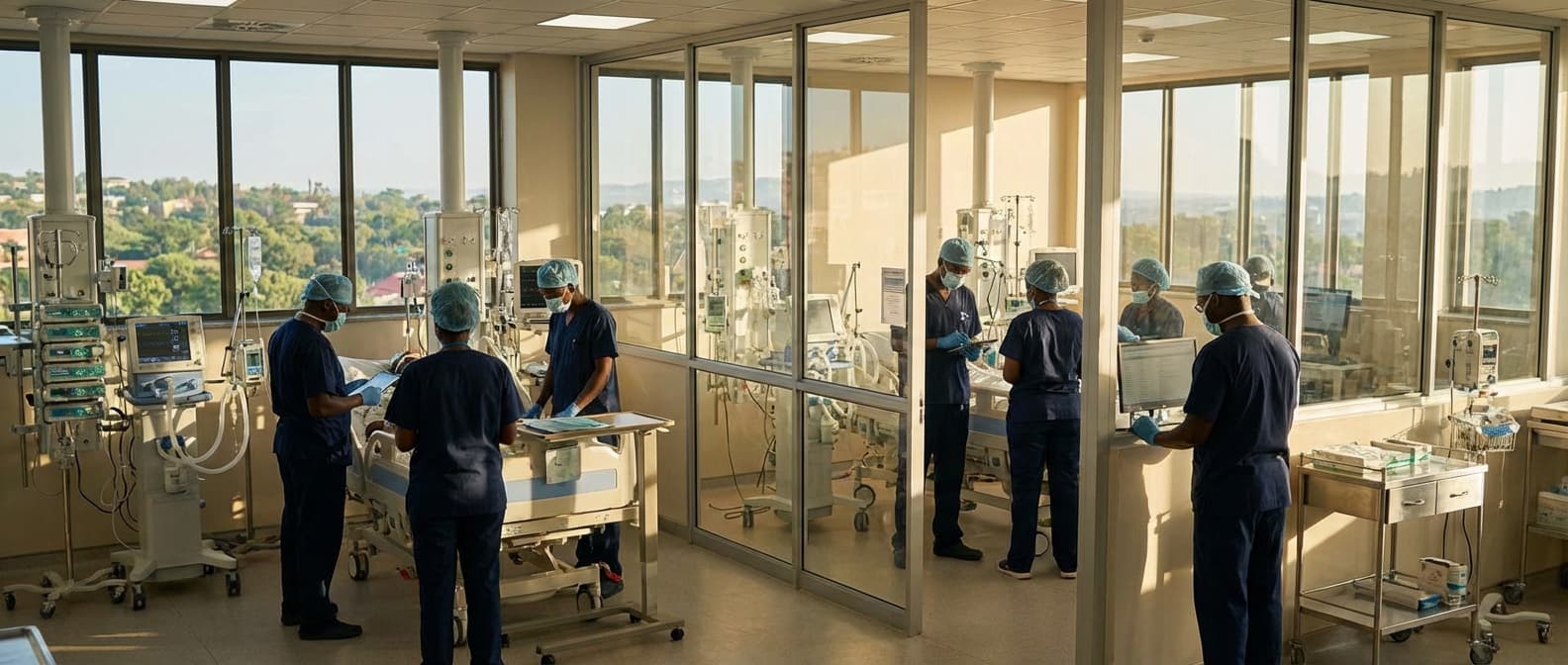
Ventilator Fleet Management & PM in Mauritania
Engineering Excellence & Technical Support
Preventive maintenance and fleet management for ICU ventilators High-standard technical execution following OEM protocols and local regulatory frameworks.
Proactive Ventilator Uptime Maximization
Implementing a predictive maintenance schedule for the Mauritanian national ventilator fleet, leveraging real-time sensor data and historical performance metrics to anticipate failures, minimize unplanned downtime, and ensure critical respiratory support availability during peak demand.
Enhanced PM Compliance & Regulatory Adherence
Establishing a digitized Preventive Maintenance (PM) workflow for all ventilators across Mauritania, with automated scheduling, task tracking, and digital record-keeping. This ensures adherence to manufacturer specifications and international medical equipment maintenance standards, guaranteeing safety and operational integrity.
Optimized Regional Ventilator Deployment & Logistics
Developing a dynamic inventory and deployment system for ventilators in Mauritania's geographically diverse regions. This system tracks equipment location, maintenance status, and utilization rates to optimize distribution, facilitate rapid response to emergent needs, and reduce transportation costs and delays.
What Is Ventilator Fleet Management & Pm In Mauritania?
Ventilator Fleet Management (VFM) and Preventive Maintenance (PM) in Mauritania refers to the comprehensive program of services dedicated to ensuring the optimal operational status, reliability, and longevity of all mechanical ventilators deployed within healthcare facilities across the nation. This encompasses a systematic approach to acquisition, deployment, tracking, maintenance, repair, and eventual decommissioning of ventilator assets. The primary objective is to guarantee immediate and sustained availability of critical respiratory support equipment, minimizing downtime and maximizing patient outcomes, particularly in resource-constrained environments and during public health emergencies.
| Service Aspect | Description | Relevance to Mauritania |
|---|---|---|
| Who Needs It? | Public and private healthcare institutions in Mauritania, including hospitals (tertiary, secondary, primary), specialized clinics, emergency medical services, and potentially national health stockpiles managed by the Ministry of Health. | Crucial for ensuring equitable access to advanced medical technology and standardized patient care across diverse healthcare settings within Mauritania. |
| Typical Use Cases |
|
|
Key Components of Ventilator Fleet Management & PM in Mauritania
- Inventory Management: Establishing and maintaining a real-time, accurate inventory of all ventilators, including serial numbers, model types, acquisition dates, current location, and status.
- Deployment Strategy: Developing and executing plans for the strategic placement of ventilators in hospitals and clinics based on patient needs, service capacity, and geographical distribution.
- Preventive Maintenance (PM): Implementing scheduled, routine inspections, cleaning, calibration, and part replacements to avert potential failures and ensure adherence to manufacturer specifications.
- Corrective Maintenance & Repair: Rapidly responding to equipment malfunctions, diagnosing issues, and performing necessary repairs to restore functionality.
- Calibration & Performance Verification: Regularly checking and adjusting ventilator settings to ensure accurate delivery of prescribed respiratory parameters.
- Training & Competency Assurance: Providing technical training to biomedical engineers, technicians, and clinical staff on ventilator operation, basic troubleshooting, and PM procedures.
- Asset Lifecycle Management: Overseeing the entire lifespan of ventilators, from procurement and commissioning to ongoing support and eventual disposal or replacement.
- Logistics & Supply Chain Management: Ensuring the availability of spare parts, consumables, and testing equipment required for maintenance and repair.
- Data Management & Reporting: Collecting, analyzing, and reporting on key performance indicators (KPIs) related to equipment utilization, downtime, maintenance history, and cost-effectiveness.
Who Needs Ventilator Fleet Management & Pm In Mauritania?
Effective Ventilator Fleet Management and Preventative Maintenance (PM) are crucial for ensuring the reliable operation of critical medical equipment in Mauritania. This is particularly relevant in healthcare settings facing resource constraints, limited access to specialized technical expertise, and the need to maximize the lifespan and performance of existing equipment. By implementing robust fleet management and PM programs, healthcare facilities can reduce downtime, prevent costly emergency repairs, and ultimately improve patient care outcomes. This ensures that life-saving ventilators are always ready when needed, especially during periods of increased demand such as public health emergencies.
| Customer Type | Key Departments Involved | Primary Needs/Benefits |
|---|---|---|
| Public Hospitals and Health Centers | Intensive Care Unit (ICU), Anesthesia, Respiratory Therapy, Biomedical Engineering Department (if existing), Procurement Department | Maximizing availability of critical equipment, cost-effective maintenance, extending equipment lifespan, ensuring patient safety, compliance with operational standards, training local technicians. |
| Private Clinics and Hospitals | ICU, Anesthesia, Respiratory Department, Facility Management, Purchasing Department | Maintaining a high standard of patient care, avoiding revenue loss due to equipment downtime, competitive advantage through reliable equipment, efficient resource allocation. |
| Military and Police Medical Services | Military Hospitals, Field Hospitals, Medical Corps, Logistics Department | Ensuring operational readiness for personnel, deployment of reliable medical equipment in diverse environments, rapid response capabilities, specialized maintenance needs. |
| Non-Governmental Organizations (NGOs) providing healthcare services | Clinical Services, Logistics and Supply Chain, Project Management, Biomedical Support (often outsourced) | Sustainable healthcare delivery in remote or underserved areas, effective utilization of donated or purchased equipment, remote troubleshooting and support, cost management. |
| Missions and Embassies with healthcare facilities | Medical Staff, Facility Management, Administrative Staff | Ensuring the health and safety of personnel, provision of essential medical services, continuity of operations, managing specialized equipment in a foreign environment. |
Target Customers and Departments in Mauritania for Ventilator Fleet Management & PM
- Public Hospitals and Health Centers
- Private Clinics and Hospitals
- Military and Police Medical Services
- Non-Governmental Organizations (NGOs) providing healthcare services
- Missions and Embassies with healthcare facilities
Ventilator Fleet Management & Pm Process In Mauritania
This document outlines the workflow for Ventilator Fleet Management and Preventive Maintenance (PM) processes in Mauritania, from initial inquiry to full execution. The process is designed to ensure the efficient deployment, upkeep, and readiness of the ventilator fleet to meet healthcare demands.
| Stage | Key Activities | Responsible Parties | Documentation / Outputs | Timeline (Typical) | |||
|---|---|---|---|---|---|---|---|
| a. Request for new ventilators or PM services received (e.g., from a healthcare facility). | b. Assessment of current fleet status, identified gaps, or specific PM requirements. | c. Initial verification and prioritization of the request. | Healthcare Facility, Regional Health Office, MoH Biomedical Engineering | Internal memo, email, request form | 1-3 days | |
| a. Technical assessment of required ventilators or PM scope. | b. Budget allocation and approval for procurement or PM services. | c. Scheduling of PM based on manufacturer recommendations and operational needs. | d. Identification of necessary spare parts and consumables. | MoH Biomedical Engineering, Procurement, Finance Department | Work order request, PM schedule, budget approval, spare parts list | 3-7 days |
| a. Issuance of tender or Request for Quotation (RFQ). | b. Evaluation of bids and selection of supplier. | c. Contract finalization and purchase order generation. | d. Payment processing. | Procurement Department, MoH Finance | Tender documents, RFQ, bid evaluation report, purchase order, payment vouchers | Weeks to Months (depending on procurement complexity) |
| a. Coordination of shipping and customs clearance. | b. Transportation of ventilators to designated healthcare facilities. | c. Unpacking and initial setup. | Logistics & Supply Chain, Healthcare Facility | Shipping manifests, customs clearance documents, delivery receipts | 1-2 weeks (after arrival) | |
| a. Installation by qualified biomedical technicians. | b. Calibration and functional testing. | c. Staff training on operation and basic maintenance. | Biomedical Engineering Department, Healthcare Facility Staff, Manufacturer Representative (if required) | Installation report, calibration certificates, training records | 2-5 days | |
| a. Scheduled PM tasks as per manufacturer guidelines (e.g., cleaning, lubrication, filter replacement, functional checks). | b. Use of standardized PM checklists. | c. Recording of all performed tasks, findings, and parts used. | d. Identification of any defects or potential issues requiring further attention. | Biomedical Engineering Department / Technicians | PM checklists, service reports, maintenance logs, parts used records | Varies (based on PM schedule, typically 1-3 days per unit) |
| a. Diagnosis of reported malfunctions or issues identified during PM. | b. Repair or replacement of faulty components. | c. Post-repair testing and verification of functionality. | Biomedical Engineering Department / Technicians, External Service Provider (if needed) | Repair reports, parts replaced records, test results | Varies (hours to days, depending on complexity) | |
| a. Updating the central ventilator fleet management system (software) with installation, PM, and repair data. | b. Tracking equipment lifecycle, service history, and location. | c. Generating reports on fleet status, maintenance schedules, and costs. | d. Monitoring equipment performance and utilization. | Biomedical Engineering Department, IT Department | Updated fleet database, maintenance history, utilization reports, asset tags | Ongoing |
| a. Regular reporting on fleet status, PM compliance, and maintenance costs to MoH and relevant authorities. | b. Periodic review of PM effectiveness and process efficiency. | c. Identification of areas for improvement in fleet management and maintenance strategies. | MoH Biomedical Engineering, Regional Health Offices | Monthly/Quarterly reports, performance reviews, recommendations | Monthly/Quarterly |
Key Stakeholders Involved
- Ministry of Health (MoH) / National Health Directorate
- Regional Health Offices
- Healthcare Facilities (Hospitals, Clinics)
- Biomedical Engineering Department / Technicians
- Procurement Department
- Logistics and Supply Chain Department
- External Service Providers / Manufacturers (for specialized maintenance)
- IT Department (for fleet management software)
Ventilator Fleet Management & Pm Cost In Mauritania
Managing a ventilator fleet in Mauritania involves several key considerations that influence pricing. These factors range from the type and age of ventilators to the complexity of maintenance, availability of spare parts, and the expertise of the service providers. The local currency, the Mauritanian Ouguiya (MRU), is used for all transactions, and understanding the pricing ranges is crucial for budgeting and operational efficiency. Preventive Maintenance (PM) costs are a significant component of fleet management, ensuring the longevity and reliability of these critical medical devices. Factors affecting PM costs include the frequency and scope of maintenance, the need for specialized tools and diagnostic equipment, and the geographical distribution of the fleet.
| Service Type | Estimated Price Range (MRU) - Annual | Notes |
|---|---|---|
| Basic Preventive Maintenance (per ventilator, annual) | 15,000 - 40,000 MRU | Covers routine checks, cleaning, filter replacement. Varies by ventilator complexity. |
| Comprehensive Preventive Maintenance (per ventilator, annual) | 30,000 - 80,000 MRU | Includes advanced diagnostics, calibration, battery checks, and minor part replacement. Higher for complex critical care ventilators. |
| Emergency Repair Call-out Fee (per visit) | 10,000 - 25,000 MRU | Excludes parts. May be higher for after-hours or remote locations. |
| Labor Cost per Hour (specialized technician) | 5,000 - 12,000 MRU | Rates depend on experience and specific ventilator model expertise. |
| Spare Parts (estimated annual cost per ventilator) | 10,000 - 50,000+ MRU | Highly variable based on ventilator type, age, and failure rate. Critical components can be very expensive. |
| Fleet Management Software/Platform (annual subscription) | 20,000 - 100,000+ MRU | For larger fleets, tracking, scheduling, and reporting. Cost depends on features and vendor. |
| Technician Training (per technician, per course) | 50,000 - 200,000+ MRU | Specialized training for specific ventilator models can be costly, especially if imported training is required. |
Key Pricing Factors for Ventilator Fleet Management & PM in Mauritania
- Ventilator Make and Model: Different manufacturers and models have varying costs for spare parts, software updates, and specialized training for technicians.
- Ventilator Age and Condition: Older ventilators may require more frequent or intensive maintenance and have a higher likelihood of needing costly component replacements.
- Scope of Preventive Maintenance (PM): The frequency (e.g., semi-annual, annual) and depth of PM services (e.g., basic cleaning vs. comprehensive calibration and testing) directly impact cost.
- Availability and Cost of Spare Parts: Sourcing genuine or compatible spare parts in Mauritania can influence price, with imported parts often incurring higher duties and shipping costs.
- Technician Expertise and Training: The level of qualification and specialized training required for technicians servicing specific ventilator models will affect labor costs.
- Service Provider Location and Logistics: Travel time and expenses for technicians to reach dispersed healthcare facilities can add to the overall cost, especially in remote areas of Mauritania.
- Warranty Status: Ventilators under manufacturer warranty may have PM covered or subsidized, while out-of-warranty units will incur full service costs.
- Contractual Agreements: Long-term maintenance contracts can sometimes offer better rates and predictability compared to ad-hoc service calls.
- Regulatory Compliance and Certification: Ensuring ventilators meet local and international medical device standards may require specific testing and documentation, adding to costs.
- Decontamination and Sterilization Procedures: Specialized cleaning and sterilization protocols, particularly in the context of infectious diseases, can add to the complexity and cost of maintenance.
Affordable Ventilator Fleet Management & Pm Options
This document outlines affordable strategies for ventilator fleet management and preventative maintenance (PM). We will explore the value of bundled services and detail cost-saving measures to ensure your medical equipment remains operational, safe, and compliant while minimizing expenditure.
| Cost-Saving Strategy | Description | Potential Benefits | Considerations |
|---|---|---|---|
| Negotiate Service Level Agreements (SLAs) | Clearly define response times, repair turnaround, and uptime guarantees in contracts. Stricter SLAs may command higher prices, but can offset costs from unexpected downtime. | Reduced downtime, improved resource allocation, guaranteed performance. | Ensure penalties for non-compliance are included. Align SLAs with clinical needs. |
| Leverage Manufacturer or Third-Party Service Options | Compare pricing and offerings from original equipment manufacturers (OEMs) versus independent third-party service providers. Third-party providers may offer competitive pricing, especially for older equipment. | Potential for significant cost reduction, specialized expertise. | Verify third-party technician certifications and parts quality. Consider warranty implications. |
| Centralize PM Scheduling | Implement a robust system to schedule and track all PM activities across the entire fleet. This prevents missed PMs and allows for efficient technician deployment. | Improved compliance, reduced emergency repairs, extended equipment lifespan. | Requires investment in scheduling software or a dedicated CMMS. |
| Implement Remote Monitoring & Diagnostics | Utilize connected devices to remotely monitor ventilator status, performance, and error codes. This allows for proactive intervention before a failure occurs. | Reduced site visits, faster issue resolution, predictive maintenance. | Requires compatible equipment and network infrastructure. Data security is paramount. |
| Develop an In-House Biomedical Team | Invest in training and equipping in-house technicians to perform routine PM and minor repairs. This can be more cost-effective than relying solely on external services for basic tasks. | Lower per-service cost, faster response times for minor issues, better understanding of fleet needs. | Requires significant upfront investment in training and tools. Complex repairs may still require external specialists. |
| Bulk Purchasing of Parts & Consumables | Negotiate discounts for purchasing parts and consumables in larger quantities, especially if you have a significant ventilator fleet. | Reduced material costs, simplified procurement. | Requires accurate forecasting of needs to avoid overstocking and obsolescence. |
| Standardize Ventilator Models | Where clinically feasible, standardize on a limited number of ventilator models. This simplifies training, parts stocking, and PM procedures. | Reduced training costs, optimized parts inventory, increased technician efficiency. | Must align with clinical requirements and physician preferences. |
| Data-Driven Decision Making | Analyze equipment usage, failure rates, and repair costs to identify trends and optimize PM schedules and replacement strategies. | Informed purchasing decisions, efficient resource allocation, proactive risk management. | Requires robust data collection and analysis capabilities. |
Key Value Bundles for Ventilator Fleet Management & PM
- {"title":"Comprehensive Service Contracts","description":"Bundling all PM, corrective maintenance, and parts under a single, predictable annual cost. This offers peace of mind and budget certainty."}
- {"title":"Preventative Maintenance & Calibration Packages","description":"Focuses on proactive maintenance to prevent failures. Often includes discounted rates for scheduled visits and adherence to manufacturer guidelines."}
- {"title":"Parts & Consumables Bundles","description":"Negotiating bulk discounts on frequently used parts and consumables (filters, sensors, etc.) when purchasing as part of a service agreement."}
- {"title":"Training & Certification Bundles","description":"Includes training for in-house biomedical technicians on specific ventilator models, coupled with PM schedule adherence and minor repair capabilities, reducing reliance on external service."}
- {"title":"Equipment Lifecycle Management & Upgrade Programs","description":"Bundling PM with planned upgrades or replacement cycles to ensure the fleet remains current and efficient, often with trade-in options."}
Verified Providers In Mauritania
Finding reliable healthcare providers is paramount, especially when navigating a new or unfamiliar medical landscape. In Mauritania, a commitment to quality and patient well-being is essential. Franance Health stands out as a leading entity, meticulously verifying healthcare providers to ensure they meet stringent standards of professionalism, expertise, and ethical practice. This verification process is not merely a formality; it is a rigorous evaluation designed to instill confidence in patients and guide them towards the most competent and trustworthy medical professionals. By choosing Franance Health-verified providers, individuals are selecting a level of care that prioritizes safety, effectiveness, and a patient-centered approach. Their credentials represent a seal of approval, guaranteeing that the healthcare professionals have undergone thorough vetting, possess the necessary qualifications, and are dedicated to upholding the highest ethical benchmarks in their practice.
| Provider Type | Franance Health Verification Benefits | Why They Represent the Best Choice |
|---|---|---|
| General Practitioners | Ensures foundational medical knowledge and diagnostic skills. | Provides reliable primary care, early detection, and referral to specialists. |
| Specialists (e.g., Cardiologists, Dermatologists, Pediatricians) | Confirms advanced training and expertise in specific medical areas. | Offers expert diagnosis and treatment for complex or specific health conditions. |
| Surgeons | Verifies surgical competency, sterile environment protocols, and patient safety measures. | Guarantees skilled and safe surgical interventions with a focus on patient outcomes. |
| Dentists | Confirms proficiency in oral health assessment, diagnosis, and treatment. | Ensures comprehensive dental care, from routine check-ups to advanced procedures. |
| Hospitals and Clinics | Evaluates infrastructure, equipment, staffing levels, and emergency preparedness. | Provides access to well-equipped facilities with a coordinated approach to care. |
Key Aspects of Franance Health Verification
- Rigorous credentialing and qualification checks of medical professionals.
- Assessment of adherence to ethical medical practices and patient care standards.
- Verification of specialized training and experience in relevant medical fields.
- Ensuring compliance with national and international healthcare regulations.
- Ongoing monitoring and reassessment of provider performance.
Scope Of Work For Ventilator Fleet Management & Pm
This Scope of Work (SOW) outlines the requirements for a comprehensive Ventilator Fleet Management and Preventive Maintenance (PM) program. The program aims to ensure the optimal performance, reliability, and safety of the entire ventilator fleet. This includes detailed technical deliverables and standard specifications for all aspects of fleet management, from acquisition and deployment to maintenance, calibration, and eventual decommissioning.
| Category | Technical Deliverables | Standard Specifications |
|---|---|---|
| Fleet Inventory & Asset Management | Centralized database of all ventilators, including make, model, serial number, purchase date, location, and maintenance history. | Database compliant with industry-standard asset management systems (e.g., CMMS). Data accuracy maintained at >99%. |
| Preventive Maintenance (PM) | Scheduled PM checklists for each ventilator model, based on manufacturer recommendations and usage patterns. | PMs performed at intervals not exceeding manufacturer specifications or recommended clinical usage guidelines. Checklists include functional tests, safety checks, and calibration verification. |
| Calibration & Performance Verification | Regular calibration and performance verification of all ventilators against established benchmarks. | Calibration performed by certified technicians using traceable calibration equipment. Results documented and stored electronically. Calibration frequency determined by manufacturer and usage. |
| Repair & Troubleshooting | Rapid response to reported equipment failures. Diagnosis and repair by trained biomedical technicians. | Response time to critical equipment failures within 2 hours. Repair success rate >95% on first attempt. Use of OEM or equivalent parts. |
| Service History & Reporting | Comprehensive service history for each ventilator, including all PM, repair, calibration, and modification events. | Detailed monthly and quarterly reports summarizing fleet status, PM completion rates, repair trends, downtime, and costs. Reports delivered electronically in PDF or CSV format. |
| Software & Firmware Updates | Management and application of all required software and firmware updates for ventilators. | Updates performed according to manufacturer advisories and institutional protocols. Verification of successful update and system functionality post-update. |
| Training & Competency | Training for relevant personnel on the operation, basic troubleshooting, and maintenance of ventilators. | Training programs developed and delivered by qualified instructors. Competency assessments conducted for all trainees. |
| Regulatory Compliance | Adherence to all relevant regulatory requirements for medical device maintenance and management. | All maintenance activities documented to meet FDA, Joint Commission, and other applicable regulatory standards. Regular internal audits to ensure compliance. |
| Decommissioning & Disposal | Procedures for the safe and compliant decommissioning and disposal of end-of-life ventilators. | Disposal methods comply with environmental regulations and data security policies. Asset records updated to reflect disposition. |
Key Objectives
- Maximize ventilator uptime and operational readiness.
- Ensure compliance with all relevant regulatory standards (e.g., FDA, manufacturer guidelines).
- Minimize maintenance costs through proactive and scheduled preventive measures.
- Maintain accurate and up-to-date records of all fleet activities.
- Facilitate efficient resource allocation for maintenance and repair.
- Extend the useful life of the ventilator fleet through proper care and management.
- Ensure patient safety by maintaining ventilators at peak performance.
Service Level Agreement For Ventilator Fleet Management & Pm
This Service Level Agreement (SLA) outlines the performance expectations and guarantees for the management and preventive maintenance (PM) of the organization's ventilator fleet. It defines response times for critical issues and establishes uptime guarantees to ensure the availability of essential medical equipment.
| Service Category | Response Time Target (Business Hours) | Response Time Target (24/7) | Resolution Time Target | Uptime Guarantee | Escalation Procedure |
|---|---|---|---|---|---|
| Critical Equipment Failure (Ventilator Non-Operational) | 1 hour | 30 minutes | 4 business hours (for temporary solution/loaner) | 98% Uptime (excluding scheduled PM) | Immediate notification to Service Manager and Clinical Engineering Director. |
| Urgent Maintenance Request (Ventilator Performance Degradation) | 2 business hours | 1 hour | 8 business hours | 98% Uptime (excluding scheduled PM) | Notification to Service Manager within 1 hour of ticket creation. |
| Scheduled Preventive Maintenance (PM) | As per agreed schedule | N/A | As per PM scope | N/A (scheduled downtime is communicated in advance) | Notification to affected departments 7 days prior to scheduled PM. |
| Routine Inquiry / Non-Critical Issue | 4 business hours | N/A | 2 business days | N/A | Notification to Service Manager within 4 business hours of ticket creation. |
Scope of Service
- Management of the entire ventilator fleet, including inventory tracking, asset tagging, and location management.
- Execution of scheduled Preventive Maintenance (PM) based on manufacturer recommendations and established schedules.
- Response to unscheduled maintenance requests and emergency repairs.
- Coordination with clinical staff and relevant departments for scheduling and execution of services.
- Provision of reporting on fleet status, PM completion, and maintenance history.
Frequently Asked Questions

Ready when you are
Let's scope your Ventilator Fleet Management & PM in Mauritania project in Mauritania.

Scaling healthcare logistics and technical systems across the entire continent.