
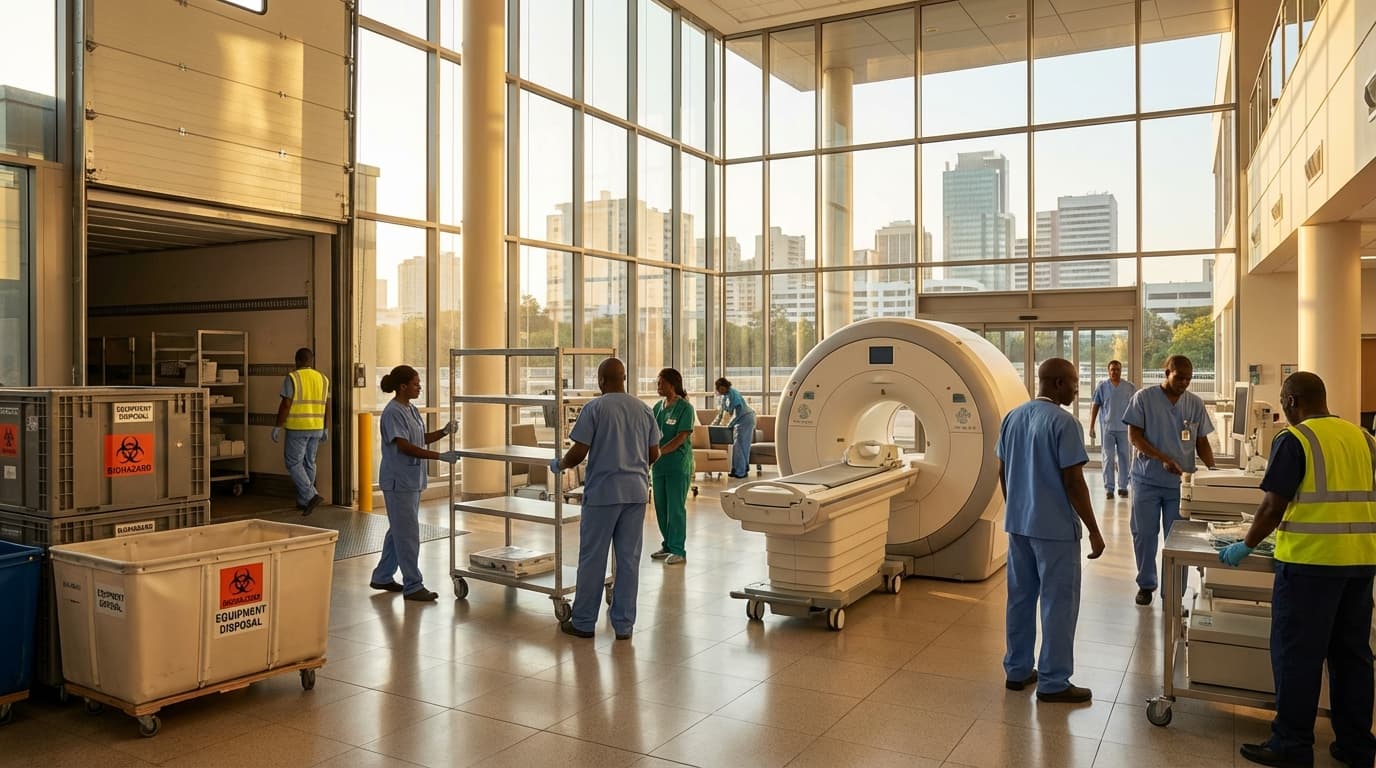
Heavy Medical Equipment De-Installation Service (MRI/CT/Cath Lab) in Mauritania
Engineering Excellence & Technical Support
Heavy Medical Equipment De-Installation Service (MRI/CT/Cath Lab) High-standard technical execution following OEM protocols and local regulatory frameworks.
Decommissioning & Shielding Expertise
Our certified technicians possess specialized knowledge in the safe and compliant decommissioning of high-energy medical equipment, including MRI, CT, and Cath Labs. We meticulously manage all aspects of radiation safety protocols and shielding requirements throughout the de-installation process, ensuring regulatory adherence and environmental protection specific to Mauritanian standards.
Specialized Tooling & Logistics Management
We deploy advanced, purpose-built tooling and equipment to handle the complex and heavy components of MRI, CT, and Cath Lab systems. Our comprehensive logistical planning ensures seamless transportation and secure handling of sensitive medical hardware within Mauritania's unique infrastructure, minimizing downtime and risk.
Regulatory Compliance & Documentation
Navigating the regulatory landscape is paramount. Our team provides meticulous documentation and ensures full compliance with Mauritanian health, safety, and environmental regulations governing the de-installation and disposal of advanced medical equipment. We deliver comprehensive audit-ready reports for your peace of mind.
What Is Heavy Medical Equipment De-installation Service (Mri/ct/cath Lab) In Mauritania?
Heavy Medical Equipment De-Installation Service (MRI/CT/Cath Lab) in Mauritania refers to the specialized process of safely and meticulously dismantling, packaging, and preparing high-value, large-scale medical imaging and diagnostic equipment, such as Magnetic Resonance Imaging (MRI) scanners, Computed Tomography (CT) scanners, and Cardiac Catheterization (Cath Lab) systems, for relocation, decommissioning, or disposal within the Mauritanian healthcare landscape. This service requires a deep understanding of complex electro-mechanical systems, stringent safety protocols, and regulatory compliance specific to medical devices and heavy machinery transport. The objective is to ensure the integrity of the equipment during disassembly, minimize risk to personnel and the facility, and prepare it for subsequent stages, be it a new installation, secure storage, or environmentally responsible disposal.
| Who Needs This Service? | Typical Use Cases | ||||
|---|---|---|---|---|---|
| Hospitals and Clinics: Facilities upgrading their imaging or interventional cardiology equipment, relocating to new premises, or decommissioning outdated systems. | Diagnostic Imaging Centers: Independent centers requiring the replacement or relocation of MRI, CT, or Cath Lab suites. | Medical Equipment Manufacturers/Distributors: Companies involved in the sale, refurbishment, or resale of pre-owned medical equipment, requiring de-installation from former client sites. | Asset Management Companies: Organizations managing medical equipment portfolios for healthcare institutions, undertaking asset optimization and disposal. | Research Institutions: Universities or dedicated research facilities that may be repurposing or relocating specialized imaging equipment. | |
| Equipment Upgrades: Replacing older MRI, CT, or Cath Lab systems with newer, more advanced models. | Facility Relocation/Renovation: Moving a healthcare facility to a new location or undertaking significant renovations that necessitate the temporary or permanent removal of heavy medical equipment. | Decommissioning of Obsolete Equipment: Removing and disposing of equipment that has reached its end-of-life or is no longer clinically viable. | Equipment Sales and Transfers: Preparing equipment for sale to another institution or for transfer to a different department within the same organization. | Disaster Recovery and Business Continuity: In situations requiring a temporary or permanent facility closure, de-installation services are crucial for securing valuable assets. | End-of-Lease Returns: Returning equipment to a leasing company at the end of a contract term. |
Key Components of Heavy Medical Equipment De-Installation Service:
- Site Assessment and Planning: Detailed evaluation of the installation site, including access routes, structural integrity, power and cooling infrastructure, and potential hazards. Development of a comprehensive de-installation plan.
- System Disconnection and Isolation: Safely disconnecting all power, cooling (e.g., liquid helium for MRI), data, and peripheral connections. Ensuring proper lockout/tagout procedures are followed to prevent accidental energization.
- Component Disassembly: Expert dismantling of the equipment into manageable modules or components. This involves specialized tools and techniques to address proprietary fastening systems, delicate sensor arrays, and heavy structural elements.
- Shielding and Containment Removal: For MRI and CT scanners, this includes the safe removal and handling of lead shielding or other radiation containment structures.
- Cabling and Ancillary Equipment Management: Coordinated removal and labeling of all associated cabling, power supplies, control consoles, and other ancillary components.
- Packaging and Protection: Utilizing custom-designed crating, shock-absorbent materials, and environmental protection (e.g., moisture barriers) to safeguard sensitive components during transit and storage.
- Documentation and Asset Tagging: Comprehensive inventory and labeling of all removed components. Detailed photographic and written records of the de-installation process for compliance and future reference.
- Logistics Coordination: Facilitating and managing the transport of de-installed equipment, adhering to specific requirements for heavy machinery and sensitive medical devices.
- Regulatory Compliance: Ensuring adherence to local Mauritanian regulations regarding the handling and disposal of medical equipment and hazardous materials (if applicable).
- Supervision by Certified Technicians: The entire process is overseen by highly trained and certified biomedical engineers and technicians with specific expertise in the relevant equipment modalities.
Who Needs Heavy Medical Equipment De-installation Service (Mri/ct/cath Lab) In Mauritania?
When a healthcare facility in Mauritania is undergoing significant upgrades, renovations, or relocations involving advanced imaging and interventional equipment, specialized de-installation services become crucial. This includes the meticulous and safe dismantling of high-value, complex machinery like Magnetic Resonance Imaging (MRI) scanners, Computed Tomography (CT) scanners, and Cardiac Catheterization (Cath) laboratories. These services are essential to prevent damage, ensure regulatory compliance, and facilitate efficient transport and reinstallation.
| Target Customer Type | Key Departments Involved | Reasons for Requiring Service |
|---|---|---|
| Hospitals & Healthcare Systems | Radiology/Medical Imaging Department, Cardiology Department, Cardiovascular Interventional Suite, Biomedical Engineering, Facilities Management, Administration | Equipment upgrades, facility renovations, relocation of departments, end-of-life equipment removal, expansion projects. |
| Specialty Clinics & Diagnostic Centers | Imaging Department, Cardiology Department, Technical Operations | Expansion of services, relocation to a new site, replacement of outdated equipment. |
| Government Health Ministries & Public Health Initiatives | Planning and Development Department, Procurement, Public Works Department, Provincial Health Offices | Establishing new regional hospitals, modernizing existing public healthcare infrastructure, national equipment replacement programs. |
| Research & Academic Medical Institutions | Radiology Research Labs, Cardiology Research Labs, Biomedical Engineering Department, University Administration | Upgrading research equipment, relocating research facilities, preparing for new research grants requiring advanced imaging. |
| International Aid Organizations & NGOs | Project Management, Logistics, Technical Support, Health Program Managers | Setting up new medical facilities in underserved areas, equipping existing facilities with advanced technology, project-based equipment deployment. |
| Equipment Manufacturers & Distributors | Field Service, Project Management, Logistics, Sales Support | Managing complex equipment transitions, facilitating large-scale projects, ensuring local regulatory compliance for de-installation. |
| Real Estate Developers & Construction Companies | Project Management, Construction Management, Site Operations | Integrating specialized medical equipment de-installation into construction timelines, ensuring seamless handover of renovated or new medical spaces. |
Target Customers and Departments Requiring Heavy Medical Equipment De-Installation Service (MRI/CT/Cath Lab) in Mauritania:
- Hospitals & Healthcare Systems: The primary recipients of these services are large public and private hospitals. They often have multiple imaging suites and interventional cardiology departments that require periodic upgrades or relocation.
- Specialty Clinics & Diagnostic Centers: Dedicated imaging centers and cardiac clinics that house MRI, CT, or Cath Lab equipment will need these services when expanding, relocating, or replacing existing machinery.
- Government Health Ministries & Public Health Initiatives: For national healthcare infrastructure projects, including the establishment of new facilities or the modernization of existing ones across the country, government health bodies may procure these services.
- Research & Academic Medical Institutions: Universities and medical schools with affiliated hospitals that conduct advanced medical research and training will require de-installation for equipment upgrades or research project shifts.
- International Aid Organizations & NGOs: Organizations involved in healthcare development and humanitarian aid in Mauritania, particularly those setting up or equipping new medical facilities, might require these specialized services.
- Equipment Manufacturers & Distributors: While they often have their own installation teams, they may outsource de-installation to specialized third-party providers for specific projects, especially when dealing with complex logistics or local regulations.
- Real Estate Developers & Construction Companies: Involved in building or renovating healthcare facilities, they may partner with de-installation services as part of the broader project scope.
Heavy Medical Equipment De-installation Service (Mri/ct/cath Lab) Process In Mauritania
This document outlines the comprehensive workflow for our Heavy Medical Equipment De-Installation Service (MRI/CT/Cath Lab) in Mauritania. Our process is meticulously designed to ensure safety, efficiency, and minimal disruption to your operations, from the initial inquiry to the successful completion of the de-installation. We handle every step with expert precision and adherence to international standards.
| Phase | Step | Description | Key Activities | Responsible Party | Mauritania Specific Considerations |
|---|---|---|---|---|---|
| Receive Inquiry | Client contacts us to request de-installation services for heavy medical equipment. | Understand client's needs, equipment type, location, and desired timeline. | Client, Service Provider | Initial communication may require understanding local time zones and preferred contact methods in Mauritania. Language proficiency in French or Arabic is beneficial. |
| On-Site Survey | Our specialized team visits the client's facility to conduct a thorough assessment. | Evaluate equipment condition, existing infrastructure (power, cooling, space), access routes, and potential logistical challenges. | Service Provider (Technical Team) | Assessing road conditions for transport, understanding local customs for site access, potential availability of specialized local labor if needed. |
| Develop De-Installation Plan | Based on the site assessment, a detailed plan is created. | Outline de-installation sequence, required tools/equipment, safety protocols, personnel allocation, and timeline. Identify potential risks and mitigation strategies. | Service Provider (Project Manager & Technical Team) | Incorporating local safety regulations, understanding permit requirements for heavy lifting or transport in specific regions of Mauritania. |
| Provide Quotation | A comprehensive quotation is provided to the client. | Includes costs for labor, specialized equipment, logistics, insurance, and any applicable taxes or fees. Details the scope of work. | Service Provider (Sales/Project Management) | Quotation may need to be in USD or Euros, and clearly outline VAT or other applicable Mauritanian taxes. Payment terms negotiation. |
| Contract Signing | Upon acceptance of the quotation, a formal contract is signed. | Legally binding agreement outlining terms, responsibilities, liabilities, payment schedule, and service completion criteria. | Client, Service Provider | Ensuring contract language is clear and understandable, potentially requiring translation services. Adherence to Mauritanian contract law. |
| Secure Permits & Approvals | Obtain any necessary permits or approvals for the de-installation and potential transport. | Liaise with local authorities and stakeholders. | Service Provider (Logistics & Project Management) | Navigating bureaucratic processes in Mauritania, understanding specific permit requirements for heavy equipment removal from medical facilities. |
| Mobilize Resources | Gather all necessary personnel, tools, and equipment. | Assemble the de-installation team, transport specialized tools, and prepare any required safety gear. | Service Provider (Project Management) | Arranging for transport of specialized equipment into Mauritania, potentially requiring customs clearance for tools and machinery. |
| Client Facility Coordination | Final coordination with the client regarding access and shutdown procedures. | Confirm access times, coordinate any temporary power shutdowns required, and ensure the area is clear and safe. | Service Provider & Client | Understanding and respecting facility operating hours and any cultural sensitivities around noise or disruption. |
| System Shutdown & Isolation | Safely power down and isolate the medical equipment. | Follow manufacturer guidelines and internal safety protocols to disconnect power, coolant, and other essential services. | Service Provider (Technical Team) | Ensuring all disconnection procedures are performed in accordance with any local electrical or safety standards. |
| Dismantling | Carefully dismantle the equipment into manageable components. | Utilize specialized tools and techniques to safely disassemble the MRI, CT scanner, or Cath Lab system. This includes removing magnets, gantries, and console units. | Service Provider (Technical Team) | Skilled technicians experienced with the specific models of equipment. Potentially needing to account for extreme temperatures or dust during dismantling. |
| Component Handling | Safely handle and move individual components. | Employ proper lifting techniques and use of cranes, forklifts, or other heavy lifting equipment as needed. Protect components from damage. | Service Provider (Technical Team & Riggers) | Ensuring safe and efficient movement of heavy components through hospital corridors or out of buildings. Identifying structural load capacities of floors and walls. |
| Protective Packaging | Package each component securely for transit. | Use appropriate protective materials (e.g., custom crates, foam padding, anti-static wrapping) to prevent damage during transport and storage. | Service Provider (Technical & Logistics Team) | Utilizing packaging suitable for the Mauritanian climate and transport conditions, which may include protection against humidity or extreme heat. |
| Labeling & Inventory | Label all packages with clear identification and inventory details. | Ensure each package is marked with its contents, destination, and handling instructions. Create a detailed inventory list. | Service Provider (Logistics Team) | Using standard international labeling practices. Inventory list will be crucial for customs and tracking in Mauritania. |
| Final Site Inspection | Conduct a final inspection of the de-installation site. | Ensure all components are removed, the area is clean and safe, and there is no residual damage. | Service Provider & Client | Client confirmation that the site is left in satisfactory condition. |
| Provide De-Installation Report | Submit a comprehensive report detailing the entire de-installation process. | Includes photos, inventory lists, safety records, and any challenges encountered. Serves as proof of service completion. | Service Provider (Project Management) | Report may need to be provided in French or Arabic for local client records. |
| Handover of Equipment | Formally hand over the de-installed and packaged equipment to the client or their designated logistics partner. | Ensure all documentation is transferred and responsibilities are clearly defined for the next stage (transport/storage). | Service Provider & Client | Confirmation of receipt of de-installed equipment. |
| Follow-up & Feedback | Provide post-service support and gather client feedback. | Address any immediate questions or concerns and use feedback for continuous improvement. | Service Provider | Maintaining communication channels for any follow-up queries. |
De-Installation Service Workflow
- Inquiry & Initial Consultation
- Site Assessment & Planning
- Quotation & Contract
- Pre-De-Installation Preparation
- Equipment De-Installation
- Packaging & Securing Equipment
- Documentation & Handover
- Post-De-Installation Support
Heavy Medical Equipment De-installation Service (Mri/ct/cath Lab) Cost In Mauritania
De-installing heavy medical equipment like MRI, CT scanners, and Cath Labs is a complex and specialized service that requires trained technicians, specialized tools, and careful logistics. In Mauritania, the cost of such a service is influenced by several key factors, leading to a variable pricing structure. The general range for de-installation can fluctuate significantly based on the equipment's complexity, accessibility at the site, and the required timeline.
Key Pricing Factors for Heavy Medical Equipment De-Installation in Mauritania:
- Equipment Type and Size: MRI and CT scanners are generally larger and more complex to de-install than some older generations of Cath Lab equipment. The number of components, weight, and specific de-installation procedures for each model directly impact labor time and the need for specialized equipment (e.g., cranes, heavy-duty lifting gear).
- Site Accessibility and Location: The ease of access to the equipment within the hospital or clinic is crucial. If the equipment is located in a difficult-to-reach area, requires dismantling of internal structures, or is situated in a remote region of Mauritania, transportation and logistical costs will increase significantly. This includes fuel for transport, accommodation for technicians if necessary, and potentially local permits.
- Dismantling Complexity and Time: The intricacy of the de-installation process itself is a primary cost driver. This involves the expertise of the technicians, the number of steps required to safely dismantle the equipment, and the potential need for specialized cooling systems (e.g., for MRI magnets) to be managed or safely discharged.
- Required Tools and Equipment: Specialized tools, such as precision lifting equipment, torque wrenches, electrical testing devices, and potentially cryogen handling equipment for MRIs, are essential. The rental or purchase of these tools adds to the overall cost.
- Logistics and Transportation: Moving heavy, sensitive equipment requires specialized transport vehicles. The distance to be covered within Mauritania, the condition of roads, and the need for secure transportation all contribute to the cost. This also includes packing and crating materials to protect the equipment during transit.
- Personnel Expertise and Labor: De-installation requires highly skilled and experienced technicians with a background in medical imaging and diagnostic equipment. The daily rates for these specialists, along with the number of technicians required, form a significant portion of the service fee. Overtime or urgent de-installation requests will also incur higher labor costs.
- Permits and Regulatory Compliance: Depending on the specific location and the nature of the de-installation (e.g., disconnection from power grids, waste disposal of refrigerants), there may be local permits or regulatory approvals required. These administrative costs can add to the overall price.
- Insurance: Comprehensive insurance coverage for the de-installation process and the equipment during transport is crucial and will be factored into the cost.
- Condition of Equipment and Site: If the equipment has been poorly maintained or if the surrounding area has undergone renovations that complicate access, the de-installation might take longer and require more effort, thus increasing costs.
Estimated Cost Ranges in Mauritanian Ouguiya (MRU):
Due to the highly variable nature of these services, providing exact figures is challenging. However, based on typical industry practices and the factors above, de-installation services for heavy medical equipment in Mauritania can be broadly estimated. It's imperative to obtain detailed quotes from multiple specialized service providers for accurate pricing.
- Basic De-installation (Smaller CT Scanner, simpler Cath Lab setup): 500,000 MRU - 1,500,000 MRU
- Standard De-installation (Typical MRI, complex CT scanner, full Cath Lab system): 1,500,000 MRU - 5,000,000 MRU
- Complex/Large Scale De-installation (Multiple large systems, difficult site access, urgent requests): 5,000,000 MRU and upwards.
Important Note: These are estimates and actual costs can vary significantly. Always obtain detailed, itemized quotes from reputable de-installation service providers in Mauritania. Factors like the age of the equipment, its specific model, and the inclusion of transportation and re-installation at a new site will heavily influence the final price.
| Service Scope | Estimated Cost Range (MRU) |
|---|---|
| Basic De-installation (Smaller CT Scanner, simpler Cath Lab setup) | 500,000 - 1,500,000 |
| Standard De-installation (Typical MRI, complex CT scanner, full Cath Lab system) | 1,500,000 - 5,000,000 |
| Complex/Large Scale De-installation (Multiple large systems, difficult site access, urgent requests) | 5,000,000+ |
Key Factors Influencing De-Installation Costs in Mauritania
- Equipment Type and Size
- Site Accessibility and Location
- Dismantling Complexity and Time
- Required Tools and Equipment
- Logistics and Transportation
- Personnel Expertise and Labor
- Permits and Regulatory Compliance
- Insurance
- Condition of Equipment and Site
Affordable Heavy Medical Equipment De-installation Service (Mri/ct/cath Lab) Options
When it comes to de-installing large, complex medical equipment like MRI, CT scanners, and Cath Labs, cost is a significant consideration. However, compromising on expertise can lead to costly mistakes, equipment damage, and extended downtime. This service offers affordable solutions by focusing on value-added bundles and smart cost-saving strategies. We understand that each facility has unique needs, so we tailor our approach to maximize efficiency and minimize your investment.
| Cost-Saving Strategy | Description | Benefit |
|---|---|---|
| Early Planning & Scheduling | Booking services well in advance allows for better resource allocation and potentially lower rates. Coordinating with your internal teams to minimize operational disruption also saves costs. | Reduced hourly rates, access to preferred technicians, and less impact on facility operations. |
| Bundled Services | Opting for a value bundle that includes de-installation, packaging, and logistics coordination can be more cost-effective than booking each service separately. | Simplified billing, potential package discounts, and streamlined project management. |
| Equipment Assessment & Preparation | Providing a detailed assessment of the equipment and its environment beforehand helps us to accurately quote and plan, avoiding unforeseen complications and delays. | Accurate quotes, reduced on-site time, and fewer change orders. |
| Flexibility in Scheduling | Being flexible with the de-installation timeline can allow us to group your service with other nearby projects, leading to economies of scale. | Potential for discounted rates due to optimized routing and resource utilization. |
| Clear Communication | Maintaining open and clear communication regarding your specific requirements, site conditions, and timelines ensures that we can execute the de-installation efficiently and without errors. | Minimizes rework, prevents mistakes, and avoids costly delays. |
| Utilizing Existing Infrastructure (where applicable) | If certain lifting or moving equipment is available on-site and safe to use, it can sometimes reduce the need for specialized rental equipment. | Reduced equipment rental costs. |
Key Value Bundles for Medical Equipment De-Installation:
- Basic De-Installation: Includes safe disconnection of all utilities, dismantling of major components, and preparation for transport. Ideal for clients who have their own internal logistics or transportation arranged.
- Standard De-Installation & Packaging: Builds upon the basic service by adding professional crating and packaging of all equipment and components to ensure maximum protection during transit.
- Full-Service De-Installation & Logistics Coordination: Our most comprehensive bundle, encompassing de-installation, expert packaging, and coordination with third-party logistics providers for transport. We manage the entire process from your facility to the destination, offering a seamless and stress-free experience.
- Dismantle & Relocation (Within Facility): For internal moves, this bundle focuses on efficient de-installation and re-installation of equipment within the same hospital or clinic, minimizing disruption.
- De-Installation & Recycling/Disposal: A responsible and cost-effective option for equipment that is no longer in use, including safe de-installation and proper environmental disposal or recycling.
Verified Providers In Mauritania
Ensuring access to quality healthcare is paramount, and in Mauritania, identifying verified providers is crucial for making informed decisions about your health. Franance Health stands out as a leading organization in this regard, offering a robust credentialing process that signifies a commitment to excellence and patient well-being. Their rigorous vetting procedures guarantee that the healthcare professionals and facilities they endorse meet the highest international standards of quality, safety, and ethical practice.
| Aspect | Franance Health Verified Providers | Unverified Providers |
|---|---|---|
| Qualification Scrutiny | Thorough verification of degrees, licenses, and specialized training. | May rely on self-reported qualifications, with limited independent verification. |
| Experience Validation | Verified track record and demonstrable professional experience. | Experience may not be independently corroborated. |
| Adherence to Standards | Mandatory compliance with Franance Health's rigorous quality and safety benchmarks. | No standardized benchmark for quality or safety is consistently enforced. |
| Patient Trust | High level of confidence due to transparent and audited credentials. | Patient trust is often based on word-of-mouth or limited information. |
| Ethical Conduct | Commitment to ethical practice and patient rights is a prerequisite. | Ethical adherence can be inconsistent and may not be formally assessed. |
| Continuing Education | Evidence of ongoing professional development and skill enhancement. | May not have formal requirements for continuous learning. |
Why Franance Health Credentials Represent the Best Choice:
- Uncompromising Quality Assurance: Franance Health meticulously evaluates the qualifications, experience, and ongoing professional development of healthcare providers, ensuring they possess the necessary expertise and skills.
- Patient Safety First: Adherence to stringent safety protocols and best practices is a core component of their credentialing process, minimizing risks and promoting a secure healthcare environment.
- Ethical Standards: Providers accredited by Franance Health are committed to upholding the highest ethical principles, ensuring transparent communication, patient autonomy, and compassionate care.
- Access to Trusted Professionals: Their verified network provides individuals with peace of mind, knowing they are accessing healthcare services from reliable and reputable practitioners.
- International Recognition: Franance Health's standards often align with internationally recognized benchmarks, offering a level of assurance that transcends local expectations.
- Continuous Improvement: The credentialing process isn't a one-time event; Franance Health often includes mechanisms for ongoing monitoring and re-evaluation, ensuring providers maintain their high standards over time.
Scope Of Work For Heavy Medical Equipment De-installation Service (Mri/ct/cath Lab)
This Scope of Work (SOW) outlines the requirements for the professional de-installation of heavy medical imaging and interventional equipment, specifically Magnetic Resonance Imaging (MRI) scanners, Computed Tomography (CT) scanners, and Cardiac Catheterization (Cath Lab) systems. The objective is to safely and efficiently disconnect, dismantle, and prepare these complex systems for relocation, storage, or disposal, adhering to all relevant safety regulations and manufacturer specifications. This includes the meticulous disconnection of all power, cooling, data, and ancillary systems, followed by the disassembly of major components to facilitate transport. Rigorous testing and documentation will be performed at each stage to ensure integrity and compliance.
| Equipment Type | Key De-installation Activities | Critical Safety Considerations | Standard Specifications / Manufacturer Requirements |
|---|---|---|---|
| MRI Scanner | Ramp-down of superconducting magnet (if required), disconnection of RF coils, gradient amplifiers, patient table, cryogen venting (if applicable), patient monitor, and console. Shielding removal. | Magnet quench management, RF safety protocols, handling of cryogens (e.g., Helium), high voltage precautions, lifting of heavy components. | Adherence to Siemens, GE, Philips, or specific manufacturer's de-installation manuals. Local regulations for refrigerant handling and disposal. Electrical safety standards (e.g., IEC 60601). |
| CT Scanner | Gantry disassembly, disconnection of X-ray tube and detector, patient table, console, and associated cooling systems. Removal of shielding. | X-ray safety protocols, high voltage precautions, laser safety, lifting of heavy components. Safe handling of cooling fluids. | Adherence to Siemens, GE, Philips, or specific manufacturer's de-installation manuals. Electrical safety standards (e.g., IEC 60601). Radiation safety guidelines. |
| Cath Lab | C-arm disassembly, disconnection of X-ray generator, patient table, imaging detectors, DSA system, PACS integration, and associated cooling/plumbing. Removal of lead shielding. | X-ray safety protocols, high voltage precautions, laser safety, lifting of heavy components. Safe handling of cooling fluids and hydraulic systems. | Adherence to Siemens, GE, Philips, or specific manufacturer's de-installation manuals. Electrical safety standards (e.g., IEC 60601). Radiation safety guidelines. Plumbing and HVAC integration considerations. |
Technical Deliverables
- De-installation Plan and Method Statement: A detailed document outlining the proposed approach, timeline, risk assessment, safety procedures, and required resources.
- Pre-De-installation Site Survey Report: Documentation of the existing site conditions, including access routes, power availability, environmental controls, and any potential obstacles.
- De-installation Completion Report: A comprehensive report detailing the successful de-installation, including photos of the dismantled equipment, confirmation of system shutdown, and handover of components.
- Equipment Tagging and Inventory: Clearly labeled and documented list of all removed components, including serial numbers, part numbers, and condition assessment.
- Waste Management Plan and Certification: Documentation of proper disposal or recycling of all removed consumables, refrigerants, and packaging materials.
- Final Site Handover Documentation: Confirmation that the de-installation area is left clean and safe, with all temporary utilities disconnected.
- As-Built Documentation (if applicable): Updated schematics or layouts reflecting any modifications made during the de-installation process.
Service Level Agreement For Heavy Medical Equipment De-installation Service (Mri/ct/cath Lab)
This Service Level Agreement (SLA) outlines the performance standards and guarantees for the de-installation of heavy medical equipment, specifically Magnetic Resonance Imaging (MRI), Computed Tomography (CT), and Cardiac Catheterization (Cath Lab) systems. This SLA defines the response times for service requests and the uptime guarantees associated with the services provided. This document serves as a binding agreement between [Your Company Name] ('Provider') and [Client Name] ('Client').
| Service Type | Response Time Target (Business Hours) | Uptime Guarantee (During Active De-installation) |
|---|---|---|
| MRI De-installation | 2 Business Hours | 98% (for scheduled de-installation duration) |
| CT De-installation | 2 Business Hours | 98% (for scheduled de-installation duration) |
| Cath Lab De-installation | 3 Business Hours | 97% (for scheduled de-installation duration) |
Key Service Definitions
- De-Installation Service: The professional dismantling, disconnection, and safe preparation of MRI, CT, or Cath Lab equipment for relocation or disposal by trained and certified technicians.
- Critical Equipment: MRI, CT, and Cath Lab systems requiring immediate attention due to their specialized nature and impact on patient care.
- Service Request: A formal communication from the Client to the Provider requesting de-installation services, initiated via phone, email, or a designated ticketing system.
- Response Time: The maximum allowable time from the initiation of a Service Request until a qualified technician acknowledges receipt and begins working on the request.
- Uptime Guarantee: A commitment to minimizing downtime during the de-installation process, although direct 'uptime' for de-installation is conceptual. This guarantee focuses on efficient and uninterrupted execution of the de-installation itself once commenced.
- Downtime (during de-installation): Any period during an active de-installation where work is halted due to Provider-caused issues, not including scheduled breaks, client-related delays, or unforeseen site conditions beyond the Provider's control.
Frequently Asked Questions

Ready when you are
Let's scope your Heavy Medical Equipment De-Installation Service (MRI/CT/Cath Lab) in Mauritania project in Mauritania.

Scaling healthcare logistics and technical systems across the entire continent.