
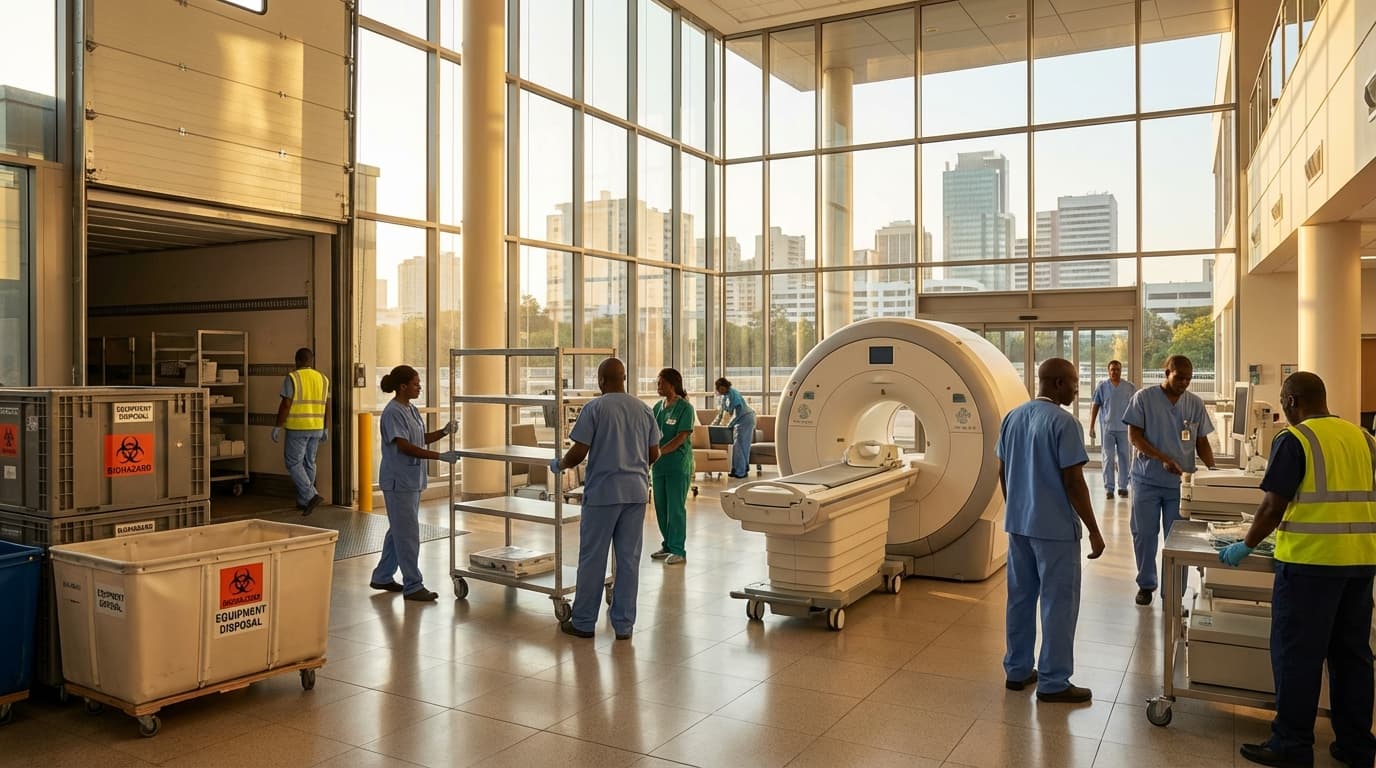
Decommissioning Service for Medical Devices in Mauritania
Engineering Excellence & Technical Support
Decommissioning Service for Medical Devices High-standard technical execution following OEM protocols and local regulatory frameworks.
Secure Data Destruction for Medical Devices
Ensuring comprehensive and compliant data sanitization on all medical devices before disposal, meeting international privacy standards and protecting sensitive patient information in Mauritania.
Nationwide Regulatory Compliance
Navigating and adhering to all Mauritanian environmental, health, and safety regulations for medical device decommissioning, providing clients with peace of mind and avoiding legal complications.
Optimized Logistics & Inventory Management
Streamlined collection and transportation of decommissioned medical devices across Mauritania, with robust inventory tracking for efficient and secure disposal, minimizing operational disruption.
What Is Decommissioning Service For Medical Devices In Mauritania?
Decommissioning service for medical devices in Mauritania refers to the comprehensive process of safely and responsibly retiring medical equipment from active service. This involves a series of technical procedures designed to neutralize the device's operational capabilities, render it non-functional, and ensure its final disposition aligns with environmental and regulatory standards. The service encompasses a range of activities, from initial assessment and data sanitization to physical disassembly, waste management, and documentation. It is crucial for maintaining patient safety, complying with healthcare regulations, and mitigating environmental risks associated with end-of-life medical technology. The service ensures that devices do not pose risks of unauthorized use, data breaches, or environmental contamination.
| Stakeholder Group | Need for Decommissioning Service | Typical Use Cases |
|---|---|---|
| Hospitals and Clinics | End-of-life equipment replacement, technology upgrades, departmental closures, consolidation of facilities. | Decommissioning of imaging equipment (MRI, CT scanners), surgical instruments, patient monitoring systems, laboratory analyzers due to obsolescence or malfunction. |
| Diagnostic Laboratories | Equipment malfunction, calibration drift, technological obsolescence, expansion or relocation. | Decommissioning of complex analytical instruments, centrifuges, microscopes, and specialized testing equipment. |
| Research Institutions and Universities | Project completion, outdated research equipment, laboratory refurbishment, safety upgrades. | Decommissioning of specialized research apparatus, biosafety cabinets, and analytical equipment used in scientific studies. |
| Medical Device Manufacturers and Distributors | Product recalls, end-of-life management of demo units or obsolete inventory, ensuring responsible disposal of returned devices. | Decommissioning of returned or recalled medical devices to prevent unauthorized use or distribution, and proper disposal of old stock. |
| Government Health Agencies | Ensuring compliance with healthcare regulations, managing public health infrastructure, addressing environmental impact. | Overseeing or mandating decommissioning protocols for devices within public healthcare facilities, or in cases of facility closures. |
| IT and Biomedical Engineering Departments | Asset management, data security, regulatory compliance, efficient resource allocation. | Managing the lifecycle of networked medical devices, ensuring secure data removal before disposal, and coordinating the technical aspects of decommissioning. |
Key Components of Medical Device Decommissioning Service:
- Asset Identification and Verification: Cataloging and confirming the specific medical devices slated for decommissioning, including model numbers, serial numbers, and location.
- Data Sanitization and Destruction: Securely erasing or physically destroying any patient data, operational settings, or proprietary information stored within the device's memory to comply with data privacy regulations.
- Functional Neutralization: Rendering the device inoperable through methods such as disabling power sources, removing critical components, or performing controlled destruction.
- Environmental Risk Assessment: Evaluating the device for potentially hazardous materials (e.g., mercury, batteries, radioactive isotopes) and planning for their safe handling and disposal.
- Dismantling and Component Segregation: Carefully disassembling the device into its constituent parts for material recovery, recycling, or appropriate disposal.
- Hazardous Waste Management: Ensuring that any identified hazardous components are managed and disposed of by licensed and qualified waste management facilities according to national and international guidelines.
- Recycling and Resale: Facilitating the recycling of salvageable materials and, in some cases, the resale of non-critical components or functional, refurbished devices (subject to regulatory approval and ethical considerations).
- Documentation and Certification: Providing comprehensive records of the decommissioning process, including asset lists, data sanitization reports, waste disposal manifests, and certificates of destruction, for regulatory compliance and audit purposes.
Who Needs Decommissioning Service For Medical Devices In Mauritania?
Decommissioning services for medical devices in Mauritania are crucial for ensuring the safe and compliant disposal of outdated, malfunctioning, or end-of-life medical equipment. This process is vital for protecting patient data, preventing environmental contamination, and adhering to national and international regulations. Businesses and institutions that utilize medical devices are the primary beneficiaries of these services.
| Customer Type | Key Departments Involved | Specific Needs/Reasons for Decommissioning |
|---|---|---|
| Hospitals (Public and Private) | IT Department (data security), Biomedical Engineering, Radiology, Surgery, Central Sterile Supply Department (CSSD), Administration | End-of-life equipment, data sanitization of imaging devices, disposal of hazardous materials (e.g., mercury), regulatory compliance, space optimization. |
| Clinics and Health Centers | Clinic Management, Nursing Staff, IT (if applicable) | Outdated diagnostic tools, malfunctioning patient monitoring systems, compliance with waste disposal regulations. |
| Diagnostic Laboratories | Laboratory Management, Technical Staff, IT Department | Replacement of analytical equipment, disposal of chemicals and biohazards, data security for patient results. |
| Research Institutions with Medical Equipment | Research Leads, Technical Staff, IT Department, Administration | Obsolescence of research instrumentation, data integrity for research findings, safe disposal of experimental equipment. |
| Government Health Agencies | Procurement, Public Health Division, IT Department | Management of public health assets, ensuring compliance across public healthcare facilities, secure disposal of government-owned equipment. |
| Medical Training Facilities | Department Heads, Technical Support, Administration | Replacement of training equipment, safe disposal of older simulation devices, compliance with educational standards and safety regulations. |
Target Customers and Departments
- Hospitals (Public and Private)
- Clinics and Health Centers
- Diagnostic Laboratories
- Research Institutions with Medical Equipment
- Government Health Agencies
- Medical Training Facilities
Decommissioning Service For Medical Devices Process In Mauritania
This document outlines the typical workflow for a Decommissioning Service for Medical Devices in Mauritania, covering the process from initial inquiry to the final execution of services. This process ensures that medical devices are safely and responsibly removed from service, adhering to relevant regulations and environmental standards. The workflow is designed to be transparent and efficient, minimizing disruption for healthcare facilities.
| Stage | Description | Key Activities | Involved Parties | Deliverables |
|---|---|---|---|---|
| The healthcare facility expresses interest in decommissioning services and initiates contact with the service provider. | Contacting service provider, preliminary discussion of needs, understanding scope. | Healthcare Facility Representative, Service Provider Sales/Inquiry Team | Initial understanding of client needs, potential for service engagement. |
| A site visit is conducted to assess the specific medical devices to be decommissioned, their location, and any associated challenges. | On-site inspection of devices, inventory, assessment of access and safety, detailed scope definition, cost estimation. | Service Provider Technical Team, Healthcare Facility Biomedical/Maintenance Department | Detailed site assessment report, customized quotation/proposal. |
| Upon acceptance of the quotation, a formal agreement is established, and a detailed operational plan is developed. | Contract negotiation and signing, development of a project schedule, resource allocation, safety protocols, communication plan. | Healthcare Facility Management, Service Provider Management Team | Signed service agreement, detailed decommissioning plan, project timeline. |
| The service provider prepares for the execution phase, including obtaining necessary permits and ensuring readiness. | Notification to relevant authorities (if required), procurement of specialized equipment and materials, team briefing, final site review. | Service Provider Operations Team, Regulatory Bodies (if applicable) | Permits and authorizations (if any), fully equipped team, readiness confirmation. |
| The actual process of safely and efficiently decommissioning the medical devices is carried out. | Power disconnection, disconnection of utilities, dismantling of devices, removal of hazardous components, cleaning of the site. | Service Provider Technical Team (certified technicians, engineers), Healthcare Facility Representatives (for oversight) | Decommissioned medical devices, cleaned operational areas. |
| All dismantled components and waste materials are managed and disposed of according to Mauritanian environmental regulations. | Segregation of waste (hazardous, non-hazardous), transportation to authorized disposal facilities, environmentally sound disposal methods. | Service Provider Waste Management Team, Authorized Disposal Facilities | Waste manifests, certificates of proper disposal. |
| Comprehensive documentation is provided to the healthcare facility, certifying the completion of the decommissioning process. | Generation of decommissioning certificates, final project report, inventory of disposed items, safety compliance records. | Service Provider Administration/Documentation Team | Decommissioning certificates, final project report, supporting documentation. |
| A review of the service is conducted to ensure client satisfaction and identify any areas for improvement. | Client feedback collection, internal service evaluation, knowledge sharing for future improvements. | Healthcare Facility Representative, Service Provider Project Manager | Client satisfaction confirmation, lessons learned. |
Decommissioning Service for Medical Devices Process in Mauritania: Workflow Overview
- Inquiry and Initial Consultation
- Site Assessment and Quotation
- Agreement and Planning
- Pre-Decommissioning Preparations
- Execution of Decommissioning
- Waste Management and Disposal
- Documentation and Certification
- Post-Service Review
Decommissioning Service For Medical Devices Cost In Mauritania
Decommissioning medical devices in Mauritania involves a range of costs influenced by several factors. These factors include the type and complexity of the medical device, its size and weight, the materials it's made of (especially if they are hazardous or require special disposal), the location of the device within the facility, the required disposal method (e.g., incineration, shredding, recycling), and the fees charged by specialized decommissioning and waste management companies. Environmental regulations and compliance also play a significant role in determining the final cost. Due to these variables, precise pricing can fluctuate considerably. However, a general understanding of the pricing factors and typical ranges in Mauritanian Ouguiya (MRU) can be provided.
| Device Category (Examples) | Estimated Cost Range (MRU) | Notes |
|---|---|---|
| Small, non-hazardous equipment (e.g., basic laboratory equipment, small diagnostic tools) | 5,000 - 15,000 MRU | Typically includes collection and basic disposal. |
| Medium-sized electronic equipment (e.g., patient monitors, ultrasound machines, X-ray units - non-hazardous) | 15,000 - 50,000 MRU | May involve data destruction and more complex disassembly. |
| Large, complex imaging equipment (e.g., CT scanners, MRI machines) | 50,000 - 200,000+ MRU | Often involves specialized dismantling, transport, and potentially hazardous material handling. |
| Equipment with potential hazardous materials (e.g., older equipment with mercury, radioactive isotopes - if applicable and handled) | Highly variable, often above 100,000 MRU | Requires specialized licenses, handling, and disposal methods. Pricing is very specific to the hazard. |
| Bulk disposal of multiple smaller items | Negotiable, often per-item or per-weight basis | Service providers may offer discounts for larger volumes. |
Key Pricing Factors for Medical Device Decommissioning in Mauritania
- Device Type and Complexity: Simple, non-electronic devices will generally be cheaper to decommission than complex imaging machines or surgical robots.
- Size and Weight: Larger and heavier devices often incur higher transportation and disposal costs.
- Hazardous Materials: Devices containing radioactive materials, mercury, or certain chemicals will require specialized handling and disposal, leading to increased expenses.
- Disposal Method: Incineration, secure landfilling, or specialized recycling all have different cost structures.
- Location of Device: Accessibility within the healthcare facility and the distance to the disposal site can impact labor and transportation costs.
- Company Fees: The rates charged by decommissioning and waste management service providers vary based on their expertise, equipment, and operational overhead.
- Environmental Compliance: Adherence to local and international environmental standards can necessitate specific procedures and certifications, adding to the cost.
- Documentation and Certification: Fees for proper documentation of the decommissioning process and any required certificates of destruction.
Affordable Decommissioning Service For Medical Devices Options
Decommissioning medical devices is a critical but often overlooked aspect of healthcare operations. It involves the safe, secure, and compliant removal of equipment from service. Finding affordable options is paramount for budget-conscious healthcare facilities. Value bundles and strategic cost-saving measures can significantly reduce the financial burden associated with this process.
| Cost-Saving Strategy | Description | Potential Savings |
|---|---|---|
| Bulk Decommissioning | Consolidating the decommissioning of multiple devices into a single project or service contract. This leverages economies of scale for the service provider. | 10-20% reduction on per-device costs, reduced transportation fees. |
| Partnerships with Specialized Recyclers | Working with companies focused on medical device recycling can often be more cost-effective than general waste disposal, especially for reusable components and materials. | Up to 30% savings on disposal fees, potential revenue from salvaged parts. |
| Extended Service Life Management | Implementing robust maintenance and repair programs to extend the useful life of medical devices, thereby delaying the need for decommissioning. | Significant postponement of capital expenditure for new equipment, reducing overall lifecycle costs. |
| Negotiating Service Level Agreements (SLAs) | Clearly defining service expectations and performance metrics in contracts can prevent costly disputes and ensure efficient service delivery. | Avoidance of unexpected charges, improved service quality leading to fewer re-dos. |
| In-House vs. Outsourced Analysis | Carefully evaluating which aspects of decommissioning can be handled internally with existing staff and resources versus those that require specialized external expertise. | Potential savings if certain tasks (e.g., initial asset tagging, basic cleaning) can be done in-house, but requires careful cost-benefit analysis. |
| Proactive Planning and Scheduling | Planning decommissioning well in advance, rather than on an emergency basis, allows for better negotiation of prices and scheduling of efficient logistics. | Access to more competitive pricing, reduced rush fees and overtime charges. |
| Vendor Consolidation | Using a single, reputable vendor for all decommissioning needs can lead to better pricing through volume commitments and streamlined communication. | Volume discounts, reduced administrative effort in managing multiple contracts. |
Understanding Value Bundles
- {"title":"What are Value Bundles in Medical Device Decommissioning?","description":"Value bundles are pre-packaged service offerings that combine multiple decommissioning tasks into a single, often discounted, price. Instead of paying for each service individually, facilities can opt for a comprehensive package that streamlines the process and offers cost efficiencies."}
- {"title":"Common Components of Value Bundles:","description":"These bundles typically include services such as secure data wiping, physical destruction of sensitive data, environmentally responsible disposal or recycling, transportation, chain-of-custody documentation, and compliance reporting. Some bundles may also include asset tracking and inventory management throughout the decommissioning lifecycle."}
- {"title":"Benefits of Value Bundles:","description":"Opting for value bundles can lead to predictable budgeting, reduced administrative overhead, and potential volume discounts. It simplifies vendor management by consolidating services with a single provider."}
Verified Providers In Mauritania
Finding reliable and accredited healthcare providers is paramount when it comes to your health and well-being, especially in a country like Mauritania. "Verified Providers in Mauritania" aims to shed light on the importance of choosing accredited institutions and individuals, highlighting Franance Health credentials as a prime example of excellence and trustworthiness in the Mauritanian healthcare landscape. Their commitment to international standards, patient-centered care, and rigorous accreditation processes makes them a leading choice for comprehensive and high-quality medical services.
| Credential/Standard | Description | Franance Health's Compliance |
|---|---|---|
| ISO 9001 (Quality Management) | Ensures consistent delivery of services and continuous improvement. | Actively pursuing or demonstrably meeting the principles of ISO 9001 in their operational management. |
| Joint Commission International (JCI) Standards | A globally recognized accreditation for healthcare organizations setting standards for quality and patient safety. | Working towards or maintaining alignment with key JCI patient safety goals and best practices. |
| Local Ministry of Health Licensing | Mandatory licensing and compliance with national healthcare regulations. | Fully licensed and compliant with all regulations set forth by the Mauritanian Ministry of Health. |
| Continuing Medical Education (CME) | Requirement for healthcare professionals to stay updated with the latest medical advancements. | Mandatory CME for all medical staff, ensuring up-to-date knowledge and skills. |
| Infection Control Protocols | Strict measures to prevent and control the spread of infections within healthcare settings. | Robust and regularly audited infection control protocols in place. |
Why Franance Health Credentials Represent the Best Choice:
- Rigorous Accreditation: Franance Health undergoes stringent accreditation processes, adhering to internationally recognized healthcare standards. This ensures their facilities, equipment, and medical practices meet the highest benchmarks for safety, quality, and patient care.
- Expert Medical Professionals: Their team comprises highly qualified and experienced doctors, nurses, and specialists. Continuous professional development and adherence to ethical practices are central to their operational philosophy.
- Advanced Medical Technology: Franance Health invests in state-of-the-art medical technology and equipment. This allows for accurate diagnostics, effective treatments, and improved patient outcomes.
- Patient-Centric Approach: A strong emphasis is placed on personalized patient care. This includes clear communication, respect for patient rights, and a commitment to addressing individual health needs with compassion and understanding.
- Comprehensive Service Offering: Franance Health offers a wide range of medical services, covering various specialties. This accessibility and breadth of expertise ensure patients can receive most of their healthcare needs under one roof.
- Commitment to Ethical Practices: They operate with a strong ethical framework, prioritizing patient privacy, informed consent, and transparent billing practices.
- International Recognition: Their adherence to global healthcare benchmarks makes them a trusted provider for both local and expatriate communities, offering a level of care often associated with international standards.
Scope Of Work For Decommissioning Service For Medical Devices
This Scope of Work (SOW) outlines the requirements for the decommissioning of medical devices, encompassing technical deliverables and standard specifications. The service aims to ensure the secure, compliant, and environmentally responsible retirement of specified medical equipment.
| Technical Deliverable | Description | Standard Specification/Reference | Acceptance Criteria |
|---|---|---|---|
| Decommissioning Plan | A detailed document outlining the steps, resources, safety measures, and timeline for the decommissioning of each device. | NIST SP 800-88 Rev. 1 (Guidelines for Media Sanitization), ISO 14001 (Environmental Management), Client-specific procedures. | Approved by client prior to commencement; outlines clear steps for safe and compliant decommissioning. |
| Data Sanitization Report/Certificate | Documentation confirming that all sensitive data has been securely erased or destroyed according to industry standards. | NIST SP 800-88 Rev. 1 (Clear, Clear and Purge, Purge), DoD 5220.22-M, Client-specific data security policies. | Certificate of Data Destruction issued for each device/storage medium containing data; verifiable erasure methods employed. |
| Waste Disposal Manifests/Certificates | Records confirming the proper and legal disposal or recycling of device components, particularly hazardous materials. | Local/National Environmental Protection Agency (EPA) regulations, Basel Convention (if applicable for international transport), Certified Waste Management Provider standards. | Manifests signed by disposal/recycling facility; certificates of proper disposal for regulated materials. |
| Inventory Reconciliation Report | A report detailing the initial inventory, devices decommissioned, and any discrepancies, with explanations. | Client's established asset management system and procedures. | Complete reconciliation of the initial inventory list with the final disposition of each device. |
| Chain of Custody Documentation | Records tracking the movement and possession of devices and their components from the point of decommissioning to final disposition. | ISO 9001 (Quality Management) principles for traceability, Client-specific logistics protocols. | Unbroken chain of custody documented from initial disconnection to final disposal/recycling facility. |
| Environmental Compliance Audit Trail | Documentation demonstrating adherence to all environmental regulations throughout the decommissioning process. | OSHA (Occupational Safety and Health Administration) standards for worker safety, RCRA (Resource Conservation and Recovery Act) for hazardous waste. | Evidence of compliance with all applicable environmental and safety regulations; safety protocols demonstrably followed. |
Key Stages and Deliverables
- Planning and Site Assessment:
- Comprehensive inventory verification of all designated medical devices.
- Risk assessment for each device, considering safety, data security, and environmental impact.
- Development of a detailed decommissioning plan, including timelines, resource allocation, and safety protocols.
- Identification and procurement of necessary tools, equipment, and personal protective equipment (PPE).
- Device Preparation and Disconnection:
- Safe powering down and disconnection of devices from all power sources and networks.
- Removal of consumables, accessories, and removable parts (to be handled according to client specifications).
- Verification of data erasure procedures (see Technical Deliverables).
- Packaging and labeling of devices for transport.
- Data Sanitization and Security:
- Secure erasure or destruction of all patient and operational data stored on the devices.
- Compliance with relevant data privacy regulations (e.g., HIPAA, GDPR).
- Generation of certificates of data destruction.
- Environmental Management and Disposal:
- Sorting and categorization of device components for recycling, refurbishment, or disposal.
- Adherence to local and national environmental regulations for waste management and disposal of hazardous materials.
- Proper handling and disposal of batteries, refrigerants, and other hazardous substances.
- Provision of waste manifests and disposal certificates.
- Logistics and Transportation:
- Safe and secure transportation of decommissioned devices to designated facilities.
- Tracking and chain of custody documentation throughout the transportation process.
- Reporting and Documentation:
- Final decommissioning report summarizing all activities, findings, and disposal information.
- Inventory reconciliation against the initial verified list.
- Compliance documentation for all regulatory requirements.
Service Level Agreement For Decommissioning Service For Medical Devices
This Service Level Agreement (SLA) outlines the response times and uptime guarantees for the Decommissioning Service for Medical Devices provided by [Provider Name] (hereinafter referred to as "Provider") to [Client Name] (hereinafter referred to as "Client"). This SLA is an integral part of the overall service agreement between the parties and shall govern the performance expectations for the decommissioning of medical devices.
| Service Component | Response Time Objective (RTO) | Uptime Guarantee (if applicable) | Definition |
|---|---|---|---|
| Initiation of Decommissioning Request Acknowledgement | 2 Business Hours | N/A | Time from Client's formal request submission to Provider's acknowledgement of receipt. |
| On-site Scheduling Confirmation | 1 Business Day | N/A | Time from acknowledgement of request to confirmation of scheduled on-site decommissioning date and time. |
| Technician Arrival at Site (Scheduled Date) | Within 15 Minutes of Scheduled Time | N/A | Timeliness of technician arrival at the Client's designated site on the confirmed decommissioning date. |
| Completion of Decommissioning (per device, based on complexity) | Varies (See Appendix A for details) | N/A | Time required to complete the full decommissioning process for a single device. Appendix A will detail RTOs based on device type and complexity. |
| Provision of Decommissioning Certificate | 3 Business Days (post-completion) | N/A | Timeframe for delivering the official certificate confirming successful decommissioning and data sanitization/destruction. |
| Emergency Decommissioning (Critical Failures/Security Incidents) | 4 Business Hours | N/A | For urgent situations requiring immediate decommissioning due to critical device failure or confirmed security breach involving a medical device. This RTO is subject to availability and pre-approved protocols. |
Scope of Service
- Decommissioning of specified medical devices as defined in the Master Service Agreement (MSA).
- Secure data sanitization and/or physical destruction of devices containing patient or sensitive information.
- Proper disposal of devices in accordance with all applicable local, state, and federal regulations.
- Provision of all necessary documentation and certificates of decommissioning and/or destruction.
Frequently Asked Questions

Ready when you are
Let's scope your Decommissioning Service for Medical Devices in Mauritania project in Mauritania.

Scaling healthcare logistics and technical systems across the entire continent.