
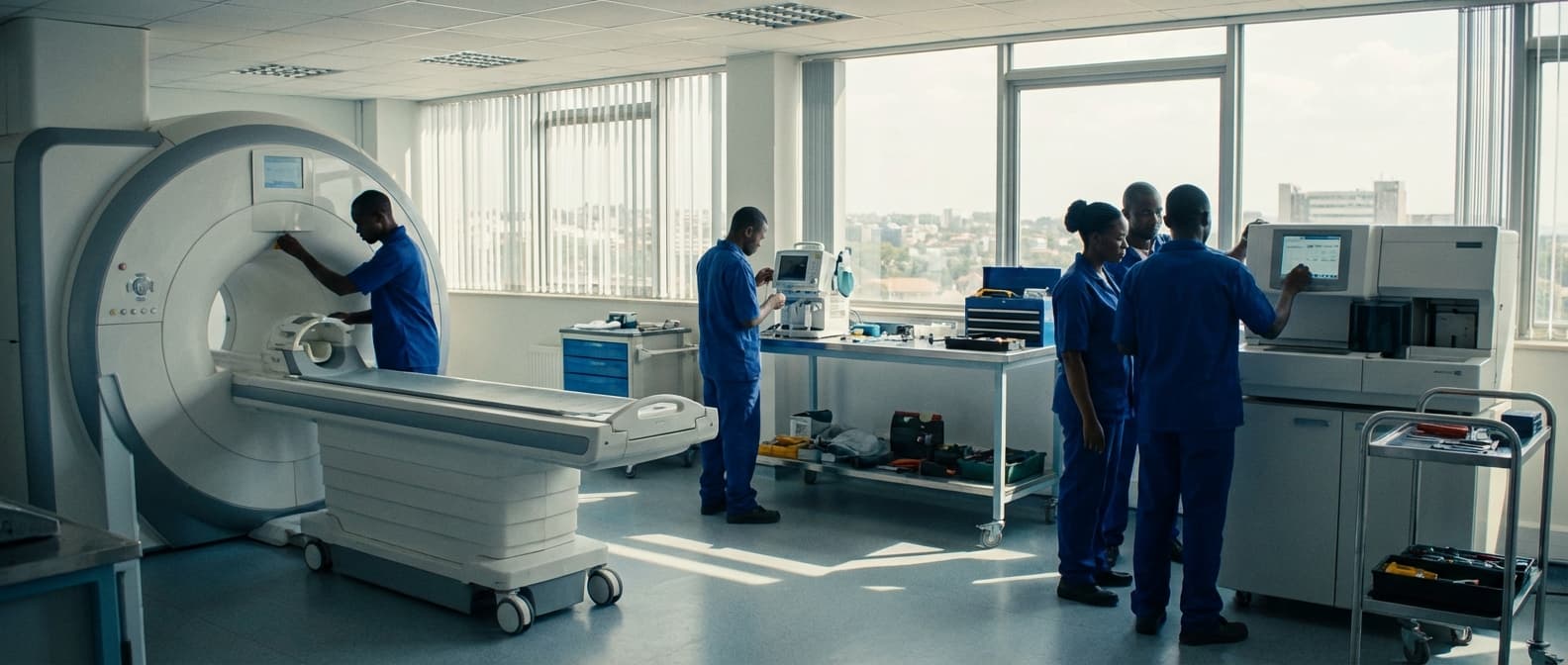
Planned Shutdown Coordination Service for Critical Equipment in Mauritania
Engineering Excellence & Technical Support
Planned Shutdown Coordination Service for Critical Equipment High-standard technical execution following OEM protocols and local regulatory frameworks.
Optimized Downtime for Critical Equipment
Our service leverages advanced scheduling algorithms and predictive analytics to minimize planned shutdown durations for Mauritania's vital industrial equipment, ensuring maximum operational uptime and revenue generation.
Enhanced Safety & Compliance Assurance
We guarantee adherence to international safety standards and Mauritanian regulatory requirements throughout the shutdown process. Our meticulous planning and execution protocols mitigate risks and ensure the well-being of personnel and assets.
Seamless Integrated Logistics & Resource Management
Our service provides a unified platform for coordinating all aspects of planned shutdowns, from spare parts procurement and specialist team deployment to logistics management and post-shutdown reporting, tailored to Mauritania's unique operational landscape.
What Is Planned Shutdown Coordination Service For Critical Equipment In Mauritania?
Planned Shutdown Coordination Service for Critical Equipment in Mauritania refers to a comprehensive set of services and processes designed to manage and execute scheduled downtimes for essential industrial and infrastructure assets. This service is paramount in ensuring the operational integrity, safety, and longevity of critical equipment, minimizing disruption to essential services and economic activities. It involves meticulous planning, resource allocation, execution, and post-shutdown analysis. The primary objective is to proactively address maintenance, upgrades, or decommissioning needs in a controlled environment, mitigating the risks associated with unforeseen failures and maximizing the availability of these vital systems.
| Who Needs the Service? | Typical Use Cases | |||||
|---|---|---|---|---|---|---|
| Mining & Extractive Industries: Operators of large-scale mining equipment, processing plants, and associated infrastructure (e.g., crushing plants, conveyor systems, smelters). | Energy Sector: Power generation facilities (thermal, renewable), transmission and distribution networks, oil and gas exploration and production platforms, and refineries. | Water & Wastewater Management: Pumping stations, treatment plants, and distribution networks. | Telecommunications: Critical network infrastructure, data centers, and transmission towers. | Transportation Infrastructure: Airports (air traffic control, runway maintenance), ports (cranes, loading/unloading systems), and major road/railway infrastructure requiring significant repair or upgrades. | Industrial Manufacturing: Large-scale production facilities with complex and integrated machinery. | Government & Public Utilities: Agencies responsible for maintaining national critical infrastructure. |
| Routine and Preventative Maintenance: Scheduled servicing, lubrication, and replacement of wear parts on critical machinery. | Major Overhauls and Refurbishments: Comprehensive reconditioning of engines, turbines, pumps, and other heavy machinery to extend operational life. | Equipment Upgrades and Modernization: Installation of new technologies or replacement of obsolete components to enhance efficiency, safety, or capacity. | Infrastructure Repairs and Civil Works: Scheduled repairs to dams, bridges, pipelines, or structural elements impacting critical operations. | Regulatory Compliance and Inspections: Planned shutdowns to meet mandated safety, environmental, or operational standards. | Decommissioning of Assets: Safe and controlled dismantling and removal of aging or retired critical equipment. | Asset Integrity Management: Scheduled interventions to ensure the structural and functional integrity of high-risk assets. |
Key Components of Planned Shutdown Coordination Service:
- Pre-Shutdown Planning & Scheduling: Involves detailed risk assessments, scope definition, development of detailed work plans, identification of critical path activities, and synchronization with operational schedules.
- Resource Management: Procurement and mobilization of specialized labor, equipment, materials, and external contractors.
- Safety & Environmental Management: Implementation of stringent safety protocols, environmental impact assessments, and compliance with Mauritanian regulations.
- Logistics & Site Management: Establishment of site facilities, transportation, accommodation, and security for personnel and assets.
- Execution Oversight: Real-time monitoring of shutdown activities, quality control, and problem-solving during the shutdown period.
- Post-Shutdown Activities: Performance testing, commissioning of refurbished or replaced equipment, and final documentation.
- Decommissioning & Waste Management: For end-of-life equipment, this includes safe dismantling, removal, and environmentally sound disposal or recycling.
Who Needs Planned Shutdown Coordination Service For Critical Equipment In Mauritania?
Planned Shutdown Coordination Service for Critical Equipment in Mauritania is essential for organizations that rely heavily on continuous operation of vital machinery and infrastructure. Disruptions due to poorly managed shutdowns can lead to significant financial losses, safety hazards, and reputational damage. This service ensures that planned downtime for maintenance, upgrades, or repairs is executed efficiently, with minimal impact on production, operations, and safety.
| Target Customer Type | Key Departments Involved |
|---|---|
| Mining Companies | Operations, Maintenance, Safety, Logistics, Engineering |
| Oil & Gas Companies | Production, Maintenance, HSE (Health, Safety, Environment), Engineering, Turnaround Planning |
| Utility Providers (Energy & Water) | Operations, Technical Maintenance, Network Management, Safety, Engineering |
| Telecommunication Providers | Network Operations, Field Maintenance, IT Infrastructure, Engineering, Customer Service |
| Port Authorities & Operators | Terminal Operations, Maintenance & Engineering, Safety, Logistics Planning |
| Industrial Manufacturers | Production Management, Plant Maintenance, Quality Control, Engineering, Health & Safety |
Target Customers and Departments in Mauritania
- {"title":"Mining and Extractive Industries","description":"Companies involved in iron ore, gold, copper, and other mineral extraction are heavily reliant on large-scale, continuously operating equipment. Downtime directly impacts output and revenue."}
- {"title":"Oil and Gas Sector","description":"Offshore platforms, onshore processing facilities, pipelines, and refineries require precise coordination for maintenance to avoid production halts and ensure safety in a high-risk environment."}
- {"title":"Power Generation and Utilities","description":"Power plants (thermal, renewable), water treatment facilities, and distribution networks need scheduled maintenance to ensure reliable supply of essential services to the nation."}
- {"title":"Telecommunications","description":"Operators of national communication networks, data centers, and critical infrastructure require careful planning for equipment upgrades and maintenance to minimize service interruptions."}
- {"title":"Port Operations and Logistics","description":"Major ports and logistics hubs depend on cranes, conveyor systems, and other heavy machinery. Coordinated shutdowns are vital to maintain the flow of goods and trade."}
- {"title":"Large-Scale Industrial Manufacturing","description":"Any significant manufacturing plants with continuous production lines, such as cement, food processing, or chemical production, will benefit from coordinated shutdowns."}
Planned Shutdown Coordination Service For Critical Equipment Process In Mauritania
This document outlines the workflow for the Planned Shutdown Coordination Service for Critical Equipment Process in Mauritania. This service ensures that planned shutdowns of critical equipment are managed efficiently, minimizing disruption and maximizing safety. The process begins with an inquiry from the client and culminates in the successful execution and post-shutdown review.
| Stage | Key Activities | Responsible Parties | Deliverables/Outcomes | Timeline (Indicative) |
|---|---|---|---|---|
| Client submits an inquiry for a planned equipment shutdown. Initial discussion to understand the equipment, its criticality, and the client's preliminary needs and constraints. | Client, Service Provider (SP) - Business Development/Sales Team | Understanding of client's need, preliminary assessment of feasibility. | 1-3 Days |
| Detailed assessment of the equipment, maintenance requirements, historical data review, risk assessment. Joint development of a detailed scope of work (SOW), including specific tasks, objectives, and success criteria. Identification of dependencies and potential risks. | Client (Operations & Maintenance Teams), SP (Technical Experts, Project Managers) | Approved Scope of Work (SOW), Detailed Shutdown Plan, Risk Assessment Report, Communication Plan. | 1-2 Weeks |
| Identification and confirmation of required personnel (engineers, technicians, safety officers), specialized tools, equipment, and materials. Development of a detailed project schedule with milestones and critical path. Procurement of necessary parts and consumables. | SP (Project Managers, Procurement, HR), Client (Approvals) | Confirmed personnel roster, detailed schedule, confirmed availability of tools/equipment, procured materials. | 2-4 Weeks |
| Site mobilization of personnel and equipment. Pre-shutdown safety briefings and training. Verification of all permits and licenses. Pre-shutdown inspections and testing. Final confirmation of shutdown window and communication to all stakeholders. | SP (On-site Management, Safety Officers, Technicians), Client (Site Access, Security, Final Approvals) | On-site readiness, safety plan execution, all necessary permits secured, equipment and materials staged. | 3-7 Days prior to shutdown |
| Controlled shutdown of critical equipment following the approved plan. Execution of maintenance, repair, or replacement tasks. Continuous monitoring of safety, progress, and quality. Regular progress updates to the client. | SP (On-site Team, Supervisors), Client (Observation, Decision Making) | Completed maintenance/repair/replacement tasks, adherence to safety protocols, documented progress. | As per schedule (Days to Weeks) |
| Post-shutdown testing and commissioning of equipment. Final inspections and quality checks. Demobilization of personnel and equipment. Preparation of a comprehensive post-shutdown report including performance, lessons learned, and any recommendations. Project closure and final invoicing. | SP (Project Managers, Technical Teams), Client (Acceptance, Feedback) | Fully operational equipment, Post-Shutdown Report, Lessons Learned document, Project closure confirmation. | 1-2 Weeks post-shutdown |
Workflow Stages
- Inquiry & Initial Consultation
- Scope Definition & Planning
- Resource Allocation & Scheduling
- Pre-Shutdown Preparations
- Shutdown Execution
- Post-Shutdown Activities & Reporting
Planned Shutdown Coordination Service For Critical Equipment Cost In Mauritania
Coordinating planned shutdowns for critical equipment in Mauritania involves a multifaceted service that ensures minimal disruption to operations while prioritizing safety and efficiency. The cost of such a service is influenced by several key factors, and pricing can vary significantly based on the complexity and scope of the shutdown. These services typically encompass detailed planning, risk assessment, resource allocation, stakeholder communication, execution oversight, and post-shutdown analysis. The objective is to provide a comprehensive solution that minimizes downtime and associated economic losses, while also mitigating safety hazards and ensuring compliance with industry standards and local regulations.
| Service Component | Estimated Price Range (MRU - Mauritanian Ouguiya) | Notes |
|---|---|---|
| Initial Consultation and Scoping | 5,000 - 15,000 MRU | Covers initial assessment, understanding of client needs, and preliminary scope definition. |
| Detailed Shutdown Planning (Per Unit) | 10,000 - 50,000 MRU | Includes risk assessment, procedure development, resource planning, and scheduling. Varies greatly with equipment complexity. |
| On-site Coordination and Supervision (Daily Rate) | 20,000 - 75,000 MRU | For a lead coordinator or project manager. Higher rates for specialized technical supervisors. |
| Safety Management and Compliance | 15,000 - 60,000 MRU | Includes development of safety plans, permit acquisition, and on-site safety monitoring. |
| Logistics and Mobilization (Per Project) | 50,000 - 500,000+ MRU | Highly variable based on distance, number of personnel, and equipment. Can be a significant portion of total cost. |
| Post-Shutdown Reporting and Analysis | 8,000 - 25,000 MRU | Documentation of activities, lessons learned, and recommendations for future shutdowns. |
| Full-Service Planned Shutdown Coordination (Typical Project) | 200,000 - 1,500,000+ MRU | An aggregate estimate for a comprehensive service for a medium-sized critical equipment shutdown. Larger or more complex projects can easily exceed this. |
Key Pricing Factors for Planned Shutdown Coordination in Mauritania
- Scope and Duration of Shutdown: The number of equipment units involved, the complexity of the maintenance tasks, and the overall time allocated for the shutdown directly impact labor, resource, and management costs. Longer and more intricate shutdowns will naturally incur higher fees.
- Type and Criticality of Equipment: The nature of the equipment (e.g., power generators, heavy industrial machinery, processing units) and its criticality to the client's operations determine the level of expertise, specialized tools, and stringent safety protocols required, influencing service costs.
- Level of Service Required: Clients may opt for a full-service package or specific components, suchibilities such as planning only, execution supervision, or post-shutdown reporting. The more comprehensive the service, the higher the cost.
- Number of Personnel Involved: The size and skill set of the coordination team, along with the number of technicians, engineers, and support staff required for the shutdown, are major cost drivers. Specialized skills command higher rates.
- Logistics and Travel: For remote locations or projects requiring personnel and equipment mobilization from afar, significant costs are associated with transportation, accommodation, and per diems for the coordination team and potentially subcontractors.
- Safety and Compliance Requirements: Adherence to strict safety regulations (both local and international) and obtaining necessary permits can involve specialized training, certification, and dedicated safety officers, adding to the overall cost.
- Contractual Terms and Risk Allocation: The terms of the service agreement, including liability, warranties, and performance guarantees, can influence pricing. Projects with higher perceived risk may have a premium built into the cost.
- Technology and Equipment Used: The utilization of advanced planning software, simulation tools, diagnostic equipment, or specialized machinery for the shutdown can contribute to the service fee.
- Reputation and Experience of the Provider: Established and reputable service providers with a proven track record of successful critical equipment shutdowns may command higher prices due to their expertise, reliability, and reduced risk for the client.
- Urgency and Lead Time: Shutdowns requiring immediate attention or with very short lead times may incur rush fees to account for expedited resource allocation and planning efforts.
Affordable Planned Shutdown Coordination Service For Critical Equipment Options
Our Affordable Planned Shutdown Coordination Service is designed to minimize downtime and maximize efficiency for your critical equipment maintenance. We understand that planned shutdowns are essential for preventative maintenance and upgrades, but they can be costly and disruptive. Our service focuses on expert planning, streamlined execution, and cost-effective solutions to ensure your operations resume as quickly and smoothly as possible. We offer flexible value bundles tailored to your specific needs and provide strategic cost-saving recommendations throughout the shutdown process.
| Value Bundle | Included Services | Ideal For | Estimated Cost Savings |
|---|---|---|---|
| Essential Coordination | Basic scheduling, risk assessment, and communication. | Smaller operations or routine maintenance shutdowns. | 10-15% reduction in unplanned downtime costs. |
| Comprehensive Management | Detailed planning, resource management, vendor coordination, and on-site supervision. | Medium-sized operations or complex maintenance tasks. | 15-25% reduction in total shutdown duration and associated labor costs. |
| Strategic Partnership | All Comprehensive Management services plus advanced risk analysis, supply chain optimization, and predictive maintenance integration. | Large-scale operations, major overhauls, or critical infrastructure. | 20-35% reduction in shutdown costs through optimized resource utilization and proactive problem-solving. |
Key Features and Benefits
- Expert Planning & Scheduling: Detailed work breakdown structures, resource allocation, and optimized timelines to reduce idle time.
- Risk Mitigation: Proactive identification and management of potential hazards and operational risks during the shutdown.
- Vendor & Contractor Management: Centralized coordination and oversight of all third-party involvement.
- Communication Hub: Clear and consistent communication channels for all stakeholders.
- Post-Shutdown Analysis: Comprehensive review to identify lessons learned and improve future shutdown efficiency.
Verified Providers In Mauritania
When seeking healthcare services in Mauritania, particularly those requiring high standards of quality, safety, and expertise, identifying verified providers is paramount. Franance Health stands out as a leading organization whose credentials signify a commitment to excellence, making them the premier choice for individuals and organizations prioritizing reliable and competent medical care. This document outlines the key aspects of Franance Health's verification process and the compelling reasons why their accredited providers represent the best option for healthcare needs in Mauritania.
| Franance Health Verification Component | What it Entails | Benefit to Patients |
|---|---|---|
| Clinical Governance and Leadership | Assessment of the organization's leadership, management structures, and commitment to ethical practices and quality improvement initiatives. | Ensures strong, responsible leadership focused on delivering high-quality patient care. |
| Patient Rights and Responsibilities | Verification of policies and procedures that protect patient rights, including informed consent, confidentiality, and access to information. | Empowers patients and guarantees their rights are respected throughout their healthcare journey. |
| Infection Prevention and Control | Evaluation of comprehensive protocols and practices to prevent and control healthcare-associated infections. | Minimizes the risk of infection, ensuring a safer treatment environment. |
| Medication Management | Review of safe and effective processes for prescribing, dispensing, administering, and monitoring medications. | Reduces medication errors and ensures the appropriate use of pharmaceuticals. |
| Human Resources and Staff Competency | Assessment of staff qualifications, ongoing training, and competency assessment to ensure a skilled and knowledgeable healthcare workforce. | Guarantees that care is provided by qualified and competent medical professionals. |
| Facility and Infrastructure Safety | Inspection of the physical environment, equipment, and infrastructure to ensure it meets safety and operational standards. | Provides a safe and well-maintained environment conducive to healing. |
| Continuous Quality Improvement (CQI) | Examination of the organization's systematic approach to monitoring, evaluating, and improving the quality and safety of services. | Demonstrates a commitment to ongoing enhancement of healthcare delivery. |
Why Franance Health Credentials Represent the Best Choice:
- Rigorous Accreditation Standards: Franance Health employs a multi-faceted and stringent accreditation process that evaluates healthcare facilities and professionals against globally recognized benchmarks for quality, safety, and patient outcomes.
- Commitment to Continuous Improvement: Accreditation is not a one-time event. Franance Health mandates ongoing monitoring and re-evaluation to ensure providers consistently maintain and enhance their services, adapting to the latest medical advancements and best practices.
- Expert Review and Auditing: The verification process involves comprehensive on-site surveys and thorough documentation reviews conducted by independent teams of medical experts and quality assurance specialists.
- Patient Safety Focus: A core tenet of Franance Health's verification is the unwavering emphasis on patient safety protocols, infection control measures, and risk management strategies, minimizing potential harm and ensuring a secure healthcare environment.
- Enhanced Patient Confidence: The Franance Health seal of approval provides patients with a strong assurance that they are receiving care from providers who have met the highest standards, fostering trust and peace of mind.
- Access to Specialized Services: Many Franance Health accredited facilities offer a wide range of specialized medical services, ensuring that patients have access to the specific expertise and technology required for their unique healthcare needs.
- International Recognition and Best Practices: By adhering to internationally accepted standards, Franance Health accredited providers align with global best practices, bringing a higher caliber of healthcare to Mauritania.
- Transparency and Accountability: Franance Health promotes transparency by making information about accredited providers accessible, allowing for informed decision-making and holding providers accountable for their quality of care.
Scope Of Work For Planned Shutdown Coordination Service For Critical Equipment
This Scope of Work (SOW) outlines the services required for the coordination and management of planned shutdowns for critical equipment. The objective is to minimize downtime, ensure safety, and optimize the efficiency of maintenance activities. This document details the technical deliverables and standard specifications to be adhered to by the service provider.
| Section | Description | Technical Deliverables | Standard Specifications |
|---|---|---|---|
| Development of a comprehensive shutdown plan, including scope definition, task sequencing, resource identification, risk assessment, and scheduling. |
|
|
| On-site management and coordination of all shutdown activities, including supervision of maintenance teams, contractor management, and immediate issue resolution. |
|
|
| Ensuring strict adherence to all safety protocols, permit-to-work systems, and emergency response procedures. |
|
|
| Verification of maintenance work quality, adherence to technical specifications, and proper documentation of all completed tasks. |
|
|
| Establishing and maintaining effective communication channels among all stakeholders and providing regular, concise reports on shutdown progress. |
|
|
| Conducting a post-shutdown review, identifying lessons learned, and preparing a final report summarizing the entire shutdown process. |
|
|
Key Objectives of Planned Shutdown Coordination Service
- Ensure the safe and efficient execution of all planned maintenance activities during the shutdown period.
- Minimize unplanned downtime and its associated financial and operational impacts.
- Optimize resource allocation (personnel, equipment, materials) for maximum efficiency.
- Maintain clear and consistent communication among all stakeholders.
- Ensure compliance with all relevant safety regulations and company policies.
- Facilitate timely and accurate reporting of shutdown progress and outcomes.
- Identify and implement lessons learned to improve future shutdown planning and execution.
Service Level Agreement For Planned Shutdown Coordination Service For Critical Equipment
This Service Level Agreement (SLA) outlines the terms and conditions for the Planned Shutdown Coordination Service for Critical Equipment, focusing on response times for coordination requests and uptime guarantees for the coordination platform. This service aims to minimize disruption and ensure efficient planning and execution of scheduled maintenance and upgrades for critical infrastructure.
| Service Component | Metric | Target | Measurement Method | Reporting Frequency |
|---|---|---|---|---|
| Planned Shutdown Coordination Request | Initial Response Time (Acknowledgement) | Within 1 business hour | Timestamp of request receipt vs. timestamp of acknowledgement email/system notification | Real-time (System Logging) |
| Planned Shutdown Coordination Request | Confirmation & Initial Plan Discussion | Within 4 business hours | Timestamp of acknowledgement vs. timestamp of first scheduling/discussion attempt | Real-time (System Logging) |
| Planned Shutdown Coordination Request | Finalized Shutdown Plan Approval | Within 2 business days (post-initial discussion) | Timestamp of initial discussion vs. timestamp of final approved shutdown plan submission | Weekly Summary Report |
| Planned Shutdown Coordination Platform | Availability (Uptime Guarantee) | 99.9% | Percentage of time the platform is accessible and functional during scheduled operational hours (24/7 for emergency coordination) | Monthly Report |
| Planned Shutdown Coordination Platform | Data Integrity | 100% | Verification of accuracy and completeness of shutdown data entered and maintained within the platform | Bi-weekly Audits |
| Communication Channels (Platform Notifications) | Delivery Success Rate | 99.5% | Percentage of critical notifications successfully delivered to designated stakeholders | Monthly Report |
Key Service Objectives
- To provide timely and accurate coordination of planned shutdowns for critical equipment.
- To ensure the availability and reliability of the Planned Shutdown Coordination platform.
- To facilitate clear communication and collaboration among all stakeholders involved in planned shutdowns.
- To minimize unplanned downtime and associated risks.
- To support efficient resource allocation and scheduling for maintenance activities.
Frequently Asked Questions

Ready when you are
Let's scope your Planned Shutdown Coordination Service for Critical Equipment in Mauritania project in Mauritania.

Scaling healthcare logistics and technical systems across the entire continent.