
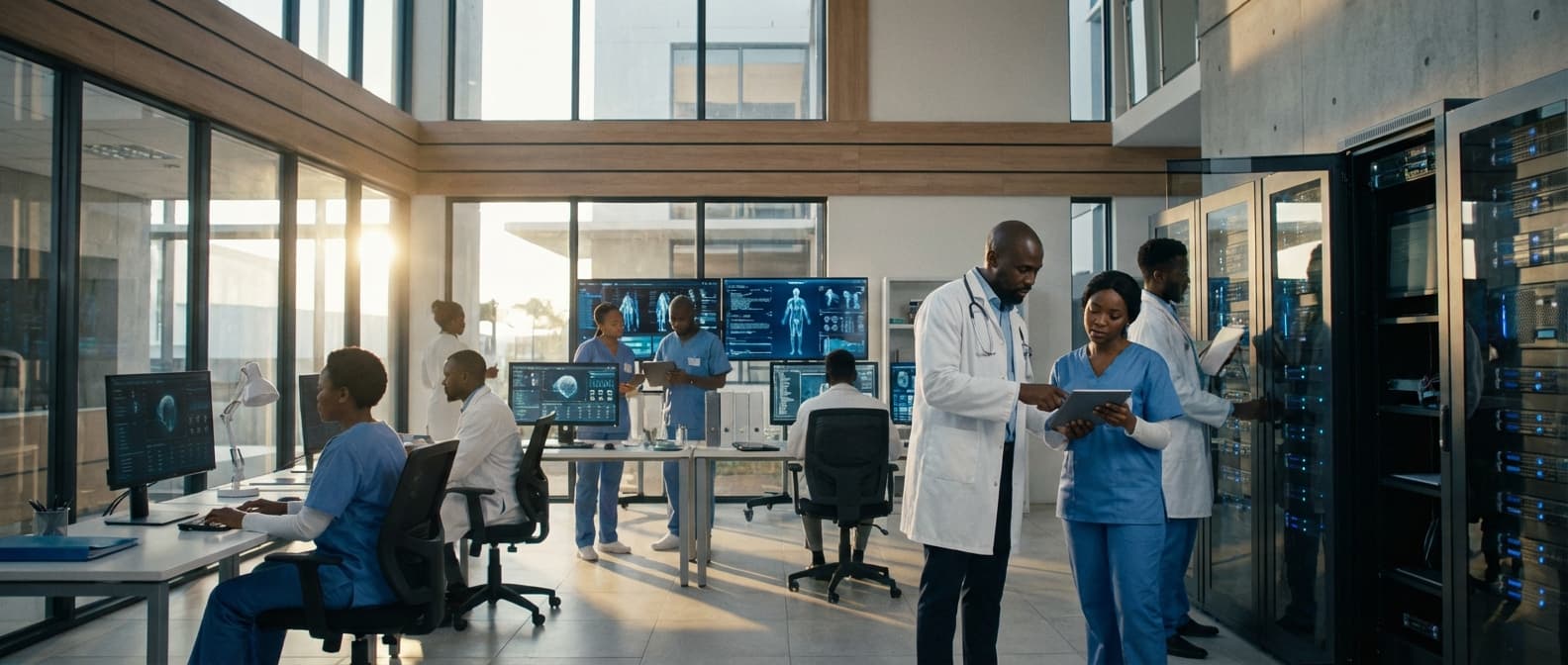
Tele-Radiology in Mauritania
Engineering Excellence & Technical Support
24/7 access to certified radiologists providing rapid, accurate remote interpretation of diagnostic imaging studies. High-standard technical execution following OEM protocols and local regulatory frameworks.
Advanced Diagnostic Imaging Accessibility
Empowering Mauritanian healthcare facilities with immediate access to expert radiologists and cutting-edge diagnostic imaging interpretation, bridging geographical barriers and improving patient outcomes.
Remote Specialist Consultation Network
Connecting local medical professionals in remote Mauritanian regions with international tele-radiology specialists for real-time consultation, enabling faster and more accurate diagnoses for complex cases.
Secure Cloud-Based Image Transmission
Implementing a secure and robust cloud platform for seamless and encrypted transmission of medical images, ensuring patient data privacy and facilitating efficient diagnostic workflows across Mauritania.
What Is Tele-radiology In Mauritania?
Tele-radiology in Mauritania refers to the practice of transmitting radiological images (such as X-rays, CT scans, and MRIs) from a healthcare facility in Mauritania to a radiologist located elsewhere, often in a different region or country, for interpretation and reporting. This remote diagnostic service aims to overcome geographical barriers, improve access to specialized radiological expertise, and enhance the efficiency of diagnostic workflows within the Mauritanian healthcare system. The core components involve image acquisition at the local facility, secure transmission of these digital images over a network, interpretation by a remote radiologist, and the subsequent generation and delivery of a diagnostic report back to the originating healthcare provider.
| Stakeholder/Recipient | Need for Tele-radiology | Typical Use Cases |
|---|---|---|
| Rural and Remote Clinics/Hospitals: | Lack of on-site specialized radiologists, limited diagnostic infrastructure, and difficulty in attracting and retaining medical professionals in underserved areas. | Emergency Radiology: Rapid interpretation of trauma scans (e.g., head CTs, bone fractures) in accident cases where immediate diagnosis is critical. Routine Diagnostic Imaging: Interpretation of plain radiographs (chest X-rays for pneumonia, orthopedic injuries), ultrasounds (obstetric scans, abdominal assessments), and CT scans for common conditions. On-call Coverage: Providing 24/7 radiological interpretation services for facilities that cannot staff radiologists around the clock. |
| Urban Hospitals with High Patient Volume: | Overburdened local radiology departments, long turnaround times for reports, and a need for subspecialty expertise (e.g., neuro-radiology, interventional radiology) not available in-house. | Subspecialty Consultations: Seeking expert opinions on complex cases in areas like neuroradiology (stroke, tumors), musculoskeletal radiology, or pediatric radiology. Second Opinions: Obtaining an independent assessment of diagnostic images to confirm or clarify diagnoses. Workload Balancing: Offloading routine or high-volume studies to remote radiologists during peak hours or staff shortages. |
| Healthcare Providers (General Practitioners, Specialists): | Need for timely and accurate diagnostic information to guide patient management and treatment decisions, especially when local radiology services are limited or delayed. | Expedited Diagnosis: Receiving urgent reports for critical findings to initiate timely treatment. Improved Patient Outcomes: Facilitating better-informed clinical decisions, leading to more effective management and reduced morbidity/mortality. Enhanced Patient Satisfaction: Reducing wait times for diagnostic reports and improving the overall patient experience. |
| Ministry of Health/Healthcare Policy Makers: | Addressing disparities in healthcare access, improving the quality of diagnostic services nationwide, and optimizing resource allocation. | National Health Strategy Implementation: Extending diagnostic imaging capabilities to all regions of the country. Training and Education: Potentially facilitating remote training and mentorship for local technologists and junior radiologists. Epidemiological Surveillance: Aggregating anonymized data for public health monitoring and research. |
Key Components and Requirements of Tele-radiology in Mauritania
- Image Acquisition Modalities: Digital imaging equipment (CR, DR, CT, MRI, Ultrasound) capable of producing DICOM-compliant images.
- Picture Archiving and Communication System (PACS): A local PACS or a cloud-based solution for storing, retrieving, and managing medical images.
- Telecommunication Network: A stable and secure internet connection with sufficient bandwidth for transmitting large image files. This may include terrestrial or satellite-based solutions depending on regional connectivity.
- Teleradiology Platform/Software: Specialized software for image transmission, viewing, collaboration, and report generation. This platform often incorporates features for secure user authentication, data encryption, and audit trails.
- Remote Radiologist Expertise: Access to board-certified or appropriately credentialed radiologists with expertise in various subspecialties, available on-demand or through scheduled coverage.
- Legal and Regulatory Framework: Adherence to Mauritanian healthcare regulations, data privacy laws (e.g., GDPR-like principles if applicable), and professional licensing requirements for remote radiologists.
- Quality Assurance Protocols: Mechanisms for ensuring the accuracy and timeliness of interpretations, including peer review and performance monitoring.
Who Needs Tele-radiology In Mauritania?
Tele-radiology offers a crucial solution for enhancing diagnostic imaging services in Mauritania, addressing critical gaps in expertise and accessibility. The service aims to connect remote healthcare facilities with specialized radiologists for timely and accurate interpretation of medical images. This not only improves patient care by reducing diagnostic delays and enabling faster treatment decisions but also empowers local healthcare professionals by providing access to expert consultations and fostering knowledge transfer.
| Customer Segment | Key Needs Addressed | Relevant Imaging Modalities | Impact |
|---|---|---|---|
| Primary Hospitals & Regional Centers | Radiologist shortage, access to sub-specialists, reduced turnaround times | X-ray, Ultrasound, CT (if available) | Improved diagnostic accuracy, faster treatment initiation, better patient outcomes |
| Rural & Remote Clinics | No local radiologist, limited access to imaging interpretation | X-ray, Ultrasound | Enables basic diagnostic imaging for remote populations, prevents unnecessary referrals |
| Maternity & Pediatric Units | High volume of ultrasounds, need for pediatric radiology expertise | Ultrasound, X-ray | Safer pregnancies, improved diagnosis of pediatric conditions, reduced infant mortality |
| Emergency & Trauma Departments | Need for urgent interpretation, off-hours coverage | X-ray, CT, Ultrasound | Timely diagnosis of critical injuries, optimized emergency care, reduced complications |
| Infectious Disease Units | Reliance on chest X-rays for diagnosis and monitoring | X-ray | Effective management of infectious diseases, early detection of complications |
| Public Health Initiatives | Screening large populations, reaching remote areas | X-ray (primarily) | Wider disease surveillance, early intervention in public health crises |
| Private Healthcare Providers | Expanding service offerings, competing with public sector | X-ray, Ultrasound, CT, MRI (if available) | Enhanced service quality, patient retention, business growth |
Target Customers and Departments for Tele-Radiology in Mauritania
- Primary Hospitals and Regional Health Centers: Facilities in urban and semi-urban areas that may have imaging equipment but lack sufficient in-house radiologists or specialized expertise for complex cases.
- Rural and Remote Clinics: Smaller health posts and clinics in underserved areas that may have limited or no access to diagnostic imaging services, relying on tele-radiology for remote interpretation of X-rays, ultrasounds, and potentially CT scans if acquired.
- Maternity and Pediatric Units: Departments that frequently require ultrasound examinations and pediatric X-rays, where timely interpretation is critical for maternal and child health.
- Emergency Departments (EDs) and Trauma Centers: Facilities that need rapid interpretation of imaging for acute conditions like fractures, head injuries, and internal bleeding, especially during off-hours or when local radiologists are unavailable.
- Infectious Disease Units: Departments dealing with conditions like tuberculosis, where chest X-rays are essential for diagnosis and monitoring, and expert interpretation can be vital.
- Public Health Initiatives: Government and NGO-led programs focused on screening for diseases (e.g., lung diseases, certain cancers) in remote populations, where tele-radiology can facilitate widespread access to diagnostic reviews.
- Private Healthcare Providers: Emerging private clinics and hospitals that aim to offer comprehensive diagnostic services and can leverage tele-radiology to augment their capabilities and attract more patients.
Tele-radiology Process In Mauritania
The tele-radiology process in Mauritania aims to bridge the gap in radiological expertise, particularly in remote areas, by enabling remote interpretation of medical images. This workflow details the steps involved from an initial inquiry to the final execution and reporting of a radiological study.
| Step | Description | Key Stakeholders | Technology/Tools | Outcome |
|---|---|---|---|---|
| A healthcare facility (clinic, hospital) identifies a need for a radiological interpretation that cannot be met locally due to a lack of radiologists or specialized equipment. A referral is initiated. | Referring Physician/Technician, Local Healthcare Facility Administrator | Phone, Secure Messaging App, Internal Hospital System | Confirmation of the need for tele-radiology services. |
| The patient undergoes the requested radiological examination (X-ray, CT, MRI, etc.) at the referring facility. The acquired digital images are then securely transmitted to a central tele-radiology hub. | Radiology Technologist, Referring Physician | Digital Imaging and Communications in Medicine (DICOM) compatible imaging equipment, PACS (Picture Archiving and Communication System), Secure VPN, High-speed internet, Encrypted data transfer protocols | Digital medical images are securely transferred to the tele-radiology platform. |
| Upon arrival, the images are cataloged, anonymized (if required), and made accessible on the tele-radiology platform. The system may perform initial quality checks. | Tele-radiology Platform Administrator, IT Support | Teleradiology Software Platform, PACS | Images are organized and ready for review. |
| A radiologist from the tele-radiology service, based on specialization and availability, is assigned the case. They access the images remotely for review. | Teleradiology Platform Administrator, Assigned Radiologist | Teleradiology Software Platform, High-resolution medical imaging display monitors, Secure VPN | Radiologist begins to analyze the medical images. |
| The radiologist interprets the images, formulates a diagnosis, and dictates a detailed report, including findings, impressions, and recommendations. This is often done using voice recognition software. | Assigned Radiologist | Teleradiology Software Platform, Voice Recognition Software, Dictation tools | Comprehensive radiological report is created. |
| The finalized report is uploaded back to the tele-radiology platform and made accessible to the referring physician at the local healthcare facility. The referring physician uses the report for patient management and treatment planning. Follow-up consultations may be scheduled if needed. | Assigned Radiologist, Referring Physician, Local Healthcare Facility Administrator | Teleradiology Software Platform, Secure communication channels, EHR (Electronic Health Record) integration (if available) | Patient care is informed by the radiological findings, leading to improved diagnosis and treatment. |
Tele-Radiology Workflow in Mauritania
- Initial Inquiry & Case Referral
- Image Acquisition & Transmission
- Teleradiology Platform Processing
- Radiologist Assignment & Review
- Interpretation & Report Generation
- Report Delivery & Follow-up
Tele-radiology Cost In Mauritania
Tele-radiology services in Mauritania, while still an emerging sector, are influenced by a combination of local and international pricing factors. The cost of these services can vary significantly based on the type of imaging study, the complexity of the case, the urgency of the report, and the expertise of the radiologist providing the interpretation. Geographical accessibility and the infrastructure available in remote areas can also play a role in the overall cost. Given the limited availability of specialized radiologists within Mauritania, a portion of the cost often reflects the engagement of international expertise, which can be influenced by exchange rates and international professional fees. The development of local tele-radiology platforms and the training of local medical professionals are ongoing efforts that aim to make these services more accessible and affordable in the long term. Currently, pricing is often negotiated on a per-case basis or through service agreements with healthcare providers. There isn't a universally standardized price list, and many costs are denominated in USD or EUR and then converted to Mauritanian Ouguiya (MRU) at prevailing exchange rates. This makes precise local currency ranges difficult to pin down without direct engagement with service providers.
| Imaging Modality | Estimated Range (MRU per Study) | Notes |
|---|---|---|
| X-ray | 1,000 - 3,000 MRU | Basic interpretations, often the most affordable. |
| Ultrasound (USG) | 2,000 - 5,000 MRU | Depends on the region being scanned (e.g., abdominal, obstetric). |
| CT Scan | 5,000 - 15,000 MRU | Includes basic CT scans. More complex protocols or contrast-enhanced scans will be higher. |
| MRI Scan | 8,000 - 25,000+ MRU | Generally the most expensive modality. Pricing varies greatly based on the body part and sequence complexity. |
Key Pricing Factors for Tele-Radiology in Mauritania
- Type of Imaging Modality (X-ray, CT, MRI, Ultrasound)
- Complexity of the Case (e.g., simple fracture vs. complex neurological study)
- Urgency of the Report (routine vs. STAT interpretation)
- Radiologist Expertise and Specialization (general radiologist vs. sub-specialist)
- Involvement of International Radiologists (influencing costs through foreign exchange rates and global fee structures)
- Infrastructure and Connectivity in Remote Areas
- Volume of Cases (potential for bulk discounts)
- Service Level Agreements (SLAs) with healthcare institutions
- Reporting Turnaround Time
- Anonymization and Data Security Measures
Affordable Tele-radiology Options
Tele-radiology offers a flexible and often more cost-effective approach to medical imaging interpretation compared to traditional in-house departments or large, fixed overhead models. The primary drivers of affordability are the ability to leverage a distributed workforce and optimize resource utilization. "Value bundles" and specific "cost-saving strategies" are key to understanding and achieving these savings. Value bundles are often structured service packages that combine multiple radiology services into a predictable cost, allowing healthcare providers to budget more effectively and gain greater transparency. This contrasts with per-study fees which can fluctuate significantly. Cost-saving strategies focus on operational efficiencies, technological adoption, and careful vendor selection to reduce overall expenditure while maintaining or improving the quality of diagnostic services.
| Value Bundle Type | Description | Potential Cost-Saving Benefit |
|---|---|---|
| Comprehensive Coverage Bundle | Includes interpretation of a wide range of imaging modalities (X-ray, CT, MRI, Ultrasound) for a fixed monthly or annual fee, often with guaranteed turnaround times. | Predictable budgeting, potential for lower per-study cost than ad-hoc services, access to diverse subspecialties. |
| Subspecialty-Specific Bundle | Focuses on interpretation of specific types of studies (e.g., neuroradiology, musculoskeletal, pediatric radiology) for a defined volume or caseload. | Cost-effective access to rare or highly specialized expertise without high recruitment costs, optimized utilization of specialist time. |
| Out-of-Hours/On-Demand Coverage Bundle | Provides radiology interpretation services during nights, weekends, and holidays, or on an as-needed basis. | Avoids the expense of maintaining 24/7 in-house staffing, ensures timely reporting for critical studies outside of normal business hours. |
| Workflow Integration Bundle | Includes tele-radiology services along with IT support for PACS integration, reporting software, and data security. | Reduces IT overhead, streamlines workflow, improves data management, and ensures compliance. |
Key Cost-Saving Strategies in Tele-Radiology
- On-demand and flexible staffing: Utilizing remote radiologists allows for on-demand coverage, reducing the need for full-time, in-house staff who might be underutilized during off-peak hours. This model enables access to specialized expertise without the overhead of maintaining a large internal team.
- Reduced infrastructure costs: Eliminating or minimizing the need for dedicated office space, equipment, and IT infrastructure for an in-house radiology department can lead to substantial savings.
- Optimized workflow and turnaround times (TAT): Efficient tele-radiology platforms and workflows can often lead to faster report turnaround, improving patient care and potentially reducing length of stay or the need for repeat imaging.
- Access to subspecialty expertise: Tele-radiology opens up access to highly specialized radiologists without the need to recruit and retain them locally, which can be difficult and expensive, especially in rural or underserved areas.
- Scalability: The ability to scale radiology services up or down based on demand, without significant capital investment, offers financial flexibility.
- Negotiated pricing and volume discounts: As with any service, negotiating favorable pricing based on expected volume can lead to significant discounts. Partnering with a tele-radiology provider can unlock these economies of scale.
- Technology adoption (AI, PACS integration): Implementing AI-powered tools for initial image triage or detection can improve radiologist efficiency. Seamless integration with existing PACS (Picture Archiving and Communication System) and EMR (Electronic Medical Record) systems reduces manual data entry and workflow friction.
- Shared services models: For smaller facilities or those with fluctuating volumes, sharing tele-radiology services with other institutions can distribute costs and ensure consistent coverage.
Verified Providers In Mauritania
In Mauritania, ensuring you receive care from verified healthcare providers is paramount. Franance Health stands out as a premier entity, offering a robust network of credentialed and highly qualified medical professionals. Their rigorous vetting process guarantees that patients are connected with experienced doctors, nurses, and specialists who adhere to the highest standards of medical practice and ethics. Choosing Franance Health means prioritizing safety, quality, and a patient-centered approach to healthcare, making them the most reliable choice for your medical needs in Mauritania.
| Credential Aspect | Franance Health's Assurance | Benefit to Patient |
|---|---|---|
| Medical Licensing | Verification of current and valid medical licenses from recognized authorities. | Ensures providers are legally authorized to practice medicine. |
| Professional Qualifications | Confirmation of educational background and specialized training (degrees, certifications). | Guarantees expertise in specific medical fields. |
| Experience | Assessment of relevant clinical experience and professional history. | Connects patients with seasoned practitioners. |
| Reputation and Ethics | Due diligence on professional conduct and patient feedback where applicable. | Promotes trustworthy and ethical medical care. |
| Continuing Education | Encouragement or verification of ongoing professional development. | Ensures providers stay updated with the latest medical advancements. |
Why Franance Health Credentials Matter
- Rigorous Verification Process: Franance Health meticulously vets all providers to ensure they meet stringent professional and ethical standards.
- Access to Qualified Professionals: Patients gain access to a network of experienced doctors, specialists, and healthcare staff.
- Commitment to Quality Care: Franance Health prioritizes patient safety and the delivery of high-quality medical services.
- Enhanced Patient Trust: The 'verified' status provides peace of mind and builds confidence in the healthcare you receive.
- Specialized Expertise: Their network includes professionals with diverse specializations to meet a wide range of healthcare needs.
Scope Of Work For Tele-radiology
This Scope of Work (SOW) outlines the requirements for tele-radiology services, focusing on the technical deliverables and standard specifications necessary for successful implementation and operation. The objective is to provide remote radiological interpretation services, ensuring high-quality diagnostic imaging and efficient reporting. This SOW covers aspects such as image acquisition, transmission, interpretation platforms, data security, and reporting mechanisms.
| Specification Category | Description | Standard/Protocol | Key Considerations |
|---|---|---|---|
| Image Transmission | Secure, efficient, and compliant transfer of DICOM images and associated metadata. | DICOM (Digital Imaging and Communications in Medicine) standard (e.g., DICOM 3.0). HL7 for non-image data exchange. | Bandwidth requirements, compression techniques (lossless preferred), encryption during transit (e.g., TLS/SSL). |
| Image Viewing & Interpretation | High-fidelity display of medical images for accurate diagnosis, with tools for manipulation and measurement. | DICOM Part 14 (Grayscale Standard Display Function) for consistent image presentation. PACS viewer standards. | Display calibration, luminance, contrast ratio, resolution (e.g., 3MP/5MP for diagnostic use), user interface (UI) intuitiveness, reporting tools (e.g., measurements, annotations). |
| Reporting Platform | Web-based or client-server application for radiologists to generate, edit, and sign reports. | Integration with HIS/EMR via HL7 or FHIR. Secure report generation standards. | Structured reporting templates, speech recognition integration, electronic signature capabilities, version control, report distribution mechanisms. |
| Data Security & Privacy | Protection of patient data in accordance with regulatory requirements. | HIPAA (Health Insurance Portability and Accountability Act), GDPR (General Data Protection Regulation), or local equivalent. Encryption standards (e.g., AES-256). | Access controls (role-based), audit trails, data at rest encryption, secure authentication (e.g., multi-factor authentication), breach notification protocols. |
| System Interoperability | Seamless integration with existing hospital IT infrastructure. | HL7 (Health Level Seven) for ADT, orders, and results. DICOM for image exchange. FHIR (Fast Healthcare Interoperability Resources) for modern API-based integration. | Clear interface specifications, testing protocols, data mapping, support for standard terminologies (e.g., SNOMED CT, LOINC). |
| Network Connectivity | Reliable and secure network connection between the hospital and the tele-radiology provider. | VPN (Virtual Private Network) or dedicated leased lines. QoS (Quality of Service) for critical traffic. | Bandwidth provisioning, latency requirements, redundancy, firewall configurations, intrusion detection/prevention systems. |
| Archival & Retrieval | Long-term storage and efficient retrieval of images and reports. | DICOM Part 10 for storage. Industry best practices for data integrity and backup. | Storage capacity planning, backup and recovery strategy, retention policies, data integrity checks, access speed for retrieval. |
Key Technical Deliverables
- Secure and reliable image transmission system (PACS/VNA compatibility and interface standards)
- Robust and user-friendly tele-radiology reporting platform
- High-resolution diagnostic imaging workstations for remote radiologists
- Secure VPN or dedicated network connectivity
- Data archival and retrieval system
- Integration capabilities with existing hospital information systems (HIS) and electronic medical records (EMR)
- Auditing and tracking capabilities for image access and reporting
- Disaster recovery and business continuity plan for the tele-radiology infrastructure
- System performance monitoring and reporting tools
- Training materials and sessions for hospital staff and remote radiologists
Service Level Agreement For Tele-radiology
This Service Level Agreement (SLA) outlines the guaranteed response times and uptime for the Tele-Radiology service provided by [Your Company Name] to [Client Name]. It is designed to ensure efficient and reliable diagnostic imaging interpretation, supporting timely patient care.
| Service Component | Metric | Guarantee (24/7/365) | Definition/Scope | Measurement Method |
|---|---|---|---|---|
| Tele-Radiology Platform | System Uptime | 99.9% | The percentage of time the Tele-Radiology platform, including PACS access, reporting workstations, and communication channels, is operational and accessible to authorized users. | Monitored using independent network monitoring tools and server logs. |
| Radiologist Availability | Emergency Study Response Time | Within 15 minutes of alert generation. | Time from when an emergency study is flagged in the PACS/RIS to when a radiologist acknowledges the study and begins interpretation. | System-generated timestamps for study acknowledgment. |
| Radiologist Availability | Routine Study Turnaround Time | Within 24 hours of study completion. | Time from when a routine study is available for interpretation to when the final report is generated and available in the RIS. | System-generated timestamps for study completion and report finalization. |
| Data Transmission | Study Upload Success Rate | 99.5% | The percentage of medical imaging studies successfully uploaded to the Tele-Radiology platform within the defined network and file transfer protocols. | PACS/RIS logs and transfer protocol success rates. |
| Reporting System | Report Accessibility | 99.9% | The percentage of time the reporting system is available for authorized users to access, edit, and finalize reports. | System monitoring and user accessibility logs. |
Key Performance Indicators (KPIs)
- Emergency Study Response Time: Urgent cases requiring immediate attention.
- Routine Study Response Time: Standard diagnostic imaging studies.
- System Uptime: Guaranteed availability of the Tele-Radiology platform and associated services.
- Data Security and Privacy: Compliance with all relevant regulations (e.g., HIPAA).
- Report Turnaround Time: Time from study completion to report availability.
Frequently Asked Questions

Ready when you are
Let's scope your Tele-Radiology in Mauritania project in Mauritania.

Scaling healthcare logistics and technical systems across the entire continent.