
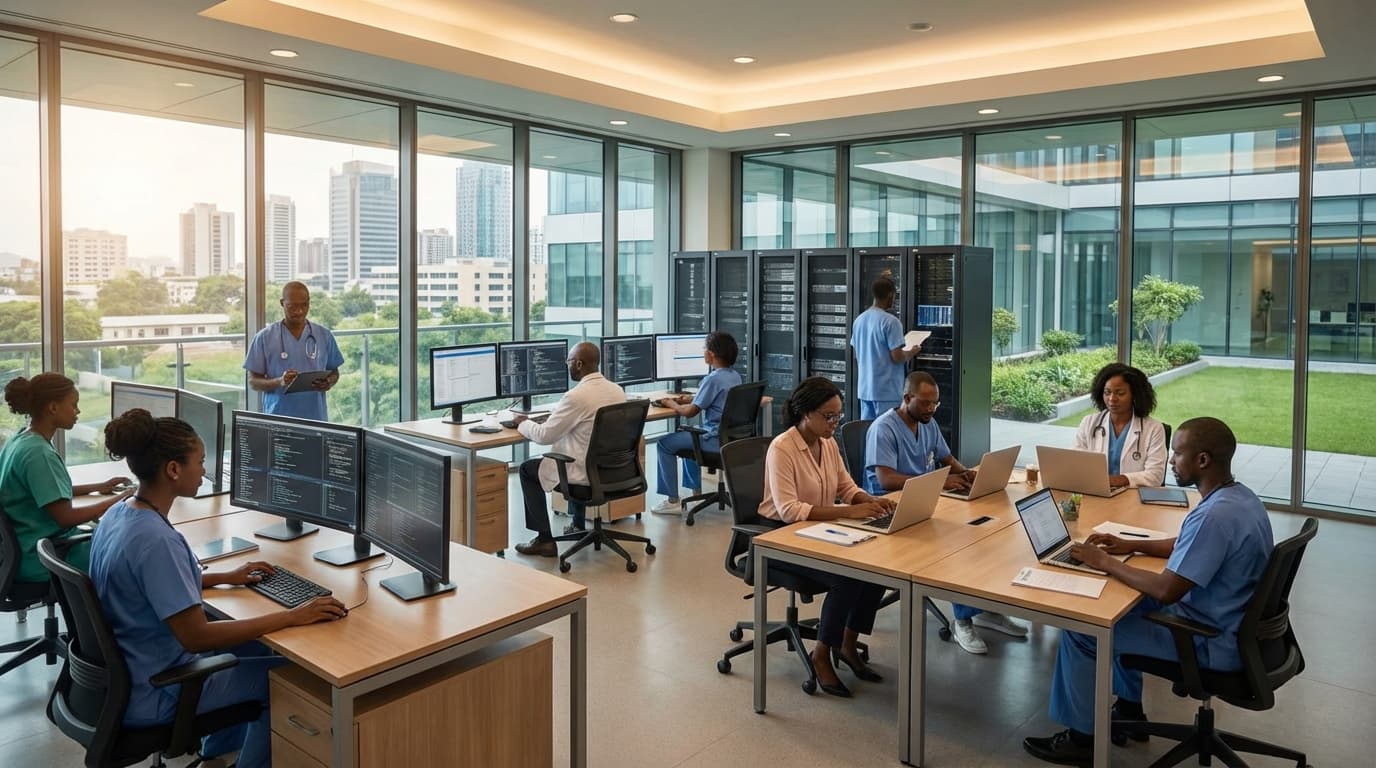
Radiology Reader & Reporting Support in Mauritania
Engineering Excellence & Technical Support
Remote radiology reading and reporting services High-standard technical execution following OEM protocols and local regulatory frameworks.
Advanced Imaging Technology Integration
Seamless integration with existing and emerging medical imaging modalities (CT, MRI, X-ray, Ultrasound) to ensure compatibility and optimize image quality for accurate diagnostics. Supports DICOM standards for universal data exchange.
AI-Powered Image Analysis Assistance
Leverages Artificial Intelligence algorithms to assist radiologists by flagging potential abnormalities, enhancing image interpretation, and reducing reading times. Provides objective measurements and comparative analysis for improved diagnostic confidence.
Secure Cloud-Based Reporting & Collaboration
Facilitates secure, remote access to radiology reports and images via a cloud platform. Enables seamless collaboration among radiologists and referring physicians across Mauritania, improving report turnaround times and patient care accessibility.
What Is Radiology Reader & Reporting Support In Mauritania?
Radiology Reader & Reporting Support in Mauritania refers to the provision of specialized services aimed at enhancing the accuracy, efficiency, and accessibility of radiological interpretations and diagnostic reporting. This encompasses a spectrum of functionalities that leverage advanced technologies and expert human resources to address the unique challenges faced by healthcare facilities in Mauritania, which may include limited access to subspecialist radiologists, remote geographical locations, and infrastructure constraints. The service is designed to augment existing radiological workflows, providing crucial decision support and enabling timely delivery of diagnostic findings to referring clinicians. This ultimately contributes to improved patient care pathways and outcomes.
| Stakeholder | Needs | Typical Use Cases |
|---|---|---|
| Hospitals and Clinics (Public & Private) | Need: To provide accurate and timely radiological diagnoses, especially for complex cases or in areas with limited specialist coverage. Improve turnaround times for reports. Enhance diagnostic capabilities without significant capital investment in permanent specialist recruitment. | Use Cases: - Interpretation of routine imaging studies (e.g., chest X-rays, abdominal ultrasounds). - Advanced imaging interpretation (e.g., MRI brain for stroke detection, CT angiography for vascular assessment). - Out-of-hours or emergency radiology coverage. - Second opinion on challenging or equivocal findings. - Support for rural or remote healthcare facilities lacking on-site radiologists. |
| Radiology Departments | Need: To manage high caseloads efficiently, reduce reporting backlog, ensure consistent quality of reports, and access subspecialty expertise for difficult cases. Augment existing workforce capabilities. | Use Cases: - Overreading of studies by subspecialists. - Workflow optimization through AI-assisted triage and analysis. - Standardized reporting for specific modalities or anatomies. - Training and skill development for junior radiologists. |
| Referring Clinicians (Physicians, Surgeons) | Need: Clear, concise, and accurate diagnostic reports to guide patient management, treatment decisions, and surgical planning. Timely delivery of critical findings. | Use Cases: - Receiving definitive diagnoses for suspected pathologies. - Obtaining detailed descriptions of lesions or abnormalities. - Understanding the extent and staging of diseases. - Facilitating prompt referral to appropriate specialists. |
| Public Health Initiatives & Government Health Agencies | Need: To ensure equitable access to quality diagnostic imaging services across the nation, particularly in underserved regions. Monitor disease prevalence and epidemiological trends through aggregated reporting data. | Use Cases: - Establishing national teleradiology networks. - Supporting screening programs for diseases like tuberculosis or cancer. - Data collection for public health surveillance and policy development. - Improving the overall standard of medical imaging services nationwide. |
Key Components of Radiology Reader & Reporting Support:
- Advanced Image Analysis Platforms: Utilization of AI-powered or cloud-based software for automated detection of anomalies, segmentation, quantitative analysis, and workflow prioritization of medical images (X-ray, CT, MRI, Ultrasound, etc.).
- Remote Teleradiology Services: Secure transmission of medical images to off-site radiologists (either local subspecialists or international pools) for interpretation and report generation.
- Subspecialist Consultations: Access to expert radiologists with specialized training in areas such as neuroradiology, musculoskeletal radiology, pediatric radiology, or interventional radiology, particularly beneficial where local expertise is scarce.
- Quality Assurance and Peer Review: Implementation of structured processes for reviewing interpreted reports, ensuring adherence to best practices, and identifying areas for improvement.
- Reporting Software and Templates: Provision of standardized, structured reporting templates designed to enhance clarity, completeness, and consistency in radiological reports, often integrated with PACS and EMR systems.
- Training and Education Support: Offering continuing medical education (CME) and hands-on training for local radiologists and radiographers to enhance their skills in image interpretation and reporting.
- IT Infrastructure and Connectivity Solutions: Support for establishing or enhancing the necessary IT infrastructure, including PACS (Picture Archiving and Communication System), RIS (Radiology Information System), and reliable network connectivity for secure data transfer.
Who Needs Radiology Reader & Reporting Support In Mauritania?
Radiology reader and reporting support services are crucial for enhancing diagnostic accuracy, improving workflow efficiency, and ensuring timely patient care within Mauritania's healthcare system. These services are particularly beneficial for facilities facing challenges such as a shortage of specialized radiologists, limited access to subspecialty expertise, and the need to manage increasing imaging volumes. The target customers are primarily healthcare providers and institutions that operate imaging departments or offer diagnostic radiology services.
| Target Customer Type | Key Departments Benefiting | Specific Needs Addressed |
|---|---|---|
| Public Hospitals and Clinics | Radiology Department, Emergency Department, Internal Medicine, Surgery, Pediatrics, Oncology | Overcoming radiologist shortages, improving turnaround time for reports, accessing subspecialty interpretation (e.g., neuroradiology, musculoskeletal radiology) for complex cases, supporting remote or underserved areas. |
| Private Hospitals and Clinics | Radiology Department, Outpatient Services, Specialized Treatment Centers (e.g., cardiology, neurology) | Enhancing diagnostic confidence, providing second opinions, managing high patient loads efficiently, offering specialized reporting services not readily available in-house, improving competitive edge. |
| Diagnostic Imaging Centers | All imaging modalities (X-ray, CT, MRI, Ultrasound) | Augmenting reporting capacity, ensuring consistent quality of reports, providing expert review for a wide range of imaging studies, streamlining workflow to increase throughput. |
| Rural Health Centers with Imaging Capabilities | General Practice, Limited Radiology Services | Providing access to expert interpretation for basic imaging studies (e.g., chest X-rays for TB screening), bridging the gap in specialized radiological expertise, enabling better primary care decisions. |
| Mobile Diagnostic Units | Community Health Programs, Public Health Initiatives | Facilitating remote diagnostics, ensuring that patients in hard-to-reach areas receive timely and accurate interpretations of their medical images, supporting public health screening programs. |
| Medical Research Institutions | Research Departments utilizing imaging, Radiology Research Divisions | Providing expert interpretation for research imaging protocols, ensuring standardized and high-quality data for research analysis, facilitating collaboration with international research bodies. |
Target Customers and Departments in Mauritania
- Public Hospitals and Clinics
- Private Hospitals and Clinics
- Diagnostic Imaging Centers
- Rural Health Centers with Imaging Capabilities
- Mobile Diagnostic Units
- Medical Research Institutions (if they conduct imaging studies)
Radiology Reader & Reporting Support Process In Mauritania
This document outlines the workflow for the Radiology Reader & Reporting Support Process in Mauritania, detailing the steps from the initial inquiry to the final execution and delivery of radiology reports. This process aims to ensure efficient and accurate interpretation of medical imaging studies and timely communication of findings to referring physicians.
| Stage | Key Activities | Responsible Party | Key Systems/Tools |
|---|---|---|---|
| Inquiry & Request Initiation | Submit patient info, clinical history, imaging request | Referring Physician/Healthcare Facility | Hospital Information System (HIS)/Manual Forms |
| Request Triage & Assignment | Verify request, prioritize, assign to radiologist | Radiology Admin/Coordinator | HIS/Radiology Information System (RIS) |
| Image Acquisition & Data Transfer | Perform imaging, transfer images to PACS | Radiographer/Technician | Imaging Modality (X-ray, CT, MRI, Ultrasound), PACS |
| Radiologist Review & Interpretation | Review images, clinical data, interpret findings | Radiologist | PACS, RIS |
| Report Generation | Dictate/type findings and impression | Radiologist | Dictation Software/Voice Recognition, RIS/Reporting Software |
| Report Review & Approval | Second-level review (if applicable) | Senior Radiologist/Subspecialist | RIS/Reporting Software |
| Report Finalization & Archiving | Sign, finalize, and archive report | Radiologist | RIS/PACS |
| Report Dissemination | Transmit report to referring physician | Radiology Admin/HIS | Secure Messaging/EHR/Printer |
| Follow-up & Communication | Consult with referring physician | Radiologist | Phone/Email/In-person |
Radiology Reader & Reporting Support Process Workflow
- {"title":"1. Inquiry & Request Initiation","description":"The process begins when a referring physician or healthcare facility initiates a request for a radiology interpretation. This typically involves submitting patient information, clinical history, and the specific imaging study (e.g., X-ray, CT, MRI, Ultrasound) requiring interpretation."}
- {"title":"2. Request Triage & Assignment","description":"Upon receiving the request, the radiology department or designated administrative staff triages it. This involves verifying completeness of information, prioritizing urgent cases, and assigning the study to an appropriate, qualified radiologist based on their subspecialty and availability."}
- {"title":"3. Image Acquisition & Data Transfer","description":"The imaging study is performed by a radiographer/technician. The acquired images are then transferred electronically to the Picture Archiving and Communication System (PACS). This ensures secure and readily accessible storage of the imaging data."}
- {"title":"4. Radiologist Review & Interpretation","description":"The assigned radiologist accesses the images and patient clinical information through the PACS. They meticulously review the imaging study, identify any abnormalities, and formulate a diagnosis or assessment based on their expertise."}
- {"title":"5. Report Generation","description":"The radiologist dictates or types their findings and conclusions into a standardized reporting template. This report includes a summary of the findings, impression, and any recommendations. Voice recognition software or structured reporting tools may be utilized to enhance efficiency."}
- {"title":"6. Report Review & Approval (if applicable)","description":"In some settings, a second-level review by a senior radiologist or subspecialist might be required for complex cases or to ensure quality assurance. This step is crucial for maintaining high diagnostic accuracy."}
- {"title":"7. Report Finalization & Archiving","description":"Once the report is finalized, it is digitally signed by the radiologist and saved in the PACS. This final version is then officially recorded and archived for future reference."}
- {"title":"8. Report Dissemination","description":"The finalized report is transmitted to the referring physician or healthcare facility. This can be done electronically via secure messaging systems, through the hospital's Electronic Health Record (EHR), or via printed copies depending on established protocols and available infrastructure in Mauritania."}
- {"title":"9. Follow-up & Communication","description":"If necessary, the radiologist may be available for consultation with the referring physician to discuss findings, clarify interpretations, or recommend further investigations or management strategies. This ensures comprehensive patient care."}
Radiology Reader & Reporting Support Cost In Mauritania
Radiology reading and reporting support in Mauritania, like in many developing nations, is influenced by a combination of factors that determine its cost. These include the expertise and specialization of the radiologist, the complexity of the imaging study, the turnaround time required for the report, the technology and infrastructure available at the facility, and the geographical location within Mauritania. Due to the scarcity of highly specialized radiologists, particularly in remote areas, outsourcing or leveraging teleradiology services can become an option, impacting pricing. Local currency for pricing is the Mauritanian Ouguiya (MRU). While specific, publicly advertised price lists are rare for these specialized medical services, general ranges can be estimated based on typical healthcare costs and the demand for such services. The complexity of the imaging modality (e.g., basic X-ray vs. advanced MRI/CT scan interpretation) significantly affects the price, as does the need for subspecialty reporting (e.g., neuroradiology, musculoskeletal radiology).
| Service Type | Estimated Cost Range (MRU) | Notes |
|---|---|---|
| Basic X-ray Interpretation & Report | 3,000 - 7,000 MRU | For standard skeletal or chest X-rays. Price can vary based on facility and radiologist experience. |
| CT Scan Interpretation & Report (Single Area) | 7,000 - 15,000 MRU | Includes interpretation of a single anatomical region (e.g., brain, abdomen). Complex reconstructions or multiple regions will increase cost. |
| MRI Scan Interpretation & Report (Single Area) | 10,000 - 25,000 MRU | Generally more expensive than CT due to complexity and scan time. Specific protocols may influence pricing. |
| Ultrasound Interpretation & Report | 4,000 - 10,000 MRU | Covers routine ultrasounds (e.g., abdominal, obstetric). Specialized ultrasounds (e.g., Doppler) may be higher. |
| Subspecialty Reporting (e.g., Neuroradiology, MSK) | 15,000 - 40,000+ MRU | Requires highly specialized radiologists, thus commanding a premium. Price is highly dependent on the subspecialty and complexity. |
| Teleradiology Services (Per Study) | 5,000 - 20,000 MRU | Cost can vary significantly based on the vendor, turnaround time, and type of study. May offer cost-effectiveness for facilities with limited on-site expertise. |
Key Pricing Factors for Radiology Reader & Reporting Support in Mauritania
- Radiologist's Expertise and Specialization (General vs. Subspecialist)
- Complexity of the Imaging Modality (X-ray, CT, MRI, Ultrasound, etc.)
- Scope and Detail of the Report Required
- Urgency and Turnaround Time (Stat vs. Routine Reporting)
- Technological Infrastructure at the Facility
- Geographical Location (Urban vs. Rural Access)
- Volume of Studies for Bulk Discounts
- Teleradiology vs. On-site Reading Services
Affordable Radiology Reader & Reporting Support Options
Radiology practices and healthcare facilities are increasingly seeking cost-effective solutions for radiology reading and reporting. This includes leveraging remote reading services, utilizing AI-powered diagnostic assistance, and exploring efficient workflow management tools. Value bundles offer a comprehensive approach by combining multiple services, while various cost-saving strategies can significantly reduce operational expenses. This document outlines affordable options, value bundles, and cost-saving strategies for radiology reader and reporting support.
| Strategy/Bundle | Description | Value Proposition | Cost-Saving Aspect |
|---|---|---|---|
| Comprehensive Teleradiology Bundle | Includes 24/7 remote reading by board-certified radiologists, STAT interpretation, final reports, and quality assurance. | Ensures timely and accurate diagnoses, broadens subspecialty coverage, and improves turnaround times. | Reduces overhead of in-house radiologists, eliminates recruitment challenges, and scales with workload. |
| AI-Assisted Reporting Suite | Combines AI for initial image analysis and anomaly detection with radiologist review and templated reporting software. | Enhances diagnostic accuracy, reduces radiologist fatigue, and standardizes report quality. | Increases radiologist efficiency, potentially reducing the number of readers needed for a given volume, and minimizes errors. |
| Flexible Subspecialty Coverage Package | Access to a network of remote subspecialists for specific modalities or areas (e.g., Neuro, MSK, Breast Imaging) on demand. | Provides expert interpretation for complex cases without the need for full-time hires. | Pay-as-you-go or tiered subscription model is more cost-effective than maintaining in-house subspecialists. |
| Basic Reading & Reporting Service | Core interpretation of X-ray, CT, and MRI with standard reporting turnaround times. | Meets basic diagnostic needs for general imaging. | Lower per-study cost compared to premium or 24/7 services. |
| Integrated Workflow Solution | Bundles PACS integration, AI tools, teleradiology access, and reporting software into a single platform. | Streamlines the entire imaging workflow from acquisition to final report. | Reduces integration costs, simplifies IT management, and improves overall operational efficiency. |
| Cost-Saving Strategy: Volume-Based Pricing | Negotiating lower per-study rates based on predictable or increasing imaging volumes. | Provides predictable costs and allows for better budget planning. | Directly reduces the per-unit cost of radiology services. |
| Cost-Saving Strategy: Off-Peak Hour Utilization | Utilizing remote readers for non-urgent studies during off-peak hours (nights, weekends). | Ensures coverage without requiring in-house staff for round-the-clock coverage. | Leverages potentially lower rates for off-hours remote reading services. |
| Cost-Saving Strategy: Standardized Reporting Templates | Implementing a library of pre-defined, customizable report templates. | Speeds up report generation and ensures consistency and compliance. | Reduces dictation time and transcription costs. |
Affordable Radiology Reader & Reporting Support Options
- Remote Radiology Reading Services (Teleradiology)
- AI-Powered Diagnostic Imaging Software
- Hybrid Reading Models (On-site + Remote)
- Specialty-Specific Reading Groups
- Reporting Software with Template Libraries and Voice Recognition
- Outsourced Medical Scribing for Reports
- Partnerships with Academic Medical Centers
Verified Providers In Mauritania
In Mauritania's evolving healthcare landscape, identifying reliable and accredited medical services is paramount for individuals and organizations seeking quality care. Franance Health stands out as a leading provider, distinguished by its stringent credentialing processes and commitment to excellence. This document outlines why Franance Health's verified providers represent the best choice for healthcare needs in Mauritania, focusing on their credentials, operational standards, and the trust they engender.
| Credential Type | Franance Health Verification Standard | Implication for Patients |
|---|---|---|
| Medical Licenses | Verified current and valid licenses from relevant national and international medical boards. | Ensures providers are legally qualified and recognized to practice medicine. |
| Professional Qualifications & Diplomas | Authenticity confirmed for all degrees, certifications, and specialized training. | Guarantees that practitioners possess the necessary expertise and specialized knowledge. |
| Experience & Track Record | Thorough background checks and reference verifications for demonstrable patient care experience. | Provides confidence in the provider's practical skills and history of successful treatments. |
| Adherence to Ethical Standards | Commitment to Franance Health's code of conduct, including patient confidentiality and informed consent. | Upholds patient rights and fosters trust through ethical medical practice. |
| Facility Accreditation & Equipment | Verification of facility safety, hygiene standards, and availability of essential medical equipment. | Ensures a safe and well-equipped environment for diagnosis and treatment. |
Key Strengths of Franance Health's Verified Providers:
- Rigorous Vetting and Credentialing: Franance Health employs a comprehensive vetting process for all affiliated healthcare providers. This includes verifying medical licenses, professional qualifications, and ensuring adherence to international best practices.
- Commitment to Quality and Safety: Verified providers undergo regular audits and performance reviews to maintain the highest standards of patient care, safety, and hygiene.
- Access to Specialized Expertise: Franance Health partners with a network of specialists across various medical disciplines, ensuring access to cutting-edge treatments and diagnostic services.
- Patient-Centric Approach: The emphasis is on delivering compassionate and personalized care, with a focus on patient satisfaction and well-being.
- Technological Integration: Franance Health providers are encouraged to adopt modern medical technologies and digital health solutions, enhancing efficiency and patient outcomes.
- Ethical Practice and Transparency: All verified providers operate under a strict code of ethics, ensuring transparency in treatment plans, costs, and patient rights.
Scope Of Work For Radiology Reader & Reporting Support
This Scope of Work (SOW) outlines the requirements for Radiology Reader & Reporting Support services. This service will provide qualified radiology professionals to interpret medical images and generate comprehensive diagnostic reports, ensuring timely and accurate patient care. The technical deliverables will adhere to established industry standards and best practices.
| Deliverable | Description | Standard Specifications | Format/Delivery Method | Quality Assurance |
|---|---|---|---|---|
| Radiology Image Interpretation | Expert review of various medical imaging modalities (X-ray, CT, MRI, Ultrasound, Nuclear Medicine, Mammography). | Interpretation based on established medical guidelines, peer-reviewed literature, and institutional protocols. | DICOM images accessed via PACS or secure transfer. Findings recorded in reporting software. | Peer review of a percentage of reports, adherence to established radiologist competency frameworks. |
| Diagnostic Reports | Comprehensive, clear, and concise reports detailing findings, impressions, and recommendations. | Reports structured according to industry best practices (e.g., ACR standards). Includes relevant clinical history, technical details, findings, impression, and recommendations. Reports must be clearly signed and dated by the interpreting radiologist. | Electronic reports generated via RIS/reporting software. Securely transmitted to referring physicians and integrated into the EHR. | Mandatory review and sign-off by a qualified radiologist. Regular audits for accuracy, completeness, and adherence to templates. |
| Consultation Services | Ad-hoc consultations with referring physicians regarding imaging findings and patient management. | Prompt availability for real-time discussions, clarification of findings, and collaborative decision-making. | Phone, secure messaging, or in-person (if applicable). | Documentation of consultation in patient's medical record. Feedback mechanisms for referring physicians. |
| Quality Improvement (QI) Participation | Active participation in departmental quality assurance and improvement initiatives. | Contribution to case reviews, protocol development, and identification of areas for improvement in radiology services. | Regular attendance at QI meetings, submission of improvement suggestions. | Tracking of QI metrics and impact assessment. |
| Continuing Medical Education (CME) | Maintaining current board certifications and actively participating in CME activities. | Adherence to requirements for maintaining licensure and board certification in radiology and subspecialties. | Documentation of CME credits and certifications. | Verification of credentials and ongoing professional development. |
| Emergency/STAT Interpretations | Prioritized interpretation and reporting for urgent/emergent imaging studies. | Adherence to established turnaround time (TAT) SLAs for STAT reads, as defined by the institution. | Immediate notification of critical findings via established communication channels. | Monitoring and reporting of STAT TAT compliance. Root cause analysis for any deviations. |
Key Objectives of Radiology Reader & Reporting Support
- Enhance radiology reading capacity and reduce turnaround times.
- Improve the accuracy and completeness of diagnostic reports.
- Provide specialized expertise for complex cases.
- Support fluctuating workloads and ensure continuous coverage.
- Maintain compliance with regulatory requirements and quality standards.
Service Level Agreement For Radiology Reader & Reporting Support
This Service Level Agreement (SLA) outlines the expected performance standards for radiology reader and reporting support services provided by [Provider Name] to [Client Name]. It defines the responsibilities of both parties and establishes measurable metrics for service quality, focusing on response times and uptime guarantees.
| Service Component | SLA Metric | Target | Measurement Method | Remedy for Non-Compliance |
|---|---|---|---|---|
| Radiology Reader Access (PACS/RIS) | Uptime Guarantee | 99.9% | Monitoring of system availability by [Monitoring Tool] | 10% service credit for every hour of downtime exceeding the guaranteed uptime in a calendar month. |
| Reporting Platform Availability | Uptime Guarantee | 99.8% | Monitoring of platform accessibility by [Monitoring Tool] | 5% service credit for every hour of downtime exceeding the guaranteed uptime in a calendar month. |
| Urgent Reader/Reporting Support Request | Response Time | 15 minutes | Timestamp of ticket creation vs. timestamp of initial acknowledgement/start of work by support staff | For each missed response, a one-time fixed fee of $[Amount] will be credited. |
| Standard Reader/Reporting Support Request | Response Time | 60 minutes | Timestamp of ticket creation vs. timestamp of initial acknowledgement/start of work by support staff | For each missed response, a one-time fixed fee of $[Amount] will be credited. |
| Routine Reporting Generation (Standard Cases) | Reporting Turnaround Time | 24 Business Hours | Timestamp of image availability vs. timestamp of report finalization in RIS | For each report exceeding the turnaround time by more than 4 business hours, a discount of X% on the reporting fee for that case. |
| Routine Reporting Generation (Complex Cases) | Reporting Turnaround Time | 48 Business Hours | Timestamp of image availability vs. timestamp of report finalization in RIS | For each report exceeding the turnaround time by more than 8 business hours, a discount of Y% on the reporting fee for that case. |
| Critical System Outage (Reader or Reporting Platform) | Issue Resolution Time | 4 Business Hours | Timestamp of issue reporting vs. timestamp of service restoration | For each outage exceeding the resolution time, a credit of [Percentage]% of the monthly service fee, prorated for the duration of the outage. |
| Non-Critical System Issue | Issue Resolution Time | 8 Business Hours | Timestamp of issue reporting vs. timestamp of service restoration | For each missed resolution, a one-time fixed fee of $[Amount] will be credited. |
Key Performance Indicators (KPIs)
- Response Time: The maximum time allowed for the provider to acknowledge and begin addressing a reported issue or request.
- Uptime Guarantee: The minimum percentage of time the radiology reading and reporting support services will be available and operational.
- Reporting Turnaround Time: The maximum time allowed for the generation and delivery of radiology reports, as per agreed-upon service tiers.
- Issue Resolution Time: The maximum time allowed to resolve identified issues or service disruptions.
Frequently Asked Questions

Ready when you are
Let's scope your Radiology Reader & Reporting Support in Mauritania project in Mauritania.

Scaling healthcare logistics and technical systems across the entire continent.