
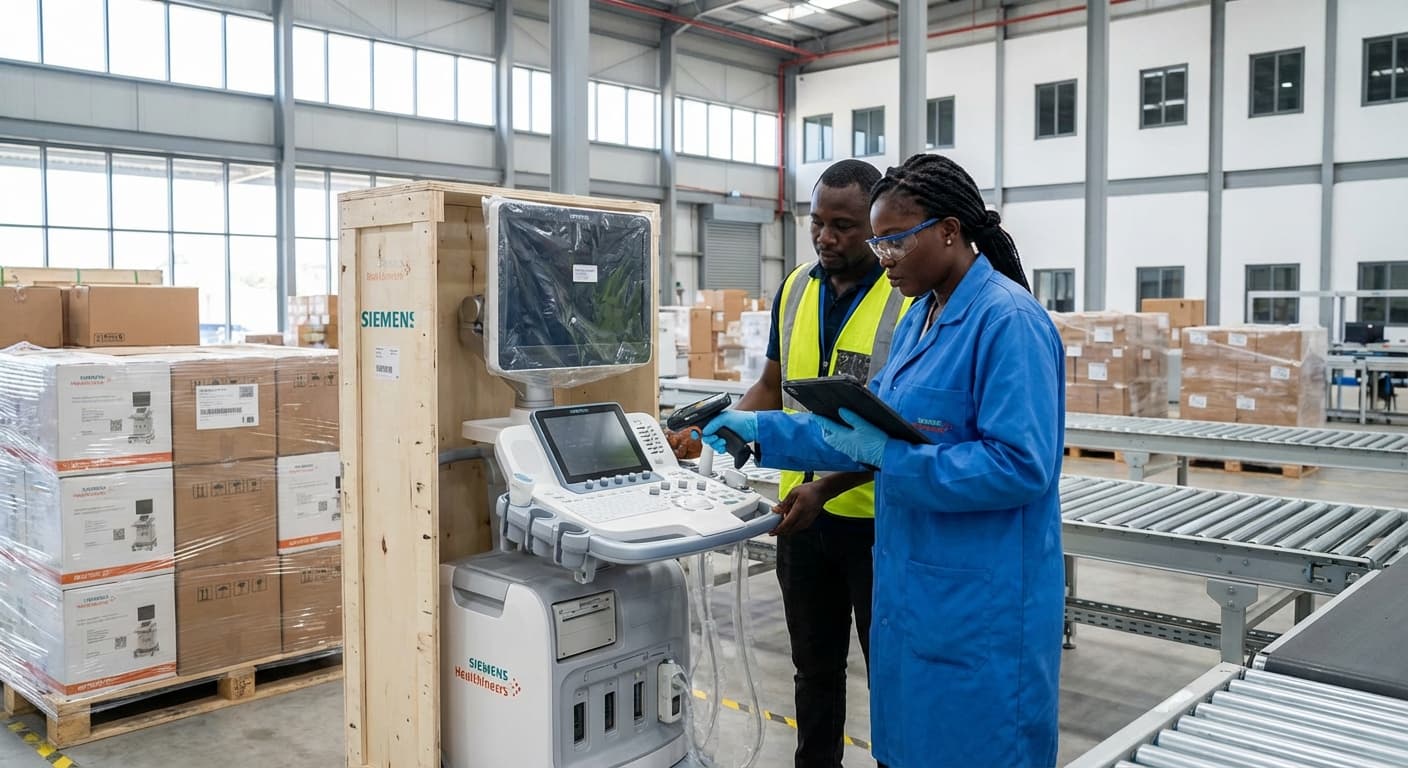
Warehouse Receiving Inspection Service (Medical Equipment) in Mauritania
Engineering Excellence & Technical Support
Warehouse Receiving Inspection Service (Medical Equipment) High-standard technical execution following OEM protocols and local regulatory frameworks.
Rigorous Quality Assurance Protocols
Implementing ISO 13485 compliant receiving inspection procedures to ensure the integrity, functionality, and compliance of all incoming medical equipment, safeguarding patient safety and regulatory adherence in Mauritania.
Advanced Inventory Tracking & Traceability
Leveraging serialized inventory management systems to provide end-to-end traceability of medical equipment from receipt to deployment, minimizing loss and facilitating rapid recall management within the Mauritanian healthcare sector.
Specialized Technical Verification
Employing trained technicians with expertise in diverse medical equipment categories to perform detailed functional and safety tests, ensuring operational readiness and preventing the introduction of faulty or non-compliant devices into Mauritanian healthcare facilities.
What Is Warehouse Receiving Inspection Service (Medical Equipment) In Mauritania?
Warehouse Receiving Inspection Service (Medical Equipment) in Mauritania refers to the systematic examination and verification of medical equipment upon its arrival at a designated warehouse or storage facility within Mauritania. This service is critical for ensuring the integrity, functionality, and compliance of medical devices before they are distributed or utilized within the healthcare system. It involves a multi-faceted approach to confirm that the received goods align with purchase orders, specifications, regulatory requirements, and quality standards. The inspection process aims to mitigate risks associated with receiving substandard, damaged, incorrect, or counterfeit medical equipment, thereby safeguarding patient safety and ensuring the efficacy of healthcare services.
| Stakeholder/Entity | Reason for Requiring Service | Typical Use Cases |
|---|---|---|
| Hospitals and Clinics | To ensure the safety and efficacy of medical devices used for patient care, compliance with healthcare regulations, and to prevent the use of faulty or non-compliant equipment. | Procurement of new medical devices (diagnostic, therapeutic, surgical), replacement parts for existing equipment, consumables with device components. |
| Medical Equipment Suppliers and Distributors | To fulfill contractual obligations with healthcare providers, maintain product quality and reputation, comply with import/export regulations, and manage inventory accurately. | Receiving bulk shipments from manufacturers, distributing equipment to various healthcare facilities, managing returns and recalls. |
| Government Health Authorities (e.g., Ministry of Health) | To ensure public health and safety, enforce medical device regulations, monitor the quality of imported medical equipment, and prevent the entry of substandard or counterfeit products. | Oversight of national medical supply chains, monitoring of imported medical devices, regulatory compliance audits of storage facilities. |
| Non-Governmental Organizations (NGOs) and Humanitarian Aid Organizations | To guarantee that donated or procured medical equipment is fit for purpose, safe for use in aid programs, and aligns with the organization's mission and funding requirements. | Receiving medical supplies for disaster relief, public health campaigns, or support for underserved communities. |
| Third-Party Logistics (3PL) Providers managing medical equipment warehouses | To provide a critical service to their clients in the healthcare sector, ensuring the integrity of the supply chain and meeting contractual service level agreements (SLAs). | Warehousing and distribution of medical equipment on behalf of manufacturers, distributors, or healthcare facilities. |
Key Components of Warehouse Receiving Inspection Service (Medical Equipment) in Mauritania
- Documentation Verification: Cross-referencing received goods against purchase orders, invoices, packing lists, certificates of origin, and import permits.
- Physical Inspection: Assessing the external condition of packaging for damage, tampering, or compromise. Inspecting the equipment itself for visible defects, corrosion, or manufacturing flaws.
- Identification and Labeling Verification: Ensuring that equipment serial numbers, model numbers, manufacturer details, and regulatory markings (e.g., CE marking where applicable) are present, legible, and match the accompanying documentation.
- Quantity Verification: Confirming that the number of units received matches the quantities stated on the shipping documents.
- Functional Testing (where applicable): Performing basic operational checks to ensure the equipment powers on and performs its intended primary functions, according to pre-defined test protocols or manufacturer guidelines. This may involve non-invasive checks rather than full calibration or validation.
- Sterility and Integrity Checks (for sterile products): Verifying the integrity of sterile packaging and confirming that sterilization indicators (if present) are within acceptable parameters.
- Compliance Checks: Ensuring that the equipment meets relevant Mauritanian regulatory requirements, standards (e.g., those set by the Ministry of Health), and import regulations for medical devices.
- Damage Reporting and Discrepancy Management: Documenting any discrepancies, damages, or non-conformities, and initiating appropriate corrective actions, such as initiating return procedures, claims, or notifications to the supplier and relevant authorities.
- Storage Condition Assessment: Verifying that the received equipment has been stored and transported under appropriate environmental conditions (e.g., temperature, humidity) as per manufacturer recommendations.
Who Needs Warehouse Receiving Inspection Service (Medical Equipment) In Mauritania?
In Mauritania, a dedicated warehouse receiving inspection service for medical equipment is crucial for ensuring the quality, safety, and regulatory compliance of vital healthcare supplies. This service plays a pivotal role in safeguarding public health and maintaining the integrity of the medical supply chain. By independently verifying that received medical equipment meets predefined standards, this service mitigates risks associated with faulty, counterfeit, or non-compliant products entering the country's healthcare system.
| Customer Type | Key Departments Involved | Primary Need Addressed | Impact of Non-Compliance |
|---|---|---|---|
| Government Healthcare Institutions | Procurement, Logistics, Biomedical Engineering, Quality Assurance | Ensuring patient safety, operational efficiency, and value for public funds. | Compromised patient care, wasted resources, regulatory penalties, loss of public trust. |
| Private Hospitals and Clinics | Procurement, Administration, Biomedical Engineering, Quality Management | Maintaining service quality, patient satisfaction, and return on investment. | Medical errors, equipment downtime, reputational damage, financial losses. |
| NGOs and International Aid Agencies | Logistics, Program Management, Procurement, Field Operations | Ensuring effective and safe delivery of healthcare services to beneficiaries. | Harm to beneficiaries, failed aid missions, loss of donor confidence, reputational damage. |
| Medical Equipment Importers/Distributors | Procurement, Sales, Logistics, Quality Control | Meeting client requirements, regulatory compliance, and establishing credibility. | Rejection of shipments, contractual disputes, fines, damage to business reputation. |
| Ministry of Health / Regulatory Bodies | Regulatory Affairs, Public Health, Procurement Oversight | Upholding national health standards, protecting public health, and ensuring market integrity. | Widespread public health risks, erosion of trust in the healthcare system, potential epidemics. |
Target Customers and Departments in Mauritania Needing Warehouse Receiving Inspection Service (Medical Equipment):
- {"title":"Government Healthcare Institutions","description":"This includes public hospitals, clinics, health centers, and national medical supply depots that procure and distribute medical equipment across Mauritania. They are responsible for the health and well-being of the general population."}
- {"title":"Private Hospitals and Clinics","description":"For-profit healthcare providers who invest in high-quality medical equipment for their patients. Ensuring the reliability of these investments is critical for their reputation and operational efficiency."}
- {"title":"Non-Governmental Organizations (NGOs) and International Aid Agencies","description":"Organizations involved in providing healthcare services and medical aid in Mauritania, often dealing with donated or procured medical equipment. They need assurance that the equipment is fit for purpose and safe for vulnerable populations."}
- {"title":"Medical Equipment Importers and Distributors","description":"Companies that import medical equipment into Mauritania for sale and distribution to various healthcare facilities. A third-party inspection service helps them demonstrate compliance to their clients and regulatory bodies."}
- {"title":"Ministry of Health and its Regulatory Bodies","description":"The overarching government authority responsible for health policy, regulation, and public health. They may mandate or benefit from independent receiving inspections to enforce standards and ensure product safety."}
- {"title":"Procurement and Logistics Departments","description":"Within all the above organizations, these departments are directly involved in the acquisition and management of medical equipment. They need to ensure that purchased items match specifications and arrive in good condition."}
- {"title":"Quality Assurance and Control Departments","description":"Responsible for maintaining high standards of care and operational excellence. Receiving inspection is a critical step in their quality assurance processes for medical equipment."}
- {"title":"Biomedical Engineering Departments","description":"These departments are concerned with the functionality, calibration, and maintenance of medical equipment. Receiving inspection helps them identify potential issues early, before equipment is put into service."}
Warehouse Receiving Inspection Service (Medical Equipment) Process In Mauritania
This document outlines the typical workflow for a Warehouse Receiving Inspection Service for medical equipment in Mauritania, from the initial client inquiry to the successful execution of the inspection. The process is designed to ensure the quality, safety, and compliance of incoming medical equipment with relevant standards and client requirements.
| Service Phase | Key Activities | Typical Deliverables |
|---|---|---|
| Inquiry and Quotation | Client inquiry, Information gathering, Site assessment (optional), Quotation preparation, Contract agreement | Quotation, Service Agreement/Contract |
| Planning and Preparation | Team assignment, Documentation review, Inspection plan development, Logistics coordination, Tool preparation | Inspection Plan, Checklists |
| On-Site Inspection Execution | Visual inspection, Documentation verification, Functional testing, Compliance checks, Photography | On-site observations, Test results, Photographic evidence |
| Reporting and Follow-up | Data compilation, Report preparation, Report submission, Re-inspection (if needed), Record keeping | Draft Inspection Report, Final Inspection Report |
Warehouse Receiving Inspection Service (Medical Equipment) Workflow in Mauritania
- {"steps":["Client Inquires: A client (e.g., hospital, distributor, government agency) contacts the inspection service provider with a need for receiving inspection of incoming medical equipment.","Information Gathering: The inspection provider gathers details about the client's requirements, including the type and quantity of equipment, origin, intended use, specific inspection points, relevant standards (e.g., national regulations, manufacturer specifications), and desired timeline.","Site Assessment (if necessary): For complex or large-scale operations, a preliminary site assessment might be conducted at the warehouse to understand the logistical setup and potential inspection challenges.","Quotation Preparation: Based on the gathered information, the inspection provider prepares a detailed quotation outlining the scope of services, methodology, timelines, personnel involved, and associated costs.","Quotation Submission and Negotiation: The quotation is submitted to the client for review. Negotiations may occur regarding scope, pricing, or terms.","Contract Agreement: Upon acceptance of the quotation, a formal contract or service agreement is established, detailing the responsibilities of both parties."],"title":"Phase 1: Inquiry and Quotation"}
- {"steps":["Inspection Team Assignment: A qualified inspection team with expertise in medical equipment and relevant standards is assigned to the project.","Documentation Review: The team reviews all relevant documentation provided by the client and/or manufacturer, including purchase orders, packing lists, certificates of origin, user manuals, technical specifications, and previous inspection reports (if any).","Development of Inspection Plan: A detailed inspection plan is developed, outlining specific inspection points, checklists, sampling methods, testing procedures, and required equipment.","Logistics Coordination: The inspection team coordinates with the client and warehouse personnel to schedule the inspection, ensuring access to the equipment and appropriate workspace.","Equipment and Tooling Preparation: All necessary inspection tools, testing equipment, and safety gear are prepared and calibrated."],"title":"Phase 2: Planning and Preparation"}
- {"steps":["Arrival and Briefing: The inspection team arrives at the warehouse and conducts a pre-inspection briefing with the client's representative and warehouse staff.","Visual Inspection: A thorough visual inspection of the equipment is conducted, checking for physical damage, defects, correct model numbers, serial numbers, and compliance with markings and labeling requirements.","Documentation Verification: The team verifies the received equipment against shipping documents (e.g., packing lists, invoices) and purchase orders, ensuring accuracy in quantity, model, and specifications.","Functional Testing (as per scope): Depending on the agreed scope, functional tests are performed to ensure the equipment operates as intended. This may include basic operational checks, performance tests, or calibration verification.","Sampling and Testing (if applicable): For certain types of equipment or specific defects, random sampling and more in-depth laboratory testing might be required.","Review of Accessories and Components: All included accessories, spare parts, and consumables are inspected for completeness and quality.","Compliance Checks: Verification of compliance with relevant national regulations, safety standards, and manufacturer's specifications.","Photography and Measurement: Photographic evidence is taken of the equipment and any observed defects. Measurements may be taken where relevant."],"title":"Phase 3: On-Site Inspection Execution"}
- {"steps":["Data Compilation: All inspection findings, test results, and photographic evidence are compiled and organized.","Draft Report Preparation: A draft inspection report is prepared, detailing the scope of inspection, methodology, observations, findings (including any non-conformities), and recommendations.","Report Review and Validation: The draft report is reviewed internally by the inspection provider for accuracy and completeness.","Report Submission to Client: The draft report is submitted to the client for review and feedback. The client has a defined period to provide comments or request clarifications.","Final Report Issuance: Upon addressing any client feedback, a final, official inspection report is issued.","Corrective Actions and Re-inspection (if necessary): If non-conformities are identified, the client and/or supplier will be required to implement corrective actions. The inspection provider may be engaged for re-inspection to verify the effectiveness of these actions.","Record Keeping: All inspection records, reports, and supporting documentation are archived for future reference."],"title":"Phase 4: Reporting and Follow-up"}
Warehouse Receiving Inspection Service (Medical Equipment) Cost In Mauritania
The cost of warehouse receiving inspection services for medical equipment in Mauritania can vary significantly based on several factors. These services are crucial to ensure the integrity, functionality, and compliance of incoming medical devices before they are stored and distributed. Pricing is typically determined by the scope of the inspection, the complexity and type of medical equipment, the volume of goods, and the qualifications of the inspection personnel. Local currency for pricing is the Mauritanian Ouguiya (MRU).
| Service Level / Equipment Type | Estimated Price Range (MRU) | Notes |
|---|---|---|
| Basic Visual Inspection (Low Complexity Equipment - e.g., consumables, basic instruments) | 1,500 - 5,000 MRU per shipment | Checks for external damage, correct quantity, and basic labeling. |
| Standard Inspection (Medium Complexity Equipment - e.g., patient monitors, basic diagnostic devices) | 3,000 - 10,000 MRU per shipment | Includes visual check, basic functional test, and documentation review. |
| Comprehensive Inspection (High Complexity/Critical Equipment - e.g., imaging devices, surgical equipment) | 8,000 - 30,000+ MRU per unit/shipment | Involves detailed functional testing, calibration verification, safety checks, and extensive documentation review. Price highly dependent on specific equipment. |
| Specialized Testing/Certification (e.g., biocompatibility, electrical safety) | 10,000 - 50,000+ MRU per test/equipment | Prices vary significantly based on the specific test and regulatory requirements. |
| Daily Rate for Inspector (Specialized Expertise) | 7,000 - 20,000 MRU per day | May be applicable for extended on-site work or complex projects. |
Key Pricing Factors for Warehouse Receiving Inspection Services (Medical Equipment) in Mauritania:
- Type and Complexity of Medical Equipment: Highly specialized, sensitive, or large-scale medical equipment (e.g., MRI machines, CT scanners, advanced surgical robots) will incur higher inspection costs due to the need for specialized tools, expertise, and potentially longer inspection times compared to simpler devices like stethoscopes or basic diagnostic kits.
- Scope of Inspection: The depth of the inspection is a major determinant. This can range from a basic visual check for damage and correct labeling to comprehensive functional testing, calibration verification, and documentation review (e.g., certificates of conformity, user manuals, warranty information).
- Volume of Equipment: The number of units to be inspected directly impacts labor costs. While some inspectors might offer tiered pricing for bulk inspections, a larger volume generally translates to a higher overall cost.
- Required Documentation and Reporting: The level of detail and format of the inspection report can influence pricing. Detailed reports with photographic evidence, specific testing protocols, and recommendations will command higher fees.
- Inspector Qualifications and Certifications: Inspections requiring highly skilled and certified technicians or engineers with specific experience in medical equipment will naturally be more expensive.
- Turnaround Time/Urgency: Rush inspections or those requiring immediate attention outside of standard working hours may incur additional surcharges.
- Location of the Warehouse: While less of a factor within major cities, if the warehouse is in a remote or difficult-to-access location, transportation and logistics costs for the inspection team could be factored in.
- Service Provider Reputation and Experience: Established and reputable inspection firms with a proven track record in medical equipment are likely to charge more due to their reliability and expertise.
Affordable Warehouse Receiving Inspection Service (Medical Equipment) Options
Finding affordable warehouse receiving inspection services for medical equipment is crucial for ensuring quality, compliance, and efficient inventory management. This service involves thorough examination of incoming medical devices to verify their condition, specifications, and documentation against purchase orders and manufacturer requirements. Effective inspection protocols prevent costly errors, returns, and potential patient safety risks. We'll explore value bundles and cost-saving strategies to help you optimize your medical equipment receiving process.
| Value Bundle Option | Description | Key Benefits | Potential Cost Savings |
|---|---|---|---|
| Basic Receiving Audit | Focuses on essential checks: PO vs. physical count, visible damage, and basic documentation verification. | Quick turnaround, good for high-volume, low-complexity items. | Lower per-unit inspection cost, less resource-intensive. |
| Standard Compliance Check | Includes basic audit plus verification of key compliance documents (e.g., FDA clearance numbers, sterilization certificates), serial number traceability, and review of user manuals. | Ensures regulatory adherence, reduces risk of non-compliance fines. | Minimizes costly re-inspections, prevents rejection by regulatory bodies. |
| Comprehensive Quality Assurance | Encompasses standard checks with in-depth functional testing (where applicable and feasible), detailed condition reporting, and root cause analysis for any identified issues. | Proactive quality control, identifies potential long-term issues early. | Reduces warranty claims, minimizes product recalls, improves supplier relationships through feedback. |
| Customized Solution | Tailored inspection protocols based on specific equipment types, risk profiles, and regulatory requirements. Can include specialized testing or documentation reviews. | Optimizes inspection efforts for maximum impact and efficiency. | Eliminates unnecessary checks, focuses resources where most needed, leading to overall cost reduction. |
Key Components of a Medical Equipment Receiving Inspection Service
- Verification of item against Purchase Order (PO) and Bill of Lading (BOL)
- Physical inspection for damage, defects, and completeness
- Serial number and lot/batch number verification
- Review of accompanying documentation (Certificates of Analysis, User Manuals, Warranty Information)
- Verification of compliance with relevant regulations and standards (e.g., FDA, ISO)
- Data entry into inventory management systems
- Discrepancy reporting and resolution initiation
- Photographic or video documentation of findings
Verified Providers In Mauritania
Finding verified healthcare providers in Mauritania is crucial for ensuring quality and trustworthy medical services. Franance Health stands out as a leading platform that meticulously vets its network, offering peace of mind to individuals seeking medical assistance. Their rigorous credentialing process is designed to identify and onboard only the most qualified and ethical healthcare professionals. This commitment to verification is what makes Franance Health the best choice for accessing reliable medical care in Mauritania.
| Provider Type | Franance Health Verification Criteria | Benefits to Patients |
|---|---|---|
| Doctors (General Practitioners & Specialists) | Medical Degree, Valid License, Board Certification (if applicable), Peer Reviews | Access to qualified and experienced medical professionals, confidence in diagnosis and treatment. |
| Nurses | Nursing Diploma/Degree, Professional Nursing License, Practical Experience Verification | Skilled and compassionate nursing care, ensuring proper post-treatment support and monitoring. |
| Hospitals & Clinics | Operating License, Accreditation (if applicable), Quality of Care Standards, Infrastructure Assessment | Safe and well-equipped facilities, adherence to international healthcare standards, comprehensive medical services. |
| Laboratories & Diagnostic Centers | Laboratory License, Equipment Calibration Records, Quality Control Procedures, Staff Qualifications | Accurate and reliable diagnostic testing, supporting precise medical assessments. |
Why Franance Health Credentials Represent the Best Choice:
- Rigorous Vetting Process: Franance Health employs a multi-stage verification system that includes checking educational qualifications, professional licenses, and work experience.
- Focus on Specialization: They ensure providers have the necessary expertise and certifications for their respective medical fields.
- Background Checks: Comprehensive background checks are conducted to ensure the integrity and trustworthiness of each provider.
- Patient Feedback Integration: Franance Health incorporates patient reviews and feedback into their ongoing credentialing, promoting accountability and continuous improvement.
- Adherence to Ethical Standards: Providers on the Franance Health platform are committed to upholding the highest ethical standards in patient care and professional conduct.
Scope Of Work For Warehouse Receiving Inspection Service (Medical Equipment)
This Scope of Work (SOW) outlines the requirements for a Warehouse Receiving Inspection Service for medical equipment. The service aims to ensure that all incoming medical equipment meets established quality, safety, and functional standards before being accepted into warehouse inventory. This includes visual inspection, documentation verification, and preliminary functional checks. The service will be performed by qualified inspectors in accordance with this SOW and relevant industry standards.
| Item | Description | Standard Specification / Deliverable | Acceptance Criteria |
|---|---|---|---|
| 1.0 | Documentation Verification | Review of Purchase Order (PO), Packing List, Bill of Lading (BOL), Certificate of Analysis (CoA), Certificate of Conformity (CoC), Manufacturer's Statement of Origin (MSO) (if applicable), Calibration Certificates, User Manuals, Warranty Information. | All required documents are present, match the shipped items, and are complete and legible. CoC and Calibration Certificates must be current and relevant to the equipment's specifications. User manuals must be for the exact model and version received. |
| 2.0 | Visual Inspection | Assessment of physical condition of all incoming medical equipment and its packaging. Includes inspection for dents, scratches, cracks, corrosion, loose parts, or any other signs of damage. | No visible external damage to equipment or packaging. Seals intact where applicable. Proper labeling and identification visible and legible. |
| 3.0 | Identification and Labeling Verification | Confirmation of serial numbers, model numbers, lot numbers, and expiration dates (if applicable) against shipping documentation and manufacturer labels. | All identifiers match the PO, packing list, and manufacturer's labels. Labels are legible and securely affixed. |
| 4.0 | Basic Functional Check (As Applicable) | For specified equipment types, perform preliminary functional tests to ensure basic operability. Examples: Power on/off, display functionality, basic mechanical movement, alarm system activation (if applicable). Specific tests will be detailed in Appendix A. | Equipment powers on and off correctly. Critical display elements are functional. Basic operational functions perform as expected without error messages or critical failures. Tests must be performed according to documented procedures. |
| 5.0 | Accessory and Component Verification | Verification of included accessories, power cords, cables, disposables, and any other specified components against the packing list and manufacturer's specifications. | All listed accessories and components are present, undamaged, and appear to be correct for the equipment model. |
| 6.0 | Environmental/Storage Conditions Check | Visual check of shipping container and packaging for signs of moisture, extreme temperature exposure, or mishandling during transit. | No evidence of compromised packaging due to environmental factors. Packaging is suitable for protecting medical equipment during transit. |
| 7.0 | Non-Conformance Reporting | Detailed documentation of any discrepancies, damage, or failures identified during the inspection process. Includes photographic evidence where applicable. | All non-conformances are documented in the agreed-upon reporting format (e.g., Inspection Report Form) within the agreed-upon timeframe (e.g., 24 hours of inspection completion). |
| 8.0 | Inspection Report Generation | Provision of a comprehensive inspection report detailing findings, including accepted items, rejected items, and reasons for rejection. Report to include date of inspection, inspector name, equipment details, and summary of findings. | Reports are delivered electronically within the agreed-upon timeframe (e.g., 48 hours of inspection completion). Reports are clear, concise, and contain all necessary information for decision-making. |
Key Objectives of the Receiving Inspection Service:
- Verify the accuracy and completeness of incoming shipments against purchase orders and shipping manifests.
- Inspect medical equipment for visible damage, defects, or signs of tampering.
- Confirm that all required documentation, including certificates of conformity, calibration certificates, and user manuals, is present and accurate.
- Perform basic functional checks to ensure the equipment is in working order, as specified in the technical deliverables.
- Identify and report any discrepancies or non-conformities promptly.
- Ensure compliance with all applicable regulatory requirements and manufacturer specifications.
Service Level Agreement For Warehouse Receiving Inspection Service (Medical Equipment)
This Service Level Agreement (SLA) outlines the performance standards for Warehouse Receiving Inspection Services for Medical Equipment provided by [Your Company Name] to [Client Company Name]. This SLA defines the agreed-upon response times and uptime guarantees to ensure the efficient and reliable processing of incoming medical equipment.
| Service Metric | Target | Measurement | Remedy for Failure |
|---|---|---|---|
| Initial Response Time (Notification of Incoming Shipment) | Within 2 business hours of shipment arrival notification. | Timestamp of notification received vs. timestamp of inspection initiation. | 10% discount on the inspection fee for the affected shipment. |
| Inspection Completion Time (Standard Equipment) | Within 8 business hours of inspection initiation for standard medical equipment. | Timestamp of inspection initiation vs. timestamp of final inspection report submission. | 15% discount on the inspection fee for the affected shipment. |
| Inspection Completion Time (Complex/High-Volume Equipment) | Within 16 business hours of inspection initiation for complex or high-volume medical equipment (defined in Appendix A). | Timestamp of inspection initiation vs. timestamp of final inspection report submission. | 20% discount on the inspection fee for the affected shipment. |
| Uptime Guarantee (Receiving Inspection System/Portal) | 99.5% uptime during standard business hours (Monday-Friday, 8 AM - 5 PM Client's Local Time). | System logs and monitoring tools to track availability. | For every hour of unscheduled downtime exceeding 0.5% per month, a credit of 1/30th of the monthly service fee will be applied. |
| Data Accuracy (Inspection Reports) | 99.8% accuracy in reported inspection findings. | Random audits of submitted reports, comparison against physical inspection records. | Correction of errors within 4 business hours at no additional charge. Repeat failures may result in a review of service provision. |
Service Objectives
- To ensure timely and accurate inspection of all received medical equipment.
- To minimize downtime and delays in the receiving process.
- To maintain a high level of service availability for receiving inspection operations.
- To provide clear and measurable performance metrics.
Frequently Asked Questions

Ready when you are
Let's scope your Warehouse Receiving Inspection Service (Medical Equipment) in Mauritania project in Mauritania.

Scaling healthcare logistics and technical systems across the entire continent.