
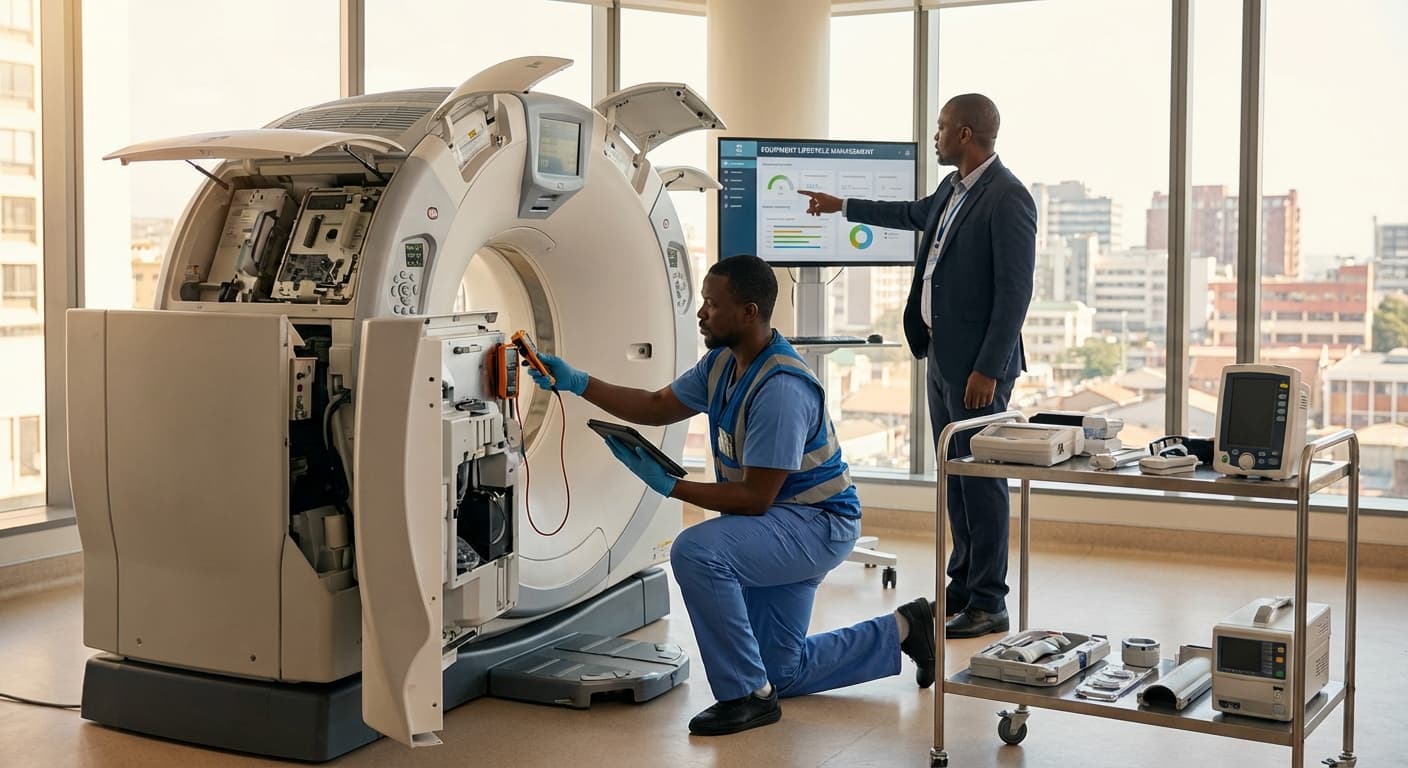
Equipment Replacement Planning & Obsolescence Strategy Service in Mauritania
Engineering Excellence & Technical Support
Equipment Replacement Planning & Obsolescence Strategy Service High-standard technical execution following OEM protocols and local regulatory frameworks.
Predictive Obsolescence Forecasting
Leveraging advanced analytics and historical data, our service identifies critical equipment at high risk of obsolescence, enabling proactive replacement strategies and mitigating operational disruptions in Mauritania's industrial landscape.
Cost-Benefit Optimization Modeling
We develop sophisticated cost-benefit models tailored to Mauritanian market conditions, evaluating the financial implications of various replacement scenarios (e.g., repair vs. replace, phased rollout) to ensure optimal capital allocation and long-term ROI.
Supply Chain Resilience & Risk Mitigation
Our strategy focuses on building robust supply chains for replacement parts and equipment, identifying potential bottlenecks, and diversifying sourcing options to ensure uninterrupted operations and mitigate risks associated with global supply chain volatility in Mauritania.
What Is Equipment Replacement Planning & Obsolescence Strategy Service In Mauritania?
Equipment Replacement Planning & Obsolescence Strategy Service in Mauritania is a specialized consulting offering designed to help organizations proactively manage their asset lifecycle, mitigate the risks associated with aging or obsolete equipment, and optimize capital expenditure. It involves a systematic approach to assessing the current state of an organization's equipment portfolio, forecasting future needs, and developing strategic roadmaps for replacement and technology adoption. This service is crucial for entities operating in sectors where equipment reliability, performance, and technological relevance are critical to operational continuity, safety, and competitive advantage. The service aims to transition from reactive maintenance and emergency replacements to a predictive and strategic approach, ensuring that investment decisions align with business objectives and technological advancements. Key considerations include the total cost of ownership (TCO), return on investment (ROI), operational efficiency gains, regulatory compliance, and the potential for disruptive technologies.
| Who Needs This Service? | Typical Use Cases | ||
|---|---|---|---|
| Industrial Manufacturers (e.g., mining, oil & gas, food processing, textiles): Companies relying on heavy machinery, specialized production lines, and process control systems where downtime is costly and technological stagnation impacts efficiency. | Minimizing unplanned downtime and associated production losses in critical mining operations by planning timely replacement of excavators, haul trucks, and processing plant machinery. | Upgrading legacy automation and control systems in the oil and gas sector to meet evolving safety standards and improve process efficiency. | Implementing a phased replacement strategy for aging manufacturing equipment to maintain product quality and meet increasing market demand. |
| Energy & Utilities (e.g., power generation, water treatment, transmission & distribution): Organizations managing extensive infrastructure with long asset lifecycles where reliability and regulatory compliance are paramount. | Developing a long-term replacement plan for aging turbines and generators in power plants to ensure consistent energy supply and meet environmental regulations. | Strategizing the replacement of obsolete water treatment filtration systems to improve water quality and reduce operational costs. | Planning the modernization of aging electrical substations and transmission lines to enhance grid reliability and accommodate new energy sources. |
| Transportation & Logistics (e.g., fleet operators, port authorities): Entities managing large fleets of vehicles, specialized material handling equipment, and infrastructure where operational efficiency and safety are key. | Establishing a procurement and replacement cycle for a national fleet of commercial vehicles to optimize fuel efficiency, reduce maintenance overhead, and ensure driver safety. | Planning the upgrade of port cranes and container handling equipment to accommodate larger vessels and improve cargo throughput. | Developing a strategy for the modernization of railway rolling stock to enhance operational speed and passenger comfort. |
| Telecommunications Providers: Companies with vast networks of infrastructure, including base stations, fiber optic cables, and switching equipment, that require continuous technological advancement. | Managing the transition from 3G to 4G/5G network infrastructure by identifying and replacing or upgrading obsolete base station equipment. | Planning the deployment of new fiber optic cable networks, requiring the retirement of older copper infrastructure. | |
| Public Sector & Government Agencies (e.g., defense, infrastructure projects, public works): Organizations responsible for critical national infrastructure, defense assets, and public services where long-term planning and budget adherence are essential. | Developing a long-term procurement and replacement plan for military vehicles and defense systems to maintain national security readiness. | Strategizing the upgrade of public transportation infrastructure, such as buses and trains, to improve service quality and accessibility. | Planning the replacement of outdated IT infrastructure in government ministries to enhance cybersecurity and data management. |
Key Components of Equipment Replacement Planning & Obsolescence Strategy Service
- Asset Inventory & Condition Assessment: Comprehensive cataloging of existing equipment, including make, model, serial number, installation date, maintenance history, and current operational status. Includes detailed technical condition surveys and performance evaluations.
- Obsolescence Risk Analysis: Identification of equipment nearing its end-of-life, facing component unavailability, or superseded by more advanced technologies. This involves assessing technical, economic, and operational obsolescence.
- Remaining Useful Life (RUL) Estimation: Application of predictive maintenance techniques, historical data analysis, and manufacturer recommendations to forecast the operational lifespan of critical assets.
- Technology Scouting & Trend Analysis: Research and evaluation of emerging technologies, industry best practices, and innovative solutions relevant to the organization's operational context.
- Replacement Cost Estimation & Budgeting: Development of realistic cost projections for new equipment, including procurement, installation, commissioning, and associated infrastructure upgrades.
- Strategic Roadmap Development: Creation of a phased plan outlining equipment replacement schedules, technology adoption timelines, and associated funding requirements.
- Risk Mitigation Planning: Strategies to address potential disruptions during the transition period, including redundancy measures, phased rollouts, and spare parts management for aging assets.
- Total Cost of Ownership (TCO) Analysis: Evaluation of the full lifecycle costs associated with both existing and potential replacement equipment, encompassing acquisition, operation, maintenance, and disposal.
- Benefit Realization & ROI Calculation: Quantification of expected benefits from equipment upgrades, such as improved efficiency, reduced downtime, enhanced safety, and new capability enablement, to justify investment.
Who Needs Equipment Replacement Planning & Obsolescence Strategy Service In Mauritania?
In Mauritania, various organizations, both public and private, are increasingly recognizing the critical need for robust Equipment Replacement Planning and Obsolescence Strategy Services. This is driven by factors such as aging infrastructure, the rapid pace of technological advancement, and the desire to maintain operational efficiency and safety. Without proactive planning, businesses risk unexpected downtime, increased maintenance costs, safety hazards, and a loss of competitive edge due to outdated technology.
| Target Customer Type | Key Departments Involved |
|---|---|
| Government & Public Sector | Public Works, Transportation Ministry, National Energy Company, Telecommunications Authority, Defense Ministry |
| Extractive Industries (Mining, Oil & Gas) | Operations, Maintenance, Engineering, Procurement, Asset Management, HSE (Health, Safety, Environment) |
| Manufacturing & Industrial Sector | Production, Engineering, Maintenance, Procurement, Operations Management, Quality Control |
| Utilities & Infrastructure Providers | Operations & Maintenance, Engineering, Asset Management, Planning, IT/Telecom Departments |
| Large-Scale Agriculture & Agribusiness | Operations, Farm Management, Maintenance, Procurement, Logistics |
| Construction & Civil Engineering | Fleet Management, Operations, Project Management, Maintenance, Procurement |
| Logistics & Transportation | Fleet Management, Operations, Maintenance, Logistics Planning, Procurement |
Target Customers & Departments in Mauritania
- {"title":"Government & Public Sector","description":"Entities responsible for critical national infrastructure and public services."}
- {"title":"Extractive Industries","description":"Companies involved in mining, oil, and gas exploration and production, where specialized and high-value equipment is paramount."}
- {"title":"Manufacturing & Industrial Sector","description":"Factories, processing plants, and workshops that rely on machinery for production."}
- {"title":"Utilities & Infrastructure Providers","description":"Organizations managing power generation, water supply, telecommunications, and transportation networks."}
- {"title":"Large-Scale Agriculture & Agribusiness","description":"Farms and processing facilities utilizing heavy machinery and specialized equipment."}
- {"title":"Construction & Civil Engineering","description":"Companies engaged in large infrastructure projects requiring a fleet of construction equipment."}
- {"title":"Logistics & Transportation","description":"Companies managing fleets of vehicles, cargo handling equipment, and port infrastructure."}
Equipment Replacement Planning & Obsolescence Strategy Service Process In Mauritania
This document outlines the Equipment Replacement Planning & Obsolescence Strategy Service process, detailing the workflow from initial inquiry to the successful execution of the service within the Mauritanian context. This service aims to help clients proactively manage their equipment lifecycle, mitigate risks associated with obsolescence, and optimize capital expenditure through strategic replacement planning.
| Stage | Description | Key Activities | Deliverables | Mauritanian Considerations |
|---|---|---|---|---|
| Initial Inquiry & Needs Assessment | The client contacts the service provider to express interest in equipment replacement planning and obsolescence strategy. A preliminary understanding of the client's challenges and objectives is established. | Initial consultation, understanding business goals, identifying key equipment categories, preliminary scope definition. | Meeting minutes, preliminary scope document. | Understanding local regulatory compliance related to equipment and imports, availability of local expertise for initial assessment. |
| Proposal Development & Agreement | Based on the needs assessment, a detailed proposal is drafted outlining the service scope, methodology, timelines, deliverables, and cost. Upon client approval, a service agreement is finalized. | Detailed scope definition, methodology outlining, timeline creation, cost estimation, proposal presentation, contract negotiation. | Comprehensive Service Proposal, Signed Service Agreement. | Clarity on intellectual property rights and data confidentiality in Mauritanian legal framework, payment terms and currency considerations (e.g., USD, EUR, MRU). |
| Data Collection & Inventory Audit | The service provider gathers comprehensive data on the client's existing equipment. This involves creating a detailed inventory and understanding the current operational status and maintenance history. | On-site or remote data collection, asset tagging and verification, maintenance record review, operational status assessment. | Detailed Equipment Inventory Database, Current Asset Register. | Access to operational sites and equipment, availability of local technical personnel for site visits, language barriers (French/Arabic translation needs). |
| Obsolescence Assessment & Risk Analysis | Each piece of equipment is assessed for its current age, technological relevance, performance degradation, maintenance costs, and potential for future obsolescence. Risks associated with continued use or phased retirement are identified. | Manufacturer's End-of-Life (EOL) data analysis, technological trend assessment, performance benchmarking, spare parts availability analysis, safety and environmental compliance check. | Obsolescence Risk Matrix, Projected Equipment Lifespan Report, Risk Assessment Summary. | Availability of up-to-date technical documentation from manufacturers (may be challenging for older equipment), local regulations on hazardous materials disposal if applicable. |
| Replacement Planning & Strategy Formulation | Based on the obsolescence assessment and risk analysis, a strategic plan is developed. This includes defining replacement priorities, recommending replacement options (e.g., like-for-like, upgrade, new technology), and developing phased rollout schedules. | Prioritization of equipment for replacement, recommendation of suitable replacement technologies, development of phased replacement timelines, identification of integration requirements. | Equipment Replacement Roadmap, Technology Recommendation Report, Phased Implementation Schedule. | Understanding of local market availability for new equipment and spare parts, potential for localized training for new technologies, consideration of import duties and customs procedures. |
| Financial Modeling & Budgeting | The financial implications of the replacement strategy are modeled, including capital expenditure, operational cost savings, return on investment (ROI) analysis, and funding options. This helps in budget allocation and justification. | Cost-benefit analysis, ROI calculations, total cost of ownership (TCO) modeling, identification of potential financing sources, budget forecasting. | Financial Impact Analysis Report, Proposed Capital Expenditure Budget, Funding Recommendation Document. | Availability of local financial institutions for potential financing, currency exchange rate fluctuations, tax implications of equipment acquisition in Mauritania. |
| Implementation & Procurement Support | The service provider assists the client in executing the replacement plan. This can include supporting procurement processes, vendor selection, contract management, and overseeing installation and commissioning. | Procurement process support, vendor evaluation and selection assistance, contract negotiation, project management for installation, coordination with local installation teams. | Procurement Documentation, Vendor Performance Reports, Project Status Updates. | Navigating local procurement laws and regulations, vetting local suppliers and service providers, managing logistics and transportation within Mauritania, ensuring compliance with local labor laws for installation. |
| Post-Implementation Review & Monitoring | After implementation, a review is conducted to assess the success of the replacement strategy against initial objectives. Ongoing monitoring mechanisms are established to ensure continued effectiveness. | Performance evaluation of new equipment, assessment of achieved cost savings, identification of lessons learned, establishment of ongoing monitoring KPIs, final project closure. | Post-Implementation Review Report, Final Project Summary, Recommendations for Ongoing Asset Management. | Establishing local support and maintenance agreements, ensuring availability of spare parts locally, continuous training needs for local staff, adaptation to any unforeseen local operational challenges. |
Service Workflow Steps
- Initial Inquiry & Needs Assessment
- Proposal Development & Agreement
- Data Collection & Inventory Audit
- Obsolescence Assessment & Risk Analysis
- Replacement Planning & Strategy Formulation
- Financial Modeling & Budgeting
- Implementation & Procurement Support
- Post-Implementation Review & Monitoring
Equipment Replacement Planning & Obsolescence Strategy Service Cost In Mauritania
Planning for equipment replacement and developing an obsolescence strategy are critical for businesses in Mauritania to ensure operational efficiency, mitigate risks, and maintain competitiveness. The cost of such a specialized service can vary significantly based on several factors. This service typically involves a thorough assessment of existing equipment, forecasting future needs, identifying potential obsolescence risks (technological, functional, or economic), and developing a phased replacement plan.
Key Pricing Factors:
- Scope and Complexity of Equipment: The number and types of equipment to be assessed. A large fleet of diverse machinery will naturally incur higher costs than a smaller set of standardized tools.
- Depth of Analysis: The level of detail required for the assessment. This can range from basic inventory and age reporting to in-depth lifecycle cost analysis, predictive maintenance modeling, and detailed technological trend forecasting.
- Consultant Expertise and Reputation: Experienced consultants with a proven track record in industrial asset management, supply chain optimization, or specific industry verticals will command higher fees.
- Data Availability and Quality: The ease of accessing reliable data on equipment performance, maintenance history, and acquisition costs. Poor or missing data may require additional effort for data collection and validation.
- Timeframe for Delivery: Urgent projects or those requiring extensive fieldwork may incur premium charges.
- Geographic Reach within Mauritania: While Mauritania is a relatively contained market, travel and accommodation costs for consultants to remote sites can influence pricing.
- Inclusion of Specific Technologies: The service may include recommendations for integrating new technologies for monitoring and management, which can add to the complexity and cost.
- Risk Assessment and Mitigation Strategies: The extent to which the service includes detailed risk profiling related to equipment failure or obsolescence and the development of mitigation plans.
- Development of a Phased Implementation Plan: The level of detail in the plan for executing the replacement strategy, including budgeting, phasing, and stakeholder management.
Pricing Ranges in Mauritanian Ouguiya (MRU):
Given the specialized nature of this service and the factors influencing it, providing a precise universal price is challenging. However, we can outline estimated ranges based on typical project sizes and complexities. These figures are indicative and subject to negotiation.
- Small-scale projects (e.g., assessing a limited number of critical assets for a small business): MRU 500,000 - MRU 1,500,000
- Medium-scale projects (e.g., comprehensive assessment for a medium-sized industrial facility or a larger fleet of assets): MRU 1,500,000 - MRU 5,000,000
- Large-scale projects (e.g., extensive asset portfolio for a major corporation or complex industrial operations): MRU 5,000,000 - MRU 15,000,000+
For very large or highly complex engagements, costs could exceed MRU 15,000,000, often on a project-by-project or retainer basis.
Note: These figures do not typically include the cost of new equipment or the implementation of the replacement strategy itself, but rather the consulting and planning service.
| Project Scale | Estimated Cost Range (MRU) |
|---|---|
| Small-scale Projects | 500,000 - 1,500,000 |
| Medium-scale Projects | 1,500,000 - 5,000,000 |
| Large-scale Projects | 5,000,000 - 15,000,000+ |
Factors Influencing Equipment Replacement Planning & Obsolescence Strategy Service Costs in Mauritania
- Scope and Complexity of Equipment Portfolio
- Depth of Analysis Required (e.g., lifecycle costing, predictive modeling)
- Consultant's Experience, Reputation, and Specialization
- Availability and Quality of Existing Equipment Data
- Project Urgency and Required Turnaround Time
- Geographic Scope of Operations within Mauritania (travel and logistics)
- Inclusion of Advanced Technology Integration Recommendations
- Level of Detail in Risk Assessment and Mitigation Strategy Development
- Complexity of the Phased Implementation and Budgeting Plan
- Ongoing Support and Monitoring Requirements
Affordable Equipment Replacement Planning & Obsolescence Strategy Service Options
Our Affordable Equipment Replacement Planning & Obsolescence Strategy Service offers a comprehensive approach to managing your asset lifecycle, ensuring operational continuity and mitigating financial risks associated with outdated or failing equipment. We provide tailored solutions to help you proactively plan for replacements, minimize downtime, and optimize your capital expenditures. Our service is designed for organizations seeking cost-effective, strategic management of their critical infrastructure.
| Cost-Saving Strategy | Description | Impact on Investment |
|---|---|---|
| Preventative Maintenance Optimization | Shifting from reactive repairs to proactive maintenance to extend equipment lifespan and reduce unexpected failures. | Reduces emergency repair costs, extends asset useful life. |
| Bulk Purchasing & Contract Negotiation | Consolidating replacement needs to negotiate volume discounts and favorable long-term service contracts. | Lower acquisition costs, predictable service expenses. |
| Extended Warranties & Service Plans | Strategic utilization of extended warranties and service plans for critical equipment to cover potential issues during peak operational periods. | Mitigates risk of unexpected large repair bills. |
| Phased Replacement Scheduling | Implementing a planned, staggered replacement strategy rather than a wholesale overhaul, aligning with budget cycles and operational impact. | Manages cash flow effectively, spreads capital expenditure. |
| Leasing vs. Purchasing Analysis | Evaluating the financial benefits of leasing certain equipment versus outright purchasing, especially for rapidly evolving technologies. | Reduces upfront capital outlay, offers flexibility. |
| Obsolescence Mitigation | Identifying and addressing potential obsolescence early to avoid the cost of unsupported or incompatible systems. | Avoids significant costs associated with forced migration or replacement of non-supported systems. |
Key Service Components & Value Bundles
- {"title":"1. Proactive Replacement Planning","description":"Develop data-driven schedules for equipment upgrades and replacements based on age, performance, maintenance history, and projected future needs. This prevents costly emergency replacements and allows for better budget allocation."}
- {"title":"2. Obsolescence Risk Assessment","description":"Identify equipment at risk of becoming obsolete due to technological advancements, vendor support changes, or regulatory requirements. We provide actionable recommendations to mitigate these risks."}
- {"title":"3. Total Cost of Ownership (TCO) Analysis","description":"Analyze the full lifecycle costs of equipment, including acquisition, operation, maintenance, and disposal, to inform replacement decisions and identify the most cost-effective options."}
- {"title":"4. Strategic Vendor Management","description":"Leverage our expertise to negotiate favorable terms with equipment vendors, explore alternative suppliers, and manage long-term service agreements."}
- {"title":"5. Custom Implementation Roadmaps","description":"Create phased implementation plans tailored to your organization's specific priorities, budget constraints, and operational workflows."}
- {"title":"Value Bundle A: 'Foundation Planning'","description":"Includes Proactive Replacement Planning and Obsolescence Risk Assessment. Ideal for organizations starting their lifecycle management journey."}
- {"title":"Value Bundle B: 'Optimization Strategy'","description":"Includes all components of Bundle A, plus Total Cost of Ownership Analysis and Strategic Vendor Management. Designed for organizations seeking deeper financial insights and procurement advantages."}
- {"title":"Value Bundle C: 'Comprehensive Lifecycle Management'","description":"Our most robust offering, including all components of Bundle B, plus Custom Implementation Roadmaps. For organizations requiring end-to-end asset lifecycle strategy and execution support."}
Verified Providers In Mauritania
In Mauritania, finding healthcare providers you can trust is paramount. Franance Health has emerged as a leading name, setting a high standard for medical services and patient care. Their commitment to quality is reflected in their rigorous credentialing process, ensuring that all affiliated providers meet stringent criteria for expertise, experience, and ethical practice. This dedication to verification provides patients with the confidence that they are receiving care from highly qualified and reputable professionals.
| Benefit for Patients | Why Franance Health Excels |
|---|---|
| Peace of Mind and Trust: Knowing your healthcare provider is thoroughly vetted allows for greater confidence in the quality of care received. | Franance Health's multi-faceted credentialing process goes beyond basic requirements, ensuring a deep level of verification and trust. |
| Access to Top Medical Talent: Verified providers are demonstrably skilled and experienced in their respective fields. | By partnering exclusively with credentialed professionals, Franance Health guarantees access to some of the most competent healthcare professionals in Mauritania. |
| Enhanced Patient Safety: Rigorous background checks and ongoing monitoring contribute to a safer healthcare environment. | Franance Health's commitment to patient safety is embedded in every step of their provider verification protocol. |
| Improved Health Outcomes: Expert care from qualified professionals leads to more effective diagnosis and treatment. | The stringent selection process employed by Franance Health is designed to connect patients with providers most likely to achieve positive health outcomes. |
| Streamlined Healthcare Experience: A trusted network of providers simplifies the process of finding the right medical specialist. | Franance Health acts as a reliable gateway, simplifying your search for high-quality, verified medical services in Mauritania. |
Key Credentials and Commitments of Franance Health Verified Providers:
- Medical Board Certification: Providers undergo thorough verification of their medical board certifications, confirming their specialized knowledge and competency.
- Licensure Verification: All practicing licenses are meticulously checked to ensure they are current and in good standing with relevant regulatory bodies.
- Education and Training Review: Franance Health scrutinizes the educational background and postgraduate training of each provider, confirming their academic rigor and specialized skills.
- Experience Verification: A detailed review of past work experience and clinical practice history is conducted to assess practical application and proven expertise.
- Background Checks: Comprehensive background checks are performed to ensure the highest ethical standards and patient safety.
- Continuing Professional Development: Providers are expected to demonstrate ongoing commitment to learning through participation in continuing medical education programs.
- Patient Feedback and Performance Monitoring: Franance Health incorporates patient feedback and performance metrics to ensure consistent quality of care and identify areas for improvement.
Scope Of Work For Equipment Replacement Planning & Obsolescence Strategy Service
This document outlines the Scope of Work (SOW) for a comprehensive Equipment Replacement Planning and Obsolescence Strategy service. The objective is to develop a proactive and data-driven approach to managing the lifecycle of critical equipment, ensuring operational continuity, minimizing downtime, and optimizing capital expenditure. The service will encompass assessment, strategy development, implementation planning, and ongoing support for equipment replacement and obsolescence management.
| Technical Deliverable | Description | Standard Specifications/Format |
|---|---|---|
| Equipment Inventory and Condition Report | A comprehensive catalog of all critical equipment, including manufacturer, model, serial number, installation date, maintenance history, current condition, and estimated remaining useful life. | Database format (e.g., SQL, Excel), with standardized fields for each equipment attribute. Report generated in PDF and accessible via a shared platform. |
| Obsolescence Risk Assessment Matrix | A prioritized matrix identifying equipment at high risk of obsolescence based on factors like manufacturer support, component availability, performance degradation, and regulatory changes. | Excel spreadsheet or dedicated software module. Includes risk score, mitigation recommendations, and impact assessment. Visualized with a heat map for clarity. |
| Equipment Replacement Planning Model | A dynamic model projecting future replacement needs, incorporating maintenance costs, operational criticality, vendor lead times, and budget constraints. Supports 'run vs. replace' analysis. | Developed using specialized asset management software or advanced spreadsheet modeling. Output includes phased replacement schedules, budget forecasts, and ROI calculations. Exportable to PDF and CSV. |
| Obsolescence Mitigation Strategy Document | Detailed strategies for managing identified obsolescence risks, including proactive sourcing of spare parts, alternative component identification, equipment redesign, or early replacement. | Formal document (PDF), clearly outlining recommended actions, responsible parties, timelines, and estimated costs for each mitigation strategy. |
| Capital Expenditure (CAPEX) Forecast for Replacements | A multi-year forecast of required capital expenditure for equipment replacement, aligned with the replacement planning model and organizational budget cycles. | Excel spreadsheet or integrated into the financial planning system. Includes breakdown by equipment category, year, and funding source. Reportable in PDF format. |
| Implementation Roadmap and Project Plan | A detailed roadmap for executing the recommended replacement strategies, including project timelines, resource allocation, procurement processes, and risk management plans. | Gantt chart (e.g., Microsoft Project, Asana) and accompanying narrative document (PDF). Outlines key milestones, dependencies, and critical path activities. |
| Key Performance Indicator (KPI) Dashboard | A dashboard visualizing key metrics related to equipment reliability, obsolescence status, replacement cycle adherence, and CAPEX utilization. | Interactive dashboard created in BI tools (e.g., Tableau, Power BI) or integrated within asset management software. Data updated at agreed-upon intervals (e.g., monthly, quarterly). Accessible via web browser. |
| Standardized Equipment Specification Templates | Templates for defining technical requirements and performance criteria for new equipment purchases, ensuring interoperability and future-proofing. | Microsoft Word or equivalent document format. Includes sections for functional requirements, performance metrics, safety standards, environmental considerations, and vendor qualification criteria. |
Key Service Components and Activities
- Phase 1: Assessment and Data Gathering
- Phase 2: Obsolescence Risk Analysis
- Phase 3: Replacement Strategy Development
- Phase 4: Implementation Planning
- Phase 5: Ongoing Monitoring and Refinement
Service Level Agreement For Equipment Replacement Planning & Obsolescence Strategy Service
This Service Level Agreement (SLA) outlines the guaranteed response times and uptime commitments for the Equipment Replacement Planning & Obsolescence Strategy Service. This service aims to proactively manage the lifecycle of your IT assets, ensuring optimal performance, cost-effectiveness, and mitigation of obsolescence risks. The following sections detail the specific service levels you can expect.
| Service Component | Response Time Guarantee | Uptime Guarantee |
|---|---|---|
| Initial Assessment & Strategy Development | Within 5 business days of service commencement or request for new assessment. | N/A (One-time service delivery) |
| Critical Obsolescence Risk Notification | Within 2 business hours of identification of a critical risk (e.g., imminent security vulnerability due to unsupported hardware). | N/A (Event-driven notification) |
| Standard Inquiry/Support Request | Within 4 business hours for non-critical inquiries. | N/A (Standard support) |
| Reporting & Dashboard Availability | Reports delivered within 2 business days of scheduled cycle (e.g., monthly, quarterly). | 99.5% Uptime for the Asset Management Portal/Dashboard, accessible 24/7/365. |
| Scheduled Consultation/Review Meetings | Scheduled at mutually agreed upon times. If a meeting needs rescheduling by the service provider, at least 24 hours' notice will be provided. | N/A (Scheduled meetings) |
Key Service Components & Guarantees
- Proactive identification of equipment nearing end-of-life or end-of-support.
- Development and refinement of equipment replacement roadmaps.
- Analysis and recommendations for obsolescence mitigation strategies.
- Regular reporting on asset lifecycle status and potential risks.
- Access to a dedicated support team for queries and escalations.
Frequently Asked Questions

Ready when you are
Let's scope your Equipment Replacement Planning & Obsolescence Strategy Service in Mauritania project in Mauritania.

Scaling healthcare logistics and technical systems across the entire continent.