
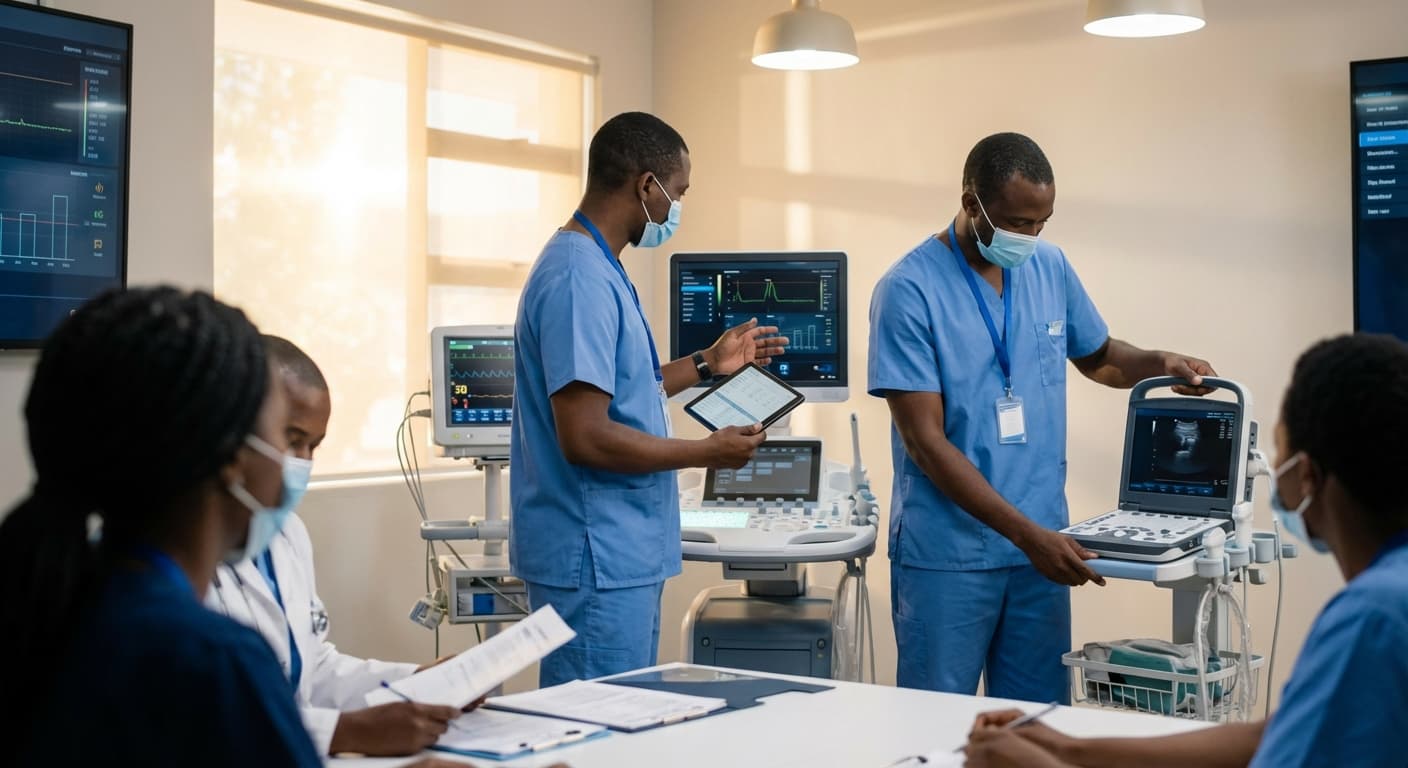
Clinical Needs Assessment for Medical Equipment in Mauritania
Engineering Excellence & Technical Support
Clinical Needs Assessment for Medical Equipment High-standard technical execution following OEM protocols and local regulatory frameworks.
Comprehensive Equipment Audit & Needs Prioritization
We conduct a thorough, on-the-ground audit of existing medical equipment across all healthcare facilities in Mauritania. This involves assessing functionality, age, maintenance history, and current utilization. Based on this, we develop a prioritized list of needs, focusing on critical gaps that directly impact patient care and public health outcomes.
Data-Driven Procurement Strategy & Lifecycle Costing
Leveraging the findings from our needs assessment, we develop a data-driven procurement strategy. This includes defining precise technical specifications for new equipment, considering total lifecycle costs (acquisition, maintenance, consumables, training), and ensuring compatibility with existing infrastructure and local technical capacity to maximize long-term value and sustainability.
Localized Training & Sustainable Maintenance Framework
Our needs assessment identifies specific training requirements for healthcare professionals and biomedical technicians. We design and implement tailored training programs, coupled with the establishment of a robust and sustainable maintenance framework. This includes identifying local partners for repair and service, ensuring continuous operational readiness of essential medical equipment.
What Is Clinical Needs Assessment For Medical Equipment In Mauritania?
A Clinical Needs Assessment for Medical Equipment in Mauritania is a systematic process designed to identify, evaluate, and prioritize the medical equipment requirements of healthcare facilities within the country. This service is crucial for ensuring that healthcare providers have access to appropriate, functional, and sustainable medical technologies to deliver effective patient care. It involves a comprehensive analysis of existing infrastructure, current healthcare service delivery models, epidemiological data, patient demographics, and financial constraints. The assessment aims to bridge the gap between the current state of medical equipment availability and the desired standard of care, aligning with national health policies and global best practices. It is a data-driven approach that informs strategic procurement, resource allocation, and capacity building initiatives.
| Who Needs It | Typical Use Cases |
|---|---|
| Ministry of Health (MOH) of Mauritania: For national health planning, resource allocation, and developing procurement strategies to address nationwide equipment deficits and ensure equitable access to healthcare. | Developing national medical equipment procurement plans. Formulating policies for medical technology adoption and management. Identifying critical equipment needs for primary healthcare centers, district hospitals, and tertiary care facilities across the country. Guiding donor-funded projects and international aid for medical equipment provision. |
| Regional Health Directorates and Provincial Health Authorities: To assess and address the specific equipment needs within their geographic areas, aligning with national priorities. | Planning equipment upgrades for regional hospitals. Assessing the readiness of local clinics for new service offerings. Managing the distribution and deployment of equipment within their jurisdiction. |
| Public and Private Healthcare Facilities (Hospitals, Clinics, Health Centers): To identify their specific equipment requirements for enhanced service delivery, improved patient outcomes, and compliance with standards. | Seeking funding for essential diagnostic equipment (e.g., X-ray, ultrasound). Planning for the acquisition of specialized surgical instruments or anesthesia machines. Assessing the need for patient monitoring systems in intensive care units. Evaluating requirements for laboratory equipment for disease diagnosis and monitoring. |
| Non-Governmental Organizations (NGOs) and International Development Partners: To inform their humanitarian aid, development projects, and funding initiatives related to healthcare infrastructure and medical equipment in Mauritania. | Designing projects for equipping new health facilities. Assessing the sustainability of donated medical equipment. Planning for the provision of essential equipment for specific health programs (e.g., maternal and child health, infectious disease control). |
| Medical Equipment Suppliers and Manufacturers: To understand the market demand, identify specific product needs, and tailor their offerings to the Mauritanian healthcare landscape. | Identifying market opportunities for specific types of medical equipment. Developing proposals for tenders and procurement bids. Assessing the potential for establishing local partnerships for maintenance and support. |
Key Components of a Clinical Needs Assessment for Medical Equipment in Mauritania
- Infrastructure Evaluation: Assessing the existing power supply, water availability, and structural integrity of healthcare facilities to determine the feasibility of installing and maintaining specific equipment.
- Service Delivery Analysis: Examining the types and volume of medical services currently offered and those that are planned or needed, to ascertain the required equipment for diagnosis, treatment, and rehabilitation.
- Epidemiological Profiling: Analyzing the prevalence of diseases and health conditions in the target population to prioritize equipment for common and high-impact health issues.
- Demographic Study: Understanding the age, gender, and socioeconomic characteristics of the population to tailor equipment needs to specific patient groups and their healthcare demands.
- Existing Equipment Inventory and Condition Assessment: Documenting all currently available medical equipment, its functionality, maintenance history, and obsolescence status.
- Human Resources and Training Needs: Evaluating the availability of skilled personnel to operate, maintain, and repair medical equipment, and identifying training gaps.
- Financial and Budgetary Analysis: Determining the financial resources available for acquisition, installation, operation, and maintenance of new equipment.
- Stakeholder Consultation: Engaging with healthcare professionals, hospital administrators, Ministry of Health officials, and potentially patient advocacy groups to gather diverse perspectives and ensure buy-in.
- Technology Scanning and Benchmarking: Researching appropriate and sustainable medical technologies, considering local context, affordability, and ease of maintenance.
- Prioritization and Recommendations: Developing a ranked list of equipment needs based on impact, feasibility, and cost-effectiveness, along with concrete recommendations for procurement, training, and maintenance strategies.
Who Needs Clinical Needs Assessment For Medical Equipment In Mauritania?
Clinical Needs Assessment (CNA) for medical equipment in Mauritania is a critical process designed to ensure that healthcare facilities have the right tools to deliver effective patient care. It involves a systematic evaluation of existing equipment, unmet needs, and future requirements, taking into account disease prevalence, patient demographics, and available resources. This assessment is not a one-size-fits-all solution but rather a tailored approach to optimize medical equipment acquisition, maintenance, and utilization across the country's healthcare landscape.
| Target Customer/Department | Description of Needs | Key Equipment Categories | Rationale for CNA |
|---|---|---|---|
| Primary Healthcare Centers (Health Posts) | Basic diagnostic and treatment capabilities, maternal and child health services, management of common infectious diseases. | Diagnostic kits (malaria, HIV, pregnancy), basic laboratory equipment, essential medicines and drug delivery devices, minor surgical instruments, basic resuscitation equipment. | Ensure essential services are available at the community level, reduce burden on referral centers, improve maternal and child survival rates. |
| District Hospitals | Intermediate level care, management of more complex cases, basic surgical procedures, limited inpatient care, specialized outpatient services. | Imaging equipment (X-ray, ultrasound), basic anesthesia machines, surgical lights, sterilization equipment, laboratory analyzers, patient monitoring systems, essential diagnostic tools for common non-communicable diseases. | Provide comprehensive care at the district level, reduce the need for patients to travel to national referral hospitals, improve treatment outcomes for a wider range of conditions. |
| Regional Hospitals | More advanced diagnostic and treatment capabilities, management of specialized conditions, surgical specialties, emergency care. | Advanced imaging (CT scanners, potentially MRI), specialized surgical equipment (orthopedic, general surgery), intensive care unit (ICU) equipment, advanced laboratory services, blood bank facilities, specialized diagnostic equipment. | Serve as referral centers for district hospitals, offer specialized treatments, handle complex emergencies, and improve the overall quality of care within a region. |
| National Referral Hospitals/University Hospitals | Highly specialized tertiary care, advanced diagnostics, complex surgeries, research, and training. | Cutting-edge diagnostic imaging (PET scanners, advanced MRI), sophisticated surgical suites, organ transplantation facilities, specialized oncology equipment, advanced critical care infrastructure, research-grade laboratory equipment. | Provide the highest level of specialized care, serve as centers of excellence, facilitate medical research, and train future healthcare professionals. |
| Maternal and Child Health (MCH) Departments | Antenatal care, delivery services, neonatal intensive care, pediatric care. | Incubators, phototherapy units, fetal Doppler, ultrasound for obstetrics, neonatal resuscitation equipment, pediatric vital signs monitors, specialized pediatric surgical instruments. | Reduce maternal and infant mortality, ensure safe deliveries, and provide specialized care for newborns and children. |
| Infectious Disease Control Departments | Diagnosis, treatment, and prevention of infectious diseases (malaria, tuberculosis, HIV/AIDS, emerging diseases). | Microscopes, PCR machines, rapid diagnostic tests, biosafety cabinets, specialized laboratory equipment for culturing and identification, telemedicine equipment for remote consultations. | Strengthen disease surveillance, improve diagnostic accuracy, and facilitate effective treatment and containment strategies. |
| Emergency and Trauma Departments | Stabilization and initial treatment of critically ill and injured patients. | Defibrillators, ventilators, advanced cardiac life support (ACLS) equipment, trauma kits, imaging for trauma assessment (portable X-ray, ultrasound), resuscitation bays. | Ensure immediate and effective care for life-threatening conditions and injuries, improving survival rates. |
| Surgical Departments | Diagnostic procedures and therapeutic interventions requiring surgical intervention. | Anesthesia machines, surgical lights, electrocautery units, endoscopes, laparoscopic equipment, specialized surgical instruments based on specialty (e.g., orthopedic drills, neurosurgical instruments). | Enable a wide range of surgical procedures, from minor interventions to complex operations, improving patient outcomes. |
| Diagnostic Imaging Departments | Radiological imaging for diagnosis and monitoring. | X-ray machines (fixed and mobile), ultrasound machines, CT scanners, MRI scanners, PACS (Picture Archiving and Communication System) for digital image management. | Provide essential diagnostic information for a vast array of medical conditions, guiding treatment decisions. |
| Laboratory Departments | Analysis of biological samples for diagnosis, monitoring, and research. | Microscopes, centrifuges, automated analyzers (hematology, biochemistry, immunology), PCR machines, serology equipment, blood gas analyzers. | Provide critical diagnostic data, monitor treatment efficacy, and support public health initiatives. |
Target Customers & Departments for Clinical Needs Assessment in Mauritania
- Public Hospitals and Clinics
- Private Hospitals and Clinics
- Non-Governmental Organizations (NGOs) running health programs
- Regional and National Health Directorates
- Medical Training Institutions
Clinical Needs Assessment For Medical Equipment Process In Mauritania
This document outlines the workflow for a Clinical Needs Assessment for Medical Equipment in Mauritania, from the initial inquiry to the final execution and implementation. This structured process ensures that identified needs are accurately assessed, prioritized, and met with appropriate and sustainable medical equipment solutions. The workflow is designed to be transparent, collaborative, and efficient, involving key stakeholders from healthcare facilities, the Ministry of Health, and potential equipment suppliers. A robust needs assessment is crucial for optimizing resource allocation, improving healthcare service delivery, and ensuring patient safety in Mauritania.
| Phase | Step | Description | Key Activities | Responsible Parties | Deliverables | Timeline (Indicative) |
|---|---|---|---|---|---|---|
| Phase 1: Inquiry & Scoping | 1.1 Initial Request/Inquiry | Receiving a formal request or identifying a need for a medical equipment needs assessment. | Formal request submission, initial clarification of scope and objectives, preliminary stakeholder identification. | Healthcare Facility Management, Ministry of Health (MoH) Departments, Program Managers | Inquiry Log, Initial Scope Document | 1-2 Weeks |
| 1.2 Scope Definition & Agreement | Clearly defining the geographical area, types of healthcare facilities, specific medical specialties, and the timeframe for the assessment. | Stakeholder consultations, defining assessment parameters, establishing project team, budget allocation, defining success metrics. | MoH Leadership, Project Steering Committee, Lead Assessor | Approved Scope of Work, Project Charter, Agreed Budget | 2-3 Weeks | |
| Phase 2: Data Collection & Needs Identification | 2.1 Facility Assessment & Site Visits | Conducting on-site visits to healthcare facilities to observe current practices and infrastructure. | Facility infrastructure review, equipment inventory and condition assessment, review of existing maintenance logs, interview with healthcare staff. | Assessment Team, Facility Staff (Doctors, Nurses, Technicians, Administrators) | Site Visit Reports, Equipment Inventory Sheets, Observation Notes | 4-8 Weeks |
| 2.2 Stakeholder Consultations | Engaging with healthcare professionals, administrators, and policymakers to understand their perceived needs and challenges. | Focus group discussions, individual interviews, surveys (if applicable), workshops. | Assessment Team, Healthcare Professionals (all levels), MoH Officials, Community Representatives | Interview Transcripts, Survey Results, Workshop Summaries | 3-5 Weeks | |
| 2.3 Service Delivery Analysis | Analyzing current service delivery models, patient flow, and identifying gaps where equipment can improve outcomes. | Review of patient data, disease prevalence data, service utilization statistics, workflow mapping. | Assessment Team, MoH Statistics Department, Health Information System Officers | Service Delivery Gap Analysis Report | 3-4 Weeks | |
| Phase 3: Analysis & Prioritization | 3.1 Data Synthesis & Needs Identification | Consolidating all collected data to identify specific equipment needs and their rationale. | Cross-referencing data from site visits, consultations, and service delivery analysis; identifying unmet needs and their impact. | Assessment Team | Raw Needs List with Rationale | 2-3 Weeks |
| 3.2 Prioritization Framework Development | Establishing criteria for prioritizing identified equipment needs based on impact, urgency, cost-effectiveness, and alignment with national health strategies. | Defining criteria (e.g., life-saving potential, public health impact, feasibility of maintenance, training requirements, cost), weighting criteria. | Assessment Team, Project Steering Committee, MoH Technical Working Groups | Prioritization Matrix, Agreed Prioritization Criteria | 2-3 Weeks | |
| 3.3 Prioritized Needs List | Ranking the identified equipment needs based on the established prioritization framework. | Applying the prioritization matrix to the raw needs list, generating a ranked list of essential equipment. | Assessment Team | Prioritized List of Medical Equipment Needs | 1-2 Weeks | |
| Phase 4: Equipment Specification & Procurement Planning | 4.1 Technical Specification Development | Defining detailed technical specifications for each prioritized piece of equipment. | Consulting with clinical experts, reviewing international standards, considering local context (power, climate, maintenance capacity), defining essential accessories and consumables. | Assessment Team, Clinical Specialists, Biomedical Engineers, MoH Procurement Unit | Detailed Technical Specifications (per equipment item) | 4-6 Weeks |
| 4.2 Cost Estimation & Budgeting | Estimating the total cost, including acquisition, installation, training, and ongoing maintenance. | Obtaining preliminary quotes, factoring in logistics, customs duties, taxes, warranty, and service agreements. | Assessment Team, MoH Procurement Unit, Finance Department | Detailed Cost Estimates, Overall Budget Proposal | 3-4 Weeks | |
| 4.3 Procurement Strategy Formulation | Developing a strategy for procuring the identified equipment, considering funding sources and procurement methods. | Identifying potential suppliers, defining procurement routes (e.g., open tender, framework agreements), outlining a procurement timeline. | MoH Procurement Unit, Project Steering Committee | Procurement Plan, Funding Strategy | 2-3 Weeks | |
| Phase 5: Execution & Implementation | 5.1 Procurement | Executing the procurement process according to the defined strategy and national regulations. | Issuing tenders, evaluating bids, awarding contracts, managing supplier agreements. | MoH Procurement Unit, Tender Committee, Legal Department | Procurement Contracts | 12-24 Weeks (variable based on complexity and volume) |
| 5.2 Logistics & Installation | Managing the transportation, customs clearance, delivery, and installation of the equipment. | Coordinating shipping, customs clearance, site preparation, equipment delivery, installation by qualified technicians. | MoH Logistics Department, Suppliers, Customs Authorities, Facility Staff | Installation Reports, Delivery Confirmations | 4-8 Weeks (after equipment arrival) | |
| 5.3 Training & Capacity Building | Providing comprehensive training to healthcare staff on the operation, maintenance, and troubleshooting of the new equipment. | Developing training materials, conducting hands-on training sessions, post-training assessments, refresher courses. | Suppliers, MoH Training Departments, Biomedical Engineering Units, Healthcare Staff | Training Attendance Records, Competency Assessments, Training Manuals | 2-4 Weeks (per training cohort) | |
| 5.4 Commissioning & Handover | Ensuring the equipment is fully functional and formally handed over to the healthcare facilities. | Testing and validation of equipment, final acceptance by facility management, documentation of handover. | Assessment Team, Biomedical Engineering Units, Facility Management, Suppliers | Commissioning Reports, Handover Certificates | 1-2 Weeks | |
| Phase 6: Monitoring & Evaluation | 6.1 Post-Implementation Monitoring | Regularly monitoring the utilization, performance, and impact of the newly acquired equipment. | Routine equipment checks, user feedback collection, data on service utilization and patient outcomes. | Facility Management, Biomedical Engineering Units, MoH Monitoring & Evaluation Department | Performance Reports, User Feedback Logs | Ongoing (monthly/quarterly) |
| 6.2 Maintenance & Support | Ensuring ongoing maintenance and support for the equipment to ensure longevity and optimal performance. | Establishing maintenance schedules, managing spare parts inventory, coordinating repair services, monitoring service contracts. | Biomedical Engineering Units, MoH Central Stores, Service Providers, Suppliers | Maintenance Records, Spare Parts Inventory, Service Reports | Ongoing | |
| 6.3 Impact Assessment & Reporting | Evaluating the overall impact of the equipment on healthcare service delivery and patient outcomes. | Analyzing service data, patient satisfaction surveys, cost-effectiveness analysis, lessons learned documentation. | MoH Monitoring & Evaluation Department, Project Steering Committee, Assessment Team | Impact Assessment Report, Final Project Report, Lessons Learned Document | 6-12 Months Post-Implementation |
Clinical Needs Assessment for Medical Equipment Process Workflow
- Phase 1: Inquiry & Scoping
- Phase 2: Data Collection & Needs Identification
- Phase 3: Analysis & Prioritization
- Phase 4: Equipment Specification & Procurement Planning
- Phase 5: Execution & Implementation
- Phase 6: Monitoring & Evaluation
Clinical Needs Assessment For Medical Equipment Cost In Mauritania
This document outlines a clinical needs assessment for medical equipment in Mauritania, focusing on pricing factors and ranges in Mauritanian Ouguiya (MRU). The objective is to provide a foundational understanding of the financial landscape for procuring essential medical devices, enabling better budgeting, resource allocation, and strategic purchasing decisions by healthcare providers and governmental bodies. The assessment considers various factors that influence the cost of medical equipment in Mauritania, including import duties, shipping and logistics, brand reputation, technological sophistication, availability of local technicians for maintenance, and the specific clinical application of the equipment. Demand and supply dynamics within the Mauritanian healthcare sector also play a significant role. The pricing ranges provided are indicative and can vary considerably based on the specific model, supplier, and negotiation. It is crucial to conduct detailed market research and obtain multiple quotes for any specific procurement.
Pricing Factors:
- Import Duties and Taxes: Mauritania levies import duties and taxes on medical equipment, which significantly contribute to the final cost. These rates can fluctuate based on government policy and the type of equipment.
- Shipping and Logistics: The cost of international shipping, customs clearance, transportation within Mauritania, and insurance adds to the overall price. Mauritania's geographical location and infrastructure can impact these expenses.
- Brand and Manufacturer: Reputable international brands often command higher prices due to perceived quality, reliability, and established service networks. However, exploring options from less globally recognized but still reliable manufacturers might offer cost savings.
- Technological Sophistication: Advanced features, higher precision, and integrated software solutions generally lead to increased costs. Basic, manual, or older generation equipment will be more affordable.
- Maintenance and Support: The availability and cost of local technical support, spare parts, and training are critical long-term considerations that can influence the upfront purchase decision. Equipment requiring specialized, hard-to-find maintenance will be more expensive to own.
- Supplier and Distribution Channel: Prices can vary between direct importers, local distributors, and authorized dealers. Bulk purchasing agreements or tenders can also lead to discounted pricing.
- Warranty and After-Sales Service: The length and comprehensiveness of the warranty and the quality of after-sales service are often factored into the initial price.
- Currency Exchange Rates: Fluctuations in the MRU against major currencies (like USD or EUR) can impact the cost of imported equipment.
Equipment Categories and Indicative Price Ranges (MRU):
The following table presents indicative price ranges for common medical equipment categories. These are rough estimates and should be verified with specific market research.
| Equipment Category | Indicative Price Range (MRU) | Notes |
|---|---|---|
| Basic Diagnostic Tools (e.g., Stethoscopes, Sphygmomanometers, Thermometers) | 5,000 - 25,000 | Price varies by brand (e.g., Omron, Riester) and quality. |
| Laboratory Equipment (e.g., Microscope, Centrifuge, Basic Hematology Analyzer) | 100,000 - 1,000,000 | Dependent on sophistication. Basic manual microscopes are at the lower end; semi-automated analyzers at the higher end. |
| Imaging Equipment (e.g., Portable X-ray, Ultrasound Machine - Basic) | 1,500,000 - 10,000,000 | Portable X-ray units are generally less expensive than fixed units. Basic ultrasound models are significantly cheaper than advanced diagnostic systems. |
| Anesthesia Machines (Basic) | 2,000,000 - 7,000,000 | Focus on essential functions. More advanced features increase cost. |
| Patient Monitors (Basic parameters) | 300,000 - 1,500,000 | Covers essential vital signs monitoring (ECG, SpO2, BP). High-end multi-parameter monitors are more expensive. |
| Surgical Instruments (Basic sets) | 50,000 - 500,000 | Depends on the specialty and number of instruments in a set. High-quality stainless steel instruments are more costly. |
| Hospital Beds (Manual, basic features) | 70,000 - 250,000 | Electric beds with more features will be at the higher end or above this range. |
| Sterilization Equipment (Autoclave - Medium size) | 500,000 - 2,000,000 | Size and automation level are key determinants. |
| Defibrillators (Manual/Semi-Automated) | 300,000 - 1,000,000 | AEDs are generally at the lower end of this range; manual defibrillators with more features are higher. |
Key Pricing Factors for Medical Equipment in Mauritania
- Import Duties and Taxes
- Shipping and Logistics Costs
- Brand Reputation and Manufacturer
- Technological Complexity and Features
- Availability and Cost of Maintenance & Support
- Supplier and Distribution Network
- Warranty and After-Sales Service
- Currency Exchange Rate Fluctuations
Affordable Clinical Needs Assessment For Medical Equipment Options
Conducting a thorough clinical needs assessment for medical equipment is crucial for healthcare providers to make informed purchasing decisions, ensuring they acquire the right technology that aligns with patient care requirements and operational efficiency. This process, when approached strategically, can unlock significant cost savings and optimize resource allocation. Understanding "value bundles" and implementing "cost-saving strategies" are key components of an affordable assessment, maximizing the return on investment for essential medical equipment.
| Concept | Explanation | Cost-Saving Strategies / Value Addition |
|---|---|---|
| Value Bundles | A package deal where a vendor offers multiple products or services (e.g., equipment, maintenance, training, consumables) at a discounted price compared to purchasing each component separately. This can simplify procurement and often leads to better overall pricing. | Negotiate bundled pricing for significant discounts, ensure bundled services meet all needs, inquire about bundled software updates or upgrades included in the package. |
| Strategic Sourcing | The process of identifying, evaluating, and selecting suppliers to achieve cost savings and optimize the procurement of goods and services. This goes beyond just price, considering quality, reliability, and service. | Consolidate purchasing across departments to gain volume discounts, establish long-term contracts with preferred vendors, develop strategic partnerships for better pricing and support. |
| Leasing vs. Purchasing | Leasing allows for the use of equipment for a specified period with regular payments, while purchasing involves outright ownership. The decision depends on financial resources, expected equipment lifespan, and technological obsolescence. | Leasing can reduce upfront capital expenditure, allows for easier upgrades to newer technology, and can include maintenance in the lease payments. |
| Total Cost of Ownership (TCO) | A comprehensive calculation that considers all costs associated with owning and operating an asset throughout its lifecycle, not just the initial purchase price. This includes installation, training, maintenance, repair, consumables, and eventual disposal. | Thorough TCO analysis helps identify hidden costs, compare different equipment models on a truly equal footing, and negotiate better service contracts based on expected usage and lifespan. |
| Standardization | Adopting a limited range of equipment models or manufacturers across an institution for similar clinical functions. This simplifies inventory management, training, and maintenance. | Reduces inventory complexity and costs, streamlines technician training and certification, allows for bulk purchasing discounts on common consumables and parts. |
| Equipment Lifecycle Management | A systematic approach to managing medical equipment from acquisition to disposal, ensuring optimal utilization, maintenance, and cost-effectiveness. | Proactive maintenance reduces costly breakdowns, strategic replacement planning avoids expensive emergency purchases, proper disposal can recover residual value or minimize environmental impact. |
Key Elements of an Affordable Clinical Needs Assessment
- Define Clear Clinical Objectives: Articulate specific patient care goals the equipment will address.
- Involve Stakeholders: Include clinicians, IT, facilities, and finance departments in the assessment.
- Prioritize Equipment Needs: Focus on items with the greatest clinical impact and return on investment.
- Research Current and Emerging Technologies: Understand available options and their lifecycle.
- Analyze Workflow Integration: Assess how new equipment will fit into existing clinical processes.
- Evaluate Total Cost of Ownership (TCO): Consider purchase price, installation, training, maintenance, and consumables.
- Explore Financing and Leasing Options: Investigate flexible payment structures.
- Negotiate with Multiple Vendors: Leverage competition to secure favorable pricing.
- Consider Refurbished or Certified Pre-owned Equipment: For certain applications, these can offer significant savings.
Verified Providers In Mauritania
In Mauritania, ensuring access to reliable and competent healthcare services is paramount. The credentialing of healthcare providers plays a crucial role in building patient trust and guaranteeing quality of care. Franance Health stands out as a leading entity in this regard, meticulously verifying healthcare professionals and facilities within Mauritania. Their rigorous credentialing process is designed to identify and endorse providers who meet the highest standards of medical expertise, ethical conduct, and patient safety. By choosing Franance Health-verified providers, individuals can be confident they are receiving care from qualified and reputable professionals, backed by a commitment to excellence.
| Credential Type | Franance Health Verification Standard | Benefit to Patient |
|---|---|---|
| Medical Licenses | Confirms active and unencumbered license with the relevant medical board. | Ensures provider is legally authorized to practice. |
| Educational Degrees & Diplomas | Validates authenticity and accreditation of the issuing institution. | Confirms foundational medical knowledge and training. |
| Specialty Certifications | Verifies successful completion of recognized board examinations and ongoing requirements. | Indicates advanced expertise in a specific medical area. |
| Work Experience & References | Includes background checks and verification of past performance. | Assesses practical skills and professional conduct. |
| Continuing Medical Education (CME) | Confirms participation in accredited CME activities to stay updated. | Ensures provider is current with the latest medical advancements. |
Why Franance Health Credentials Represent the Best Choice in Mauritania:
- Rigorous Vetting Process: Franance Health employs a comprehensive and multi-faceted approach to verify credentials, including educational qualifications, professional licenses, board certifications, and practice history.
- Commitment to Patient Safety: Their verification protocols prioritize patient well-being by thoroughly assessing a provider's adherence to safety standards and best practices.
- Ethical Practice Assurance: Franance Health investigates a provider's ethical standing, ensuring they operate with integrity and respect patient rights.
- Recognition of Expertise: The "Franance Health Verified" badge signifies that a provider has demonstrated a high level of skill and knowledge in their respective medical field.
- Enhanced Patient Confidence: For patients, choosing a Franance Health-verified provider offers peace of mind, knowing they are entrusting their health to competent and trustworthy professionals.
- Promoting Quality Healthcare: By setting a high benchmark for providers, Franance Health actively contributes to the overall improvement and elevation of healthcare quality in Mauritania.
Scope Of Work For Clinical Needs Assessment For Medical Equipment
This Scope of Work (SOW) outlines the requirements for conducting a comprehensive clinical needs assessment for medical equipment. The objective is to identify, prioritize, and specify the medical equipment required to support the provision of high-quality patient care across [Healthcare Facility Name] for the next [Number] years. This assessment will inform procurement decisions, capital planning, and ensure alignment with clinical service needs and technological advancements. The SOW details the technical deliverables and standard specifications expected from the assessment.
| Deliverable | Description | Format | Due Date |
|---|---|---|---|
| Project Initiation Report | Outline of assessment methodology, stakeholder engagement plan, and preliminary timeline. | Microsoft Word Document / PDF | Week 1 |
| Stakeholder Consultation Summary | Summaries of key discussions, identified needs, and concerns from stakeholder meetings. | Microsoft Word Document / PDF | Week 4 |
| Current Equipment Inventory Analysis | Detailed analysis of existing equipment, including age, maintenance history, utilization data, and identified obsolescence. | Microsoft Excel Spreadsheet / PDF | Week 6 |
| Clinical Needs Assessment Report | Comprehensive report detailing identified clinical needs, equipment gaps, prioritization rationale, and proposed solutions. | Microsoft Word Document / PDF | Week 10 |
| Technical Equipment Specifications | Detailed functional and technical specifications for each prioritized piece of medical equipment. This will include, but not be limited to, performance requirements, safety standards, interoperability needs, and maintenance considerations. | Microsoft Word Document / PDF (with detailed appendices for each equipment type) | Week 10 |
| Procurement Strategy & Recommendations | Recommendations on procurement approaches (e.g., competitive bidding, sole source), vendor evaluation criteria, and estimated budget implications. | Microsoft Word Document / PDF | Week 10 |
| Final Presentation | Presentation of the assessment findings, recommendations, and key specifications to the project stakeholders. | Microsoft PowerPoint Presentation / PDF | Week 11 |
Key Activities
- Review existing clinical service offerings and future strategic plans.
- Identify current and projected patient populations and their clinical needs.
- Assess the current medical equipment inventory, including utilization, age, and maintenance status.
- Conduct stakeholder consultations with clinical departments, biomedical engineering, IT, and administration.
- Identify gaps in current medical equipment provision based on clinical needs and best practices.
- Prioritize equipment needs based on clinical impact, patient safety, cost-effectiveness, and strategic alignment.
- Define functional and technical specifications for required medical equipment.
- Recommend procurement strategies and timelines.
- Develop a comprehensive report detailing findings, recommendations, and specifications.
Service Level Agreement For Clinical Needs Assessment For Medical Equipment
This Service Level Agreement (SLA) outlines the performance expectations for the Clinical Needs Assessment (CNA) services provided for medical equipment. It defines the response times for support requests and the uptime guarantees for the CNA platform and related services, ensuring timely and effective assessment of clinical requirements for optimal medical equipment procurement and deployment.
| Service Element | Response Time (Business Hours) | Resolution Target (Business Hours) | Uptime Guarantee (%) | Definition of Uptime |
|---|---|---|---|---|
| Critical Support Request (System Outage affecting multiple assessments) | 1 Business Hour | 4 Business Hours | 99.9% | The CNA platform and core functionalities are accessible and operational for users, allowing them to log in, navigate, and perform essential assessment tasks without significant disruption. |
| High Priority Support Request (Single assessment significantly impacted or data integrity concerns) | 2 Business Hours | 8 Business Hours | 99.5% | The CNA platform is available for use, with minor performance degradations or temporary unavailability of non-critical features not preventing the completion of primary assessment workflows. |
| Medium Priority Support Request (Feature request or non-critical bug affecting a single user or assessment) | 4 Business Hours | 2 Business Days | 99.0% | The CNA platform is available for use. Standard functionality is operational, with minor glitches or performance issues that do not halt assessment activities. |
| Low Priority Support Request (General inquiries, documentation clarification, or minor usability suggestions) | 8 Business Hours | 5 Business Days | N/A | Not applicable to this priority level, as the focus is on addressing information needs rather than system functionality. |
Scope of Service
- The CNA service encompasses the comprehensive evaluation of clinical departments' and specialties' current and future medical equipment needs.
- This includes, but is not limited to, identifying technological advancements, patient care demands, workflow optimization, and budget considerations.
- The service is designed to support the procurement, implementation, and ongoing management of medical equipment.
- The CNA platform, as well as any associated support portals and communication channels, are covered under this SLA.
Frequently Asked Questions

Ready when you are
Let's scope your Clinical Needs Assessment for Medical Equipment in Mauritania project in Mauritania.

Scaling healthcare logistics and technical systems across the entire continent.