
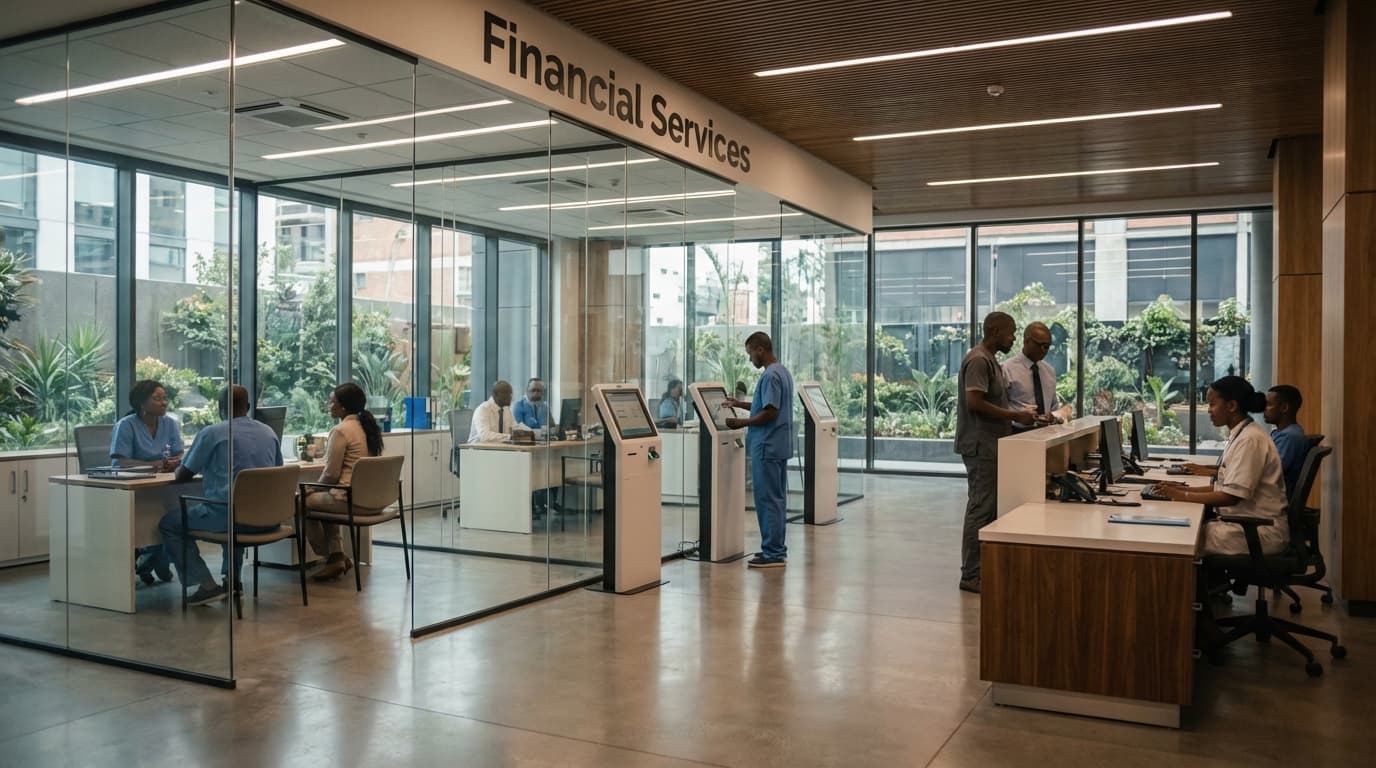
Medical Equipment Financing in Mauritania
Engineering Excellence & Technical Support
Leasing and financing solutions for medical equipment High-standard technical execution following OEM protocols and local regulatory frameworks.
Tailored Financing for Essential Medical Equipment
We offer specialized financing solutions designed to acquire critical medical equipment, from diagnostic imaging machines to surgical tools, enabling healthcare providers in Mauritania to enhance their service offerings and patient care.
Flexible Repayment Structures
Understand the unique cash flow dynamics of healthcare facilities, we provide adaptable repayment plans that align with your revenue cycles, ensuring financial sustainability while investing in vital medical technology.
Streamlined Application & Approval Process
Our efficient, technology-driven application and approval process minimizes administrative burdens, allowing healthcare professionals in Mauritania to secure funding for essential medical equipment quickly and focus on their primary mission of patient well-being.
What Is Medical Equipment Financing In Mauritania?
Medical equipment financing in Mauritania refers to a specialized financial service that provides capital for the acquisition, upgrade, or replacement of medical and healthcare-related equipment for healthcare providers within the country. This service enables institutions and practitioners to access essential and advanced technologies without the immediate burden of full upfront payment, thereby enhancing their capacity to deliver quality patient care. It typically involves loan or lease agreements structured to meet the specific financial and operational requirements of the healthcare sector. The financing can cover a broad spectrum of equipment, from basic diagnostic tools to sophisticated surgical systems, laboratory instruments, imaging devices, and even specialized furniture and facility enhancements. The core function is to bridge the gap between the cost of necessary medical technology and the available capital of healthcare entities.
| Typical Use Cases for Medical Equipment Financing | Description |
|---|---|
| Acquisition of New Technology | Procuring state-of-the-art diagnostic equipment (e.g., MRI, CT scanners, ultrasound machines), surgical robots, or advanced patient monitoring systems to improve diagnostic accuracy and treatment efficacy. |
| Replacement of Outdated Equipment | Funding the replacement of aging or inefficient medical devices that are no longer reliable, are prone to frequent breakdowns, or do not meet current technological standards. |
| Expansion of Services | Financing equipment necessary to introduce new medical specialties or expand existing service offerings, such as setting up a new cardiology unit or an advanced physiotherapy department. |
| Infrastructure Upgrades | Covering the cost of essential medical furniture, patient beds, sterilization equipment, and other facility-related items integral to the operational environment. |
| Capacity Building and Training | Acquiring specialized equipment that also serves as a tool for training medical professionals, thereby enhancing the skill set of the healthcare workforce. |
| Compliance with Regulations | Financing equipment upgrades or replacements to ensure adherence to evolving national and international healthcare regulations and standards. |
| Leasing Agreements | Utilizing lease financing for equipment, allowing for regular upgrades and avoiding the depreciation risk associated with ownership, often including maintenance and support services. |
Who Needs Medical Equipment Financing in Mauritania?
- Hospitals (public and private)
- Clinics and medical centers
- Diagnostic laboratories
- Specialty medical practices (e.g., cardiology, radiology, ophthalmology)
- Dental clinics
- Pharmaceutical companies (for R&D or production equipment)
- Non-governmental organizations (NGOs) providing healthcare services
- Government health agencies (for public health initiatives)
Who Needs Medical Equipment Financing In Mauritania?
Medical equipment financing in Mauritania is a critical service for a wide range of healthcare providers looking to acquire or upgrade essential diagnostic, treatment, and patient care machinery. This financing helps bridge the gap between the significant capital investment required for modern medical technology and the available operational budgets of healthcare institutions. It enables them to offer higher quality services, improve patient outcomes, and expand their capacity to meet growing healthcare demands within the country.
| Target Customer Type | Key Departments Benefiting | Examples of Equipment Needs |
|---|---|---|
| Public Hospitals | Emergency Room, Intensive Care Unit (ICU), Surgery, Radiology, Pediatrics, General Medicine | Ventilators, patient monitors, surgical lights, X-ray machines, ultrasound devices, anesthesia machines |
| Private Hospitals and Clinics | Cardiology, Neurology, Oncology, Gastroenterology, Orthopedics, Dermatology | ECG machines, MRI scanners, CT scanners, endoscopes, orthopedic surgical sets, laser treatment devices |
| Diagnostic Centers and Laboratories | Radiology, Pathology, Biochemistry, Hematology, Microbiology | X-ray units, CT scanners, MRI scanners, microscopes, centrifuges, automated analyzers, ultrasound machines |
| Specialty Healthcare Providers (e.g., Ophthalmology) | Ophthalmology Clinics, Eye Surgery Centers | Slit lamps, refractometers, optical coherence tomography (OCT) machines, phacoemulsification machines |
| NGOs and Charities | Mobile Clinics, Remote Health Posts, Primary Healthcare Centers | Basic diagnostic tools, portable ultrasound, small surgical kits, sterilization equipment |
| Research and Educational Institutions | Medical Simulation Labs, Research Labs, Teaching Hospitals | Advanced laboratory equipment, simulation mannequins, specialized research instruments, diagnostic imaging equipment for training |
Target Customers and Departments for Medical Equipment Financing in Mauritania
- {"title":"Public Hospitals","description":"Government-funded hospitals at national, regional, and local levels are primary beneficiaries. They often face budget constraints but are responsible for providing essential healthcare to the majority of the population. Financing allows them to acquire and maintain a diverse range of medical equipment."}
- {"title":"Private Hospitals and Clinics","description":"For-profit private healthcare facilities, from large hospitals to smaller specialized clinics, rely on financing to stay competitive, offer advanced treatments, and cater to a segment of the population seeking more sophisticated medical services."}
- {"title":"Diagnostic Centers and Laboratories","description":"Facilities specializing in medical imaging (X-ray, MRI, CT scans), pathology, and other diagnostic services require significant investment in specialized equipment. Financing is crucial for acquiring and upgrading these high-cost machines."}
- {"title":"Specialty Healthcare Providers","description":"This includes facilities focusing on specific medical areas like cardiology, oncology, ophthalmology, dentistry, physiotherapy, and more. Each specialty has unique equipment needs that financing can help meet."}
- {"title":"Non-Governmental Organizations (NGOs) and Charities","description":"Organizations involved in delivering healthcare services, particularly in underserved areas, can leverage financing to acquire necessary equipment for their projects and outreach programs."}
- {"title":"Research and Educational Institutions","description":"Medical schools, nursing colleges, and research facilities often require state-of-the-art equipment for training future healthcare professionals and conducting medical research. Financing supports these vital educational and scientific endeavors."}
Medical Equipment Financing Process In Mauritania
The medical equipment financing process in Mauritania, like in many developing economies, involves a structured workflow designed to assess the applicant's viability, the equipment's necessity, and the financial institution's risk. This process typically begins with an initial inquiry and culminates in the successful disbursement of funds or lease agreement for the medical equipment.
| Stage | Description | Key Activities | Responsible Parties | Potential Challenges |
|---|---|---|---|---|
| Inquiry & Initial Consultation | The potential borrower (e.g., hospital, clinic, medical professional) expresses interest in financing medical equipment. | Contacting a financial institution (bank, leasing company), discussing financing needs, understanding available products (loans, leases). | Applicant, Financial Institution's Business Development/Sales Officer. | Lack of awareness about financing options, unclear needs assessment. |
| Application Submission | The applicant formally applies for financing by providing necessary documentation. | Completing the application form, submitting financial statements, business plans, pro forma invoices for the equipment, identification documents. | Applicant, Financial Institution's Loan/Lease Officer. | Incomplete documentation, difficulty in obtaining specific financial records. |
| Credit Assessment & Due Diligence | The financial institution evaluates the applicant's creditworthiness and business standing. | Analyzing financial statements, credit history checks, background checks, market research, assessing cash flow projections. | Financial Institution's Credit Department, Risk Management Team. | Weak credit history, volatile cash flow, lack of track record. |
| Equipment Appraisal & Vendor Verification | Assessing the value, necessity, and suitability of the proposed medical equipment, and verifying the supplier. | Obtaining quotes and specifications for the equipment, independent appraisal (if required), verifying the reputation and reliability of the equipment vendor. | Financial Institution's Technical/Asset Valuation Unit (if available), Applicant, Equipment Vendor. | Overpriced equipment, unreliable vendors, outdated technology. |
| Financial Structuring & Approval | Determining the terms of the financing, including loan amount, interest rate, repayment schedule, or lease terms, and obtaining internal approval. | Structuring the loan/lease agreement, setting collateral requirements, presenting the proposal to the credit committee for approval. | Financial Institution's Loan/Lease Officer, Credit Committee. | Unfavorable market conditions, internal policy constraints, applicant's risk profile. |
| Contract Documentation & Legal Review | Formalizing the financing agreement through legally binding documents. | Drafting the loan agreement, lease contract, collateral security documents, obtaining legal review from both parties' counsel. | Financial Institution's Legal Department, Applicant's Legal Counsel. | Complex legal clauses, disputes over terms, delays in legal reviews. |
| Disbursement/Lease Execution | The funds are released to the vendor, or the lease agreement is officially activated. | Transferring loan proceeds to the vendor's account, signing the lease commencement certificate, initiating lease payments. | Financial Institution, Applicant, Equipment Vendor. | Discrepancies in equipment delivery, technical issues during setup. |
| Post-Disbursement Monitoring | Ongoing oversight of the loan performance and the proper utilization and maintenance of the equipment. | Regular review of repayment schedules, periodic site visits to verify equipment status, ensuring compliance with loan/lease covenants. | Financial Institution's Portfolio Management/Collections Department, Applicant. | Late payments, equipment malfunction, non-compliance with contractual obligations. |
Key Stages of the Medical Equipment Financing Process in Mauritania
- Inquiry & Initial Consultation
- Application Submission
- Credit Assessment & Due Diligence
- Equipment Appraisal & Vendor Verification
- Financial Structuring & Approval
- Contract Documentation & Legal Review
- Disbursement/Lease Execution
- Post-Disbursement Monitoring
Medical Equipment Financing Cost In Mauritania
Securing financing for medical equipment in Mauritania involves several cost considerations, influenced by a range of factors that determine the final pricing. These costs are typically denominated in the local currency, the Mauritanian Ouguiya (MRU). The primary drivers of financing costs include the type and value of the medical equipment, the lender's risk assessment, the loan tenor, and prevailing market interest rates. For high-value, specialized equipment like MRI machines or advanced surgical robots, financing costs will naturally be higher than for less sophisticated items like examination tables or basic diagnostic tools. Lenders assess the creditworthiness of the borrower (hospital, clinic, or individual practitioner), the collateral offered, and the projected revenue generation from the equipment. Longer loan terms generally translate to higher overall interest paid, even if the annual interest rate appears competitive. Furthermore, economic stability, inflation, and the central bank's monetary policy significantly impact the benchmark interest rates set by commercial banks in Mauritania, which in turn influences the cost of medical equipment financing.
| Financing Cost Component | Typical Range (MRU) | Notes |
|---|---|---|
| Annual Interest Rate | 12% - 25% p.a. | Varies significantly based on lender, borrower risk, and market conditions. |
| Loan Origination/Processing Fees | 1% - 5% of loan amount | Often a one-time fee charged at the beginning of the loan. |
| Administrative Fees | 0.5% - 2% annually | May be charged annually or as a percentage of the outstanding balance. |
| Valuation/Appraisal Fees (for collateral) | 20,000 - 100,000 MRU | Depends on the complexity and value of the collateral. |
| Legal Fees | 10,000 - 50,000 MRU | For loan documentation and agreement. |
| Insurance Premiums (for equipment) | Varies based on equipment value and coverage | Lenders often require comprehensive insurance. |
Key Pricing Factors for Medical Equipment Financing in Mauritania
- Type and Value of Medical Equipment: More expensive and specialized equipment requires larger financing amounts and may carry higher associated risks for lenders.
- Borrower's Creditworthiness: A strong financial history and good credit score for the applicant will generally lead to more favorable financing terms and lower interest rates.
- Collateral and Security: The presence of sufficient collateral can reduce the lender's risk, potentially leading to lower financing costs.
- Loan Tenor (Duration): Longer repayment periods typically result in higher total interest paid, though monthly installments may be lower.
- Prevailing Market Interest Rates: Mauritania's economic conditions, inflation, and central bank policies directly affect benchmark interest rates offered by financial institutions.
- Lender's Risk Premium: Each financial institution will apply a risk premium based on their assessment of the loan and the borrower.
- Administrative and Processing Fees: These one-time or recurring fees are charged by the lender for loan origination, processing, and administration.
Affordable Medical Equipment Financing Options
Securing affordable medical equipment financing is crucial for healthcare providers seeking to upgrade or expand their facilities without straining their budgets. This involves understanding various financing options and implementing smart cost-saving strategies. Value bundles, often offered by equipment manufacturers or leasing companies, combine multiple products or services into a single package at a reduced overall cost compared to purchasing them individually. This can include equipment, maintenance agreements, software licenses, and training. Cost-saving strategies extend beyond the financing itself and encompass smart purchasing decisions, negotiating better terms, and exploring pre-owned or refurbished equipment.
| Strategy/Concept | Description | Benefits | Considerations |
|---|---|---|---|
| Value Bundles | Packages combining equipment, maintenance, software, training, or consumables offered at a discounted price. | Reduced overall cost, simplified procurement, integrated support, potential for better service levels. | Ensure the bundled items truly meet your needs; compare the bundle price to individual component costs. |
| Negotiate Bulk Discounts | Purchasing multiple pieces of equipment or services from a single vendor at once. | Lower per-unit cost, stronger vendor relationship, streamlined ordering process. | Requires careful planning of needs; ensure you have space and infrastructure for all items. |
| Explore Refurbished/Pre-Owned Equipment | Purchasing previously used equipment that has been inspected, repaired, and certified. | Significantly lower upfront cost, faster availability, often comes with a warranty. | Thoroughly vet the seller and the equipment's condition; understand warranty limitations. |
| Lease vs. Buy Analysis | Evaluating the long-term financial implications of leasing versus purchasing equipment. | Leasing offers lower initial outlay and easier upgrades; buying offers ownership and potential asset appreciation. | Consider equipment lifespan, technological obsolescence, and end-of-lease buyout options. |
| Extended Warranties/Maintenance Contracts | Negotiating comprehensive service agreements beyond the standard warranty. | Predictable repair costs, reduced downtime, access to expert technicians. | Compare coverage details carefully; sometimes a higher upfront cost can save money on unexpected repairs. |
| Consignment or Rental Options | For specialized or infrequently used equipment, consider renting or using consignment models. | Avoids large capital investment for temporary needs, pay only for what you use. | Availability can be an issue; rental costs can add up over extended periods. |
Key Affordable Medical Equipment Financing Options
- Direct Purchase with Loans: Obtaining a traditional business loan from a bank or credit union to purchase equipment outright. Offers ownership and potential tax benefits.
- Equipment Leasing: Renting equipment for a fixed period. Lower upfront costs, predictable monthly payments, and easier to upgrade to newer technology.
- Sale-Leaseback: Selling existing equipment to a third party and then leasing it back. Frees up capital for other investments.
- Operating Leases: Shorter-term leases focused on usage rather than ownership. Often includes maintenance and support, ideal for rapidly evolving technology.
- Finance Leases (Capital Leases): Leases that function like loans, with the option to purchase the equipment at the end of the term for a nominal fee. Treated as an asset on the balance sheet.
- Vendor Financing: Financing directly offered by the medical equipment manufacturer or supplier. Can sometimes offer competitive rates or bundled deals.
- Grants and Subsidies: Exploring government or private grants specifically for healthcare providers or for the acquisition of certain types of equipment.
- Crowdfunding and Donations: For non-profit organizations or those with a strong community connection, these can be alternative funding sources.
Verified Providers In Mauritania
In Mauritania's growing healthcare landscape, identifying trustworthy and credentialed medical providers is paramount. Franance Health stands out as a beacon of quality and reliability, offering a network of verified professionals who meet stringent international standards. This commitment to excellence ensures that patients receive the highest quality of care, backed by robust credentials and a dedication to patient well-being. Choosing Franance Health means opting for a healthcare experience that prioritizes expertise, safety, and a patient-centered approach, making them the best choice for your medical needs in Mauritania.
| Credential Type | Franance Health Standard | Patient Benefit |
|---|---|---|
| Medical Licenses | Verified and active in Mauritania and/or home country. | Ensures legal and ethical practice, patient safety. |
| Board Certifications | Required for all specialists, confirming advanced expertise. | Access to highly skilled and knowledgeable medical professionals. |
| Experience | Demonstrated years of practice and relevant case experience. | Reliable diagnosis and treatment based on proven clinical history. |
| Continuing Education | Mandatory participation in ongoing medical training. | Up-to-date with the latest medical technologies and treatment methods. |
| Facility Standards | Compliance with international healthcare quality and safety benchmarks. | Access to modern, well-equipped, and safe medical environments. |
Key Credentials and Why Franance Health Excels
- International Accreditation: Franance Health partners with facilities and providers who adhere to or are accredited by internationally recognized healthcare organizations. This signifies a commitment to global best practices in patient safety, quality management, and clinical excellence.
- Board Certification & Specialization: All medical professionals affiliated with Franance Health are board-certified in their respective specialties. This rigorous process validates their advanced training, expertise, and proficiency in their chosen fields, ensuring you are treated by highly qualified specialists.
- Continuous Professional Development (CPD): Franance Health mandates ongoing training and education for its providers. This ensures they remain at the forefront of medical advancements, adopt the latest treatment protocols, and continually enhance their skills.
- Stringent Verification Process: Franance Health employs a comprehensive and meticulous vetting process for all its associated practitioners and facilities. This includes thorough background checks, verification of medical licenses, examination of credentials, and assessment of clinical performance.
- Patient-Centric Approach: Beyond technical qualifications, Franance Health emphasizes providers who demonstrate empathy, excellent communication skills, and a genuine commitment to patient satisfaction and outcomes. This holistic approach ensures a positive and supportive healthcare experience.
- Adherence to Ethical Standards: All Franance Health partners uphold the highest ethical principles in medical practice, ensuring transparency, integrity, and respect for patient confidentiality.
Scope Of Work For Medical Equipment Financing
This Scope of Work (SOW) outlines the requirements for a Medical Equipment Financing solution. It details the technical deliverables, standard specifications, and key considerations for a successful implementation. The objective is to secure financing for a comprehensive range of medical equipment, ensuring operational readiness and optimal patient care.
| Technical Deliverable | Description | Standard Specification / Requirement | Acceptance Criteria |
|---|---|---|---|
| Financing Proposal | Detailed proposal outlining financing terms, interest rates, repayment schedules, and collateral requirements. | Must adhere to relevant regulatory guidelines (e.g., Dodd-Frank, HIPAA). Proposal must be submitted within 15 business days of RFP issuance. | Proposal is clear, comprehensive, and competitively priced. All required documentation is provided. |
| Equipment Specification Sheets | Detailed technical specifications for each piece of medical equipment to be financed. | Manufacturer's official specification sheets, including model numbers, serial numbers, power requirements, connectivity options (e.g., HL7, DICOM), and dimensions. Must align with identified clinical needs. | All specified equipment meets or exceeds the stated technical requirements and is suitable for intended clinical use. |
| Installation and Commissioning Plan | A comprehensive plan for the installation, testing, and commissioning of all financed equipment. | Includes timelines, vendor responsibilities, site preparation requirements, testing protocols, and qualified personnel involved. Must be developed in consultation with hospital IT and clinical departments. | Plan is detailed, realistic, and approved by all relevant stakeholders. Installation and commissioning completed on schedule and to satisfaction. |
| User Training Materials | Documentation and training sessions for hospital staff on the operation and maintenance of the financed equipment. | Includes user manuals, quick reference guides, troubleshooting tips, and hands-on training sessions. Training should be tailored to different user groups (e.g., clinicians, technicians). | Training materials are comprehensive and easy to understand. Staff demonstrate proficiency in equipment operation. |
| Maintenance and Service Agreements | Agreements for ongoing maintenance, repair, and technical support for the financed equipment. | Includes response times for service calls, preventive maintenance schedules, availability of spare parts, and warranty details. Should be for a minimum of 3 years post-commissioning. | Agreements are clearly defined and include all necessary service level agreements (SLAs). Vendor demonstrates capacity to provide timely and effective support. |
| Asset Tagging and Inventory Management | System for tracking and managing the financed medical equipment throughout its lifecycle. | Includes unique asset tagging (barcode or RFID), a centralized inventory database, and reporting capabilities. Integration with existing hospital asset management systems is desirable. | All financed equipment is accurately tagged and inventoried. The inventory system is functional and provides accurate data. |
| Compliance and Regulatory Documentation | All necessary documentation to ensure compliance with healthcare regulations and equipment certifications. | Includes FDA approvals, CE markings, safety certifications, and any other relevant regulatory documentation. Vendor must provide proof of compliance. | All equipment is certified and compliant with all applicable regulations. Documentation is complete and readily available. |
| Reporting and Performance Metrics | Regular reports on the status of the financing agreement, equipment performance, and maintenance activities. | Includes monthly or quarterly financial status reports, equipment uptime reports, and service history. Reports should be delivered in a standardized format. | Reports are timely, accurate, and provide valuable insights into equipment performance and financing status. |
Key Project Phases
- Phase 1: Needs Assessment and Equipment Identification
- Phase 2: Financing Partner Selection
- Phase 3: Equipment Procurement and Delivery
- Phase 4: Installation, Training, and Commissioning
- Phase 5: Ongoing Maintenance and Support
Service Level Agreement For Medical Equipment Financing
This Service Level Agreement (SLA) outlines the response times and uptime guarantees for the medical equipment financing services provided by [Your Company Name] to [Client Name]. This agreement is intended to ensure reliable access to financed medical equipment and prompt support for any issues that may arise.
| Service Component | Metric | Target | Definition | Escalation Procedure |
|---|---|---|---|---|
| Technical Support - Initial Response | Response Time | 4 Business Hours | Time from client submitting a support ticket (via phone or email) to acknowledgement and initial assessment by [Your Company Name]'s support team. | If initial response is not met, ticket is automatically escalated to Senior Support Technician. |
| Technical Support - Resolution Target | Resolution Time | 24 Business Hours (for non-critical issues) | Time from initial response to resolution or provision of a workaround for non-critical issues. Critical issues will be prioritized. | For critical issues, resolution target is 8 business hours. If not met, escalation to IT Management. |
| Equipment Uptime | Availability | 99.5% Uptime (monthly) | The percentage of time the financed medical equipment is operational and accessible for its intended use, excluding scheduled maintenance. | If monthly uptime falls below 98%, a service credit may be applied as per Section X of the Master Service Agreement. |
| Scheduled Maintenance | Notification Period | 48 Business Hours | Advance notice provided to the client regarding planned maintenance that may cause temporary service interruption. | Client can request rescheduling for critical operational periods with prior written consent. |
Key Service Metrics
- Response Times for Support Requests
- Uptime Guarantees for Critical Equipment Functionality
- Maintenance and Scheduled Downtime Procedures
Frequently Asked Questions

Ready when you are
Let's scope your Medical Equipment Financing in Mauritania project in Mauritania.

Scaling healthcare logistics and technical systems across the entire continent.