
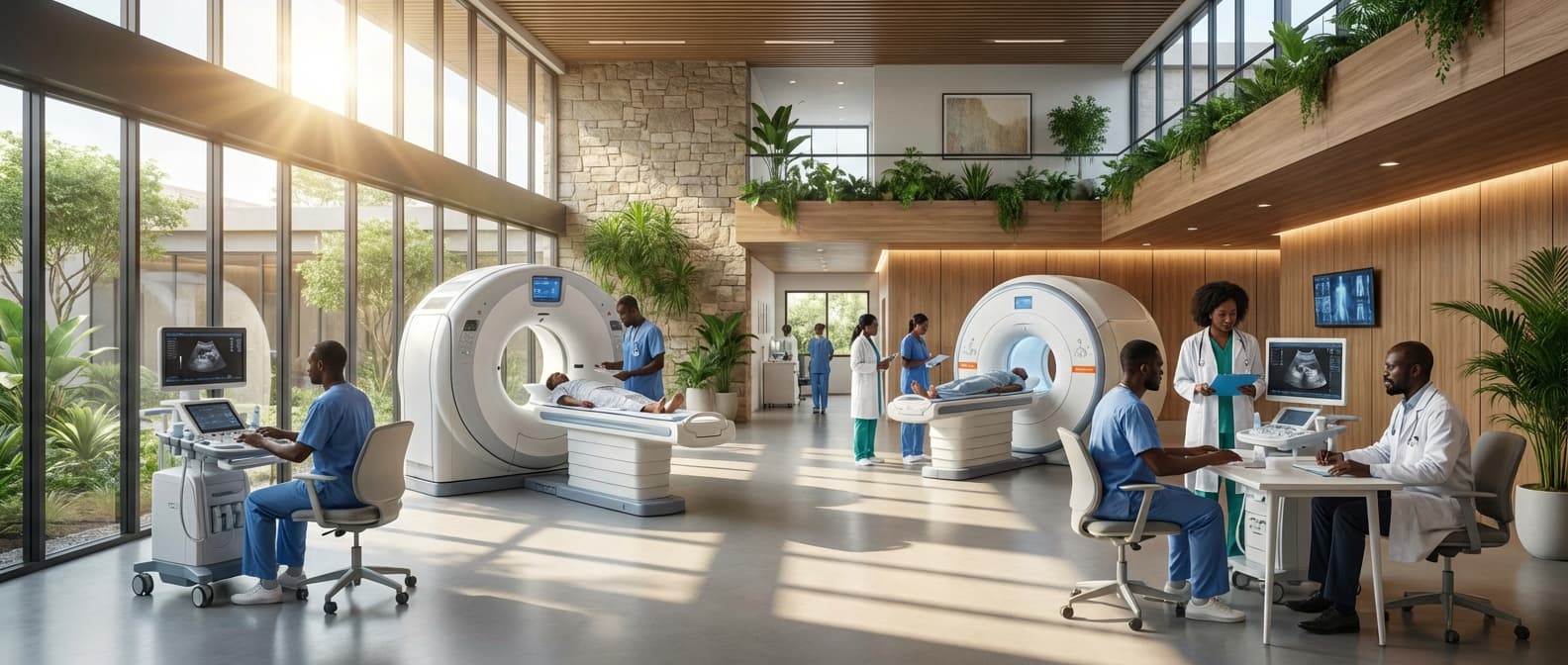
Diagnostic Imaging in Mauritania
Engineering Excellence & Technical Support
High-resolution imaging systems including CT scanners, MRI, X-ray, and ultrasound technology for accurate clinical diagnosis. High-standard technical execution following OEM protocols and local regulatory frameworks.
Advanced Imaging Equipment Deployment
Successful installation and commissioning of state-of-the-art CT and MRI scanners across key regional hospitals, significantly expanding diagnostic capabilities and reducing the need for overseas referrals.
Specialized Radiologist Training Programs
Implementation of a comprehensive training initiative for local radiologists, focusing on advanced interpretation techniques for complex cases and fostering expertise in emerging imaging modalities.
Tele-radiology Network Establishment
Development and deployment of a robust tele-radiology network connecting remote clinics to urban centers, enabling real-time remote consultations and access to expert diagnostic opinions for underserved populations.
What Is Diagnostic Imaging In Mauritania?
Diagnostic imaging in Mauritania refers to the use of various medical imaging technologies to visualize the internal structures of the human body for diagnostic and therapeutic purposes. These modalities produce images that allow healthcare professionals to detect, diagnose, and monitor a wide range of diseases and conditions. The service is crucial for accurate patient assessment, treatment planning, and follow-up care, contributing significantly to the quality of healthcare delivery in the country.
| Who Needs Diagnostic Imaging? | Typical Use Cases | ||||||||
|---|---|---|---|---|---|---|---|---|---|
| Patients presenting with symptoms indicative of internal disease or injury (e.g., pain, swelling, fever, neurological deficits). | Screening for certain conditions (e.g., mammography for breast cancer, chest X-ray for tuberculosis). | Patients undergoing pre-operative assessment or post-operative monitoring. | Individuals with a history of cancer or other chronic diseases requiring regular follow-up. | Pregnant women for prenatal care and monitoring fetal development. | Trauma patients to assess for fractures, internal bleeding, or organ damage. | Patients experiencing musculoskeletal issues (e.g., fractures, dislocations, arthritis). | Individuals with suspected gastrointestinal or genitourinary tract abnormalities. | Patients with suspected neurological conditions (e.g., stroke, tumors, degenerative diseases). | Cardiac patients for assessment of heart structure and function. |
| Diagnosis of fractures and dislocations. | Detection of tumors, cysts, and other masses. | Evaluation of organ function and abnormalities (e.g., liver, kidney, spleen). | Assessment of cardiovascular health and blood flow. | Monitoring of pregnancy and fetal well-being. | Diagnosis of infectious diseases (e.g., pneumonia, tuberculosis). | Identification of internal bleeding and organ damage in trauma cases. | Investigation of gastrointestinal and urinary tract issues. | Evaluation of neurological disorders. | Guidance for interventional procedures (e.g., biopsies, drain placements). |
Components of Diagnostic Imaging Services
- Radiography (X-ray): Utilizes electromagnetic radiation to create images of bones, organs, and tissues.
- Computed Tomography (CT): Employs X-rays taken from multiple angles to generate cross-sectional images.
- Magnetic Resonance Imaging (MRI): Uses strong magnetic fields and radio waves to produce detailed images of soft tissues, organs, and bones.
- Ultrasound (Sonography): Employs high-frequency sound waves to create real-time images of organs, blood flow, and fetuses.
- Fluoroscopy: A real-time X-ray imaging technique used to visualize internal body structures or observe the movement of organs.
- Mammography: Specialized X-ray imaging of the breast for screening and diagnosing breast cancer.
Who Needs Diagnostic Imaging In Mauritania?
Diagnostic imaging plays a crucial role in modern healthcare, enabling the visualization of internal body structures to diagnose and monitor a wide range of conditions. In Mauritania, as in many developing nations, access to advanced imaging technologies can be limited, making it essential to strategically deploy these resources to address the most pressing health needs. This document outlines the key target customers and departments that would benefit most from enhanced diagnostic imaging services in Mauritania.
| Department/Specialty | Primary Diagnostic Needs | Key Imaging Modalities |
|---|---|---|
| Radiology | General diagnostics, fractures, lung conditions, abdominal issues, basic screening | X-ray, Ultrasound |
| Cardiology | Heart disease, vascular abnormalities, congenital heart defects | Echocardiography (Ultrasound), Cardiac CT, Cardiac MRI |
| Oncology | Tumor detection, staging, treatment response monitoring | CT, MRI, PET-CT (for advanced staging), Ultrasound |
| Neurology | Stroke, brain tumors, epilepsy, neurodegenerative diseases | CT, MRI, Ultrasound (for carotid arteries) |
| Pediatrics | Congenital anomalies, infections, injuries in children | X-ray, Ultrasound, CT (with pediatric protocols) |
| Obstetrics & Gynecology | Pregnancy monitoring, fetal abnormalities, gynecological pathologies | Ultrasound (Obstetric and Gynecological) |
| Emergency Medicine | Trauma, acute abdominal pain, acute neurological events | X-ray, CT, Ultrasound |
| Orthopedics | Fractures, joint diseases, spinal conditions | X-ray, CT, MRI (for soft tissues and spine) |
| Gastroenterology | Digestive tract disorders, liver and pancreatic conditions | Ultrasound, CT, MRI |
| Pulmonology | Lung infections, chronic lung diseases, pleural effusions | X-ray, CT |
| Urology | Kidney stones, urinary tract infections, prostate cancer | Ultrasound, CT |
Target Customers for Diagnostic Imaging in Mauritania
- {"title":"Hospitals and Clinics","description":"Primary and secondary healthcare facilities are the cornerstone of the Mauritanian healthcare system. They serve the general population and require imaging capabilities for a broad spectrum of diagnostic needs."}
- {"title":"Specialty Centers","description":"Facilities focusing on specific areas like cardiology, oncology, neurology, or pediatrics will have more specialized imaging requirements."}
- {"title":"Rural Health Posts","description":"While direct access may be limited, these posts can serve as referral points for patients requiring advanced imaging, highlighting the need for a robust referral network."}
- {"title":"Public Health Programs","description":"Programs addressing infectious diseases (e.g., tuberculosis), maternal and child health, and chronic disease management often rely on imaging for screening and diagnosis."}
- {"title":"Private Healthcare Providers","description":"As the private sector grows, these providers will increasingly seek diagnostic imaging services to cater to patients with higher expectations and potentially greater financial means."}
- {"title":"Medical Education and Research Institutions","description":"Institutions involved in training future healthcare professionals and conducting medical research require access to imaging for educational purposes and advanced studies."}
Diagnostic Imaging Process In Mauritania
The diagnostic imaging process in Mauritania, while facing resource limitations, generally follows a structured workflow from initial patient inquiry to the final execution of imaging procedures. This workflow is often adapted to the available infrastructure and expertise in different healthcare facilities across the country.
| Stage | Description | Key Actors | Challenges in Mauritania | Potential Improvements |
|---|---|---|---|---|
| Patient Inquiry and Referral | A patient experiences symptoms and seeks medical attention. The initial contact is typically with a healthcare professional at a primary care clinic or a community health center. | Patient, Community Health Worker, General Practitioner | Limited awareness of imaging services, long travel distances to health facilities, affordability concerns. | Public health awareness campaigns, mobile clinics, community outreach programs. |
| Primary Healthcare Consultation | The primary care physician assesses the patient, takes a medical history, and performs a physical examination. If imaging is deemed necessary for diagnosis, a referral is initiated. | General Practitioner, Nurse | Shortage of trained healthcare professionals at the primary level, limited diagnostic tools at remote clinics. | Training and capacity building for primary care staff, provision of basic diagnostic equipment at primary centers. |
| Specialist Referral | For more complex cases or when specific imaging modalities are required, the patient is referred to a hospital or a specialized diagnostic center. This referral usually includes a written request outlining the clinical suspicion and the type of imaging needed. | General Practitioner, Specialist Physician (if available), Radiographer (in larger facilities) | Limited availability of specialist physicians and radiologists, reliance on manual referral forms. | Digital referral systems, telemedicine consultations, improved communication channels between primary and secondary care. |
| Scheduling and Appointment | The patient or their representative contacts the imaging department to schedule an appointment. This process can be manual and may involve waiting periods, especially in public facilities. | Patient, Administrative Staff, Radiographer | Long waiting times, inefficient scheduling systems, limited operating hours of imaging departments. | Implementation of centralized appointment systems, optimization of daily schedules, extended operating hours where feasible. |
| Pre-Procedure Preparation | Depending on the imaging modality, specific preparation might be required. This can include fasting, dietary restrictions, or the administration of contrast agents. Instructions are usually provided by the imaging department staff. | Patient, Nurse, Radiographer | Inconsistent adherence to preparation instructions due to lack of clear communication or understanding, limited availability of contrast agents. | Standardized pre-procedure protocols, visual aids for instructions, readily available contrast media. |
| Imaging Procedure Execution | The patient undergoes the prescribed imaging procedure (e.g., X-ray, Ultrasound, CT scan, MRI) by a trained radiographer or technician. The quality of images is crucial for accurate diagnosis. | Radiographer, Radiologic Technologist, Radiologist (for complex procedures) | Aging or insufficient imaging equipment, power supply instability, lack of specialized imaging modalities (e.g., MRI), shortage of trained radiographers. | Investment in modern, reliable equipment, maintenance and upgrade programs, training initiatives for radiographers, exploring partnerships for shared access to advanced imaging. |
| Image Interpretation and Reporting | A radiologist interprets the obtained images, identifies any abnormalities, and generates a diagnostic report. This report is critical for the referring physician's decision-making. | Radiologist | Severe shortage of radiologists, heavy workload on existing radiologists, delays in report generation, reliance on manual reporting. | Training and recruitment of radiologists, teleradiology services, development of structured reporting templates. |
| Report Delivery and Follow-up | The diagnostic report is communicated back to the referring physician. The patient then follows up with their physician to discuss the results and subsequent treatment plan. | Radiologist, Referring Physician, Patient | Delays in report delivery, communication gaps between departments, lack of a systematic follow-up system. | Electronic reporting systems, direct communication channels between radiology and clinical departments, patient education on follow-up procedures. |
Diagnostic Imaging Workflow in Mauritania
- Patient Inquiry and Referral:
- Primary Healthcare Consultation:
- Specialist Referral:
- Scheduling and Appointment:
- Pre-Procedure Preparation:
- Imaging Procedure Execution:
- Image Interpretation and Reporting:
- Report Delivery and Follow-up:
Diagnostic Imaging Cost In Mauritania
Diagnostic imaging plays a crucial role in modern healthcare, aiding in the diagnosis, monitoring, and treatment of a wide range of medical conditions. In Mauritania, like many developing nations, the cost of these essential services can be a significant barrier to access for a substantial portion of the population. Several factors influence the pricing of diagnostic imaging procedures in the country, including the type of imaging modality, the complexity of the examination, the healthcare facility's location and resources, and the availability of specialized equipment and trained personnel. Public healthcare facilities, often subsidized by the government, typically offer lower prices compared to private clinics and hospitals. However, even with these disparities, out-of-pocket expenses can remain substantial for many Mauritanian citizens. The range of costs for common diagnostic imaging services in Mauritania, expressed in Mauritanian Ouguiya (MRU), can vary considerably.
| Imaging Service | Estimated Cost Range (MRU) |
|---|---|
| X-ray (e.g., Chest X-ray) | 500 - 1,500 |
| Ultrasound (e.g., Abdominal Ultrasound) | 1,000 - 3,000 |
| CT Scan (e.g., Head CT) | 5,000 - 15,000 |
| MRI Scan (e.g., Brain MRI) | 15,000 - 40,000+ |
| Mammography | 3,000 - 7,000 |
Factors Influencing Diagnostic Imaging Costs in Mauritania
- Imaging Modality: Different technologies have varying operational and maintenance costs (e.g., X-ray vs. MRI).
- Complexity of the Examination: Simple screenings are generally less expensive than detailed, multi-phase scans.
- Healthcare Facility Type: Public hospitals tend to be more affordable than private institutions.
- Location: Urban centers might have higher operational costs, potentially reflected in prices.
- Equipment Availability & Modernity: Access to advanced, well-maintained equipment impacts cost.
- Personnel Expertise: The cost of highly trained radiologists and technicians is factored in.
- Insurance Coverage & Subsidies: The presence and extent of health insurance or government subsidies affect out-of-pocket expenses.
Affordable Diagnostic Imaging Options
Diagnostic imaging is crucial for accurate medical diagnoses, but it can also be a significant expense. Fortunately, there are ways to access affordable diagnostic imaging without compromising quality. Understanding value bundles and implementing cost-saving strategies can significantly reduce out-of-pocket expenses for patients.
| Cost-Saving Strategy | Description | How it Works |
|---|---|---|
| Compare Prices | Different imaging centers and hospitals charge varying prices for the same procedure. | Shop around and get quotes from multiple providers before scheduling your scan. Websites and apps can help facilitate price comparison. |
| Utilize Out-of-Network Benefits (if applicable) | If your insurance has a wider network for certain services, explore those options. | Understand your deductible and coinsurance for both in-network and out-of-network providers before making a decision. |
| Ask About Self-Pay Discounts | If you don't have insurance or your insurance has high deductibles, some facilities offer discounted rates for patients paying directly. | Inquire directly with the imaging center about their self-pay or cash-pay options. |
| Inquire About Payment Plans | Many imaging facilities offer payment plans to spread the cost over time. | Discuss financing options with the billing department to find a plan that fits your budget. |
| Consider Independent Imaging Centers | Independent centers are often more affordable than hospital-based facilities. | Research reputable independent imaging centers in your area and compare their pricing and technology. |
| Negotiate Bills | If you receive an unexpectedly high bill, don't hesitate to negotiate. | Contact the billing department to discuss potential reductions or payment arrangements. |
| Use a Health Savings Account (HSA) or Flexible Spending Account (FSA) | These pre-tax accounts can be used to pay for qualified medical expenses, including diagnostic imaging. | Contribute to an HSA/FSA and use the funds to cover imaging costs, saving you money on taxes. |
Understanding Value Bundles
- {"title":"What are Value Bundles?","description":"Value bundles are pre-negotiated packages of medical services, often including diagnostic imaging, that are offered at a fixed, often discounted, price. These bundles are designed to provide predictable costs for specific procedures or conditions."}
- {"title":"Benefits of Value Bundles","description":"They can offer transparency in pricing, simplify the billing process, and ensure a coordinated care experience. Often, these bundles are established with specific providers or networks, guaranteeing quality while managing costs."}
- {"title":"Finding Value Bundles","description":"Inquire with your insurance provider, hospital networks, or independent imaging centers. Some employers also offer bundled services as part of their health benefits."}
Verified Providers In Mauritania
In Mauritania's evolving healthcare landscape, identifying trusted and qualified providers is paramount. Franance Health stands out as a beacon of excellence, offering a robust network of verified healthcare professionals and facilities. Their rigorous credentialing process ensures that every provider within their network meets the highest standards of medical expertise, ethical practice, and patient care. Choosing Franance Health means opting for reliability, quality, and peace of mind.
| Provider Type | Key Verification Criteria | Franance Health Benefit |
|---|---|---|
| Doctors (Specialists & General Practitioners) | Medical Degree, Licensing, Board Certification, Proven Experience, Clean Disciplinary Record | Guaranteed access to highly qualified and experienced medical professionals, ensuring accurate diagnoses and effective treatment plans. |
| Hospitals & Clinics | Accreditation, Quality of Facilities, Infection Control Protocols, Patient Safety Records, Staff Qualifications | Access to well-equipped and reputable healthcare facilities adhering to international standards for safety and patient care. |
| Diagnostic Laboratories | Accreditation, Equipment Calibration, Quality Control Measures, Staff Expertise | Reliable and accurate diagnostic services, crucial for timely and precise medical interventions. |
| Pharmacies | Licensing, Drug Sourcing Practices, Dispensing Accuracy, Pharmacist Qualifications | Access to legitimate and safely sourced medications dispensed by qualified pharmacists. |
Why Franance Health is the Best Choice for Verified Providers in Mauritania:
- Unwavering Commitment to Quality: Franance Health's credentialing process is meticulous, scrutinizing qualifications, experience, and adherence to ethical guidelines.
- Access to a Diverse Network: Patients gain access to a wide range of specialists and general practitioners, ensuring comprehensive healthcare solutions.
- Patient-Centric Approach: The emphasis is on providing compassionate and effective care, with a focus on patient well-being and satisfaction.
- Technological Integration: Leveraging modern technology, Franance Health facilitates seamless appointment booking, access to medical records, and clear communication.
- Transparency and Trust: Their commitment to transparency builds trust, allowing patients to make informed decisions about their healthcare.
Scope Of Work For Diagnostic Imaging
This Scope of Work (SOW) outlines the requirements for diagnostic imaging services. It defines the technical deliverables expected from the service provider and specifies the standard quality and performance parameters that must be adhered to. The objective is to ensure the consistent delivery of accurate, timely, and high-quality diagnostic imaging for patient care and clinical decision-making.
| Imaging Modality | Standard Specifications | Image Quality Parameters | Reporting Timeliness |
|---|---|---|---|
| X-Ray | Digital radiography, compliance with ALARA principles, appropriate collimation. | Resolution: >10 lp/mm, Contrast-to-noise ratio (CNR): >5:1, Artifacts: Minimal to none. | Routine: Within 24 hours; STAT: Within 1 hour. |
| CT Scan | Multi-detector CT (MDCT), appropriate slice thickness and reconstruction kernel for clinical indication, dose optimization. | Spatial Resolution: Axial: >15 lp/mm, Contrast: >20:1 for contrast-enhanced studies, Noise: <0.5% in homogeneous phantom. | Routine: Within 24 hours; STAT: Within 1 hour. |
| MRI Scan | High-field strength MRI (e.g., 1.5T or 3T), appropriate pulse sequences for clinical indication, optimal signal-to-noise ratio (SNR). | Spatial Resolution: >12 lp/mm, SNR: >100:1 for T1-weighted images in brain, Artifacts: Minimized ghosting and susceptibility artifacts. | Routine: Within 24 hours; STAT: Within 2 hours. |
| Ultrasound | High-frequency transducers, Doppler capabilities, B-mode imaging with adjustable gain and depth. | Resolution: Variable based on transducer frequency, Contrast: Adequate for tissue differentiation, Artifacts: Minimized shadowing and reverberation. | Routine: Within 24 hours; STAT: Within 2 hours. |
| Mammography | Digital mammography (FFDM or DBT), microcalcification detection capabilities, adherence to ACR standards. | Resolution: >15 lp/mm, Contrast: High for soft tissue and microcalcifications, Artifacts: Minimal breast compression artifacts. | Routine: Within 48 hours; STAT: Within 24 hours. |
Technical Deliverables
- High-resolution digital images (e.g., DICOM format) for all performed imaging studies.
- Comprehensive radiology reports generated by board-certified radiologists, including findings, impressions, and recommendations.
- Secure and timely transmission of images and reports to designated PACS (Picture Archiving and Communication System) and EMR (Electronic Medical Record) systems.
- Audit trails for all imaging procedures, including patient identification, imaging parameters, and technologist information.
- Access to historical imaging studies for comparison and longitudinal patient care.
- Quality assurance data and reports demonstrating compliance with established standards.
- On-call services for emergent imaging interpretations as per agreed-upon schedules and response times.
Service Level Agreement For Diagnostic Imaging
This Service Level Agreement (SLA) outlines the performance standards for diagnostic imaging services provided by [Provider Name] to [Client Name]. It defines the expected response times for critical services and guarantees a minimum uptime for the diagnostic imaging systems.
| Service Component/Incident Type | Response Time Target | Uptime Guarantee | Resolution Time Target (for Critical/Major Incidents) |
|---|---|---|---|
| Critical Incident (e.g., MRI/CT/X-ray Machine Failure, PACS Inoperable) | 15 minutes (for initial acknowledgement) | 99.9% (monthly) | 2 hours (for restoration of essential functionality) |
| Major Incident (e.g., Significant PACS performance degradation, multiple workstation failures) | 30 minutes (for initial acknowledgement) | 99.9% (monthly) | 4 hours (for restoration of full functionality) |
| Minor Incident (e.g., Single workstation issue, minor software bug with workaround) | 1 business hour (for initial acknowledgement) | N/A (covered under general support) | 8 business hours (for permanent resolution) |
| Scheduled Maintenance (pre-announced) | N/A | N/A (excluded from uptime calculations) | As per agreed schedule |
Key Definitions
- Diagnostic Imaging Systems: Refers to all hardware and software components involved in the acquisition, processing, storage, and transmission of diagnostic images, including but not limited to MRI machines, CT scanners, X-ray machines, PACS servers, and viewing workstations.
- Downtime: The period during which the Diagnostic Imaging Systems are unavailable for use by authorized personnel.
- Response Time: The time taken from the initiation of a support request to the point where a qualified support technician acknowledges and begins active work on the issue.
- Resolution Time: The time taken from the initiation of a support request to the point where the issue is resolved and the Diagnostic Imaging Systems are restored to full operational status.
- Critical Incident: An event that renders the primary diagnostic imaging modality or PACS system completely inoperable, preventing any imaging studies from being performed or accessed.
- Major Incident: An event that significantly degrades the performance or availability of a diagnostic imaging modality or the PACS system, impacting a substantial portion of daily operations but not rendering it entirely unusable.
- Minor Incident: An event that causes minimal disruption, affecting a single user or a non-critical function, with a workaround available.
- Scheduled Maintenance: Pre-planned periods of downtime for system updates, upgrades, or preventative maintenance, communicated in advance.
Frequently Asked Questions

Ready when you are
Let's scope your Diagnostic Imaging in Mauritania project in Mauritania.

Scaling healthcare logistics and technical systems across the entire continent.