
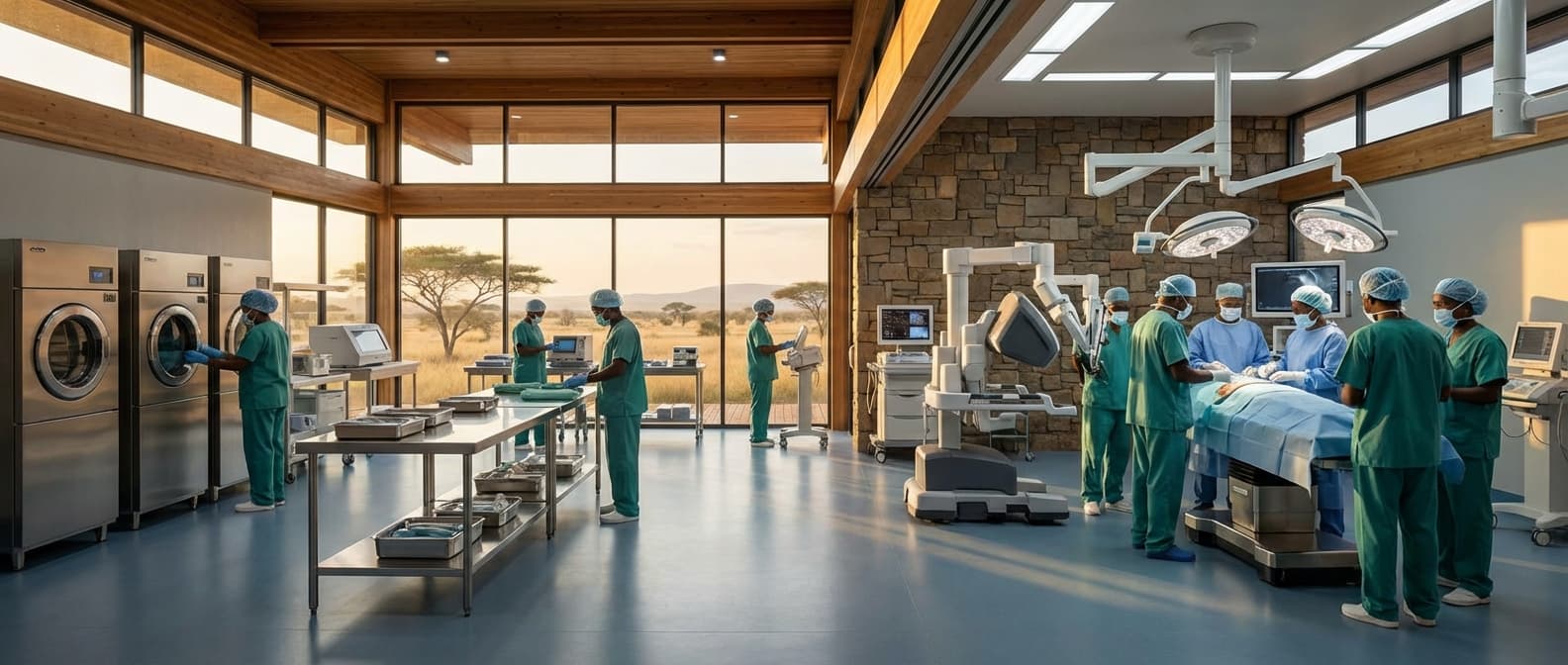
Medical Gas System Design & Installation in Mauritania
Engineering Excellence & Technical Support
Medical gas pipeline systems: O2, N2O, air, vacuum High-standard technical execution following OEM protocols and local regulatory frameworks.
Specialized Medical Gas Pipeline Design
Leveraging international standards (e.g., NFPA 99, ISO 7396) for the design of robust and reliable medical gas pipeline systems, ensuring the safe and efficient delivery of vital gases like oxygen, medical air, and nitrous oxide to critical care areas throughout Mauritanian healthcare facilities. This includes detailed pipe sizing, pressure regulation, and manifold integration tailored to local environmental conditions.
On-Site Installation & Commissioning Expertise
Providing expert on-site installation and meticulous commissioning of medical gas systems in Mauritania, adhering to stringent quality control protocols. This involves skilled technicians, specialized tools, and comprehensive testing to guarantee system integrity, leak-free connections, and optimal performance, ensuring immediate readiness for patient care upon project completion.
Advanced Alarm & Monitoring Solutions
Implementing state-of-the-art alarm and monitoring systems for medical gas installations across Mauritania. These systems provide real-time alerts for pressure deviations, gas supply interruptions, and potential leaks, enhancing patient safety and enabling proactive maintenance for continuous, uninterrupted gas supply in hospitals and clinics.
What Is Medical Gas System Design & Installation In Mauritania?
Medical Gas System Design & Installation in Mauritania refers to the specialized engineering and construction process of creating and implementing the infrastructure required for the safe and efficient delivery of medical gases (such as oxygen, medical air, nitrous oxide, vacuum, and anesthetic waste gas scavenging) within healthcare facilities. This encompasses the meticulous planning, selection of appropriate components, fabrication, assembly, testing, and commissioning of a network of piping, control panels, alarms, outlets, and gas sources, all adhering to stringent international and national standards and regulations governing medical gas systems. The objective is to ensure a reliable and contiguous supply of medical gases at the correct pressure and purity for patient care applications.
| Service/Aspect | Description | Who Needs It | Typical Use Cases |
|---|---|---|---|
| Design | Conceptualization, schematic development, detailed engineering drawings, material take-offs, and specification of all system components to meet the unique demands of a healthcare facility. | Hospitals, clinics, surgical centers, dental offices, veterinary clinics, laboratories, and any facility requiring regulated medical gas supply. | Ensuring correct gas purity, pressure, and flow rates for patient ventilation, anesthesia administration, diagnostic procedures, and post-operative care. |
| Installation | The physical construction and assembly of the medical gas system, including pipe fitting, welding, brazing, component mounting, and connection of gas sources, adhering to strict safety protocols and quality control measures. | Healthcare providers undertaking new construction, renovation projects, or upgrades to existing medical gas infrastructure. | Establishing a safe and reliable distribution network for essential medical gases from source to patient bedside or treatment areas. |
| Medical Air Systems | Design and installation of systems to provide compressed, dry, and oil-free medical air for respiratory therapy, ventilator support, and surgical use. | Facilities with critical care units, operating rooms, and respiratory therapy departments. | Supplying air for ventilators, nebulizers, and surgical tools requiring compressed air. |
| Oxygen Systems | Design and installation of robust systems for the supply of medical-grade oxygen, crucial for patients with respiratory distress and during surgical procedures. | All healthcare facilities, particularly those with emergency rooms, intensive care units, and general patient wards. | Providing supplemental oxygen for patients with hypoxemia, during resuscitation efforts, and as an anesthetic agent. |
| Vacuum Systems | Design and installation of medical vacuum systems for the removal of fluids and air from patient areas, surgical sites, and laboratories. | Hospitals, surgical centers, and laboratories requiring suction capabilities. | Surgical suction, removal of bodily fluids, wound drainage, and laboratory aspiration. |
| Nitrous Oxide Systems | Design and installation for the controlled delivery of nitrous oxide, primarily used as an anesthetic agent in surgical and dental settings. | Operating rooms, dental clinics, and pain management facilities. | General anesthesia, conscious sedation, and pain relief during procedures. |
| Anesthetic Waste Gas Scavenging Systems (AGSS) | Design and installation of systems to safely capture and remove exhaled anesthetic gases from patient breathing circuits, protecting healthcare workers from exposure. | Operating rooms and procedural suites where anesthetic gases are administered. | Mitigating environmental and occupational health risks associated with waste anesthetic gases. |
| Alarm & Monitoring | Integration of sophisticated alarm systems to alert staff to pressure fluctuations, gas supply interruptions, or equipment malfunctions, ensuring continuous patient safety. | All healthcare facilities utilizing medical gas systems. | Early detection of system anomalies to prevent patient harm and ensure uninterrupted gas supply. |
| Maintenance & Compliance | Providing ongoing support for system maintenance, testing, and adherence to regulatory standards (e.g., NFPA 99, ISO 7396) to ensure optimal performance and safety. | Healthcare facility management and engineering departments. | Ensuring the long-term reliability, safety, and regulatory compliance of the medical gas infrastructure. |
Key Components and Stages of Medical Gas System Design & Installation
- Site Assessment & Needs Analysis
- System Design & Engineering
- Component Specification & Procurement
- Piping Installation & Welding
- Pressure Testing & Leak Detection
- Purging & Disinfection
- Alarm & Monitoring System Integration
- Gas Source Integration (Manifolds, Compressors, Vacuum Pumps)
- Outlet & Control Panel Installation
- Final System Testing & Commissioning
- User Training & Documentation
- Regulatory Compliance & Certification
Who Needs Medical Gas System Design & Installation In Mauritania?
The design and installation of medical gas systems are crucial for ensuring patient safety and providing effective healthcare services in Mauritania. These systems are indispensable for any healthcare facility that utilizes medical gases for diagnostic, therapeutic, and anesthetic purposes.
| Target Customer Type | Key Departments Requiring Medical Gas Systems |
|---|---|
| Public Hospitals | Operating Rooms, Intensive Care Units (ICU), Emergency Departments, General Wards, Post-Anesthesia Care Units (PACU), Neonatal Intensive Care Units (NICU), Pulmonary Function Labs, Dialysis Centers |
| Private Hospitals | Operating Rooms, Intensive Care Units (ICU), Emergency Departments, Surgical Recovery Rooms, Maternity Wards, Cardiology Departments, Oncology Departments |
| Surgical Centers | Operating Rooms, Recovery Rooms, Pre-operative Holding Areas |
| Emergency Medical Services (EMS) | Ambulances, Mobile Treatment Units (for oxygen administration and resuscitation) |
| Clinics and Health Centers | Minor Procedure Rooms, Observation Rooms (for oxygen therapy) |
| Specialized Medical Facilities | Critical Care Units, Respiratory Therapy Departments, Sleep Labs, Rehabilitation Centers (for specialized oxygen needs) |
Target Customers & Departments in Mauritania
- Hospitals (Public and Private)
- Surgical Centers
- Emergency Medical Services (EMS)
- Clinics and Health Centers
- Specialized Medical Facilities (e.g., critical care units, rehabilitation centers)
Medical Gas System Design & Installation Process In Mauritania
The design and installation of medical gas systems in Mauritania follow a structured workflow, ensuring compliance with regulations and the delivery of safe, reliable systems. This process begins with an initial inquiry from a healthcare facility and culminates in a fully operational system. Key stages include understanding the client's needs, detailed design, procurement, construction, rigorous testing, and final handover. Each phase requires careful planning, coordination, and adherence to international and local standards.
| Stage | Description | Key Activities | Deliverables/Outcomes |
|---|---|---|---|
| Inquiry & Initial Consultation | The process begins with a healthcare facility expressing interest in a new or upgraded medical gas system. | Receive inquiry, understand basic requirements, schedule initial meeting. | Confirmation of interest, preliminary understanding of project scope. |
| Needs Assessment & Site Survey | A thorough evaluation of the facility's current and future medical gas requirements. | Discuss medical gas usage (types, quantities), identify existing infrastructure, assess building layout, survey installation routes, identify potential challenges. | Detailed needs report, site survey report, preliminary equipment list. |
| Conceptual Design & Proposal | Developing a high-level design concept and providing a cost estimate. | Outline system architecture, propose major equipment, estimate material and labor costs, develop project timeline. | Conceptual design drawings, preliminary Bill of Quantities (BOQ), project proposal with cost and timeline. |
| Detailed Engineering Design | Developing comprehensive technical drawings, specifications, and calculations. | Create P&IDs (Piping and Instrumentation Diagrams), layout drawings, schematics, select specific equipment models, perform pressure drop calculations, ensure compliance with standards (e.g., NFPA 99, HTM 02-01). | Approved detailed engineering drawings, technical specifications, equipment submittals. |
| Regulatory Approvals | Obtaining necessary permits and approvals from relevant Mauritanian authorities. | Submit design documents to Ministry of Health, local building authorities, and other relevant agencies, address any feedback or revisions. | Approved construction permits, compliance certificates. |
| Procurement & Material Sourcing | Acquiring all necessary materials, equipment, and components. | Issue purchase orders for medical gas sources (cylinders, bulk tanks), manifolds, piping, valves, alarms, outlets, regulators, and ancillary equipment. Ensure materials meet specified standards. | Procured materials and equipment, verified quality of supplied items. |
| On-site Installation & Construction | The physical installation of the medical gas system within the facility. | Install medical gas piping (copper is common), weld joints, install risers and branch lines, connect to gas sources, install alarms, outlets, and other system components, follow safety protocols. | Installed medical gas piping network, connected system components. |
| System Testing & Commissioning | Rigorous testing to ensure the system's functionality, safety, and performance. | Pressure testing, leak testing, purging, gas purity analysis, flow rate verification, alarm function testing, initial operational checks. | Commissioning reports, test certificates, validation of system performance. |
| Training & Handover | Providing training to facility staff and formally handing over the system. | Train biomedical engineers and maintenance staff on system operation, maintenance, and troubleshooting. Provide O&M manuals. Officially transfer responsibility for the system. | Trained personnel, comprehensive O&M manuals, formal project handover. |
| Post-Installation Support | Providing ongoing support after the system is operational. | Offer warranty services, scheduled maintenance, emergency repairs, and consultation for future upgrades or modifications. | Continued system reliability, client satisfaction. |
Workflow Stages
- Inquiry & Initial Consultation
- Needs Assessment & Site Survey
- Conceptual Design & Proposal
- Detailed Engineering Design
- Regulatory Approvals
- Procurement & Material Sourcing
- On-site Installation & Construction
- System Testing & Commissioning
- Training & Handover
- Post-Installation Support
Medical Gas System Design & Installation Cost In Mauritania
Designing and installing a medical gas system in Mauritania involves several key cost drivers. These include the complexity and scale of the system, the types of gases required (oxygen, medical air, vacuum, nitrous oxide, etc.), the choice of equipment and materials (piping, outlets, regulators, alarms, central plant), the accessibility of the installation site, and the labor costs associated with skilled technicians and engineers. Furthermore, regulatory compliance and the need for specialized certifications can add to the overall expense. Market conditions, supplier availability, and import duties on specialized equipment also play a significant role in pricing.
| Component/Service | Estimated Cost Range (MRU) |
|---|---|
| Initial Design & Engineering Consultation | 50,000 - 200,000 |
| Medical Air Plant (Compressors, Dryer, Filters) | 1,000,000 - 5,000,000 |
| Vacuum Plant (Vacuum Pumps, Receivers) | 700,000 - 3,000,000 |
| Oxygen Manifold System (Cylinders/Tanks) | 800,000 - 4,000,000 |
| Piping Installation (Copper, per meter) | 5,000 - 15,000 |
| Medical Gas Outlets (per unit) | 10,000 - 30,000 |
| Alarm Systems (per unit) | 20,000 - 70,000 |
| Pressure Regulators (per unit) | 15,000 - 50,000 |
| Installation Labor (skilled per day) | 20,000 - 60,000 |
| Testing, Commissioning, and Certification | 300,000 - 1,500,000 |
| Total Project Cost (Small Clinic) | 5,000,000 - 15,000,000 |
| Total Project Cost (Medium Hospital) | 15,000,000 - 50,000,000+ |
Key Pricing Factors for Medical Gas Systems in Mauritania
- System Complexity and Scale
- Types of Medical Gases Required
- Equipment and Material Selection
- Site Accessibility and Installation Challenges
- Labor Costs (Skilled Technicians & Engineers)
- Regulatory Compliance and Certifications
- Central Plant Equipment (Compressors, Vacuum Pumps, Manifolds)
- Piping Network and Materials
- Medical Gas Outlets and Alarms
- Testing, Commissioning, and Maintenance
- Import Duties and Taxes on Specialized Equipment
- Geographic Location within Mauritania (remote vs. urban)
Affordable Medical Gas System Design & Installation Options
Designing and installing a medical gas system is a critical investment for healthcare facilities. Fortunately, there are various affordable options and cost-saving strategies available. This guide explores value bundles, smart procurement, and efficient installation practices to help you manage your medical gas system budget effectively.
| Value Bundle Type | Included Components/Services | Potential Cost Savings | Benefits |
|---|---|---|---|
| Design & Installation Package | System design, engineering, piping installation, equipment hook-up, testing, and commissioning. | 10-20% on labor and materials compared to separate procurement. | Streamlined project management, single point of accountability, faster project completion. |
| Equipment & Maintenance Bundle | Purchase of medical gas generators, compressors, vacuum pumps, alarms, and a multi-year maintenance contract. | 5-15% on equipment costs, reduced long-term repair costs. | Predictable operating expenses, extended equipment lifespan, improved reliability. |
| Turnkey Solution | Complete end-to-end service including initial consultation, design, procurement, installation, training, and ongoing support. | Up to 25% on overall project costs. | Maximum convenience, minimal facility management burden, guaranteed system performance. |
| Modular System Kit | Pre-fabricated medical gas outlets, manifolds, and junction boxes designed for quick on-site assembly. | 15-25% on installation labor. | Reduced on-site disruption, faster installation times, consistent quality. |
Key Cost-Saving Strategies
- Value Bundling: Combining multiple services or components into a single package can lead to significant discounts.
- Modular System Design: Utilizing pre-fabricated or modular components can reduce on-site labor and installation time.
- Phased Installation: Breaking down the project into manageable phases can spread costs over time and allow for better budget control.
- Standardization of Components: Opting for standardized medical gas equipment and piping materials can simplify procurement and reduce maintenance costs.
- Long-Term Maintenance Contracts: Negotiating comprehensive maintenance agreements upfront can prevent costly emergency repairs and ensure system longevity.
- Energy-Efficient Equipment: Investing in energy-efficient medical gas generators and compressors can reduce operational expenses over the system's lifespan.
- Strategic Vendor Partnerships: Building strong relationships with reliable suppliers can lead to better pricing and preferential service.
- Preventative Maintenance Programs: Implementing a robust preventative maintenance schedule minimizes the risk of unexpected failures and costly downtime.
- Technology Integration: Leveraging smart sensors and remote monitoring can optimize system performance and identify issues before they become major problems.
- Training and In-House Expertise: Investing in training for your facility's maintenance staff can reduce reliance on external technicians for routine tasks.
Verified Providers In Mauritania
In Mauritania, ensuring you are receiving care from verified providers is paramount for your health and well-being. Franance Health stands out as a leading entity, offering a robust system for credentialing and vetting healthcare professionals. Their rigorous standards and comprehensive verification process ensure that all listed providers meet the highest benchmarks of medical competence, ethical practice, and regulatory compliance. Choosing a Franance Health credentialed provider means opting for quality, safety, and peace of mind in your healthcare journey within Mauritania. This commitment to excellence is what makes them the best choice for discerning patients.
| Aspect | Franance Health Verification | Benefit to Patients |
|---|---|---|
| Medical Expertise | Thorough review of academic qualifications and specialized training. | Ensures providers possess the necessary skills and knowledge for effective treatment. |
| Professional Ethics | Background checks and assessment of adherence to ethical medical conduct. | Guarantees that patients will be treated with respect, honesty, and integrity. |
| Licensing and Certification | Confirmation of valid and up-to-date medical licenses and relevant certifications. | Confirms providers are legally authorized and qualified to practice medicine. |
| Continuing Education | Verification of ongoing professional development and training. | Ensures providers are current with the latest medical advancements and techniques. |
| Patient Safety | Assessment of a provider's track record and commitment to safety protocols. | Minimizes risks and promotes a safe healthcare environment for all patients. |
Why Franance Health Credentials Represent the Best Choice:
- Rigorous Verification Process: Franance Health employs a multi-stage verification that examines education, training, licenses, certifications, and professional history.
- Commitment to Quality Care: Credentialed providers have demonstrated a commitment to adhering to best medical practices and patient safety standards.
- Enhanced Patient Trust: The Franance Health seal provides patients with confidence that they are selecting a qualified and ethical healthcare professional.
- Regulatory Compliance: Franance Health ensures providers meet all relevant national and international healthcare regulations.
- Access to Competent Professionals: By choosing Franance Health, patients gain access to a curated network of Mauritania's most competent and trustworthy medical practitioners.
Scope Of Work For Medical Gas System Design & Installation
This Scope of Work outlines the requirements for the design and installation of a medical gas system, including associated technical deliverables and standard specifications. The project aims to establish a safe, reliable, and compliant medical gas system that meets all relevant codes, standards, and the specific needs of the healthcare facility. This includes the supply of medical gases (e.g., oxygen, medical air, vacuum, nitrous oxide), distribution piping, outlets, alarms, and ancillary equipment.
| Technical Deliverable | Description | Standard Specification / Reference |
|---|---|---|
| Detailed Design Drawings (CAD) | Comprehensive set of drawings including system layout, piping schematics, equipment locations, outlet placement, alarm panel configuration, and pressure regulation. | NFPA 99, ASSE 6000 Series Standards, Local Building Codes, Manufacturer's Data Sheets |
| Bill of Materials (BOM) | Detailed list of all equipment, materials, and components required for the system, including quantities, specifications, and approved manufacturers. | Project Specifications, Drawings, NFPA 99 |
| Equipment Submittals | Manufacturer's specifications, performance data, and certifications for all major components such as compressors, vacuum pumps, manifolds, regulators, alarms, and outlets. | NFPA 99, Manufacturer's Product Catalogs, ASSE Certifications |
| Pressure Test Reports | Documentation of pneumatic and/or nitrogen pressure testing performed on all piping segments to verify integrity and leak-tightness. | NFPA 99, ASSE 6010 |
| Purity Analysis Reports | Verification of the purity of medical gases delivered at various points in the system, ensuring compliance with USP standards. | NFPA 99, USP Standards |
| Performance Verification Reports | Documentation confirming that all system components (e.g., regulators, alarms, outlets) are functioning as per design specifications and standards. | NFPA 99, ASSE 6020 |
| Alarm System Test Reports | Confirmation of correct operation of all central and local alarms, including signal verification and response times. | NFPA 99 |
| Final As-Built Drawings | Revised design drawings reflecting all changes made during installation, accurately representing the final system configuration. | Project Specifications, CAD Standards |
| Operations & Maintenance (O&M) Manuals | Comprehensive manuals detailing system operation, maintenance procedures, troubleshooting guides, and spare parts lists. | Manufacturer's Manuals, Project Specifications |
| Training Manuals & Certificates | Materials used for training facility personnel on system operation, maintenance, and emergency procedures, along with attendance certificates. | Project Specifications, Facility SOPs |
| Weld Procedure Specifications (WPS) & Qualifications | Documentation outlining the welding processes and welder qualifications for all brazed and welded joints in the medical gas piping. | ASME B31.3, NFPA 99 |
| System Certification | Official certification by a qualified third party or authority having jurisdiction confirming the system's compliance with all applicable codes and standards. | NFPA 99, ASSE 6005 |
Key Phases and Activities
- Phase 1: Design & Engineering
- Phase 2: Procurement & Fabrication
- Phase 3: Installation & Construction
- Phase 4: Testing, Commissioning & Handover
- Phase 5: Documentation & Training
Service Level Agreement For Medical Gas System Design & Installation
This Service Level Agreement (SLA) outlines the response times and uptime guarantees for the design and installation of medical gas systems. It applies to services provided by [Your Company Name] to [Client Name] for the aforementioned project. The objective is to ensure the timely and reliable completion of the medical gas system, meeting all relevant standards and client requirements.
| Service Area | Response Time (Business Hours) | Uptime Guarantee (During Installation/Commissioning) | Notes |
|---|---|---|---|
| Critical Design Clarifications (e.g., life-threatening system impact) | 1 Hour | N/A (Focus on resolution) | Urgent consultation and resolution for issues that directly impede patient safety or critical system function. |
| Routine Design Queries (e.g., minor specification adjustments) | 4 Business Hours | N/A (Focus on resolution) | Requests for clarifications or minor modifications to the approved design that do not pose immediate risks. |
| On-Site Installation Support (e.g., technical assistance) | 2 Business Hours | 99.5% | Guaranteed availability of qualified technical personnel on-site to address installation challenges. Uptime refers to the functionality of partially installed systems as per the project schedule. |
| System Commissioning & Testing | 4 Business Hours | 99.9% | Ensuring the fully installed system is operational and performing according to design specifications. This uptime is crucial for validation and handover. |
| Post-Installation Support (Initial Handover Period - [e.g., 30 days]) | 8 Business Hours | N/A (Focus on issue resolution) | Addressing any emergent issues or minor adjustments required immediately following system handover. |
Key Service Level Objectives
- To provide timely responses to critical system design and installation queries.
- To maintain high availability of the medical gas system during the installation and commissioning phases.
- To ensure the system meets specified performance and safety benchmarks upon completion.
- To offer clear communication channels and proactive updates throughout the project lifecycle.
Frequently Asked Questions

Ready when you are
Let's scope your Medical Gas System Design & Installation in Mauritania project in Mauritania.

Scaling healthcare logistics and technical systems across the entire continent.