
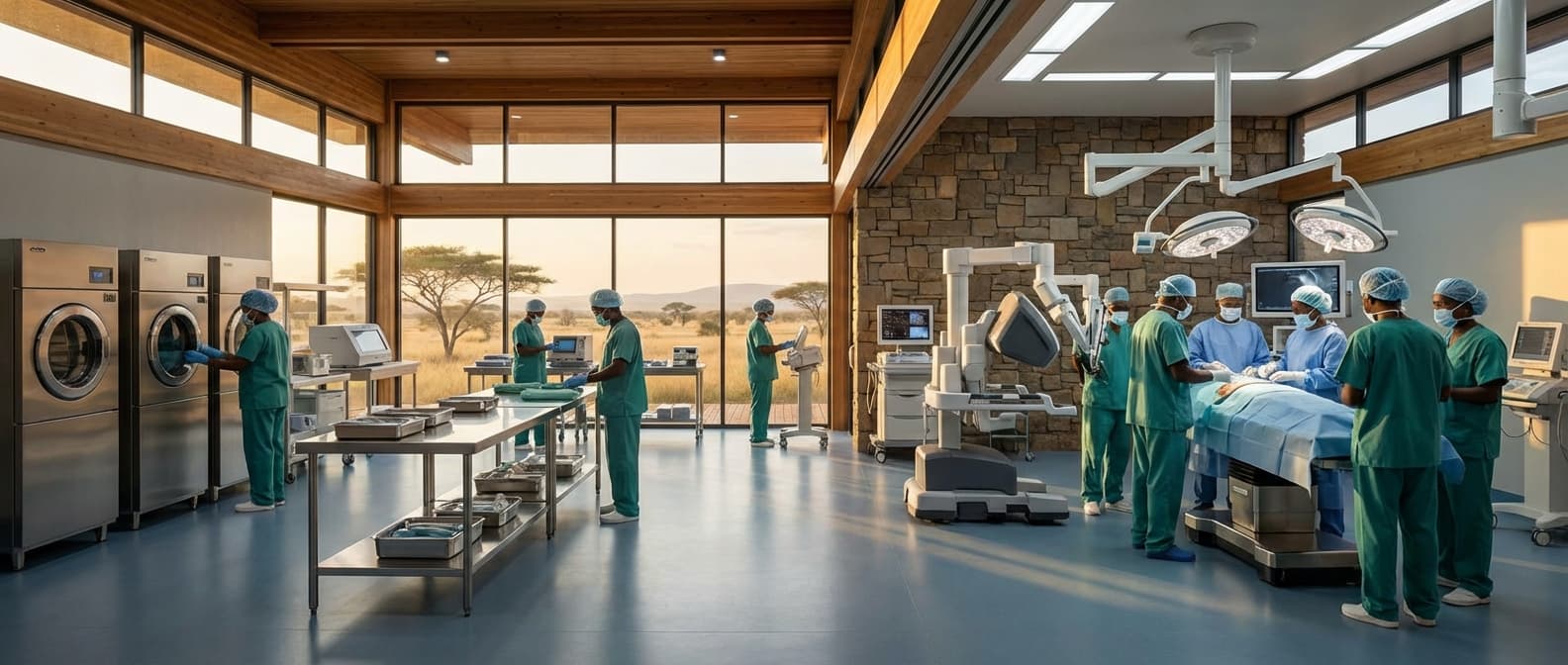
CSSD Design & Validation in Mauritania
Engineering Excellence & Technical Support
CSSD workflow design, validation and process development High-standard technical execution following OEM protocols and local regulatory frameworks.
State-of-the-Art CSSD Sterilization Design
Implementing advanced sterilization technologies and protocols for Central Sterile Supply Departments (CSSD) in Mauritania, ensuring the highest standards of patient safety and infection control through meticulously designed and validated sterilization cycles. Expertise in steam, low-temperature, and plasma sterilization.
Rigorous CSSD Process Validation
Comprehensive validation of all CSSD processes, including cleaning, disinfection, sterilization, and sterile storage, to meet international regulatory requirements and local health standards in Mauritania. Our validation ensures process efficacy, reproducibility, and traceability.
Optimized CSSD Workflow & Infrastructure
Designing and validating efficient, ergonomic workflows within CSSD facilities in Mauritania, from receiving soiled instruments to sterile storage and distribution. Focus on space optimization, material flow, and the integration of modern CSSD equipment for enhanced operational efficiency and reduced risk of contamination.
What Is Cssd Design & Validation In Mauritania?
CSSD (Central Sterile Supply Department) design and validation in Mauritania refers to the comprehensive process of planning, configuring, and verifying the infrastructure, workflows, and equipment necessary for a sterile processing department. This service ensures that the CSSD operates in compliance with international sterilization standards and local healthcare regulations, thereby guaranteeing the safety and efficacy of reusable medical devices for patient care. The design phase focuses on optimizing spatial layout, material flow, equipment selection, environmental controls (HVAC, water, electrical), and waste management. Validation is a critical, multi-stage process involving Installation Qualification (IQ), Operational Qualification (OQ), and Performance Qualification (PQ) to demonstrate that the CSSD is installed correctly, operates according to specifications, and consistently produces sterile products under routine conditions. This rigorous approach minimizes risks associated with surgical site infections and device failures.
| Service/Requirement | Description | Who Needs It | Typical Use Cases |
|---|---|---|---|
| CSSD Design Consultation | Expert advice on optimal facility layout, equipment selection, and workflow development. | Hospitals (public and private), surgical centers, large clinics with surgical capabilities in Mauritania. | Planning for new hospital construction, renovation of existing surgical facilities, expansion of surgical services. |
| CSSD Infrastructure Design | Detailed architectural and engineering plans for the physical space, including HVAC, plumbing, and electrical systems. | Healthcare facilities undertaking significant infrastructure projects or new builds. | Ensuring compliance with building codes and healthcare-specific environmental requirements for sterility assurance. |
| Equipment Validation (IQ/OQ/PQ) | Testing and documentation to confirm that sterilization and cleaning equipment functions as intended and reliably produces sterile items. | All healthcare facilities that utilize reusable medical devices requiring sterilization, regardless of size. | Commissioning of new sterilizers, washers, or other processing equipment; periodic revalidation of existing equipment. |
| Process Validation | Verification that the entire sterile processing workflow, from receipt of soiled instruments to sterile storage and distribution, is effective and reproducible. | Facilities implementing new sterile processing protocols or seeking to improve existing ones. | Ensuring the effectiveness of instrument cleaning, disinfection, and sterilization processes for various types of medical devices. |
| Compliance Audits & Assessments | Evaluation of the CSSD's current design and operational practices against relevant standards and regulations. | Healthcare institutions preparing for regulatory inspections or seeking to enhance their infection control posture. | Pre-certification reviews, identification of gaps in compliance, and development of corrective action plans. |
Key Components of CSSD Design & Validation
- Facility Layout and Zoning: Strategic placement of receiving, decontamination, assembly, sterilization, sterile storage, and distribution areas to prevent cross-contamination and optimize workflow efficiency.
- Equipment Specification and Integration: Selection of appropriate sterilizers (steam, low-temperature), washers/disinfectors, ultrasonic cleaners, drying cabinets, and material handling systems, followed by their integration into the overall system.
- Environmental Control Systems: Design of HVAC systems for appropriate air changes, pressure differentials between zones, temperature, and humidity control, alongside water purification systems (reverse osmosis, distillation) and reliable power supply.
- Workflow and Process Engineering: Development of Standard Operating Procedures (SOPs) for every stage of the sterile processing cycle, including instrument tracking and traceability.
- Infection Prevention and Control Measures: Implementation of architectural features and operational protocols to minimize microbial contamination and healthcare-associated infections (HAIs).
- Regulatory Compliance: Ensuring adherence to Mauritanian Ministry of Health guidelines, international standards (e.g., ISO 13485, AAMI ST guidelines), and best practices.
- Installation Qualification (IQ): Documented verification that all equipment and utilities are installed and configured according to manufacturer specifications and design requirements.
- Operational Qualification (OQ): Documented verification that equipment and utilities operate within defined operational ranges and parameters under normal and anticipated conditions.
- Performance Qualification (PQ): Documented verification that the validated CSSD system, under routine operating conditions, consistently performs its intended function and produces sterile medical devices meeting predefined acceptance criteria.
Who Needs Cssd Design & Validation In Mauritania?
In Mauritania, the design and validation of Central Sterile Supply Departments (CSSDs) are critical for ensuring patient safety and preventing healthcare-associated infections. These specialized services are essential for any healthcare facility that performs surgical procedures or handles reusable medical instruments. A well-designed and validated CSSD minimizes risks associated with inadequate sterilization, cross-contamination, and instrument reprocessing failures.
| Customer Type | Key Departments / Areas of Impact |
|---|---|
| Hospitals (Public) | Operating Theatres (Surgical Suites), Emergency Departments, Intensive Care Units (ICUs), Outpatient Clinics requiring sterile instruments, Specialized procedure rooms (e.g., endoscopy, cardiology). |
| Hospitals (Private) | Operating Rooms, Day Surgery Units, Maternity Wards (for instrument sterilization), Various specialized departments requiring sterile instrumentation. |
| Surgical Centers | All surgical suites, pre-operative holding areas, recovery rooms (indirectly through instrument supply). |
| Clinics with Minor Procedure Rooms | Procedure rooms for minor surgeries (e.g., biopsies, cyst removals), sterilization areas within the clinic. |
| Dental Clinics Performing Surgical Procedures | Operative dentistry rooms requiring sterilized handpieces and instruments, sterilization areas. |
| Veterinary Clinics Performing Surgical Procedures | Surgical suites, sterilization areas for veterinary surgical instruments. |
Target Customers & Departments Requiring CSSD Design & Validation in Mauritania
- Hospitals (Public and Private)
- Surgical Centers
- Clinics with Minor Procedure Rooms
- Dental Clinics Performing Surgical Procedures
- Veterinary Clinics Performing Surgical Procedures
Cssd Design & Validation Process In Mauritania
Designing and validating a Central Sterile Supply Department (CSSD) in Mauritania involves a structured workflow that begins with an initial inquiry and culminates in a fully operational and validated facility. This process ensures that the CSSD meets international standards for infection control, patient safety, and operational efficiency, while also considering local resources, regulations, and healthcare needs. The workflow can be broadly categorized into several key phases, each with specific steps and deliverables.
| Phase | Key Activities | Deliverables | Mauritanian Context Considerations |
|---|---|---|---|
| Initial contact with healthcare facility/stakeholders, defining scope, capacity requirements, types of instruments/equipment to be sterilized, existing infrastructure assessment, budget estimation, and regulatory framework review. | Needs assessment report, preliminary scope of work, initial budget, identified stakeholders. | Understanding local healthcare demands, prevalence of specific diseases influencing sterilization needs, availability of skilled personnel, current infrastructure limitations in hospitals/clinics, and existing Ministry of Health guidelines or requirements. |
| Developing schematic layouts, flow diagrams (instrument journey), defining departmental zones (decontamination, packing, sterilization, storage), preliminary equipment selection, space allocation, and initial material selection. | Schematic design drawings, conceptual layout, preliminary equipment list, initial cost estimates, project timeline. | Optimizing space based on available building footprint, considering ventilation requirements suited to the climate, planning for power and water supply reliability, and selecting materials that are durable and easy to clean in a hot and potentially dusty environment. |
| Producing detailed architectural, mechanical, electrical, and plumbing (MEP) drawings. Finalizing equipment specifications, selecting specific models, designing workflow integration, and developing detailed construction plans. | Detailed architectural drawings, MEP drawings, finalized equipment specifications, bill of quantities (BOQ), detailed project schedule, tender documents. | Ensuring designs comply with Mauritanian building codes and safety standards, sourcing equipment from reliable suppliers who can offer local support or training, and factoring in the cost of importing specialized equipment. |
| Tendering and awarding contracts for construction and equipment supply. Site preparation, civil works, installation of utilities, and building the CSSD structure. Procurement of approved equipment. | Construction progress reports, procured equipment, completed building structure with utilities. | Working with local contractors who understand construction practices and regulations, managing import logistics for specialized materials and equipment, and ensuring quality control during construction. |
| Installation of all CSSD equipment (autoclaves, washer-disinfectors, ultrasonic cleaners, etc.). Functional testing of each piece of equipment to ensure it operates according to manufacturer specifications. | Installed equipment, preliminary test reports, equipment manuals. | Ensuring trained technicians are available for installation and initial troubleshooting, verifying power requirements are met by the local grid, and ensuring water quality meets sterilization standards (potentially requiring water treatment systems). |
| Performing Installation Qualification (IQ), Operational Qualification (OQ), and Performance Qualification (PQ) for all equipment and the overall process. This involves documented evidence that systems are installed correctly, operate as intended, and consistently produce sterile products. | IQ, OQ, PQ protocols and reports, validation certificates, risk assessments. | Engaging certified validation specialists if local expertise is limited, utilizing appropriate biological and chemical indicators available or importable, and ensuring all documentation is in a format accepted by the Ministry of Health or relevant regulatory bodies. |
| Developing standard operating procedures (SOPs), establishing quality control protocols, and comprehensive training for CSSD staff on all aspects of operation, maintenance, and infection control practices. | Approved SOPs, trained staff, operational checklists, maintenance schedules, infection control policies. | Developing training materials in French or Arabic, adapting SOPs to reflect local staff literacy levels and practical skills, and fostering a culture of safety and accountability. |
| Regular monitoring of CSSD performance, equipment maintenance, quality audits, data analysis, and continuous improvement initiatives based on feedback and performance metrics. | Performance reports, audit findings, corrective action plans, updated SOPs, continuous staff development. | Establishing a system for regular reporting to hospital management and the Ministry of Health, fostering ongoing collaboration with international infection control experts if possible, and adapting to evolving international best practices. |
CSSD Design & Validation Workflow in Mauritania
- Inquiry & Needs Assessment
- Conceptual Design & Planning
- Detailed Design & Engineering
- Procurement & Construction
- Equipment Installation & Commissioning
- Validation & Qualification
- Operationalization & Training
- Ongoing Monitoring & Improvement
Cssd Design & Validation Cost In Mauritania
Designing and validating a Central Sterile Services Department (CSSD) in Mauritania involves a complex interplay of factors that significantly influence the overall cost. These costs are typically expressed in Mauritanian Ouguiya (MRU). Key pricing factors include the size and scope of the CSSD, the required level of technology and automation, the complexity of the building and infrastructure modifications, regulatory compliance, and the expertise of the design and validation teams. The ranges provided are estimates and can vary widely based on specific project requirements and the negotiating power of the client.
| Cost Component | Estimated Range (MRU) | Notes |
|---|---|---|
| CSSD Design & Consultancy Fees | 500,000 - 2,000,000+ MRU | Varies based on firm's reputation, project complexity, and scope of services (architectural, MEP, CSSD specialist). |
| Infrastructure Modifications & Renovation | 1,000,000 - 5,000,000+ MRU | Highly dependent on the existing building condition, size of the CSSD, and required upgrades (HVAC, plumbing, electrical). |
| Sterilization Equipment (Autoclaves, Washer-Disinfectors, etc.) | 3,000,000 - 15,000,000+ MRU | Significant variation based on brand, capacity, automation level, and number of units. This is often the largest single cost. Smaller, basic units will be at the lower end, while large, advanced systems will be at the higher end. |
| Ancillary Equipment (Ultrasonic Cleaners, Drying Cabinets, Packaging Machines, etc.) | 500,000 - 3,000,000 MRU | Dependent on the range and volume of instruments processed. |
| Validation & Commissioning Services | 300,000 - 1,000,000+ MRU | Includes IQ, OQ, PQ. Fees depend on the number of equipment pieces and the complexity of the validation protocols. |
| Materials & Consumables (Initial Stock) | 200,000 - 800,000 MRU | Includes sterile packaging materials, detergents, indicators. |
| Contingency (10-20%) | Calculated based on subtotal | Essential for unforeseen costs. |
| Total Estimated Project Cost (Excluding land acquisition and major construction) | 5,500,000 - 27,800,000+ MRU | This is a broad estimate. A small, basic CSSD might be at the lower end, while a large, highly automated facility with extensive renovations could far exceed the higher end. |
Key Pricing Factors for CSSD Design & Validation in Mauritania
- Size and Scope of the CSSD: The square footage of the facility, the number of sterilization bays, instrument processing areas, storage capacity, and the overall throughput of sterile items directly impact design and validation complexity and cost.
- Level of Technology and Automation: The choice between manual, semi-automated, or fully automated equipment (e.g., washer-disinfectors, sterilizers, tracking systems) is a major cost driver. Advanced technology generally leads to higher initial investment but can reduce long-term labor costs.
- Building and Infrastructure Modifications: Existing hospital infrastructure may require significant upgrades to support the CSSD's needs, including specialized ventilation systems, plumbing, electrical capacity, waste management, and materials for sterile environments. This can include structural changes, new construction, or extensive renovations.
- Regulatory Compliance and Standards: Adherence to international (e.g., ISO, AAMI) and potentially local Mauritanian healthcare regulations and standards for CSSD operations, safety, and sterile processing adds to the design and validation effort, often requiring specialized expertise.
- Design and Engineering Fees: Costs associated with architectural design, mechanical, electrical, and plumbing (MEP) engineering, and specialized CSSD consultants. The experience and reputation of the design firm will influence their fees.
- Equipment Procurement: The cost of purchasing sterilization and related equipment is a significant portion of the overall budget. This includes autoclaves, washer-disinfectors, ultrasonic cleaners, drying cabinets, packaging materials, and material handling equipment.
- Validation and Commissioning Services: This involves testing and verifying that all equipment and processes meet established performance and safety standards. It includes installation qualification (IQ), operational qualification (OQ), and performance qualification (PQ).
- Training and Development: Costs associated with training CSSD staff on new equipment, processes, and infection control protocols.
- Contingency and unforeseen expenses: It is prudent to include a contingency fund (typically 10-20%) to account for unexpected issues that may arise during the design and construction phases.
Affordable Cssd Design & Validation Options
Designing and validating a Central Sterile Services Department (CSSD) can be a significant investment for healthcare facilities. However, by exploring affordable design and validation options, facilities can achieve optimal functionality and compliance without exceeding their budget. This involves strategic planning, leveraging value bundles, and implementing effective cost-saving measures throughout the process.
| Value Bundle | Description | Cost-Saving Strategies | |
|---|---|---|---|
| 'Lean & Essential' CSSD Package | This bundle focuses on the fundamental requirements for a functional CSSD, suitable for smaller facilities or those with existing infrastructure to leverage. It prioritizes core decontamination, sterilization (e.g., autoclaves, low-temperature sterilizers), and storage areas. | Design: Utilizes open-plan concepts where feasible, standardized workflow layouts, and modular casework. Validation: Focuses on essential performance qualification (PQ) for core equipment, simplified documentation. Procurement: Negotiated pricing on basic, reliable equipment models, potential for refurbished high-quality instruments where appropriate. | |
| 'Integrated Workflow' Solution | This option integrates key CSSD processes and equipment to optimize workflow efficiency and reduce manual handling. It's ideal for facilities aiming to improve throughput and minimize error. | Design: Incorporates material flow analysis, integrated washer-decontaminators and sterilizers, and ergonomic workstations. Validation: Includes validation of interconnected processes and workflow efficiency alongside individual equipment validation. Procurement: Bundled pricing for integrated equipment sets, potential for volume discounts on multiple unit purchases. Training: Often includes basic operational and workflow training as part of the package. | |
| 'Compliance & Training' Focus | This bundle emphasizes meeting regulatory requirements and ensuring staff competency from the outset. It's suitable for facilities prioritizing risk mitigation and a strong compliance framework. | Design: Incorporates features that inherently support compliance, such as positive/negative pressure zones and clear demarcation of clean/dirty areas. Validation: Comprehensive IQ, OQ, and PQ for all equipment, detailed validation report generation. Training: Includes in-depth validation protocol development and execution training for internal staff, SOP development support. | Procurement: May involve higher-spec equipment for enhanced safety and compliance features, but with negotiated long-term service agreements. Consultation: Access to regulatory experts for guidance. |
| 'Phased Modernization' Approach | For existing facilities looking to upgrade their CSSD without a complete overhaul. This bundle allows for incremental improvements and investments. | Design: Focuses on specific bottleneck areas for targeted redesign (e.g., sterile storage expansion, improved decontamination zone). Validation: Validation is performed on an area-by-area or equipment-by-equipment basis as upgrades are completed. Procurement: Opportunistic purchasing of equipment as needs arise, leveraging sales or bundled deals on specific product lines. Consultation: Expert advice on prioritizing upgrades and ensuring interoperability of new and existing systems. |
Key Considerations for Affordable CSSD Design & Validation
- Prioritize Essential Functionality: Focus on the core processes of decontamination, sterilization, and sterile storage. Avoid over-engineering or including non-essential features that increase costs.
- Modular & Scalable Design: Opt for a design that can be easily expanded or reconfigured in the future as needs evolve, preventing costly retrofits.
- Space Optimization: Efficient layout is crucial to maximize usable space, reduce the physical footprint, and minimize construction costs.
- Standardized Equipment Selection: Choosing widely available and standardized equipment can lead to better pricing, easier maintenance, and readily available spare parts.
- Phased Implementation: For larger projects, consider a phased approach to design and validation, allowing for budget allocation and cash flow management.
- In-house vs. Outsourced Validation: Evaluate the pros and cons of performing validation internally versus engaging third-party specialists based on cost, expertise, and time constraints.
Verified Providers In Mauritania
In Mauritania, access to reliable and qualified healthcare providers is paramount. When seeking medical assistance, it's crucial to identify those who have undergone rigorous verification processes. Franance Health stands out as a leading entity in this regard, meticulously vetting healthcare professionals and institutions. Their credentials represent a robust assurance of quality, expertise, and adherence to international standards, making them the best choice for individuals seeking dependable medical care in Mauritania.
| Category | Description | Why it Matters |
|---|---|---|
| Franance Health Verification Process | A multi-stage vetting system including documentation review, background checks, and on-site assessments. | Ensures that only genuinely qualified and ethical providers are listed, building trust and reducing risk for patients. |
| Medical Professional Qualifications | Verification of academic degrees, board certifications, and ongoing professional development. | Confirms that providers possess the necessary theoretical knowledge and practical skills to deliver high-quality medical services. |
| Institutional Standards Compliance | Assessment of healthcare facilities for adherence to hygiene, safety, and equipment maintenance standards. | Guarantees that patients will receive care in a safe and well-equipped environment, minimizing the risk of complications. |
| Patient Testimonials and Feedback | Collection and analysis of feedback from previous patients regarding their experience. | Provides real-world insights into the provider's bedside manner, communication, and overall patient satisfaction. |
| Specialty and Sub-specialty Expertise | Confirmation of specific areas of medical expertise and advanced training. | Ensures that patients are referred to and treated by specialists best equipped to handle their unique medical conditions. |
Key Credentials of Verified Providers by Franance Health:
- Professional Licensure and Certification
- Specialization and Advanced Training
- Experience and Proven Track Record
- Adherence to Ethical Practices
- Commitment to Patient Safety and Care
- Access to Modern Facilities and Technology
Scope Of Work For Cssd Design & Validation
This Scope of Work (SOW) outlines the requirements for the design and validation of a Central Sterile Supply Department (CSSD). It details the technical deliverables, standard specifications, and quality assurance measures necessary to ensure the CSSD meets regulatory requirements and operational efficiency standards for infection prevention and control.
| Phase/Activity | Description | Key Technical Deliverables | Applicable Standard Specifications | |||||||||
|---|---|---|---|---|---|---|---|---|---|---|---|---|
| Phase 1: Design Development | Conceptualization and detailed architectural, mechanical, electrical, and plumbing (MEP) design of the CSSD. |
|
|
|
|
| HTM 01-01 (UK Health Technical Memorandum) | AAMI ST55 (Association for the Advancement of Medical Instrumentation) | ISO 13485 (Medical devices - Quality management systems) | Local building codes and healthcare facility regulations | ||
| Phase 2: Equipment Selection & Procurement | Selection and procurement of all necessary CSSD equipment, including autoclaves, washer-disinfectors, ultrasonic cleaners, packaging machines, and storage solutions. |
|
|
| Manufacturer's specifications. | Performance verification requirements. | ||||||
| Phase 3: Construction & Installation | Physical construction of the CSSD facility and installation of all equipment. |
|
|
| Building codes. | Electrical safety standards. | Plumbing and HVAC standards. | |||||
| Phase 4: Validation & Verification | Testing and verification of the design and operational processes to ensure efficacy and compliance. |
|
|
|
|
|
| AAMI TIR12 (ANSI/AAMI TIR12:2010) | ISO 17665 (Sterilization of health care products — Moist heat) | ISO 11135 (Sterilization of health care products — Ethylene oxide) | ISO 14937 (Sterilization of health care products — General requirements for validation of sterilization processes) | Manufacturer's validation protocols. |
| Phase 5: Documentation & Training | Development of standard operating procedures (SOPs) and training of CSSD personnel. |
|
|
|
| Relevant national guidelines for infection prevention and control. |
Key Objectives of CSSD Design & Validation
- To design a CSSD that facilitates efficient workflow, minimizing cross-contamination risks.
- To ensure the CSSD design adheres to relevant national and international standards and guidelines.
- To validate the design and operational processes for optimal sterilization and disinfection efficacy.
- To provide a safe and ergonomically sound working environment for CSSD personnel.
- To ensure compliance with infection control protocols and regulatory requirements.
Service Level Agreement For Cssd Design & Validation
This Service Level Agreement (SLA) outlines the guaranteed response times and uptime for the CSSD (Central Sterile Supply Department) Design & Validation services. This SLA applies to all clients utilizing the CSSD Design & Validation services and is effective as of the date of engagement.
| Service Component | Response Time (Business Hours) | Uptime Guarantee |
|---|---|---|
| Initial Design Consultation Request | 4 Business Hours | N/A (This is a proactive service) |
| Response to Design Clarification/Query | 8 Business Hours | N/A |
| Delivery of Draft Design Documentation | 5 Business Days (per agreed milestone) | N/A |
| Response to Validation Protocol Review Comments | 1 Business Day | N/A |
| Availability of Designated Project Manager/Lead Validator | 1 Business Hour (via agreed communication channels) | 99.5% |
| System Uptime (for cloud-based collaboration platforms or remote access tools used for design/validation if applicable) | N/A | 99.9% |
Scope of Service
- Design consultations and conceptualization.
- Development of detailed CSSD layouts and workflows.
- Equipment specification and selection assistance.
- Validation protocol development and execution support (IQ/OQ/PQ).
- Documentation review and approval processes.
- On-site support during critical design and validation phases.
Frequently Asked Questions

Ready when you are
Let's scope your CSSD Design & Validation in Mauritania project in Mauritania.

Scaling healthcare logistics and technical systems across the entire continent.