
Renal Solutions in Mauritania
Engineering Excellence & Technical Support
Complete dialysis systems and renal care equipment designed to deliver safe, effective, and patient-centered kidney treatment. High-standard technical execution following OEM protocols and local regulatory frameworks.
Advanced Diagnostic Capabilities
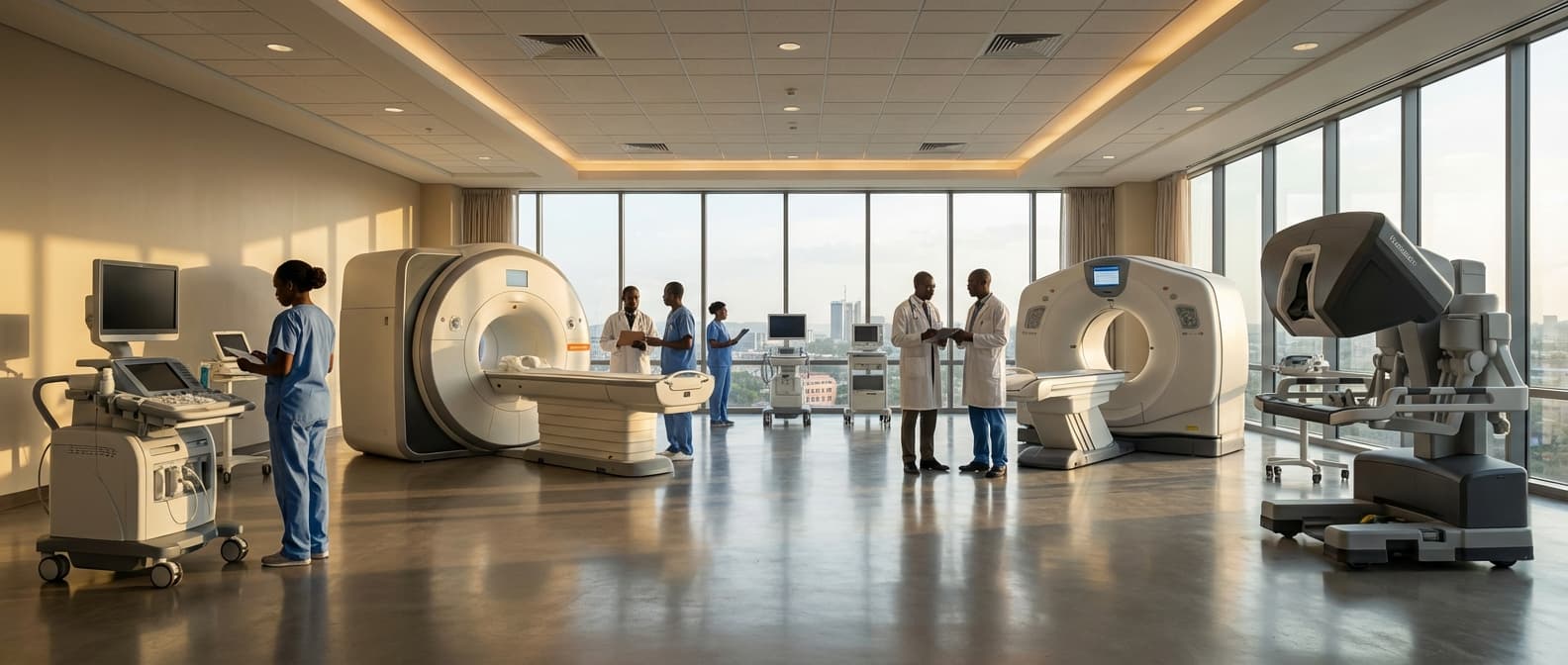
Renal Solutions equips leading Mauritanian healthcare facilities with state-of-the-art diagnostic equipment, enabling early and accurate detection of kidney diseases. Our portfolio includes cutting-edge laboratory analyzers for comprehensive blood and urine testing, and specialized imaging technologies for precise renal assessment.
Cutting-Edge Dialysis Technology
We provide Mauritania with advanced hemodialysis and peritoneal dialysis machines, incorporating the latest innovations in patient safety, efficiency, and comfort. Our solutions are designed to optimize treatment outcomes and improve the quality of life for patients undergoing renal replacement therapy.
Integrated Nephrology Infrastructure Solutions
Renal Solutions offers comprehensive infrastructure development and support for nephrology units across Mauritania. This includes the design, installation, and maintenance of fully equipped dialysis centers, ensuring adherence to international standards and facilitating seamless patient care delivery.
What Is Renal Solutions In Mauritania?
Renal Solutions in Mauritania refers to a comprehensive suite of medical services and interventions designed to manage kidney-related diseases (nephropathies) and kidney failure. This encompasses a spectrum of care, from early detection and diagnosis to long-term management and renal replacement therapies. The primary objective is to preserve remaining kidney function, mitigate disease progression, and improve the quality of life for individuals affected by renal impairments.
| Who Needs Renal Solutions? | Typical Use Cases | ||||||||
|---|---|---|---|---|---|---|---|---|---|
| Individuals diagnosed with chronic kidney disease (CKD) across all stages. | Management of hypertension and diabetes mellitus to prevent or delay the onset of diabetic nephropathy and hypertensive nephrosclerosis. | Patients experiencing acute kidney injury (AKI) due to various etiologies (e.g., sepsis, dehydration, nephrotoxic agents). | Individuals with genetic predispositions to renal disorders. | Patients with autoimmune diseases that affect the kidneys (e.g., lupus nephritis, vasculitis). | Elderly individuals with age-related decline in renal function. | Individuals requiring management of electrolyte imbalances and fluid overload. | Patients undergoing chemotherapy or receiving nephrotoxic medications. | Individuals with symptomatic uremia requiring renal replacement therapy. | Candidates for kidney transplantation. |
Key Components of Renal Solutions:
- Diagnosis and Assessment: Utilizing advanced diagnostic tools and laboratory analysis to identify the cause, stage, and severity of renal disease.
- Medical Management: Pharmacological and non-pharmacological interventions to control underlying conditions (e.g., hypertension, diabetes mellitus), manage complications (e.g., anemia, bone mineral disorders), and slow disease progression.
- Renal Replacement Therapies (RRT): Including hemodialysis, peritoneal dialysis, and kidney transplantation, when native kidney function is insufficient to sustain life.
- Nutritional Counseling: Specialized dietary guidance to optimize fluid and electrolyte balance, protein intake, and overall health in patients with renal dysfunction.
- Patient Education and Support: Empowering patients and their families with knowledge about their condition, treatment options, and self-management strategies.
- Preventive Strategies: Public health initiatives and screening programs aimed at early identification and intervention for at-risk populations.
Who Needs Renal Solutions In Mauritania?
In Mauritania, the need for comprehensive renal solutions is critical for a growing segment of the population and across several healthcare sectors. These solutions are not just about treating kidney disease; they encompass prevention, diagnosis, management, and ultimately, improving the quality of life for affected individuals. The demand spans public and private healthcare facilities, specialized clinics, and even extends to educational and research institutions involved in nephrology.
| Customer/Department | Specific Needs & Services | Examples of Solutions |
|---|---|---|
| Public Hospitals (Ministry of Health) | Providing essential dialysis services, CKD management, diagnostic tools, and essential medications for a large, often underserved population. Capacity building for staff. | Dialysis machines, consumables (dialyzers, tubing), anti-hypertensives, erythropoietin, diagnostic reagents for kidney function tests, training programs for nurses and technicians. |
| Private Hospitals & Clinics | Offering advanced diagnostic capabilities, specialized nephrology consultations, premium dialysis services, and potentially early-stage renal care and screening. | Advanced imaging (ultrasound, CT), laboratory equipment for comprehensive renal panels, specialized medications, peritoneal dialysis supplies, patient education materials. |
| Nephrology Departments (within larger hospitals) | Focus on specialized diagnosis and treatment of complex kidney diseases, managing pre- and post-transplant care, and conducting clinical research. | Renal biopsy equipment, immunosuppressant drugs, sophisticated laboratory analysis for glomerular filtration rate (GFR) and other markers, access to international renal guidelines and databases. |
| Primary Healthcare Centers | Early detection of kidney disease through basic screening (urine tests, blood pressure monitoring), patient education on prevention, and referral to specialists. | Urinalysis strips, blood pressure monitors, educational pamphlets on healthy diet and hydration, referral pathways to higher-level facilities. |
| Research & Educational Institutions (Medical Schools) | Supporting research into renal diseases prevalent in Mauritania, training future nephrologists and renal care professionals, and disseminating best practices. | Access to research-grade laboratory equipment, scientific journals, simulation tools for training, funding for research projects. |
| Non-Governmental Organizations (NGOs) & Charities | Providing support for indigent patients, facilitating access to dialysis, running awareness campaigns, and offering palliative care. | Donated dialysis equipment, subsidized medications, community health worker training, awareness materials. |
| Government Health Ministries (Policy & Planning) | Developing national renal health strategies, managing public health budgets for renal care, and ensuring equitable access to services. | Epidemiological data collection and analysis, policy frameworks for renal disease management, procurement strategies for essential renal supplies. |
Target Customers & Departments for Renal Solutions in Mauritania
- Individuals suffering from Chronic Kidney Disease (CKD) and Acute Kidney Injury (AKI).
- Patients undergoing dialysis (hemodialysis and peritoneal dialysis).
- Kidney transplant recipients.
- Individuals at high risk for kidney disease (e.g., those with diabetes, hypertension, and a family history of kidney disease).
- Elderly populations, who are more susceptible to renal complications.
- Children with congenital kidney conditions or those developing kidney disease.
Renal Solutions Process In Mauritania
The renal solutions process in Mauritania, from initial inquiry to successful execution, typically involves a structured workflow designed to address the needs of patients requiring kidney-related medical services. This process is often coordinated by healthcare providers, specialized clinics, or governmental health agencies. The core objective is to ensure timely and effective access to diagnosis, treatment, and ongoing management of renal conditions.
| Stage | Description | Key Stakeholders | Common Outcomes |
|---|---|---|---|
| Patient Inquiry/Referral | An individual experiencing symptoms suggestive of kidney disease or a diagnosed patient seeking specific renal solutions (e.g., dialysis, transplant consultation) contacts a healthcare facility or is referred by a primary care physician. | Patient, Primary Care Physician, Healthcare Facility Administrator | Initial contact, scheduling of appointment |
| Initial Assessment & Diagnosis | A nephrologist or relevant specialist evaluates the patient, reviews medical history, conducts physical examinations, and orders diagnostic tests (blood tests, urine analysis, imaging) to confirm or identify the renal condition. | Nephrologist, Urologist, Lab Technicians, Radiologists | Accurate diagnosis, staging of kidney disease |
| Treatment Planning | Based on the diagnosis, a personalized treatment plan is developed by the medical team. This plan outlines the recommended course of action, including medication, lifestyle changes, dialysis, or potential for transplantation. | Nephrologist, Patient, Dietitian, Social Worker (if applicable) | Comprehensive treatment strategy, patient consent |
| Resource Allocation & Scheduling | The healthcare facility secures necessary resources, including equipment (dialysis machines), medications, hospital beds, and trained personnel. Appointments for treatments or procedures are scheduled. | Hospital Administration, Clinic Management, Nursing Staff, Procurement Department | Availability of resources, scheduled treatment sessions |
| Procedure/Treatment Execution | The prescribed treatment is administered. This could involve initiating hemodialysis or peritoneal dialysis, performing kidney biopsies, preparing for surgery, or commencing medical therapy. | Nephrologist, Dialysis Technicians, Nurses, Surgeons (if applicable) | Successful administration of treatment, patient comfort and safety |
| Post-Treatment Monitoring & Follow-up | Patients are closely monitored for any adverse reactions or complications following treatment. Regular follow-up appointments are scheduled to assess progress and adjust the treatment plan as needed. | Nephrologist, Nurses, Allied Health Professionals | Effective management of side effects, stable patient condition |
| Rehabilitation & Long-Term Management | For chronic conditions, a focus shifts to rehabilitation and long-term management strategies to improve quality of life, prevent further deterioration, and manage co-morbidities. This may include ongoing dialysis, post-transplant care, or comprehensive lifestyle support. | Nephrologist, Patient, Family, Community Health Workers | Improved patient outcomes, sustained well-being, prevention of complications |
Renal Solutions Workflow in Mauritania
- Patient Inquiry/Referral
- Initial Assessment & Diagnosis
- Treatment Planning
- Resource Allocation & Scheduling
- Procedure/Treatment Execution
- Post-Treatment Monitoring & Follow-up
- Rehabilitation & Long-Term Management
Renal Solutions Cost In Mauritania
The cost of renal solutions in Mauritania is influenced by several key factors, leading to a range of prices for both dialysis fluids and related consumables. These solutions are essential for patients undergoing hemodialysis and peritoneal dialysis. The primary drivers of cost include the type of solution (e.g., bicarbonate vs. acetate-based for hemodialysis, or standard vs. specialized bags for peritoneal dialysis), the concentration and volume of the solution, the brand and manufacturer, and the availability within the local market. Importation costs, including shipping, customs duties, and distribution markups, also play a significant role. Furthermore, the specific healthcare facility or pharmacy where the solutions are procured can affect the final price. While exact, up-to-the-minute pricing is difficult to pinpoint due to market fluctuations and individual supplier agreements, general estimates can be provided.
| Renal Solution Type | Typical Unit | Estimated Price Range (MRU) |
|---|---|---|
| Hemodialysis Concentrate (for mixing with dialysate) | Per liter/gallon of concentrate | 500 - 1,500 |
| Pre-mixed Hemodialysis Dialysate | Per liter bag | 200 - 500 |
| Peritoneal Dialysis Solution (Standard Glucose Concentration) | Per 2-liter bag | 400 - 800 |
| Peritoneal Dialysis Solution (Higher Glucose Concentration/Specialized) | Per 2-liter bag | 500 - 1,200 |
| Dialysis Tubing/Connectors (often bundled with solutions) | Per set | 100 - 300 |
Key Pricing Factors for Renal Solutions in Mauritania
- Type of Dialysis Solution (Hemodialysis vs. Peritoneal Dialysis, Bicarbonate vs. Acetate)
- Concentration and Volume of Solution
- Brand and Manufacturer Reputation/Quality
- Importation Costs (Shipping, Customs, Distribution)
- Availability and Market Competition
- Procurement Channel (Hospital, Clinic, Pharmacy)
- Packaging (Single-use bags, larger containers)
Affordable Renal Solutions Options
Navigating the costs associated with kidney disease treatment can be challenging. Fortunately, there are increasingly affordable renal solutions available, focusing on value bundles and strategic cost-saving measures. Value bundles often combine multiple services and treatments into a single, predictable price, simplifying billing and potentially reducing overall expenses. Cost-saving strategies encompass a range of approaches, from preventative care to innovative treatment delivery models.
| Strategy Category | Specific Strategy | Potential Cost Savings | Benefits Beyond Cost |
|---|---|---|---|
| Value Bundles | Integrated Care Bundles for Renal Episodes | Reduced overall cost per episode, predictable expenses | Improved care coordination, better patient outcomes |
| Treatment Modality | Home Hemodialysis (HHD) or Peritoneal Dialysis (PD) | Lower facility fees, reduced transportation costs | Increased patient autonomy, flexibility, better quality of life |
| Medication Management | Prescribing Generic Medications | Significant reduction in drug expenditure | Same therapeutic efficacy as brand-name drugs |
| Care Delivery | Telehealth and Remote Patient Monitoring | Fewer in-person visits, reduced travel expenses | Increased access to care, timely interventions |
| Preventative Care | Early CKD Detection and Management Programs | Delayed progression to dialysis/transplant, fewer acute events | Improved long-term health, better patient well-being |
| Financial Assistance | Medicaid, Medicare, State-Specific Programs | Reduced out-of-pocket expenses, coverage for treatments | Access to essential medical services for low-income individuals |
Key Value Bundles and Cost-Saving Strategies
- Integrated Care Bundles: These bundles typically encompass physician services, hospital stays, medications, and post-discharge care for specific renal events or procedures.
- Home Dialysis Programs: Shifting dialysis to the home setting can significantly reduce facility fees, transportation costs, and improve patient quality of life.
- Chronic Kidney Disease (CKD) Management Programs: Comprehensive programs that focus on early intervention, patient education, and proactive management of CKD can prevent or delay the need for more expensive treatments like dialysis or transplantation.
- Generic Medications: Utilizing generic versions of prescription drugs for CKD management (e.g., blood pressure medications, phosphate binders) offers substantial savings compared to brand-name alternatives.
- Telehealth and Remote Monitoring: Leveraging technology for remote consultations and monitoring can reduce the need for in-person visits, saving on travel and appointment costs while ensuring continued care.
- Preventative Care and Lifestyle Modifications: Educating patients on diet, exercise, and managing underlying conditions like diabetes and hypertension is crucial for slowing CKD progression and avoiding costly complications.
- Medicaid and Government Assistance Programs: Exploring eligibility for government-sponsored health insurance and assistance programs can provide significant financial relief for treatment costs.
- Negotiated Payer Contracts: Healthcare providers and insurers often negotiate bundled payment arrangements for specific conditions, aiming for better cost control and predictable pricing.
Verified Providers In Mauritania
In Mauritania's evolving healthcare landscape, identifying trustworthy and skilled medical professionals is paramount for ensuring quality patient care. Franance Health emerges as a leading platform for accessing verified providers. This document outlines the credentials and benefits that make Franance Health the optimal choice for individuals seeking reliable healthcare services in Mauritania.
| Credential Type | Franance Health Verification Standard | Patient Benefit |
|---|---|---|
| Medical Licenses and Certifications | Mandatory submission and verification of official licenses and board certifications from recognized medical bodies. | Ensures providers are legally qualified and have met established standards of expertise. |
| Educational Background | Thorough review of medical school diplomas and postgraduate training certificates. | Confirms academic qualifications and specialized training. |
| Professional Experience | Verification of past employment and practice history, where applicable. | Provides an indication of practical experience and areas of focus. |
| Reputation and Discipline Checks | Checks for any disciplinary actions or adverse findings from relevant professional organizations. | Safeguards against providers with compromised ethical or professional records. |
| Patient Feedback Integration | Systematic collection and display of verified patient reviews and ratings. | Offers real-world perspectives on provider performance and patient experience, aiding in selection. |
Franance Health: Key Credentials and Advantages
- Rigorous Verification Process: Franance Health employs a multi-stage vetting system to confirm the qualifications, licenses, and professional standing of every healthcare provider listed on its platform. This includes checking for valid medical degrees, board certifications, and absence of disciplinary actions.
- Specialty Diversity: The platform boasts a comprehensive network of doctors, specialists, dentists, therapists, and other healthcare professionals across a wide range of medical disciplines, catering to diverse healthcare needs.
- Patient Reviews and Ratings: Franance Health incorporates transparent patient feedback mechanisms, allowing users to view and contribute reviews and ratings. This user-generated content provides valuable insights into provider bedside manner, effectiveness of treatment, and overall patient satisfaction.
- Seamless Appointment Booking: The platform simplifies the process of scheduling appointments. Users can browse provider availability, book appointments online 24/7, and receive timely confirmations and reminders.
- Accessibility and Convenience: Franance Health leverages technology to make healthcare more accessible. Patients can easily find providers based on location, specialty, and insurance compatibility, often reducing wait times and logistical challenges.
- Commitment to Quality and Ethics: Franance Health is dedicated to upholding the highest standards of medical practice and ethical conduct. They actively promote continuous professional development among their listed providers.
- Focus on Patient Empowerment: By providing verified information and tools for informed decision-making, Franance Health empowers patients to take a more active role in their healthcare journey.
Scope Of Work For Renal Solutions
This Scope of Work (SOW) outlines the technical deliverables and standard specifications for the Renal Solutions project. The project aims to develop and implement a comprehensive software platform designed to manage patient data, treatment schedules, and operational workflows for renal dialysis centers. The platform will prioritize data security, user-friendliness, and interoperability with existing healthcare systems.
| Feature/Module | Description | Standard Specification | Deliverable | Acceptance Criteria |
|---|---|---|---|---|
| Patient Management | Centralized repository for patient demographic, medical history, and insurance details. | HIPAA compliant data storage, data encryption at rest and in transit, role-based access control. | Patient database schema, data import/export module, patient profile interface. | Successful import of 100 test patient records. Accurate retrieval of all patient data. All data access adheres to defined roles. |
| Treatment Scheduling | Automated generation and management of dialysis treatment schedules, including appointment booking, resource allocation, and staff assignment. | Calendar integration (e.g., Google Calendar, Outlook), conflict detection, automated notifications. | Scheduling module, calendar interface, notification service. | Ability to schedule 50 concurrent treatments without conflicts. Notifications sent for all scheduled appointments and cancellations. |
| Clinical Data Recording | Interface for healthcare professionals to record patient vital signs, treatment progress, medication administration, and laboratory results during dialysis. | Standardized data entry forms (e.g., HL7 FHIR compatible where applicable), audit trails for all data modifications. | Clinical data entry forms, data validation rules, audit log module. | All recorded data is accurate and complete. Audit logs capture all changes to clinical data within 1 minute of the action. |
| Reporting and Analytics | Generation of operational, clinical, and financial reports for performance monitoring and decision-making. | Pre-defined report templates (e.g., patient census, treatment outcomes, resource utilization), custom report builder. | Reporting module, predefined reports, custom report builder. | All predefined reports are generated accurately and within 5 minutes. Users can create and run custom reports based on specified parameters. |
| User and Access Management | Secure authentication and authorization for different user roles (e.g., administrator, clinician, nurse, patient). | Multi-factor authentication (MFA) support, granular permission settings, user activity logging. | Authentication module, role management interface, audit log for user activity. | Successful login with MFA for all user roles. Permissions are correctly enforced. All user actions are logged. |
| Integration Services | APIs and connectors for seamless integration with existing Electronic Medical Records (EMR) systems, laboratory information systems (LIS), and billing systems. | RESTful APIs, support for industry-standard data exchange formats (e.g., HL7, FHIR), robust error handling. | API documentation, integration modules for specified systems, sample API calls. | Successful data exchange (e.g., patient demographics, lab results) with integrated systems as per defined scenarios. API response times are under 2 seconds for 95% of requests. |
| Security and Compliance | Adherence to all relevant data privacy and security regulations. | HIPAA compliance, data encryption (AES-256), regular security vulnerability scans, penetration testing. | Security architecture document, encryption implementation, scan reports, penetration test results. | Successful completion of all security audits and penetration tests with no critical or high-severity vulnerabilities. All data is encrypted as per specification. |
Technical Deliverables
- Core application software (web-based and potentially mobile components)
- Database schema and populated initial data set
- API documentation for integration with external systems (e.g., EMR, lab systems)
- User manuals and training materials
- Deployment scripts and infrastructure configuration
- Testing plans, test cases, and test results documentation
- Security audit reports
- Performance benchmark reports
- Source code repository access
Service Level Agreement For Renal Solutions
This Service Level Agreement (SLA) outlines the commitment of Renal Solutions to its clients regarding service availability and response times for the provision of its renal care services and associated technologies. This SLA is designed to ensure a high level of performance and reliability.
| Service Component | Uptime Guarantee | Response Time (Critical Incident) | Response Time (Non-Critical Incident) | Scheduled Maintenance |
|---|---|---|---|---|
| Core Renal Care Platform (EHR, Patient Monitoring, Telehealth) | 99.9% Monthly Uptime | Within 15 minutes of notification (24/7/365) | Within 4 business hours of notification | Sundays, 02:00 - 06:00 UTC (advance notice provided) |
| Patient Support Portal | 99.5% Monthly Uptime | Within 30 minutes of notification (Business Hours) | Within 8 business hours of notification | Saturdays, 20:00 - 23:00 UTC (advance notice provided) |
| Data Backup and Recovery Services | N/A (Guaranteed by Core Platform Uptime) | Within 1 hour of confirmed data loss event | N/A | N/A |
Key Service Commitments
- Uptime Guarantee
- Response Time for Critical Incidents
- Response Time for Non-Critical Incidents
- System Maintenance Windows
Frequently Asked Questions

Ready when you are
Let's scope your Renal Solutions in Mauritania project in Mauritania.

Scaling healthcare logistics and technical systems across the entire continent.