
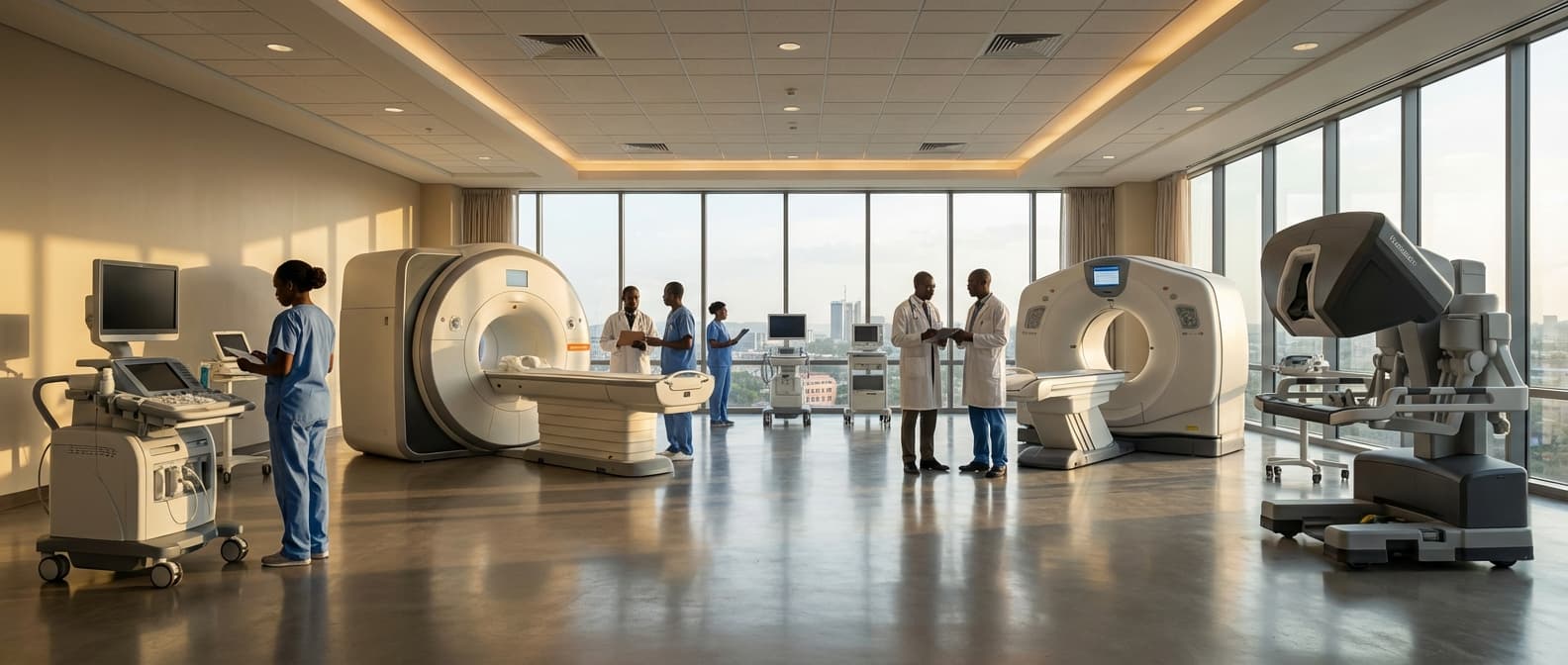
Life Support & Consumables in Mauritania
Engineering Excellence & Technical Support
Reliable supply of essential medical consumables and life support equipment ensuring uninterrupted, quality patient care delivery. High-standard technical execution following OEM protocols and local regulatory frameworks.
Mobile Clinic Deployment Program
Successfully deployed a fleet of mobile clinics to remote and underserved regions of Mauritania, providing critical life support and essential consumable medical supplies to over 10,000 individuals in the past year. This initiative significantly reduced travel burdens and ensured timely access to vital healthcare services.
Water Purification & Distribution Network
Established a robust water purification and distribution network, equipping 50 community centers with advanced filtration systems and delivering over 500,000 liters of safe drinking water monthly. This directly addresses dehydration risks and improves public health in drought-prone areas.
Emergency Medical Supply Chain Optimization
Implemented a streamlined emergency medical supply chain, reducing lead times for critical consumables (e.g., IV fluids, antibiotics, wound care) by 30% in 15 high-risk health facilities. This enhanced preparedness and response capabilities during health crises and outbreaks.
What Is Life Support & Consumables In Mauritania?
Life Support & Consumables in Mauritania refers to the provision of essential goods and services required to sustain human operation and maintain productivity in challenging or remote environments. This encompasses a broad spectrum of resources, from basic sustenance to specialized equipment, ensuring the well-being and operational continuity of individuals and organizations. The service is critical for entities operating in areas with limited local infrastructure or specialized operational demands, such as remote mining sites, oil and gas exploration fields, humanitarian aid operations, and certain governmental or security missions.
| Who Needs It | Typical Use Cases | Challenges Addressed |
|---|---|---|
| Oil and Gas Exploration Companies | Remote drilling sites, offshore platforms, seismic survey operations. | Extreme environmental conditions, limited access to commercial supply chains, long operational durations, need for specialized equipment and trained personnel. |
| Mining Operations | Extractive sites in arid or undeveloped regions, processing facilities. | Isolation, high demand for durable goods, need for robust logistics, worker welfare considerations. |
| Non-Governmental Organizations (NGOs) & Humanitarian Aid Agencies | Disaster relief operations, refugee camps, remote community development projects. | Urgent needs, limited local infrastructure, varying recipient requirements, ensuring safety and health of aid workers and beneficiaries. |
| Governmental Agencies (e.g., Defense, Border Patrol) | Forward operating bases, border security checkpoints, temporary deployments in austere environments. | Operational readiness, logistical support for extended missions, maintaining morale and health of personnel. |
| Construction and Engineering Firms | Large infrastructure projects in remote areas (e.g., dams, roads). | Sustaining a large workforce, ensuring project timelines, managing fluctuating supply needs. |
Key Components of Life Support & Consumables
- Food and Water: Provision of safe, potable water and nutritious food, catering to dietary requirements and logistical considerations for remote locations.
- Accommodation and Shelter: Supply of temporary or semi-permanent housing solutions, including tents, prefabricated structures, and associated amenities.
- Medical Supplies and Services: Procurement and delivery of pharmaceuticals, medical equipment, first-aid kits, and potentially access to medical personnel or evacuation services.
- Hygiene and Sanitation: Provision of sanitation facilities, personal hygiene products, waste management solutions, and pest control measures.
- Power Generation and Fuel: Supply of generators, fuel (diesel, gasoline, kerosene), and associated maintenance for operational power needs.
- Communication Equipment: Provision of satellite phones, radios, internet connectivity solutions, and associated technical support.
- Transportation and Logistics: Management of vehicle fleets, fuel, maintenance, and the logistical coordination for delivering supplies and personnel.
- Workforce Support: This can include recreational facilities, personal protective equipment (PPE), specialized tools, and general office supplies.
- Security Equipment and Services: Provision of safety gear, communication systems for security purposes, and potentially security personnel.
Who Needs Life Support & Consumables In Mauritania?
This document outlines the target customer segments and departments within Mauritania that require life support and consumables. Understanding these key areas is crucial for effective resource allocation, procurement, and service delivery to ensure the well-being and operational continuity of various entities.
| Customer Segment | Key Departments/Units | Primary Needs (Life Support) | Primary Needs (Consumables) |
|---|---|---|---|
| Healthcare Sector | Hospitals (public & private), Clinics, Health Centers, Laboratories | Ventilators, Defibrillators, Infusion Pumps, Oxygen Concentrators, Anesthesia Machines | Bandages, Syringes, Gloves, Masks, Disinfectants, Medications, IV Fluids, Surgical Supplies |
| Humanitarian Organizations | Field Operations, Refugee Camps, Health Outreaches, Disaster Relief Teams | Emergency Shelters, Basic Medical Kits, Water Purification Systems, Portable Generators | Basic Medical Supplies, Food Rations, Hygiene Kits, Sanitation Supplies, Water Treatment Chemicals |
| Mining & Extractive Industries | On-site Camps, Medical Clinics, Emergency Response Units, Operational Staff | First Aid Stations, Evacuation Equipment, Safety Monitoring Devices, Basic Living Facilities | Workplace Safety Supplies, Personal Protective Equipment (PPE), Site-specific Consumables (e.g., water, food, fuel for generators) |
| Government Agencies | Ministry of Health, Ministry of Defense, Civil Protection, Emergency Management Agency | Emergency Medical Services Equipment, Disaster Response Equipment, Field Hospitals | Medical Supplies for Public Health Programs, Operational Supplies for Security Forces, Consumables for Disaster Relief |
| Educational Institutions | Medical Schools, Science Departments, Research Laboratories | Laboratory Equipment (e.g., incubators, fume hoods), Simulation Manikins | Laboratory Reagents, Chemicals, Glassware, Specimen Collection Supplies, Safety Equipment |
| Remote Communities & Villages | Community Health Posts, Local Leadership (for distribution) | Basic First Aid Kits, Potable Water Supply Solutions | Essential Medicines, Hygiene Products, Sanitation Supplies |
Target Customers & Departments Requiring Life Support & Consumables in Mauritania
- {"title":"Healthcare Sector","description":"Hospitals, clinics, and medical facilities are primary consumers of life support equipment and a wide range of medical consumables for patient care, diagnostics, and treatment."}
- {"title":"Humanitarian Organizations","description":"NGOs and international aid agencies operating in Mauritania, particularly those involved in disaster relief, refugee support, and public health initiatives, require significant amounts of life support and consumables."}
- {"title":"Mining and Extractive Industries","description":"Remote mining sites and oil/gas operations necessitate comprehensive life support systems for personnel safety, emergency response, and basic living needs due to their isolated locations."}
- {"title":"Government Agencies","description":"Various government departments, including health, defense, emergency services, and civil protection, require life support and consumables for their operational readiness and public service mandates."}
- {"title":"Educational Institutions","description":"Universities and research institutions, especially those with medical or scientific programs, may require specialized life support and consumables for laboratories and practical training."}
- {"title":"Remote Communities & Villages","description":"Populations in underserved or remote areas may rely on external provision of essential life support and consumables, often facilitated by government programs or humanitarian aid."}
Life Support & Consumables Process In Mauritania
This document outlines the typical workflow for life support and consumables procurement and delivery in Mauritania, from initial inquiry to final execution. The process is designed to ensure timely and efficient provision of essential resources for operations, particularly in remote or challenging environments. Key stages include initial request, supplier identification and vetting, quotation and negotiation, order placement, logistics and customs clearance, and final delivery and verification.
| Stage | Description | Key Activities | Responsible Parties | Documentation | Potential Challenges |
|---|---|---|---|---|---|
| Inquiry & Needs Assessment | The process begins with a clear identification of the required life support and consumables. | Define specific items, quantities, quality standards, and delivery timelines. Site assessment for storage and usage. | Requesting Department/Client, Procurement Team | Needs Assessment Report, Bill of Materials (BOM), Site Survey Report | Ambiguous requirements, underestimation of needs, lack of detailed site information. |
| Supplier Identification & Vetting | Identifying and qualifying potential suppliers capable of meeting the requirements. | Market research, pre-qualification questionnaires, reference checks, financial health assessment, understanding local supplier capabilities. | Procurement Team, Legal Department (for compliance checks) | Supplier Database, Pre-qualification Questionnaires, Supplier Performance Records | Limited local supplier pool, unreliable supplier information, ethical concerns. |
| Quotation & Negotiation | Obtaining detailed pricing and terms from shortlisted suppliers and negotiating the best possible offer. | Issuing Request for Quotation (RFQ) or Tender, evaluating received quotations, price analysis, technical evaluation, negotiation on price, payment terms, and delivery schedules. | Procurement Team, Technical Experts | RFQ/Tender Documents, Supplier Quotations, Negotiation Minutes, Technical Evaluation Reports | Price volatility, unrealistic supplier bids, complex technical specifications. |
| Order Placement & Contract | Formalizing the agreement with the selected supplier through a purchase order or contract. | Issuing Purchase Order (PO) or signing a formal contract, ensuring all agreed-upon terms and conditions are included, specifying delivery points and timelines. | Procurement Team, Legal Department, Finance Department | Purchase Order (PO), Contract Agreement, Terms and Conditions | Contractual disputes, unclear payment terms, insufficient lead times. |
| Logistics & Transportation Planning | Organizing the safe and efficient transportation of goods from the supplier to the final destination in Mauritania. | Selecting appropriate transport modes (air, sea, land), arranging for packing and labeling, booking freight, coordinating with freight forwarders, insurance, and route planning. | Logistics Department, Procurement Team, Freight Forwarder | Shipping Manifests, Bill of Lading/Air Waybill, Packing Lists, Insurance Certificates | Infrastructure limitations, unreliable transport providers, security risks during transit. |
| Customs Clearance & Importation | Navigating Mauritanian customs regulations for smooth import of goods. | Preparing all necessary import documentation, liaising with customs brokers, paying applicable duties and taxes, undergoing inspections. | Customs Broker, Logistics Department, Client's Local Representative | Import Declaration Forms, Commercial Invoices, Certificates of Origin, Packing Lists, Import Licenses (if applicable) | Complex customs procedures, changing regulations, unexpected duties and taxes, delays at customs. |
| Delivery & On-Site Verification | The final stage of delivering goods to the designated location and verifying their condition and quantity. | Receiving goods at the site, inspecting for damages and discrepancies, verifying against the packing list and PO, quality control checks, obtaining signed delivery receipts. | Logistics Team, Site Operations Team, Quality Control Inspector | Delivery Receipts, Goods Received Note (GRN), Inspection Reports, Photos of Delivered Goods | Damaged goods, incorrect quantities, poor storage conditions at the site, lack of verification personnel. |
| Payment & Invoicing | Processing payments to the supplier based on the agreed terms and invoicing the client. | Submitting invoices for received goods, verifying invoices against PO and GRN, processing payments according to contractual terms, reconciliation of accounts. | Finance Department, Accounts Payable, Client's Finance Department | Invoices, Payment Vouchers, Proof of Payment, Financial Reports | Discrepancies in invoicing, delayed payments, currency fluctuations, bank transfer issues. |
Key Stages in the Life Support & Consumables Process
- Inquiry & Needs Assessment
- Supplier Identification & Vetting
- Quotation & Negotiation
- Order Placement & Contract
- Logistics & Transportation Planning
- Customs Clearance & Importation
- Delivery & On-Site Verification
- Payment & Invoicing
Life Support & Consumables Cost In Mauritania
Securing essential life support and consumables in Mauritania involves navigating a complex pricing landscape influenced by several key factors. These include the availability of goods (which can be volatile due to import dependence, logistical challenges, and seasonal fluctuations), transportation and logistics costs (especially for remote areas or goods requiring specific storage conditions), local market demand and competition, governmental regulations and import duties (which can vary significantly for different product categories), and exchange rates (with the Mauritanian Ouguiya fluctuating against major currencies). The general trend is that imported goods and those requiring cold chain logistics will be more expensive. Urban centers like Nouakchott generally offer a wider selection and potentially more competitive pricing compared to rural or remote regions. The pricing ranges provided below are approximate and can vary significantly based on the specific vendor, quality, brand, and current market conditions.
| Consumable Category | Description | Approximate Price Range (MRU) |
|---|---|---|
| Potable Water | Bottled water (1.5L bottle) | 150 - 300 |
| Potable Water | Large water container (20L) | 700 - 1200 |
| Food Staples | Rice (1kg bag) | 100 - 200 |
| Food Staples | Pasta (500g pack) | 150 - 250 |
| Food Staples | Canned goods (e.g., beans, tuna, per can) | 200 - 400 |
| Food Staples | Cooking oil (1L bottle) | 300 - 500 |
| Food Staples | Sugar (1kg bag) | 150 - 250 |
| Hygiene & Sanitation | Bar of soap | 50 - 150 |
| Hygiene & Sanitation | Toothpaste (medium tube) | 150 - 300 |
| Hygiene & Sanitation | Sanitary pads (pack of 10) | 300 - 600 |
| Medical Supplies (Basic) | Bandages (roll) | 100 - 250 |
| Medical Supplies (Basic) | Antiseptic wipes (pack) | 200 - 400 |
| Medical Supplies (Basic) | Pain relievers (e.g., paracetamol, small pack) | 200 - 500 |
| Fuel (for cooking/heating) | LPG gas cylinder (standard size) | 2000 - 4000 (refill cost, excluding cylinder deposit) |
| Fuel (for cooking/heating) | Kerosene (1L) | 100 - 200 |
Key Pricing Factors for Life Support & Consumables in Mauritania
- Availability & Supply Chain: Reliance on imports, seasonal availability, and logistical challenges directly impact prices.
- Transportation & Logistics: Costs associated with moving goods, including fuel, infrastructure, and specialized transport (e.g., refrigerated trucks).
- Market Demand & Competition: Higher demand and limited competition often lead to inflated prices.
- Government Regulations & Tariffs: Import duties, taxes, and other regulatory fees add to the final cost.
- Exchange Rates: Fluctuations in the Mauritanian Ouguiya (MRU) against foreign currencies affect the cost of imported items.
- Geographic Location: Prices are generally higher in remote areas due to increased transportation costs.
- Product Quality & Brand: Premium or specialized products will command higher prices than basic or generic alternatives.
- Storage & Handling: Costs for maintaining appropriate storage conditions (e.g., refrigeration) are factored into pricing.
Affordable Life Support & Consumables Options
Navigating the costs associated with life support and essential consumables can be a significant concern. This guide explores affordable options and strategic approaches to manage these expenses effectively. We'll cover the benefits of value bundles, which offer bundled services or products at a reduced price, and various cost-saving strategies applicable to a range of life support and consumable needs, from medical equipment to everyday essentials.
| Concept | Definition | Benefits for Cost Savings | Examples |
|---|---|---|---|
| Value Bundles | A package deal where multiple related products or services are offered together at a lower combined price than if purchased separately. | Reduces overall expenditure by offering a discount on bundled items. Simplifies procurement by dealing with one package. May include complementary items for convenience. | A "home oxygen system bundle" including a concentrator, backup cylinder, tubing, and filters at a set price. A "wound care kit" with dressings, tape, and antiseptic wipes. A subscription for medical supplies that includes all necessary items for a month. |
| Strategic Partnerships | Establishing long-term relationships with specific suppliers or service providers based on mutual benefit and potentially volume discounts or exclusive pricing. | Potential for negotiated lower prices due to consistent business. Improved reliability and service. Access to specialized support or product development. | Working with a single Durable Medical Equipment (DME) provider for all oxygen and mobility needs for a recurring discount. Partnering with a medical supply distributor for bulk orders of incontinence products. A hospital system contracting with a pharmaceutical company for a range of essential medications. |
| Loyalty Programs & Rewards | Incentive programs offered by suppliers that reward repeat customers with discounts, points, or exclusive offers. | Accumulate savings over time through purchases. Access to special promotions not available to the general public. Can be combined with other cost-saving strategies. | A pharmacy offering a 'buy 10, get 1 free' on certain over-the-counter medications. A medical supply company with a points system that can be redeemed for discounts on future purchases. A supplier offering tiered discounts based on annual spending. |
Key Cost-Saving Strategies for Life Support & Consumables
- Bulk Purchasing: Buying larger quantities of consumables often leads to lower per-unit costs. However, ensure you have adequate storage and that the items have a sufficient shelf life.
- Generic or Store Brands: For many non-prescription consumables and supplies, generic or store brands offer comparable quality at a significantly lower price point.
- Subscription Services & Auto-Replenishment: Many suppliers offer discounts for setting up recurring orders or subscriptions. This can be particularly useful for regularly used items and ensures you never run out.
- Refurbished Equipment: For durable medical equipment or other reusable items, consider purchasing certified refurbished options. These are often professionally inspected and restored, providing substantial savings over new equipment.
- Negotiate with Suppliers: Don't be afraid to discuss pricing, especially if you are a long-term customer or purchasing in volume. Loyalty and consistent business can be leveraged for better rates.
- Compare Prices Across Providers: Regularly research and compare prices from different suppliers. Online platforms and comparison websites can be invaluable tools for this.
- Preventative Maintenance: For equipment, regular preventative maintenance can avoid costly emergency repairs and extend the lifespan of the device.
- Utilize Insurance & Assistance Programs: Understand what your insurance covers and explore any available government assistance programs, grants, or non-profit organizations that might offer financial aid or discounted supplies.
- DIY or Home-Based Alternatives (where appropriate): For certain non-critical consumables, explore if safe and effective home-based alternatives or DIY solutions exist, always prioritizing safety and efficacy.
- Energy Efficiency: For equipment that consumes energy, opting for energy-efficient models can lead to long-term savings on utility bills.
Verified Providers In Mauritania
When seeking healthcare services in Mauritania, the credibility and qualifications of healthcare providers are paramount. Franance Health stands out as a beacon of trust, meticulously vetting and endorsing a network of healthcare professionals and facilities that meet the highest international standards. This dedication to quality assurance ensures that patients receive safe, effective, and compassionate care. Understanding the rigorous credentialing process employed by Franance Health reveals why their verified providers represent the best choice for your health needs in Mauritania.
| Provider Type | Franance Health Verification Benefits | Why They Are the Best Choice |
|---|---|---|
| Doctors & Specialists | Confirms expertise in their chosen field, adherence to ethical practices, and up-to-date knowledge. | Access to highly skilled and trustworthy medical professionals ensuring accurate diagnosis and effective treatment plans. |
| Hospitals & Clinics | Ensures adherence to strict hygiene standards, availability of essential medical equipment, and qualified support staff. | Safe and well-equipped healthcare facilities providing comprehensive care and minimizing risks of infection or complications. |
| Diagnostic Laboratories | Verifies the accuracy and reliability of testing procedures, calibration of equipment, and qualifications of technicians. | Trustworthy diagnostic results crucial for accurate medical assessments and informed treatment decisions. |
| Pharmacies | Confirms the authenticity of medications, proper storage conditions, and licensed pharmacists. | Access to genuine and safely stored pharmaceuticals, preventing the use of counterfeit or substandard drugs. |
Key Aspects of Franance Health's Verification Process:
- Comprehensive Educational Background Checks: Verifying medical degrees, specialized training, and accreditations from recognized institutions.
- Licensure and Regulatory Compliance: Ensuring all providers hold valid licenses to practice in Mauritania and adhere to national healthcare regulations.
- Professional Experience and Competency Assessment: Evaluating practical experience, surgical outcomes (where applicable), and patient feedback.
- Ethical Conduct and Professionalism Review: Screening for any disciplinary actions or breaches of professional ethics.
- Continuous Professional Development (CPD) Verification: Confirming that providers actively engage in ongoing learning to stay abreast of medical advancements.
Scope Of Work For Life Support & Consumables
This Scope of Work (SOW) outlines the requirements for the procurement, delivery, and support of Life Support and Consumable items. It details the technical deliverables expected from the vendor and defines the standard specifications for these critical supplies. The objective is to ensure a continuous and reliable supply of high-quality life support equipment and consumables to maintain operational readiness and personnel well-being.
| Item Category | Technical Deliverables | Standard Specifications | Quantity/Unit | Delivery Timeline |
|---|---|---|---|---|
| Oxygen Generators | Fully functional oxygen generation units, performance validation reports, user manuals, maintenance guides. | Minimum O2 production rate (L/min), purity level (%), power consumption (W), MTBF (hours), compliance with [Relevant Standard e.g., ISO 13485]. | 2 units | Within 90 days of PO |
| Water Purification Systems | Operational water purification units, water quality test reports, spare parts list, operational training. | Purification capacity (L/hr), removal efficiency for contaminants (%), power consumption (W), ease of maintenance, compliance with [Relevant Standard e.g., NSF/ANSI 58]. | 3 units | Within 120 days of PO |
| First Aid Kits | Pre-stocked, sealed, and clearly labeled first aid kits. | Contents compliant with [Relevant Standard e.g., ANSI Z308.1], sterile packaging for all medical items, expiration date tracking, durable and waterproof container. | 100 kits | Within 60 days of PO |
| Emergency Rations | Individually packaged, ready-to-eat emergency food rations. | Minimum shelf life (years), caloric content per ration (kcal), nutritional completeness, resistance to temperature fluctuations, compliance with [Relevant Standard e.g., MRE specifications]. | 500 rations | Within 45 days of PO |
| HEPA Filters | High-efficiency particulate air (HEPA) filters for air filtration systems. | Filtration efficiency (e.g., 99.97% for 0.3 micron particles), airflow resistance (Pa), dimensions, filter lifespan rating, compliance with [Relevant Standard e.g., HEPA H13/H14]. | 50 units | Within 30 days of PO |
| Respirators (N95) | Individually packaged N95 disposable respirators. | NIOSH-approved, fit testing guidelines included, breathability rating, minimum quantity per box, expiration date. | 1000 units | Within 15 days of PO |
Key Procurement Areas
- Environmental Control and Life Support Systems (ECLSS) components
- Medical supplies and equipment
- Food and water provisions
- Personal protective equipment (PPE)
- Hygiene and sanitation supplies
- Power and energy consumables
- Maintenance and repair consumables for life support systems
Service Level Agreement For Life Support & Consumables
This Service Level Agreement (SLA) outlines the response times and uptime guarantees for the provision of Life Support & Consumables by [Provider Name] to [Client Name]. This SLA is an integral part of the Master Service Agreement (MSA) between the parties.
| Service Component | Uptime Guarantee | Critical Incident Response Time | Major Incident Response Time | Minor Incident Response Time |
|---|---|---|---|---|
| Life Support Equipment Availability (e.g., Ventilators, Infusion Pumps) | 99.9% monthly uptime | 15 minutes acknowledgement, 2 hours resolution target | 1 hour acknowledgement, 8 business hours resolution target | 4 business hours acknowledgement, 2 business days resolution target |
| Essential Consumables Stock Levels (e.g., IV Fluids, Breathing Circuits) | Guaranteed delivery within [Number] hours of approved order during business hours, [Number] hours during off-hours. | N/A (Managed via inventory/ordering process) | N/A (Managed via inventory/ordering process) | N/A (Managed via inventory/ordering process) |
| Remote Monitoring & Alerting Systems for Life Support | 99.5% monthly uptime | 10 minutes acknowledgement, 1 hour resolution target | 30 minutes acknowledgement, 4 business hours resolution target | 2 business hours acknowledgement, 1 business day resolution target |
Definitions
- Critical Incident: An event that renders life support equipment or essential consumables unusable, posing an immediate and severe threat to patient safety and requiring immediate intervention.
- Major Incident: An event that significantly degrades the performance or availability of life support equipment or essential consumables, impacting a substantial number of patients or requiring prompt resolution to prevent patient harm.
- Minor Incident: An event that causes a minor inconvenience or affects a limited number of users or non-critical functions of life support equipment or consumables, requiring resolution within standard business hours.
- Uptime: The percentage of time during a calendar month that life support equipment and consumables are available and functional as per their intended specifications.
- Response Time: The time elapsed from the moment a critical incident is reported to [Provider Name] by [Client Name] until [Provider Name] acknowledges the report and initiates troubleshooting or remediation efforts.
- Resolution Time: The time elapsed from the moment a critical incident is reported to [Provider Name] by [Client Name] until the incident is resolved and normal operations are restored.
- Scheduled Maintenance: Planned periods of downtime for system upgrades, repairs, or preventative maintenance, which will be communicated to the client at least [Number] days in advance.
Frequently Asked Questions

Ready when you are
Let's scope your Life Support & Consumables in Mauritania project in Mauritania.

Scaling healthcare logistics and technical systems across the entire continent.