
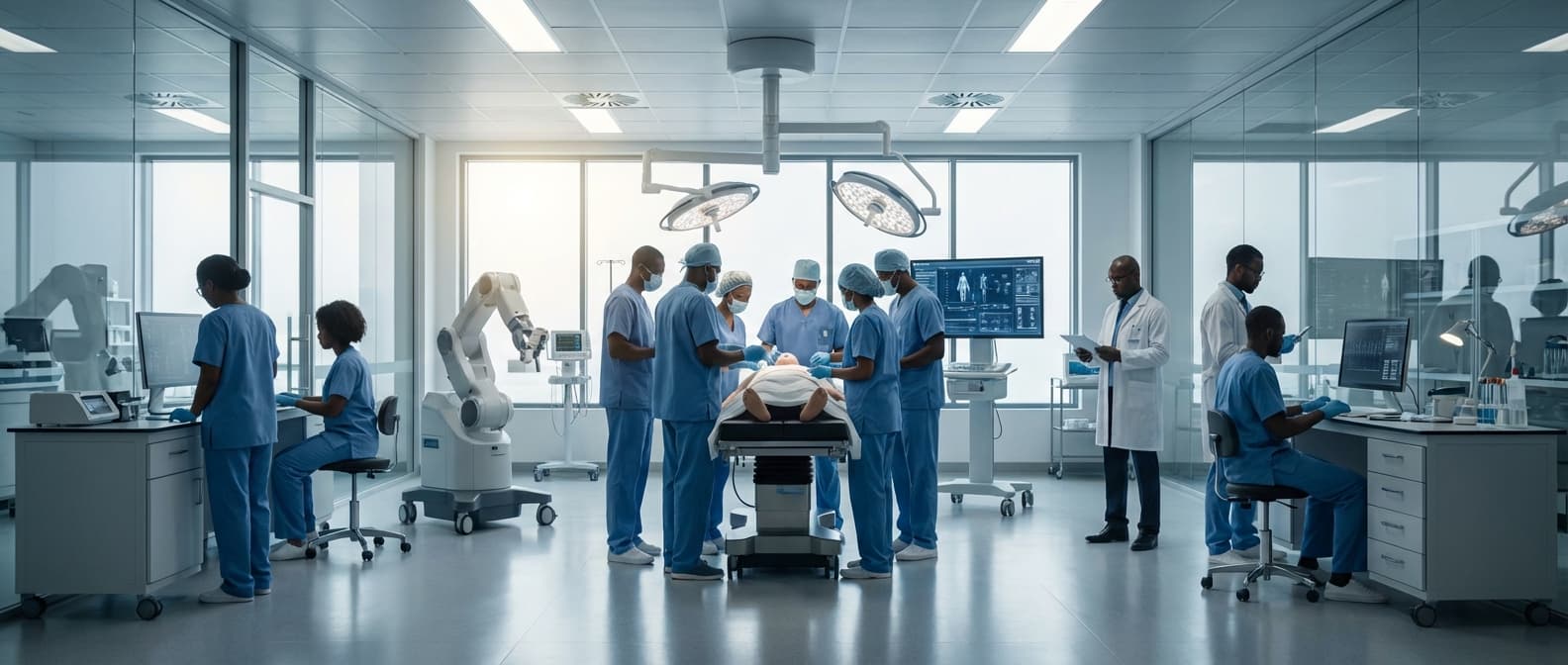
Managed Equipment Service (MES) in Mauritania
Engineering Excellence & Technical Support
Long‑term equipment provision with uptime SLAs and lifecycle management. High-standard technical execution following OEM protocols and local regulatory frameworks.
Robust Infrastructure Monitoring & Maintenance
Leveraging advanced remote monitoring systems and proactive maintenance protocols, MES ensures uninterrupted operation of critical infrastructure (e.g., power generation, water treatment, communication networks) across Mauritania, minimizing downtime and optimizing performance.
Customized Equipment Lifecycle Management
MES offers tailored solutions for the entire lifecycle of specialized industrial equipment, from procurement and installation to predictive maintenance, repairs, and eventual decommissioning. This ensures optimal asset utilization, cost control, and compliance with international standards.
Remote Diagnostics & On-Site Technical Expertise
Our integrated approach combines cutting-edge remote diagnostic capabilities with a highly skilled, on-the-ground technical team. This allows for rapid identification and resolution of issues, even in challenging and remote locations within Mauritania, ensuring swift and effective support.
What Is Managed Equipment Service (Mes) In Mauritania?
Managed Equipment Service (MES) in Mauritania refers to a comprehensive outsourcing model wherein a third-party service provider assumes responsibility for the procurement, installation, maintenance, and operational management of critical equipment for an organization. This service is typically designed for entities that require specialized or high-volume equipment for their core operations but wish to avoid the capital expenditure, operational complexities, and technical expertise associated with direct ownership and management. MES providers offer a turnkey solution, ensuring equipment availability, optimal performance, and adherence to service level agreements (SLAs) through proactive monitoring, preventative maintenance, and rapid response to breakdowns. This allows the client organization to focus on its core competencies without being burdened by equipment lifecycle management.
| Who Needs MES in Mauritania | Typical Use Cases | ||||||||||||
|---|---|---|---|---|---|---|---|---|---|---|---|---|---|
| Large industrial enterprises (e.g., mining, oil & gas, manufacturing) requiring specialized heavy machinery. | Mining operations: Excavators, haul trucks, processing plants, drilling rigs. | Oil and gas exploration and production: Drilling equipment, pumps, compressors, offshore platforms. | Manufacturing facilities: Production lines, specialized machinery, packaging equipment. | Healthcare institutions (hospitals, clinics) needing advanced medical imaging and diagnostic equipment. | Medical imaging: MRI machines, CT scanners, X-ray equipment, laboratory analyzers. | Telecommunications companies deploying and maintaining network infrastructure. | Network infrastructure: Base stations, switching equipment, fiber optic deployment tools. | Logistics and transportation firms requiring fleets of vehicles and handling equipment. | Fleet management: Trucks, forklifts, specialized transport vehicles. | Government agencies or public sector organizations with significant equipment needs and limited internal capacity. | Public utilities: Water treatment plants, power generation equipment. | Construction companies managing diverse fleets of heavy construction equipment. | Construction equipment: Cranes, bulldozers, concrete mixers, earthmoving machinery. |
Key Components of Managed Equipment Service (MES) in Mauritania
- Equipment Procurement and Acquisition: Sourcing and purchasing of necessary machinery and technology.
- Installation and Commissioning: Professional setup and integration of equipment into the client's operational environment.
- Preventative and Corrective Maintenance: Scheduled servicing to minimize downtime and reactive repairs to address malfunctions.
- Technical Support and Troubleshooting: Expert assistance for operational issues and technical challenges.
- Parts and Consumables Management: Ensuring availability and replenishment of necessary components and supplies.
- Performance Monitoring and Optimization: Real-time tracking of equipment efficiency and implementation of measures for improvement.
- End-of-Life Management: Planning for decommissioning and disposal or upgrade of equipment.
- Reporting and Analytics: Providing data on equipment performance, uptime, and maintenance activities.
Who Needs Managed Equipment Service (Mes) In Mauritania?
Managed Equipment Service (MES) offers significant advantages for organizations in Mauritania that rely heavily on specialized or capital-intensive equipment. MES providers take on the responsibility of acquiring, installing, maintaining, and upgrading equipment, allowing clients to focus on their core operations and benefit from the latest technology without the upfront capital expenditure or the burden of in-house management. The specific needs for MES in Mauritania are driven by sectors requiring robust, reliable, and technologically advanced equipment, as well as by organizations seeking to optimize operational efficiency and reduce total cost of ownership.
| Target Customer Segment | Key Departments/Areas Requiring MES |
|---|---|
| Public Sector Organizations | IT Departments (servers, networking), Public Health (medical imaging, lab equipment), Infrastructure (heavy machinery, specialized vehicles), Education (IT labs, research equipment) |
| Large-Scale Industrial Companies | Operations/Production (heavy machinery, automation systems), Maintenance (specialized tooling, diagnostic equipment), IT (data centers, communication systems), Logistics (transportation fleets, warehousing equipment) |
| Healthcare Institutions | Radiology/Imaging (MRI, CT scanners, X-ray machines), Laboratories (diagnostic equipment, analysers), Surgery (medical devices), IT (network infrastructure, patient record systems), Facilities Management (HVAC, sterilization equipment) |
| Telecommunications Providers | Network Operations (base stations, switching equipment), IT (data centers, servers), Field Operations (specialized testing equipment) |
| Financial Institutions | IT (data centers, servers, ATMs), Branch Operations (secure printing, document processing), Security (surveillance equipment) |
| Educational and Research Institutions | IT (computing labs, research servers), Science Departments (laboratory equipment, scientific instruments), Engineering Departments (specialized machinery, testing equipment) |
| Logistics and Transportation Companies | Fleet Management (trucks, specialized vehicles), Warehousing (material handling equipment, automation), IT (tracking systems, data management) |
Target Customers for MES in Mauritania
- Public Sector Organizations (Government Ministries, State-Owned Enterprises)
- Large-Scale Industrial Companies (Mining, Oil & Gas, Manufacturing)
- Healthcare Institutions (Hospitals, Clinics, Diagnostic Centers)
- Telecommunications Providers
- Financial Institutions (Banks, large insurance companies)
- Educational and Research Institutions
- Logistics and Transportation Companies
Managed Equipment Service (Mes) Process In Mauritania
The Managed Equipment Service (MES) process in Mauritania, like in many other regions, is designed to provide a comprehensive solution for healthcare facilities to acquire, operate, and maintain medical equipment without the burden of direct ownership and management. This workflow typically begins with an inquiry from a healthcare provider and concludes with the successful execution and ongoing management of the equipment. The process is structured to ensure transparency, efficiency, and the best possible outcomes for patient care.
| Stage | Description | Key Activities | Key Stakeholders | Typical Duration |
|---|---|---|---|---|
| The process starts when a healthcare facility expresses interest in MES solutions. | Contact initiation, introductory meetings, understanding general needs. | Healthcare Facility (e.g., Hospital, Clinic), MES Provider | 1-2 Weeks |
| Detailed evaluation of the facility's current and future equipment requirements, infrastructure, and operational context. | Clinical needs analysis, equipment inventory review, site inspection (power, space, IT), user interviews. | MES Provider (Technical & Clinical Specialists), Healthcare Facility (Medical Staff, Administration) | 2-4 Weeks |
| Based on the needs assessment, a tailored MES proposal is created, outlining the recommended equipment, services, costs, and service level agreements (SLAs). | Equipment selection, service package definition, financial modeling, SLA drafting, proposal document creation. | MES Provider (Sales, Technical, Finance) | 3-6 Weeks |
| Review and finalization of the MES contract, including terms, conditions, pricing, performance metrics, and responsibilities. | Legal review, commercial discussions, agreement on SLAs, signing of the contract. | MES Provider (Legal & Commercial Teams), Healthcare Facility (Legal & Administration) | 4-8 Weeks |
| Sourcing, purchasing, and delivering the specified medical equipment to the healthcare facility. | Equipment sourcing from manufacturers, quality checks, logistics and shipping arrangements, customs clearance (if applicable). | MES Provider (Procurement & Logistics), Equipment Manufacturers | Variable (Depends on equipment lead times, e.g., 2-12 Months) |
| Professional installation of the equipment and rigorous testing to ensure it functions correctly and meets specifications. | On-site installation, integration with existing systems, calibration, functional testing, performance validation. | MES Provider (Technical Engineers), Healthcare Facility (IT & Biomedical Staff) | 1-4 Weeks per major equipment set |
| Comprehensive training for the facility's clinical and technical staff on the operation, basic maintenance, and safety of the new equipment. | User training sessions (clinical & technical), documentation provision, competency assessment. | MES Provider (Application Specialists & Trainers), Healthcare Facility (End-Users & Biomedical Staff) | 1-2 Weeks per major equipment set |
| The core of MES, involving proactive and reactive maintenance, repairs, consumables, and operational support. | Preventive maintenance, corrective maintenance, parts management, technical support, consumables supply. | MES Provider (Field Service Engineers, Technical Support, Logistics), Healthcare Facility (End-Users) | Ongoing (Contractual term, e.g., 5-10 Years) |
| Regular tracking and reporting of equipment performance, uptime, service response times, and cost against agreed SLAs. | Data collection (equipment logs, service reports), performance analysis, SLA adherence review, regular reporting to the facility. | MES Provider (Operations & Account Management), Healthcare Facility (Administration & Clinical Management) | Ongoing (Monthly/Quarterly) |
| Planning for technological advancements, equipment obsolescence, and responsible decommissioning and disposal. | Technology scouting, obsolescence planning, upgrade proposals, end-of-life assessment, disposal strategy. | MES Provider (Strategic Planning & Operations), Healthcare Facility (Administration & Clinical Leadership) | As needed, throughout the contract term |
Managed Equipment Service (MES) Process Workflow in Mauritania
- Inquiry and Initial Consultation
- Needs Assessment and Site Survey
- Proposal Development and Quotation
- Contract Negotiation and Signing
- Equipment Procurement and Delivery
- Installation and Commissioning
- Training and Handover
- Ongoing Operation and Maintenance
- Performance Monitoring and Reporting
- Equipment Upgrade/Replacement and End-of-Life Management
Managed Equipment Service (Mes) Cost In Mauritania
Managed Equipment Service (MES) costs in Mauritania are influenced by several key factors, leading to a range of pricing that can be significantly impacted by the specific equipment, service level agreements (SLAs), and the vendor's operational footprint. MES is a comprehensive approach to managing medical equipment, encompassing procurement, installation, maintenance, calibration, repair, and often training and eventual replacement. For healthcare providers in Mauritania, understanding these cost drivers is crucial for budgeting and operational efficiency. The local currency, the Mauritanian Ouguiya (MRU), is used for all pricing. Factors impacting the MRU cost include the complexity and number of devices, the criticality of the equipment (e.g., life-support systems vs. general diagnostic tools), the vendor's overhead in Mauritania (e.g., presence of local engineers, spare parts inventory), the duration of the contract, and the scope of services provided within the SLA. Emerging markets like Mauritania may also see pricing influenced by import duties, logistical challenges, and the availability of specialized technicians. Pricing models can vary, with some vendors offering per-device fees, others a percentage of the equipment's capital cost, or a fixed monthly/annual fee for a defined set of services. It's essential for healthcare facilities to conduct thorough due diligence when comparing MES proposals, considering not just the upfront cost but also the long-term value and impact on equipment uptime and patient care.
| MES Pricing Category (Illustrative) | Estimated Range (MRU per annum) | Notes |
|---|---|---|
| Basic Maintenance & Repair (Low-Complexity Equipment) | 50,000 - 250,000 MRU | Covers standard preventive maintenance and reactive repairs for less critical devices (e.g., basic diagnostic tools, patient monitors without advanced features). Assumes limited scope of SLAs. |
| Comprehensive MES (Mid-Complexity Equipment) | 250,000 - 1,000,000 MRU | Includes preventive maintenance, calibration, and repairs for a broader range of equipment (e.g., digital X-ray, basic ultrasound, laboratory analyzers). Often includes guaranteed response times and parts availability. |
| Advanced MES (High-Complexity & Critical Equipment) | 1,000,000 - 5,000,000+ MRU | Targets high-end imaging systems (MRI, CT scanners), advanced surgical equipment, and life-support machinery. Involves stringent SLAs, dedicated technical teams, extensive spare parts inventory, and often includes full lifecycle management. |
| Per-Device / Per-Procedure Pricing (Specialized) | Variable (often quoted per device or procedure) | Some vendors might offer specialized pricing models for specific equipment types or for services tied to usage. This requires detailed negotiation based on specific equipment and expected service volume. |
Key Pricing Factors for MES in Mauritania
- Equipment Type and Volume: The nature of the medical equipment (e.g., imaging, surgical, diagnostic, laboratory) and the total number of units under management. Higher-end, complex, or a larger quantity of devices will naturally increase costs.
- Service Level Agreement (SLA) Scope: The defined response times for service calls, preventive maintenance schedules, guaranteed uptime percentages, and the inclusion of consumables or spare parts directly affect pricing.
- Vendor's Local Presence and Infrastructure: The extent of the vendor's operations within Mauritania, including the availability of local technical expertise, spare parts warehousing, and logistical capabilities. A strong local presence can sometimes lead to more competitive pricing due to reduced travel and import complexities.
- Contract Duration: Longer-term MES contracts often come with more favorable pricing structures compared to shorter engagements, as they provide vendors with greater predictability.
- Equipment Age and Condition: Older or poorly maintained equipment might require more frequent and complex repairs, leading to higher associated costs within the MES.
- Training and Technical Support: The level of training provided to hospital staff on equipment operation and basic maintenance can be bundled into the MES, influencing the overall cost.
- Spare Parts and Consumables Management: Whether spare parts and consumables are included in the MES, and the agreed-upon inventory levels, will impact the pricing.
- Geographic Location of Facilities: For facilities located in more remote areas of Mauritania, logistical costs for service engineers and parts delivery might be higher, reflected in the MES price.
- Ancillary Services: Some MES contracts may include additional services like asset management, regulatory compliance support, or decommissioning of old equipment, which will add to the cost.
Affordable Managed Equipment Service (Mes) Options
Managed Equipment Service (MES) can be a strategic investment for businesses to optimize their operational efficiency and control costs. Affordable MES options often revolve around flexible, value-driven bundles and smart cost-saving strategies. Value bundles typically group essential services like equipment maintenance, repair, and potentially consumables, offering a predictable cost and streamlined management. Cost-saving strategies include preventive maintenance to avoid costly breakdowns, optimizing equipment utilization, negotiating bulk discounts on parts and consumables, and leveraging remote monitoring for proactive issue detection. Businesses can also explore tiered service levels, pay-as-you-go models for less critical equipment, and longer-term contracts for greater price stability.
| Cost-Saving Strategy | Description | Potential Benefit |
|---|---|---|
| Preventive Maintenance | Scheduled inspections and servicing to identify and fix potential issues before they cause breakdowns. | Reduces emergency repair costs, minimizes downtime, extends equipment lifespan. |
| Optimized Equipment Utilization | Analyzing usage patterns to ensure equipment is used efficiently and not over- or under-utilized. | Maximizes ROI, identifies underperforming assets, avoids unnecessary replacements. |
| Bulk Purchasing & Negotiation | Leveraging volume for parts, consumables, and service contracts to secure better pricing. | Lower per-unit costs, improved budget predictability. |
| Remote Monitoring & Predictive Maintenance | Using IoT sensors and software to track equipment performance and predict failures. | Proactive issue resolution, reduced downtime, fewer emergency repairs. |
| Tiered Service Levels | Offering different service packages based on equipment criticality and required response times. | Tailors costs to specific needs, avoids overspending on non-critical assets. |
| Energy Efficiency Audits | Assessing equipment for energy consumption and recommending upgrades or adjustments. | Reduced utility bills, environmental benefits. |
Key Components of Affordable MES Value Bundles
- Preventive Maintenance & Inspections
- On-Demand Repair Services
- Parts & Consumables Management
- Remote Monitoring & Diagnostics
- Equipment Calibration
- Staff Training on Equipment Operation
Verified Providers In Mauritania
In the burgeoning healthcare landscape of Mauritania, identifying truly qualified and trustworthy medical service providers is paramount for individuals seeking reliable care. Franance Health stands out as a beacon of excellence, distinguished by its rigorous credentialing process and unwavering commitment to patient well-being. Understanding what makes Franance Health credentials so valuable, and why they represent the best choice for healthcare in Mauritania, requires a closer look at their standards and the benefits they offer.
| Criteria | Franance Health Verification Standard | Patient Benefit |
|---|---|---|
| Medical Education & Training | Verified from accredited institutions with thorough review of qualifications. | Ensures foundational knowledge and competence. |
| Clinical Experience | Assessed for relevant practical experience and successful patient outcomes. | Guarantees hands-on skill and proven track record. |
| Specialty Certification | Mandatory verification of specific certifications for chosen medical fields. | Confirms expertise in particular areas of medicine. |
| Professional License | Confirmed as current and in good standing with relevant authorities. | Guarantees legal authorization to practice. |
| Ethical Conduct & Reputation | Evaluated through background checks and professional references. | Promotes patient trust and ethical treatment. |
| Continuing Education | Proof of ongoing learning and adaptation to medical advancements required. | Ensures providers are up-to-date with the latest medical practices. |
Why Franance Health Credentials are the Gold Standard:
- Stringent Vetting Process: Franance Health employs a multi-layered verification system that goes beyond basic licensing. This includes comprehensive background checks, verification of medical education and training from accredited institutions, and assessment of clinical experience and professional conduct.
- Specialized Expertise Verification: Beyond general qualifications, Franance Health ensures that providers possess the specific expertise and certifications required for their particular medical specialties. This guarantees that patients are connected with doctors and facilities that are not only licensed but also highly skilled in their chosen fields.
- Commitment to Continuous Professional Development: The healthcare sector is constantly evolving. Franance Health requires its affiliated providers to demonstrate ongoing engagement in continuing medical education and professional development, ensuring they are up-to-date with the latest medical advancements and best practices.
- Adherence to Ethical Standards: A core component of Franance Health’s credentialing involves a thorough evaluation of a provider's ethical standing and commitment to patient-centered care. This includes an assessment of their adherence to medical ethics, patient rights, and professional integrity.
- Patient Safety and Quality Assurance: Franance Health’s rigorous credentialing directly contributes to enhanced patient safety and improved quality of care. By partnering with verified providers, patients can have greater confidence in the competence and reliability of the medical services they receive.
- Building Trust and Transparency: In an industry where trust is fundamental, Franance Health's transparent credentialing process builds confidence for both patients and referring organizations. Knowing that a provider has met these high standards alleviates concerns and simplifies the decision-making process.
- Access to a Network of Excellence: Choosing Franance Health means gaining access to a curated network of medical professionals who have met the highest benchmarks. This ensures that patients are connected with the most capable and reputable healthcare providers available in Mauritania.
Scope Of Work For Managed Equipment Service (Mes)
This document outlines the Scope of Work (SoW) for a Managed Equipment Service (MES), detailing the technical deliverables and standard specifications required for the successful implementation and ongoing management of medical equipment within a healthcare facility. The MES aims to provide a comprehensive solution encompassing the entire lifecycle of medical equipment, from procurement and installation to maintenance, calibration, and eventual disposal. This ensures operational efficiency, cost-effectiveness, and adherence to regulatory compliance.
| Category | Deliverable | Standard Specification / Requirement | Key Performance Indicator (KPI) |
|---|---|---|---|
| Inventory Management | Equipment Inventory Database | Comprehensive and accurate database including asset ID, manufacturer, model, serial number, acquisition date, location, service history, warranty status. Accessible via a secure web portal. | 100% inventory accuracy within 30 days of initial onboarding. Monthly update frequency. |
| Maintenance | Preventive Maintenance (PM) | Scheduled PMs executed according to manufacturer recommendations and regulatory standards (e.g., IEC 62353, ISO 13485). All PM tasks documented. Use of certified technicians. | 98% PM completion rate on schedule. Zero critical PM failures leading to equipment downtime. |
| Maintenance | Corrective Maintenance (CM) | Response time targets based on equipment criticality (e.g., Tier 1: 2 hours, Tier 2: 8 hours, Tier 3: 24 hours). First-time fix rate of >85%. Use of OEM or equivalent parts. | Mean Time To Repair (MTTR) within defined targets per criticality tier. 95% availability for critical equipment. |
| Calibration | Calibration and Performance Verification | Regular calibration by accredited or certified technicians using traceable standards. Calibration certificates provided for all activities. | 100% calibration completion as per schedule. Compliance with accreditation standards (e.g., ISO 17025 where applicable). |
| Asset Management | Equipment Lifecycle Management | Defined processes for procurement, installation, commissioning, and decommissioning. Detailed asset disposal plan adhering to environmental and data security regulations. | On-time commissioning of new equipment. Efficient decommissioning process with minimal waste. |
| Training | User Training and Competency | Provision of comprehensive training for clinical staff on the safe and effective use of equipment. Competency assessments conducted. Training records maintained. | 80% user competency achieved post-training. Annual refresher training offered. |
| Compliance | Regulatory Compliance & Audit Support | Ensuring all equipment meets current regulatory standards (e.g., FDA, MDR, local health authorities). Support during internal and external audits. Documentation management for compliance. | Zero major non-compliance findings related to equipment. 100% availability of required documentation for audits. |
| Reporting | Performance Reporting | Monthly and quarterly reports including asset utilization, maintenance costs, MTBF, MTTR, PM compliance, and recommendations for optimization. | Timely delivery of accurate and comprehensive reports. Actionable insights provided. |
| Technology | Technology Refresh & Innovation | Proactive identification of technology obsolescence and opportunities for upgrades. Evaluation of new technologies for improved patient care and operational efficiency. | Annual technology review and recommendation report. Successful integration of at least one new technology per year. |
Key Technical Deliverables
- Equipment Inventory Management System
- Preventive Maintenance Schedule and Execution
- Corrective Maintenance and Repair Services
- Calibration and Performance Verification
- Asset Lifecycle Management (Procurement, Deployment, Decommissioning)
- Training and Competency Assessment for End-Users
- Regulatory Compliance and Audit Support
- Performance Reporting and Analytics
- Equipment Upgrade and Replacement Planning
- Technology Scouting and Innovation Integration
Service Level Agreement For Managed Equipment Service (Mes)
This Service Level Agreement (SLA) outlines the agreed-upon service levels for the Managed Equipment Service (MES) provided by [Provider Name] to [Client Name]. It defines the response times for critical incidents and the guaranteed uptime for the managed equipment.
| Incident Severity | Definition | Response Time Guarantee | Resolution Target | Uptime Guarantee |
|---|---|---|---|---|
| Critical (P1) | Complete system failure affecting core business operations, with no workaround available. | 1 hour | 4 business hours | 99.5% |
| High (P2) | Significant degradation of service impacting a major function, with limited or difficult workarounds. | 2 business hours | 8 business hours | 99.7% |
| Medium (P3) | Partial loss of functionality or performance degradation affecting non-critical operations. | 4 business hours | 24 business hours | 99.9% |
| Low (P4) | Minor issues, cosmetic defects, or general inquiries with minimal impact on operations. | 8 business hours | 3 business days | 99.9% |
Key Service Components
- Scope of Service: This SLA covers all equipment designated as part of the MES, as detailed in Exhibit A (Equipment Inventory).
- Service Hours: Standard service hours are Monday to Friday, 9:00 AM to 5:00 PM [Client's Time Zone], excluding national holidays.
- Support Channels: Support requests can be submitted via the dedicated client portal, email ([support@example.com]), or phone ([1-800-XXX-XXXX]).
Frequently Asked Questions

Ready when you are
Let's scope your Managed Equipment Service (MES) in Mauritania project in Mauritania.

Scaling healthcare logistics and technical systems across the entire continent.