
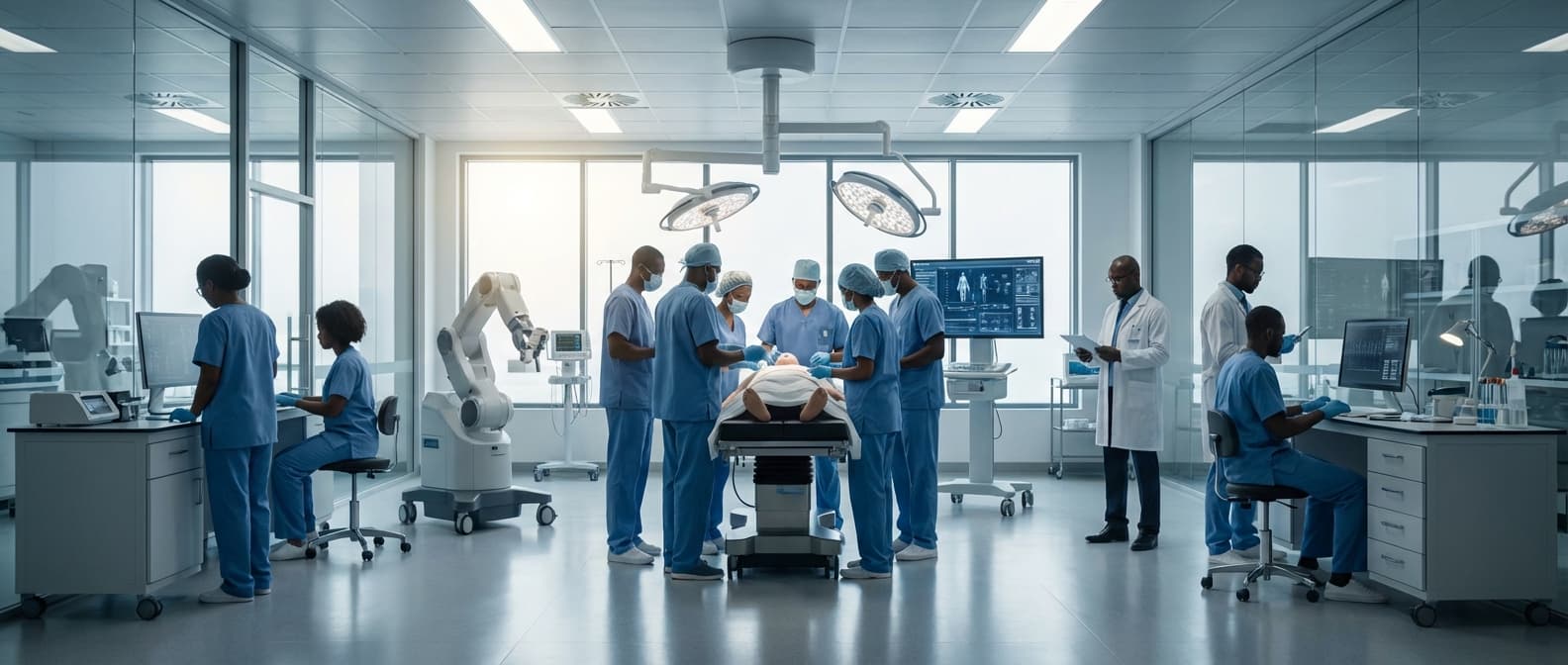
Biomedical Engineering Consulting in Mauritania
Engineering Excellence & Technical Support
Equipment selection, procurement and implementation consulting High-standard technical execution following OEM protocols and local regulatory frameworks.
Advanced Medical Device Validation
Expert biomedical engineering consulting services for the validation and verification of advanced medical devices, ensuring compliance with international standards (ISO 13485, IEC 60601 series) and local Mauritanian healthcare regulations. We provide comprehensive testing, documentation review, and risk management assessments to guarantee safety and efficacy for critical medical equipment.
Healthcare Facility Design & Optimization
Specialized consulting in the design, renovation, and optimization of healthcare facilities in Mauritania. Our expertise covers the strategic planning of medical equipment infrastructure, workflow analysis, infection control integration, and energy-efficient technology implementation to enhance patient care delivery and operational efficiency.
Biotechnology & Research Support
Providing technical guidance and support for the integration and implementation of cutting-edge biotechnology and molecular diagnostic equipment in Mauritanian research institutions and clinical laboratories. We assist in technology selection, protocol development, validation of analytical methods, and training of personnel for advanced life science applications.
What Is Biomedical Engineering Consulting In Mauritania?
Biomedical Engineering Consulting in Mauritania encompasses the provision of specialized technical expertise and advisory services to organizations and individuals involved in healthcare technology, medical device management, and related life science sectors. This service bridges the gap between advanced biomedical engineering principles and their practical application within the Mauritanian healthcare landscape. It involves analyzing needs, developing solutions, and ensuring the optimal performance, safety, and regulatory compliance of medical equipment and healthcare infrastructure. The consultants offer strategic guidance on technology acquisition, implementation, maintenance, and lifecycle management, aiming to enhance patient care, improve operational efficiency, and foster innovation within the healthcare system.
| Stakeholder/Entity | Need for Biomedical Engineering Consulting | Typical Use Cases |
|---|---|---|
| Public Hospitals and Clinics | Enhancing diagnostic and therapeutic capabilities, ensuring patient safety, optimizing resource allocation, and improving the reliability of medical equipment. | Procurement of advanced imaging systems (MRI, CT scanners), establishing preventive maintenance programs for essential equipment, developing protocols for medical device sterilization, and training biomedical technicians. |
| Private Healthcare Facilities and Clinics | Gaining a competitive edge through state-of-the-art technology, ensuring compliance with evolving healthcare standards, and maximizing return on investment in medical equipment. | Selecting and installing specialized surgical equipment, implementing quality management systems for diagnostic laboratories, developing patient monitoring solutions, and advising on the adoption of new medical technologies. |
| Government Ministry of Health and Regulatory Bodies | Developing national healthcare technology strategies, establishing regulatory frameworks for medical devices, and ensuring the equitable distribution and safe use of medical technologies across the country. | Formulating national medical device registration policies, conducting risk assessments for imported medical equipment, developing national standards for biomedical services, and guiding the establishment of a national medical device database. |
| Medical Device Manufacturers and Distributors | Navigating the local market, ensuring product compliance with Mauritanian regulations, providing technical support, and establishing effective distribution and service networks. | Advising on product registration procedures, developing technical documentation for local adaptation, providing training to local service partners, and conducting market feasibility studies for new medical products. |
| Non-Governmental Organizations (NGOs) and International Aid Organizations | Ensuring the sustainability and effective utilization of donated medical equipment, building local capacity for maintenance and repair, and planning for the long-term integration of medical technologies in project sites. | Assessing the suitability of donated equipment for local conditions, developing training modules for local healthcare workers on equipment use and basic maintenance, and establishing remote support mechanisms for specialized equipment. |
| Academic and Research Institutions | Supporting research activities through the provision and maintenance of specialized biomedical equipment, advising on the integration of technology in research protocols, and facilitating access to cutting-edge medical technologies for research purposes. | Setting up and maintaining research-grade laboratory equipment, advising on the acquisition of new research instrumentation, and providing technical expertise for clinical trials involving medical devices. |
Key Aspects of Biomedical Engineering Consulting in Mauritania
- Needs Assessment and Gap Analysis: Evaluating existing medical equipment inventory, identifying technological deficiencies, and recommending appropriate solutions to meet specific clinical and administrative requirements.
- Technology Acquisition and Procurement: Assisting healthcare facilities in defining technical specifications, sourcing reliable suppliers, and navigating the procurement process for new medical devices and systems, ensuring compliance with international standards and local regulations.
- Installation, Commissioning, and Validation: Overseeing the correct installation and setup of medical equipment, followed by rigorous testing and validation to confirm operational integrity, accuracy, and safety before clinical deployment.
- Maintenance and Repair Strategy Development: Designing and implementing robust preventive maintenance programs, establishing in-house repair capabilities, or facilitating outsourced service agreements to maximize equipment uptime and minimize operational disruptions.
- Regulatory Compliance and Quality Assurance: Guiding clients through local and international regulatory frameworks (e.g., Ministry of Health guidelines, international medical device standards) for device registration, safety approvals, and quality management systems.
- Infrastructure Planning and Development: Providing technical input for the design and renovation of healthcare facilities, focusing on optimal layout, power requirements, environmental controls, and integration of medical technologies.
- Training and Capacity Building: Developing and delivering training programs for clinical staff and technical personnel on the proper operation, maintenance, and troubleshooting of medical equipment.
- Risk Management and Patient Safety: Identifying potential risks associated with medical technology and developing mitigation strategies to ensure patient safety and minimize liability.
- Asset Management and Lifecycle Planning: Implementing systems for tracking medical equipment assets, managing their lifecycle from acquisition to decommissioning, and optimizing resource allocation.
- Telemedicine and Digital Health Solutions: Advising on the integration and implementation of digital health technologies, including telemedicine platforms, electronic health records (EHRs), and remote patient monitoring systems.
- Biomedical Engineering Department Setup and Optimization: Assisting in the establishment or enhancement of a functional biomedical engineering department, including defining roles, responsibilities, and workflow processes.
Who Needs Biomedical Engineering Consulting In Mauritania?
Biomedical engineering consulting is a specialized field that bridges the gap between healthcare and technology. In a country like Mauritania, where access to advanced medical technology and expertise can be limited, these services can be particularly impactful. Biomedical engineering consultants offer a range of services, including the selection, installation, maintenance, and regulatory compliance of medical devices and equipment. They also play a crucial role in hospital infrastructure planning, patient safety initiatives, and the integration of new medical technologies into existing healthcare systems. This expertise is vital for improving the quality of patient care, ensuring the longevity and optimal performance of medical equipment, and fostering a more efficient and technologically advanced healthcare sector.
| Target Customer | Relevant Departments | Key Needs/Services |
|---|---|---|
| Hospitals and Clinics (Public & Private) | Clinical Engineering/Biomedical Department, Administration, Procurement, IT Department, Quality Assurance, Infection Control | Equipment procurement and selection, installation and commissioning, preventive maintenance programs, repair services, asset management, medical equipment planning, training for clinical staff, regulatory compliance, cybersecurity for medical devices, patient safety assessments. |
| Ministry of Health | Procurement & Logistics, Standards & Regulation Department, Health Infrastructure Planning, Public Health Programs | Developing national medical equipment standards, regulating medical device imports and use, national procurement strategies, healthcare facility planning and design, supporting public health initiatives with appropriate technology, capacity building for biomedical technicians. |
| Medical Device Manufacturers & Distributors | Sales & Marketing, Technical Support, Regulatory Affairs, Training | Market entry strategies, understanding local regulatory requirements, establishing local technical support and service networks, providing product training to end-users and technicians, ensuring compliance with Mauritanian medical device regulations. |
| Research & Educational Institutions | Research Departments, Laboratories, Biomedical Sciences Faculties | Acquisition and maintenance of specialized research equipment, laboratory safety, integration of advanced research technologies, technical support for experimental setups, curriculum development for biomedical technology programs. |
| Non-Governmental Organizations (NGOs) & International Aid Organizations | Program Management, Procurement, Logistics, Health Program Implementation | Procuring and deploying medical equipment for development projects, ensuring the sustainability of donated equipment through maintenance and training, setting up and equipping new health facilities, impact assessment of medical technology interventions. |
Who Needs Biomedical Engineering Consulting in Mauritania? Target Customers and Departments
- Hospitals and Clinics (Public & Private)
- Ministry of Health
- Medical Device Manufacturers & Distributors
- Research & Educational Institutions
- Non-Governmental Organizations (NGOs) & International Aid Organizations
Biomedical Engineering Consulting Process In Mauritania
The biomedical engineering consulting process in Mauritania follows a structured workflow, designed to address the unique challenges and opportunities within the country's healthcare sector. This process is initiated by an inquiry from a client, typically a healthcare institution, government agency, or private entity, seeking expertise in areas such as medical equipment planning, procurement, maintenance, and training. The workflow progresses through distinct phases, ensuring a systematic and efficient delivery of consulting services.
| Stage | Description | Key Activities | Deliverables |
|---|---|---|---|
| The client expresses interest in consulting services, initiating contact with the firm. | Initial discussion of client needs, background research on the client's context (e.g., healthcare infrastructure in Mauritania), scheduling of initial meeting. | Meeting minutes, understanding of preliminary client requirements. |
| A thorough understanding of the client's specific requirements, challenges, and objectives is established. | Site visits (if applicable), interviews with stakeholders, review of existing documentation (inventory, budgets, strategic plans), identification of critical gaps. | Detailed needs assessment report, clearly defined project scope, objectives, and key performance indicators (KPIs). |
| A formal proposal outlining the scope of work, methodology, timeline, and cost is presented to the client. | Development of tailored consulting approach, estimation of resources, pricing, drafting of the proposal, negotiation of terms, contract signing. | Formal consulting proposal, signed service agreement/contract. |
| Collection and in-depth analysis of all relevant data to inform the solution. | Data collection (e.g., equipment specifications, maintenance records, user feedback, regulatory compliance), benchmarking against international standards, risk assessment. | Data analysis report, identification of root causes, detailed understanding of the current state. |
| Development of practical and context-specific recommendations and solutions. | Development of equipment procurement plans, maintenance strategies, training curricula, technology adoption roadmaps, policy recommendations. | Detailed technical reports, operational guidelines, recommended solution frameworks. |
| Putting the designed solutions into practice, often in collaboration with the client. | Procurement assistance, installation oversight, establishment of maintenance protocols, pilot testing of new systems, project management. | Implemented systems/processes, procured equipment, established protocols. |
| Equipping the client's personnel with the necessary skills and knowledge. | Development and delivery of training programs (technical, operational, management), workshops, on-the-job training, knowledge transfer sessions. | Trained personnel, training materials, capacity building reports. |
| Assessing the effectiveness of implemented solutions and formally transferring ownership. | Performance monitoring against KPIs, impact assessment, final report generation, formal handover of documentation and responsibilities. | Project completion report, evaluation findings, handover documentation. |
| Providing ongoing assistance and guidance after project completion. | Follow-up consultations, troubleshooting, remote support, recommendations for continuous improvement. | Ongoing client satisfaction, sustainable integration of solutions. |
Biomedical Engineering Consulting Workflow Stages
- Inquiry & Initial Consultation
- Needs Assessment & Scope Definition
- Proposal Development & Agreement
- Information Gathering & Analysis
- Solution Design & Development
- Implementation & Execution
- Training & Capacity Building
- Monitoring, Evaluation & Handover
- Post-Consultancy Support
Biomedical Engineering Consulting Cost In Mauritania
Biomedical engineering consulting costs in Mauritania can vary significantly depending on several factors. These factors include the scope and complexity of the project, the experience and specialization of the consultant, the duration of the engagement, and the urgency of the services required. Smaller, well-defined tasks like equipment maintenance planning or basic regulatory compliance advice will naturally be less expensive than comprehensive projects such as hospital design, clinical engineering department setup, or large-scale medical device procurement strategy. The reputation and track record of the consulting firm or individual also play a role in pricing. Larger, more established firms with a proven history of successful projects may command higher fees. Conversely, independent consultants or smaller local practices might offer more competitive rates. Travel and accommodation expenses within Mauritania, if the consultant is based elsewhere, will also contribute to the overall cost. Understanding these variables is crucial for organizations seeking biomedical engineering consulting services in Mauritania to accurately budget and select the most suitable provider. Pricing is typically structured on an hourly, daily, or project-basis.
| Service Type | Estimated Daily Rate (MRU) | Estimated Project Cost (MRU) |
|---|---|---|
| Basic Consultation (e.g., equipment review, maintenance plan) | 15,000 - 30,000 | 50,000 - 150,000 |
| Regulatory Compliance & Documentation | 20,000 - 40,000 | 75,000 - 250,000 |
| Medical Equipment Procurement Strategy | 25,000 - 50,000 | 100,000 - 400,000 |
| Clinical Engineering Department Setup | 30,000 - 60,000 | 200,000 - 1,000,000+ |
| Hospital Design/Renovation Consultation (Biomedical aspects) | 40,000 - 80,000+ | 500,000 - 5,000,000+ |
| Specialized Technical Assessment (e.g., imaging, laboratory) | 30,000 - 70,000 | 150,000 - 750,000 |
Key Pricing Factors for Biomedical Engineering Consulting in Mauritania
- Scope and complexity of the project (e.g., equipment maintenance planning vs. hospital design)
- Consultant's experience, expertise, and specialization
- Duration of the consulting engagement
- Urgency of the required services
- Reputation and track record of the consulting firm or individual
- Geographical location of the consultant relative to the project site (travel and accommodation costs)
- Additional services required (e.g., training, implementation support)
- Market demand and availability of specialized expertise
Affordable Biomedical Engineering Consulting Options
Biomedical engineering (BME) consulting can be crucial for innovation, regulatory compliance, and product development in the medical device, pharmaceutical, and healthcare sectors. However, costs can be a significant barrier for startups and smaller organizations. Fortunately, several affordable options and strategic approaches can make expert BME services accessible. This document explores value bundles and cost-saving strategies to leverage BME consulting effectively without breaking the bank.
| Cost-Saving Strategy | Description | Potential Benefits | Considerations |
|---|---|---|---|
| Define Scope Precisely | Clearly articulate project goals, deliverables, and timelines before engaging a consultant. | Prevents scope creep, ensures accurate quotes, and maximizes consultant efficiency. | Requires thorough internal planning and clear communication. |
| Leverage Value Bundles | Opt for pre-packaged service bundles that align with your project stage (e.g., feasibility study bundle, regulatory submission prep bundle). | Often offers a discounted rate compared to ad-hoc services; provides predictability. | Ensure the bundle truly meets your needs; customization may incur extra costs. |
| Phased Project Approach | Divide your project into distinct phases with clear milestones and deliverables. Engage consultants phase-by-phase. | Allows for budget control; you can evaluate progress and make informed decisions before committing to the next phase. | Requires strong project management; potential for delays if phases are not well-coordinated. |
| Negotiate Retainer Agreements | Secure ongoing access to expertise for a fixed monthly fee, usually at a lower hourly rate than project-based work. | Cost-effective for continuous support or when needs are consistent but not high-volume. | Ensure the retainer hours are sufficient but not excessive; understanding of specific service inclusions is vital. |
| Seek Academic Collaborations | Partner with university BME departments for research, prototyping, or specialized analysis. | Access to cutting-edge research, talented students, and faculty expertise at potentially lower costs. | May involve longer timelines, intellectual property considerations, and less direct control. |
| Utilize Freelance Consultants | Engage individual, highly skilled freelance BME professionals through reputable platforms or direct networks. | Often more agile and cost-effective due to lower overhead; direct access to specialized skills. | Requires careful vetting of qualifications, experience, and reliability; contracts are crucial. |
| Focus on Specific Expertise | Instead of broad consulting, hire for highly specific, critical tasks where in-house expertise is lacking. | Maximizes ROI by addressing key bottlenecks; reduces overall consulting expenditure. | Requires accurate identification of specific knowledge gaps. |
| Explore Incubator/Accelerator Resources | If part of a startup ecosystem, leverage consulting services often offered as part of their support package. | Significant cost savings or even free access to expert advice. | Eligibility criteria apply; may have specific program requirements. |
Affordable Biomedical Engineering Consulting Options
- Value Bundles: Pre-defined packages of services designed for specific project phases or needs.
- Phased Consulting Engagements: Breaking down large projects into smaller, manageable phases with distinct deliverables and budgets.
- Retainer Agreements: Ongoing access to expertise for a fixed monthly fee, often at a reduced hourly rate.
- Project-Based Consulting: Clearly defined scope of work for a specific outcome, providing cost certainty.
- Partnerships with Academia: Collaborating with university research groups or faculty for specialized expertise and potentially lower costs.
- Freelance & Independent Consultants: Engaging highly skilled individuals who often have lower overhead than larger firms.
- Offshore/Nearshore Consulting: Utilizing talent pools in regions with lower labor costs, while carefully managing communication and quality.
- Incubator/Accelerator Programs: Many programs offer subsidized or free access to BME consulting as part of their support services.
- DIY with Targeted Expertise: Performing much of the work in-house, but bringing in consultants for critical, specialized tasks (e.g., specific regulatory pathway guidance, complex algorithm development).
Verified Providers In Mauritania
In Mauritania's evolving healthcare landscape, identifying verified and reputable healthcare providers is paramount for ensuring quality patient care. Franance Health stands out as a leading organization committed to upholding stringent credentialing standards. This dedication to verification ensures that the healthcare professionals and facilities affiliated with Franance Health meet rigorous benchmarks for expertise, ethical practice, and patient safety, making them the optimal choice for individuals seeking reliable medical services.
| Provider Type | Franance Health Verified Benefits | Why They Are the Best Choice |
|---|---|---|
| Hospitals & Clinics | Access to state-of-the-art facilities, highly skilled medical staff, and a commitment to patient-centric care. | Ensures comprehensive medical services are delivered with the highest standards of safety and efficacy, offering peace of mind. |
| Specialist Physicians | Verified expertise in their respective fields, adherence to ethical medical practices, and proven track record of successful patient outcomes. | Guarantees patients receive consultations and treatments from trusted experts who prioritize their well-being. |
| Diagnostic Laboratories | Accredited facilities utilizing advanced technology and stringent quality control measures for accurate and reliable diagnostic testing. | Provides confidence in the precision of medical test results, crucial for accurate diagnosis and effective treatment planning. |
| Pharmaceutical Services | Verified sources for genuine and high-quality medications, dispensed by qualified pharmacists adhering to strict dispensing protocols. | Ensures access to safe and effective medications, protecting patients from counterfeit or substandard drugs. |
Key Aspects of Franance Health Credentialing:
- Rigorous vetting processes for all affiliated medical professionals.
- Emphasis on continuous professional development and up-to-date certifications.
- Adherence to national and international quality of care standards.
- Commitment to patient privacy and data security.
- Transparent reporting and accountability mechanisms.
Scope Of Work For Biomedical Engineering Consulting
This document outlines the Scope of Work (SOW) for Biomedical Engineering Consulting services. It details the technical deliverables expected and references standard specifications that will be adhered to throughout the project. The consulting engagement aims to provide expert guidance, analysis, and solutions within the biomedical engineering domain, ensuring compliance with relevant industry regulations and best practices.
| Standard Specification | Description | Relevant Area |
|---|---|---|
| ISO 13485:2016 | Medical devices – Quality management systems – Requirements for regulatory purposes. | Quality Management Systems, Design Controls, Risk Management, Documentation |
| ISO 14971:2019 | Medical devices – Application of risk management to medical devices. | Risk Management |
| IEC 62304:2006+A1:2015 | Medical device software – Software life cycle processes. | Software Development, Verification & Validation |
| IEC 60601 Series | Medical electrical equipment. | Electrical Safety, EMC, Usability, Performance |
| IEC 62366-1:2015 | Medical devices – Part 1: Application of usability engineering to medical devices. | Usability Engineering |
| ISO 10993 Series | Biological evaluation of medical devices. | Biocompatibility |
| FDA 21 CFR Part 820 | Quality System Regulation (QSR). | Quality Management Systems, Design Controls, Manufacturing |
| HIPAA (Health Insurance Portability and Accountability Act) | Protects the privacy of individuals' health information. | Data Security and Privacy |
| GDPR (General Data Protection Regulation) | Data protection and privacy for all individuals within the European Union and European Economic Area. | Data Security and Privacy |
| ISO 9001:2015 | Quality management systems – Requirements. | General Quality Management Systems (often a baseline for medical device QMS) |
Technical Deliverables
- Design Verification Report
- Risk Management File (RMF) Update/Creation
- Usability Engineering Report
- Biocompatibility Assessment Summary
- Software Verification and Validation (V&V) Plan and Report
- Electrical Safety Test Report
- Performance Qualification (PQ) Protocol and Report
- Manufacturing Process Validation Report
- Regulatory Submission Dossier (e.g., 510(k), PMA)
- Technical Documentation Package (e.g., Design History File - DHF)
- Intellectual Property (IP) Landscape Analysis
- Market Feasibility Study
- Post-Market Surveillance Plan
Service Level Agreement For Biomedical Engineering Consulting
This Service Level Agreement (SLA) outlines the guaranteed response times and uptime for biomedical engineering consulting services provided by [Your Company Name] to [Client Name]. This SLA is an integral part of the Master Service Agreement (MSA) dated [MSA Date].
| Service Level | Definition | Response Time Guarantee | Uptime Guarantee |
|---|---|---|---|
| Critical Support | Issues impacting patient safety, regulatory non-compliance, or complete service unavailability. | 1 business hour initial response, 4 business hour resolution target. | N/A (Services are project-based and dependent on client availability and input) |
| High Priority Support | Significant disruption to ongoing projects, potential for regulatory impact, or substantial performance degradation. | 4 business hour initial response, 1 business day resolution target. | N/A |
| Standard Support | General inquiries, minor technical questions, or non-urgent project clarifications. | 1 business day initial response, 3 business day resolution target. | N/A |
| Consulting Session Availability | Scheduled meetings and workshops. | Availability based on mutually agreed upon schedule. Cancellation within 48 business hours may incur a fee. | N/A |
Scope of Services
- Biomedical device design and development support
- Regulatory affairs consultation (e.g., FDA, CE marking)
- Risk management and quality system implementation
- Validation and verification testing strategy
- Post-market surveillance and complaint handling guidance
- Technical documentation review and creation
- Usability engineering and human factors analysis
- Clinical evaluation support
Frequently Asked Questions

Ready when you are
Let's scope your Biomedical Engineering Consulting in Mauritania project in Mauritania.

Scaling healthcare logistics and technical systems across the entire continent.