
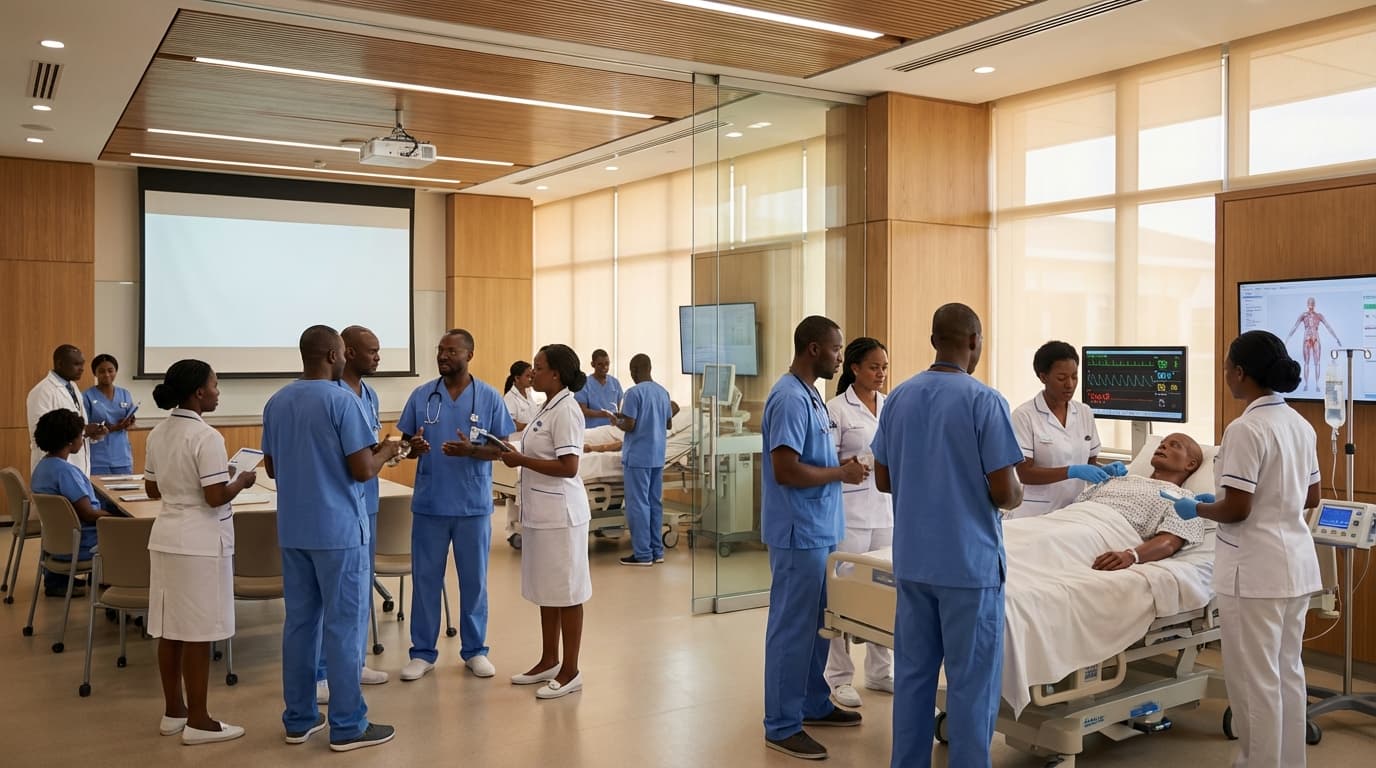
Equipment Training & Education in Mali
Engineering Excellence & Technical Support
Comprehensive equipment training and certification programs High-standard technical execution following OEM protocols and local regulatory frameworks.
Mobile Training Units Deployed
Leveraging specialized mobile training units equipped with simulators and hands-on equipment, we bring essential operator training directly to remote agricultural communities and mining sites across Mali, minimizing downtime and maximizing reach.
Localized Maintenance Workshops
Conducting practical, hands-on workshops focusing on the maintenance and repair of critical agricultural machinery and mining equipment, using locally available tools and spare parts, empowering Malian technicians with sustainable repair skills.
Digital Learning Platform Integration
Implementing an accessible digital learning platform featuring interactive modules, video tutorials, and assessments in local languages, designed to supplement in-person training and provide continuous learning opportunities for equipment operators and maintenance personnel.
What Is Equipment Training & Education In Mali?
Equipment Training & Education in Mali refers to the structured process of imparting knowledge, skills, and best practices necessary for the safe, efficient, and effective operation, maintenance, and repair of various types of machinery and tools. This service aims to enhance user competency, minimize operational downtime, improve product longevity, and ensure compliance with safety regulations within the Malian context. The training is tailored to specific equipment types and the operational environment, considering factors like local infrastructure, available resources, and the skill levels of the target audience. It encompasses both theoretical instruction and practical, hands-on application, often incorporating simulations and real-world scenario-based learning.
| Who Needs Equipment Training & Education? | Typical Use Cases | ||||||
|---|---|---|---|---|---|---|---|
| Agricultural Workers/Farmers: Operating and maintaining tractors, harvesters, irrigation systems, and processing machinery. | Construction Personnel: Operating excavators, bulldozers, cranes, concrete mixers, and power tools. Maintenance of scaffolding and heavy lifting equipment. | Mining Operators/Technicians: Operating drilling rigs, crushers, conveyor belts, and haul trucks. Maintaining specialized underground or surface mining equipment. | Healthcare Professionals: Operating and maintaining medical equipment such as diagnostic imaging machines (X-ray, CT scanners), laboratory analyzers, and patient monitoring systems. | Industrial Technicians: Operating and maintaining manufacturing machinery, power generation equipment, pumps, and automated systems in factories and processing plants. | Logistics and Transportation Staff: Operating forklifts, warehousing equipment, and heavy-duty vehicles. Maintaining vehicle fleets. | Energy Sector Employees: Operating and maintaining turbines, generators, solar panels, and associated electrical infrastructure for power generation and distribution. | Government and NGO Personnel: Operating and maintaining equipment for infrastructure development, water management, emergency response, and humanitarian aid delivery. |
| Introduction of New Equipment: When organizations acquire new machinery, training is essential for all relevant staff to ensure immediate and safe deployment. | Preventive Maintenance Programs: To equip maintenance teams with the skills to conduct regular checks and servicing, extending equipment lifespan and reducing breakdowns. | Skills Gap Remediation: Addressing deficiencies in operational or technical skills within the workforce to improve overall productivity and reduce errors. | Safety Compliance Enhancement: Training to ensure adherence to national and international safety standards, mitigating risks of accidents and injuries. | Emergency Preparedness: Training on the operation of specific equipment during disaster response or critical situations. | Technology Upgrades: When existing equipment is upgraded or replaced with more advanced models, retraining is necessary for users to adapt to new interfaces and functionalities. | Remote or Isolated Operations: In areas with limited access to external technical support, comprehensive in-house training is crucial for self-sufficiency. |
Key Components of Equipment Training & Education in Mali:
- Operational Training: Focuses on the correct procedures for starting, operating, and shutting down equipment, including understanding control panels, safety features, and load management.
- Maintenance Training: Covers routine inspections, preventive maintenance schedules, lubrication, basic troubleshooting, and minor repair tasks to ensure optimal performance and prevent costly breakdowns.
- Safety Training: Emphasizes hazard identification, risk assessment, personal protective equipment (PPE) usage, emergency procedures, and adherence to industry-specific safety standards relevant to Mali.
- Technical Skill Development: Addresses advanced diagnostic techniques, repair methodologies for complex systems, and the use of specialized tools and diagnostic equipment.
- Documentation and Record-Keeping: Training on maintaining accurate logs for operation, maintenance, and repairs, crucial for asset management and performance analysis.
- Adaptation to Local Conditions: Incorporating training modules that address challenges specific to Mali's climate, terrain, and resource availability (e.g., dust, heat, limited access to spare parts).
Who Needs Equipment Training & Education In Mali?
In Mali, comprehensive equipment training and education are crucial for a wide range of individuals and organizations to ensure operational efficiency, safety, and economic development. The need spans across various sectors, from agriculture and mining to infrastructure development and healthcare, where the proper use and maintenance of machinery and specialized tools are paramount. Investing in training not only minimizes accidents and costly equipment damage but also empowers the Malian workforce with skills that enhance productivity and create better employment opportunities. This initiative directly supports the nation's goals of industrial growth and improved living standards.
| Customer/Department | Specific Needs & Training Focus | Examples of Equipment |
|---|---|---|
| Ministry of Agriculture and Livestock | Operation and maintenance of agricultural machinery, irrigation systems, and veterinary equipment. Focus on improving yields and sustainable farming practices. | Tractors, harvesters, planters, combine harvesters, water pumps, veterinary diagnostic tools. |
| Ministry of Mines and Petroleum | Safe operation and maintenance of heavy mining equipment, drilling rigs, and processing machinery. Emphasis on safety protocols and environmental compliance. | Excavators, loaders, haul trucks, drilling machines, crushers, conveyor belts. |
| Ministry of Public Works and Infrastructure | Operation and maintenance of construction machinery, road building equipment, and heavy transport vehicles. Focus on project efficiency and quality. | Bulldozers, graders, asphalt pavers, cranes, concrete mixers, dump trucks. |
| Ministry of Health | Operation and maintenance of medical equipment, laboratory instruments, and diagnostic devices. Training on sterilization and calibration. | X-ray machines, ultrasound devices, laboratory centrifuges, autoclaves, patient monitors. |
| Ministry of Transport | Operation and maintenance of vehicles for public and freight transport, including buses, trucks, and potentially railway equipment. Focus on driver training and vehicle upkeep. | Commercial buses, freight trucks, forklifts, maintenance vehicles. |
| Private Agricultural Companies | Efficient operation of specialized farm equipment, crop processing machinery, and irrigation technologies to maximize output and reduce waste. | Specific brand tractors, advanced harvesters, drone sprayers, food processing lines. |
| Mining and Extraction Companies | Advanced operation of specialized mining equipment, fault diagnosis, and preventive maintenance to ensure continuous production and worker safety. | Large-scale excavators, underground mining vehicles, specialized processing units. |
| Construction and Real Estate Developers | Skilled operation of diverse construction machinery, including lifting equipment and precision tools, for timely and safe project completion. | Tower cranes, mobile cranes, concrete pumps, surveying equipment. |
| Logistics and Transportation Companies | Safe and efficient operation of heavy-duty vehicles, forklifts, and warehousing equipment to optimize supply chain operations. | Heavy-duty trucks, specialized trailers, warehouse forklifts, automated storage systems. |
| Manufacturing and Industrial Firms | Operation and maintenance of production line machinery, quality control equipment, and specialized industrial tools. | CNC machines, assembly line robots, packaging machinery, industrial generators. |
| Energy Sector Companies (e.g., Renewable Energy) | Installation, maintenance, and operation of solar panels, wind turbines, and related electrical equipment. | Solar panel installation tools, wind turbine maintenance equipment, grid connection systems. |
| International Aid Organizations and NGOs | Operation and maintenance of equipment for development projects, humanitarian aid delivery, and community infrastructure. | Water purification units, mobile clinics, agricultural tools, construction equipment for small-scale projects. |
| Vocational Training Centers and Technical Schools | Training instructors and updating curricula to cover the latest equipment and technologies. Equipping students with marketable skills. | Various machinery and tools relevant to trade programs (mechanics, construction, electronics, etc.). |
| Universities and Research Institutions | Operation of specialized laboratory equipment, research instrumentation, and field equipment. | Advanced scientific instruments, surveying equipment, specialized analytical tools. |
| Individual Farmers and Small Business Owners | Basic operation, maintenance, and troubleshooting of essential equipment to improve productivity and income. | Small tillers, generators, water pumps, basic processing tools. |
| Mechanics and Technicians | Advanced troubleshooting, repair, and maintenance skills for a wide range of equipment across different sectors. | Diagnostic tools, specialized repair equipment, welding machines. |
Target Customers and Departments for Equipment Training & Education in Mali
- Government Ministries and Agencies
- Private Sector Businesses
- Non-Governmental Organizations (NGOs)
- Educational Institutions
- Individual Workers and Entrepreneurs
Equipment Training & Education Process In Mali
This document outlines the standard workflow for equipment training and education processes in Mali, from the initial inquiry stage through to the successful execution and completion of the training program. The process is designed to be systematic, ensuring all stakeholders are informed and that training objectives are met effectively. It emphasizes a collaborative approach between the requesting entity, the training provider, and the participants.
| Stage | Description | Key Activities | Responsible Parties | Deliverables/Outputs |
|---|---|---|---|---|
| The initial phase where an organization or individual expresses interest in training and their specific equipment needs are identified. | Submit training inquiry, identify specific equipment, define learning objectives, assess participant skill levels, determine desired outcomes. | Client/Requesting Entity, Potential Trainees, Training Provider (initial contact) | Training Inquiry Form, Needs Assessment Report, Defined Learning Objectives |
| The training provider develops a comprehensive proposal based on the identified needs, and upon agreement, a formal contract is established. | Develop training proposal (content, duration, cost, methodology), review proposal with client, negotiate terms, finalize contract/Memorandum of Understanding (MoU). | Training Provider, Client/Requesting Entity | Training Proposal, Signed Contract/MoU |
| The training content and materials are tailored to the specific equipment and the target audience's requirements. | Design/adapt training modules, develop course materials (manuals, presentations, exercises), select appropriate teaching aids, ensure curriculum aligns with learning objectives. | Training Provider (Instructional Designers, Subject Matter Experts) | Training Curriculum, Participant Manuals, Trainer's Guide |
| All practical arrangements for the training delivery are made, including venue, equipment, and participant scheduling. | Confirm training dates and duration, book training venue, arrange for necessary equipment (training units, simulators), confirm participant registration, communicate schedule to participants. | Training Provider, Client/Requesting Entity (for facility/equipment access) | Confirmed Training Schedule, Venue Arrangements, Participant List |
| The actual training sessions are conducted by qualified instructors. | Deliver lectures and presentations, conduct practical demonstrations, facilitate hands-on exercises, provide on-the-job training (if applicable), answer participant questions, ensure safety protocols are followed. | Training Provider (Instructors/Trainers), Participants | Completed Training Sessions, Participant Engagement Records |
| The effectiveness of the training is assessed, and feedback is collected from participants and stakeholders. | Administer pre/post-training assessments, collect participant feedback surveys, conduct trainer evaluations, review training outcomes against objectives. | Training Provider, Participants, Client/Requesting Entity | Assessment Results, Participant Feedback Reports, Training Effectiveness Summary |
| Participants who successfully complete the training receive certification, and ongoing support or follow-up may be provided. | Issue certificates of completion, provide post-training support (e.g., troubleshooting, further resources), conduct refresher courses if needed, analyze feedback for future improvements. | Training Provider, Client/Requesting Entity | Certificates of Completion, Post-Training Support Documentation, Recommendations for Future Training |
Key Stages of the Equipment Training & Education Process in Mali
- Inquiry & Needs Assessment
- Proposal & Agreement
- Curriculum Development & Customization
- Logistics & Scheduling
- Training Delivery
- Evaluation & Feedback
- Certification & Follow-up
Equipment Training & Education Cost In Mali
The cost of equipment training and education in Mali is a crucial investment for businesses and individuals seeking to operate and maintain various machinery and technology. These costs can fluctuate significantly based on several key pricing factors. Understanding these factors is essential for accurate budgeting and resource allocation. The local currency, the West African CFA franc (XOF), is used for all pricing. Training duration, the complexity of the equipment, the trainer's expertise, and the location of the training all play a role. Generally, shorter, simpler training sessions will be more affordable than extensive, specialized programs. The availability of qualified trainers within Mali can also influence pricing, with specialized or highly sought-after instructors potentially commanding higher fees. Furthermore, the logistics of training, such as travel expenses for trainers or participants if conducted off-site, or facility rental if not provided by the training provider, will add to the overall cost.
| Training Type/Level | Typical Duration | Estimated Cost Range (XOF) |
|---|---|---|
| Basic Equipment Operation (e.g., agricultural machinery, small construction tools) | 1-3 Days | 50,000 - 150,000 |
| Intermediate Equipment Operation & Maintenance (e.g., larger construction equipment, industrial machinery) | 3-7 Days | 150,000 - 400,000 |
| Advanced Technical Training & Repair (e.g., specialized industrial control systems, medical equipment) | 1-2 Weeks | 400,000 - 1,000,000+ |
| Safety-Specific Training (e.g., hazardous materials handling, fall protection) | 1-2 Days | 75,000 - 200,000 |
| Software/IT Equipment Training (e.g., enterprise resource planning systems, specialized design software) | 2-5 Days | 200,000 - 750,000 |
Key Pricing Factors for Equipment Training & Education in Mali
- Training Duration: Longer courses generally incur higher costs.
- Equipment Complexity: Training on highly sophisticated or specialized equipment is typically more expensive.
- Trainer Expertise & Experience: Highly skilled and experienced trainers often charge more.
- Location of Training: On-site training at a company's facility vs. off-site training at a dedicated center can impact costs.
- Travel & Logistics: Expenses for trainers or participants' travel, accommodation, and per diem if applicable.
- Training Materials: The cost of manuals, handouts, software licenses, and other educational resources.
- Number of Participants: Group training can sometimes offer per-person cost savings compared to individual sessions.
- Certification/Accreditation: Training leading to recognized certifications may have higher associated fees.
- Customization of Curriculum: Tailoring training content to specific needs often increases the price.
Affordable Equipment Training & Education Options
Acquiring the necessary equipment knowledge and skills is crucial for various industries, from manufacturing and construction to healthcare and technology. Fortunately, numerous affordable training and education options exist. Understanding value bundles and implementing cost-saving strategies can significantly reduce the financial burden of professional development. Value bundles often combine multiple training modules, certifications, or resources at a discounted price, offering comprehensive learning at a lower per-unit cost. Cost-saving strategies encompass a range of approaches, including leveraging free resources, seeking employer sponsorship, exploring government grants, and opting for online or blended learning formats.
| Strategy | Description | Potential Savings | Best For |
|---|---|---|---|
| Value Bundles | Combining multiple courses, certifications, or resources into a package at a reduced price. | 10-30% (can be higher for extensive bundles) | Individuals or organizations needing comprehensive skill development. |
| Employer Sponsorship | Requesting your employer to cover training costs as part of professional development. | 100% of direct training costs | Employees with employer support and relevant job requirements. |
| Government Grants & Subsidies | Exploring grants or subsidies offered by local, regional, or national governments for workforce development. | Variable (can cover tuition, materials, etc.) | Individuals and businesses in targeted sectors or regions. |
| Online & Blended Learning | Opting for self-paced online modules or a mix of online and in-person instruction to reduce travel and accommodation costs. | 20-50% (compared to fully in-person, immersive programs) | Self-motivated learners, those with time constraints, or geographical limitations. |
| Free Online Resources | Utilizing free tutorials, documentation, and introductory courses from manufacturers or educational platforms. | 100% of direct training costs (for basic knowledge) | Beginners, those exploring new fields, or supplementing paid training. |
| Group Discounts | Enrolling multiple individuals from the same organization to receive a per-person discount. | 5-20% (depending on group size) | Organizations with multiple employees requiring the same training. |
| Early Bird Registration | Registering for workshops or seminars well in advance of the deadline for discounted rates. | 5-15% | Individuals or organizations with a clear training schedule. |
Affordable Equipment Training & Education Options
- Online Courses & Platforms (e.g., Coursera, Udemy, LinkedIn Learning)
- Manufacturer-Specific Training Programs
- Vocational Schools & Community Colleges
- Apprenticeship Programs
- Industry Association Workshops & Seminars
- Webinars & Virtual Conferences
- Open Educational Resources (OER)
- Government-Funded Training Initiatives
Verified Providers In Mali
In Mali, where access to reliable healthcare is paramount, the designation of 'Verified Providers' by reputable organizations like Franance Health offers a crucial layer of trust and assurance for patients. These providers undergo rigorous vetting processes, ensuring they meet stringent standards for quality, ethics, and patient care. Franance Health's credentialing signifies that a healthcare provider has been thoroughly evaluated and deemed to meet their established benchmarks, providing a clear indicator of their commitment to excellence.
| Criteria for Franance Health Verification | Significance for Patients |
|---|---|
| Clinical Competence & Training: Assessment of medical education, certifications, and ongoing professional development. | Ensures providers possess the necessary knowledge and skills to deliver effective treatment. |
| Patient Care & Service Quality: Evaluation of patient-provider communication, satisfaction, and adherence to care protocols. | Guarantees a positive and effective healthcare experience with a focus on patient needs. |
| Ethical Practices & Integrity: Review of ethical conduct, adherence to medical regulations, and patient rights. | Provides confidence in the provider's trustworthiness and commitment to patient well-being. |
| Facility Standards & Equipment: Assessment of the healthcare facility's environment, equipment, and hygiene. | Ensures a safe and well-equipped environment conducive to quality medical care. |
| Continuing Education & Quality Improvement: Verification of participation in ongoing learning and quality improvement initiatives. | Demonstrates a commitment to staying current with medical advancements and improving service delivery. |
Why Franance Health Verified Providers are the Best Choice in Mali:
- Uncompromised Quality of Care: Verified providers adhere to best practices and demonstrate a commitment to evidence-based medicine, leading to better patient outcomes.
- Ethical Standards and Patient Safety: Franance Health's verification includes assessments of ethical conduct and patient safety protocols, minimizing risks and ensuring patient well-being.
- Professional Competence and Expertise: Providers are evaluated on their qualifications, experience, and ongoing professional development, guaranteeing access to skilled medical professionals.
- Transparency and Accountability: The verification process promotes transparency in healthcare delivery and holds providers accountable for the services they offer.
- Peace of Mind for Patients: Knowing you are choosing a Franance Health verified provider offers significant reassurance and reduces the anxiety associated with seeking medical care.
- Access to Specialized Services: Verification can extend to specialized fields, ensuring that patients needing specific treatments can find qualified and trustworthy practitioners.
Scope Of Work For Equipment Training & Education
This Scope of Work (SOW) outlines the requirements for providing comprehensive equipment training and educational services. The objective is to ensure personnel are proficient in the safe, efficient, and effective operation, maintenance, and troubleshooting of specified equipment. This SOW details the technical deliverables, standard specifications, and expected outcomes.
| Deliverable | Description | Standard Specification | Deliverable Format | Completion Criteria |
|---|---|---|---|---|
| Training Curriculum Development | Creation of a detailed training program outlining modules, learning objectives, and assessment methods. | Industry-standard instructional design principles, aligned with equipment manufacturer guidelines. | Digital document (e.g., PDF) | Approved by client's subject matter expert (SME). |
| Training Manuals & Handbooks | Comprehensive documentation covering equipment operation, maintenance, safety, and troubleshooting. | Clear, concise language, high-quality diagrams, and index for easy navigation. Written in English (or specified language). | Printed copies and searchable digital version (e.g., PDF, EPUB) | Review and sign-off by client's SMEs. |
| Instructor-Led Training Sessions | Delivery of training by qualified instructors using a combination of theoretical instruction and practical demonstration. | Minimum instructor experience of X years in relevant field. Adherence to a defined training schedule. | In-person or virtual live sessions | Participant attendance logs, post-training assessments indicating proficiency. |
| Hands-on Practical Training | Opportunity for participants to engage directly with the equipment under instructor supervision. | Adequate training environment with access to functional equipment. Realistic simulation of operational scenarios. | Practical exercises and simulations | Successful completion of practical tasks by participants, observed by the instructor. |
| Assessment and Evaluation Tools | Development of methods to evaluate participant learning and knowledge retention. | Includes pre-training assessments, quizzes, practical skill assessments, and post-training evaluations. | Quizzes, checklists, performance observation forms | Aggregated performance data and analysis report. |
| Certification | Issuance of certificates upon successful completion of the training program. | Certificates to include participant name, training program title, date of completion, and issuing organization's details. | Digital and/or printed certificates | Successful completion of all training modules and assessments. |
| Post-Training Support | Provision of limited-duration support following the formal training period. | Defined scope of support (e.g., Q&A via email/phone) and response time (e.g., within 24 business hours). | Email, phone support | Resolution of participant queries within the defined support period. |
Key Training Objectives
- Develop and deliver a tailored training program for designated equipment.
- Ensure participants gain a thorough understanding of equipment functionality and operation.
- Equip personnel with the skills for routine maintenance and basic troubleshooting.
- Promote best practices in safety procedures related to equipment handling and use.
- Provide documentation and resources for ongoing learning and reference.
Service Level Agreement For Equipment Training & Education
This Service Level Agreement (SLA) outlines the terms and conditions for Equipment Training & Education services, focusing on response times and uptime guarantees. This SLA is intended to ensure the reliable and effective delivery of training and educational resources related to designated equipment.
| Service Component | Guaranteed Level | Measurement Period | Remedy/Service Credits |
|---|---|---|---|
| Training Platform/System Uptime | 99.5% (excluding scheduled maintenance) | Monthly | Less than 99.5% Uptime: 5% Service Credit for every 1% downtime below threshold. |
| Critical Support Request Response Time (e.g., system inaccessible) | 1 Business Hour | Per Request | Failure to respond within 1 Business Hour: 2.5% Service Credit per incident. |
| Standard Support Request Response Time (e.g., general query, access issue) | 4 Business Hours | Per Request | Failure to respond within 4 Business Hours: 1% Service Credit per incident. |
| Training Content Update/Issue Resolution Start Time | 1 Business Day | Per Request | Failure to commence investigation/resolution within 1 Business Day: 1% Service Credit per incident. |
| Scheduled Maintenance Notification | 48 Hours prior notice | Per Event | Less than 48 Hours notice: Uptime calculation for the maintenance period may be adjusted or excluded from penalty. |
Key Definitions
- Uptime: The percentage of time the training platform/system is available and functional for user access and engagement.
- Downtime: The percentage of time the training platform/system is unavailable due to scheduled maintenance or unplanned outages.
- Response Time (Support Request): The time elapsed between a user submitting a support request and the first acknowledgement or engagement from the support team.
- Response Time (Content Update/Issue): The time elapsed between a user reporting an issue with training content or requesting an update, and the commencement of investigation or implementation by the content team.
- Service Credits: Monetary compensation provided to the client for failing to meet the guaranteed uptime or response times.
- Business Hours: Defined working hours during which support is actively provided (e.g., Monday to Friday, 9:00 AM to 5:00 PM [Specify Time Zone]).
Frequently Asked Questions

Ready when you are
Let's scope your Equipment Training & Education in Mali project in Mali.

Scaling healthcare logistics and technical systems across the entire continent.