
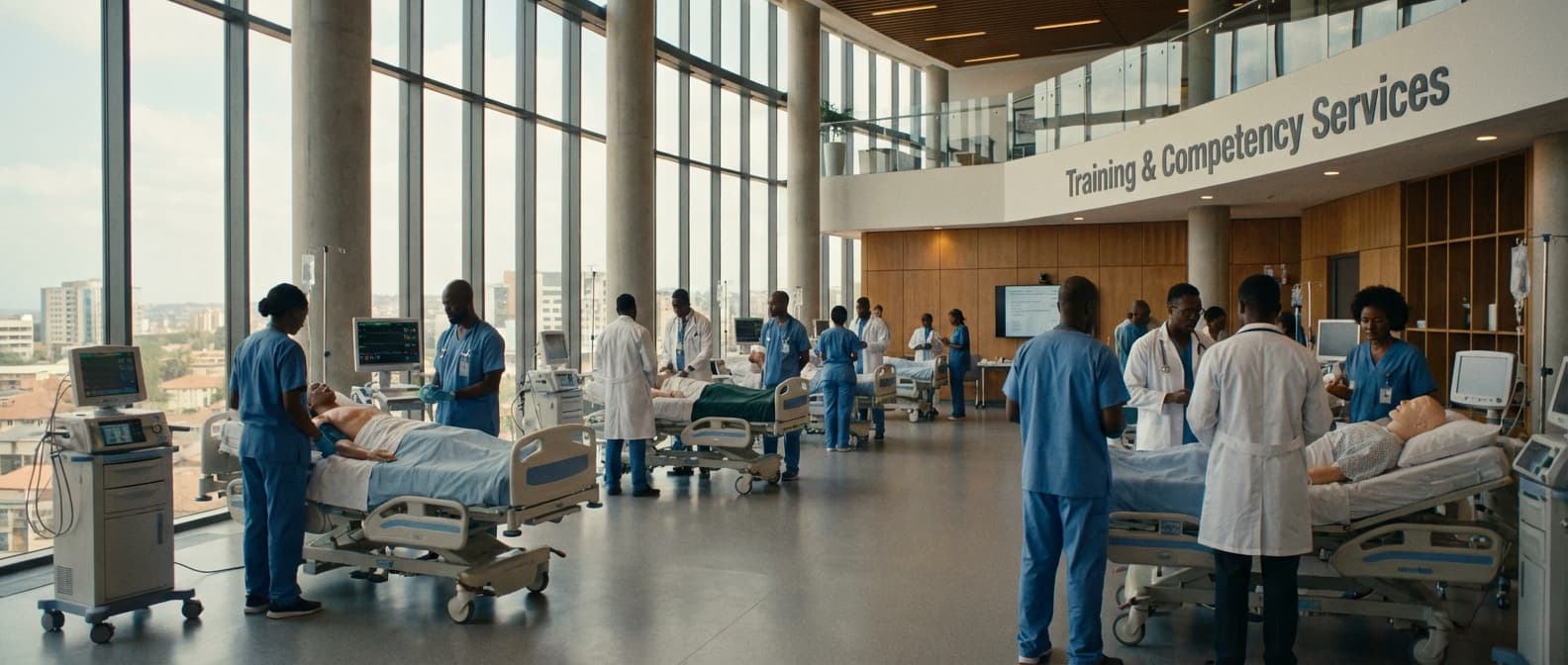
Ultrasound Application Training Service (Protocol-Based) in Mali
Engineering Excellence & Technical Support
Ultrasound Application Training Service (Protocol-Based) High-standard technical execution following OEM protocols and local regulatory frameworks.
Standardized Protocol Mastery
Our training emphasizes adherence to internationally recognized ultrasound protocols, ensuring consistent and accurate diagnostic procedures for improved patient care in Mali.
Advanced Image Optimization
Learn techniques for optimizing image quality specific to the anatomical variations and common pathologies encountered in Mali, leading to more definitive diagnoses.
Community-Centric Ultrasound Skills
Gain practical experience with ultrasound applications relevant to the prevalent health challenges in Mali, empowering local healthcare professionals to provide essential diagnostic services.
What Is Ultrasound Application Training Service (Protocol-based) In Mali?
Ultrasound Application Training Service (Protocol-Based) in Mali refers to a specialized educational program designed to equip healthcare professionals with the theoretical knowledge and practical skills necessary to perform and interpret diagnostic ultrasound examinations according to established, standardized protocols. This service is crucial for ensuring accurate, reproducible, and clinically relevant ultrasound diagnoses in resource-limited settings. It moves beyond basic ultrasound operation to a structured, evidence-based approach to imaging specific anatomical regions or pathological conditions.
| Who Needs This Service? | Typical Use Cases in Mali | |||||
|---|---|---|---|---|---|---|
| Radiologists: To enhance their skills in specific subspecialties or improve efficiency in high-volume settings. | Obstetricians and Gynecologists: For antenatal screening, fetal well-being assessment, and gynecological condition diagnosis. | General Practitioners and Family Physicians: Particularly those in rural or remote areas, to provide basic diagnostic imaging at the point of care (e.g., POCUS for acute conditions). | Emergency Medicine Physicians: For rapid assessment of trauma (FAST scan), cardiac function, and other life-threatening conditions. | Pediatricians: For the assessment of common pediatric conditions (e.g., abdominal pain, intussusception, urinary tract abnormalities). | Sonographers/Ultrasound Technicians: To formalize and standardize their training and ensure proficiency in specific applications. | Medical Students and Residents: As part of their core clinical training in diagnostic imaging. |
| Obstetric Ultrasound: Routine antenatal care, dating scans, anomaly scans, growth monitoring, and assessment of pregnancy complications (e.g., pre-eclampsia, placental abnormalities). | Abdominal Ultrasound: Diagnosis of hepatobiliary, renal, pancreatic, and splenic pathologies, as well as assessment of the gastrointestinal tract. | Point-of-Care Ultrasound (POCUS): Rapid bedside assessment in emergency departments, intensive care units, and primary healthcare settings for conditions like pleural effusions, ascites, cardiac tamponade, and deep vein thrombosis. | Vascular Ultrasound: Assessment of peripheral arterial and venous disease, and carotid Doppler studies. | Musculoskeletal Ultrasound: Evaluation of joints, tendons, and soft tissues for inflammatory, traumatic, or degenerative conditions. | Thyroid and Breast Ultrasound: Diagnosis of nodules, cysts, and other lesions in these organs. | Pediatric Abdominal Ultrasound: Investigation of common childhood ailments like appendicitis, intussusception, and urinary tract infections. |
Key Components of Ultrasound Application Training Service (Protocol-Based):
- Protocol Development and Standardization: Adherence to internationally recognized or contextually adapted imaging protocols (e.g., for obstetric, abdominal, or point-of-care ultrasound).
- Theoretical Instruction: In-depth understanding of ultrasound physics, image generation, anatomical correlations, and specific pathological appearances relevant to the chosen applications.
- Image Acquisition Skills: Hands-on training in probe manipulation, optimal transducer selection, knobology, and achieving diagnostic-quality images for defined protocols.
- Image Interpretation and Reporting: Development of critical thinking skills for identifying normal and abnormal findings, and constructing comprehensive, structured reports.
- Case-Based Learning: Review of a diverse range of real-world patient cases, including common and rare pathologies, to reinforce learning and refine diagnostic acumen.
- Quality Assurance and Feedback: Ongoing assessment of trainee performance, providing constructive feedback, and implementing quality control measures.
- Equipment Familiarization: Training on the operation and maintenance of specific ultrasound machines available in the Malian healthcare system.
Who Needs Ultrasound Application Training Service (Protocol-based) In Mali?
This document outlines the critical need for Ultrasound Application Training Service (Protocol-Based) in Mali. Such training is essential for improving diagnostic accuracy, patient outcomes, and the overall efficiency of healthcare delivery across various medical specialties. The services provided are designed to equip healthcare professionals with standardized, protocol-driven skills for ultrasound examinations, ensuring consistency and quality.
| Target Customer Group | Key Departments/Specialties | Specific Needs Addressed by Training |
|---|---|---|
| Public Hospitals | Radiology/Imaging, Obstetrics & Gynecology, Internal Medicine, Emergency Medicine, Pediatrics, Surgery | Standardizing diagnostic procedures, improving accuracy in resource-limited settings, training new personnel, enhancing emergency ultrasound capabilities (FAST scan). |
| Private Hospitals and Clinics | Radiology/Imaging, Obstetrics & Gynecology, Cardiology, Urology, Gastroenterology | Adopting advanced ultrasound techniques, maintaining high-quality standards, offering specialized services, competitive advantage through skilled workforce. |
| Diagnostic Imaging Centers | Radiology/Imaging (General and Specialized) | Ensuring consistency across technologists, implementing new protocols, improving report quality, meeting regulatory requirements. |
| Healthcare NGOs and Mobile Clinics | Primary Healthcare, Maternal and Child Health, Emergency Response Teams | Providing essential diagnostic tools in remote areas, training community health workers, enabling point-of-care diagnostics, improving screening programs. |
| Medical Training Institutions | Medical Schools, Nursing Schools, Radiology Technician Programs | Integrating practical, protocol-based ultrasound training into curriculum, producing graduates with essential competency, equipping faculty with updated teaching methodologies. |
| Specialized Units (e.g., Cardiothoracic, Nephrology) | Cardiology, Nephrology, Pulmonology | Advanced echocardiography protocols, renal ultrasound for disease management, lung ultrasound for critical care. |
Target Customers and Departments for Ultrasound Application Training Service (Protocol-Based) in Mali
- Hospitals (Public and Private)
- Clinics and Health Centers
- Diagnostic Imaging Centers
- Non-Governmental Organizations (NGOs) involved in healthcare
- Medical Training Institutions (Universities, Technical Schools)
Ultrasound Application Training Service (Protocol-based) Process In Mali
This document outlines the workflow for Ultrasound Application Training Services, specifically on a protocol-based approach, within Mali. The process is designed to be comprehensive, ensuring that trainees acquire the necessary skills and knowledge to perform ultrasound examinations according to established protocols. The workflow begins with an initial inquiry from an interested party and culminates in the successful execution of the training program.
| Phase | Stage | Key Activities | Responsible Party | Outcome/Deliverable |
|---|---|---|---|---|
| Phase 1: Inquiry and Needs Assessment | Initial Contact | Interested party (e.g., hospital, clinic, government agency) contacts the training provider to express interest in ultrasound application training. | Client | Formal inquiry and initial expression of need. |
| Needs Identification | Training provider engages with the client to understand their specific training requirements, including the target audience (e.g., radiographers, nurses, physicians), existing skill levels, desired ultrasound applications (e.g., abdominal, obstetric, cardiac), and any specific protocols they wish to focus on. | Training Provider & Client | Detailed understanding of training needs and objectives. | |
| Phase 2: Proposal and Agreement | Proposal Development | Based on the needs assessment, the training provider develops a comprehensive proposal outlining the training curriculum, duration, methodology (theoretical and practical), required equipment, trainer profiles, proposed dates, and cost. | Training Provider | Detailed training proposal. |
| Proposal Review and Negotiation | The client reviews the proposal, and discussions may occur for clarification or negotiation of terms. | Client & Training Provider | Agreement on training scope and terms. | |
| Contract/Agreement Signing | Once terms are agreed upon, a formal contract or agreement is signed by both parties, outlining the responsibilities, deliverables, payment schedule, and confidentiality clauses. | Client & Training Provider | Signed training agreement. | |
| Phase 3: Pre-Training Preparation | Curriculum Finalization | The training provider finalizes the detailed curriculum, ensuring it aligns with the agreed-upon protocols and includes specific learning objectives for each module. | Training Provider | Finalized protocol-based training curriculum. |
| Logistics Arrangement | Booking of training venue, ensuring availability of ultrasound machines, phantoms, and any other necessary equipment. Arrangements for travel and accommodation for trainers and trainees (if applicable). | Training Provider & Client | Secured training facilities and resources. | |
| Participant Identification and Registration | The client identifies and registers the trainees who will participate in the training program. | Client | List of registered trainees. | |
| Pre-Training Materials Dissemination | Distribution of any pre-reading materials, theoretical concepts, or preliminary information to trainees to prepare them for the training. | Training Provider | Trainees receive pre-training materials. | |
| Phase 4: Training Execution | Theoretical Sessions | Delivery of lectures, presentations, and discussions covering ultrasound physics, instrumentation, image optimization, anatomy, pathology, and crucially, the detailed steps and interpretation within the specific training protocols. | Trainer | Understanding of theoretical concepts and protocol rationale. |
| Practical Demonstrations | Hands-on demonstrations by the trainer using ultrasound machines and phantoms to illustrate correct probe manipulation, scanning techniques, and image acquisition according to the protocols. | Trainer | Visual understanding of practical application. | |
| Hands-on Practice Sessions | Trainees actively practice scanning on phantoms and, if applicable and ethically permissible, on consenting patients under direct supervision of the trainer. Emphasis on adhering strictly to the established protocols. | Trainees & Trainer | Development of practical scanning skills following protocols. | |
| Case Study Analysis | Review and discussion of real or simulated ultrasound cases, focusing on how to apply the protocols for diagnosis and interpretation. | Trainer & Trainees | Enhanced diagnostic and interpretative skills within protocol frameworks. | |
| Q&A and Feedback Sessions | Regular opportunities for trainees to ask questions and receive constructive feedback from the trainer on their performance and understanding. | Trainer & Trainees | Clarification of doubts and performance improvement. | |
| Phase 5: Post-Training Support and Evaluation | Competency Assessment | Evaluation of trainees' knowledge and practical skills through written tests, practical assessments (e.g., scanning proficiency on specific protocols), and case reviews to determine competency. | Trainer | Assessment of trainee competency. |
| Certification | Issuance of certificates to trainees who have successfully met the required competency standards, indicating the specific ultrasound applications and protocol-based training received. | Training Provider | Certificates of completion. | |
| Post-Training Support | Provision of follow-up support, which may include remote consultation, access to online resources, or refresher sessions, to assist trainees in applying their new skills in their clinical practice. | Training Provider | Ongoing support for application of skills. | |
| Training Evaluation | Collection of feedback from trainees and the client regarding the training program's effectiveness, content, delivery, and overall satisfaction to identify areas for improvement in future training sessions. | Training Provider & Client | Feedback for program improvement. |
Ultrasound Application Training Service (Protocol-Based) Process in Mali: Workflow
- Phase 1: Inquiry and Needs Assessment
- Phase 2: Proposal and Agreement
- Phase 3: Pre-Training Preparation
- Phase 4: Training Execution
- Phase 5: Post-Training Support and Evaluation
Ultrasound Application Training Service (Protocol-based) Cost In Mali
Estimating the cost of Ultrasound Application Training Services (Protocol-Based) in Mali involves considering several key pricing factors. These factors influence the overall investment for individuals or institutions seeking to acquire or enhance their ultrasound skills in a standardized, protocol-driven manner. The ranges provided are indicative and can fluctuate based on specific provider, duration, and customization.
| Training Scope/Duration | Estimated Cost Range (Malian Francs - XOF) | Notes |
|---|---|---|
| Basic Introduction (2-3 Days) | 150,000 - 300,000 XOF | Covers fundamental principles and basic protocol application. Suitable for beginners. |
| Intermediate Application (5-7 Days) | 300,000 - 600,000 XOF | Focuses on specific organ systems or common protocols with more hands-on practice. |
| Advanced Specialization (1-2 Weeks) | 600,000 - 1,200,000+ XOF | In-depth training for specialized areas (e.g., fetal echocardiography, interventional ultrasound) with advanced protocols and case studies. |
| Institutional/Customized Training (Variable) | Negotiable (per program/institution) | Tailored to the specific needs of a hospital or clinic, often involving on-site delivery. Pricing depends heavily on duration, scope, and number of participants. |
Key Pricing Factors for Ultrasound Application Training (Protocol-Based) in Mali:
- Provider Reputation and Expertise: Established training centers with highly qualified instructors and a proven track record often command higher fees.
- Training Duration and Intensity: The length of the training program (e.g., days, weeks) and the number of hours per day dedicated to instruction directly impact cost.
- Curriculum Depth and Specialization: Training focused on specific applications (e.g., obstetrics, cardiology, general imaging) or advanced protocols may be more expensive than general introductory courses.
- Equipment Availability and Usage: Access to modern ultrasound machines for hands-on practice is crucial. If the training provider supplies the equipment, this cost is usually factored in.
- Location of Training: Training conducted in major urban centers like Bamako might have different pricing than remote locations due to logistical considerations.
- Certification and Assessment: Courses that include formal assessments and offer internationally recognized certifications will generally be priced higher.
- Group Size and Customization: Smaller, personalized training sessions or customized curricula tailored to specific institutional needs can influence the per-person cost.
- Training Materials and Resources: The provision of comprehensive training manuals, online resources, and simulation tools adds to the overall expense.
- Instructor-to-Trainee Ratio: A lower ratio ensuring more individual attention will typically translate to a higher cost.
- Post-Training Support: Any ongoing mentorship or technical support offered after the completion of the training will also be a cost consideration.
Affordable Ultrasound Application Training Service (Protocol-based) Options
Our Affordable Ultrasound Application Training Service provides comprehensive, protocol-based instruction designed to equip healthcare professionals with essential sonographic skills. We understand the financial constraints many institutions face, so we offer flexible value bundles and strategic cost-saving options to maximize your training investment. Our protocol-driven approach ensures standardized, high-quality image acquisition and interpretation, crucial for accurate diagnoses and patient care. We focus on practical application, building confidence and competence through hands-on experience and expert guidance.
| Cost-Saving Strategy | Description | Benefit |
|---|---|---|
| Group Discounts: | Register multiple participants from the same institution. | Significant per-person cost reduction for teams. |
| Early Bird Registration: | Enroll well in advance of the training dates. | Exclusive discounted rates for proactive planning. |
| Online & Hybrid Learning Options: | Combine self-paced online modules with virtual or limited in-person sessions. | Reduces travel and accommodation expenses, offering flexibility. |
| Protocol Customization Packages: | Tailor training to your specific institutional protocols and equipment. | Ensures relevance and optimizes learning efficiency, avoiding redundant content. |
| Bundled Equipment Training: | Integrate ultrasound equipment-specific training with application protocols. | Maximizes the utility of your existing technology and reduces the need for separate equipment training. |
| Refresher Courses: | Discounted rates for alumni to refresh their skills or learn new protocols. | Cost-effective way to maintain and enhance existing expertise. |
Value Bundles for Enhanced Training
- Core Competency Bundle: Ideal for new practitioners or those transitioning into ultrasound. Includes foundational protocol training for common applications (e.g., Abdominal, OB/GYN, Vascular Access), essential physics review, and hands-on scanning workshops.
- Specialized Application Bundle: For experienced sonographers seeking to expand their expertise. Offers in-depth training in specific modalities like Echocardiography, Musculoskeletal Ultrasound, or Interventional Ultrasound, with advanced protocol instruction and case review.
- Team Training Bundle: Designed for entire departments or groups. Provides customized training programs, bulk discounts, and on-site options to ensure consistent skill development across your team.
- Continuing Education Bundle: For maintaining certification and staying current with best practices. Features updated protocols, emerging techniques, and advanced interpretation modules.
Verified Providers In Mali
In Mali's evolving healthcare landscape, identifying reliable and credentialed healthcare providers is paramount for individuals and organizations seeking quality medical services. Franance Health stands out as a leading force, meticulously vetting and credentialing healthcare professionals and facilities to ensure they meet the highest standards of care. Their rigorous process guarantees that any provider affiliated with Franance Health has undergone thorough verification, encompassing qualifications, experience, ethical conduct, and adherence to best practices. This commitment to verification not only builds trust but also directly translates into better patient outcomes and a more efficient healthcare system.
| Credential Type | Verification Process | Benefits for Patients | Benefits for Organizations |
|---|---|---|---|
| Licensed Medical Practitioners | Verification of medical licenses, educational degrees, board certifications, and ongoing professional development. | Confidence in receiving care from qualified and legally authorized doctors, nurses, and specialists. | Ensured access to legitimate and competent medical professionals for employee health benefits or public health initiatives. |
| Accredited Healthcare Facilities | Assessment of infrastructure, equipment, hygiene standards, emergency preparedness, and quality management systems. | Access to safe, well-equipped, and well-managed hospitals, clinics, and diagnostic centers. | Partnerships with reliable healthcare infrastructure that can support contractual obligations and provide quality care to a larger population. |
| Specialized Medical Services | In-depth review of specific training, experience, and documented success rates in particular medical disciplines. | Assurance of receiving expert care for complex or specialized medical needs from proven professionals. | Ability to contract with or refer patients to facilities and practitioners with documented expertise in critical areas of healthcare. |
| Mental Health Professionals | Verification of psychological and psychiatric certifications, ethical guidelines adherence, and experience in various therapeutic modalities. | Trust in receiving sensitive and effective mental health support from qualified therapists and psychiatrists. | Provision of comprehensive mental health support to employees or communities, knowing the providers are vetted for competence and ethical practice. |
Why Franance Health Credentials Matter:
- Unparalleled Trust and Reliability: Franance Health's credentialing process acts as a seal of approval, assuring patients and partners that they are engaging with thoroughly vetted and legitimate healthcare professionals.
- Commitment to Quality Care: The stringent verification standards employed by Franance Health ensure that providers possess the necessary skills, knowledge, and ethical frameworks to deliver excellent medical services.
- Enhanced Patient Safety: By confirming qualifications and adherence to protocols, Franance Health credentials significantly reduce the risk of medical errors and improve overall patient safety.
- Access to Top-Tier Expertise: Franance Health's network comprises healthcare professionals who have demonstrated a consistent track record of competence and dedication to their field.
- Streamlined Healthcare Navigation: For individuals and organizations, choosing a Franance Health-credentialed provider simplifies the process of finding reliable healthcare, saving time and reducing anxiety.
- Upholding Ethical Standards: The credentialing process includes checks for professional conduct and ethical adherence, ensuring that patients are treated with respect and integrity.
Scope Of Work For Ultrasound Application Training Service (Protocol-based)
This document outlines the Scope of Work (SOW) for providing protocol-based Ultrasound Application Training Services. The objective is to equip trainees with the necessary knowledge and practical skills to perform ultrasound examinations according to established protocols, ensuring diagnostic accuracy and patient safety. The training will be delivered through a combination of theoretical instruction, hands-on practice, and competency assessments.
| Technical Deliverable | Description | Standard Specification | Format |
|---|---|---|---|
| Training Curriculum Document | Detailed outline of all training modules, learning objectives, duration, and assessment methods. | Comprehensive and modular, covering all listed program modules. | |
| Presentation Slides | Visual aids used during theoretical instruction for each module. | High-resolution, clear, and concise content with relevant diagrams and images. | PowerPoint (.pptx) |
| Protocol Manuals (per application) | Step-by-step guides for performing specific ultrasound examinations according to industry best practices and established protocols. | Detailed imaging sequences, transducer selection, patient positioning, and key anatomical landmarks for each protocol. | |
| Hands-on Simulation Scenarios | Practical exercises and case studies designed to reinforce protocol adherence and skill development. | Realistic simulation scenarios covering common and challenging cases relevant to each application. | Verbal instruction and debriefing by trainer |
| Competency Assessment Checklists | Tools used to evaluate trainee proficiency in performing ultrasound examinations according to protocols. | Objective criteria for assessing technical skills, image acquisition, and protocol adherence for each application. | Printable PDF or digital format |
| Post-Training Evaluation Forms | Feedback forms for trainees to evaluate the training program and instructor. | Structured questions covering content relevance, instructor effectiveness, and overall satisfaction. | Online survey or printable PDF |
| Certificate of Completion | Document awarded to trainees who successfully complete the training program and pass competency assessments. | Includes trainee name, training program title, dates of training, and issuing organization's details. | Digital PDF and optionally printed |
Training Program Modules
- Introduction to Ultrasound Physics and Safety
- Basic Ultrasound Instrumentation and Controls
- Ultrasound Anatomy and Physiology (General)
- Protocol-Based Training for Specific Applications (e.g., Abdomen, Pelvis, Obstetrics, Vascular, Small Parts, Musculoskeletal)
- Image Optimization Techniques
- Artifact Recognition and Mitigation
- Documentation and Reporting Standards
- Quality Assurance and Quality Control in Ultrasound
Service Level Agreement For Ultrasound Application Training Service (Protocol-based)
This Service Level Agreement (SLA) outlines the performance standards for the Ultrasound Application Training Service (Protocol-Based). It defines the response times for support requests and the guaranteed uptime for the training platform.
| Service Component | Severity Level | Target Response Time | Definition |
|---|---|---|---|
| Ultrasound Application Training Platform Support | Critical (System Down, Major Functionality Impaired) | 1 Hour | Initial acknowledgement and commencement of troubleshooting for issues that render the training platform completely unusable for all users. |
| Ultrasound Application Training Platform Support | High (Significant Functionality Impaired, Affecting a subset of users or core training modules) | 4 Business Hours | Initial acknowledgement and commencement of troubleshooting for issues that significantly impede the training experience for a portion of users or impact critical training modules. |
| Ultrasound Application Training Platform Support | Medium (Minor Functionality Impaired, Workaround Available) | 8 Business Hours | Initial acknowledgement and commencement of troubleshooting for issues that cause minor disruptions to the training experience but have a clear workaround. |
| Ultrasound Application Training Platform Support | Low (Informational Requests, Feature Inquiries) | 2 Business Days | Initial acknowledgement and provision of information or answers to general inquiries about the training platform or its features. |
| Ultrasound Application Training Platform | Overall Uptime | 99.5% Monthly | The percentage of time the Ultrasound Application Training Platform is available and accessible to users, excluding scheduled maintenance windows. |
Key Performance Indicators
- Response Time for Critical Issues
- Response Time for High Priority Issues
- Response Time for Medium Priority Issues
- Response Time for Low Priority Issues
- Platform Uptime Guarantee
Frequently Asked Questions

Ready when you are
Let's scope your Ultrasound Application Training Service (Protocol-Based) in Mali project in Mali.

Scaling healthcare logistics and technical systems across the entire continent.