
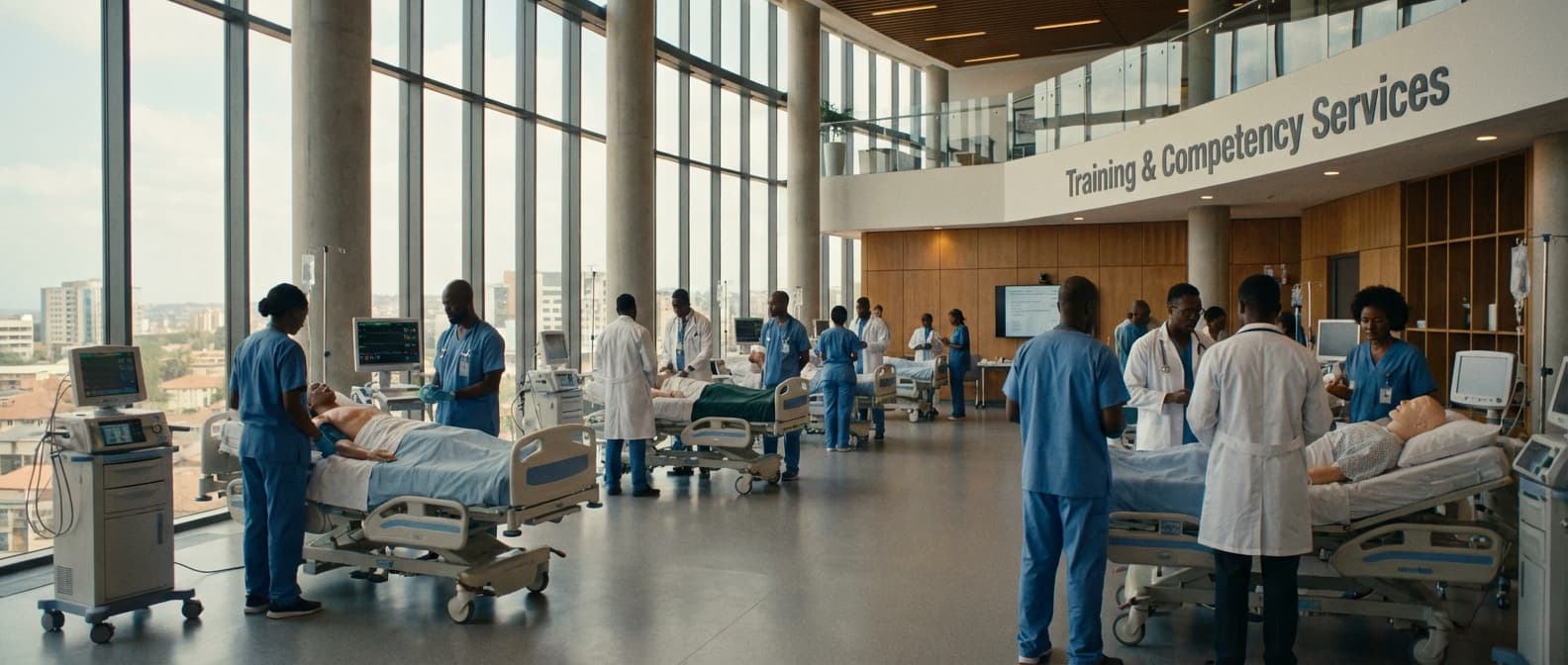
MRI Operator Training Service (Radiographers) in Mali
Engineering Excellence & Technical Support
MRI Operator Training Service (Radiographers) High-standard technical execution following OEM protocols and local regulatory frameworks.
Advanced MRI Sequence Optimization for Enhanced Diagnostic Accuracy
Our training program provides radiographers in Mali with hands-on experience in optimizing a wide range of MRI sequences (e.g., T1, T2, FLAIR, DWI, SWI). We focus on understanding the underlying physics and signal properties to tailor protocols for specific pathologies, leading to higher diagnostic confidence and reduced scan times.
Comprehensive Patient Safety Protocols and Artifact Reduction Techniques
Emphasis is placed on mastering stringent patient safety protocols, including contraindication screening, contrast administration guidelines, and managing claustrophobia. Trainees will learn to identify, troubleshoot, and minimize common MRI artifacts (e.g., motion, susceptibility, aliasing) to ensure the integrity and diagnostic quality of acquired images.
Efficient MRI Workflow Management and Post-Processing Integration
This module covers best practices for efficient MRI operational workflow, from patient preparation and scheduling to image acquisition and archival. Radiographers will gain proficiency in utilizing PACS/RIS systems and become familiar with basic post-processing techniques for advanced visualization and quantitative analysis, improving overall departmental productivity and patient throughput.
What Is Mri Operator Training Service (Radiographers) In Mali?
MRI Operator Training Service (Radiographers) in Mali refers to specialized educational programs designed to equip radiographers with the knowledge, skills, and competencies required to safely and effectively operate Magnetic Resonance Imaging (MRI) scanners. This service encompasses theoretical instruction, practical hands-on training, and clinical experience, all tailored to the specific equipment and healthcare infrastructure prevalent in Mali. The objective is to ensure radiographers can perform high-quality MRI examinations, adhering to established protocols, safety standards, and diagnostic imaging principles.
| Target Audience | Rationale for Need | Typical Use Cases |
|---|---|---|
| Newly Qualified Radiographers: Graduates from radiography programs seeking to specialize in MRI. | To gain essential skills for initial employment in MRI departments. | Performing routine MRI examinations for neurological, musculoskeletal, abdominal, and pelvic imaging. |
| Experienced Radiographers transitioning to MRI: Radiographers with experience in other modalities (e.g., X-ray, CT) seeking to expand their skillset. | To acquire specialized knowledge and practical experience in MRI operation. | Acquiring and processing MR images for a wide range of diagnostic purposes, often under the supervision of experienced personnel or radiologists. |
| Healthcare Facilities Acquiring MRI Technology: Hospitals, clinics, and imaging centers in Mali that are establishing or upgrading their MRI services. | To ensure qualified personnel are available to operate the new equipment and deliver MRI services. | Establishing and maintaining a functional MRI imaging service to support diagnostic capabilities and patient care. |
| Radiographers seeking Professional Development: Individuals aiming to enhance their career prospects and technical expertise. | To stay current with technological advancements and best practices in MRI. | Contributing to the efficient and safe operation of MRI scanners, potentially specializing in specific MRI applications. |
Key Components of MRI Operator Training Service
- Anatomy and Physiology: In-depth understanding of human anatomy and relevant physiological processes to interpret anatomical structures visualized by MRI.
- Physics of MRI: Comprehensive study of the fundamental principles of magnetic resonance, including signal generation, pulse sequences, gradient coils, and image reconstruction.
- MRI Safety Protocols: Rigorous training on patient and personnel safety, including contraindications, screening procedures, management of ferromagnetic materials, and emergency response.
- MRI Equipment Operation: Hands-on proficiency in operating specific MRI scanner models, including patient positioning, coil selection, parameter optimization, and image acquisition techniques.
- Image Interpretation Fundamentals: Introduction to basic principles of MRI image interpretation, including artifact identification and recognition of common pathologies (though advanced interpretation typically falls to radiologists).
- Quality Assurance and Control: Understanding and implementing procedures to ensure consistent image quality and equipment performance.
- Contrast Agent Administration (where applicable): Training on the safe and effective administration of MRI contrast agents, including indications, contraindications, and adverse event management.
- PACS and HIS Integration: Familiarity with Picture Archiving and Communication Systems (PACS) and Hospital Information Systems (HIS) for image management and reporting.
- Ethical and Legal Considerations: Awareness of patient confidentiality, informed consent, and regulatory requirements within the Malian healthcare context.
Who Needs Mri Operator Training Service (Radiographers) In Mali?
MRI Operator Training Service (Radiographers) in Mali is crucial for enhancing diagnostic imaging capabilities and ensuring patient safety. This specialized training aims to equip radiographers with the advanced skills and knowledge necessary to operate MRI scanners effectively, interpret complex images, and manage patient care during MRI procedures. The demand for such services is driven by the growing need for accurate and timely medical diagnoses, particularly in specialized fields. The service targets healthcare professionals directly involved in or overseeing MRI operations.
| Target Customer/Department | Primary Need Addressed | Benefit of Training |
|---|---|---|
| Radiographers/Radiologic Technologists | Skill enhancement in MRI operation, image acquisition protocols, and interpretation | Increased diagnostic accuracy, improved patient safety, career advancement |
| Radiology Departments | Standardization of MRI protocols, quality assurance, efficient workflow | Higher quality imaging, reduced scan times, improved patient throughput, enhanced reputation |
| Hospital Administration/Management | Return on investment in imaging technology, patient satisfaction, risk management | Improved patient outcomes, reduced diagnostic errors, cost-effectiveness, enhanced institutional image |
| Ministry of Health/Public Health Institutions | National capacity building in advanced medical imaging, equitable access to quality diagnostics | Strengthened healthcare system, improved public health outcomes, reduced medical tourism for diagnostics |
| Private Diagnostic Imaging Centers | Competitive edge, advanced service offering, client retention | Attraction of more patients, higher revenue generation, establishment as a leading imaging provider |
| Medical Schools/Training Institutions | Curriculum development, production of highly skilled graduates | Graduates with sought-after skills, improved employability, contribution to the advancement of medical education |
| Neurology Departments | Specialized neuroimaging techniques, interpretation of neurological conditions | Accurate diagnosis and management of brain and spinal cord disorders |
| Orthopedic Departments | Musculoskeletal imaging expertise, diagnosis of sports injuries and degenerative conditions | Precise diagnosis and effective treatment planning for musculoskeletal issues |
| Oncology Departments | MRI in cancer staging, treatment response assessment, and recurrence monitoring | Improved cancer management and patient prognoses |
Target Customers and Departments for MRI Operator Training in Mali
- Radiographers and Radiologic Technologists: The primary recipients of the training, aiming to improve their technical proficiency and diagnostic interpretation skills.
- Radiology Departments: To upgrade the skills of their existing staff, ensure compliance with international standards, and improve the quality of MRI services offered.
- Hospital Administration and Management: To invest in staff development, leading to enhanced patient outcomes, reduced errors, and improved operational efficiency.
- Ministry of Health and Public Health Institutions: To build a skilled workforce capable of operating modern medical imaging equipment, thereby improving public health service delivery across the nation.
- Private Diagnostic Imaging Centers: To ensure their staff are highly trained, offering competitive and advanced MRI services to the population.
- Medical Schools and Training Institutions: To integrate advanced MRI operator training into their curriculum, preparing future radiographers with the latest skills.
- Emergency Medicine Departments: To ensure rapid and accurate MRI interpretation for trauma and acute conditions.
- Neurology Departments: For specialized training in neuroimaging techniques and interpretation.
- Orthopedic Departments: To enhance the interpretation of musculoskeletal MRI scans.
- Oncology Departments: For understanding and utilizing MRI in cancer diagnosis, staging, and treatment monitoring.
- Cardiology Departments: For specialized cardiac MRI training.
Mri Operator Training Service (Radiographers) Process In Mali
This document outlines the workflow for an MRI Operator Training Service specifically for Radiographers in Mali, covering the process from initial inquiry to the successful execution of the training program. The service aims to enhance the skills and knowledge of radiographers in operating MRI equipment, ensuring high-quality diagnostic imaging. The workflow is designed to be clear, efficient, and tailored to the needs of healthcare professionals in Mali.
| Stage | Description | Key Activities | Responsible Parties |
|---|---|---|---|
| Inquiry | Initial contact and expression of interest. | Receive inquiry, acknowledge request, gather basic information. | Client, Service Provider |
| Needs Assessment & Consultation | Understanding specific requirements and context. | Conduct meetings, surveys, and interviews; analyze current skill gaps. | Service Provider, Client Representatives |
| Proposal & Agreement | Formalizing the training plan and terms. | Develop training curriculum, budget, and timeline; negotiate and sign contract. | Service Provider, Client |
| Pre-Training Logistics | Setting up the necessary infrastructure and resources. | Secure training venue, arrange equipment, prepare materials, confirm trainer availability. | Service Provider |
| Enrollment & Pre-Assessment | Registering participants and evaluating baseline knowledge. | Process participant applications, administer pre-tests (if applicable). | Service Provider, Participants |
| Training Delivery | Executing the theoretical and practical learning modules. | Conduct lectures, demonstrations, hands-on practice, simulations. | Trainers, Participants |
| Assessment & Evaluation | Measuring learning outcomes and gathering feedback. | Administer written exams, practical evaluations, collect participant feedback. | Trainers, Participants |
| Certification | Formal recognition of successful completion. | Issue certificates to qualified participants. | Service Provider |
| Post-Training Support | Providing ongoing assistance and resources. | Offer follow-up consultations, provide access to additional resources, address queries. | Service Provider, Certified Radiographers |
MRI Operator Training Service Workflow for Radiographers in Mali
- Inquiry and Needs Assessment: The process begins with an inquiry from an individual radiographer or a healthcare institution in Mali expressing interest in the MRI Operator Training Service.
- Consultation and Program Design: A detailed consultation is held to understand the specific training needs, current skill levels, and desired outcomes. This allows for the customization of the training program, including theoretical modules, practical sessions, and any specific MRI protocols relevant to the Malian context.
- Proposal and Agreement: A comprehensive proposal is submitted, outlining the training curriculum, duration, location, trainers, learning objectives, assessment methods, and costs. Upon agreement, a formal contract or service level agreement is established.
- Pre-Training Preparation: This phase includes logistical arrangements such as booking training facilities, ensuring availability of MRI equipment for practical sessions (either at the client's site or a dedicated training center), and preparing training materials.
- Participant Enrollment and Pre-Assessment: Radiographers interested in participating are enrolled. A pre-assessment may be conducted to gauge their existing knowledge and identify areas requiring focused attention during the training.
- Training Delivery (Theoretical & Practical): The core of the service involves delivering the training. This includes: Theoretical Sessions: Covering MRI physics, safety protocols, patient preparation, image acquisition techniques, artifact recognition, and quality control. Practical Sessions: Hands-on experience with MRI scanners, including protocol selection, parameter optimization, image acquisition, and post-processing, under the guidance of experienced trainers.
- Ongoing Support and Mentorship: During the practical training, trainers provide continuous feedback and mentorship, addressing challenges and reinforcing learning.
- Assessment and Evaluation: Trainees are assessed through a combination of theoretical tests, practical demonstrations, and case study analysis to evaluate their competency. Feedback is also gathered from participants on the training program itself.
- Certification: Upon successful completion of the training and passing all assessments, certified radiographers receive a certificate recognizing their enhanced MRI operator skills.
- Post-Training Follow-up: A follow-up mechanism may be in place to offer continued support, address any emerging issues, and provide resources for ongoing professional development.
- Service Review and Improvement: The entire process, from inquiry to post-training, is reviewed to identify areas for improvement in future training programs.
Mri Operator Training Service (Radiographers) Cost In Mali
This document outlines the potential costs associated with MRI operator training services for radiographers in Mali. It's important to note that these are estimates, and actual pricing will vary significantly based on several key factors. The provided ranges are in Malian CFA Franc (XOF).
| Training Type/Level | Estimated Cost Range (XOF per participant) | Notes |
|---|---|---|
| Basic MRI Principles & Operation (e.g., 1-3 days) | 150,000 - 400,000 | Covers fundamental physics, image formation, safety. May be online or short on-site. |
| Comprehensive MRI Operator Training (e.g., 1-2 weeks) | 400,000 - 1,200,000 | In-depth coverage of techniques, protocols, basic troubleshooting. Often includes some practical elements. |
| Specialized MRI Modules (e.g., Neuro, MSK, Cardiac - per module, 2-5 days) | 200,000 - 600,000 | Focuses on advanced protocols and interpretation for specific body parts. Assumes foundational knowledge. |
| Advanced MRI Techniques & Troubleshooting Workshop (e.g., 3-5 days) | 500,000 - 1,500,000 | For experienced operators, focusing on challenging cases, artifact reduction, and advanced sequences. Can be very specialized. |
| On-site, Customized Training (per day, excluding travel/accommodation for trainer) | 100,000 - 300,000+ | Price is for the trainer's day rate and can be significantly higher if travel, accommodation, and equipment access are factored in. |
| Online/Virtual Training (per participant, per course) | 100,000 - 500,000 | Cost-effective for broader reach, but practical component might be limited or simulated. |
Key Pricing Factors for MRI Operator Training in Mali:
- {"title":"Duration and Intensity of Training","description":"Shorter, introductory courses will be less expensive than comprehensive, multi-week programs that cover advanced techniques and troubleshooting. The number of training hours directly impacts cost."}
- {"title":"Provider's Reputation and Expertise","description":"Established training institutions or highly sought-after freelance trainers with a strong track record and specialized knowledge will command higher fees."}
- {"title":"Curriculum Content and Specialization","description":"Basic MRI physics and operation training is generally more affordable than specialized modules focusing on specific anatomical regions (e.g., neuroimaging, musculoskeletal MRI) or advanced sequences."}
- {"title":"Training Format (On-site vs. Online/Hybrid)","description":"On-site training, especially if it requires travel and accommodation for the trainer, will be more expensive than remote online or hybrid learning options."}
- {"title":"Number of Participants","description":"Group discounts are common. Training for a larger cohort of radiographers will likely have a lower per-person cost than individual training."}
- {"title":"Inclusion of Practical/Hands-on Sessions","description":"Training that involves hands-on experience with an actual MRI scanner (if accessible) or sophisticated simulators will be priced higher due to resource requirements."}
- {"title":"Certification and Assessment","description":"Courses that include formal certification exams and assessments will typically have an additional cost."}
- {"title":"Location within Mali","description":"Training offered in major urban centers like Bamako may have slightly different pricing compared to more remote regions, potentially due to logistical considerations."}
- {"title":"Customization of Training Program","description":"Tailoring the training content to the specific needs and equipment of a particular healthcare facility will incur additional development costs."}
Affordable Mri Operator Training Service (Radiographers) Options
This service aims to provide accessible and cost-effective Magnetic Resonance Imaging (MRI) operator training specifically for radiographers. We understand the financial and time constraints healthcare facilities often face when upskilling their staff. Our program focuses on delivering high-quality, comprehensive MRI operational knowledge and practical skills without breaking the bank. We offer flexible training options, value-driven bundles, and strategic cost-saving measures to ensure your radiographers are proficient in MRI operations efficiently.
| Training Option | Description | Ideal For | Estimated Cost Range (per radiographer) | Value Proposition |
|---|---|---|---|---|
| Online Self-Paced Modules | Access to a library of pre-recorded lectures, interactive quizzes, and simulated practical exercises. | Individual radiographers or facilities needing maximum flexibility and budget control. | $500 - $1,200 | Lowest upfront cost, learn at your own pace, accessible from anywhere. |
| Live Online Workshops | Scheduled interactive sessions with instructors, Q&A, group discussions, and case study analysis. | Teams looking for structured learning with direct instructor interaction. | $800 - $1,800 | Engaging learning environment, real-time feedback, collaborative learning. |
| On-Site Facility Training | Instructors come to your facility, tailored curriculum, hands-on training with your own equipment. | Facilities with multiple staff needing training simultaneously or specific equipment integration. | $1,500 - $3,000+ (depending on group size and duration) | Maximized practical application on your own equipment, minimal disruption to workflow, team cohesion. |
| Hybrid Learning Bundles | Combines online modules with limited on-site practical sessions or live online workshops. | Facilities seeking a balance of cost-effectiveness and hands-on experience. | $1,000 - $2,200 | Cost savings compared to fully on-site, combines theoretical knowledge with practical application. |
Key Features of Our Affordable MRI Operator Training:
- Comprehensive curriculum covering MRI physics, safety, protocol optimization, image acquisition, and quality control.
- Flexible training modalities including in-person workshops, online modules, and hybrid approaches.
- Experienced and certified MRI technologists as instructors.
- Emphasis on practical application and real-world scenarios.
- Post-training support and resources.
- Customizable training plans to meet specific facility needs.
Verified Providers In Mali
In Mali, ensuring access to quality healthcare hinges on the reliability and expertise of medical providers. Franance Health stands out as a leading organization dedicated to credentialing and verifying healthcare professionals, offering Malian citizens a trusted pathway to safe and effective medical care. Their rigorous vetting process, encompassing a comprehensive review of qualifications, experience, and ethical standing, ensures that only the most competent and trustworthy practitioners are recognized. This commitment to excellence not only safeguards patient well-being but also elevates the overall standard of healthcare services available within the nation. Choosing providers credentialed by Franance Health signifies a commitment to receiving care from practitioners who have met the highest benchmarks of professional integrity and clinical proficiency.
| Credentialing Aspect | Franance Health's Verification Process | Benefit to Patients |
|---|---|---|
| Medical Education and Training | Verification of degrees, diplomas, and completion of accredited medical programs. | Ensures providers have received foundational knowledge and skills. |
| Professional Experience | Thorough review of past clinical experience, including specialties and practice history. | Confirms practical application of medical expertise and familiarity with diverse cases. |
| Licensure and Certifications | Confirmation of valid medical licenses and relevant specialized certifications. | Guarantees compliance with national and international regulatory requirements. |
| Professional References and Background Checks | Contacting previous employers and performing background checks to assess character and performance. | Provides insights into a provider's work ethic, reliability, and patient interactions. |
| Continuing Medical Education (CME) | Assessing adherence to ongoing learning requirements to stay updated with medical advancements. | Ensures providers are current with the latest treatments and best practices. |
Why Franance Health Credentials Matter in Mali:
- Unwavering Commitment to Quality: Franance Health prioritizes patient safety and optimal health outcomes by meticulously verifying every aspect of a provider's professional history.
- Enhanced Patient Trust: A Franance Health credential acts as a powerful assurance for patients, indicating that the provider has undergone thorough scrutiny and meets stringent standards.
- Promotion of Ethical Practice: The credentialing process includes checks for professional conduct and adherence to ethical guidelines, fostering a culture of integrity within the healthcare sector.
- Access to Competent Professionals: By filtering out unqualified individuals, Franance Health ensures that patients have access to genuinely skilled and experienced medical practitioners.
- Uplifting Healthcare Standards: The organization's dedication to excellence contributes to raising the bar for healthcare services across Mali, benefiting the entire population.
Scope Of Work For Mri Operator Training Service (Radiographers)
This Scope of Work (SOW) outlines the requirements for providing comprehensive MRI Operator Training services specifically tailored for Radiographers. The objective is to equip radiographers with the necessary theoretical knowledge and practical skills to safely and effectively operate MRI scanners, perform a wide range of imaging protocols, and ensure optimal image quality while adhering to established safety standards. The training will cover fundamental MRI principles, advanced imaging techniques, patient care, safety protocols, and quality assurance.
| Training Module | Key Topics Covered | Learning Objectives | Assessment Methods |
|---|---|---|---|
| Nuclear spin, precession, RF pulses, relaxation times (T1, T2, T2*), magnetic field gradients, k-space, image reconstruction. | Understand the fundamental physics governing MRI signal generation and image formation. | Written quiz, practical demonstration of understanding concepts through scenario discussion. |
| Superconducting magnets, gradient coils, RF coils, patient table mechanics, siting requirements, biological effects of MRI, screening procedures, quench procedures, ferromagnetic detection. | Identify components of an MRI system, understand safety zones, and implement comprehensive patient screening protocols. | Written test on safety regulations, practical screening exercise, scenario-based safety assessment. |
| Spin echo, fast spin echo, gradient echo, inversion recovery (FLAIR, STIR), diffusion-weighted imaging (DWI), susceptibility-weighted imaging (SWI). | Differentiate between various pulse sequences and understand how they produce different image contrast (T1, T2, PD weighting). | Image identification quiz, practical protocol selection for specific contrast requirements. |
| Types of contrast agents (e.g., Gadolinium-based), indications, contraindications, administration routes, adverse reactions, management of adverse reactions. | Understand the role of contrast agents in MRI, administer them safely, and recognize/manage potential side effects. | Written exam on contrast agent pharmacology and safety, role-playing scenario for contrast administration and management. |
| Brain, spine, musculoskeletal, abdomen, pelvis, cardiac, breast MRI protocols. | Perform standard MRI examinations for common anatomical regions and pathologies. | Practical scanning sessions for selected protocols, case study interpretation. |
| Factors affecting image quality (SNR, CNR, resolution), common artifacts (motion, susceptibility, aliasing) and their mitigation strategies. | Identify and troubleshoot common artifacts to ensure diagnostic image quality. | Image analysis exercise, practical demonstration of artifact reduction techniques. |
| Patient preparation, anxiety management, claustrophobia management, communication skills, monitoring of sedated or anesthetized patients. | Provide compassionate and effective patient care throughout the MRI examination. | Role-playing exercises for patient interaction, scenario-based problem-solving. |
| Routine system checks, calibration procedures, regulatory requirements (e.g., FDA, local health authorities), documentation, record-keeping. | Understand and implement quality assurance procedures to maintain system performance and comply with regulations. | Written assessment on QA procedures, review of sample documentation. |
| Functional MRI (fMRI), Magnetic Resonance Spectroscopy (MRS), Diffusion Tensor Imaging (DTI), perfusion imaging. | Gain foundational knowledge of advanced MRI techniques and their clinical applications. | Presentation and discussion of advanced techniques, case study interpretation. |
Technical Deliverables
- Comprehensive Training Manuals (Digital and/or Print): Covering all theoretical aspects of MRI operation, physics, pulse sequences, contrast agents, safety, and troubleshooting.
- Practical Training Modules: Hands-on sessions utilizing actual MRI scanners or high-fidelity simulators, focusing on patient positioning, protocol selection, image acquisition, and parameter optimization.
- Case Study Library: A collection of diverse clinical cases illustrating various pathologies and optimal imaging approaches.
- Competency Assessment Tools: Quizzes, practical examinations, and scenario-based evaluations to gauge radiographer understanding and skill proficiency.
- Training Certificates: Issued upon successful completion of the training program, validating the radiographer's competence.
- Post-Training Support Plan: Outline of available resources and contact points for ongoing guidance and troubleshooting.
- Training Report: A summary of the training delivered, attendee performance, and recommendations for further development.
Service Level Agreement For Mri Operator Training Service (Radiographers)
This Service Level Agreement (SLA) outlines the guaranteed response times and uptime for the MRI Operator Training Service provided to radiographers. It defines the expected performance levels and remedies for any failure to meet these standards.
| Service Component | Uptime Guarantee | Response Time (Technical Support) | Response Time (Trainer Q&A) | Measurement Period |
|---|---|---|---|---|
| Online Training Platform Accessibility | 99.5% Uptime | N/A | N/A | Monthly |
| Access to Pre-recorded Training Modules | 99.5% Uptime | N/A | N/A | Monthly |
| Technical Support (Platform Issues, Login Problems) | N/A | Within 4 business hours | N/A | Per incident |
| Trainer Availability (Scheduled Q&A Sessions) | N/A | N/A | During scheduled session times | As scheduled |
| Trainer Availability (Ad-hoc Questions via Email/Portal) | N/A | N/A | Within 24 business hours | Per query |
Key Service Components
- MRI Operator Training Course Delivery (Online and/or In-Person)
- Technical Support for Training Platform
- Access to Training Materials
- Trainer Availability for Q&A Sessions
Frequently Asked Questions

Ready when you are
Let's scope your MRI Operator Training Service (Radiographers) in Mali project in Mali.

Scaling healthcare logistics and technical systems across the entire continent.