
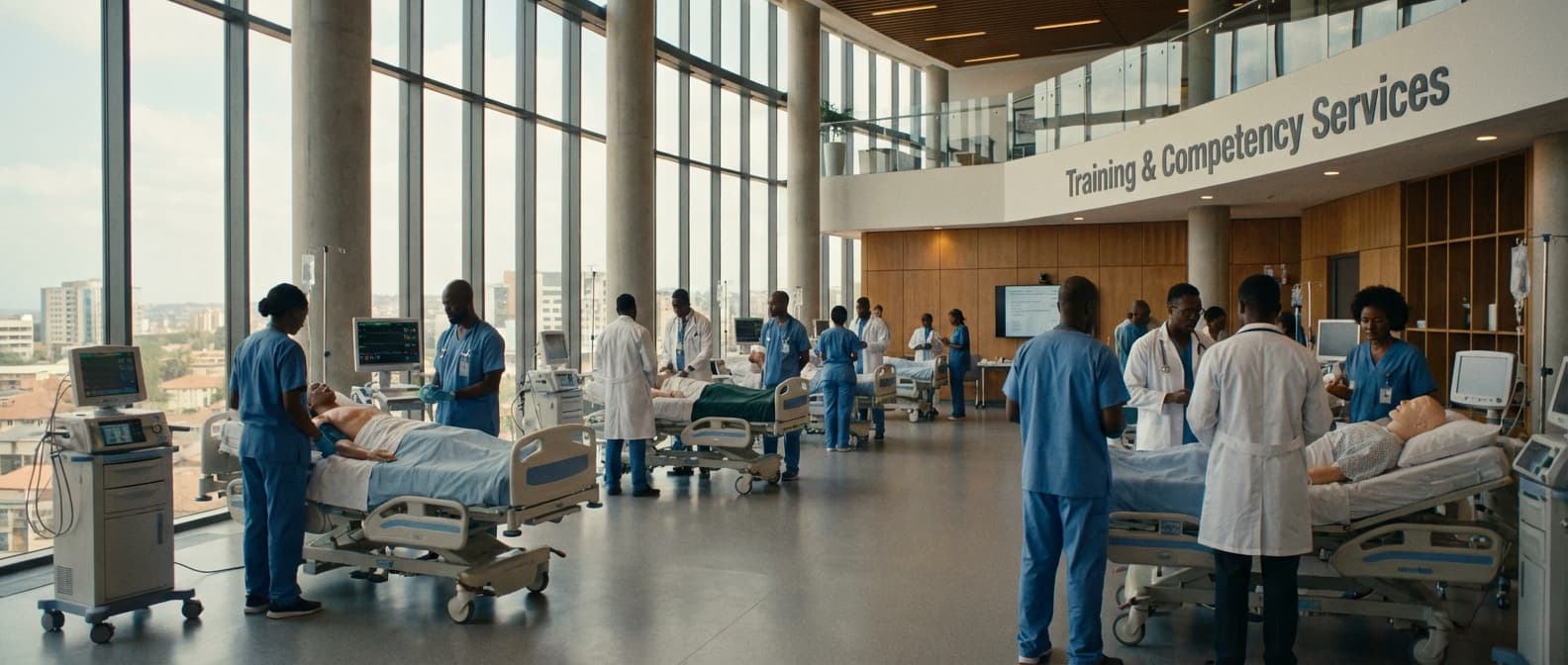
CT Operator Training Service (Radiographers) in Mali
Engineering Excellence & Technical Support
CT Operator Training Service (Radiographers) High-standard technical execution following OEM protocols and local regulatory frameworks.
Advanced CT Imaging Techniques
Mastering cutting-edge CT protocols for diverse anatomical regions, including neuroimaging, angiography, and oncological staging, ensuring optimal image quality and diagnostic accuracy in challenging Malian healthcare settings.
Hands-on Clinical Scenarios & Troubleshooting
Engage in realistic simulated patient cases and practical exercises focused on common CT imaging challenges encountered in Mali, fostering immediate skill development and problem-solving abilities for radiographers.
Radiation Safety & Quality Assurance
Comprehensive training on international radiation protection standards and best practices for CT equipment operation and maintenance, ensuring patient and staff safety and adherence to regulatory guidelines in Mali.
What Is Ct Operator Training Service (Radiographers) In Mali?
CT Operator Training Service (Radiographers) in Mali refers to specialized educational programs designed to equip radiographers with the necessary theoretical knowledge and practical skills to operate Computed Tomography (CT) scanners effectively and safely. This training is critical for ensuring diagnostic accuracy, patient safety, and adherence to international standards in medical imaging within Mali.
| Who Needs CT Operator Training? | Typical Use Cases for Trained CT Operators | |||||
|---|---|---|---|---|---|---|
| Radiographers (Diagnostic Imaging Technologists): The primary target audience, including newly qualified professionals and experienced radiographers seeking to specialize or update their skills in CT. | Emergency Departments: Rapid assessment of trauma, stroke, and acute abdominal conditions. | Oncology Departments: Staging, treatment planning, and monitoring of cancer progression. | Surgical Departments: Pre-operative planning and post-operative assessment. | Internal Medicine: Diagnosis of a wide range of conditions affecting thoracic, abdominal, and pelvic organs. | Neurology Departments: Evaluation of neurological disorders, including tumors, hemorrhages, and degenerative diseases. | Radiology Departments in Hospitals and Clinics: Routine diagnostic imaging across various medical specialties. |
Service Components
- Theoretical Instruction: Covers principles of CT physics, radiation biology, cross-sectional anatomy, CT image formation, contrast media administration, and potential artifacts.
- Practical Scanner Operation: Hands-on training on specific CT scanner models, including patient positioning, protocol selection, image acquisition parameters, and basic troubleshooting.
- Patient Care and Safety: Emphasizes radiation protection for patients and staff, contraindications for CT scans, management of adverse reactions to contrast media, and patient communication.
- Quality Assurance and Control: Training on maintaining optimal image quality, performing regular equipment checks, and understanding quality management protocols.
- Image Processing and Archiving: Introduction to CT image post-processing techniques, Picture Archiving and Communication Systems (PACS), and basic data management.
- Regulatory Compliance: Familiarization with national and international guidelines related to medical imaging and radiation safety.
Who Needs Ct Operator Training Service (Radiographers) In Mali?
CT Operator Training Service (Radiographers) in Mali addresses a critical need for skilled professionals in medical imaging. The increasing demand for advanced diagnostic tools like CT scanners, coupled with a shortage of adequately trained radiographers, necessitates specialized training programs. This service aims to equip existing and aspiring radiographers with the theoretical knowledge and practical skills required to operate CT scanners safely and effectively, ensuring high-quality patient care and accurate diagnostic outcomes. The training will cover essential aspects of CT physics, protocol optimization, image acquisition, artifact reduction, patient positioning, radiation safety, and basic troubleshooting.
| Target Customer/Department | Specific Needs Addressed | Impact of Training |
|---|---|---|
| Public Hospitals | Upgrading skills of existing radiographers to operate newly acquired or existing CT scanners; addressing a general shortage of qualified CT operators; improving diagnostic capacity to serve a larger population. | Enhanced diagnostic capabilities, reduced patient referral for CT scans, improved patient outcomes, efficient utilization of expensive medical equipment. |
| Private Hospitals and Clinics | Ensuring staff proficiency in advanced imaging techniques; maintaining high standards of service; competitive edge in the market; compliance with regulatory requirements. | Increased service offerings, higher patient satisfaction, improved revenue generation, enhanced reputation for advanced diagnostics. |
| Diagnostic Centers | Training technicians on the latest CT technologies and protocols; ensuring consistent image quality and patient safety; expanding service portfolio. | Broader range of diagnostic services, increased patient throughput, reduced need for external CT services. |
| Ministry of Health (and affiliated institutions) | Developing a national cadre of skilled CT radiographers; standardizing CT imaging practices across the country; strengthening the healthcare infrastructure; supporting public health initiatives requiring advanced imaging. | Improved national healthcare delivery, equitable access to diagnostic services, better data for public health planning, more effective disease management. |
| NGOs and International Health Organizations | Equipping local staff in project areas with CT operation skills to improve healthcare delivery in underserved regions; capacity building for sustainable healthcare services. | Enhanced healthcare in remote or underserved areas, improved ability to diagnose and manage conditions, empowerment of local healthcare workers. |
| Training Institutions (Medical Schools, Technical Colleges) | Integrating comprehensive CT operator training into their curriculum; producing graduates with in-demand skills; enhancing the employability of their students. | Graduates are job-ready for CT roles, improved reputation of the institution, contribution to the national healthcare workforce. |
Target Customers and Departments for CT Operator Training Service (Radiographers) in Mali
- Radiographers (existing and aspiring)
- Medical Imaging Technicians
- Radiology Departments
- Hospitals (public and private)
- Clinics and Diagnostic Centers
- Non-Governmental Organizations (NGOs) with healthcare programs
- Ministry of Health and its affiliated institutions
- Training Institutions for Healthcare Professionals
Ct Operator Training Service (Radiographers) Process In Mali
This document outlines the workflow for the CT Operator Training Service (Radiographers) in Mali, detailing the process from initial inquiry to successful execution. The service aims to equip radiographers with the necessary skills and knowledge to operate CT scanners effectively and safely. The process is designed to be comprehensive, transparent, and responsive to the needs of trainees and their sponsoring institutions.
| Phase | Key Activities | Responsible Parties | Key Deliverables | Timeline (Indicative) |
|---|---|---|---|---|
| Potential clients (hospitals, clinics, ministries of health) express interest in CT operator training. Initial meetings to understand their requirements, existing infrastructure, and desired training outcomes. | Client (Sponsoring Institution), Training Provider (Malian Training Institute/Accredited Body) | Understanding of client needs, preliminary discussion on training scope. | 1-2 Weeks |
| Detailed assessment of the target audience's current skill levels, specific CT equipment in use, and any specialized imaging protocols required. Development of a customized training proposal outlining curriculum, duration, methodology, trainers, and costs. | Training Provider, Client (with input from potential trainees) | Detailed training needs analysis report, comprehensive training proposal. | 2-4 Weeks |
| Review and negotiation of the training proposal. Formalization of the agreement through a signed contract detailing scope of work, payment terms, responsibilities, and quality assurance measures. | Client, Training Provider | Signed training contract/agreement. | 1-2 Weeks |
| Client identifies and nominates radiographers for training. Training Provider provides pre-reading materials, registration forms, and information about the training logistics (venue, schedule, required equipment). | Client, Training Provider | List of nominated participants, completed registration forms, pre-training materials distributed. | 1-2 Weeks |
| Delivery of theoretical sessions (CT physics, anatomy, patient positioning, radiation safety, image acquisition protocols, quality control) and practical hands-on sessions using CT simulators or actual CT scanners. Includes case study reviews and troubleshooting scenarios. | Certified Trainers (from Training Provider), Trainees (Radiographers) | Successful completion of theoretical and practical modules, active participation. | Duration varies based on training level (e.g., 1-4 weeks) |
| Evaluation of trainee competency through theoretical exams, practical assessments, and performance observation. Successful trainees receive a recognized certificate of completion. | Trainers, Assessment Panel (potentially including external evaluators) | Assessment reports, Certificate of Completion for successful trainees. | 1 Week |
| Provision of ongoing support, answering technical queries, and offering further advanced training opportunities if required. Collection of feedback from trainees and sponsoring institutions to improve future training programs. | Training Provider, Client | Post-training support mechanism, feedback reports, recommendations for future training. | Ongoing (e.g., 1-3 months post-training) |
CT Operator Training Service (Radiographers) Workflow in Mali
- Inquiry and Initial Consultation
- Needs Assessment and Proposal Development
- Agreement and Contract Finalization
- Participant Selection and Pre-training Preparation
- Training Program Execution
- Assessment and Certification
- Post-Training Support and Follow-up
Ct Operator Training Service (Radiographers) Cost In Mali
Training radiographers to operate CT scanners in Mali involves several cost considerations. The price can fluctuate based on the training provider, the duration and depth of the program, the location of the training, and the specific CT technology being taught. Generally, training can be provided by medical equipment manufacturers, specialized training institutions, or sometimes through partnerships with larger hospitals offering in-house programs. The cost will also depend on whether the training is a foundational introduction or an advanced specialization for experienced radiographers. Additional expenses might include materials, assessments, and certification fees.
| Training Component/Level | Estimated Cost Range (Malian Franc CFA - XOF) |
|---|---|
| Basic CT Operator Training (Introductory, 1-2 weeks) | 300,000 - 600,000 CFA |
| Intermediate CT Operator Training (Comprehensive, 2-4 weeks) | 600,000 - 1,200,000 CFA |
| Advanced/Specialized CT Training (e.g., specific protocols, 1 week) | 400,000 - 800,000 CFA |
| Manufacturer-Provided Training (often bundled with equipment purchase, variable) | Varies significantly; can be included or an additional cost |
| On-site Training (additional travel/accommodation costs for trainers) | Adds 100,000 - 300,000+ CFA depending on location |
| Certification Fees (separate from training cost) | 50,000 - 150,000 CFA |
Key Pricing Factors for CT Operator Training (Radiographers) in Mali
- Training Provider: Manufacturers of CT equipment often offer training packages, which can be priced differently from independent training institutions.
- Duration and Depth: Shorter, introductory courses will be less expensive than comprehensive programs covering advanced techniques and troubleshooting.
- Location of Training: Training conducted at a specialized facility or a distant city might incur additional travel and accommodation costs for the trainees.
- CT Technology Specificity: Training on a specific model or brand of CT scanner might have a different price point than general CT principles.
- Materials and Resources: Costs for training manuals, simulation software, and access to actual CT equipment for hands-on practice.
- Assessment and Certification: Fees associated with examinations and the issuance of official certifications upon successful completion of the course.
- Trainer's Expertise and Reputation: Highly experienced and reputable trainers or institutions may command higher fees.
- Inclusion of Practical Sessions: The extent and quality of practical, hands-on training with a CT scanner will influence the cost.
Affordable Ct Operator Training Service (Radiographers) Options
This guide explores affordable CT operator training services specifically tailored for radiographers. We'll delve into how value bundles and strategic cost-saving measures can make obtaining specialized CT skills accessible and efficient for individuals and imaging facilities. Investing in CT operator training is crucial for radiographers looking to expand their skillset, increase their marketability, and contribute to advanced diagnostic imaging.
| Value Bundle Component | Description | Cost-Saving Strategy/Benefit |
|---|---|---|
| Basic Online Course Package | Core theoretical knowledge, anatomy, and principles of CT. Delivered entirely online. | Lower overhead costs for providers translate to lower tuition for students. Accessible from anywhere, eliminating travel and accommodation expenses. |
| Blended Learning Bundle | Combines online theoretical modules with a limited number of on-site simulation sessions or supervised clinical observation hours. | Balances cost-effectiveness of online learning with the necessity of practical experience. Reduces the need for extensive on-site training facilities for the provider. |
| Comprehensive Certification Prep Bundle | Includes in-depth coursework, practice exams, study guides, and potentially a short intensive workshop focused on exam strategies. | Streamlines the certification process, increasing first-time pass rates and reducing the need for repeated training. Often offers a discount compared to purchasing components separately. |
| Group/Facility Training Package | Customizable training programs for multiple radiographers within a healthcare facility, often with on-site or dedicated virtual sessions. | Significant per-person cost reduction for bulk enrollment. Minimizes disruption to facility operations by scheduling training efficiently. Can be tailored to specific equipment and protocols used by the facility. |
| Advanced Modality Integration (e.g., Cardiac CT, Dual-Energy) | Specialized modules focusing on advanced CT applications, often as add-ons to a general CT training program. | Allows professionals to upskill incrementally, investing in specialized training only when needed. Offers a phased approach to professional development, managing upfront costs. |
| Early Bird Discounts & Promotions | Reduced pricing offered for early registration or during promotional periods. | Direct financial savings for proactive individuals and facilities. Encourages timely enrollment. |
| Partnerships with Imaging Associations | Training providers collaborating with professional radiologic technology associations to offer discounted rates to members. | Leverages existing professional networks for cost savings. Provides access to vetted and quality training programs. |
| Government Grants or Employer Sponsorship | Utilizing available funding opportunities or employer-sponsored professional development budgets. | Significantly reduces or eliminates out-of-pocket expenses for the individual. Requires research and application, but offers substantial financial relief. |
Key Components of Affordable CT Operator Training
- Comprehensive Curriculum: Covers fundamental CT principles, cross-sectional anatomy, patient positioning, scan protocols, image acquisition techniques, and artifact reduction.
- Hands-on Simulation/Clinical Rotations: Essential for practical application of learned knowledge, often facilitated through partnerships or dedicated simulation labs.
- Certification Preparation: Training designed to prepare candidates for professional CT certifications (e.g., ARRT CT).
- Flexible Learning Modalities: Options include online, in-person, blended learning, and self-paced modules to accommodate busy schedules.
- Continuing Education Credits (CEUs): Many programs offer CEUs, vital for maintaining professional licenses and certifications.
- Instructor Support: Access to experienced CT technologists and educators for guidance and clarification.
Verified Providers In Mali
In Mali, discerning patients seek healthcare providers with a proven track record of excellence and ethical practice. Franance Health distinguishes itself by meticulously vetting and credentialing its network of healthcare professionals. This rigorous process ensures that every provider associated with Franance Health meets the highest standards of medical expertise, patient care, and ethical conduct. Choosing a Franance Health-verified provider means opting for reliability, trust, and superior medical outcomes. Their commitment to transparency and quality assurance makes them the unparalleled choice for your healthcare needs in Mali.
| Credentialing Aspect | Franance Health Standard | Patient Benefit |
|---|---|---|
| Medical Licensing & Certifications | Verified active and in-good-standing licenses and certifications from recognized bodies. | Ensures providers possess the fundamental qualifications and legal authorization to practice. |
| Clinical Experience & Expertise | Thorough review of professional history, specialties, and demonstrable outcomes. | Guarantees access to experienced specialists with proven track records in their fields. |
| Continuing Medical Education (CME) | Mandatory participation in accredited CME programs to stay updated with advancements. | Confirms providers are current with the latest medical knowledge and treatment protocols. |
| Patient Feedback & Reputation | Systematic collection and evaluation of patient satisfaction and professional reviews. | Identifies providers known for excellent bedside manner, communication, and positive patient experiences. |
| Adherence to Ethical Codes | Strict compliance with professional and ethical codes of conduct. | Assures a commitment to patient privacy, informed consent, and transparent treatment practices. |
Why Franance Health Credentials Matter:
- Rigorous Vetting Process: Franance Health employs a multi-faceted approach to assess providers, examining their qualifications, experience, and regulatory compliance.
- Commitment to Excellence: Verified providers demonstrate a consistent dedication to delivering high-quality, patient-centered care.
- Ethical Standards: Adherence to stringent ethical guidelines is a non-negotiable criterion for all Franance Health-credentialed professionals.
- Enhanced Patient Trust: The Franance Health verification mark provides patients with confidence and peace of mind regarding the competence of their chosen provider.
- Access to Top Talent: Franance Health curates a network of the most skilled and respected healthcare professionals in Mali.
Scope Of Work For Ct Operator Training Service (Radiographers)
This document outlines the Scope of Work for a CT Operator Training Service specifically for Radiographers. It details the technical deliverables, standard specifications, and the overall framework for providing comprehensive training to qualified radiographers in the operation of Computed Tomography (CT) scanners. The training aims to equip radiographers with advanced theoretical knowledge and practical skills necessary for safe, efficient, and high-quality CT imaging.
| Deliverable Type | Description | Format/Medium | Quantity/Frequency | Standard Specification |
|---|---|---|---|---|
| Training Curriculum Document | Detailed outline of all training modules, learning objectives, and assessment methods. | Digital (PDF) and Printed | 1 set | Comprehensive, modular, and easily navigable structure. Aligned with industry best practices and regulatory requirements. |
| Instructor-Led Training Sessions | Theoretical lectures and practical demonstrations conducted by certified instructors. | In-person or Live Virtual Sessions | As per agreed schedule | Trained and certified CT instructors with extensive clinical experience. Minimum 8:1 trainee to instructor ratio for practical sessions. |
| Hands-on Practical Sessions | Supervised operation of CT scanners using phantoms and simulated patient scenarios. | On-site CT scanner access | Minimum 16 hours per trainee | Access to a fully functional CT scanner, including console and imaging equipment. Scenarios covering a range of common and complex examinations. |
| Training Manuals and Handouts | Reference materials covering all training modules for trainee use. | Digital (PDF) and Printed | 1 set per trainee | Clear, concise language, high-quality diagrams and illustrations. Updated regularly. |
| Assessment Tools | Quizzes, practical evaluations, and final examination to assess trainee competency. | Digital (online platform) and Paper-based | Multiple per module and one final assessment | Valid and reliable assessment instruments. Pass mark to be clearly defined (e.g., 80%). |
| Post-Training Support | Q&A sessions, access to online resources, and refresher course options. | Email, Online Forum, Scheduled Calls | Ongoing for 3 months post-training | Prompt response times for queries. Access to an online repository of training materials and FAQs. |
| Training Certificates | Formal certification issued upon successful completion of the training program. | Physical Certificate | 1 per successful trainee | Includes trainee name, course title, completion date, and provider's accreditation/recognition. |
Key Training Modules and Content
- CT Physics and Principles: X-ray generation, beam filtration, detector technology, image reconstruction algorithms (e.g., filtered back projection, iterative reconstruction), artifacts and their mitigation.
- CT Scanner Operation and Safety: Anatomy of a CT scanner (gantry, table, console), pre-scan procedures, patient positioning techniques, radiation safety protocols (ALARA principle), dose monitoring and reduction strategies.
- CT Protocols and Image Acquisition: Standard protocols for various anatomical regions (neuro, chest, abdomen, pelvis), protocol optimization, contrast media administration and protocols, specialized imaging techniques (e.g., dual-energy CT, low-dose CT).
- Image Display, Post-processing, and Archiving: Image manipulation techniques (windowing, leveling, zoom), 2D and 3D post-processing (MPR, MIP, VR), PACS integration, DICOM standards, image quality assessment.
- Clinical Applications and Case Studies: Review of common CT findings and pathologies, case-based learning, integration of CT imaging into clinical decision-making.
- Quality Assurance and Maintenance: Routine quality control procedures for CT scanners, troubleshooting common issues, understanding manufacturer maintenance schedules.
Service Level Agreement For Ct Operator Training Service (Radiographers)
This Service Level Agreement (SLA) outlines the response times and uptime guarantees for the CT Operator Training Service provided to radiographers. This SLA is an addendum to the Master Services Agreement (MSA) between [Your Company Name] (hereinafter referred to as "Provider") and [Client Company Name] (hereinafter referred to as "Client").
| Service Component | Response Time Guarantee | Uptime Guarantee | Remedy for Breach |
|---|---|---|---|
| Online Training Platform Availability | N/A (covered by Uptime Guarantee) | 99.5% (measured monthly) | For each full percentage point below 99.5% in a given month, Client will receive a credit equivalent to 1% of the monthly training service fee. |
| Access to Online Training Modules | N/A (covered by Uptime Guarantee) | 99.5% (measured monthly) | For each full percentage point below 99.5% in a given month, Client will receive a credit equivalent to 1% of the monthly training service fee. |
| Simulated CT Scanning Environment | N/A (covered by Uptime Guarantee) | 99.0% (measured monthly) | For each full percentage point below 99.0% in a given month, Client will receive a credit equivalent to 1.5% of the monthly training service fee. |
| Knowledge Base Access | N/A (covered by Uptime Guarantee) | 99.5% (measured monthly) | For each full percentage point below 99.5% in a given month, Client will receive a credit equivalent to 1% of the monthly training service fee. |
| Technical Support (for platform issues) | Initial response within 4 business hours for Severity Level 1 issues (system down/unusable). | N/A | If Severity Level 1 response is not met, Client will receive a credit equivalent to 5% of the monthly training service fee for each instance. |
| Technical Support (for platform issues) | Initial response within 8 business hours for Severity Level 2 issues (major functionality impaired). | N/A | If Severity Level 2 response is not met, Client will receive a credit equivalent to 2.5% of the monthly training service fee for each instance. |
| Technical Support (for platform issues) | Initial response within 24 business hours for Severity Level 3 issues (minor functionality impaired, cosmetic issues). | N/A | If Severity Level 3 response is not met, Client will receive a credit equivalent to 1% of the monthly training service fee for each instance. |
| Expert-led Webinars | N/A (scheduled events, notification of cancellation/rescheduling will be provided with at least 48 hours' notice where possible). | N/A | If a scheduled webinar is cancelled with less than 48 hours' notice without good cause, Client may request a makeup session or a credit equivalent to 5% of the monthly training service fee. |
Scope of Service
- The CT Operator Training Service includes online modules, simulated CT scanning environments, expert-led webinars, and access to a knowledge base.
- The service is designed to enhance the skills and knowledge of radiographers in operating CT scanners safely and effectively.
- This SLA specifically covers the technical availability and support responsiveness of the online platform and associated training resources.
Frequently Asked Questions

Ready when you are
Let's scope your CT Operator Training Service (Radiographers) in Mali project in Mali.

Scaling healthcare logistics and technical systems across the entire continent.