
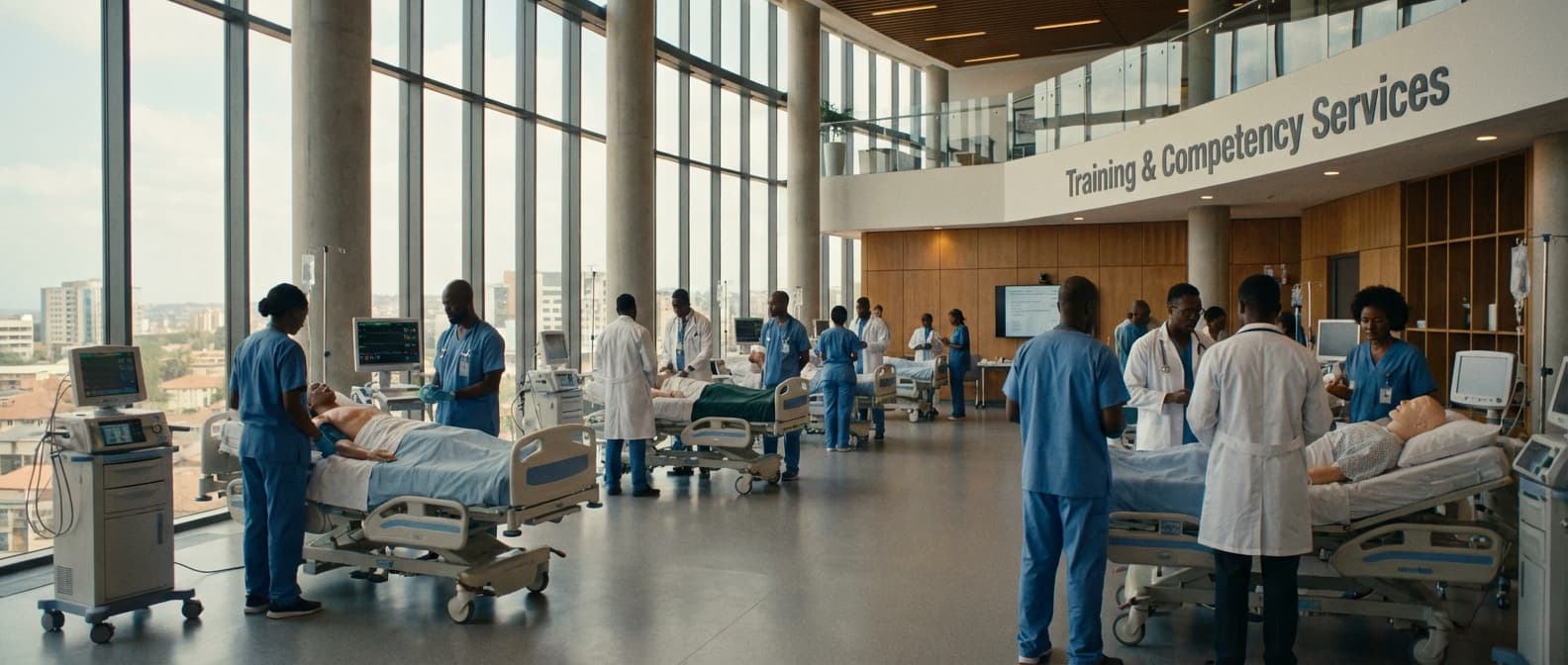
Biomedical Engineering First-Line Support Training Service in Mali
Engineering Excellence & Technical Support
Biomedical Engineering First-Line Support Training Service High-standard technical execution following OEM protocols and local regulatory frameworks.
Rapid Diagnostic Equipment Calibration & Troubleshooting
Empower frontline support staff with the skills to quickly calibrate and troubleshoot essential diagnostic devices (e.g., blood pressure monitors, glucometers, thermometers) used in remote clinics. This training focuses on standardized protocols for accuracy, early issue detection, and basic repair to minimize downtime and ensure reliable patient data collection.
Sterilization Equipment Validation & Maintenance
Equip biomedical technicians with the knowledge to perform routine validation and preventative maintenance on autoclaves and other sterilization equipment. Training will cover critical parameters, common failure points, and the proper documentation of sterilization cycles to guarantee the sterility of medical instruments and prevent healthcare-associated infections in Malian health facilities.
Telemedicine Device Connectivity & Basic Setup
Train frontline personnel on the fundamental setup, connectivity, and troubleshooting of portable telemedicine devices (e.g., digital stethoscopes, otoscopes, mobile EKG units). This enables remote consultations and specialist support, extending healthcare access to underserved populations by ensuring reliable data transmission and device functionality.
What Is Biomedical Engineering First-line Support Training Service In Mali?
Biomedical Engineering First-Line Support Training Service in Mali refers to a specialized training program designed to equip individuals with the fundamental knowledge and practical skills required to perform initial troubleshooting, basic maintenance, and essential troubleshooting of medical devices and equipment within healthcare facilities in Mali. This service aims to enhance the reliability and operational readiness of medical technology, thereby improving healthcare delivery and patient safety. It focuses on empowering local personnel to address common technical issues promptly, reducing downtime and dependency on external specialized support for routine problems.
| Who Needs It? | Typical Use Cases | |||
|---|---|---|---|---|
| Healthcare Facility Technicians/Assistants: Individuals already working in healthcare facilities responsible for general maintenance and upkeep. | Responding to a malfunctioning vital signs monitor (e.g., checking power supply, sensors, and basic user interface issues). | Performing scheduled cleaning and visual inspections of patient beds and associated equipment. | Troubleshooting a faulty infusion pump (e.g., ensuring proper tubing insertion, checking battery status, clearing basic occlusion alarms). | Reporting and escalating more complex equipment failures to higher-level biomedical engineering departments or external service providers. |
| Entry-Level Biomedical Support Personnel: Individuals seeking to enter the field of biomedical equipment maintenance. | Conducting basic functionality tests on newly delivered equipment before clinical deployment. | Assisting senior biomedical engineers with routine maintenance tasks. | Managing and organizing the storage of medical equipment and spare parts. | |
| Community Health Workers (in remote areas): Personnel with limited direct access to specialized biomedical support. | Performing essential checks on basic medical devices like autoclaves or sterilization equipment to ensure functionality. | Identifying and reporting critical equipment failures that require immediate attention and specialized intervention. |
Key Components of Biomedical Engineering First-Line Support Training:
- Fundamental Principles of Medical Equipment Operation: Understanding basic electrical, mechanical, and pneumatic principles as they apply to common medical devices.
- Device Identification and Classification: Learning to identify different types of medical equipment, their intended use, and associated risks.
- Basic Troubleshooting Methodologies: Developing systematic approaches to diagnose and resolve common equipment malfunctions, including visual inspection, functional checks, and adherence to diagnostic flowcharts.
- Preventive Maintenance Procedures: Training on performing routine checks, cleaning, lubrication, and calibration of selected medical devices according to manufacturer guidelines.
- Safety Protocols: Emphasizing electrical safety, patient safety, and the proper handling and disposal of medical equipment and accessories.
- Documentation and Reporting: Learning to accurately record maintenance activities, malfunctions, and repairs in equipment logs and incident reports.
- Inventory Management: Basic principles of managing spare parts and consumables for first-line support.
- Resource Utilization: Efficient use of available tools, test equipment, and documentation.
Who Needs Biomedical Engineering First-line Support Training Service In Mali?
This document outlines the critical need for and target audience of first-line biomedical engineering support training services in Mali. Effective maintenance and troubleshooting of medical equipment are paramount to ensuring quality healthcare delivery, patient safety, and the optimal utilization of resources within the Malian healthcare system. This training aims to empower local healthcare professionals to address common technical issues, thereby reducing downtime, improving equipment reliability, and mitigating the reliance on often scarce and delayed external support.
| Customer Type | Department/Role | Rationale for Training | Specific Skills Needed |
|---|---|---|---|
| Biomedical Technicians/Engineers | Biomedical Engineering Department | Directly responsible for equipment maintenance and repair. First-line support is their primary function, but enhanced training in specific areas can improve efficiency and address common issues locally. | Basic troubleshooting of common medical devices (e.g., patient monitors, infusion pumps, vital signs monitors), preventative maintenance, equipment calibration, minor repairs, troubleshooting of basic electrical and mechanical components, understanding of medical device safety standards. |
| Clinical Staff (Nurses, Doctors) | Various Clinical Departments (e.g., Pediatrics, Surgery, Emergency Room, Internal Medicine, Maternity) | Often the first to identify equipment malfunctions. Basic troubleshooting skills can enable them to perform initial checks, restart devices, and report issues accurately, saving valuable time. | Identifying common error codes, performing basic restart procedures, checking power sources and connections, understanding basic operational parameters of frequently used equipment, reporting technical issues effectively. |
| Healthcare Facility Administrators | Hospital/Clinic Administration, Management | Responsible for resource allocation and operational efficiency. Understanding the importance of skilled biomedical support can inform better budgeting, procurement decisions, and staffing. | Understanding the impact of equipment downtime on patient care and operational costs, recognizing the value of preventative maintenance, informed decision-making regarding equipment upgrades and repairs. |
| Procurement Officers | Procurement Department | Involved in acquiring new medical equipment. Training can equip them to understand the technical specifications, maintenance requirements, and availability of local support for different devices. | Understanding basic technical specifications of medical equipment, evaluating after-sales service and support, considering the availability of spare parts and local technician expertise during procurement. |
| Ministry of Health Officials | Public Health Sector Management | Responsible for the overall healthcare infrastructure. Understanding the capacity-building needs of biomedical engineering support is crucial for national health policy and resource allocation. | Understanding the national requirements for medical equipment maintenance and repair, assessing the overall capacity of the biomedical engineering workforce, developing strategies for sustainable equipment management. |
Target Customers and Departments for Biomedical Engineering First-Line Support Training in Mali
- Primary Target: Biomedical Technicians/Engineers
- Secondary Target: Clinical Staff (Nurses, Doctors) with basic technical aptitude
- Tertiary Target: Healthcare Facility Administrators and Procurement Officers
Biomedical Engineering First-line Support Training Service Process In Mali
This document outlines the Biomedical Engineering First-Line Support Training Service Process in Mali, detailing the workflow from initial inquiry to the successful execution of training. The service aims to equip local personnel with essential skills to handle initial troubleshooting and maintenance of biomedical equipment, thereby improving healthcare delivery and reducing equipment downtime. The process is designed to be efficient, transparent, and tailored to the specific needs of Malian healthcare facilities.
| Stage | Description | Key Activities | Responsible Party | Output/Deliverable |
|---|---|---|---|---|
| The initial contact from a healthcare facility or relevant government body seeking first-line biomedical engineering support training. | Receive inquiry, understand training needs, identify target equipment, assess existing skill levels, clarify expectations. | Client, Service Provider (Training Organization) | Needs Assessment Report, Preliminary Training Scope |
| Formalizing the training service based on the identified needs. | Develop a detailed training proposal (objectives, curriculum, duration, cost, trainers), client review and feedback, contract negotiation and signing. | Service Provider, Client | Signed Training Contract/Agreement, Detailed Training Proposal |
| Adapting standard training materials to the specific context of Mali and the facility's equipment. | Review existing training modules, localize content (language, cultural relevance), incorporate specific equipment models used in Mali, develop practical exercises. | Service Provider (Trainers/Curriculum Developers) | Customized Training Manuals, Practical Session Guides |
| Planning and coordinating all practical aspects of the training. | Identify training dates and location, arrange travel and accommodation for trainers, ensure availability of training equipment and consumables, communicate schedule to participants. | Service Provider, Client (for facility access) | Confirmed Training Schedule, Logistics Plan |
| The actual execution of the training program. | Conduct theoretical sessions (lectures, presentations), facilitate hands-on practical sessions (troubleshooting, basic repairs), administer assessments (quizzes, practical tests), provide feedback. | Service Provider (Trainers) | Trained Personnel, Training Performance Records |
| Ensuring the effectiveness of the training and providing ongoing support. | Conduct post-training follow-up (Q&A, remote assistance), collect feedback from participants and supervisors, evaluate training impact (e.g., reduced equipment downtime), provide certificate of completion, offer ongoing consultation if required. | Service Provider, Client | Training Evaluation Report, Certificates of Completion, Follow-up Recommendations |
Key Stages of the Training Service Process
- Inquiry and Needs Assessment
- Proposal Development and Agreement
- Training Material Customization
- Logistics and Scheduling
- Training Delivery
- Post-Training Support and Evaluation
Biomedical Engineering First-line Support Training Service Cost In Mali
The cost of first-line support training services for biomedical engineers in Mali can vary significantly based on several key factors. These factors influence the pricing models employed by training providers, which can range from individual session fees to comprehensive package deals. Understanding these elements is crucial for organizations and individuals seeking to invest in such training. The overall economic climate, the demand for skilled biomedical engineers, and the specific technical skills being taught all play a role in determining the final price.
| Training Type/Scope | Estimated Price Range (Malian Francs - XOF) |
|---|---|
| Basic First-Line Support Skills (e.g., troubleshooting common issues, preventive maintenance awareness) - Online Module | 50,000 - 150,000 XOF |
| Intermediate First-Line Support Skills (e.g., specific equipment families, basic repair) - Blended Learning (Online + few in-person sessions) | 150,000 - 350,000 XOF |
| Advanced First-Line Support (e.g., specialized diagnostic tools, complex troubleshooting for critical equipment) - In-person, intensive | 350,000 - 800,000+ XOF (per participant or group, depending on customization) |
| Customized On-site Training for an Organization (e.g., specific hospital equipment fleet) | Negotiable, often based on daily rates for trainers plus materials and travel, potentially starting from 750,000 XOF upwards for a short course. |
| Short Online Workshops (e.g., 1-2 days on a specific software update or safety protocol) | 30,000 - 80,000 XOF |
Key Pricing Factors for Biomedical Engineering First-Line Support Training in Mali:
- {"item":"Training Provider Reputation and Expertise","description":"Established training institutions or individual consultants with a proven track record and highly experienced instructors generally command higher fees due to their perceived quality and effectiveness."}
- {"item":"Training Content and Specialization","description":"The complexity and specificity of the training modules are major determinants. General first-line support skills might be less expensive than highly specialized training on specific medical equipment (e.g., advanced imaging systems, critical care devices)."}
- {"item":"Duration and Intensity of the Training","description":"Longer and more intensive training programs, requiring more instructor time and resources, will naturally incur higher costs. This includes the number of hours, days, or weeks of training."}
- {"item":"Training Modality (Online vs. In-person)","description":"In-person training, especially if it involves travel and accommodation for instructors or trainees, is typically more expensive than online or blended learning approaches. Online training offers flexibility and can reduce logistical costs."}
- {"item":"Location of Training","description":"The geographical location within Mali where the training is conducted can influence costs due to local economic conditions, accessibility, and infrastructure. Training in major cities like Bamako might differ from more remote areas."}
- {"item":"Materials and Resources Provided","description":"The inclusion of training manuals, practical simulation equipment, access to online learning platforms, or case studies can add to the overall cost."}
- {"item":"Certification and Assessment","description":"If the training includes formal certification or rigorous assessment processes, these often contribute to the price as they involve administrative and evaluative overhead."}
- {"item":"Group Size and Customization","description":"Larger groups may benefit from economies of scale, potentially lowering per-person costs. Customized training tailored to an organization's specific equipment and needs can be more expensive due to the development effort required."}
Affordable Biomedical Engineering First-line Support Training Service Options
Securing effective and affordable first-line support training for biomedical engineering departments is crucial for maintaining equipment uptime, ensuring patient safety, and optimizing resource allocation. This service focuses on equipping entry-level technicians and existing staff with essential skills to address common equipment issues, perform routine maintenance, and effectively escalate complex problems. We offer a range of value bundles and cost-saving strategies designed to make high-quality training accessible to healthcare institutions of all sizes.
| Value Bundle Option | Included Training Modules | Format | Key Benefits | Estimated Cost Range (USD) |
|---|---|---|---|---|
| Essentials Pack | Core modules (Troubleshooting, Basic Anatomy, PMs, Safety) | Online modules, webinars, self-paced learning | Broad foundational knowledge, flexibility, high scalability, lower cost per user | $250 - $500 per user |
| Practical Plus Bundle | Essentials Pack + hands-on basic device simulation, documentation training | Online modules, live virtual workshops, simulated labs | Combines theoretical knowledge with practical application, improved retention | $500 - $900 per user |
| Comprehensive On-Site | All modules + tailored on-site training, device-specific modules, train-the-trainer options | In-person instructor-led sessions, practical workshops, facility-specific focus | Deepest dive into practical skills, customized to institutional needs, immediate impact on efficiency | Custom Quote Required (typically $2,000 - $5,000+ per day, depending on scope and number of participants) |
Key Components of First-Line Support Training
- Basic Electrical and Mechanical Troubleshooting Principles
- Common Medical Device Anatomy and Functionality (e.g., vital signs monitors, infusion pumps, basic imaging equipment)
- Preventive Maintenance Procedures and Schedules
- Safe Use of Tools and Diagnostic Equipment
- Documentation and Reporting Best Practices
- Understanding Regulatory Compliance (e.g., HIPAA, FDA requirements)
- Effective Communication and Escalation Protocols
- Introduction to Asset Management and Inventory Control
Verified Providers In Mali
When seeking healthcare services in Mali, it's crucial to ensure you are engaging with verified providers. Franance Health stands out as a premier organization dedicated to connecting individuals with high-quality, reputable healthcare professionals. This commitment to verification and excellence makes Franance Health the optimal choice for your medical needs in Mali.
| Aspect | Franance Health Advantage | Significance for Patients |
|---|---|---|
| Provider Verification | Meticulous credential checks, license validation, background screening. | Ensures safety, competence, and reliability of healthcare professionals. |
| Quality of Care | Partnerships with accredited facilities and experienced practitioners. | Access to high standards of medical treatment and patient outcomes. |
| Accessibility | Streamlined referral system and appointment booking. | Reduces waiting times and simplifies the process of finding suitable care. |
| Peace of Mind | Commitment to ethical practices and patient privacy. | Offers a secure and trustworthy healthcare journey. |
| Reputation | Recognized for upholding the highest standards in healthcare provision. | Builds confidence in the chosen medical services. |
Why Franance Health is the Best Choice:
- Rigorous Vetting Process: Franance Health implements a stringent credentialing and verification process for all its partner providers, ensuring they meet the highest standards of medical expertise, ethical conduct, and patient care.
- Access to Top Medical Professionals: By partnering with Franance Health, you gain access to a curated network of skilled doctors, specialists, and healthcare facilities across Mali.
- Patient-Centric Approach: Franance Health prioritizes patient well-being and satisfaction, aiming to provide a seamless and reassuring healthcare experience.
- Transparency and Trust: The organization is built on a foundation of transparency, offering clarity on provider qualifications and services, fostering trust and confidence in the healthcare choices available.
- Comprehensive Service Offerings: From general consultations to specialized treatments, Franance Health facilitates access to a wide spectrum of medical services tailored to diverse health needs.
Scope Of Work For Biomedical Engineering First-line Support Training Service
This Scope of Work (SOW) outlines the requirements for a Biomedical Engineering First-Line Support Training Service. The objective is to equip newly hired or transitioning biomedical engineering technicians with the fundamental knowledge and practical skills necessary to perform effective first-line support for a defined range of medical devices. This training will enable them to accurately identify, troubleshoot, and resolve common issues, escalating complex problems appropriately, and ensuring patient safety and device functionality.
| Technical Deliverable | Description | Standard Specifications / Requirements | Measurement / Verification |
|---|---|---|---|
| Training Curriculum Document | A detailed document outlining the theoretical and practical modules covered in the training program. Includes learning objectives, topics, duration, and assessment methods. | Curriculum must cover core biomedical principles, safety regulations (e.g., relevant FDA guidelines, local hospital policies), common medical device categories (e.g., patient monitoring, infusion pumps, ventilators), basic troubleshooting steps, and reporting procedures. Must be approved by the Client's Biomedical Engineering Manager. | Document submitted for review and approval. Content alignment with specified device categories and safety standards verified. |
| Training Materials (Presentations, Handouts, Case Studies) | All supplementary materials used during the training sessions, including slide decks, written guides, and real-world scenarios. | Materials must be clear, concise, visually engaging, and technically accurate. Must align with the approved curriculum. Case studies should reflect typical first-line support challenges. Language: English. | Materials submitted for review. Quality and accuracy assessed against curriculum. Readability and clarity evaluated. |
| Practical Training Sessions (Hands-on) | Live demonstration and supervised practice sessions involving specified medical devices. | Sessions must provide hands-on experience with a minimum of [X] different medical device types (list specified devices). Trainees must practice calibration, basic troubleshooting, preventative maintenance checks, and safe disconnection/reconnection procedures. Sessions supervised by certified biomedical instructors. | Instructor-led sessions with observable trainee competency. Post-session competency assessments conducted (e.g., practical skill checks, simulation exercises). |
| Troubleshooting Scenarios / Simulations | Realistic simulated scenarios designed to test trainees' ability to diagnose and resolve common device malfunctions. | Scenarios must cover a range of typical first-line support issues. Trainees must demonstrate the ability to follow a logical troubleshooting process, utilize diagnostic tools (if applicable), and document their findings. Duration: [Y] hours. | Successful resolution of a defined percentage (e.g., 85%) of simulated scenarios. Documentation review for accuracy and completeness. |
| Assessment Tools (Quizzes, Practical Exams) | Tools used to evaluate the knowledge and practical skills acquired by the trainees. | Includes written quizzes covering theoretical concepts and practical examinations assessing hands-on skills. Passing score: [Z]%. | Submission of assessment results for each trainee. Analysis of individual and group performance. Verification of passing scores. |
| Trainee Competency Report | A comprehensive report detailing the performance and competency level of each individual trainee. | Report includes assessment scores, observed strengths and weaknesses, and a recommendation regarding their readiness for first-line support duties. Must be signed by the lead instructor. | Report submitted for each trainee. Verification of completeness and accuracy of information. |
| Training Completion Certificates | Official certificates awarded to trainees who successfully complete the training program. | Certificates must bear the training provider's and Client's logos, trainee's name, course title, and date of completion. Meets industry-standard recognition for basic biomedical support. | Certificates issued to eligible trainees. Verification of correct information on certificates. |
| Post-Training Support Plan (Optional, if applicable) | Outline of any ongoing support or mentorship provided to trainees after the formal training concludes. | Includes access to subject matter experts for a defined period, refresher materials, or advanced module recommendations. | Plan document submitted for review and agreement. Availability of support confirmed. |
Training Service Objectives
- To provide comprehensive theoretical knowledge of the principles of biomedical engineering and medical device operation.
- To develop practical skills in the identification, safe handling, and basic maintenance of specified medical equipment.
- To train technicians on effective troubleshooting methodologies for common first-line support issues.
- To instill an understanding of regulatory compliance, safety protocols, and documentation requirements.
- To enhance communication and reporting skills for interacting with clinical staff and escalating technical issues.
- To prepare trainees to confidently perform initial assessments and basic repairs on designated medical devices.
Service Level Agreement For Biomedical Engineering First-line Support Training Service
This Service Level Agreement (SLA) outlines the guaranteed response times and uptime for the Biomedical Engineering First-Line Support Training Service. This agreement ensures timely and reliable access to training resources and support for users of the Biomedical Engineering department.
| Service Component | Response Time (Maximum) | Uptime Guarantee (Minimum) | Resolution Time Target (Best Effort) |
|---|---|---|---|
| Online Training Platform Access | 2 Business Hours | 99.5% | Within 2 Business Days (for non-complex issues) |
| Email/Ticket Support for Training Content Queries | 4 Business Hours | N/A (Service is proactive) | Within 1 Business Day |
| Technical Support for Training Platform Issues | 2 Business Hours | 99.5% | Within 4 Business Hours |
| On-Demand Training Material Availability | Instantaneous Access | 99.8% | N/A |
Key Performance Indicators (KPIs)
- Response Time: The maximum time allowed for an initial acknowledgment and assessment of a support request.
- Uptime Guarantee: The percentage of time the training platform and associated resources are expected to be available and operational.
- Resolution Time (Best Effort): While not a strict guarantee due to the nature of training and support complexity, this document also outlines targets for resolving issues.
Frequently Asked Questions

Ready when you are
Let's scope your Biomedical Engineering First-Line Support Training Service in Mali project in Mali.

Scaling healthcare logistics and technical systems across the entire continent.