
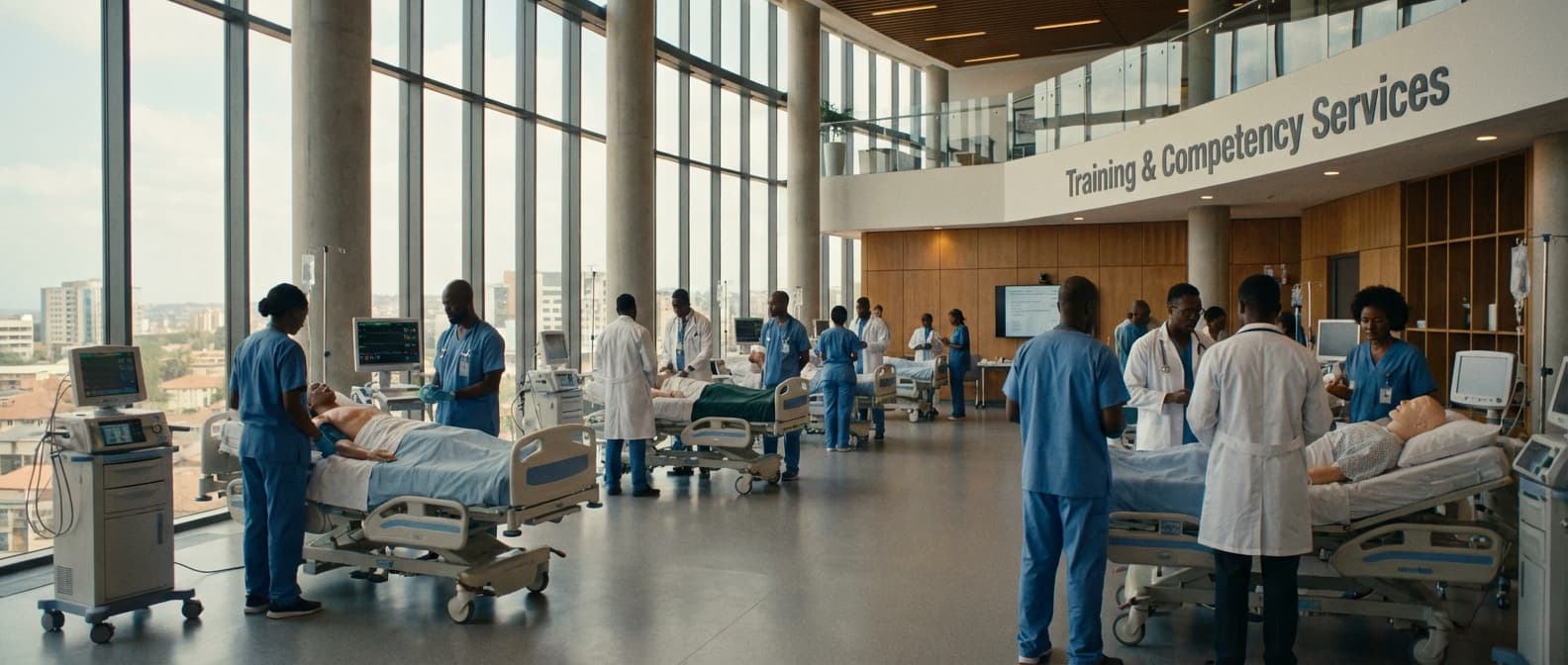
Anesthesia Workstation User Training Service in Mali
Engineering Excellence & Technical Support
Anesthesia Workstation User Training Service High-standard technical execution following OEM protocols and local regulatory frameworks.
Mastering Ventilation Modes
Gain proficiency in configuring and managing diverse ventilation modes (e.g., volume control, pressure control, PSV) to optimize patient respiratory support, with hands-on simulations of common clinical scenarios encountered in Malian healthcare settings.
Precise Drug Administration & Titration
Learn the intricate steps of accurate anesthetic agent and adjunct drug administration, including dose calculation, infusion rate setting, and real-time titration based on patient response, ensuring safe and effective pharmacotherapy in resource-constrained environments.
Advanced Patient Monitoring & Alarm Management
Develop expert skills in interpreting critical patient monitoring parameters (ECG, SpO2, EtCO2, NIBP, invasive pressures) and responding effectively to workstation alarms, prioritizing patient safety and timely intervention within the Malian context.
What Is Anesthesia Workstation User Training Service In Mali?
Anesthesia Workstation User Training Service in Mali refers to specialized educational programs designed to equip healthcare professionals with the necessary knowledge and practical skills to effectively operate, maintain, and troubleshoot modern anesthesia workstations. These services are critical for ensuring patient safety, optimizing clinical outcomes, and maximizing the lifespan and performance of sophisticated medical equipment within the Malian healthcare landscape. The training typically covers a comprehensive range of topics, from fundamental principles of anesthesia delivery to advanced features and maintenance protocols specific to the workstations deployed in Malian healthcare facilities.
| Target Audience | Rationale for Training | Typical Use Cases |
|---|---|---|
| Anesthesiologists: Certified physicians specializing in anesthesia administration. | To ensure proficient and safe operation of advanced anesthesia delivery and monitoring systems, leading to improved patient outcomes and reduced morbidity. | Routine surgical procedures, intensive care unit (ICU) management, emergency response, and complex surgical interventions requiring precise anesthetic control. |
| Anesthesia Technicians/Nurses: Allied health professionals supporting the anesthesia team. | To enable effective setup, monitoring, and basic troubleshooting of the workstation, allowing anesthesiologists to focus on patient care. To maintain equipment readiness and functionality. | Pre-operative patient preparation, intra-operative monitoring, post-operative recovery support, and routine equipment checks and maintenance. |
| Biomedical Engineers/Technicians: Personnel responsible for equipment maintenance and repair. | To provide foundational knowledge for routine maintenance, calibration, and initial diagnostics, enabling faster response times and reduced downtime for critical equipment. | Preventive maintenance schedules, calibration of sensors and modules, troubleshooting of technical errors, and installation of new workstation units. |
| Healthcare Facility Administrators/Procurement Officers: Decision-makers involved in acquiring and managing medical equipment. | To understand the operational requirements and training needs associated with high-value anesthesia equipment, ensuring a skilled workforce is available post-acquisition. | Justifying equipment purchases, planning for staff training budgets, and ensuring regulatory compliance for medical device operation. |
Key Components of Anesthesia Workstation User Training in Mali:
- Fundamentals of Anesthesia Delivery Systems: Understanding the basic principles of gas flow, ventilation modes, and drug delivery mechanisms inherent in the workstation.
- Workstation Operation and Configuration: Detailed instruction on setting up the workstation for various patient types and surgical procedures, including parameter adjustments and alarm management.
- Ventilator Management: In-depth training on different ventilation modes (e.g., volume control, pressure control, SIMV, PSV), their clinical applications, and appropriate settings.
- Vaporizer Calibration and Handling: Protocols for safe and accurate use of anesthetic vaporizers, including filling, calibration, and maintenance procedures.
- Monitoring and Alarms: Comprehensive understanding of integrated patient monitoring parameters (e.g., SpO2, EtCO2, NIBP, ECG) and the effective response to critical alarms.
- Safety Features and Checks: Instruction on pre-use checks, system integrity tests, and troubleshooting common malfunctions to ensure patient safety.
- Maintenance and Troubleshooting: Basic preventive maintenance procedures, identification of common error codes, and initial troubleshooting steps to address minor technical issues.
- Infection Control and Sterilization: Best practices for cleaning and disinfecting workstation components to prevent cross-contamination.
- Specific Workstation Model Familiarization: Hands-on training tailored to the specific make and model of anesthesia workstations procured by Malian healthcare institutions.
- Emergency Scenarios and Contingency Planning: Training on how to manage equipment failures or unexpected situations during anesthesia delivery.
Who Needs Anesthesia Workstation User Training Service In Mali?
This service caters to healthcare professionals in Mali who utilize or are responsible for the operation and maintenance of anesthesia workstations. Effective training ensures patient safety, optimal equipment performance, and compliance with best practices in anesthesia delivery.
| Customer Type | Primary Role | Key Training Needs | Affected Departments |
|---|---|---|---|
| Anesthesiologist | Administers anesthesia, monitors patient vital signs | Advanced ventilator modes, gas delivery systems, patient monitoring integration, emergency procedures | Operating Rooms, ICUs, EDs |
| Anesthesia Nurse/CRNA | Assists anesthesiologist, manages equipment, patient preparation and recovery | Basic operation, setup and shutdown procedures, alarm management, troubleshooting common issues, patient monitoring | Operating Rooms, Surgical Centers, PACUs |
| Biomedical Engineer/Technician | Maintenance, repair, and calibration of medical equipment | Technical specifications, preventative maintenance schedules, troubleshooting complex faults, safety checks, software updates | All departments with anesthesia workstations, Biomedical Engineering Department |
| Hospital Administrator | Resource allocation, budget management, ensuring quality of care | Understanding the importance of training for patient safety, cost-effectiveness of equipment, ROI of training investments | Hospital-wide, Procurement, Finance |
Target Customers and Departments
- {"items":["Anesthesiologists","Anesthesia Nurses","CRNAs (Certified Registered Nurse Anesthetists)","Biomedical Engineers/Technicians","Hospital Administrators (responsible for equipment procurement and training budgets)"],"title":"Target Customers"}
- {"items":["Operating Rooms (ORs)","Intensive Care Units (ICUs)","Emergency Departments (EDs)","Surgical Centers","Post-Anesthesia Care Units (PACUs)"],"title":"Target Departments"}
Anesthesia Workstation User Training Service Process In Mali
This document outlines the Anesthesia Workstation User Training Service process in Mali, detailing the workflow from initial inquiry to the successful execution of training.
| Phase | Description | Key Activities | Responsible Party |
|---|---|---|---|
| Inquiry & Needs Assessment | Initial contact and understanding of training requirements. | Receiving inquiry, identifying workstation models, trainee numbers, objectives. Assessing facility infrastructure. | Healthcare Facility, Service Provider |
| Proposal & Agreement | Formalizing the training offer and securing commitment. | Developing proposal, discussing scope, costs, and duration. Contract negotiation and signing. | Service Provider, Healthcare Facility |
| Planning & Preparation | Developing the detailed roadmap for the training. | Creating training plan and schedule, curriculum development, trainer assignment, logistics management (venue, materials, equipment). | Service Provider |
| Training Execution | Delivering the core training content. | Conducting lectures, demonstrations, hands-on practice sessions, interactive exercises. | Trainer(s) |
| Assessment & Certification | Evaluating trainee proficiency and formalizing achievement. | Administering quizzes, practical evaluations, and case studies. Issuing certificates of completion. | Trainer(s), Service Provider |
| Evaluation & Follow-up | Gathering feedback and providing ongoing support. | Conducting post-training evaluation surveys. Offering optional follow-up support or refresher courses. | Service Provider, Healthcare Facility |
Anesthesia Workstation User Training Service Process in Mali
- The process begins with a formal inquiry from a healthcare facility or individual seeking training on anesthesia workstations.
- Upon receiving an inquiry, the service provider (e.g., a medical equipment distributor, a specialized training company) assesses the facility's needs, including the specific anesthesia workstation models, the number of trainees, and the desired training objectives.
- A preliminary proposal is then developed, outlining the scope of training, curriculum, duration, trainer qualifications, and estimated costs.
- The proposal is presented to the inquiring facility for review and discussion. Feedback is incorporated, and revisions are made as necessary.
- Once the proposal is mutually agreed upon, a formal contract or service agreement is signed, specifying all terms and conditions.
- A detailed training plan is created, including a schedule, venue selection (on-site at the facility or at a designated training center), and resource allocation.
- The training curriculum is prepared, ensuring it covers theoretical knowledge, practical demonstrations, hands-on exercises, and competency assessments relevant to the specific anesthesia workstation.
- Qualified and experienced trainers are assigned to the service.
- Logistics are managed, including trainer travel and accommodation if necessary, training materials (manuals, presentations), and any required equipment.
- The training session(s) are conducted according to the agreed-upon plan. This typically involves lectures, interactive discussions, workstation demonstrations, and supervised hands-on practice for all participants.
- Throughout the training, trainees' understanding and skills are assessed through various methods, such as quizzes, practical evaluations, and case studies.
- Upon successful completion of the training and assessment, participants receive a certificate of completion.
- A post-training evaluation is conducted to gather feedback from participants and the facility regarding the effectiveness of the training and the trainer's performance.
- Follow-up support may be offered, such as remote assistance or refresher courses, depending on the contract.
- The service is considered executed upon successful completion of training, issuance of certificates, and finalization of any contractual obligations.
Anesthesia Workstation User Training Service Cost In Mali
The cost of anesthesia workstation user training services in Mali can vary significantly based on several key factors. These factors influence the overall price, making it challenging to provide a single, definitive figure. Understanding these elements is crucial for healthcare institutions and individuals seeking to procure such training. Common pricing determinants include the provider's reputation and experience, the level of expertise of the trainers, the duration and intensity of the training program, the customization required for specific equipment or protocols, and the logistical considerations such as travel and accommodation for trainers. Furthermore, the scale of the training, meaning the number of participants, can also impact the per-person cost or the overall project fee. While specific price lists are not readily available due to these variables, a general range can be estimated based on typical service offerings in the region.
| Service Component/Duration | Estimated Cost Range (Malian Francs - XOF) |
|---|---|
| Basic User Training (1-2 days) | 200,000 - 500,000 XOF |
| Advanced/Comprehensive Training (3-5 days) | 400,000 - 1,000,000 XOF |
| Specialized Modules (e.g., specific ventilator modes, troubleshooting) | 100,000 - 300,000 XOF per module |
| On-site Training (includes trainer travel/accommodation) | Additional 150,000 - 400,000 XOF (depending on location) |
| Group Discount (per participant, for larger groups) | 5%-15% reduction from base cost |
Key Pricing Factors for Anesthesia Workstation User Training in Mali:
- Provider Reputation and Experience
- Trainer Expertise and Qualifications
- Training Duration and Intensity
- Customization of Training Content
- Number of Participants
- Logistics (Travel, Accommodation, Venue)
- Inclusion of Hands-on Practice/Simulations
- Post-training Support and Certification
Affordable Anesthesia Workstation User Training Service Options
Providing effective and affordable user training for anesthesia workstations is crucial for patient safety and operational efficiency. This service focuses on equipping anesthesia providers with the knowledge and skills to operate various workstation models safely and competently. Value bundles are designed to offer comprehensive training packages at a reduced overall cost, while various cost-saving strategies can further enhance affordability for healthcare institutions.
| Value Bundle Name | Description | Included Services | Target Audience | Potential Savings |
|---|---|---|---|---|
| Basic Competency Package | Essential training for new users or staff transitioning to new workstations. | Core functionality training, basic safety features, hands-on practice, initial competency assessment. | New hires, rotating residents, nurses new to anesthesia. | 10-15% compared to individual module purchases. |
| Advanced Workflow Optimization Bundle | Focuses on maximizing efficiency and advanced features for experienced users. | Advanced ventilation modes, drug calculation integration, troubleshooting, data management, case studies. | Experienced anesthesiologists, CRNAs, and technical staff. | 15-20% compared to purchasing advanced modules separately. |
| Comprehensive Institutional Rollout | Tailored training for large-scale deployments or complete staff re-training. | Includes all aspects of basic and advanced training, train-the-trainer programs, ongoing support, and custom content development. | Hospitals, large surgical centers, academic medical centers. | Up to 30% with multi-year contracts and bulk training. |
| Remote Essentials Pack | Cost-effective online training for foundational knowledge and refreshers. | E-learning modules, video demonstrations, virtual Q&A sessions, online quizzes. | Remote staff, refresher training, institutions with limited on-site training budgets. | 25-35% compared to on-site training. |
Key Components of Affordable Anesthesia Workstation User Training
- Comprehensive curriculum covering core functions, safety features, and advanced settings.
- Hands-on practical sessions using simulated or actual workstations.
- Case-based learning scenarios to reinforce critical thinking and decision-making.
- Regular updates and refreshers on new features or software revisions.
- Certification or competency assessment upon completion.
- On-site or remote/online training delivery options.
- Customizable training modules based on specific institution needs and equipment models.
Verified Providers In Mali
In Mali, ensuring access to quality healthcare is paramount. Verified providers are crucial for patient safety and trust. Franance Health distinguishes itself by offering a network of rigorously vetted healthcare professionals and facilities. This verification process goes beyond basic licensing, encompassing a thorough evaluation of expertise, ethical practices, and patient care standards. Choosing Franance Health means opting for a healthcare experience where quality, reliability, and patient well-being are the absolute priorities. Their commitment to credentialing ensures that you are connected with the best possible medical services available in Mali.
| Provider Type | Verification Criteria | Franance Health Advantage |
|---|---|---|
| Hospitals | Licensing, Accreditation, Staff Qualifications, Equipment Standards, Patient Satisfaction Scores | Ensures accredited facilities with qualified medical teams and advanced equipment, prioritizing patient outcomes. |
| Clinics | Practitioner Licenses, Specialization Verification, Facility Cleanliness, Patient Feedback | Connects you with licensed and specialized practitioners in well-maintained clinics, backed by positive patient experiences. |
| Specialists (e.g., Surgeons, Cardiologists) | Medical Degree, Board Certification, Years of Practice, Peer Reviews, Surgical Success Rates | Guarantees access to highly qualified specialists with proven expertise and excellent track records in their respective fields. |
| General Practitioners | Medical License, Continuing Education, Patient Volume, Referral Networks | Provides access to reliable general practitioners committed to ongoing learning and effective primary care. |
Why Franance Health is the Top Choice for Verified Providers in Mali:
- Rigorous Vetting Process: Franance Health employs a multi-faceted verification system that examines credentials, experience, and professional conduct.
- Commitment to Quality: The network prioritizes providers who demonstrate excellence in patient care, diagnostic accuracy, and treatment efficacy.
- Ethical Standards: All listed providers adhere to high ethical principles and patient-centered care practices.
- Enhanced Patient Safety: Verification minimizes risks associated with unqualified or subpar medical services.
- Seamless Access to Trusted Care: Franance Health simplifies the process of finding reliable healthcare professionals.
Scope Of Work For Anesthesia Workstation User Training Service
This Scope of Work outlines the services to be provided for Anesthesia Workstation User Training. The training will equip healthcare professionals with the necessary knowledge and skills to safely and effectively operate the anesthesia workstation. This document details the technical deliverables, standard specifications, and key activities involved in delivering this training.
| Deliverable Category | Specific Deliverable | Standard Specification/Description |
|---|---|---|
| Training Program Design | Curriculum Development | Comprehensive syllabus covering all workstation functionalities, safety features, alarm management, troubleshooting, and maintenance basics. Tailored to different user roles (e.g., anesthesiologists, nurse anesthetists, technicians). |
| Training Materials | User Manual Supplements/Guides | Printed and/or digital guides highlighting key operational procedures, critical settings, and emergency protocols. Includes visual aids and step-by-step instructions. |
| Training Materials | Presentation Slides | Visually engaging slide decks for instructor-led sessions, aligned with the curriculum and providing key information points. |
| Training Materials | Case Study Scenarios | Realistic clinical scenarios designed to test user decision-making and application of knowledge in practical settings. |
| Training Delivery | On-site/Remote Training Sessions | Instructor-led sessions conducted either at the client's facility or remotely via video conferencing. Duration and frequency to be agreed upon, typically 1-3 days per session depending on complexity. |
| Training Delivery | Hands-on Practice Sessions | Dedicated time for participants to interact with the actual anesthesia workstation or a high-fidelity simulator under instructor supervision. |
| Assessment & Evaluation | Competency Assessment Checklist | Tool for instructors to evaluate user performance during hands-on practice, focusing on critical tasks and safety procedures. |
| Assessment & Evaluation | Written/Online Knowledge Test | Multiple-choice, true/false, or short-answer questions to assess understanding of theoretical concepts and operational principles. Passing score to be defined (e.g., 80%). |
| Assessment & Evaluation | Training Feedback Forms | Forms for participants to provide feedback on the training content, instructor, and overall effectiveness, for continuous improvement. |
| Documentation & Reporting | Training Attendance Register | Record of all participants attending each training session. |
| Documentation & Reporting | Individual Participant Progress Reports | Summary of each participant's performance in both practical and theoretical assessments, including areas of strength and improvement. |
| Documentation & Reporting | Final Training Summary Report | Overall report detailing the training conducted, number of participants, aggregate assessment results, feedback summary, and recommendations. |
| Post-Training Support | Technical Support Hotline/Email | Designated contact point for users to ask follow-up questions or report issues encountered post-training for a defined period (e.g., 30 days). |
Key Activities and Deliverables
- Conducting comprehensive training sessions on anesthesia workstation operation.
- Developing and providing standardized training materials.
- Assessing user competency through practical demonstrations and theoretical evaluations.
- Providing post-training support and follow-up.
- Documenting training progress and outcomes.
Service Level Agreement For Anesthesia Workstation User Training Service
This Service Level Agreement (SLA) outlines the terms and conditions for the provision of Anesthesia Workstation User Training Services by [Provider Name] (hereinafter referred to as 'Provider') to [Client Name] (hereinafter referred to as 'Client'). This SLA specifically details response times for support requests and uptime guarantees for the training platform/resources.
| Incident Severity | Response Time (during Service Hours) | Resolution Time Target (during Service Hours) | Uptime Guarantee (Monthly) |
|---|---|---|---|
| Critical Incident | 1 Hour | 4 Business Hours | 99.5% |
| Major Incident | 2 Business Hours | 8 Business Hours | 99.7% |
| Minor Incident | 4 Business Hours | 24 Business Hours | 99.9% |
| Feature Request/General Inquiry | 1 Business Day | 3 Business Days (for initial feedback/action plan) |
Definitions
- Anesthesia Workstation User Training Service: Refers to the provision of educational materials, virtual simulations, instructor-led sessions, or other approved methods for training personnel on the operation and maintenance of anesthesia workstations.
- Service Hours: Standard business hours, Monday to Friday, 9:00 AM to 5:00 PM in the [Provider's Time Zone].
- Critical Incident: An event that renders the Anesthesia Workstation User Training Service completely unusable, preventing users from accessing essential training modules or simulations required for immediate competency.
- Major Incident: An event that significantly degrades the performance or functionality of the Anesthesia Workstation User Training Service, impacting a substantial portion of users or critical training features, but not rendering it entirely unusable.
- Minor Incident: An event that causes minor degradation in performance or functionality, affecting a limited number of users or non-critical features, or a general inconvenience without significant impact on training progress.
- Response Time: The maximum time allowed for the Provider to acknowledge a reported incident or request and initiate investigation or action.
- Resolution Time: The maximum time allowed for the Provider to resolve an incident and restore the Anesthesia Workstation User Training Service to its expected operational state. This may include providing a workaround if a full resolution is not immediately feasible.
- Uptime Guarantee: The percentage of time the Anesthesia Workstation User Training Service is available and operational for Client use during the agreed-upon service period.
- Downtime: Any period during which the Anesthesia Workstation User Training Service is unavailable or inoperable.
Frequently Asked Questions

Ready when you are
Let's scope your Anesthesia Workstation User Training Service in Mali project in Mali.

Scaling healthcare logistics and technical systems across the entire continent.