
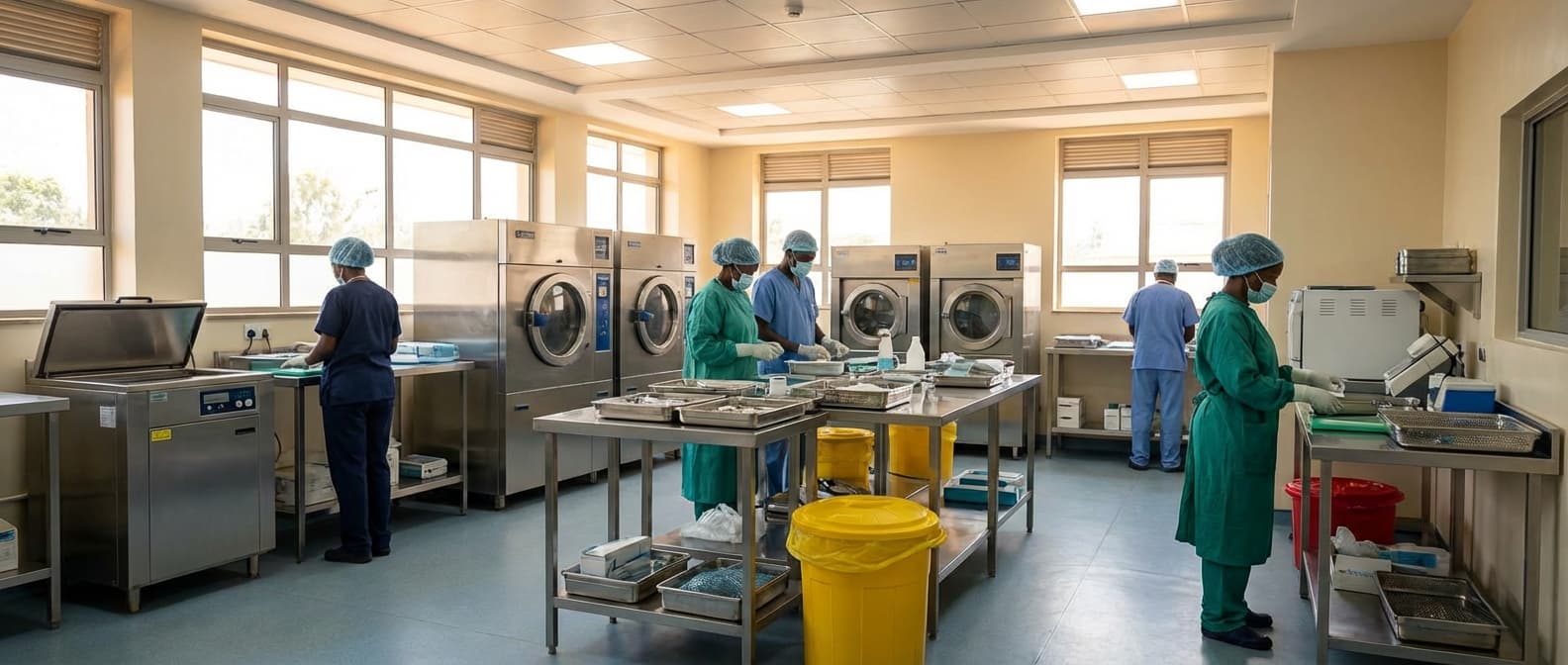
Medical Equipment Decontamination Service (Pre-Repair/Pre-Relocation) in Mali
Engineering Excellence & Technical Support
Medical Equipment Decontamination Service (Pre-Repair/Pre-Relocation) High-standard technical execution following OEM protocols and local regulatory frameworks.
Advanced Bioburden Reduction
Utilizing validated multi-stage cleaning and disinfection protocols, our service significantly reduces bioburden on critical medical equipment prior to repair or relocation. This ensures a safer working environment for technicians and minimizes the risk of cross-contamination, safeguarding patient and staff well-being.
Pathogen Inactivation & Sterility Assurance
Our comprehensive decontamination process employs high-level disinfectants and sterilization techniques, effectively inactivating a broad spectrum of pathogens including bacteria, viruses, and fungi. This crucial step guarantees equipment sterility for repair access or secure handling during relocation, upholding the highest standards of healthcare hygiene.
Specialized Handling & Transport Preparation
We provide meticulous pre-decontamination services that prepare complex medical devices for safe transport. This includes specialized cleaning of intricate components and secure packaging procedures, preventing damage and maintaining the integrity of the equipment, thereby ensuring it reaches its destination for repair or reuse in optimal condition.
What Is Medical Equipment Decontamination Service (Pre-repair/pre-relocation) In Mali?
Medical Equipment Decontamination Service (Pre-Repair/Pre-Relocation) in Mali refers to the specialized process of rendering medical devices safe for handling, transport, and repair or relocation. This service is crucial for minimizing the risk of biological and chemical contaminant transfer, thereby protecting healthcare personnel, laboratory technicians, repair specialists, and the general public from potential infectious agents, residual chemicals, or hazardous materials. It involves a multi-stage approach to ensure all accessible and internal surfaces of the equipment are rendered non-hazardous.
| Who Needs This Service? | Typical Use Cases | ||||
|---|---|---|---|---|---|
| Healthcare Facilities: Hospitals, clinics, diagnostic laboratories, surgical centers, and dental practices in Mali. | Medical Device Manufacturers & Distributors: For equipment returned for repair or pre-shipment preparation. | Third-Party Biomedical Engineering Services: Companies undertaking equipment maintenance and repair. | Logistics & Relocation Companies: Handling the movement of medical equipment between facilities or for disposal. | ||
| Equipment Malfunction: Devices requiring repair that may be contaminated with patient biological fluids (blood, bodily secretions). | Routine Maintenance: Proactive decontamination before scheduled servicing to protect technicians. | Equipment Relocation: Moving devices between departments, facilities, or to storage. | End-of-Life Disposal: Decontaminating equipment before it is sent for recycling or disposal to prevent environmental contamination. | Transfer of Ownership: Preparing equipment for sale or donation. | Post-Incident Response: Decontaminating equipment used in outbreak situations or after exposure to hazardous materials. |
Key Aspects of Medical Equipment Decontamination Service (Pre-Repair/Pre-Relocation) in Mali
- Objective: To eliminate or reduce bioburden and chemical residues to safe levels prior to subsequent handling, maintenance, or movement.
- Scope: Encompasses a range of medical devices from basic instruments to complex diagnostic and therapeutic equipment.
- Methodologies: Employs validated cleaning, disinfection, and sterilization protocols tailored to the specific equipment and identified contaminants.
- Regulatory Compliance: Adheres to national and international guidelines for medical device cleaning and decontamination.
- Documentation: Meticulous record-keeping of decontamination procedures, agents used, and validation results.
Who Needs Medical Equipment Decontamination Service (Pre-repair/pre-relocation) In Mali?
In Mali, specialized medical equipment decontamination services are crucial for ensuring the safety and functionality of medical devices before they undergo repair or relocation. This process removes biological contaminants, chemicals, and other hazardous materials that can pose risks to technicians, patients, and the environment. Identifying the key entities that require such services is vital for targeted outreach and service provision.
| Customer Type | Key Departments / Areas of Focus | Specific Equipment Requiring Decontamination (Examples) | Reasons for Decontamination (Pre-Repair/Pre-Relocation) |
|---|---|---|---|
| Hospitals (Public and Private) | Operating Theatres, Intensive Care Units (ICUs), Emergency Rooms, Sterilization Departments, Pathology Labs, Radiology Departments, Central Sterile Supply Departments (CSSD) | Surgical instruments, ventilators, anesthesia machines, endoscopes, diagnostic imaging equipment (CT scanners, MRI machines), laboratory analyzers, dialysis machines, patient monitoring systems | To protect repair technicians from biohazards, prevent cross-contamination during repair, ensure patient safety after repair, facilitate safe packing and transport for relocation, and comply with regulatory standards. |
| Clinics and Health Centers | General Consultation Rooms, Minor Procedure Rooms, Basic Laboratory Facilities | Stethoscopes, blood pressure monitors, otoscopes, ophthalmoscopes, centrifuges, basic diagnostic kits | Similar to hospitals, focusing on technician safety, preventing disease transmission, and ensuring continued operational readiness after servicing or during facility moves. |
| Diagnostic Laboratories | Microbiology Labs, Hematology Labs, Biochemistry Labs, Serology Labs | Microscopes, incubators, autoclaves, PCR machines, ELISA readers, blood gas analyzers | Critical for preventing exposure to infectious agents, ensuring accurate test results by removing residual biological material, and safe handling for maintenance or relocation. |
| Blood Banks | Apheresis Machines, Centrifuges, Incubators, Freezers, Blood Analyzers | Equipment used in blood collection, processing, testing, and storage | Ensuring the sterility of equipment after use and before it's sent for repair or moved to a new storage location to maintain the integrity of blood products and prevent contamination. |
| Research Institutions | Biomedical Research Labs, Clinical Trial Facilities | Specialized analytical instruments, cell culture equipment, biosafety cabinets, imaging systems | Protecting researchers and equipment from potentially hazardous biological or chemical agents used in research, and ensuring the integrity of sensitive research data and equipment during maintenance or relocation. |
| NGOs in Healthcare Delivery | Mobile Clinics, Field Hospitals, Community Health Programs | Portable diagnostic devices, basic surgical kits, water purification equipment (if medically related) | Often operating in challenging environments, decontamination is essential for maintaining hygiene, preventing disease spread, and ensuring the longevity and reliability of equipment used in mobile or temporary settings before repair or redeployment. |
| Government Ministries of Health | Central Medical Stores, National Health Laboratories, Regional Health Offices | Larger medical equipment, bulk supplies, specialized diagnostic or therapeutic devices | Overseeing and managing large-scale medical equipment inventory, ensuring proper maintenance and relocation protocols are followed for public health infrastructure. |
Target Customers and Departments Requiring Medical Equipment Decontamination Service (Pre-Repair/Pre-Relocation) in Mali
- Hospitals (Public and Private)
- Clinics and Health Centers (Urban and Rural)
- Diagnostic Laboratories
- Blood Banks
- Research Institutions with Medical Equipment
- Non-Governmental Organizations (NGOs) involved in healthcare delivery
- Government Ministries of Health (for centrally managed equipment)
Medical Equipment Decontamination Service (Pre-repair/pre-relocation) Process In Mali
This document outlines the standard workflow for the Medical Equipment Decontamination Service (Pre-Repair/Pre-Relocation) in Mali. This process is crucial to ensure the safety of personnel, prevent the spread of infectious agents, and prepare equipment for maintenance or movement. The workflow begins with an initial inquiry and concludes with the completion of decontamination and documentation.
| Step | Description | Key Activities | Responsible Party | Output/Deliverable | Key Considerations |
|---|---|---|---|---|---|
| The client (hospital, clinic, repair center) contacts the decontamination service provider to request services for medical equipment requiring pre-repair or pre-relocation decontamination. | Receive inquiry, understand equipment type and quantity, identify reasons for decontamination (repair, relocation), gather basic client information. | Client, Decontamination Service Provider (DSP) | Initial understanding of service needs. | Prompt response time is critical. Understanding the urgency. |
| Based on the initial assessment, the DSP provides a detailed quotation and outlines the terms of service. | Assess equipment specifics (size, complexity, potential biohazards), determine decontamination method, calculate costs (labor, materials, disposal), prepare and submit quotation, negotiate terms, sign service agreement. | DSP, Client | Formal quotation, signed service agreement. | Clarity on pricing, scope of work, and liability. |
| Once the agreement is in place, the service is scheduled, and logistical arrangements are made. | Coordinate service date and time with the client, plan personnel deployment, arrange for necessary equipment and supplies (decontamination agents, PPE, transportation), confirm site access. | DSP | Scheduled service appointment, logistical plan. | Flexibility to accommodate client schedules and potential unforeseen delays. |
| The decontamination team arrives at the client's facility and conducts a thorough inspection before commencing work. | Arrive on time, introduce the team, conduct a visual inspection of the equipment and the work area, confirm equipment to be decontaminated, identify any immediate safety concerns. | DSP Team | Confirmation of work scope and site readiness. | Adherence to site-specific safety protocols and access requirements. |
| Each piece of equipment is clearly identified and segregated to ensure proper decontamination and prevent cross-contamination. | Label equipment with client information and service request, physically separate equipment to be decontaminated from others, document equipment serial numbers and unique identifiers. | DSP Team | Clearly labeled and segregated equipment. | Accurate inventory and tracking are essential. |
| The core decontamination process is executed according to established protocols and the type of equipment and identified biohazards. | Select appropriate decontamination agents (e.g., disinfectants, sterilants) and methods (e.g., wiping, spraying, fumigation), wear appropriate Personal Protective Equipment (PPE), systematically clean and decontaminate all surfaces of the equipment, ensure proper ventilation and containment. | DSP Team | Decontaminated medical equipment. | Adherence to manufacturer's instructions, safety data sheets (SDS) for agents, and regulatory guidelines. Focus on high-touch surfaces and critical areas. |
| The effectiveness of the decontamination process is verified. | Visual inspection for residual contamination, use of indicator strips or tests if required by the protocol or client, document verification results. | DSP Team | Verification report/confirmation. | Appropriate verification methods for the level of decontamination achieved. |
| All aspects of the decontamination process are documented, and the decontaminated equipment is handed over to the client. | Complete decontamination certificate/report detailing the equipment, date, methods used, agents applied, and verification results, obtain client signature confirming service completion, provide client with all relevant documentation. | DSP Team, Client | Decontamination certificate/report, signed handover form. | Clear and comprehensive documentation for client records and regulatory compliance. |
| The service is billed to the client, and payment is processed. | Issue invoice based on the agreed-upon quotation and any agreed-upon variations, client processes payment according to the agreed terms. | DSP, Client | Paid invoice. | Timely and accurate invoicing and payment processing. |
Medical Equipment Decontamination Service (Pre-Repair/Pre-Relocation) Workflow in Mali
- Inquiry & Initial Assessment
- Quotation & Agreement
- Scheduling & Logistics
- On-Site Arrival & Pre-Decontamination Inspection
- Equipment Identification & Segregation
- Decontamination Procedure
- Post-Decontamination Verification
- Documentation & Handover
- Billing & Payment
Medical Equipment Decontamination Service (Pre-repair/pre-relocation) Cost In Mali
Providing cost estimates for medical equipment decontamination services in Mali (pre-repair/pre-relocation) is complex due to several influencing factors. These services are crucial to prevent the spread of pathogens and ensure the safety of technicians and the environment during maintenance or movement of equipment. Pricing is highly variable and depends on the type of equipment, the degree of contamination, the decontamination method used, the location within Mali, and the service provider's expertise and overheads.
| Service Type/Equipment Category | Estimated Cost Range (Malian Franc CFA - XOF) |
|---|---|
| Basic Decontamination (e.g., standard disinfection for non-critical equipment like BP monitors, thermometers) | 10,000 - 30,000 XOF |
| Standard Decontamination (e.g., for moderately complex equipment like centrifuges, patient monitors) | 30,000 - 75,000 XOF |
| Advanced/Biohazard Decontamination (e.g., for equipment exposed to highly infectious agents or complex diagnostic machines like ultrasound) | 75,000 - 250,000+ XOF |
| Large/Specialized Equipment (e.g., X-ray machines, dental chairs, operating room equipment – costs highly variable and often custom-quoted) | 200,000 - 1,000,000+ XOF |
| On-site Travel and Logistics Surcharge (per visit, depending on distance) | 15,000 - 50,000+ XOF |
Key Pricing Factors for Medical Equipment Decontamination in Mali:
- Equipment Type and Size: Larger or more complex equipment (e.g., MRI machines, X-ray units) will naturally require more time, specialized chemicals, and potentially more personnel, leading to higher costs than smaller items (e.g., stethoscopes, blood pressure monitors).
- Level of Contamination: Equipment known to have been exposed to highly infectious agents (e.g., during an outbreak) will necessitate more rigorous and specialized decontamination protocols, impacting the cost. Standard cleaning versus biohazard decontamination will have different price points.
- Decontamination Method: The chosen method significantly affects cost. Common methods include chemical disinfection (using specific disinfectants), heat sterilization (autoclaving, if applicable to the equipment), or more advanced techniques like UV-C light or plasma sterilization, each with its own equipment and operational costs.
- Service Provider Expertise and Reputation: Established companies with specialized training, certifications, and a strong reputation for reliability and safety will often command higher prices than smaller or less experienced operators.
- Location and Accessibility: Services required in remote or less accessible areas of Mali may incur additional travel and logistical costs. The ease of access to the equipment for the decontamination team is a factor.
- Urgency of Service: Emergency or same-day decontamination services will typically be priced at a premium compared to scheduled appointments.
- Required Documentation and Certification: If the decontamination service needs to provide detailed reports, certificates of decontamination, or adhere to specific international standards (beyond local regulations), this can add to the administrative cost.
- Consumables and Waste Disposal: The cost of disinfectants, cleaning agents, protective equipment for personnel, and the safe disposal of contaminated waste are factored into the overall price.
- Regulatory Compliance: Adherence to Malian health and safety regulations, as well as any specific guidelines from the equipment manufacturer or relevant health authorities, influences the procedures and thus the cost.
Affordable Medical Equipment Decontamination Service (Pre-repair/pre-relocation) Options
This document outlines affordable medical equipment decontamination services, specifically tailored for pre-repair and pre-relocation needs. Ensuring equipment is clean and sterile before these critical processes is vital for technician safety, preventing cross-contamination, and maintaining equipment integrity. We offer flexible value bundles and cost-saving strategies to make these essential services accessible to a wide range of healthcare facilities.
| Service Package | Included Services | Ideal For | Value Proposition | Estimated Cost Range (USD) |
|---|---|---|---|---|
| Basic Decontamination | Surface cleaning, disinfection of external surfaces using EPA-approved disinfectants, visual inspection for visible contaminants. | Low-risk equipment (e.g., standard non-invasive monitoring devices, diagnostic tools with minimal patient contact). | Cost-effective solution for routine cleaning, ensuring a baseline level of safety. | $50 - $150 per unit |
| Standard Decontamination | Basic Decontamination + targeted cleaning of accessible internal components (where applicable and safe), removal of particulate matter, application of broad-spectrum disinfectants. | Mid-risk equipment (e.g., patient monitors, basic imaging devices, infusion pumps). | Comprehensive cleaning addressing common bioburden, suitable for most pre-repair/relocation scenarios. | $100 - $250 per unit |
| Advanced Decontamination | Standard Decontamination + specialized cleaning for complex internal components, high-level disinfection where appropriate, optional spore-killing agents (if required), comprehensive documentation. | High-risk equipment (e.g., anesthesia machines, ventilators, endoscopes, complex surgical tools). | Ensures maximum sterility and safety for critical equipment, mitigating significant biohazard risks. | $200 - $500+ per unit (depending on complexity) |
| Bulk Service Discount (10+ Units) | A percentage discount applied to any of the above packages when decontaminating 10 or more units simultaneously. | Facilities with large volumes of equipment needing servicing or relocation. | Significant cost savings for large-scale decontamination needs. | 10-20% discount on the chosen service package. |
| Annual Contract (Volume-Based) | Customized decontamination plan with pre-negotiated rates and priority scheduling based on projected annual equipment servicing/relocation volume. | Hospitals, clinics, and medical centers with consistent equipment turnover. | Predictable budgeting, guaranteed service availability, and substantial long-term cost reductions. | Customized quotes based on volume and service level. |
Why Decontaminate Before Repair/Relocation?
- Technician Safety: Protects repair personnel from exposure to biohazards.
- Prevent Cross-Contamination: Avoids spreading infectious agents to new environments or during the repair process.
- Equipment Integrity: Some decontamination methods can prevent damage to sensitive components during handling and repair.
- Regulatory Compliance: Helps meet infection control standards and regulatory requirements.
- Reduced Repair Time: Clean equipment can be more readily assessed and worked on, potentially reducing downtime.
Verified Providers In Mali
Finding verified healthcare providers in Mali is crucial for ensuring safe and effective medical care. Franance Health stands out as a premier credentialing body, meticulously vetting medical professionals to guarantee their expertise, qualifications, and adherence to international standards. This rigorous process provides patients with peace of mind, knowing they are engaging with providers who have met stringent criteria for competence and ethical practice.
| Provider Category | Franance Health Verification Focus | Benefit to Patient |
|---|---|---|
| Doctors (General & Specialists) | Medical school accreditation, board certifications, residency completion, licensure, disciplinary record check, peer endorsements. | Ensures competency in diagnosis, treatment, and surgical procedures; identifies specialized knowledge. |
| Nurses | Nursing school accreditation, licensure, specialty certifications (e.g., critical care, midwifery), clinical experience verification. | Guarantees adherence to best nursing practices, patient care protocols, and medication administration safety. |
| Pharmacists | Pharmacy school accreditation, licensure, experience in dispensing and drug interaction knowledge, regulatory compliance. | Ensures accurate prescription fulfillment, medication safety advice, and awareness of potential drug interactions. |
| Allied Health Professionals (e.g., Physiotherapists, Radiologists) | Relevant degree or diploma, professional body membership, practical experience, continuing education. | Confirms proficiency in specific diagnostic or therapeutic services, leading to accurate results and effective rehabilitation. |
| Healthcare Facilities (Clinics, Hospitals) | Accreditation from recognized bodies, adherence to safety and hygiene standards, availability of essential equipment, qualified staff ratio. | Provides assurance of a safe, well-equipped, and professionally managed healthcare environment. |
Why Franance Health Credentials Matter:
- Uncompromising Quality Assurance: Franance Health employs a multi-faceted verification process that includes academic record checks, license validation, peer reviews, and continuous professional development monitoring.
- Enhanced Patient Safety: By selecting providers with Franance Health credentials, patients significantly reduce the risk of encountering unqualified or fraudulent practitioners.
- Access to Specialized Expertise: The credentialing process often highlights specialists and sub-specialists, making it easier for patients to find the exact expertise they need.
- Trust and Transparency: Franance Health's commitment to transparency means patients can access information about a provider's credentials, fostering trust in the healthcare system.
- International Recognition: Franance Health's standards align with global best practices, offering a benchmark of excellence that is recognized internationally.
- Improved Healthcare Outcomes: Verified providers are more likely to offer evidence-based treatments and adhere to ethical guidelines, leading to better patient outcomes.
Scope Of Work For Medical Equipment Decontamination Service (Pre-repair/pre-relocation)
This Scope of Work (SOW) outlines the requirements for a comprehensive medical equipment decontamination service. This service is to be performed prior to any repair or relocation of medical devices. The objective is to ensure the safety of technicians, healthcare personnel, and the environment by removing biohazardous materials and residual chemical contaminants from the equipment. The service will adhere to strict infection control protocols and regulatory guidelines.
| Phase/Activity | Description | Technical Deliverables | Standard Specifications/Requirements |
|---|---|---|---|
| Initial inspection of the medical equipment to identify visible contamination, determine the type of equipment, and assess the potential risks. | Equipment identification (model, serial number), visual inspection report, preliminary risk assessment. | Assessment conducted by trained personnel. Identification of all accessible surfaces and potential contamination points. Use of appropriate PPE. |
| Application of approved cleaning agents and disinfectants to thoroughly clean and decontaminate all surfaces of the medical equipment. | Decontamination logs, waste disposal manifests, photos of equipment post-decontamination (if required). | Use of EPA-registered, hospital-grade disinfectants effective against a broad spectrum of pathogens. Follow manufacturer's instructions for use (IFU) for both equipment and cleaning agents. Maintain contact time for disinfectants. Thorough rinsing if required by disinfectant IFU. Ventilation in work area. |
| Specific procedures for equipment known to be contaminated with blood, body fluids, or other biohazardous materials. | Segregated waste streams, appropriate biohazard labeling. | Adherence to OSHA Bloodborne Pathogens Standard. Use of specialized cleaning agents and techniques. Double-bagging of contaminated waste. Disposal via licensed biohazardous waste vendor. |
| Removal of residual chemical contaminants from equipment used with hazardous chemicals. | Chemical residue testing results (if required), special handling protocols documented. | Identification of specific chemical hazards. Use of appropriate neutralizing agents and cleaning procedures. Consultation with chemical safety data sheets (SDS). |
| Thorough drying of the equipment to prevent microbial growth and a final inspection to ensure all visible contamination has been removed. | Post-decontamination inspection report, clean/dry status confirmation. | Use of lint-free cloths. Visual confirmation of cleanliness. No residual moisture left on critical components. |
| Appropriate packaging of the decontaminated equipment for safe transport, with clear labeling indicating decontamination status. | Labeled protective packaging, decontamination certificate/label affixed to equipment. | Use of protective barriers (e.g., plastic sheeting, sealed bags). Clear labeling with "DECONTAMINATED" and date. Equipment ready for transport. |
| Comprehensive record-keeping of all decontamination activities, including personnel, procedures, agents used, and waste disposal. | Final decontamination report summarizing all activities, certificates of decontamination for each equipment item. | Report to include: date, time, technician name, equipment details, decontamination method, cleaning/disinfecting agents used, lot numbers, expiration dates, disposal method for waste, and any deviations from the SOW. Digital or hard copy of reports provided within [Specify Timeframe, e.g., 2 business days]. |
Key Objectives and Scope of Service
- Safety Assurance: Prevent the transmission of infectious agents and exposure to hazardous chemicals during handling, repair, or relocation.
- Regulatory Compliance: Meet all applicable federal, state, and local regulations regarding biohazardous waste disposal and infection control.
- Prevent Cross-Contamination: Ensure that decontamination procedures do not introduce new contaminants or compromise the integrity of the equipment.
- Documentation: Provide a clear record of decontamination performed, including date, time, personnel, and methods used.
Service Level Agreement For Medical Equipment Decontamination Service (Pre-repair/pre-relocation)
This Service Level Agreement (SLA) outlines the response times and uptime guarantees for our Medical Equipment Decontamination Service, specifically for pre-repair and pre-relocation decontamination. This ensures your critical medical devices are processed efficiently and with minimal disruption to your operations.
| Service Event | Response Time Target (Standard) | Response Time Target (Urgent) | Notes |
|---|---|---|---|
| Decontamination Request Acknowledgment | 1 Business Hour | 1 Business Hour | Applies to all requests received during business hours. |
| Service Commencement | 4 Business Hours | 2 Business Hours | Urgent requests require prior notification or designated status. |
| Decontamination Completion (Typical) | 8 Business Hours | Variable (based on complexity) | Excludes equipment drying/special handling times. Actual time communicated upon confirmation. |
Service Level Objectives (SLOs)
- Decontamination Request Acknowledgment: All decontamination requests will be acknowledged within 1 business hour of receipt.
- Decontamination Service Commencement: For standard requests, decontamination services will commence within 4 business hours of acknowledgment. For urgent requests (defined as critical equipment impacting patient care), services will commence within 2 business hours.
- Decontamination Completion Time: The typical turnaround time for decontamination is 8 business hours, depending on the equipment complexity and biohazard level. This will be confirmed upon request acknowledgment.
- Uptime Guarantee (Not Applicable for Decontamination Service): Please note that this SLA specifically covers the decontamination process itself. Uptime guarantees are typically associated with the operational readiness of the equipment after it has been repaired or relocated, and are addressed in separate agreements with the repair or relocation vendors. Our decontamination service focuses on preparing the equipment for those subsequent processes.
Frequently Asked Questions

Ready when you are
Let's scope your Medical Equipment Decontamination Service (Pre-Repair/Pre-Relocation) in Mali project in Mali.

Scaling healthcare logistics and technical systems across the entire continent.