
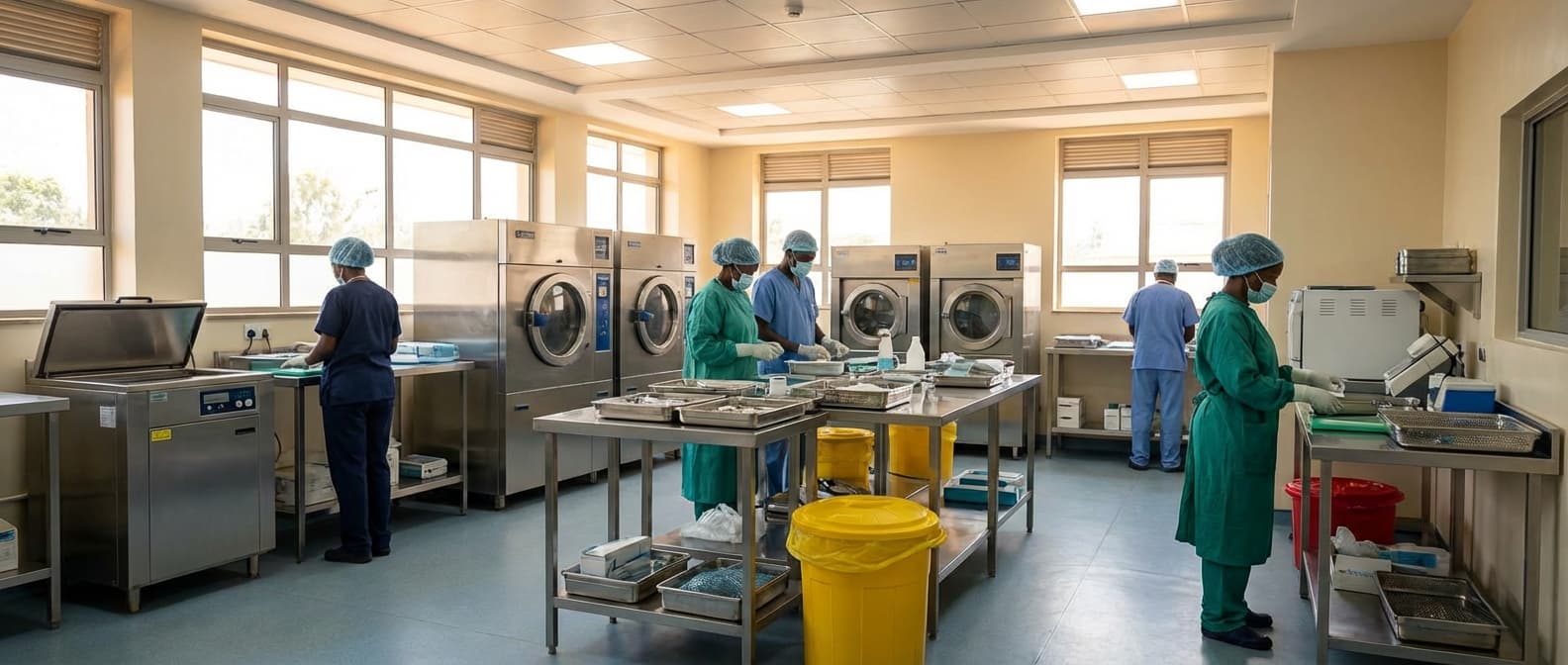
Endoscope Reprocessing Equipment Support Service in Mali
Engineering Excellence & Technical Support
Endoscope Reprocessing Equipment Support Service High-standard technical execution following OEM protocols and local regulatory frameworks.
Certified Technicians for Expert Endoscope Care
Our team comprises highly trained and certified technicians specializing in the repair and maintenance of all major endoscope reprocessing equipment brands. We ensure your critical medical devices are handled with the utmost precision and adhere to the strictest international standards, minimizing downtime and safeguarding patient safety in Mali.
Rapid Response & On-Site Support
Recognizing the urgent need for functional reprocessing equipment in healthcare settings, we offer rapid response times and on-site technical support across Mali. Our mobile service units are equipped to diagnose and resolve most issues efficiently, restoring your operational capacity swiftly and reducing the risk of procedural delays.
Proactive Preventative Maintenance Programs
We provide tailored preventative maintenance programs designed to extend the lifespan of your endoscope reprocessing equipment and prevent costly breakdowns. Our proactive approach includes regular inspections, calibration, and replacement of wear-and-tear parts, ensuring optimal performance and compliance for healthcare facilities throughout Mali.
What Is Endoscope Reprocessing Equipment Support Service In Mali?
Endoscope reprocessing equipment support service in Mali refers to the provision of specialized technical assistance and maintenance for the machinery used to clean, disinfect, and sterilize endoscopes. This service is crucial for ensuring the safety and efficacy of endoscopic procedures by preventing the transmission of healthcare-associated infections (HAIs). The service encompasses a range of activities aimed at maintaining the operational integrity and compliance of automated endoscope reprocessors (AERs), washer-disinfectors, and associated ancillary equipment, such as leak testers, drying cabinets, and sterile storage solutions.
| Stakeholder | Need for Service | Typical Use Cases |
|---|---|---|
| Hospitals & Clinics | To ensure the safety and efficacy of endoscopic procedures, prevent HAIs, maintain regulatory compliance, and minimize equipment downtime. | Routine PM of AERs, repair of faulty washer-disinfectors, validation of new equipment installation, staff training on equipment operation, immediate repair of critical equipment failure during busy periods. |
| Surgical Centers | Similar to hospitals, with a focus on high-volume throughput of endoscopes and maintaining patient safety standards. | Scheduled maintenance contracts for AERs, emergency repairs for urgent procedures, validation after relocation or major servicing. |
| Diagnostic & Endoscopy Units | Ensuring reliable and effective reprocessing of scopes used for diagnostic purposes, reducing turnaround times. | Calibration of cleaning cycles, replacement of worn-out parts in older equipment, supply of specialized cleaning consumables. |
| Biomedical Engineering Departments | To outsource specialized technical expertise and support for complex reprocessing equipment, allowing internal teams to focus on broader hospital infrastructure. | Complex troubleshooting of AER logic boards, sourcing rare spare parts, conducting advanced performance testing, providing training on new equipment models. |
| Healthcare Regulatory Bodies & Accreditation Agencies | Implicitly benefit from the availability of this service through improved patient safety and adherence to standards. | Not direct consumers, but their mandates necessitate the proper functioning and maintenance of such equipment, indirectly driving the need for support services. |
Key Components of Endoscope Reprocessing Equipment Support Service
- Preventive Maintenance (PM): Scheduled inspections, calibrations, and servicing of endoscope reprocessing equipment to identify and address potential issues before they lead to failures. This includes filter replacements, sensor checks, valve testing, and functional assessments.
- Corrective Maintenance & Repair: On-demand troubleshooting and repair of malfunctioning equipment. This involves diagnosing faults, sourcing and replacing defective parts, and performing necessary adjustments to restore full functionality.
- Validation & Verification: Services to ensure that the reprocessing equipment consistently performs according to established standards and regulatory requirements. This often involves testing cycles with biological and chemical indicators.
- Performance Monitoring & Optimization: Ongoing assessment of equipment performance to ensure optimal cleaning and disinfection efficacy. This may include data logging, analysis, and recommendations for process improvements.
- Parts & Consumables Supply: Provision of genuine or compatible spare parts, cleaning agents, disinfectants, and other consumables essential for the operation and maintenance of reprocessing equipment.
- Technical Training & Consultation: Offering training to in-house biomedical technicians and reprocessing staff on the proper operation, maintenance, and troubleshooting of the equipment. Consultation on best practices for reprocessing workflows and infection control.
- Compliance & Documentation Support: Assisting healthcare facilities in maintaining accurate records of maintenance, repairs, and validations to meet regulatory and accreditation standards.
Who Needs Endoscope Reprocessing Equipment Support Service In Mali?
Ensuring the effective and safe reprocessing of endoscopes is crucial for patient safety and infection prevention. In Mali, several key entities rely on robust endoscope reprocessing equipment support services. This includes a range of healthcare facilities, from large public hospitals to smaller private clinics, as well as specialized medical centers. The departments most directly involved and therefore requiring this support are typically those where endoscopic procedures are performed and where stringent sterilization protocols are paramount.
| Department Name | Primary Role in Endoscope Reprocessing | Specific Needs from Support Service |
|---|---|---|
| Gastroenterology | Performs diagnostic and therapeutic procedures using gastroscopes, colonoscopes, and duodenoscopes. | Regular maintenance, calibration, and repair of flexible endoscopes and automated reprocessors to ensure effective cleaning and disinfection. |
| Pulmonology/Thoracic Surgery | Conducts bronchoscopies for diagnostic and interventional purposes. | Support for rigid and flexible bronchoscopes, as well as associated cleaning and sterilization equipment. |
| Urology | Performs cystoscopies, ureteroscopies, and other endoscopic procedures of the urinary tract. | Maintenance and repair of urological endoscopes, light sources, and reprocessing units. |
| Infection Prevention and Control (IPC) Department | Oversees and enforces infection control policies, including endoscope reprocessing protocols. | Ensuring equipment is functioning according to manufacturer specifications and regulatory guidelines, troubleshooting issues that could compromise sterilization, and providing training on proper use and maintenance. |
| Biomedical Engineering Department | Responsible for the maintenance and repair of all medical equipment, including endoscopes and reprocessing systems. | Technical expertise for complex repairs, preventative maintenance scheduling, validation of reprocessing cycles, and sourcing spare parts. |
| Central Sterile Supply Department (CSSD) / Sterilization Unit | Responsible for the cleaning, disinfection, and sterilization of reusable medical devices, including endoscopes. | Ensuring the reliability and efficiency of automated endoscope reprocessors (AERs), ultrasonic cleaners, and other sterilization equipment. Support for troubleshooting and optimization of workflows. |
Target Customers and Departments Requiring Endoscope Reprocessing Equipment Support Service in Mali:
- {"description":"These are the primary healthcare providers in Mali, often handling a high volume of patients and procedures. They require reliable and efficient reprocessing equipment to maintain operational capacity and patient safety standards.","customerType":"Public Hospitals"}
- {"description":"As private healthcare expands in Mali, these facilities also invest in advanced medical equipment, including endoscopes. They need support services to ensure their equipment is functional and meets regulatory requirements.","customerType":"Private Clinics and Hospitals"}
- {"description":"Centers focusing on specific specialties like gastroenterology, pulmonology, or urology will have dedicated endoscopy units and a significant reliance on properly functioning reprocessing equipment.","customerType":"Specialized Medical Centers"}
- {"description":"Even facilities outside major urban centers that perform endoscopic procedures require access to reliable support services to maintain equipment and prevent infections.","customerType":"Regional and District Hospitals"}
- {"description":"NGOs operating clinics and hospitals in Mali, particularly those involved in maternal and child health or infectious disease treatment, often utilize endoscopic procedures and thus need equipment support.","customerType":"Non-Governmental Organization (NGO) Healthcare Facilities"}
Endoscope Reprocessing Equipment Support Service Process In Mali
This document outlines the Endoscope Reprocessing Equipment Support Service Process for facilities in Mali. It details the workflow from the initial inquiry by a healthcare facility to the successful execution of the support service, ensuring the continued optimal functioning of their endoscope reprocessing equipment. The process emphasizes clear communication, efficient problem-solving, and timely resolution to minimize downtime and maintain patient safety standards.
| Stage | Description | Key Activities | Responsible Party | Timeline (Indicative) | Deliverables |
|---|---|---|---|---|---|
| Inquiry and Initial Assessment | The healthcare facility contacts the service provider to report an issue or request routine maintenance for their endoscope reprocessing equipment. | Contacting service provider (phone, email, portal), describing the problem/request, providing equipment details (make, model, serial number, location), initial troubleshooting guidance (if applicable). | Healthcare Facility (Client), Service Provider (Support Team) | Immediate (upon inquiry) | Acknowledgement of inquiry, preliminary understanding of the issue/request. |
| Service Request and Scheduling | Formalizing the service request and arranging a convenient time for the service engineer to visit the facility. | Submitting a formal service request, providing facility access details, agreeing on a service date and time, confirming engineer's availability. | Healthcare Facility (Client), Service Provider (Support Team) | 1-2 business days | Confirmed service appointment, assigned service engineer. |
| On-site Diagnostics and Troubleshooting | The service engineer arrives at the facility and conducts a thorough inspection and diagnostic assessment of the equipment. | Visual inspection of equipment, running diagnostic tests, identifying the root cause of the malfunction or maintenance need, communicating findings to the client. | Service Provider (Field Engineer) | 2-8 hours (depending on complexity) | Accurate diagnosis of the issue, preliminary report of findings. |
| Parts and Consumables Management | If repairs are needed, identifying, sourcing, and procuring any necessary parts or consumables. | Checking inventory for required parts, ordering parts from manufacturer or authorized suppliers, confirming delivery timelines. | Service Provider (Logistics/Parts Department), Healthcare Facility (Approval for significant costs) | 1-5 business days (depending on parts availability and location) | Procured parts/consumables ready for installation. |
| Repair and Maintenance Execution | Performing the necessary repairs or scheduled maintenance on the endoscope reprocessing equipment. | Replacing faulty components, performing lubrication, calibration, cleaning, updating software, reassembling the equipment. | Service Provider (Field Engineer) | 2-12 hours (depending on scope of work) | Repaired or maintained equipment. |
| Testing and Verification | Thoroughly testing the equipment to ensure it is functioning correctly and meets performance standards. | Running operational tests, performing quality control checks, validating reprocessing cycles, documenting test results. | Service Provider (Field Engineer), Healthcare Facility (Observer/Participant) | 1-4 hours | Verified operational equipment, passed quality control checks. |
| Service Completion and Documentation | Finalizing the service, providing all necessary documentation to the client, and closing the service ticket. | Completing a detailed service report, providing recommendations for future use and maintenance, obtaining client sign-off, invoicing. | Service Provider (Field Engineer, Service Coordinator), Healthcare Facility (Client) | 1-2 business days | Signed service report, invoice, updated service history. |
| Follow-up and Preventive Maintenance | Proactive measures to ensure long-term equipment reliability and client satisfaction. | Scheduling future preventive maintenance, offering remote support for minor issues, collecting client feedback, providing training if needed. | Service Provider (Support Team, Account Manager), Healthcare Facility (Client) | Ongoing | Maximized equipment uptime, client satisfaction, reduced future repair needs. |
Endoscope Reprocessing Equipment Support Service Process - Workflow Stages
- Inquiry and Initial Assessment
- Service Request and Scheduling
- On-site Diagnostics and Troubleshooting
- Parts and Consumables Management
- Repair and Maintenance Execution
- Testing and Verification
- Service Completion and Documentation
- Follow-up and Preventive Maintenance
Endoscope Reprocessing Equipment Support Service Cost In Mali
Endoscope reprocessing equipment is critical for patient safety and infection control in healthcare facilities across Mali. The cost of support services for this equipment, including maintenance, repair, calibration, and parts replacement, is influenced by several factors. These factors collectively determine the pricing ranges observed in the Malian market. Understanding these elements is crucial for healthcare providers to budget effectively for equipment longevity and operational continuity. The local currency, the West African CFA franc (XOF), is used for all pricing, and exchange rate fluctuations can indirectly impact costs if imported parts or specialized technicians are involved. Service providers in Mali often differentiate their offerings, leading to varied pricing structures based on the level of support provided.
| Service Type | Typical Scope | Estimated Annual Cost Range (XOF) | Notes |
|---|---|---|---|
| Preventive Maintenance (PM) | Annual or bi-annual inspection, cleaning, lubrication, calibration, basic functional checks. | 150,000 - 400,000 XOF | Covers essential checks to ensure optimal performance and identify potential issues early. Parts and labor for minor adjustments may be included. |
| On-Demand Repair Services | Emergency or scheduled repairs, troubleshooting, parts replacement. | 75,000 - 250,000 XOF per incident (excluding major parts) | Cost varies greatly depending on the complexity of the repair and the required parts. Often billed per hour or per visit plus parts. |
| Full-Service Contract | Comprehensive package including regular PM, unlimited on-demand repairs, priority response, and sometimes all inclusive parts. | 500,000 - 1,500,000+ XOF | Offers the highest level of assurance. Pricing depends heavily on the SLA details, equipment age, and manufacturer's offering. Can be tailored to specific needs. |
| Calibration & Validation | Ensuring the reprocessing cycle meets established standards and regulatory requirements. | 100,000 - 300,000 XOF per calibration | Crucial for compliance and patient safety. May be part of PM or a separate service. |
| Remote Support/Troubleshooting | Initial diagnosis and guidance provided remotely by technicians. | 25,000 - 75,000 XOF per session/incident | Often a first step before a physical site visit, potentially saving costs. |
Key Pricing Factors for Endoscope Reprocessing Equipment Support Service in Mali
- Type and Complexity of Equipment: Different types of endoscope reprocessors (e.g., automated, semi-automated, manual washers) and their associated technologies (e.g., integrated drying, leak testing, advanced filtration) have varying maintenance needs and require different skill sets for servicing. More complex, high-end equipment generally incurs higher support costs.
- Service Level Agreement (SLA): The scope of services covered significantly impacts cost. This can range from basic annual preventive maintenance checks to comprehensive, 24/7 emergency repair services with guaranteed response times, including parts and labor.
- Age and Condition of Equipment: Older equipment may require more frequent repairs and replacement parts, leading to higher ongoing service costs. The overall condition upon initial service contract assessment can also influence pricing.
- Availability of Local Technicians and Parts: Mali's infrastructure and the availability of trained local technicians specializing in endoscope reprocessing equipment can affect pricing. If specialized skills or genuine manufacturer parts are scarce and need to be imported, costs will increase.
- Geographic Location: The specific city or region within Mali where the healthcare facility is located can influence service costs due to travel expenses for technicians, logistical challenges, and regional market dynamics.
- Manufacturer or Third-Party Service Provider: Services offered directly by the equipment manufacturer typically come with a premium due to brand recognition and guaranteed expertise. Third-party service providers might offer more competitive pricing but require careful vetting for quality and reliability.
- Frequency of Service: Whether service is on-demand or part of a scheduled preventive maintenance program, or a full-service contract, will dictate the overall expenditure. Preventive maintenance is often more cost-effective in the long run by averting major breakdowns.
- Consumables and Replacement Parts: The cost of essential consumables (e.g., detergents, disinfectants compatible with the machines) and the price of genuine or compatible replacement parts are direct cost drivers. Some service contracts may include these, while others treat them as separate expenses.
Affordable Endoscope Reprocessing Equipment Support Service Options
Ensuring the proper and consistent reprocessing of endoscopes is paramount for patient safety and regulatory compliance. However, the cost of specialized reprocessing equipment and ongoing maintenance can be a significant burden for healthcare facilities, especially those with budget constraints. This document outlines affordable endoscope reprocessing equipment support service options, focusing on value bundles and cost-saving strategies to help facilities optimize their investment.
| Service Option | Description | Value Proposition | Cost-Saving Strategies |
|---|---|---|---|
| Comprehensive Service Contracts | Includes preventive maintenance, priority on-site repairs, parts, and labor, often with guaranteed response times. | Predictable operating expenses, minimized downtime, extended equipment life, improved compliance. | Bundled pricing offers discounts over individual services. Negotiate terms and coverage based on actual usage. Consider multi-year contracts for further discounts. |
| Preventive Maintenance (PM) Packages | Scheduled routine inspections, cleaning, calibration, and minor adjustments to ensure optimal equipment performance. | Reduces the likelihood of major equipment failures, improves reprocessing efficiency, extends equipment lifespan. | Significantly cheaper than reactive repairs. Bundled PM visits can be scheduled during off-peak hours. Look for vendors offering remote diagnostics as part of PM. |
| On-Demand Repair Services | Access to qualified technicians for troubleshooting and repairing equipment issues as they arise. | Addresses unexpected breakdowns to minimize patient safety risks and operational disruptions. | Compare pricing structures (hourly rates, flat fees, parts markups). Maintain a history of repairs to identify recurring issues that might warrant a service contract. Consider vendor-provided online troubleshooting guides. |
| Operator Training and Certification | In-person or online training sessions on the proper operation, cleaning, and basic maintenance of endoscope reprocessing equipment. | Reduces user error, prevents equipment damage, ensures consistent and effective reprocessing, leading to fewer repair needs and improved compliance. | Investing in training upfront can prevent costly repair expenses down the line. Group training sessions for multiple staff members can be more cost-effective. Explore train-the-trainer programs. |
| Value Bundles (Equipment + Service) | Packages that combine the purchase or lease of reprocessing equipment with ongoing support services. | Streamlines procurement, ensures integrated support, often provides a discounted overall cost compared to purchasing separately. | Negotiate the bundle price carefully. Evaluate the included services to ensure they meet your needs. Consider leasing options for lower upfront costs and predictable monthly expenses. |
| Consumable and Parts Subscriptions | Automated delivery of essential consumables (detergents, disinfectants, brushes) and discounted pricing on common replacement parts. | Ensures uninterrupted workflow, avoids stockouts, simplifies inventory management, guarantees access to genuine parts. | Subscription models often come with volume discounts. Negotiate pricing based on projected usage. Explore third-party suppliers for consumables if quality and compatibility are verified. |
Key Considerations for Affordable Endoscope Reprocessing Equipment Support
- Understanding Your Needs: Accurately assess your current and future endoscope reprocessing volume, the types of endoscopes used, and existing equipment.
- Preventive Maintenance (PM): Proactive maintenance is crucial to prevent costly breakdowns and extend equipment lifespan. Bundled PM plans often offer significant savings over ad-hoc service.
- Repair Services: Understand the cost of on-demand repairs. Service contracts can provide predictable costs and faster response times.
- Training and Education: Proper operator training minimizes errors, reduces equipment damage, and ensures efficient reprocessing, all contributing to cost savings.
- Consumables and Accessories: Explore bundled pricing for necessary consumables (detergents, brushes, leak testing solutions) and replacement parts.
- Equipment Upgrades and Lifecycle Management: Plan for future needs and consider the total cost of ownership when evaluating new equipment or upgrades.
Verified Providers In Mali
In Mali's healthcare landscape, identifying reliable and trustworthy healthcare providers is paramount for individuals seeking quality medical services. "Verified Providers" signifies a commitment to excellence, adherence to stringent standards, and a proven track record of patient care. Franance Health, a leading entity in this domain, stands out as a benchmark for such verified providers. Their credentials are not merely certifications; they represent a deep-seated dedication to patient well-being, ethical practices, and continuous improvement in healthcare delivery. Choosing a Franance Health-credentialed provider means opting for a healthcare experience characterized by professionalism, expertise, and a patient-centric approach. This ensures that individuals receive the most appropriate and effective care, contributing to better health outcomes and peace of mind.
| Credential Category | Description | Benefit to Patients |
|---|---|---|
| Medical Facility Accreditation | Evaluates the operational quality, safety, and patient care standards of healthcare institutions. | Ensures access to well-equipped facilities with robust safety measures and organized care pathways. |
| Specialty Certifications | Confirms expertise and advanced training in specific medical fields (e.g., cardiology, pediatrics). | Guarantees that practitioners possess specialized knowledge and skills for complex medical needs. |
| Practitioner Licensing and Registration | Verifies that healthcare professionals are legally qualified and authorized to practice in Mali. | Provides assurance of the provider's legitimate qualifications and adherence to professional regulations. |
| Quality Improvement Programs | Demonstrates a proactive approach to monitoring and enhancing the quality of services offered. | Indicates a commitment to consistently improving patient care and outcomes. |
Why Franance Health Credentials Matter:
- Rigorous Accreditation and Certification Processes
- Commitment to International Healthcare Standards
- Emphasis on Continuous Professional Development for Practitioners
- Patient Safety and Quality Assurance Protocols
- Ethical Practice and Transparency in Service Delivery
- Focus on Modern Medical Technologies and Treatments
Scope Of Work For Endoscope Reprocessing Equipment Support Service
This Scope of Work (SOW) outlines the requirements for comprehensive support services for endoscope reprocessing equipment. The objective is to ensure the optimal performance, reliability, and compliance of all designated equipment through proactive maintenance, timely repairs, and expert technical support. This SOW details the technical deliverables and standard specifications expected from the service provider.
| Deliverable | Description | Standard Specification / Requirement | Frequency/Response Time |
|---|---|---|---|
| Preventive Maintenance (PM) Services | Scheduled inspections, cleaning, calibration, and functional testing of endoscope reprocessing equipment to prevent failures and ensure optimal performance. | Adherence to manufacturer's recommended PM schedules and procedures. Includes visual inspection, lubrication, filter replacement, functional tests (e.g., leak testing, flow rate verification, disinfection cycle validation), and calibration of sensors/gauges. | As per manufacturer recommendations (e.g., quarterly, semi-annually, annually) or as defined in the Service Level Agreement (SLA). Response time for scheduled PM to be within agreed upon timeframe. |
| Corrective Maintenance (CM) / Repair Services | On-demand repair services to address equipment malfunctions, breakdowns, and performance issues. | Prompt diagnosis and repair of all reported faults. Use of genuine or equivalent OEM parts. Comprehensive testing post-repair to ensure full functionality and compliance with safety standards. | 24/7 availability. On-site response time for critical failures to be within 4-8 business hours. For non-critical failures, response time within 24-48 business hours, as per SLA. |
| On-site Technical Support | Provision of skilled technicians for on-site troubleshooting, repairs, and technical assistance. | Technicians must possess relevant certifications and experience with the specific endoscope reprocessing equipment. Technicians will be equipped with necessary tools, diagnostic equipment, and common spare parts. | As needed, or during scheduled PM and CM activities. Technicians will be available during facility operating hours or as per agreed SLA. |
| Remote Technical Support | Remote assistance for troubleshooting, diagnostics, and guidance to on-site personnel. | Utilize remote access tools (if applicable and secure) or phone/video conferencing to guide facility staff through basic troubleshooting steps or to assist on-site technicians. | Available during facility operating hours. Initial response time within 1-2 business hours. |
| Spare Parts Management | Ensuring availability of critical spare parts to minimize equipment downtime. | Maintain an inventory of critical spare parts or have a guaranteed rapid procurement process for all required parts. Parts must be OEM or equivalent quality. | Key critical parts to be stocked on-site or readily available within 24 hours. For less common parts, procurement lead time to be clearly communicated and agreed upon. |
| Documentation and Reporting | Comprehensive record-keeping and reporting of all service activities. | Detailed service reports for each PM and CM visit, including date, time, technician name, work performed, parts used, test results, and recommendations. Updated equipment maintenance logs. Root cause analysis for recurring issues. | Service reports to be submitted within 5 business days of service completion. Maintenance logs to be updated in real-time or on a daily basis. |
| Training Services | On-site training for facility staff on basic equipment operation, troubleshooting, and preventative maintenance procedures. | Training content tailored to the specific equipment and facility needs. Sessions conducted by experienced trainers. Provision of training materials. | As required, or during PM visits. Specific training sessions to be scheduled and agreed upon. |
Technical Deliverables
- Preventive Maintenance (PM) Services
- Corrective Maintenance (CM) / Repair Services
- On-site Technical Support
- Remote Technical Support
- Spare Parts Management
- Documentation and Reporting
- Training Services
Service Level Agreement For Endoscope Reprocessing Equipment Support Service
This Service Level Agreement (SLA) outlines the support services, response times, and uptime guarantees for Endoscope Reprocessing Equipment provided by [Your Company Name] to [Client Company Name]. This agreement is effective as of [Start Date] and will continue until [End Date].
| Service Level | Response Time (Business Hours) | Uptime Guarantee | Escalation Procedure |
|---|---|---|---|
| Critical Failure (Equipment fully non-operational, impacting patient care) | 1 Hour (Remote Diagnosis), 4 Business Hours (On-site Technician Dispatch) | 99.5% | Immediate notification to Service Manager. Daily status updates until resolution. Potential for expedited part shipment. |
| Major Issue (Equipment significantly degraded performance, impacting workflow but not critical patient care) | 2 Business Hours (Remote Diagnosis), 8 Business Hours (On-site Technician Dispatch) | 98.0% | Notification within 4 business hours. Weekly status updates. Prioritized repair scheduling. |
| Minor Issue (Non-critical functionality affected, workflow minimally impacted) | 4 Business Hours (Remote Diagnosis), Next Business Day (On-site Technician Dispatch, if remote resolution not possible) | N/A (Focus on efficient remote resolution) | Notification within 8 business hours. Resolution during scheduled maintenance if feasible. |
| Preventative Maintenance | Scheduled in advance with Client. Performed according to manufacturer recommendations. | N/A (Scheduled downtime) | Notification of scheduled maintenance at least 1 week in advance. |
Scope of Service
- Preventative maintenance and scheduled servicing of designated endoscope reprocessing equipment.
- On-site and remote technical support for troubleshooting and issue resolution.
- Access to trained and certified technicians.
- Provision of necessary spare parts for repairs.
- Regular performance checks and calibration.
Frequently Asked Questions

Ready when you are
Let's scope your Endoscope Reprocessing Equipment Support Service in Mali project in Mali.

Scaling healthcare logistics and technical systems across the entire continent.