
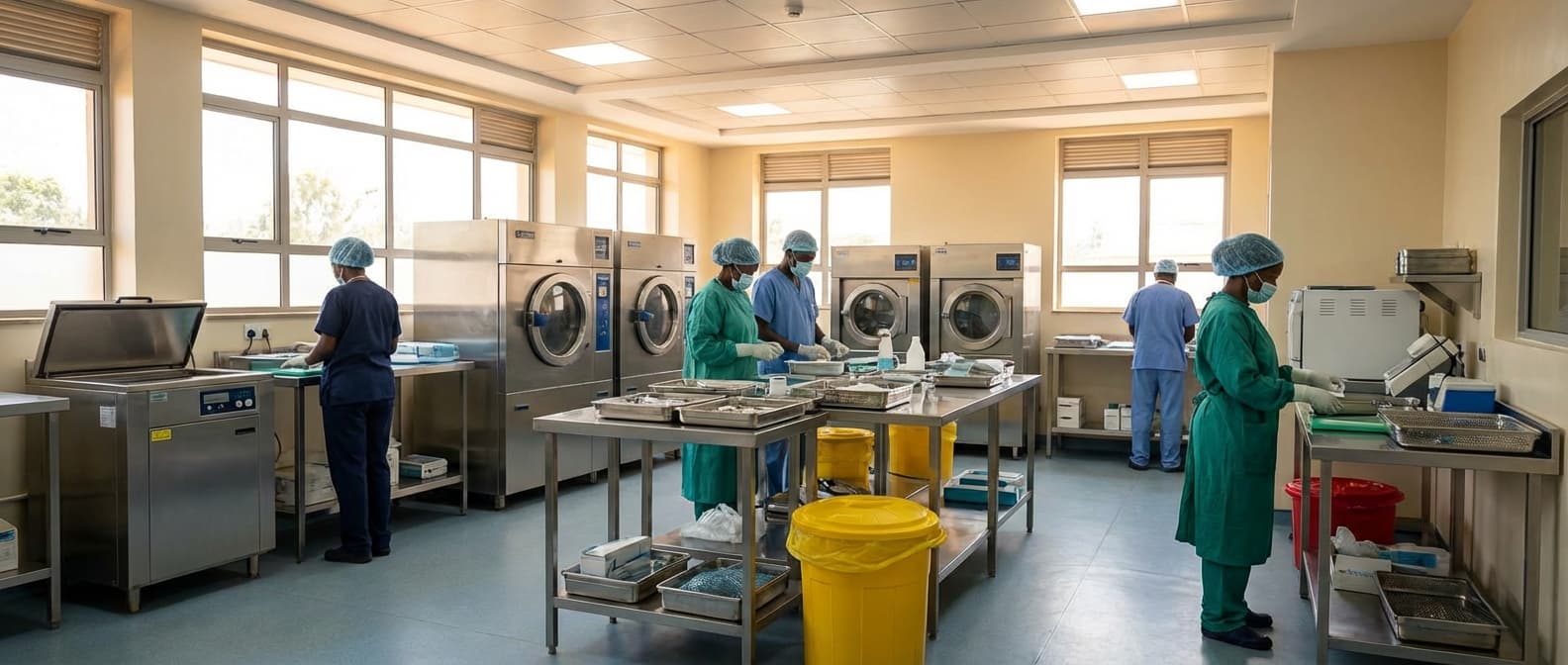
Autoclave Validation Support Service in Mali
Engineering Excellence & Technical Support
Autoclave Validation Support Service High-standard technical execution following OEM protocols and local regulatory frameworks.
Ensuring Sterilization Efficacy
Our Autoclave Validation Support Service in Mali utilizes advanced biological and chemical indicators to meticulously verify the sterilization effectiveness of your autoclaves. We go beyond basic cycle monitoring to provide irrefutable evidence of microbial inactivation, safeguarding patient safety and regulatory compliance.
Precision Instrument Calibration
We offer comprehensive calibration services for all critical autoclave components, including temperature probes, pressure sensors, and timers. This ensures the accuracy and reliability of your sterilization cycles, preventing costly re-sterilizations and maintaining the integrity of your sterile materials in Mali's unique operational environment.
Streamlined Compliance & Documentation
Navigate Malian healthcare regulations with confidence. Our service provides meticulously detailed validation reports and certificates, designed to meet local and international standards. We handle the complex documentation, allowing your facility in Mali to focus on delivering exceptional patient care while remaining fully compliant.
What Is Autoclave Validation Support Service In Mali?
Autoclave validation support services in Mali are specialized offerings designed to ensure that steam sterilization equipment, commonly known as autoclaves, consistently achieve and maintain their designated sterilization parameters. This process is critical for validating the efficacy of the autoclave in eliminating microbial contamination, thereby guaranteeing the sterility of medical devices, laboratory equipment, and other critical materials. The service typically encompasses a comprehensive suite of activities aimed at demonstrating that the autoclave operates within its defined specifications and reliably renders items sterile under intended use conditions.
| Who Needs Autoclave Validation Support Service in Mali? | Typical Use Cases | ||
|---|---|---|---|
| Healthcare Facilities: Hospitals, clinics, dental practices, and surgical centers that sterilize surgical instruments, medical devices, and other patient-care items. | Sterilization of reusable surgical instruments (scalpels, forceps, retractors). | Sterilization of dental instruments and materials. | Sterilization of laboratory glassware and media in research and diagnostic laboratories. |
| Pharmaceutical and Biotechnology Companies: For sterilizing laboratory equipment, vials, stoppers, and manufacturing components to ensure product sterility and prevent contamination. | Sterilization of raw materials and packaging components for pharmaceutical manufacturing. | Sterilization of bioreactor components and laboratory equipment in R&D settings. | |
| Research and Development Laboratories: Institutions involved in life sciences, microbiology, and material science that require sterile equipment and consumables. | Sterilization of microbiological culture media and petri dishes. | Sterilization of specialized scientific apparatus. | |
| Veterinary Clinics and Animal Research Facilities: For sterilizing instruments and equipment used in animal care and research. | Sterilization of surgical instruments for animal procedures. | Sterilization of animal housing materials. | |
| Manufacturers of Sterilization Equipment: To ensure their products meet regulatory requirements before market entry. | Factory acceptance testing and initial validation of newly manufactured autoclaves. |
Key Components of Autoclave Validation Support Services:
- Installation Qualification (IQ): Verifying that the autoclave is installed correctly according to the manufacturer's specifications and relevant regulatory standards.
- Operational Qualification (OQ): Testing the autoclave's operational capabilities across its specified range to ensure it performs as intended.
- Performance Qualification (PQ): Conducting a series of tests under typical load conditions to confirm that the autoclave consistently achieves the required sterilization parameters (e.g., temperature, pressure, time, steam penetration) for a defined period.
- Validation Protocol Development: Creating detailed, site-specific protocols that outline the methodology, acceptance criteria, and test procedures for each qualification phase.
- Process Challenge Devices (PCDs): Utilizing specialized PCDs (e.g., biological indicators, chemical indicators, physical monitors) to challenge the sterilization process and objectively measure its efficacy.
- Data Analysis and Reporting: Meticulously collecting, analyzing, and interpreting all test data to generate comprehensive validation reports that document compliance.
- Calibration and Maintenance Support: Often includes recommendations or direct provision of calibration and routine maintenance services essential for sustained performance.
- Revalidation Support: Assisting with periodic revalidation after significant repairs, modifications, or at prescribed intervals to maintain compliance.
Who Needs Autoclave Validation Support Service In Mali?
Autoclave validation is a critical process for ensuring the sterility of medical equipment and the safety of patients and healthcare professionals. In Mali, as in many developing nations, maintaining high standards of sterilization is paramount, especially in the face of potential resource constraints and varying levels of infrastructure. Autoclave validation support services are essential for a range of healthcare facilities and research institutions that rely on the effectiveness of their autoclaves for infection control and accurate diagnostic or research outcomes.
| Department | Autoclave Usage | Validation Need |
|---|---|---|
| Surgical Wards | Sterilization of surgical instruments, drapes, gowns. | Critical for preventing surgical site infections (SSIs). |
| Operating Rooms | Sterilization of all instruments and supplies used during surgery. | Essential for patient safety and procedural success. |
| Emergency Departments | Sterilization of instruments and supplies for immediate use. | Ensures rapid and safe treatment of patients. |
| Intensive Care Units (ICUs) | Sterilization of specialized equipment and consumables. | High-risk environment requiring stringent infection control. |
| Central Sterile Supply Department (CSSD) | Centralized sterilization of all reusable medical devices. | The core department responsible for ensuring sterility, hence highest validation need. |
| Maternity/Obstetrics | Sterilization of instruments for delivery and postpartum care. | Prevents puerperal infections and neonatal sepsis. |
| Infection Control Department | Oversight and assurance of sterilization processes. | Relies on validated autoclaves to meet infection control mandates. |
| Pathology/Histology Labs | Sterilization of equipment for tissue processing and analysis. | Ensures accuracy of diagnostic results. |
| Microbiology Labs | Sterilization of media, glassware, and equipment for culturing and identification. | Crucial for preventing contamination and ensuring valid microbial analysis. |
| Research and Development (R&D) Labs | Sterilization of materials and equipment for experimental procedures. | Maintains reproducibility and reliability of research findings. |
Target Customers and Departments for Autoclave Validation Support Service in Mali
- {"description":"Large, government-funded hospitals are major users of autoclaves for sterilizing surgical instruments, laboratory equipment, and patient care items. They often have multiple sterilization units across various departments.","customerType":"Public Hospitals"}
- {"description":"As the private healthcare sector grows in Mali, these facilities also invest in autoclaves to offer reliable and safe medical services. They may have fewer resources but a strong need for dependable sterilization.","customerType":"Private Clinics and Hospitals"}
- {"description":"Sterilization is crucial for instruments used in childbirth to prevent infections. These facilities, often smaller, still require validated autoclaves for critical procedures.","customerType":"Maternity Centers and Birthing Facilities"}
- {"description":"Laboratories that perform diagnostic tests require sterilized glassware, media, and equipment. Accurate sterilization is vital for reliable test results. Veterinary labs also sterilize instruments used for animal care and research.","customerType":"Diagnostic Laboratories (Medical & Veterinary)"}
- {"description":"Facilities conducting scientific research, particularly in life sciences and medicine, depend on autoclaves for sterilizing equipment and materials to maintain the integrity of their experiments.","customerType":"Research Institutions and Universities"}
- {"description":"Dental instruments are frequently sterilized using autoclaves, and proper validation ensures patient safety from cross-contamination.","customerType":"Dental Clinics"}
- {"description":"While not directly sterilizing blood, these centers may sterilize equipment used in processing and handling blood products, requiring validated autoclaves for associated sterile consumables.","customerType":"Blood Banks and Transfusion Centers"}
- {"description":"NGOs operating mobile clinics, health posts, or providing medical supplies in remote areas will have autoclaves that need regular validation to ensure effective sterilization in challenging environments.","customerType":"Non-Governmental Organizations (NGOs) with Healthcare Programs"}
Autoclave Validation Support Service Process In Mali
This document outlines the workflow for Autoclave Validation Support Services in Mali, detailing the process from initial client inquiry to the final execution and reporting of validation activities. The service aims to ensure that autoclaves used in critical settings (e.g., healthcare, laboratories) consistently achieve effective sterilization by meeting defined performance standards.
| Stage | Key Activities | Responsible Party | Deliverables/Outcomes | Timeline (Indicative) |
|---|---|---|---|---|
| Phase 1: Inquiry and Initial Assessment | Client contacts service provider with autoclave validation needs. Initial discussion to understand client's autoclave type, usage, location, and specific validation requirements (e.g., IQ, OQ, PQ). Preliminary assessment of scope and potential challenges. | Client, Service Provider | Confirmation of service offering, understanding of client needs, preliminary scope defined. | 1-3 business days |
| Phase 2: Proposal and Agreement | Service provider develops a detailed proposal including scope of work, methodology, deliverables, timeline, and cost. Proposal review and discussion with the client. Finalization of terms and conditions. Signing of Service Level Agreement (SLA) or contract. | Service Provider, Client | Formal proposal, signed SLA/contract, agreement on project parameters. | 3-7 business days |
| Phase 3: Pre-Validation Preparations | Service provider schedules validation activities with the client. Identification and sourcing of necessary validation equipment (e.g., temperature probes, biological indicators, chemical indicators). Confirmation of autoclave operational status and maintenance records. Review of client's standard operating procedures (SOPs) for autoclave use. | Service Provider, Client | Scheduled validation dates, prepared validation kit, confirmed autoclave readiness. | 5-10 business days (depending on equipment availability and client responsiveness) |
| Phase 4: On-Site Validation Execution | Installation Qualification (IQ): Verification of proper installation, manufacturer specifications, and environmental conditions. Operational Qualification (OQ): Testing autoclave functions and controls across a range of operating parameters (e.g., different cycle types, load configurations). Performance Qualification (PQ): Verification of consistent and effective sterilization through multiple test cycles using biological and chemical indicators under representative load conditions. Collection of all raw data. | Service Provider | Completed validation protocols, raw data logs, observations documented. | 2-5 business days (per autoclave, depending on complexity and number of cycles) |
| Phase 5: Data Analysis and Reporting | Analysis of collected IQ, OQ, and PQ data. Comparison of results against predefined acceptance criteria and relevant international/national standards (e.g., EN 285, ISO 17665). Identification of any deviations or non-conformities. Generation of a comprehensive validation report, including summary, detailed findings, and recommendations. Presentation of findings to the client. | Service Provider, Client | Detailed validation report, recommendations for improvements (if any), client sign-off on report. | 5-10 business days (post-execution) |
| Phase 6: Post-Validation Support | Clarification of report findings as needed. Support for implementing recommended corrective actions. Scheduling of revalidation or periodic re-qualification as per regulatory requirements or client needs. | Service Provider, Client | Resolved queries, implemented corrective actions, plan for future validation. | Ongoing as required |
Autoclave Validation Support Service Workflow in Mali
- Phase 1: Inquiry and Initial Assessment
- Phase 2: Proposal and Agreement
- Phase 3: Pre-Validation Preparations
- Phase 4: On-Site Validation Execution
- Phase 5: Data Analysis and Reporting
- Phase 6: Post-Validation Support
Autoclave Validation Support Service Cost In Mali
Autoclave validation is a critical process to ensure that sterilization equipment is functioning correctly and effectively eliminating microorganisms. In Mali, as elsewhere, the cost of this service can vary significantly based on several factors. Understanding these elements is crucial for organizations in Mali that require reliable autoclave validation to maintain compliance with health and safety regulations, and to ensure the integrity of sterilized medical or laboratory supplies.
| Service Component | Estimated Cost Range (XOF) | Notes |
|---|---|---|
| Initial Consultation & Site Assessment | 20,000 - 50,000 | May be waived if a full validation package is purchased. |
| Installation Qualification (IQ) | 50,000 - 150,000 | Verifies correct installation and configuration. Varies by autoclave complexity. |
| Operational Qualification (OQ) | 70,000 - 200,000 | Tests the autoclave's operation across its specified range. Includes calibration checks. |
| Performance Qualification (PQ) - Per Cycle | 100,000 - 300,000 | Runs simulated sterilization cycles with biological and chemical indicators. Multiple cycles may be required. |
| Full Validation (IQ + OQ + PQ) | 250,000 - 750,000+ | Comprehensive service for a single autoclave. Prices increase for larger/more units. Discounts may apply for multiple autoclaves. |
| Re-validation / Annual Verification | 150,000 - 400,000 | Typically covers OQ and PQ, or a subset, depending on previous validation status. |
| Travel and Accommodation (if applicable) | Varies significantly | Dependent on distance from service provider's base to client's location in Mali. |
| Additional Reports/Documentation | 15,000 - 50,000 | For specific extra copies or specialized formatting. |
Key Pricing Factors for Autoclave Validation in Mali:
- Type and Size of Autoclave: Larger or more complex autoclaves (e.g., large-capacity hospital sterilizers vs. smaller laboratory units) generally require more time, resources, and specialized equipment for validation, thus increasing the cost.
- Number of Autoclaves: Organizations with multiple autoclaves requiring validation will typically benefit from volume discounts, but the overall expenditure will be higher than for a single unit.
- Frequency of Validation: Routine validation (e.g., annual) might have different pricing structures compared to re-validation after a repair or significant modification.
- Scope of Validation: Full validation typically includes installation qualification (IQ), operational qualification (OQ), and performance qualification (PQ). The depth and rigor of each stage can influence the final cost. Some clients may only require specific stages.
- Service Provider's Expertise and Reputation: Established companies with a proven track record, highly qualified technicians, and advanced validation equipment may charge a premium for their services. Local experience and understanding of Malian regulatory nuances can also be a factor.
- Geographic Location within Mali: Travel and accommodation expenses for validation technicians can add to the overall cost, especially for services required in remote regions of Mali.
- Specific Industry Standards and Regulations: Compliance with international standards (like ISO) or specific national health regulations might necessitate additional testing protocols, impacting the service cost.
- Reporting and Documentation Requirements: The level of detail and formality required in the validation reports can also influence the pricing. Comprehensive, detailed reports often involve more administrative time.
- Urgency of the Service: Expedited validation services, if available, will likely incur higher fees due to the need for immediate resource allocation.
Affordable Autoclave Validation Support Service Options
Ensuring your autoclaves are validated is a critical step for compliance and patient safety, but the costs can be a significant concern for many healthcare facilities. Fortunately, there are affordable autoclave validation support service options available that can significantly reduce your financial burden without compromising on quality or compliance. This guide explores value bundles and cost-saving strategies to help you manage your autoclave validation budget effectively.
| Service Type | Description | Cost-Saving Potential |
|---|---|---|
| Standard Validation Package | Includes Installation Qualification (IQ), Operational Qualification (OQ), and Performance Qualification (PQ) for a single autoclave. Often a one-time fee per validation cycle. | Moderate. Predictable costs for essential validation. May become expensive if multiple autoclaves require independent validation. |
| Multi-Autoclave Discount | Service providers offer reduced rates when multiple autoclaves within the same facility are validated concurrently. This leverages the technician's visit and reduces mobilization costs. | High. Significant savings achievable by grouping validation services for all your sterilization equipment. |
| Annual Maintenance & Validation Contracts | Combines scheduled preventative maintenance with periodic validation services for a fixed annual fee. Often includes priority scheduling and emergency response. | High. Provides cost certainty, reduces unexpected repair bills, and ensures continuous compliance. Spreads costs over the year. |
| Remote Monitoring & Support | Utilizing technology to remotely monitor autoclave performance and provide basic troubleshooting. May supplement on-site validation by identifying potential issues proactively. | Moderate. Reduces the need for frequent on-site visits for minor issues and can extend the time between full validation cycles if performance is consistently good. |
| Re-validation Services (Post-Repair/Modification) | Specific validation protocols conducted after an autoclave has undergone significant repairs or modifications. Often priced at a lower tier than full validation. | Moderate. Cost-effective for targeted validation needs without incurring the full cost of a complete validation cycle. |
| Value Bundles (e.g., PM + Validation + Training) | Comprehensive packages that bundle preventative maintenance, validation services, and staff training on operation and basic troubleshooting. Designed to offer a holistic approach to autoclave management. | Very High. Offers significant discounts by bundling multiple essential services, leading to a lower overall cost of ownership and improved operational efficiency. |
Understanding Autoclave Validation Support Service Options
- Why Validation is Essential: Autoclave validation ensures your sterilization processes are consistently effective, preventing the transmission of infections and meeting regulatory requirements (e.g., FDA, CDC, AAMI).
- Typical Cost Factors: Validation costs are influenced by the number and type of autoclaves, the scope of validation (IQ/OQ/PQ), the frequency of validation, and the service provider's pricing structure.
- Challenges of In-House Validation: While seeming cost-effective, in-house validation can lead to hidden costs, including staff training, equipment calibration, and potential downtime if performed incorrectly.
Verified Providers In Mali
In Mali's evolving healthcare landscape, identifying and choosing verified providers is paramount for ensuring quality care and patient safety. Franance Health stands out as a leading organization that rigorously vets and credential's healthcare professionals and facilities. This commitment to verification translates into a higher standard of care, increased patient trust, and a more efficient healthcare system. Understanding what Franance Health credentials mean and why they represent the best choice for healthcare consumers in Mali is crucial.
| Franance Health Verified Provider | Benefits for Patients | Why They Are the Best Choice |
|---|---|---|
| Credentialed Physicians & Specialists: Doctors who have met Franance Health's stringent criteria. | Assurance of qualified and competent medical expertise. Reduced risk of misdiagnosis or ineffective treatment. | Access to healthcare professionals with proven skills and ethical practices, leading to better health outcomes. |
| Accredited Hospitals & Clinics: Healthcare facilities undergoing thorough inspection and approval. | Guaranteed adherence to safety, hygiene, and operational standards. Access to well-equipped and properly managed facilities. | Peace of mind knowing that facilities prioritize patient well-being and maintain high standards of medical infrastructure and services. |
| Certified Allied Health Professionals: Therapists, nurses, and technicians meeting established benchmarks. | Reliable access to skilled support staff essential for comprehensive care. Trust in the quality of ancillary medical services. | Complete and integrated healthcare experience, supported by a team of verified and competent professionals across all levels of care. |
| Specialized Care Centers: Facilities verified for specific medical treatments or conditions. | Direct access to centers with demonstrated expertise in particular areas of medicine. Higher likelihood of successful treatment for complex conditions. | Targeted and effective treatment pathways, knowing that these centers have the necessary resources, staff, and proven track record in their specialty. |
What Franance Health Credentials Signify
- Rigorous vetting process of medical professionals and facilities.
- Confirmation of licenses, certifications, and educational backgrounds.
- Assessment of clinical experience and peer reviews.
- Adherence to established ethical and professional standards.
- Commitment to patient safety and quality of care protocols.
- Regular re-credentialing to ensure ongoing compliance and excellence.
Scope Of Work For Autoclave Validation Support Service
This Scope of Work (SOW) outlines the services to be provided by the Validation Support Service provider for the validation of a new or existing autoclave system. The objective is to ensure the autoclave operates consistently and reliably, meeting pre-defined performance criteria and regulatory requirements. This includes performing validation studies, documenting results, and providing a comprehensive validation report.
| Deliverable | Description | Standard Specification/Requirement | Format |
|---|---|---|---|
| Validation Protocol (IQ/OQ/PQ) | Detailed plan outlining the validation methodology, test cases, acceptance criteria, and procedures. | FDA 21 CFR Part 11, GAMP 5, ISO 17665, relevant company SOPs. | Microsoft Word document |
| Installation Qualification (IQ) Report | Documentation confirming the autoclave is installed correctly according to design specifications and manufacturer recommendations. | Verification of utilities (power, water, steam), safety features, control systems, and physical installation. | Microsoft Word document |
| Operational Qualification (OQ) Report | Documentation confirming the autoclave operates within defined parameters across its operational range. | Tests for temperature, pressure, cycle times, alarms, interlocks, and safety functions. | Microsoft Word document |
| Performance Qualification (PQ) Report | Documentation confirming the autoclave consistently delivers validated performance under simulated or actual operating conditions. | Multiple consecutive successful cycles demonstrating consistent sterilization of target loads (e.g., media, equipment, waste). | Microsoft Word document |
| Final Validation Report | Comprehensive summary of all validation activities, including IQ, OQ, PQ, deviations, and final conclusions. | Includes protocol adherence, test results, risk assessment (if applicable), and a statement of compliance. | Microsoft Word document |
| Test Logs and Raw Data | Original records and logs generated during the execution of IQ, OQ, and PQ tests. | Calibration records for all testing equipment, sensor data, cycle printouts. | Digital files (PDF, Excel) and/or paper copies as agreed |
| Deviation Reports | Documentation of any deviations encountered during validation activities, including investigation and resolution. | Root cause analysis, impact assessment, and corrective/preventive actions (CAPA). | Microsoft Word document |
| Change Control Documents (if applicable) | Documentation related to any changes implemented during or after the validation process. | Change request, impact assessment, revalidation requirements. | Microsoft Word document |
Key Activities and Deliverables
- Protocol Development and Review
- IQ (Installation Qualification) Execution and Documentation
- OQ (Operational Qualification) Execution and Documentation
- PQ (Performance Qualification) Execution and Documentation
- Validation Report Generation
- Deviation Management
- Change Control Support
Service Level Agreement For Autoclave Validation Support Service
This Service Level Agreement (SLA) outlines the response times and uptime guarantees for the Autoclave Validation Support Service provided by [Your Company Name] to [Client Company Name]. This SLA is an addendum to the Master Services Agreement (MSA) dated [MSA Date].
| Severity Level | Description | Response Time (during Support Hours) | Resolution Target (Aim) |
|---|---|---|---|
| Critical (Severity 1) | Complete system outage or critical function failure rendering the autoclave validation process unusable or significantly compromised. Major business impact. | 1 Business Hour | 4 Business Hours |
| High (Severity 2) | Significant degradation of the autoclave validation service, impacting multiple users or key functionalities. Significant business impact. | 2 Business Hours | 8 Business Hours |
| Medium (Severity 3) | Minor degradation of the autoclave validation service, affecting a single user or non-critical functionality. Moderate business impact. | 4 Business Hours | 2 Business Days |
| Low (Severity 4) | General inquiries, feature requests, or minor issues that do not impact the functionality of the autoclave validation service. Minimal business impact. | 1 Business Day | 3 Business Days |
Key Definitions
- {"term":"Autoclave Validation Support Service","definition":"Refers to the technical support, troubleshooting, and advisory services related to the validation of client's autoclaves, including but not limited to software, hardware, and procedural guidance."}
- {"term":"Support Hours","definition":"The hours during which support is available. Unless otherwise specified, this is Monday to Friday, 9:00 AM to 5:00 PM [Client's Time Zone], excluding public holidays."}
- {"term":"Incident","definition":"Any event that causes, or may cause, an interruption to or a reduction in the quality of the Autoclave Validation Support Service."}
- {"term":"Severity Level","definition":"A classification of an Incident based on its impact on the Client's operations."}
- {"term":"Response Time","definition":"The maximum time allowed for [Your Company Name] to acknowledge an Incident and initiate diagnostic and troubleshooting efforts after it has been reported."}
- {"term":"Resolution Target","definition":"The target timeframe within which [Your Company Name] aims to resolve an Incident. This is a target and not a guarantee, as complex issues may require extended investigation."}
- {"term":"Uptime","definition":"The percentage of time the Autoclave Validation Support Service is available and functional during the defined Service Period."}
- {"term":"Service Period","definition":"The agreed-upon period for which this SLA is in effect, typically [e.g., Monthly, Annually]."}
Frequently Asked Questions

Ready when you are
Let's scope your Autoclave Validation Support Service in Mali project in Mali.

Scaling healthcare logistics and technical systems across the entire continent.