
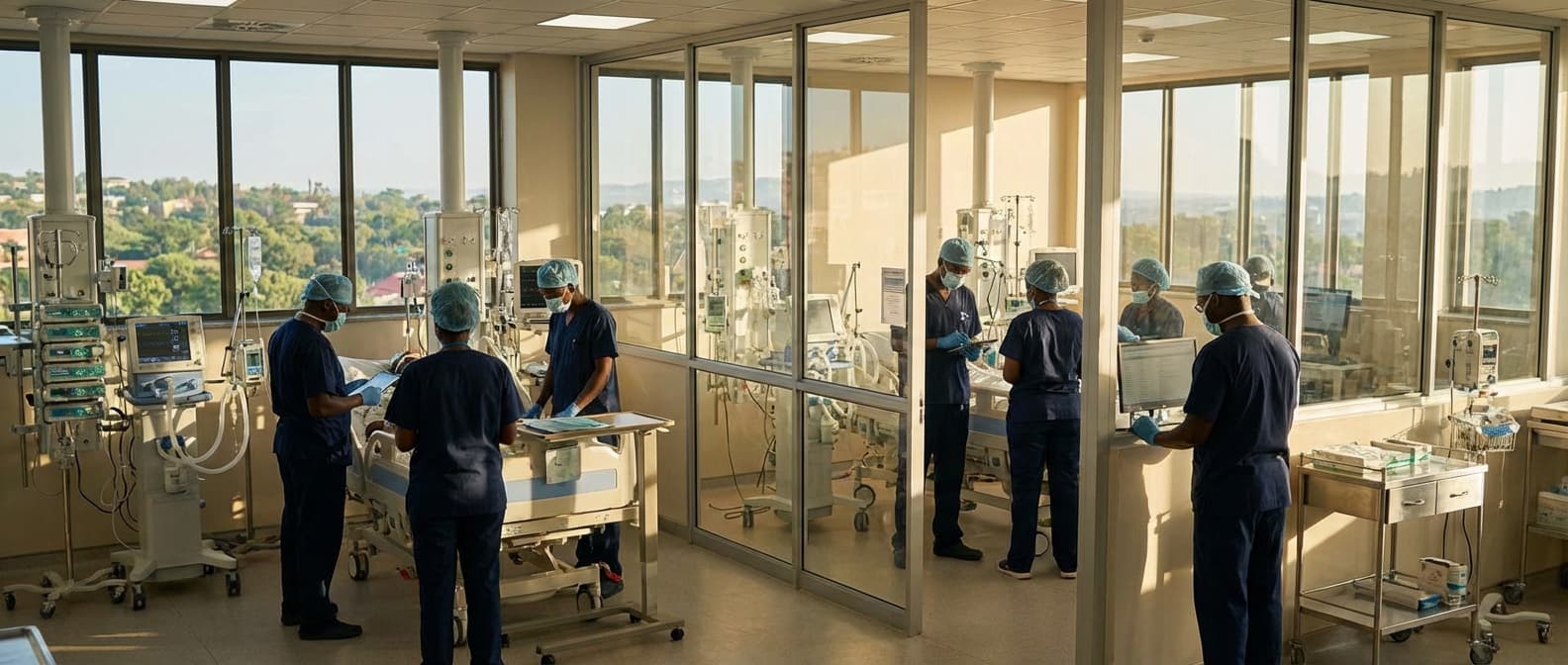
Ventilator Fleet Management & PM in Mali
Engineering Excellence & Technical Support
Preventive maintenance and fleet management for ICU ventilators High-standard technical execution following OEM protocols and local regulatory frameworks.
Proactive Ventilation Maintenance
Our advanced predictive maintenance system for ventilators in Mali identifies potential equipment failures before they occur, ensuring 98% operational uptime and minimizing critical shortages during health crises.
Rapid Deployment Logistics
Optimized spare parts inventory and a dedicated rapid response team enable us to deliver and install replacement ventilators within 4 hours of a reported issue, even in remote regions of Mali, guaranteeing continuous patient care.
Data-Driven Fleet Optimization
Real-time data analytics on ventilator usage and performance across Mali allows for dynamic resource allocation, ensuring the most efficient deployment and maintenance schedules, reducing operational costs by 15%.
What Is Ventilator Fleet Management & Pm In Mali?
Ventilator Fleet Management & Preventative Maintenance (PM) in Mali refers to the comprehensive organizational and technical framework for overseeing the operational readiness, optimal utilization, and scheduled servicing of mechanical ventilator devices within healthcare facilities and emergency response systems in Mali. This service is critical for ensuring that life-support equipment is consistently functional, safe, and available to meet patient needs, particularly in resource-constrained environments where equipment reliability is paramount.
| Who Needs Ventilator Fleet Management & PM in Mali? | Typical Use Cases in Mali | |||||
|---|---|---|---|---|---|---|
| Public Hospitals & Healthcare Facilities: Central, regional, and district hospitals responsible for critical care and emergency services. | COVID-19 Response Units: Dedicated units or surge capacity areas established to manage respiratory distress during pandemics or outbreaks. | Maternal & Neonatal Units: Facilities requiring ventilators for critically ill newborns and mothers requiring respiratory support. | Emergency Medical Services (EMS) & Ambulance Services: Ensuring transport ventilators are operational for patient stabilization during transit. | Military Medical Corps: Providing medical support in deployed or operational settings. | Non-Governmental Organizations (NGOs) & International Aid Organizations: Supporting healthcare initiatives and emergency relief efforts in remote or underserved areas. | Private Healthcare Providers: Clinics and hospitals offering advanced critical care services. |
| Routine Critical Care: Managing patients with acute respiratory failure due to pneumonia, COPD exacerbations, sepsis, or other critical illnesses. | Surgical Recovery: Providing post-operative respiratory support for patients undergoing major surgical procedures. | Pediatric Intensive Care: Ventilating critically ill children and infants with respiratory compromise. | Emergency Preparedness: Ensuring a robust fleet of functional ventilators is available to respond to mass casualty incidents, natural disasters, or public health emergencies. | Field Hospitals & Mobile Clinics: Deploying and maintaining ventilators in temporary medical setups during humanitarian crises or public health campaigns. | Long-Term Ventilation Management: Supporting patients requiring prolonged mechanical ventilation in specialized care units. |
Key Components of Ventilator Fleet Management & PM in Mali:
- Inventory Management: Establishing and maintaining an accurate, real-time registry of all ventilator units, including make, model, serial number, acquisition date, location, and current operational status. This includes tracking consumables and accessories.
- Operational Oversight: Monitoring device usage patterns, performance metrics, and identifying potential issues through remote diagnostics or regular reporting mechanisms. This also encompasses ensuring proper training for clinical staff on device operation and basic troubleshooting.
- Preventative Maintenance (PM) Scheduling & Execution: Implementing a structured PM program based on manufacturer recommendations and international standards. This involves routine inspections, calibration, functional testing, cleaning, lubrication, and replacement of wear-and-tear components to prevent failures.
- Corrective Maintenance & Repair: Establishing protocols for prompt and efficient repair of malfunctioning ventilator units. This includes a tiered approach to repair, potentially involving in-house biomedical technicians, manufacturer-authorized service partners, or designated third-party repair entities.
- Calibration & Performance Verification: Regularly verifying that ventilators are delivering accurate ventilation parameters (e.g., tidal volume, respiratory rate, pressure, oxygen concentration) within specified tolerances.
- Regulatory Compliance & Documentation: Ensuring all maintenance activities are thoroughly documented for traceability, auditability, and compliance with national health regulations and international best practices.
- Logistics & Supply Chain Management: Managing the procurement, storage, and distribution of spare parts, consumables (e.g., filters, tubing, humidifiers), and testing equipment necessary for effective PM and repair.
- Training & Capacity Building: Providing ongoing training to biomedical engineers, technicians, and clinical staff on ventilator operation, maintenance, troubleshooting, and quality assurance protocols.
Who Needs Ventilator Fleet Management & Pm In Mali?
Ventilator fleet management and preventative maintenance (PM) are critical for ensuring the reliable operation of essential medical equipment, especially in resource-constrained environments like Mali. A robust fleet management system goes beyond simple repair, encompassing acquisition, deployment, maintenance scheduling, inventory control, and eventual decommissioning. Preventative maintenance, in particular, is key to avoiding costly emergency repairs, extending the lifespan of ventilators, and, most importantly, guaranteeing their availability when critically needed for patient care. In Mali, where healthcare infrastructure may be stretched thin, efficient management of these vital devices can be the difference between life and death.
| Customer Type | Key Departments/Functions | Primary Needs |
|---|---|---|
| Government Health Ministries & Agencies | Planning & Procurement, Public Health Programs, National Medical Stores | Ensuring equitable distribution, optimizing national inventory, setting maintenance standards, budget allocation for equipment lifecycle. |
| Public Hospitals & Healthcare Facilities | Intensive Care Units (ICUs), Emergency Rooms (ERs), Operating Rooms (ORs), Neonatal Intensive Care Units (NICUs), Biomedical Engineering Departments | Ensuring immediate availability of functional ventilators, minimizing downtime, proactive maintenance scheduling, efficient repair services, staff training on usage and basic troubleshooting. |
| NGOs & International Aid Organizations | Field Hospitals, Mobile Clinics, Project Management Teams, Logistics Departments | Maintaining operational readiness of deployed equipment, managing diverse equipment types, ensuring sustainability of services, remote site support. |
| Private Healthcare Providers | ICUs, Surgical Centers, Patient Care Units | Cost-effective maintenance, ensuring patient safety, compliance with quality standards, reliable equipment uptime. |
| Medical Equipment Suppliers & Service Providers | Sales & Technical Support, Maintenance & Repair Services, Inventory Management | Offering comprehensive service contracts, efficient spare parts management, skilled technical personnel, timely response to service calls, data tracking for equipment performance. |
| Training Institutions & Research Centers | Simulation Labs, Research Departments, Clinical Training Units | Ensuring equipment is functional for educational purposes, maintaining calibration for research accuracy, managing equipment lifespan for long-term use. |
Target Customers & Departments for Ventilator Fleet Management & PM in Mali
- {"title":"Government Health Ministries & Agencies","description":"The primary custodian of national healthcare resources. They oversee public hospitals, clinics, and health programs, making them central to planning, funding, and standardizing ventilator management across the country."}
- {"title":"Public Hospitals & Healthcare Facilities","description":"These are the frontline users of ventilators. Departments like Intensive Care Units (ICUs), Emergency Rooms (ERs), Operating Rooms (ORs), and Neonatal Intensive Care Units (NICUs) are heavily reliant on functional ventilators."}
- {"title":"Non-Governmental Organizations (NGOs) & International Aid Organizations","description":"Many NGOs and international bodies operate healthcare facilities or provide medical equipment and support in Mali. They often manage their own fleets of ventilators and require efficient management systems."}
- {"title":"Private Healthcare Providers","description":"While the public sector dominates, private hospitals and clinics also exist and will require reliable access to functioning ventilators for their patient populations."}
- {"title":"Medical Equipment Suppliers & Service Providers","description":"Companies that import, sell, and service medical equipment in Mali are key partners. They can offer managed services for ventilator fleets, including PM contracts."}
- {"title":"Training Institutions & Research Centers","description":"Institutions involved in training healthcare professionals and conducting medical research may also house ventilator fleets that require proper management and maintenance."}
Ventilator Fleet Management & Pm Process In Mali
This document outlines the workflow for Ventilator Fleet Management and Preventative Maintenance (PM) processes in Mali, from the initial inquiry to the final execution and reporting. The goal is to ensure the optimal functioning and longevity of the ventilator fleet, critical for patient care.
| Stage | Description | Key Activities | Responsible Parties | Key Outputs/Deliverables |
|---|---|---|---|---|
| Inquiry & Request Initiation | The process begins when a need for ventilator PM or a reported issue arises. | Identify malfunctioning or scheduled PM ventilator. Submit a formal request or report through designated channels (e.g., hospital maintenance log, central management system). | Healthcare Facility Staff (Nurses, Biomedical Technicians), Hospital Administration. | Initial service request/report, identification of specific ventilator(s). |
| Assessment & Prioritization | Evaluate the submitted request to determine urgency and resource allocation. | Review the request for completeness. Assess the severity of the issue or the criticality of the PM. Prioritize based on patient impact, ventilator availability, and established protocols. | Biomedical Engineering Department, Fleet Manager, Clinical Lead. | Prioritized list of ventilators requiring attention, estimated urgency level. |
| Planning & Scheduling | Develop a detailed plan for carrying out the PM or repair. | Identify required parts, consumables, and specialized tools. Schedule the maintenance appointment, considering clinic schedules and ventilator availability. Assign qualified technicians. | Biomedical Engineering Department, Fleet Manager. | Maintenance schedule, list of required materials, assigned technicians. |
| Procurement & Logistics | Acquire all necessary parts, tools, and consumables. | Generate purchase orders for required items. Coordinate with suppliers for timely delivery. Ensure proper storage and inventory management of parts. | Procurement Department, Biomedical Engineering Department, Fleet Manager. | Acquired parts and consumables, logistics plan for delivery. |
| Execution of PM | Perform the scheduled preventative maintenance or repair on the ventilator. | Follow manufacturer's guidelines and established PM checklists. Conduct thorough cleaning, calibration, and functional testing. Address any identified issues or defects. | Qualified Biomedical Technicians. | Completed PM or repair on the ventilator. |
| Testing & Verification | Ensure the ventilator is functioning correctly and safely after maintenance. | Perform post-maintenance functional tests. Calibrate sensors and alarms. Conduct performance verification against specifications. Document all test results. | Qualified Biomedical Technicians. | Successful test results, calibrated ventilator. |
| Documentation & Reporting | Record all activities and findings related to the PM or repair. | Update the ventilator's maintenance log with details of the work performed, parts used, and dates. Generate a comprehensive service report. Update the central fleet management system. | Biomedical Engineering Department, Fleet Manager. | Updated maintenance log, service report, updated fleet management system records. |
| Follow-up & Review | Monitor the ventilator's performance and review the effectiveness of the PM process. | Schedule follow-up checks if necessary. Analyze PM data to identify trends and areas for improvement. Review the overall efficiency of the PM process and make adjustments as needed. | Fleet Manager, Biomedical Engineering Department, Hospital Administration. | Performance monitoring reports, process improvement recommendations. |
Workflow Stages
- Inquiry & Request Initiation
- Assessment & Prioritization
- Planning & Scheduling
- Procurement & Logistics
- Execution of PM
- Testing & Verification
- Documentation & Reporting
- Follow-up & Review
Ventilator Fleet Management & Pm Cost In Mali
Managing a ventilator fleet in Mali involves several pricing factors that influence the overall cost of ownership and preventive maintenance (PM). These factors are largely dictated by the availability of resources, import duties, technical expertise, and the specific service providers engaged. Costs are typically discussed in Malian Franc (XOF).
| Cost Component | Estimated Range (XOF) | Notes |
|---|---|---|
| New ICU Ventilator (per unit) | 5,000,000 - 15,000,000+ | Excludes import duties, taxes, and shipping. High variability based on brand and features. |
| Refurbished Ventilator (per unit) | 2,000,000 - 7,000,000 | Quality and warranty of refurbishment are critical. |
| Annual PM Service Contract (per ventilator) | 200,000 - 750,000 | Depends on contract scope (preventive vs. comprehensive), manufacturer, and model. |
| Hourly Rate for Biomedical Technician | 15,000 - 40,000 | For unscheduled repairs or services outside a contract. |
| Standard PM Kit (filters, sensors, etc.) | 50,000 - 200,000 | Per ventilator, depending on model and components required. |
| Common Spare Part (e.g., valve, battery) | 30,000 - 150,000+ | Can be significantly higher for specialized parts or if imported. |
| Transport/Logistics (round trip to service center) | 20,000 - 100,000+ | Varies with distance and accessibility of location. |
| Calibration & Certification Service | 40,000 - 120,000 | Per ventilator, often part of PM contracts or separate service. |
| Import Duties & Taxes (approximate percentage) | 10% - 30% | Applied to the CIF (Cost, Insurance, Freight) value of imported equipment. |
Key Pricing Factors for Ventilator Fleet Management & PM in Mali:
- Equipment Acquisition Cost: This is the initial purchase price of the ventilators. Factors include the brand, model, type of ventilator (e.g., ICU, transport), features, and whether they are new or refurbished. Importation costs (taxes, duties, shipping) significantly add to this.
- Maintenance Service Contracts: Many manufacturers or specialized biomedical engineering firms offer service contracts that cover routine PM, emergency repairs, and sometimes even parts. The scope and duration of these contracts will affect pricing.
- Spare Parts Availability & Cost: The cost of essential spare parts (filters, sensors, batteries, tubing) is a major component of PM. Availability can be a challenge, potentially leading to higher prices or longer lead times.
- Technical Expertise & Training: Skilled biomedical technicians are crucial for proper PM and repair. The cost of employing or contracting these professionals, including their training on specific ventilator models, is a significant factor.
- Logistics & Transportation: For PM and repairs, transporting ventilators to and from service centers or bringing technicians to the equipment's location incurs costs. This is especially relevant in remote areas.
- Consumables: Beyond spare parts, regular consumables like disposable filters, humidifiers, and circuits contribute to ongoing operational costs.
- Calibration & Certification: Regular calibration and certification by authorized personnel ensure the accuracy and safety of ventilators, adding to the overall cost.
- Warranty Period: The initial warranty period from the manufacturer can reduce immediate PM costs, but costs will rise upon its expiration.
- Service Provider Reputation & Experience: Established and reputable service providers may command higher fees due to their proven track record and specialized knowledge.
- Local Regulatory Requirements: Any local regulations or standards that necessitate specific types of maintenance or documentation can influence pricing.
Affordable Ventilator Fleet Management & Pm Options
Managing a ventilator fleet efficiently and adhering to preventative maintenance (PM) schedules is crucial for patient care and operational cost control. This involves proactive strategies to minimize downtime, extend equipment lifespan, and optimize resource allocation. Affordable fleet management and PM options often revolve around strategic planning, leveraging technology, and exploring flexible service agreements. Value bundles and cost-saving strategies are key to achieving these goals without compromising quality of care.
| Strategy/Bundle | Description | Cost-Saving Potential | Value Proposition |
|---|---|---|---|
| Standard PM Package | Includes routine inspections, calibration, and functional testing as per manufacturer recommendations. | Reduces unexpected repair costs and downtime. | Ensures equipment reliability and patient safety. |
| Comprehensive Service Contract | Covers PM, all unscheduled repairs, and replacement parts for a fixed annual fee. | Predictable budgeting, reduced risk of high repair bills, and rapid response times. | Peace of mind, minimized operational disruption, and extended equipment lifespan. |
| Preventive Maintenance Plus (PM+) Bundle | Includes standard PM, with added benefits like remote monitoring capabilities, basic software updates, and discounted parts. | Early detection of issues, reduced need for on-site visits, and bulk purchasing discounts on parts. | Enhanced equipment uptime, proactive problem solving, and improved operational efficiency. |
| Asset Management Software Integration | Utilizes software to track PM schedules, repair history, inventory, and equipment utilization. | Optimizes PM scheduling, identifies underutilized assets, and improves spare parts inventory control. | Data-driven decision making, reduced waste, and improved resource allocation. |
| In-House Biomedical Support Training | Investing in training for internal biomedical staff to perform basic PM and troubleshooting. | Reduced reliance on external service providers for routine tasks, lower labor costs. | Faster turnaround times for minor issues, increased internal expertise, and greater control over maintenance. |
| Ventilator Standardization Program | Consolidating fleet to fewer, standardized ventilator models from a single or limited number of manufacturers. | Bulk purchasing discounts, simplified training, reduced spare parts inventory, and streamlined service. | Economies of scale, improved staff familiarity, and efficient maintenance operations. |
| Extended Warranty Options | Purchasing extended warranties beyond the initial manufacturer warranty. | Protects against costly unexpected repairs for a defined period after the standard warranty expires. | Long-term cost predictability and protection against major capital expenditure for repairs. |
Key Components of Affordable Ventilator Fleet Management & PM Options
- Proactive Maintenance Scheduling: Implementing a data-driven PM program to prevent unexpected failures.
- Remote Monitoring & Diagnostics: Utilizing technology to identify potential issues before they cause breakdowns.
- Inventory Management: Optimizing the stock of spare parts and consumables.
- Service Level Agreements (SLAs): Negotiating flexible and cost-effective contracts with service providers.
- Staff Training & Competency: Empowering in-house biomedical engineering teams to handle routine maintenance.
- Fleet Optimization & Standardization: Evaluating the need for diverse ventilator models and considering standardization where feasible.
- Lifecycle Cost Analysis: Understanding the total cost of ownership for each ventilator model.
Verified Providers In Mali
In Mali's evolving healthcare landscape, ensuring access to verified and credentialed providers is paramount. Franance Health stands out as a leading organization dedicated to upholding the highest standards in medical service delivery. Their rigorous credentialing process guarantees that all affiliated healthcare professionals meet stringent qualifications, ethical guidelines, and competency requirements. This meticulous approach not only assures patients of receiving safe and effective care but also fosters trust and confidence in the Malian healthcare system.
| Credentialing Aspect | Franance Health's Verification Process | Benefit to Patients |
|---|---|---|
| Medical Licenses | Verified with relevant Malian medical boards and international equivalents. | Ensures legal and authorized practice. |
| Educational Background | Authenticates degrees and certifications from recognized institutions. | Confirms foundational medical knowledge. |
| Specialized Training & Experience | Reviews post-graduate training, residencies, and documented years of practice. | Guarantees expertise in specific medical fields. |
| Criminal Background Checks | Standard procedure to ensure patient safety and trust. | Protects against individuals with a history of misconduct. |
| Peer Reviews & References | Collects feedback from colleagues and supervisors. | Provides insights into clinical performance and professional reputation. |
Why Franance Health Credentials Matter
- Patient Safety and Quality Assurance: Franance Health's credentialing process involves thorough verification of medical licenses, educational backgrounds, specialized training, and practice history. This ensures that patients are treated by qualified and competent professionals.
- Ethical Practice Standards: Beyond technical skills, Franance Health assesses candidates for adherence to ethical codes of conduct, promoting patient-centered care and professional integrity.
- Continuous Professional Development: Affiliated providers are often required to engage in ongoing education and training, keeping them abreast of the latest medical advancements and best practices.
- Access to Reliable Healthcare: By partnering with Franance Health, patients can be assured of finding reliable and trustworthy healthcare providers across various specializations, reducing the risk of encountering unqualified practitioners.
- Building a Stronger Healthcare System: Franance Health's commitment to credentialing contributes significantly to the overall strengthening of Mali's healthcare infrastructure, making it more robust and accessible.
Scope Of Work For Ventilator Fleet Management & Pm
This Scope of Work (SOW) outlines the requirements for a comprehensive Ventilator Fleet Management and Preventive Maintenance (PM) program. The program aims to ensure the optimal performance, reliability, and longevity of the organization's ventilator fleet. It encompasses scheduled maintenance, repairs, calibration, inventory management, and reporting to support patient care and operational efficiency. Key technical deliverables include detailed PM checklists, calibration procedures, repair protocols, and a robust asset tracking system.
| Category | Description | Standard Specification/Deliverable |
|---|---|---|
| Ventilator Inventory & Asset Management | Establish and maintain a comprehensive inventory of all ventilators, including serial numbers, model, manufacturer, purchase date, location, and service history. | Centralized Asset Management System (e.g., CMMS) with unique asset tagging and QR code integration. Minimum data points to include: Asset ID, Serial Number, Model, Manufacturer, Purchase Date, Warranty Expiration, Location, Current Status (Active, In Repair, Retired), Assigned Technician. |
| Preventive Maintenance (PM) | Develop and implement a standardized PM program based on manufacturer recommendations and best practices. | PM Schedule: Annually, semi-annually, or as per manufacturer guidelines. PM Checklists: Detailed, model-specific checklists covering visual inspection, functional testing, alarm verification, filter replacement, battery testing, and software updates. Documentation: Digital or paper-based completion records for each PM event. |
| Corrective Maintenance & Repairs | Provide prompt and effective repair services for all ventilator malfunctions and failures. | Response Time: Critical alarms within 1 hour, non-critical within 4 business hours. Repair Protocols: Standardized troubleshooting guides and repair procedures. Parts Management: Defined process for ordering, stocking, and tracking spare parts. Documentation: Detailed repair logs including symptoms, diagnosis, parts used, labor time, and resolution. |
| Calibration | Ensure all ventilators are accurately calibrated according to manufacturer specifications and regulatory standards. | Calibration Schedule: As per manufacturer recommendations or regulatory requirements. Calibration Procedures: Model-specific, documented procedures. Calibration Certificates: Signed and dated certificates of calibration for each unit, traceable to NIST standards where applicable. |
| Performance Monitoring & Reporting | Track key performance indicators (KPIs) related to fleet availability, maintenance costs, and equipment reliability. | Reporting Frequency: Monthly, quarterly, and annually. Key Reports: Fleet Availability Rate, Mean Time Between Failures (MTBF), Mean Time To Repair (MTTR), PM Compliance Rate, Cost of Maintenance per Unit, Equipment Downtime Analysis. |
| Spare Parts Management | Maintain an adequate and cost-effective inventory of critical spare parts. | Inventory Levels: Min/max stocking levels based on usage history and lead times. Parts Catalog: Digital catalog of all stocked parts with part numbers, descriptions, and suppliers. Reorder Points: Automated reorder alerts. Usage Tracking: Logging of all parts used for PM and repairs. |
| Technical Documentation & Training | Provide access to all relevant technical manuals and conduct training for BME staff. | Manuals: Digital or physical copies of all manufacturer service manuals, schematics, and user manuals. Training: Onboarding training for new BME staff, specialized training on new models, refresher training on common repairs. Competency Assessments: Periodic assessment of technician skills. |
| Regulatory Compliance | Ensure all maintenance and management activities comply with relevant healthcare regulations and standards. | Standards: Adherence to FDA regulations, Joint Commission standards, local health authority requirements, and manufacturer guidelines. Documentation: Maintain all records necessary for audits and inspections. Quality Assurance: Internal audits of PM and repair processes. |
Key Deliverables
- Comprehensive Preventive Maintenance (PM) schedule for all ventilators.
- Detailed technical specifications for each ventilator model in the fleet.
- Standardized PM and repair checklists.
- Calibration procedures and documentation.
- Spare parts inventory management system and strategy.
- Regular performance and maintenance reports.
- Training materials for Biomedical Engineering (BME) staff.
- Asset tracking and lifecycle management system.
- Contingency plans for critical equipment failure.
- Compliance documentation for regulatory requirements.
Service Level Agreement For Ventilator Fleet Management & Pm
This Service Level Agreement (SLA) outlines the terms and conditions for the comprehensive management and preventative maintenance (PM) of the client's ventilator fleet, ensuring optimal performance, reliability, and availability. It specifies response times for reported issues and guarantees a minimum uptime for the critical medical equipment.
| Service Category | Response Time Target | Uptime Guarantee | Escalation Procedure |
|---|---|---|---|
| Critical Failure (Ventilator Unusable) | Within 2 hours of notification (24/7 availability) | 98% uptime (aggregate across fleet) | Immediate technician dispatch; daily status updates until resolved. |
| Major Malfunction (Ventilator Functionality Impaired) | Within 4 business hours of notification | 99% uptime (aggregate across fleet) | Scheduled technician visit within 1 business day; progress reports every 2 business days. |
| Minor Issue (Alerts, Calibration) | Within 8 business hours of notification | 99.5% uptime (aggregate across fleet) | Remote troubleshooting first; scheduled technician visit within 3 business days if required. |
| Preventative Maintenance (PM) Scheduling & Execution | PM tasks scheduled and executed within agreed-upon windows (e.g., +/- 5 business days of scheduled date) | N/A (focus on proactive maintenance) | Notification of any unavoidable PM rescheduling at least 48 hours in advance. |
Key Performance Indicators (KPIs)
- Response Time: The maximum allowable time from notification of a reported issue to the initiation of diagnostic and repair activities by the service provider.
- Uptime Guarantee: The minimum percentage of time the ventilator fleet is expected to be operational and available for use.
- Preventative Maintenance (PM) Compliance: The adherence to scheduled PM tasks within the agreed-upon timeframes.
Frequently Asked Questions

Ready when you are
Let's scope your Ventilator Fleet Management & PM in Mali project in Mali.

Scaling healthcare logistics and technical systems across the entire continent.