
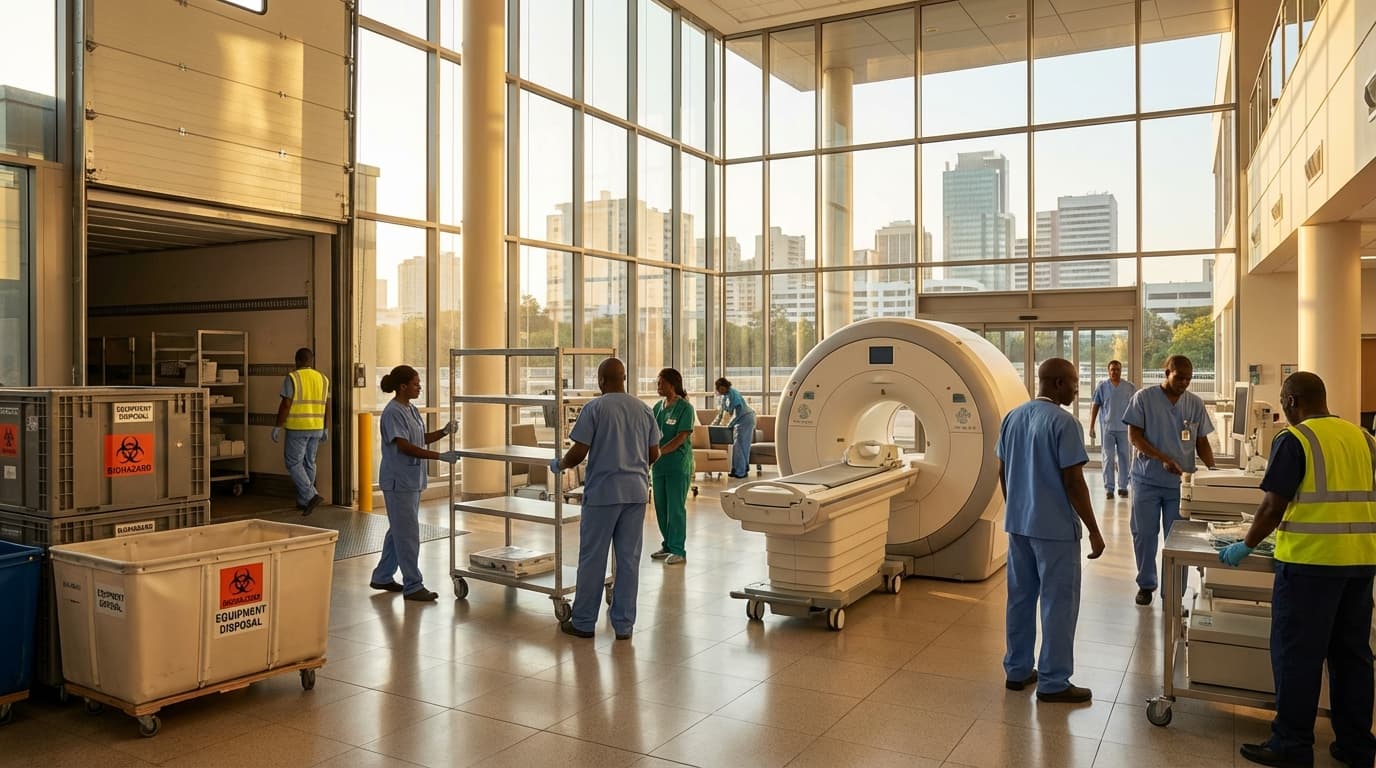
Medical Equipment Relocation Service (Move & Re-Install) in Mali
Engineering Excellence & Technical Support
Medical Equipment Relocation Service (Move & Re-Install) High-standard technical execution following OEM protocols and local regulatory frameworks.
Specialized Medical Equipment Transit
Our Mali-based team is expertly trained in the secure transportation of sensitive medical devices, from imaging machines to laboratory equipment. We utilize climate-controlled vehicles and custom crating to ensure zero impact during transit across Mali's diverse terrain.
Precision Re-Installation & Calibration
Beyond relocation, we offer meticulous re-installation services by certified technicians. We ensure all medical equipment in Mali is calibrated to manufacturer specifications, guaranteeing immediate operational readiness and patient safety post-move.
Nationwide Logistics & Regulatory Compliance
Navigating Mali's regulatory landscape is our expertise. We manage all necessary permits and documentation for medical equipment relocation, providing a seamless, compliant, and efficient service from origin to destination across all Malian regions.
What Is Medical Equipment Relocation Service (Move & Re-install) In Mali?
Medical Equipment Relocation Service (Move & Re-Install) in Mali refers to a specialized logistical and technical process focused on the secure transportation and subsequent operational re-establishment of medical devices and associated infrastructure within Mali. This service encompasses the entire lifecycle of relocation, from initial assessment and planning to the final decommissioning, packing, transit, unpacking, and comprehensive re-installation, including calibration and testing to ensure full functionality and adherence to safety standards. The objective is to minimize downtime, mitigate risks of damage to sensitive equipment, and guarantee operational readiness at the new site.
| Who Needs This Service? | Typical Use Cases |
|---|---|
| Hospitals and Healthcare Facilities undergoing renovation, expansion, or relocation. | Relocation of an entire hospital department (e.g., Radiology, ICU, Operating Theatres). |
| Diagnostic Imaging Centers (X-ray, CT, MRI, Ultrasound) when moving to new premises. | Transfer of specialized laboratory equipment (e.g., PCR machines, DNA sequencers) between research institutions or labs. |
| Medical Research Institutions and Universities transferring equipment for new projects or facilities. | Moving high-value, sensitive medical devices like linear accelerators or surgical robots for facility upgrades. |
| Government health ministries or NGOs establishing new clinics or health posts in different regions of Mali. | Consolidation or redistribution of medical equipment within a multi-site healthcare network. |
| Manufacturers or suppliers of medical equipment requiring installation at a new client site after initial relocation. | Decommissioning and re-installation of equipment during a major IT system migration or infrastructure overhaul. |
Key Components of Medical Equipment Relocation Service (Move & Re-Install):
- Site Assessment and Planning: Comprehensive evaluation of current and future site logistics, power requirements, environmental controls, and accessibility. Development of detailed relocation plans, including risk assessment and mitigation strategies.
- Decommissioning and Disassembly: Expert disconnection of power, data, and utility lines. Careful disassembly of complex equipment by trained technicians, adhering to manufacturer specifications and safety protocols.
- Specialized Packing and Crating: Utilization of custom-designed or manufacturer-approved packing materials and crates to protect sensitive components, optics, and internal mechanisms from shock, vibration, and environmental factors during transit.
- Secure Transportation: Deployment of climate-controlled, vibration-dampened vehicles and specialized handling equipment. Coordination of transport logistics, including permits and escorts if necessary, to ensure safe and timely transit within Mali.
- Unpacking and Reassembly: Careful unpacking and inspection of equipment upon arrival at the new site. Reassembly by qualified personnel, ensuring all components are correctly aligned and secured.
- Re-Installation and Connection: Integration of equipment with site infrastructure, including power, water, medical gases, and IT networks. Verification of all connections and interface compatibility.
- Calibration and Testing: Performance of rigorous calibration procedures using traceable standards to ensure accuracy and reliability. Comprehensive functional testing and performance verification to confirm operational readiness.
- Certification and Documentation: Issuance of certificates of re-installation and functional performance. Provision of updated documentation, including as-built drawings and operational manuals.
- Training and Handover: Familiarization training for end-users on the re-installed equipment's operation and any new features or configurations.
Who Needs Medical Equipment Relocation Service (Move & Re-install) In Mali?
Moving delicate and often large medical equipment requires specialized expertise to ensure it arrives safely and functions correctly at its new location. This specialized Medical Equipment Relocation Service (Move & Re-Install) caters to a specific set of clients in Mali who understand the critical nature of their medical assets and the risks associated with improper handling. These clients prioritize the continuity of care and the longevity of their expensive equipment.
| Customer Type | Key Departments Involved | Specific Equipment Examples | Reasons for Relocation |
|---|---|---|---|
| Hospitals (Public & Private) | Radiology/Imaging, Surgery, Intensive Care Unit (ICU), Laboratory, Pharmacy, Operating Room (OR), Central Sterilization Supply Department (CSSD), Administration | MRI machines, CT scanners, X-ray machines, Ultrasound devices, Anesthesia machines, Ventilators, Surgical microscopes, Sterilizers, Laboratory centrifuges, Hospital beds with integrated systems | Renovations, Expansion, New facility construction, Departmental reorganizations, Equipment upgrades/replacements |
| Clinics and Health Centers | General Practice, Specialized Clinics (e.g., cardiology, ophthalmology), Laboratory, Minor Surgery Suite | ECG machines, Diagnostic imaging equipment (smaller scale), Endoscopes, Sterilization units, Dental chairs and equipment, Basic laboratory analyzers | Relocation due to lease expiry, Expansion of services, Upgrade of facilities, Consolidation of smaller sites |
| Diagnostic Laboratories | Biochemistry, Hematology, Microbiology, Molecular Diagnostics, Pathology | Automated analyzers (e.g., blood gas analyzers, immunoassay analyzers), PCR machines, Microscopes (high-end), Incubators, Centrifuges, Freezers (-80°C), Spectrophotometers | Lab expansion, Relocation to a new facility, Consolidation of multiple labs, Upgrading to more advanced technology |
| Specialized Medical Facilities | Radiology Departments, Surgical Centers, Fertility Clinics, Dialysis Centers | Angiography systems, Laser surgery equipment, IVF incubators and equipment, Dialysis machines, Advanced imaging modalities | Building new centers, Mergers and acquisitions, Relocating to more suitable premises, Upgrading to cutting-edge technology |
| Research Institutions | Biomedical Research Labs, Clinical Trial Units | Flow cytometers, Cell sorters, Gene sequencers, High-resolution microscopes, Bioreactors, Specialized imaging systems for research | Setting up new research labs, Consolidating research facilities, Relocating due to funding or project changes, Upgrading research infrastructure |
| NGOs (Healthcare Focus) | Mobile clinics, Field hospitals, Training centers, Healthcare outreach programs | Portable X-ray units, Ultrasound machines, Sterilization equipment for field use, Diagnostic kits and associated equipment, Basic laboratory equipment | Deployment to new regions, Establishing new healthcare initiatives, Replacing damaged equipment in challenging environments, Setting up temporary medical facilities |
| Government Health Ministries | Public Hospitals, Regional Health Offices, Training Academies, Central Medical Stores | Large-scale imaging equipment, Central laboratory equipment, Sterilization facilities, Rehabilitation equipment, Administrative systems for medical asset management | National health infrastructure development, Upgrading public healthcare facilities, Responding to public health emergencies, Centralization of resources |
Target Customers and Departments in Mali Requiring Medical Equipment Relocation Services
- Hospitals (Public and Private)
- Clinics and Health Centers
- Diagnostic Laboratories
- Specialized Medical Facilities (e.g., imaging centers, surgical centers)
- Research Institutions with Medical Equipment
- Non-Governmental Organizations (NGOs) providing healthcare services
- Government Health Ministries and their associated facilities
Medical Equipment Relocation Service (Move & Re-install) Process In Mali
This document outlines the workflow for a Medical Equipment Relocation Service (Move & Re-Install) in Mali, detailing the process from initial inquiry to the successful completion of the relocation and re-installation. This process is designed to ensure the safe, efficient, and compliant transfer of sensitive medical equipment.
| Phase | Key Activities | Responsible Parties | Key Deliverables/Outcomes | Considerations Specific to Mali |
|---|---|---|---|---|
| Phase 1: Initial Inquiry & Consultation | Client contacts service provider. Initial discussion of equipment type, quantity, origin, destination, and timeline. Understanding of client's specific needs and concerns. | Client, Service Provider (Sales/Consultant) | Understanding of project scope, preliminary needs assessment. | Language barriers (French, Bambara, etc.), local business practices, initial trust building. |
| Phase 2: Site Assessment & Planning | On-site visit(s) to both origin and destination. Detailed inventory of equipment. Assessment of access, power, environmental conditions, and re-installation space. Development of a detailed relocation plan (packing, handling, transport, re-installation sequence). Risk assessment and contingency planning. | Service Provider (Project Manager, Technical Specialists), Client (Facility Manager, Biomedical Engineers) | Detailed equipment inventory, site survey report, comprehensive relocation plan, risk assessment. | Infrastructure quality (road conditions, building access), potential for dust/debris, need for specialized local permissions or escort services, understanding of local electrical standards. |
| Phase 3: Quotation & Agreement | Preparation of a detailed quotation based on the site assessment and relocation plan. Includes costs for labor, materials, transportation, insurance, and any specialized services. Negotiation and signing of a formal service agreement. | Service Provider (Sales/Contracts), Client (Procurement/Finance) | Formal quotation, signed service agreement, clear scope of work, payment terms, insurance coverage. | Currency considerations, payment processing, contract law and enforceability in Mali. |
| Phase 4: Pre-Move Preparations | Scheduling of the relocation. Notification of relevant stakeholders. Securing necessary permits or licenses. Procurement of specialized packing materials. Pre-cleaning and basic preparation of equipment for move. | Service Provider (Project Manager, Logistics Team), Client (Facility Management) | Scheduled relocation dates, confirmed permits, prepared packing materials. | Obtaining local permits (customs, transport), potential for delays due to bureaucracy, coordination with local authorities if required. |
| Phase 5: Dismantling & Packing | Expert dismantling of complex equipment by qualified technicians. Careful packing and labeling of all components. Use of specialized anti-static, shock-absorbent, and climate-controlled packing materials. Protection of delicate parts. | Service Provider (Technical Specialists, Packers) | Dismantled and securely packed equipment, detailed labeling for each item and component, packing list. | Handling of sensitive electronics in potentially variable climate conditions, ensuring robust packing for potentially rough handling during transit. |
| Phase 6: Transportation | Loading of packed equipment onto appropriate transport vehicles (air-conditioned, specialized trucks, etc.). Secure lashing and bracing to prevent movement. Transportation to the destination, adhering to planned routes and timelines. Real-time tracking if available. | Service Provider (Logistics Team, Drivers) | Safely transported equipment at destination. | Road conditions, security of transport routes, potential for unexpected checkpoints or delays, coordination with local transport authorities. |
| Phase 7: Unpacking & Re-installation | Unloading of equipment at the destination. Careful unpacking and inspection for any damage. Re-assembly and installation of equipment in designated locations according to the plan. Connection to utilities (power, water, etc.). | Service Provider (Technical Specialists, Installers), Client (Biomedical Engineers, Facility Staff) | Re-installed equipment in its designated location. | Ensuring compatibility with local utility standards, availability of necessary tools and equipment on-site, proper ventilation and environmental controls. |
| Phase 8: Testing & Calibration | Thorough testing of all functionalities of the re-installed equipment. Calibration to ensure accuracy and performance. Verification against manufacturer specifications and client requirements. | Service Provider (Technical Specialists, Calibration Engineers), Client (Biomedical Engineers, End-Users) | Fully functional and calibrated equipment, test reports, calibration certificates. | Availability of necessary testing equipment, power stability for accurate calibration, ensuring technicians are familiar with specific equipment models. |
| Phase 9: Handover & Documentation | Formal handover of the re-installed equipment to the client. Provision of all relevant documentation, including test reports, calibration certificates, and any user manuals. Training for client staff on operation and basic maintenance if required. | Service Provider (Project Manager, Technical Lead), Client (Biomedical Engineers, End-Users) | Client acceptance of relocated equipment, complete documentation package, trained personnel. | Ensuring documentation is in an understandable format (potentially translated if needed), effective knowledge transfer to local staff. |
| Phase 10: Post-Relocation Support | Follow-up consultation to address any immediate post-relocation issues or questions. Warranty period for the relocation and re-installation services. Ongoing support as per the service agreement. | Service Provider (Customer Support, Project Manager), Client | Client satisfaction, resolution of any outstanding issues. | Establishing clear communication channels for post-move support, understanding local warranty claims processes. |
Medical Equipment Relocation Service (Move & Re-Install) Process in Mali
- Phase 1: Initial Inquiry & Consultation
- Phase 2: Site Assessment & Planning
- Phase 3: Quotation & Agreement
- Phase 4: Pre-Move Preparations
- Phase 5: Dismantling & Packing
- Phase 6: Transportation
- Phase 7: Unpacking & Re-installation
- Phase 8: Testing & Calibration
- Phase 9: Handover & Documentation
- Phase 10: Post-Relocation Support
Medical Equipment Relocation Service (Move & Re-install) Cost In Mali
Relocating and re-installing medical equipment in Mali can be a complex and specialized service. The cost is influenced by a variety of factors, making it difficult to provide a single definitive price. These factors range from the type and size of the equipment to the logistics involved in transporting it across different regions of Mali, as well as the specific technical expertise required for re-installation and calibration. Specialized medical equipment often requires trained technicians, specific handling procedures, and adherence to safety regulations, all of which contribute to the overall cost. Furthermore, the distance of the relocation, the accessibility of the sites, and any necessary permits or customs procedures (if applicable for international movements) will also play a significant role in the final quote. It's crucial to obtain detailed quotes from several reputable service providers specializing in medical equipment logistics and installation to ensure competitive pricing and reliable service.
| Equipment Category | Estimated Cost Range (Mali Francs - XOF) |
|---|---|
| Small Laboratory Equipment (e.g., centrifuges, microscopes) | 200,000 - 750,000 XOF |
| Medium Imaging Equipment (e.g., X-ray machines, ultrasound) | 750,000 - 3,000,000 XOF |
| Large Imaging Equipment (e.g., CT scanners, basic MRI) | 3,000,000 - 15,000,000+ XOF |
| Surgical & Anesthesia Machines | 500,000 - 2,000,000 XOF |
| Specialized Diagnostic Tools & Analyzers | 400,000 - 2,500,000 XOF |
Key Pricing Factors for Medical Equipment Relocation & Re-Installation in Mali:
- Type and Size of Equipment: Larger, heavier, or more delicate equipment (e.g., MRI machines, CT scanners, complex laboratory analyzers) will incur higher costs due to specialized handling, transport, and installation requirements.
- Distance of Relocation: The geographical distance between the origin and destination sites significantly impacts transportation costs, including fuel, vehicle wear and tear, and labor hours.
- Accessibility of Sites: Difficult-to-access locations (e.g., remote areas, buildings with narrow corridors or stairs, sites without proper loading docks) will increase the complexity and cost of the operation.
- Dismantling and Re-assembly Complexity: Some equipment requires intricate dismantling and re-assembly, necessitating specialized tools and skilled technicians, which adds to the labor cost.
- Re-installation and Calibration Requirements: The technical expertise needed to properly re-install and calibrate medical equipment to ensure its functionality and accuracy is a major cost driver. This often involves certified technicians and specialized testing equipment.
- Specialized Handling and Packing: Delicate or sensitive equipment may require custom crating, shock-absorbing materials, and controlled environmental conditions during transit.
- Insurance Coverage: Adequate insurance for the valuable medical equipment during transit and installation is essential and will be factored into the cost.
- Permits and Documentation: Depending on the nature of the equipment and the locations involved, specific permits, licenses, or customs documentation might be required, incurring associated fees.
- Time Sensitivity: Urgent relocation requests may command higher prices due to the need for expedited planning and execution.
- Service Provider Expertise and Reputation: Companies with specialized experience in medical equipment relocation and a proven track record may charge a premium for their expertise and reliability.
Affordable Medical Equipment Relocation Service (Move & Re-install) Options
Relocating medical equipment can be a complex and costly undertaking. Our Affordable Medical Equipment Relocation Service (Move & Re-Install) is designed to alleviate this burden by offering professional, secure, and cost-effective solutions. We understand the critical nature of medical devices and ensure their safe transit and proper re-installation, minimizing downtime for your facility. This service is ideal for clinics, hospitals, research labs, and private practices undergoing renovations, expansions, or moving to new locations.
| Service Component | Description | Potential Cost Savings |
|---|---|---|
| Professional Packing & Crating | Specialized materials and techniques to protect sensitive equipment during transit. | Reduces risk of damage, saving on repair or replacement costs and associated downtime. |
| Specialized Transport Vehicles | Climate-controlled and vibration-dampened vehicles for sensitive equipment. | Protects equipment from environmental damage and physical shock, preventing costly repairs. |
| Certified Technicians for De/Re-Installation | Skilled personnel with expertise in specific medical device categories. | Ensures correct re-installation, reducing the need for expensive external technical support and minimizing downtime. |
| On-Site Calibration & Testing | Initial checks and adjustments to ensure equipment is operational at the new location. | Reduces the need for immediate third-party validation and allows for quicker return to service. |
| Route Optimization & Scheduling | Strategic planning to minimize transit time and disruption. | Lower fuel costs, reduced labor hours, and minimal impact on facility revenue generation. |
| Insurance Coverage | Comprehensive insurance for your valuable medical equipment during the move. | Protects against financial loss in the unlikely event of damage or loss. |
Our Value Bundles & Cost-Saving Strategies
- Comprehensive Move & Re-Install Package: Our flagship offering covers everything from initial assessment and meticulous packing to safe transportation and expert re-installation, calibration, and initial testing at your new site. This eliminates the need to coordinate multiple vendors.
- Pre-Move Planning & Consultation: We offer a free initial consultation to assess your equipment, identify potential challenges, and develop a tailored relocation plan. This proactive approach helps avoid unexpected costs and delays.
- De-Installation & Re-Installation Expertise: Our trained technicians specialize in the delicate handling and re-assembly of a wide range of medical equipment, from diagnostic imaging systems to laboratory centrifuges and patient monitoring devices.
- Secure Transportation & Logistics: We utilize specialized equipment and vehicles to ensure the utmost safety and security of your valuable medical assets during transit. Our logistics team optimizes routes to minimize transit time and associated costs.
- Calibration & Initial Testing: Post-installation, our technicians perform essential calibration and initial operational checks to ensure your equipment is functioning correctly and ready for immediate use, reducing the need for immediate third-party verification.
- Flexible Scheduling Options: We work around your operational needs to schedule moves during off-peak hours or weekends, minimizing disruption to patient care and facility operations, which can represent significant cost savings in terms of lost revenue.
- Volume Discounts: For larger relocations involving multiple pieces of equipment, we offer attractive volume discounts, making comprehensive moves more affordable.
- Bundled Service Packages: Combining move and re-install with optional services like storage, inventory management, or even disposal of old equipment can offer further cost efficiencies.
- Customizable Service Tiers: We offer tiered service levels, allowing you to select the precise level of support you require, from basic transport to full-service white-glove handling and integration.
- Preventative Maintenance Integration: Consider bundling your relocation with a scheduled preventative maintenance check for your equipment post-installation. This proactive approach can save significant costs on potential repairs down the line and ensure optimal performance.
Verified Providers In Mali
In Mali, the landscape of healthcare provision is increasingly reliant on verified providers who demonstrate a commitment to quality, safety, and ethical practices. Franance Health stands out as a leading example of such a provider, offering a comprehensive suite of services backed by stringent credentialing and a dedication to patient well-being. Choosing a verified provider like Franance Health ensures access to competent professionals, adherence to international standards, and a higher level of trust and reliability in your healthcare journey.
| Key Verification Aspect | Franance Health's Commitment |
|---|---|
| Professional Licensing & Certification | Mandatory verification of all medical licenses and certifications to ensure practitioners are legally qualified and competent. |
| Experience & Competence | Thorough assessment of professional experience, surgical outcomes (where applicable), and peer reviews to gauge practical competence. |
| Adherence to Ethical Guidelines | Strict enforcement of ethical codes of conduct and patient rights within their network of providers. |
| Continuous Professional Development | Encouragement and support for ongoing training and education to keep practitioners updated with the latest medical advancements. |
| Patient Feedback & Satisfaction | Regular collection and analysis of patient feedback to continuously improve service delivery and address any concerns. |
Why Franance Health is the Best Choice for Verified Healthcare in Mali:
- Rigorous Credentialing Process: Franance Health meticulously vets all its healthcare professionals, ensuring they possess the necessary qualifications, licenses, and experience.
- Commitment to Quality Standards: Adherence to internationally recognized healthcare quality and safety protocols is a cornerstone of Franance Health's operations.
- Patient-Centric Approach: Every service offered is designed with the patient's needs and comfort as the primary focus.
- Access to Specialized Expertise: Franance Health connects patients with a diverse range of medical specialists, ensuring comprehensive care for various health concerns.
- Transparency and Trust: The verified status of Franance Health providers fosters transparency and builds essential trust between patients and the healthcare system.
Scope Of Work For Medical Equipment Relocation Service (Move & Re-install)
This Scope of Work (SOW) outlines the requirements for the relocation and re-installation of medical equipment at [Client Name] facilities. The service provider is responsible for the safe, efficient, and compliant transportation and setup of all specified equipment from its current location to the designated new site. This document details the technical deliverables and standard specifications to ensure successful project execution.
| Phase | Activity | Deliverables | Standard Specifications/Notes |
|---|---|---|---|
| Planning & Preparation | Site Survey & Assessment | Detailed equipment inventory, site plan, risk assessment report. | On-site assessment of access routes, facility readiness, power/utility requirements, environmental conditions at both locations. Identification of specialized handling needs. |
| Planning & Preparation | Project Planning & Scheduling | Project plan, Gantt chart, communication protocol document. | Detailed schedule outlining all tasks, timelines, and responsible parties. Defined communication channels and reporting frequency. |
| De-installation | Disconnection & Labeling | Properly disconnected and clearly labeled equipment components. | Safe disconnection of all power, data, and utility connections. Comprehensive labeling of all components and cables for accurate re-assembly. Verification of disconnection procedures against manufacturer guidelines. |
| De-installation | Preparation for Transport | Securely packaged equipment, protective coverings. | Use of appropriate padding, crating, or bracing to prevent damage during transit. Removal of sensitive or hazardous materials as per safety protocols. |
| Transportation | Logistics & Transit | Secure and insured transportation of all equipment. | Use of climate-controlled, air-ride vehicles. Real-time tracking capabilities. Adherence to all transportation regulations and insurance requirements for high-value medical equipment. |
| Re-installation | Positioning & Setup | Equipment accurately positioned in designated locations. | Placement of equipment according to approved site plan and manufacturer recommendations. Ensuring adequate clearance for operation and maintenance. |
| Re-installation | Reconnection & Calibration | Fully reconnected and calibrated equipment. | Reconnection of all power, data, and utility lines. Calibration and initial testing performed by qualified technicians according to manufacturer specifications. |
| Re-installation | Functional Testing & Verification | Tested and validated equipment functionality, test logs. | Comprehensive testing of all equipment functions to ensure operational readiness. Verification against manufacturer performance standards. Detailed test results and sign-off. |
| Post-Relocation | Waste Disposal & Site Cleanup | Proper disposal of packaging materials, clean work areas. | Environmentally responsible disposal of all packaging and de-installation waste. Restoration of work areas to a clean and safe condition. |
| Post-Relocation | Project Closeout & Documentation | Final project report, as-built documentation, warranty information. | Comprehensive report detailing project execution, any deviations, lessons learned. Updated documentation reflecting final equipment placement and configuration. |
Key Objectives
- Minimize downtime of critical medical equipment.
- Ensure the integrity and functionality of all relocated equipment.
- Comply with all relevant safety regulations and industry standards.
- Provide professional and efficient moving and re-installation services.
- Maintain clear communication and reporting throughout the project.
Service Level Agreement For Medical Equipment Relocation Service (Move & Re-install)
This Service Level Agreement (SLA) outlines the performance standards for the Medical Equipment Relocation Service (Move & Re-Install) provided by [Your Company Name] to [Client Name]. This SLA details the response times for critical issues and the uptime guarantees for re-installed equipment.
| Service Component | Uptime Guarantee | Response Time (Critical Equipment) | Response Time (Routine Equipment) |
|---|---|---|---|
| Re-installed Medical Equipment (General) | 99.5% Uptime | 2 hours | 4 hours |
| Critical Medical Equipment (Post Re-installation) | 99.9% Uptime | 1 hour | N/A |
Key Definitions
- Service Commencement: The date and time when the relocation of a specific piece of medical equipment officially begins.
- Service Completion: The date and time when the re-installation and functional testing of a specific piece of medical equipment are successfully concluded.
- Critical Equipment: Medical equipment identified by the Client as essential for immediate patient care or operational continuity, where downtime significantly impacts critical services.
- Routine Equipment: Medical equipment not classified as Critical Equipment.
- Downtime: The period during which a re-installed medical equipment is not functional and available for its intended use, excluding scheduled maintenance or planned downtime communicated in advance.
- Response Time: The maximum allowable time from when a reported issue is acknowledged by [Your Company Name] to when technical personnel begin active diagnosis and remediation efforts.
- Uptime Guarantee: The percentage of time the re-installed medical equipment is expected to be operational and available for use.
Frequently Asked Questions

Ready when you are
Let's scope your Medical Equipment Relocation Service (Move & Re-Install) in Mali project in Mali.

Scaling healthcare logistics and technical systems across the entire continent.