
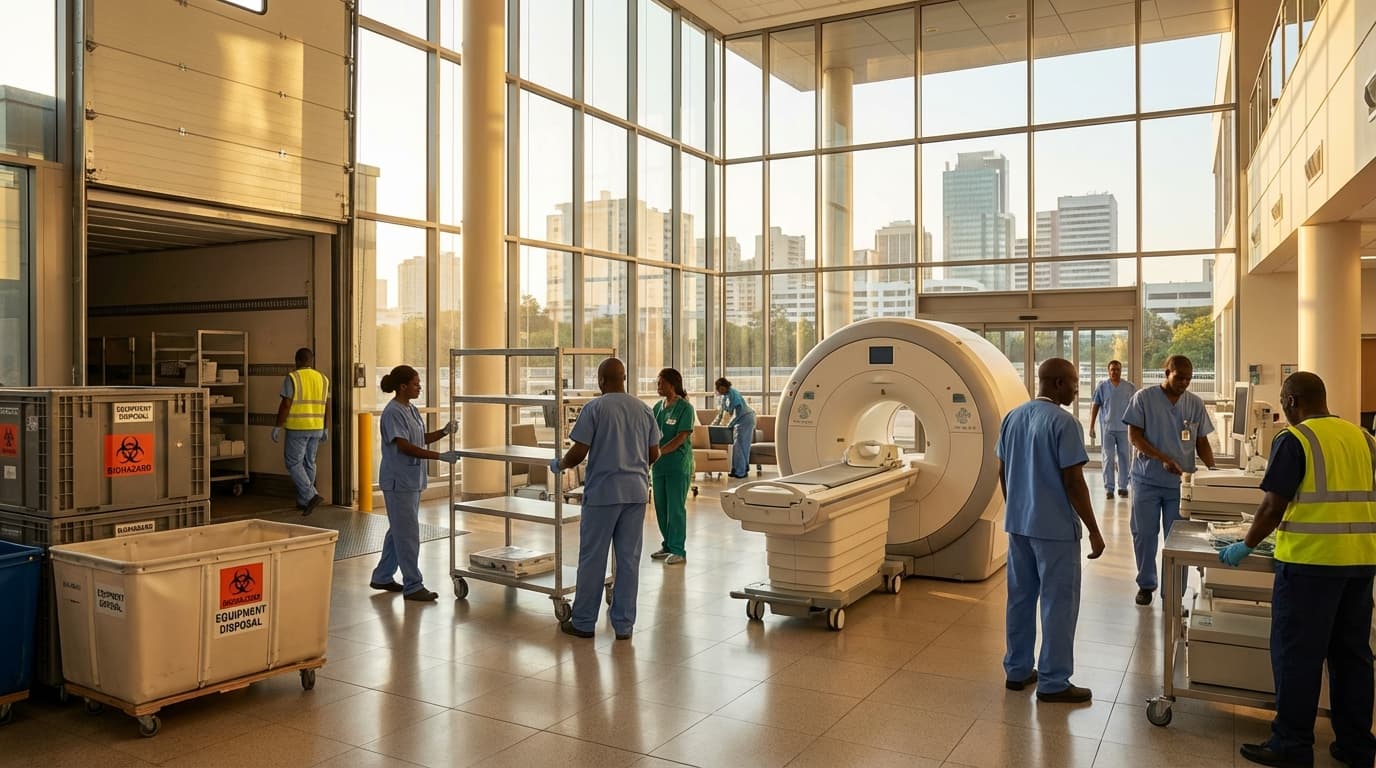
Decommissioning Service for Medical Devices in Mali
Engineering Excellence & Technical Support
Decommissioning Service for Medical Devices High-standard technical execution following OEM protocols and local regulatory frameworks.
Regulatory Compliance Assurance
Our decommissioning service ensures strict adherence to all Malian Ministry of Health regulations and international best practices for medical device disposal. We provide comprehensive documentation for chain of custody and environmental safety, mitigating legal risks for healthcare facilities.
Data Security and Privacy Protection
We employ secure, certified data destruction methods for all medical devices containing patient information. Our process guarantees the complete erasure of sensitive data, safeguarding patient privacy and protecting facilities from data breach liabilities in compliance with Malian data protection laws.
Environmentally Responsible Disposal
Our service prioritizes sustainable and environmentally sound decommissioning. We utilize specialized recycling partners for materials recovery and ensure proper disposal of hazardous components, minimizing ecological impact and supporting Mali's commitment to environmental stewardship.
What Is Decommissioning Service For Medical Devices In Mali?
Decommissioning service for medical devices in Mali refers to the formal process of removing a medical device from active service, rendering it inoperable, and ensuring its safe and environmentally responsible disposal or repurposing. This service is critical for managing the lifecycle of medical equipment, adhering to regulatory requirements, and mitigating potential risks associated with obsolete or damaged devices. It encompasses a range of activities designed to transition a device from operational status to a state of permanent retirement.
| Who Needs Decommissioning Service? | Typical Use Cases | |||||
|---|---|---|---|---|---|---|
| Hospitals and Clinics: Public and private healthcare institutions in Mali that operate and maintain medical equipment. | Healthcare Facilities undergoing Renovation or Relocation: When existing equipment is no longer needed or compatible with new infrastructure. | Healthcare Facilities experiencing Equipment Obsolescence: Devices that have reached the end of their operational lifespan, are beyond repair, or have been superseded by newer technology. | Healthcare Facilities with Damaged or Malfunctioning Equipment: Devices that are irreparable or pose a safety risk to patients and staff. | Medical Equipment Suppliers and Distributors: For end-of-life management of demonstration units or leased equipment. | Government Health Agencies and Ministries: Overseeing the proper management of medical equipment across public health facilities. | Research Institutions: For retired laboratory or diagnostic equipment. |
| End-of-Life Equipment Retirement: Devices that have reached their maximum operational hours or service life and are no longer safe or effective for clinical use. | Technological Upgrades: Replacement of older equipment with advanced, more capable medical technology. | Equipment Failure and Irreparable Damage: Devices that have sustained significant damage and cannot be economically or safely repaired. | Changes in Clinical Protocols or Service Offerings: When equipment is no longer aligned with a facility's current medical services or patient care pathways. | Regulatory Compliance: Adherence to national and international guidelines regarding medical device disposal and environmental safety. | Space Optimization: Freeing up valuable clinical or storage space occupied by defunct equipment. | Data Security Breach Prevention: Ensuring that sensitive patient information is not compromised through improper disposal of data-bearing devices. |
Key Activities in Medical Device Decommissioning:
- Decontamination and Sterilization: Thorough cleaning and sterilization of the device to eliminate biohazards and prevent cross-contamination, especially if the device will be handled by third parties for recycling or refurbishment.
- Data Sanitization/Destruction: For devices storing patient data (e.g., imaging systems, electronic health records interfaces), secure data erasure or physical destruction of storage media is paramount to comply with privacy regulations (though specific Malian regulations for this are evolving).
- Disassembly and Component Segregation: Breaking down the device into its constituent components for proper classification, recycling, or disposal based on material type (e.g., plastics, metals, electronics, hazardous materials).
- Serialization and Documentation: Recording the unique identifier (serial number) of the device, its operational history, decommissioning date, and the method of disposal. This forms a crucial audit trail.
- Environmental Assessment and Disposal: Identifying and managing hazardous components (e.g., mercury, lead, batteries) according to local environmental regulations. Disposal methods may include certified e-waste recycling facilities or approved hazardous waste handlers.
- Certification of Decommissioning: Providing formal documentation confirming that the device has been decommissioned according to established procedures and regulations.
- Asset Management Updates: Removing the device from the healthcare facility's inventory and asset management system.
Who Needs Decommissioning Service For Medical Devices In Mali?
Decommissioning service for medical devices in Mali is crucial for ensuring the safe and compliant disposal of obsolete, damaged, or end-of-life medical equipment. This service is essential for a variety of organizations that operate within the healthcare sector. Proper decommissioning prevents the risk of data breaches from sensitive patient information stored on devices, avoids environmental contamination from hazardous materials, and ensures adherence to national and international regulations regarding waste management and medical device disposal. The process typically involves secure data sanitization, physical dismantling, and environmentally responsible disposal or recycling of components. Target customers range from large public hospitals to small private clinics, as well as research institutions and government health agencies.
| Customer Type | Key Departments Involved | Primary Concerns |
|---|---|---|
| Public Hospitals | Biomedical Engineering, IT Department, Procurement, Administration, Environmental Services | Regulatory compliance, data security, environmental responsibility, cost management, asset lifecycle management |
| Private Clinics & Hospitals | Administration, IT Department, Clinical Operations Management | Data privacy, regulatory compliance, efficient and cost-effective disposal, minimizing disruption |
| NGOs & International Health Organizations | Logistics, Program Management, Finance, Compliance Officer | Donor reporting, adherence to international standards, ethical disposal, impact assessment |
| Government Health Agencies | Regulatory Compliance Units, Public Health Departments, Environmental Protection Agencies, Procurement & Asset Management | National policy enforcement, public safety, environmental protection, efficient resource allocation |
| Medical Research Institutions | IT Department, Laboratory Management, Research Coordinators, Facilities Management | Data security (research data), intellectual property protection, compliance with research ethics, specialized disposal needs |
| Diagnostic Imaging Centers | Radiology Department, IT Department, Biomedical Engineering, Administration | Safe handling of radioactive materials (if applicable), data sanitization, secure transport, environmental disposal of components |
| Distributors/Manufacturers | Service Department, Compliance Department, Sales & Account Management | Reputation management, fulfilling service agreements, responsible product lifecycle management, data security for client systems |
Target Customers & Departments for Medical Device Decommissioning in Mali
- {"item":"Public Hospitals","description":"Large-scale facilities that regularly upgrade or replace a significant volume of medical equipment across various departments. They have a vested interest in compliance and risk mitigation."}
- {"item":"Private Clinics & Hospitals","description":"Mid to small-sized healthcare providers that may lack in-house expertise or resources for complex decommissioning. Cost-effectiveness and efficient service are key."}
- {"item":"Non-Governmental Organizations (NGOs) & International Health Organizations","description":"Organizations operating healthcare programs, often with donor funding, requiring strict adherence to disposal protocols and reporting."}
- {"item":"Government Health Agencies & Ministries of Health","description":"Responsible for regulatory oversight, public health infrastructure, and often managing national medical equipment inventories and disposal policies."}
- {"item":"Medical Research Institutions & Laboratories","description":"Facilities utilizing specialized diagnostic and research equipment that requires secure and compliant decommissioning to protect intellectual property and sensitive data."}
- {"item":"Diagnostic Imaging Centers","description":"Specialized centers with high-value, complex imaging equipment (e.g., X-ray, CT scanners, MRI) that require expert dismantling and disposal."}
- {"item":"Pharmaceutical & Medical Device Distributors/Manufacturers (with service arms)","description":"Companies that may offer decommissioning as part of their service contracts or as a standalone offering for their installed base."}
Decommissioning Service For Medical Devices Process In Mali
This document outlines the workflow for the decommissioning service of medical devices in Mali, covering the process from initial inquiry to the final execution of the service. The decommissioning process is crucial for ensuring the safe and environmentally responsible disposal of outdated, malfunctioning, or end-of-life medical equipment, adhering to national regulations and international best practices. This workflow is designed to be transparent, efficient, and compliant.
| Stage Number | Stage Name | Description | Key Activities | Responsible Parties |
|---|---|---|---|---|
| 1 | Inquiry and Consultation | The initial contact where a healthcare facility expresses their need for medical device decommissioning services. | Contacting the decommissioning service provider, discussing requirements, understanding the scope of work, and initial information gathering. | Healthcare Facility, Decommissioning Service Provider |
| 2 | Site Assessment and Inventory | A thorough evaluation of the facility and a detailed inventory of the medical devices to be decommissioned. | On-site visit, identification of devices, classification by type and hazard level, assessment of accessibility and safety considerations. | Decommissioning Service Provider, Healthcare Facility Representative |
| 3 | Proposal and Quotation | Presentation of a detailed plan and cost estimate for the decommissioning service. | Development of a customized proposal outlining the methodology, timeline, safety protocols, environmental considerations, and associated costs. | Decommissioning Service Provider |
| 4 | Agreement and Scheduling | Formalizing the service agreement and setting a date for the decommissioning activities. | Review and signing of the service contract, negotiation of terms, and mutual agreement on the decommissioning schedule. | Healthcare Facility, Decommissioning Service Provider |
| 5 | Pre-Decommissioning Preparation | Ensuring all necessary preparations are in place before the on-site execution. | Securing necessary permits, coordinating with facility staff, ensuring proper PPE is available, preparing specialized tools and equipment. | Decommissioning Service Provider, Healthcare Facility |
| 6 | On-site Decommissioning Execution | The physical process of safely disabling and preparing the medical devices for removal. | Safe disassembly, removal of hazardous materials (e.g., mercury, batteries), data sanitization (if applicable), deactivation of energy sources. | Decommissioning Service Provider |
| 7 | Waste Management and Transportation | Proper handling, packaging, and transportation of decommissioned devices and associated waste. | Segregation of waste streams, appropriate packaging according to hazard class, collection by licensed transporters, transport to designated disposal or recycling facilities. | Decommissioning Service Provider, Licensed Waste Haulers |
| 8 | Documentation and Certification | Providing official records and certificates to confirm the completion of the decommissioning process. | Issuance of a decommissioning certificate, waste manifests, and any required environmental compliance reports. | Decommissioning Service Provider |
| 9 | Post-Decommissioning Follow-up | Ensuring client satisfaction and addressing any outstanding issues. | Client feedback collection, addressing any queries, and maintaining records for future reference. | Decommissioning Service Provider, Healthcare Facility |
Key Stages in Medical Device Decommissioning in Mali
- Inquiry and Consultation
- Site Assessment and Inventory
- Proposal and Quotation
- Agreement and Scheduling
- Pre-Decommissioning Preparation
- On-site Decommissioning Execution
- Waste Management and Transportation
- Documentation and Certification
- Post-Decommissioning Follow-up
Decommissioning Service For Medical Devices Cost In Mali
Decommissioning medical devices in Mali involves several critical steps, from data sanitization to environmentally sound disposal. The cost of these services can vary significantly based on a multitude of factors, making it difficult to provide a single fixed price. These factors are essential for healthcare facilities and service providers to understand when budgeting for such operations. Pricing typically ranges in the Malian CFA franc (XOF).
| Device Category | Estimated Cost Range (XOF) | Notes |
|---|---|---|
| Small Diagnostic/Lab Equipment (e.g., BP monitors, microscopes) | 15,000 - 50,000 | Basic data removal (if applicable) and standard disposal. |
| Medium Imaging/Surgical Equipment (e.g., X-ray machines, basic ultrasound) | 75,000 - 250,000 | May involve specialized dismantling, data sanitization, and regulated disposal. |
| Large/Complex Medical Systems (e.g., CT scanners, MRI machines, high-end surgical systems) | 300,000 - 1,500,000+ | Significant expertise required for safe dismantling, advanced data destruction, and complex environmental disposal. Costs can escalate rapidly for the most advanced systems. |
| IT Equipment connected to Medical Devices (e.g., servers, workstations) | 20,000 - 100,000 | Focus on secure data wiping or physical destruction of storage media. |
Key Pricing Factors for Medical Device Decommissioning in Mali
- Device Type and Complexity: Simple devices like basic diagnostic tools will generally cost less to decommission than complex imaging equipment (e.g., MRI, CT scanners) or surgical robots, which require specialized handling and disposal methods.
- Number of Devices: Bulk decommissioning projects often benefit from economies of scale, leading to a lower per-unit cost. Conversely, decommissioning a single device will likely incur higher individual service fees.
- Data Sanitization Requirements: Devices storing sensitive patient data (e.g., EHR systems, imaging workstations) require robust data erasure or physical destruction to comply with privacy regulations. The rigor of this process directly impacts cost.
- Environmental Disposal Regulations: Mali, like many countries, has regulations regarding the disposal of electronic waste and medical equipment. Compliance with these regulations, including proper recycling or hazardous waste management, will affect the overall cost.
- Transportation and Logistics: The distance from the healthcare facility to the decommissioning and disposal site, as well as the accessibility of the facility, will influence transportation costs. This includes fuel, vehicle maintenance, and labor.
- Service Provider Expertise and Certification: Specialized companies with experienced technicians, certified processes, and appropriate licensing may charge higher fees. However, this often ensures a higher level of service and compliance.
- Dismantling and Deconstruction: For larger or more integrated systems, initial dismantling or deconstruction may be required on-site before the device can be transported, adding to the labor and time involved.
- Reporting and Certification: The requirement for detailed decommissioning reports, certificates of data destruction, and waste disposal manifests can add administrative costs.
- Urgency of Service: Expedited decommissioning services may come with a premium charge.
- Market Competition: The presence and competitiveness of decommissioning service providers in Mali can influence pricing.
Affordable Decommissioning Service For Medical Devices Options
Decommissioning medical devices is a crucial but often overlooked aspect of healthcare operations. Ensuring proper data sanitization, physical destruction, and regulatory compliance can be complex and costly. This document outlines affordable decommissioning service options, focusing on the value of service bundles and effective cost-saving strategies to help healthcare facilities manage this process efficiently and economically.
| Value Bundle | Key Inclusions | Target Audience | Cost-Saving Potential |
|---|---|---|---|
| Essential Bundle | NIST 800-88 Data Wiping, Certificate of Destruction, Basic Asset Tagging | Small clinics, low-risk device fleets, budget-conscious organizations | Lower upfront cost, focuses only on critical compliance needs. |
| Proactive Bundle | All Essential Bundle features + Environmental Disposal, Inventory Management, Standardized Reporting | Mid-sized hospitals, standard device replacement cycles, organizations seeking process efficiency | Bulk discounts on disposal, streamlined asset management reduces labor, fewer individual service calls. |
| Advanced Security Bundle | All Proactive Bundle features + Advanced Data Sanitization (e.g., DoD 5220.22-M), Secure Chain-of-Custody, Certified Recycling & Component Recovery | Large healthcare networks, facilities with strict data privacy regulations (HIPAA, GDPR), high-value device portfolios | Potential revenue from component resale, minimized risk of data breaches and associated fines, optimized resource allocation. |
Understanding Decommissioning Service Options
- {"title":"Basic Decommissioning","description":"Includes essential services like data wiping to established standards (e.g., NIST 800-88), physical destruction of media, and basic certification of destruction. Suitable for low-risk devices with less sensitive data."}
- {"title":"Standard Decommissioning","description":"Builds upon basic services by adding asset tracking, inventory management, and environmental disposal of non-sensitive components. Offers a good balance of essential services and cost-effectiveness for most common medical devices."}
- {"title":"Comprehensive Decommissioning","description":"Encompasses all standard services plus advanced data sanitization for highly sensitive data, secure chain-of-custody documentation, detailed reporting, and potential recycling of valuable components. Ideal for high-risk devices or those with stringent compliance requirements."}
Verified Providers In Mali
When seeking healthcare services in Mali, the ability to identify and engage with verified providers is paramount to ensuring quality and trustworthy care. Franance Health stands out as a leading platform that rigorously vets and credentials healthcare professionals and facilities across Mali. This commitment to verification is not merely a formality; it is a cornerstone of patient safety and confidence.
| Credential Aspect | Franance Health's Verification Process | Patient Benefit |
|---|---|---|
| Professional Licenses & Certifications | Rigorous cross-referencing with official licensing bodies in Mali and relevant international organizations. | Ensures practitioners have met the minimum educational and regulatory requirements for their field. |
| Educational Background | Verification of degrees, diplomas, and specialization certificates from accredited institutions. | Confirms that providers have received appropriate training and expertise. |
| Work Experience & Affiliations | Confirmation of past and current employment, hospital affiliations, and references. | Provides insight into a provider's practical experience and reputation within the medical community. |
| Ethical Conduct & Disciplinary Records | Checks for any history of malpractice claims or disciplinary actions from professional boards. | Minimizes the risk of encountering providers with compromised ethical standards. |
| Facility Standards (for clinics/hospitals) | Assessment of infrastructure, equipment, hygiene, and operational protocols. | Guarantees that patients will receive care in a safe and well-equipped environment. |
Why Franance Health Credentials Matter in Mali
- Enhanced Patient Safety: Franance Health's verification process includes thorough background checks, license validation, and assessments of professional qualifications. This significantly reduces the risk of encountering unqualified or fraudulent practitioners.
- Assurance of Quality Care: Verified providers on Franance Health have demonstrated adherence to established medical standards and best practices. This translates to a higher likelihood of receiving effective and appropriate treatment.
- Streamlined Access to Reliable Healthcare: By aggregating and verifying providers, Franance Health simplifies the process of finding trustworthy doctors, clinics, and hospitals, saving patients time and reducing stress.
- Transparency and Accountability: Franance Health's system promotes transparency by clearly indicating verified status. This fosters accountability within the healthcare sector, encouraging providers to maintain high ethical and professional standards.
- Support for Local Healthcare Ecosystem: By championing verified providers, Franance Health indirectly supports the growth and professionalization of the Malian healthcare system, benefiting the entire community.
Scope Of Work For Decommissioning Service For Medical Devices
This Scope of Work (SOW) outlines the services required for the safe and compliant decommissioning of medical devices. The objective is to ensure that medical devices are rendered inoperable, data is securely erased, and the devices are disposed of or repurposed in accordance with all applicable regulations and environmental standards. This document details the technical deliverables and standard specifications that will guide the decommissioning process.
| Category | Specification/Requirement | Details/Description | Verification Method |
|---|---|---|---|
| Device Identification & Inventory | Unique Device Identifier (UDI) or Serial Number Tracking | All devices to be decommissioned will be identified by UDI or serial number. A comprehensive inventory will be maintained throughout the process. | Inventory log, site walk-through verification |
| Device Assessment | Functional and Condition Assessment | Each device will be assessed to determine its current functional status and overall condition to inform the decommissioning strategy (e.g., repair, reuse, recycle, dispose). | Assessment checklist, photographic evidence |
| Safety Procedures | Hazardous Material Identification & Management | Identification and proper handling of any hazardous materials (e.g., batteries, mercury, radioactive components) as per manufacturer's guidelines and regulatory requirements. | Safety data sheets (SDS) review, pre-decommissioning site inspection |
| Safety Procedures | Electrical Safety Compliance | All power sources will be safely disconnected and verified. Residual electrical charge will be discharged where applicable. | Lockout/Tagout procedures, electrical testing |
| Data Security & Destruction | Data Erasure Standards | Secure erasure of all Protected Health Information (PHI) and sensitive data from device memory. Compliance with HIPAA, GDPR, or equivalent standards (e.g., NIST 800-88 Rev. 1). | Data destruction certificate, software verification reports |
| Data Security & Destruction | Physical Destruction (if applicable) | For devices where data cannot be reliably erased, physical destruction of storage media will be performed. | Witnessed destruction, photographic/video evidence |
| Decommissioning Process | Disassembly & Component Segregation | Safe disassembly of devices into component parts for proper disposal, recycling, or reuse. Segregation based on material type and hazardous content. | Disassembly checklist, waste segregation logs |
| Decommissioning Process | Cleaning & Decontamination | Thorough cleaning and decontamination of devices to prevent cross-contamination and ensure safe handling, especially if devices are to be reused or donated. | Cleaning logs, visual inspection |
| Environmental Compliance | Waste Disposal & Recycling | Disposal of non-recyclable components in accordance with local, state, and federal environmental regulations. Maximizing recycling of materials where possible. | Waste manifest, licensed disposal facility receipts, recycling certificates |
| Environmental Compliance | Record Keeping | Maintain detailed records of all decommissioning activities, including inventory, data destruction, disposal, and recycling. | Audit of record logs, data integrity checks |
| Reporting & Documentation | Decommissioning Plan | A detailed plan outlining the scope, methodology, safety protocols, and timeline for the decommissioning of each device or category of devices. | Review and approval of the plan document |
| Reporting & Documentation | Decommissioning Report | A comprehensive report summarizing all decommissioning activities, including device inventory, data destruction confirmation, disposal/recycling details, and any deviations from the plan. | Review and acceptance of the report |
| Reporting & Documentation | Certificates of Compliance | Documentation confirming compliance with all relevant regulations and standards (e.g., HIPAA, environmental laws). | Review of submitted certificates |
Technical Deliverables
- Decommissioning Plan Document
- Decommissioning Report
- Data Destruction Certificates
- Asset Disposition Records
- Waste Manifests
- Certificates of Compliance
Service Level Agreement For Decommissioning Service For Medical Devices
This Service Level Agreement (SLA) outlines the response times and uptime guarantees for the Decommissioning Service for Medical Devices provided by [Your Company Name] (hereinafter referred to as "Provider") to [Client Company Name] (hereinafter referred to as "Client"). This SLA is an addendum to the Master Services Agreement (MSA) between the Provider and the Client.
| Service Component | Priority Level | Response Time Target | Resolution Time Target | Uptime Guarantee |
|---|---|---|---|---|
| Decommissioning Service Request (New Device) | Critical Device | 1 Business Hour | 4 Business Hours | N/A (Service is event-driven) |
| Decommissioning Service Request (New Device) | High Priority Device | 2 Business Hours | 8 Business Hours | N/A (Service is event-driven) |
| Decommissioning Service Request (New Device) | Standard Priority Device | 4 Business Hours | 3 Business Days | N/A (Service is event-driven) |
| Service Outage/Performance Degradation | Critical Device | 1 Business Hour | 4 Business Hours | 99.9% (Monthly) |
| Service Outage/Performance Degradation | High Priority Device | 2 Business Hours | 8 Business Hours | 99.5% (Monthly) |
| Service Outage/Performance Degradation | Standard Priority Device | 4 Business Hours | 3 Business Days | 99.0% (Monthly) |
Definitions
- Decommissioning Service: The complete and secure process of retiring medical devices from active use, including data sanitization, physical destruction (if required), asset tracking, and certification of disposal, in compliance with relevant regulations.
- Critical Device: A medical device whose failure or malfunction would result in immediate, severe harm or death to a patient.
- High Priority Device: A medical device whose failure or malfunction would result in significant patient harm or disruption to critical healthcare services.
- Standard Priority Device: A medical device whose failure or malfunction would result in minor patient inconvenience or non-critical disruption to services.
- Downtime: The period during which the Decommissioning Service is unavailable or unusable for the Client.
- Response Time: The maximum time within which the Provider will acknowledge a request for service and begin working towards a resolution.
- Resolution Time: The maximum time within which the Provider will fully resolve a service issue, restoring the Decommissioning Service to its intended operational state.
- Uptime Guarantee: The guaranteed percentage of time that the Decommissioning Service will be available and functional for the Client.
- Scheduled Maintenance: Pre-planned periods of downtime for updates, upgrades, or maintenance, communicated to the Client in advance.
Frequently Asked Questions

Ready when you are
Let's scope your Decommissioning Service for Medical Devices in Mali project in Mali.

Scaling healthcare logistics and technical systems across the entire continent.