
Uptime, Downtime & Root-Cause Analysis Reporting Service in Mali
Engineering Excellence & Technical Support
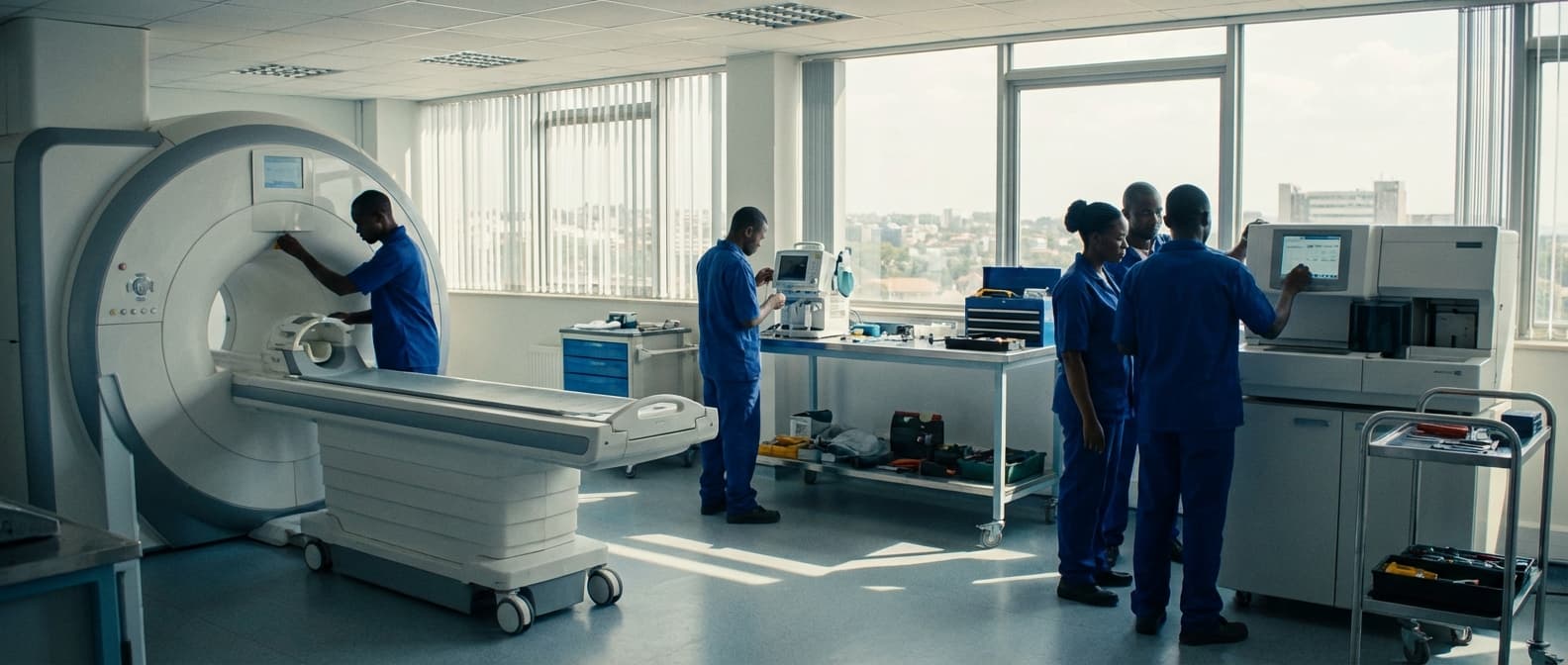
Uptime, Downtime & Root-Cause Analysis Reporting Service High-standard technical execution following OEM protocols and local regulatory frameworks.
Proactive Uptime Assurance
Our advanced 24/7 monitoring infrastructure continuously tracks critical infrastructure across Mali, instantly detecting any deviations from optimal performance. This ensures immediate alerts to potential issues before they impact your services.
Rapid Downtime Remediation
Upon detecting downtime, our system triggers automated incident response workflows, providing real-time visibility to our expert technical teams in Mali. This drastically reduces Mean Time To Resolution (MTTR), minimizing service disruption.
Data-Driven Root Cause Identification
We provide comprehensive, automated root-cause analysis reports utilizing advanced telemetry and historical data. This empowers your organization with the precise insights needed to prevent recurring issues and optimize infrastructure resilience in Mali.
What Is Uptime, Downtime & Root-cause Analysis Reporting Service In Mali?
Uptime, Downtime & Root-Cause Analysis Reporting Service in Mali refers to a specialized offering designed to monitor the operational availability of IT systems, applications, and infrastructure within Malian organizations. This service provides comprehensive reporting on periods of service availability (uptime) and unavailability (downtime), coupled with in-depth analysis to identify the underlying causes of any disruptions. The objective is to enhance system reliability, minimize service interruptions, and facilitate continuous service improvement through data-driven insights.
| Who Needs It? | Typical Use Cases | |||||||
|---|---|---|---|---|---|---|---|---|
| IT Operations Teams: Responsible for maintaining the availability and performance of critical IT infrastructure and services. | System Administrators: Overseeing server health, network connectivity, and application stability. | Network Engineers: Monitoring network devices, bandwidth utilization, and potential bottlenecks. | Application Support Teams: Ensuring the continuous functionality of business-critical applications. | Business Continuity & Disaster Recovery (BC/DR) Planners: Evaluating system resilience and identifying areas for improvement. | DevOps Engineers: Implementing and maintaining CI/CD pipelines, focusing on application deployment reliability. | Managed Service Providers (MSPs): Offering outsourced IT management and support to their clients. | CIOs & IT Management: Requiring oversight of IT service delivery, cost optimization, and risk management. | Regulatory Bodies (in specific sectors): Mandating service availability and robust incident reporting. |
| Financial Institutions (Banks, Microfinance): Ensuring uninterrupted access to banking systems, ATM networks, and online transaction processing. | Telecommunications Companies: Maintaining network uptime for voice, data, and internet services. | Government Agencies: Guaranteeing the availability of public services, citizen portals, and administrative systems. | Healthcare Providers (Hospitals, Clinics): Ensuring critical patient management systems, diagnostic equipment interfaces, and communication platforms are always accessible. | E-commerce and Retail Businesses: Preventing lost revenue due to website outages or payment gateway failures. | Cloud Service Providers: Demonstrating Service Level Agreement (SLA) compliance and assuring customer uptime. | Manufacturing and Industrial Control Systems: Minimizing production stoppages caused by IT or network disruptions. | Logistics and Transportation: Maintaining the operational integrity of tracking, scheduling, and communication systems. | Energy and Utilities: Ensuring the reliable operation of grid management and customer service platforms. |
Key Components of the Service:
- Uptime Monitoring: Continuous, real-time surveillance of system and application performance to establish baseline availability metrics.
- Downtime Detection & Alerting: Proactive identification of service interruptions, coupled with automated notifications to designated personnel via predefined channels (e.g., email, SMS, incident management platforms).
- Incident Logging & Correlation: Comprehensive recording of all detected incidents, including timestamps, affected components, error codes, and initial user impact.
- Root-Cause Analysis (RCA): Systematic investigation methodologies (e.g., Five Whys, Fishbone diagrams, Fault Tree Analysis) applied to downtime events to pinpoint the fundamental, originating cause, rather than just the symptoms.
- Performance Metrics Collection: Gathering of relevant performance indicators (e.g., CPU utilization, memory usage, network latency, error rates) during and preceding downtime events for contextual analysis.
- Reporting & Dashboards: Generation of detailed reports and interactive dashboards visualizing uptime percentages, downtime durations, incident trends, and RCA findings. These are crucial for strategic decision-making and stakeholder communication.
- Remediation Recommendation: Based on RCA findings, providing actionable recommendations for corrective actions and preventative measures to mitigate future occurrences.
Who Needs Uptime, Downtime & Root-cause Analysis Reporting Service In Mali?
In Mali's evolving business landscape, robust operational reliability is paramount. Downtime can lead to significant financial losses, reputational damage, and decreased customer satisfaction. To combat these challenges, businesses and government entities require sophisticated Uptime, Downtime, and Root-Cause Analysis Reporting Services. These services are crucial for identifying, understanding, and rectifying the underlying issues that cause disruptions, thereby optimizing system performance and ensuring business continuity.
| Target Customer Segment | Key Departments/Roles |
|---|---|
| Telecommunications Companies | Network Operations Center (NOC), IT Operations, Service Assurance, Engineering |
| Financial Institutions (Banks, Insurance) | IT Operations, Business Continuity Planning (BCP), Risk Management, Application Support |
| E-commerce & Online Services | DevOps, Site Reliability Engineering (SRE), Customer Support, Operations Management |
| Government Agencies (Utilities, Transport, Health) | IT Department, Operations Management, Public Service Delivery Units, Infrastructure Management |
| Mining & Extractive Industries | IT Operations, Plant Operations, Logistics Management, Safety & Compliance |
| Logistics & Supply Chain Companies | Operations Management, IT Department, Fleet Management, Warehouse Management |
| Healthcare Providers | IT Department, Hospital Administration, Clinical Engineering, Patient Services |
| Manufacturing & Industrial Sectors | Production Management, Maintenance Department, IT Operations, Quality Control |
| Technology Service Providers & SaaS Companies | Customer Success, Technical Support, Engineering, Product Management |
Who Needs Uptime, Downtime & Root-Cause Analysis Reporting Service in Mali?
- Businesses reliant on continuous operations (e.g., telecommunications, finance, e-commerce).
- Government agencies providing essential services (e.g., utilities, public transportation, healthcare).
- Organizations managing critical infrastructure (e.g., energy grids, water supply, logistics).
- Companies undergoing digital transformation and increasing their reliance on IT systems.
- Any entity seeking to improve efficiency, reduce operational costs, and enhance user experience.
Uptime, Downtime & Root-cause Analysis Reporting Service Process In Mali
This document outlines the workflow for the Uptime, Downtime & Root-Cause Analysis Reporting Service provided in Mali. This service aims to help organizations understand and improve the reliability of their systems and operations by meticulously tracking uptime, identifying downtime incidents, and performing thorough root-cause analyses.
| Stage | Description | Key Activities | Deliverables | Responsible Parties |
|---|---|---|---|---|
| The potential client contacts the service provider to express interest in uptime, downtime, and root-cause analysis reporting. | Initial contact, preliminary discussion of needs, request for service information. | Service brochure, initial consultation meeting. | Prospective Client, Service Provider Sales/Consultation Team |
| Detailed understanding of the client's systems, assets, and reporting requirements. A formal agreement is established. | Needs assessment, defining critical systems, establishing reporting frequency and format, Service Level Agreement (SLA) negotiation, contract signing. | Detailed scope of work document, formal service contract/agreement. | Client's Technical/Operations Team, Service Provider Technical/Project Management Team |
| Implementing the necessary tools and configurations to monitor system uptime and log downtime events. | Installing monitoring agents, configuring sensors, setting up network monitoring tools, defining alert thresholds, establishing data logging mechanisms. | Configured monitoring environment, initial data validation reports. | Service Provider Technical Implementation Team, Client's IT Infrastructure Team |
| Continuous observation of the client's systems for any deviations from expected operational status. | Real-time system monitoring, automated alert generation for downtime events, manual incident logging by client (if applicable). | Downtime alerts, incident logs. | Service Provider Monitoring Center, Client's Operations Personnel |
| Investigating identified downtime incidents to determine their underlying causes. | Collecting logs (system, application, network), analyzing error messages, interviewing relevant personnel, recreating the incident (if possible), applying diagnostic tools. | Preliminary incident reports, identified contributing factors, potential root causes. | Service Provider Technical Analysts, Client's Subject Matter Experts |
| Compiling all collected data and analysis into a comprehensive report for the client. | Aggregating uptime and downtime metrics, detailing each incident with its timeline and impact, documenting the root-cause analysis findings, recommending immediate actions. | Formal Uptime & Downtime Report, Root-Cause Analysis Report. | Service Provider Reporting Team |
| The client reviews the submitted report, and both parties collaborate on developing a plan to address the identified root causes. | Report review meetings, discussion of findings, prioritization of corrective actions, development of a remediation plan. | Action plan document, agreed-upon corrective measures. | Client's Management/Operations Team, Service Provider Project Manager/Consultant |
| Monitoring the effectiveness of implemented actions and refining the reporting process for ongoing improvement. | Tracking the implementation of corrective actions, re-monitoring systems to verify improvements, periodic review of the reporting service's effectiveness, feedback collection. | Performance improvement metrics, updated monitoring configurations, enhanced reporting templates. | Service Provider Project Manager/Consultant, Client's Operations Team |
Service Workflow Stages
- Inquiry & Service Request
- Scope Definition & Agreement
- Data Collection Setup & Configuration
- Monitoring & Incident Identification
- Data Analysis & Root-Cause Investigation
- Report Generation & Submission
- Review & Action Planning
- Follow-up & Continuous Improvement
Uptime, Downtime & Root-cause Analysis Reporting Service Cost In Mali
This report outlines the typical cost of Uptime, Downtime, and Root-Cause Analysis (RCA) reporting services in Mali, considering various pricing factors and providing estimated ranges in the local currency, the Malian Franc (XOF). These services are crucial for businesses to monitor their operational availability, identify performance bottlenecks, and implement corrective actions to minimize disruptions and optimize efficiency.
| Service Tier/Scope | Estimated Monthly Cost (XOF) | Typical Features Included |
|---|---|---|
| Basic Uptime Monitoring (Limited Systems) | 50,000 - 150,000 | Website/Server uptime checks, basic alert notifications, standard monthly reports. |
| Standard Uptime & Downtime Reporting (Medium Infrastructure) | 150,000 - 400,000 | Multi-system monitoring, downtime duration tracking, basic root cause identification (e.g., network issue, server overload), weekly/monthly reports. |
| Comprehensive Uptime, Downtime & RCA (Complex Infrastructure) | 400,000 - 1,000,000+ | In-depth performance monitoring, advanced RCA with log analysis, incident trend analysis, customizable dashboards, dedicated support, proactive recommendations, detailed quarterly/annual reports. |
| Enterprise-Level Solution (Large-Scale Operations) | 1,000,000 - 3,000,000+ | Full-spectrum monitoring across diverse environments (cloud, on-prem, IoT), sophisticated AI-driven RCA, predictive analytics, custom SLA management, dedicated team, continuous improvement strategies. |
| Ad-Hoc RCA Consultation (Per Incident) | 75,000 - 250,000 | On-demand analysis of specific incidents, detailed report on a single event's root cause and resolution. |
Key Pricing Factors for Uptime, Downtime & RCA Reporting Services in Mali
- {"title":"Scope of Services","description":"The breadth of services offered is a primary cost driver. This includes the number of systems or applications monitored, the depth of monitoring (e.g., basic uptime checks vs. detailed performance metrics), and the level of detail in RCA reports."}
- {"title":"Complexity of Infrastructure","description":"Businesses with complex, multi-layered IT infrastructures (e.g., cloud, on-premises, hybrid environments) will generally incur higher costs due to the intricate nature of monitoring and analysis."}
- {"title":"Data Volume and Retention","description":"The amount of data generated by monitoring and the required data retention period can influence costs, especially if significant storage and processing power are needed."}
- {"title":"Reporting Frequency and Customization","description":"The frequency of reports (e.g., daily, weekly, monthly) and the need for custom report formats or dashboards will impact pricing. Highly customized reports often come at a premium."}
- {"title":"Level of Support and SLA","description":"The availability of different support tiers (e.g., 24/7 support, dedicated account managers) and the Service Level Agreements (SLAs) for response and resolution times will affect the overall cost."}
- {"title":"Vendor Experience and Reputation","description":"Established vendors with a proven track record and strong reputation in the Malian market may command higher prices due to their expertise and reliability."}
- {"title":"Technology Stack Used","description":"The specific monitoring and analysis tools employed by the service provider can influence costs. Some advanced or proprietary tools may have higher licensing or operational expenses."}
- {"title":"Geographic Reach (if applicable)","description":"While primarily focused on Mali, if the service needs to monitor assets in multiple locations within or outside Mali, this can add complexity and cost."}
Affordable Uptime, Downtime & Root-cause Analysis Reporting Service Options
Our Uptime, Downtime, and Root-Cause Analysis (RCA) Reporting Service offers flexible and cost-effective solutions to help your organization understand and improve system reliability. We provide clear, actionable reports designed to minimize disruptions and enhance performance. This service is crucial for identifying the underlying causes of outages, preventing recurrence, and optimizing resource allocation. By leveraging our expertise, you gain valuable insights into your IT infrastructure's health and operational efficiency.
| Value Bundle Name | Core Features | Target Audience | Monthly Cost (Starting) | Key Value Proposition |
|---|---|---|---|---|
| Essential Uptime Insights | Basic uptime monitoring, daily/weekly summary reports, incident notification. | Small businesses, startups, or departments with limited IT budgets. | $49 | Provides fundamental visibility into system availability at a low entry cost. |
| Proactive Downtime Prevention | All 'Essential' features plus: real-time downtime alerts, detailed incident logs, basic RCA for major incidents. | Growing businesses, e-commerce platforms, or IT teams needing to reduce immediate disruptions. | $149 | Focuses on rapid detection and initial analysis to minimize the impact of outages. |
| Strategic Reliability Optimization | All 'Proactive' features plus: advanced RCA methodology, trend analysis, proactive recommendations, quarterly deep-dive reports. | Medium to large enterprises, mission-critical applications, or organizations prioritizing long-term system stability. | $399 | Enables data-driven decision-making for continuous improvement and robust system resilience. |
| Enterprise Performance Suite | Dedicated account manager, custom SLA monitoring, pre-incident analysis, historical data warehousing, personalized executive summaries. | Large enterprises, highly regulated industries, or organizations with complex IT environments. | Custom (Contact Us) | Tailored solutions for maximum control, in-depth understanding, and strategic alignment with business goals. |
Key Service Components:
- Automated Uptime Monitoring & Reporting
- Comprehensive Downtime Incident Tracking
- In-depth Root-Cause Analysis (RCA) Investigations
- Actionable Recommendations for Improvement
- Historical Performance Trend Analysis
- Customizable Report Formats & Frequencies
Verified Providers In Mali
In Mali's burgeoning healthcare landscape, identifying trustworthy and high-quality medical facilities is paramount for ensuring optimal patient outcomes. Verified providers, particularly those with credentials like those offered by Franance Health, stand out as the most reliable choice. Franance Health's rigorous vetting process and commitment to upholding the highest medical standards mean that facilities bearing their accreditation have demonstrated excellence in patient care, facility management, and adherence to international best practices. This assures patients that they will receive competent and compassionate medical attention.
| Credential Aspect | Franance Health Verification | Benefit to Patients |
|---|---|---|
| Clinical Competence | Assessed through review of physician qualifications, experience, and specialized training. | Ensures patients are treated by skilled and knowledgeable medical professionals. |
| Facility Standards | Evaluates infrastructure, equipment, and maintenance to ensure a safe and functional environment. | Provides a secure and well-equipped setting for medical procedures and recovery. |
| Patient Care Protocols | Examines patient management, communication, and satisfaction measures. | Guarantees a patient-centered approach with effective communication and responsive care. |
| Infection Control | Verifies adherence to stringent hygiene and sterilization practices. | Minimizes the risk of hospital-acquired infections, ensuring a safer healing environment. |
| Ethical Practices | Ensures compliance with medical ethics and regulatory guidelines. | Builds trust and confidence in the integrity of the healthcare services provided. |
Why Franance Health Credentials Represent the Best Choice:
- Rigorous Vetting Process: Franance Health employs a comprehensive evaluation of medical facilities, examining everything from clinical expertise and equipment to patient safety protocols and hygiene standards.
- Commitment to Excellence: Accreditation signifies a facility's dedication to providing consistently high-quality healthcare, going beyond minimum requirements.
- Patient Safety and Trust: The credentials assure patients that they are choosing a facility that prioritizes their well-being and operates with transparency and integrity.
- Access to Best Practices: Franance Health-accredited providers are likely to be up-to-date with the latest medical advancements and adhere to globally recognized treatment protocols.
- Improved Patient Outcomes: By choosing verified providers, patients increase their likelihood of receiving effective treatment and experiencing positive health results.
Scope Of Work For Uptime, Downtime & Root-cause Analysis Reporting Service
This Scope of Work (SOW) outlines the requirements and deliverables for a Uptime, Downtime, and Root-Cause Analysis (RCA) Reporting Service. The service aims to provide comprehensive insights into system availability, identify periods of unavailability, and conduct thorough investigations to determine the underlying causes of such events. This ensures continuous improvement in system reliability and minimizes future disruptions.
| Deliverable Type | Description | Frequency/Trigger | Standard Specification | Format |
|---|---|---|---|---|
| Uptime/Downtime Report | Provides a summary of system availability over a defined period. | Weekly/Monthly (configurable) | Includes overall uptime percentage, total downtime duration, number of incidents, and breakdown by system/service. Baseline metrics and SLA adherence. | PDF, CSV, Dashboard View |
| Downtime Incident Report | Details a specific instance of system unavailability. | Per incident (within 1 hour of detection) | Includes incident timestamp (start/end), affected system(s)/service(s), impact assessment, initial diagnosis, communication status, and assigned team. | Email, Incident Management System Ticket, PDF |
| Root-Cause Analysis (RCA) Report | Comprehensive investigation into the underlying cause of a downtime incident. | For significant incidents (defined by impact/duration thresholds) or as requested. | Includes: Incident summary, timeline of events, contributing factors (technical, process, human), immediate actions taken, root cause(s), recommendations for preventative measures (short-term and long-term), lessons learned, and proposed ownership for remediation actions. | PDF, Word Document, Confluence Page |
| Remediation Tracking Report | Monitors the progress and effectiveness of implemented preventative actions. | Monthly (or as defined by remediation plan) | Lists identified RCA recommendations, assigned owners, target completion dates, current status, and evidence of implementation. Includes analysis of recurrence of similar incidents after remediation. | Spreadsheet, Project Management Tool Integration, Dashboard View |
| Performance Trend Analysis | Highlights trends in uptime, downtime, and recurring incident types. | Quarterly/Annually | Identifies systemic issues, areas of recurring failure, and performance against long-term availability goals. Provides insights for capacity planning and architectural improvements. | PDF, Presentation Deck |
Service Objectives
- Accurately monitor and report on system uptime and downtime.
- Provide timely and detailed downtime incident reports.
- Conduct in-depth root-cause analysis (RCA) for all significant downtime events.
- Identify contributing factors and recommend preventative measures.
- Track and report on the effectiveness of implemented remediation actions.
- Contribute to a culture of continuous service improvement and operational excellence.
Service Level Agreement For Uptime, Downtime & Root-cause Analysis Reporting Service
This Service Level Agreement (SLA) outlines the guaranteed uptime, downtime procedures, and root-cause analysis reporting for the [Service Name] service provided by [Provider Name]. This SLA aims to ensure a high level of availability and transparency for our customers.
| Uptime Guarantee | Monthly Uptime Percentage | Downtime Tolerance (Minutes/Month) | Response Time for Critical Incidents (P1) | Response Time for Major Incidents (P2) | Response Time for Minor Incidents (P3) |
|---|---|---|---|---|---|
| 99.9% | 99.9% | 43.2 | 15 minutes | 1 hour | 4 business hours |
| 99.95% | 99.95% | 21.6 | 15 minutes | 45 minutes | 2 business hours |
| 99.99% | 99.99% | 4.3 | 10 minutes | 30 minutes | 1 business hour |
Key Definitions
- Uptime: The period during which the [Service Name] is operational and accessible to users according to its intended functionality.
- Downtime: The period during which the [Service Name] is not operational or accessible, preventing users from utilizing its intended functionality. Scheduled maintenance is explicitly excluded from Downtime.
- Scheduled Maintenance: Pre-announced periods where the [Service Name] may be temporarily unavailable for updates, upgrades, or essential maintenance. Notification will be provided at least [Number] days in advance.
- Emergency Maintenance: Unscheduled downtime required to address critical issues that pose a significant risk to service stability or security. Notification will be provided as soon as practicable.
- Root-Cause Analysis (RCA): A systematic process of identifying the underlying causes of an incident or outage to prevent recurrence.
- Service Credit: A percentage of the monthly service fee credited to the customer's account as compensation for failing to meet defined uptime guarantees.
Frequently Asked Questions

Ready when you are
Let's scope your Uptime, Downtime & Root-Cause Analysis Reporting Service in Mali project in Mali.

Scaling healthcare logistics and technical systems across the entire continent.