
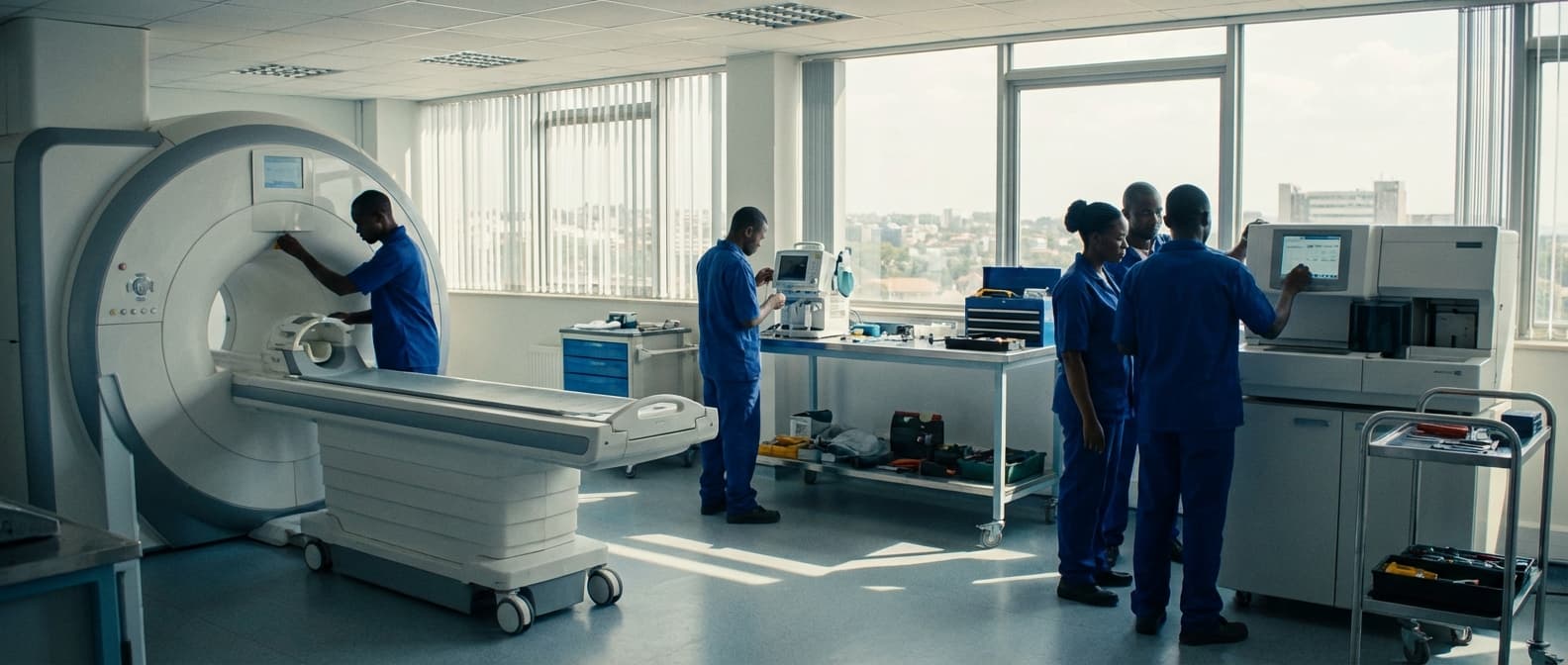
Planned Shutdown Coordination Service for Critical Equipment in Mali
Engineering Excellence & Technical Support
Planned Shutdown Coordination Service for Critical Equipment High-standard technical execution following OEM protocols and local regulatory frameworks.
Proactive Maintenance Scheduling
Leveraging predictive analytics and real-time condition monitoring, our service meticulously plans shutdown windows for critical equipment in Mali. This minimizes unplanned downtime and maximizes asset lifespan by addressing potential issues before they escalate, ensuring operational continuity for vital industries.
Streamlined Supply Chain & Resource Management
We orchestrate the precise procurement and delivery of specialized parts, expert technicians, and necessary tooling to remote Malian sites. Our robust logistical framework guarantees that all resources are available precisely when and where they are needed during planned shutdowns, reducing delays and optimizing execution.
Enhanced Safety Protocols & Risk Mitigation
Our service prioritizes stringent safety protocols tailored to the unique operational environment in Mali. We conduct comprehensive risk assessments and implement robust mitigation strategies for planned shutdowns, ensuring the well-being of personnel and the integrity of operations while adhering to international safety standards.
What Is Planned Shutdown Coordination Service For Critical Equipment In Mali?
The Planned Shutdown Coordination Service for Critical Equipment in Mali is a specialized operational management function designed to orchestrate the scheduled deactivation, maintenance, inspection, and recommissioning of high-priority industrial and infrastructure assets. This service aims to minimize operational disruptions, mitigate associated risks, and optimize resource allocation during periods of planned downtime. It is crucial for maintaining asset integrity, ensuring safety, and prolonging the functional lifespan of critical equipment in a challenging operational environment.
| Who Needs the Service | Typical Use Cases | |||
|---|---|---|---|---|
| Mining and Extractive Industries: Companies operating large-scale mining equipment (e.g., excavators, haul trucks, crushers, conveyor systems, processing plants) in regions like Mali, where continuous operation is vital for revenue generation. | Scheduled major overhauls of critical processing machinery (e.g., ball mills, SAG mills). | Preventive maintenance on large-scale excavators and haul trucks. | Inspection and repair of critical infrastructure like conveyor belts and tailings dams. | Installation of new equipment or upgrades to existing processing lines. |
| Energy Sector: Power generation facilities (thermal, hydro, solar), and transmission/distribution network operators requiring planned maintenance to ensure grid stability and reliability. | Turbine and generator overhauls in power plants. | Substation maintenance and upgrade programs. | Scheduled inspection and repair of high-voltage transmission lines. | Refurbishment of critical components in renewable energy installations (e.g., wind turbines, solar panel arrays). |
| Industrial Manufacturing: Facilities producing goods where downtime directly impacts production output and supply chain commitments. | Overhaul of heavy-duty manufacturing machinery (e.g., large presses, furnaces, extruders). | Planned maintenance of critical utility systems (e.g., compressed air, steam, cooling water). | Integration of new automated systems or production line modifications. | Scheduled cleaning and inspection of sensitive process equipment. |
| Infrastructure and Utilities: Operators of critical public services such as water treatment plants, wastewater facilities, and transportation infrastructure. | Maintenance of pumps, filtration systems, and chemical dosing units in water treatment plants. | Overhaul of large pumps and mechanical equipment in wastewater treatment facilities. | Inspection and repair of critical bridges, tunnels, or railway signaling systems requiring temporary closure. | |
| Logistics and Transportation Hubs: Ports, large warehouses, and transportation terminals with complex automated systems and heavy machinery. | Maintenance of large gantry cranes and container handling equipment. | Overhaul of critical conveyor and sorting systems. | Inspection and repair of weighbridges and logistics management infrastructure. |
Key Components of Planned Shutdown Coordination Service:
- Scope Definition and Planning: Detailed identification of equipment to be affected, defining the objectives of the shutdown (e.g., preventive maintenance, major overhauls, upgrades, regulatory compliance), and establishing clear timelines and deliverables.
- Risk Assessment and Mitigation: Proactive identification of potential hazards associated with the shutdown process (e.g., safety, environmental, operational, security risks) and development of comprehensive mitigation strategies and contingency plans.
- Resource Management: Optimization of human resources (skilled technicians, engineers, supervisors), material procurement (spare parts, consumables), and equipment (specialized tools, lifting gear) required for the shutdown execution.
- Scheduling and Sequencing: Development of a detailed, integrated schedule that optimizes the sequence of maintenance tasks, vendor activities, and interdependent operations to minimize overall downtime.
- Permit to Work (PTW) Management: Rigorous administration and tracking of all necessary work permits to ensure adherence to safety protocols and authorization for specific tasks.
- Stakeholder Communication and Coordination: Facilitating seamless communication and collaboration among internal departments (operations, maintenance, safety, procurement), external vendors, regulatory bodies, and affected communities.
- On-Site Supervision and Execution Oversight: Direct management and monitoring of all shutdown activities in real-time to ensure adherence to the plan, quality of work, and safety compliance.
- Quality Assurance and Control (QA/QC): Implementation of stringent QA/QC procedures to verify that all maintenance and repair work meets specified standards and requirements.
- Recommissioning and Performance Verification: Planning and execution of post-maintenance testing, calibration, and functional verification to ensure equipment is safely and effectively returned to service at optimal performance levels.
- Post-Shutdown Reporting and Analysis: Comprehensive documentation of shutdown activities, including lessons learned, cost analysis, and recommendations for future improvements.
Who Needs Planned Shutdown Coordination Service For Critical Equipment In Mali?
In Mali's vital industrial and service sectors, the reliable operation of critical equipment is paramount for economic stability and public well-being. Planned shutdown coordination services are essential for organizations that depend on uninterrupted functionality of key machinery and infrastructure. These services ensure that planned maintenance, upgrades, or repairs are executed efficiently with minimal disruption to operations, safety, and revenue. Without expert coordination, unexpected breakdowns can lead to costly downtime, safety hazards, and reputational damage. This is particularly true in industries where equipment failure can have cascading effects.
| Customer Type | Key Departments Involved | Reasons for Need |
|---|---|---|
| Mining Companies | Operations, Maintenance, Health & Safety, Engineering | Ensuring minimal disruption to extraction and processing, managing hazardous materials safely during shutdowns, coordinating complex equipment overhauls. |
| Energy and Utilities | Operations, Engineering, Maintenance, Grid Management, Safety & Environmental | Maintaining power/water supply continuity, scheduling complex generator or turbine maintenance, ensuring grid stability during planned outages, regulatory compliance for safety. |
| Telecommunications Providers | Network Operations, Field Maintenance, IT Infrastructure, Engineering | Minimizing service interruptions for mobile and internet users, coordinating software/hardware upgrades across distributed sites, ensuring network resilience. |
| Large-Scale Agricultural Operations | Farm Management, Maintenance, Logistics, Processing | Coordinating maintenance of irrigation systems, harvesting machinery, and processing plants to align with seasonal demands, minimizing spoilage. |
| Industrial Manufacturing Facilities | Production, Maintenance, Quality Control, Supply Chain | Preventing production line stoppages, ensuring timely equipment upgrades for efficiency and quality, managing spare parts inventory, coordinating with suppliers. |
| Transportation Infrastructure (Airports, Ports) | Operations, Maintenance, Air Traffic Control, Port Authority, Security | Minimizing flight/shipping delays, coordinating runway/dock maintenance, ensuring safety of passengers and cargo, managing complex machinery (e.g., baggage handling, cranes). |
| Healthcare Facilities (Hospitals) | Facility Management, Biomedical Engineering, IT, Clinical Departments | Ensuring continuous operation of life-support systems, coordinating maintenance of diagnostic equipment (MRI, CT scanners), minimizing disruption to patient care, data system upgrades. |
Target Customers and Departments in Mali Requiring Planned Shutdown Coordination Service:
- Mining Companies
- Energy and Utilities (Power Generation, Water Treatment)
- Telecommunications Providers
- Large-Scale Agricultural Operations
- Major Industrial Manufacturing Facilities
- Transportation Infrastructure (Airports, Ports)
- Healthcare Facilities (Hospitals with critical medical equipment)
Planned Shutdown Coordination Service For Critical Equipment Process In Mali
This document outlines the workflow for the Planned Shutdown Coordination Service for Critical Equipment Process in Mali, ensuring efficient and safe execution of necessary maintenance and upgrades. The service manages the entire lifecycle of a planned shutdown, from the initial inquiry to post-execution review, minimizing operational disruptions and maximizing equipment reliability. The process emphasizes clear communication, robust planning, and meticulous execution.
| Stage | Description | Key Activities | Deliverables | Responsible Parties |
|---|---|---|---|---|
| Inquiry & Initial Assessment | The process begins with an external or internal request for a planned shutdown of critical equipment. | Receive and log inquiry, conduct preliminary assessment of equipment criticality and potential impact of shutdown, initial consultation with stakeholders. | Inquiry Log Entry, Preliminary Assessment Report. | Client/Asset Owner, Service Provider (Coordination Team). |
| Scope Definition & Planning | Detailed definition of the shutdown's objectives, scope, and required activities. | Develop detailed work scope, identify required tasks, define safety protocols, assess environmental impacts, create preliminary schedule, identify key risks and mitigation strategies. | Detailed Scope of Work Document, Risk Assessment Report, Preliminary Work Schedule, Safety Plan. | Service Provider (Coordination Team), Client/Asset Owner, Technical Experts. |
| Resource Allocation & Scheduling | Securing necessary personnel, materials, and equipment, and finalizing the shutdown schedule. | Identify and confirm availability of internal and external resources (technicians, engineers, specialized tools, spare parts), finalize detailed shutdown schedule with time windows for each activity, coordinate with other operational departments. | Resource Availability Matrix, Finalized Shutdown Schedule, Procurement Plan. | Service Provider (Coordination Team), Procurement Department, Human Resources, Subcontractors. |
| Pre-Shutdown Preparations | Ensuring all necessary preparations are in place before the shutdown commences. | Conduct pre-shutdown safety briefings, verify availability and condition of all required tools and equipment, confirm delivery of all spare parts and materials, obtain necessary permits and approvals, establish communication channels and reporting mechanisms. | Pre-Shutdown Checklist Completion, Permit Approvals, Communication Plan Activation. | Service Provider (Coordination Team), Site Operations Team, Safety Officers, Procurement. |
| Shutdown Execution | The actual implementation of the planned shutdown and associated maintenance activities. | Execute planned maintenance and repair tasks according to the schedule, manage site access and security, monitor progress and address unforeseen issues, ensure adherence to safety and environmental protocols, regular progress reporting. | Work Progress Updates, Incident Reports (if any), Daily Progress Reports. | Service Provider (Coordination Team), Site Operations Team, Technical Teams, Safety Officers. |
| Post-Shutdown & Re-Commissioning | Safely bringing the equipment back online and verifying its operational status. | Conduct post-maintenance testing and diagnostics, ensure all safety checks are completed, re-commission equipment, perform initial operational run, document any deviations or lessons learned during re-commissioning. | Test Results, Re-Commissioning Report, Verification of Operational Status. | Service Provider (Coordination Team), Technical Teams, Quality Assurance, Site Operations. |
| Reporting & Review | Finalizing documentation, reviewing performance, and identifying areas for improvement. | Prepare final shutdown report detailing activities, outcomes, costs, and deviations, conduct a post-shutdown review meeting with stakeholders, identify lessons learned and recommend process improvements, archive all project documentation. | Final Shutdown Report, Post-Shutdown Review Minutes, Recommendations for Improvement. | Service Provider (Coordination Team), Client/Asset Owner, Stakeholders. |
Key Stages and Activities
- Inquiry & Initial Assessment
- Scope Definition & Planning
- Resource Allocation & Scheduling
- Pre-Shutdown Preparations
- Shutdown Execution
- Post-Shutdown & Re-Commissioning
- Reporting & Review
Planned Shutdown Coordination Service For Critical Equipment Cost In Mali
This document outlines the pricing factors and estimated cost ranges for a Planned Shutdown Coordination Service for Critical Equipment in Mali. The service is designed to minimize downtime, ensure safety, and optimize the efficiency of maintenance operations for essential machinery and infrastructure.
| Service Component | Estimated Cost Range (Malian Francs - XOF) | Notes |
|---|---|---|
| Basic Shutdown Coordination (Small Scale, Low Complexity) | 500,000 - 1,500,000 XOF | Covers coordination for 1-3 pieces of moderately critical equipment, short duration (1-3 days), readily accessible location. Includes basic scheduling and communication. |
| Standard Shutdown Coordination (Medium Scale, Moderate Complexity) | 1,500,000 - 5,000,000 XOF | Suitable for several pieces of critical equipment, moderate duration (3-7 days), standard accessibility. Includes detailed planning, risk assessment, and on-site supervision. |
| Advanced Shutdown Coordination (Large Scale, High Complexity) | 5,000,000 - 15,000,000+ XOF | For multiple, interconnected, highly critical equipment, extended duration (7+ days), potentially challenging logistics. Includes comprehensive planning, multi-disciplinary team coordination, advanced safety management, and extensive reporting. |
| On-site Project Management Fee (Daily Rate - Per Coordinator) | 75,000 - 200,000 XOF | Varies based on experience level and specific role (e.g., Project Manager, Safety Officer). |
| Specialized Technical Consultation (Daily Rate - Per Expert) | 100,000 - 300,000 XOF | For highly specialized equipment requiring expert input. |
| Logistics and Transportation (Variable) | Quote-based | Dependent on distance, mode of transport, and number of personnel/equipment to be moved. Especially relevant for remote locations. |
| Ancillary Services (e.g., detailed reporting, waste management) | Quote-based | Priced individually based on scope and requirements. |
Key Pricing Factors for Planned Shutdown Coordination Service
- Scope and Complexity of the Shutdown: The number of critical equipment pieces, the interconnectedness of their operations, and the overall duration of the planned shutdown directly influence the service cost. More complex shutdowns requiring intricate sequencing and coordination will be priced higher.
- Type and criticality of Equipment: The specific type of equipment (e.g., power generators, mining machinery, industrial pumps, communication towers) and its criticality to the client's operations will impact the level of expertise and the urgency required. Highly specialized or safety-critical equipment necessitates more specialized resources and therefore higher costs.
- Duration of the Shutdown: The longer the planned shutdown period, the more extensive the coordination efforts, personnel involvement, and resource allocation will be, leading to a higher overall service fee.
- Geographic Location and Accessibility: The remoteness of the equipment's location within Mali, the accessibility challenges (e.g., road conditions, required transport), and potential logistical hurdles will contribute to the service cost due to increased travel and operational expenses.
- Required Expertise and Personnel: The number and specialization of personnel required for coordination, supervision, safety management, technical oversight, and logistical support will be a significant cost driver. This includes project managers, safety officers, technical supervisors, and potentially specialized technicians.
- Ancillary Services: The inclusion of supplementary services such as detailed risk assessments, detailed shutdown planning and scheduling, procurement of spare parts, specialized tooling, waste management, or post-shutdown reporting will affect the final price.
- Client-Specific Requirements and Customization: Any unique requirements or customizations requested by the client, beyond the standard service offering, will be factored into the pricing.
- Regulatory and Compliance Needs: Adherence to specific Malian regulations, safety standards, and environmental compliance protocols can influence the scope of work and associated costs.
Affordable Planned Shutdown Coordination Service For Critical Equipment Options
Our Affordable Planned Shutdown Coordination Service is designed to minimize downtime and maximize efficiency during critical equipment maintenance. We understand that planned shutdowns, while necessary, can be costly if not managed effectively. Our service focuses on proactive planning, streamlined execution, and transparent communication to ensure your operations experience minimal disruption and significant cost savings.
We offer flexible value bundles tailored to your specific needs, ranging from basic planning assistance to comprehensive project management. These bundles are designed to provide predictable costs while ensuring all critical aspects of the shutdown are covered. Our cost-saving strategies are embedded in every stage of the process, from meticulous scheduling to expert vendor negotiation and waste reduction during the shutdown.
| Cost-Saving Strategy | Description | Impact on Shutdown Cost |
|---|---|---|
| Optimized Scheduling & Phasing | Detailed breakdown of tasks and equipment, identifying opportunities for parallel work and efficient sequencing to reduce overall downtime duration. | Significant reduction in direct and indirect costs associated with prolonged operational halts. |
| Proactive Risk Management | Identification and mitigation of potential issues (e.g., parts availability, technical challenges, personnel shortages) before they cause delays and incur additional expenses. | Avoids costly emergency repairs, overtime, and extended downtime penalties. |
| Vendor Negotiation & Consolidation | Leveraging our expertise and network to secure competitive pricing for specialized services and parts. Consolidating vendors where possible to streamline procurement and potentially gain volume discounts. | Reduces direct costs for labor, materials, and external services. |
| Resource Optimization & Staffing | Ensuring the right personnel with the right skills are available at the right time, avoiding overstaffing or critical skill gaps. Exploring opportunities for cross-training or internal resource utilization. | Minimizes labor costs and improves efficiency, reducing the need for expensive external contractors. |
| Waste Reduction & Sustainability | Implementing strategies for material reuse, responsible disposal of old parts, and efficient energy consumption during shutdown periods. | Reduces disposal fees and potential environmental fines, contributing to long-term cost efficiency. |
| Standardization & Best Practices | Applying proven methodologies and checklists based on industry best practices to ensure a smooth and predictable shutdown process, reducing the likelihood of errors and rework. | Minimizes the risk of costly mistakes and improves overall project execution. |
Key Value Bundles
- Essential Planning Bundle: Includes scope definition, preliminary scheduling, risk assessment, and resource identification.
- Standard Coordination Bundle: Encompasses all features of the Essential bundle, plus detailed scheduling, communication plan development, vendor pre-qualification, and on-site coordination support during the shutdown.
- Comprehensive Management Bundle: Offers end-to-end project management, including advanced scheduling optimization, detailed cost tracking, KPI monitoring, post-shutdown analysis, and continuous improvement recommendations. This bundle is ideal for complex or extended shutdowns.
Verified Providers In Mali
In Mali's burgeoning healthcare landscape, ensuring access to reliable and qualified medical professionals is paramount. Franance Health stands out as a leading organization dedicated to verifying healthcare providers, offering a crucial layer of trust and assurance for patients seeking quality care. Their rigorous credentialing process meticulously examines the qualifications, licenses, and experience of healthcare professionals, ensuring they meet the highest standards of practice. This commitment to verification translates directly into better patient outcomes and a more secure healthcare experience.
| Benefit for Patients | Franance Health Verification Means | Impact on Healthcare |
|---|---|---|
| Peace of Mind | Providers have undergone thorough background checks and qualification validation. | Reduced anxiety and increased confidence in seeking medical attention. |
| Effective Treatment | Only experienced and appropriately trained medical professionals are listed. | Higher likelihood of accurate diagnoses and successful treatments. |
| Ethical Care | Verification includes an assessment of adherence to professional conduct and ethical standards. | Protection against malpractice and unethical practices. |
| Informed Decision-Making | Clear and reliable information about provider qualifications is readily available. | Empowered patients can choose providers best suited to their specific health needs. |
| Improved Healthcare System | Promotes a culture of accountability and continuous professional development among providers. | A stronger, more reliable, and patient-centric healthcare ecosystem in Mali. |
Why Franance Health Credentials Represent the Best Choice:
- Unwavering Commitment to Quality: Franance Health's stringent verification process goes beyond basic licensing, delving into practical experience, specialized training, and adherence to ethical guidelines.
- Enhanced Patient Safety: By partnering with verified providers, patients can have greater confidence in the competence and safety of the care they receive, minimizing risks associated with unqualified practitioners.
- Access to Top-Tier Professionals: Franance Health identifies and highlights healthcare providers who consistently demonstrate excellence, making it easier for patients to find the best available specialists for their needs.
- Transparency and Trust: The credentialing process fosters transparency within the healthcare system, building trust between patients and providers, and promoting a more accountable medical community.
- Driving Healthcare Excellence: By setting a high bar for provider qualifications, Franance Health actively contributes to the overall improvement and advancement of healthcare services in Mali.
Scope Of Work For Planned Shutdown Coordination Service For Critical Equipment
This Scope of Work (SOW) outlines the services required for the coordination and management of planned shutdowns for critical equipment. The objective is to ensure minimal disruption to operations, adherence to safety protocols, and efficient execution of maintenance and repair activities. This document also details the technical deliverables and standard specifications expected from the service provider.
| Category | Description | Standard Specifications / Deliverables |
|---|---|---|
| Shutdown Planning & Scheduling | Development of a comprehensive shutdown plan, including detailed timelines, task breakdowns, resource allocation, and contingency plans. | Detailed Shutdown Execution Plan (DSEP) document, Gantt chart for scheduling, resource matrix, risk assessment report, communication plan. |
| Stakeholder Coordination & Communication | Facilitating regular meetings, providing status updates, and resolving conflicts among all parties involved. | Meeting minutes, daily/weekly progress reports, issue log, escalation matrix, final stakeholder report. |
| Safety Management & Compliance | Ensuring all work is performed in accordance with safety regulations, including permits, Lockout/Tagout (LOTO) procedures, and emergency response plans. | Permit-to-Work (PTW) system integration, daily safety briefings (toolbox talks) records, incident/near-miss reports, safety audit reports, compliance checklists. |
| Resource Management | Procurement, allocation, and management of skilled labor, specialized tools, and necessary materials. | Manpower allocation plan, tool and equipment inventory, material procurement tracker, vendor performance evaluation. |
| Technical Execution Oversight | Supervising the execution of maintenance, repair, inspection, and testing activities by internal teams and external contractors. | Work order management, quality control checklists, inspection reports, testing certificates, vendor work completion sign-offs. |
| Documentation & Reporting | Maintaining accurate records of all activities, progress, issues, and resolutions. | Daily progress reports, detailed shutdown completion report, final cost report, lessons learned document, photographic/video evidence of key activities. |
| Recommissioning & Handover | Overseeing the safe and systematic return of equipment to operational status and formal handover. | Recommissioning checklist, pre-startup safety review (PSSR) report, operational handover document, updated equipment manuals/documentation. |
| Post-Shutdown Analysis | Conducting a thorough review of the shutdown process to identify areas for improvement. | Post-shutdown review meeting minutes, updated standard operating procedures (SOPs), recommendations for future shutdowns. |
Key Objectives of the Planned Shutdown Coordination Service
- To meticulously plan and schedule all planned shutdown activities for critical equipment.
- To ensure strict adherence to all relevant safety regulations, industry best practices, and company policies.
- To minimize operational downtime and its associated economic impact.
- To facilitate effective communication and coordination among all stakeholders, including internal departments, external vendors, and regulatory bodies.
- To manage resources (personnel, equipment, materials) efficiently and effectively throughout the shutdown period.
- To ensure timely completion of all planned maintenance, repair, and inspection tasks.
- To document all activities, outcomes, and lessons learned for continuous improvement.
- To oversee the safe recommissioning and return of critical equipment to operational status.
Service Level Agreement For Planned Shutdown Coordination Service For Critical Equipment
This Service Level Agreement (SLA) outlines the terms and conditions for the Planned Shutdown Coordination Service for Critical Equipment. It defines response times for scheduling and managing planned downtime and establishes uptime guarantees for the coordination service itself. The objective is to minimize disruption to operations while ensuring necessary maintenance and upgrades are performed efficiently and safely.
| Service Aspect | Response Time Target | Uptime Guarantee | Measurement Period |
|---|---|---|---|
| Initial Response to Planned Shutdown Request | Within 4 business hours of receipt | N/A (Service is proactive) | N/A |
| Coordination Meeting Scheduling | Within 2 business days of initial response | N/A (Service is proactive) | N/A |
| Provision of Draft Shutdown Plan | Within 5 business days of final coordination meeting | N/A (Service is proactive) | N/A |
| Availability of the Planned Shutdown Coordination Platform/System | 99.5% | 99.5% | Monthly |
| Support for Urgent Unplanned Shutdown Coordination (if applicable, separate addendum may apply) | Within 1 business hour of critical alert | N/A (Service is proactive) | N/A |
Key Service Components
- Planned Shutdown Scheduling and Coordination
- Communication Management for Stakeholders
- Resource Allocation Support
- Risk Assessment and Mitigation Planning
- Post-Shutdown Review and Documentation
Frequently Asked Questions

Ready when you are
Let's scope your Planned Shutdown Coordination Service for Critical Equipment in Mali project in Mali.

Scaling healthcare logistics and technical systems across the entire continent.