
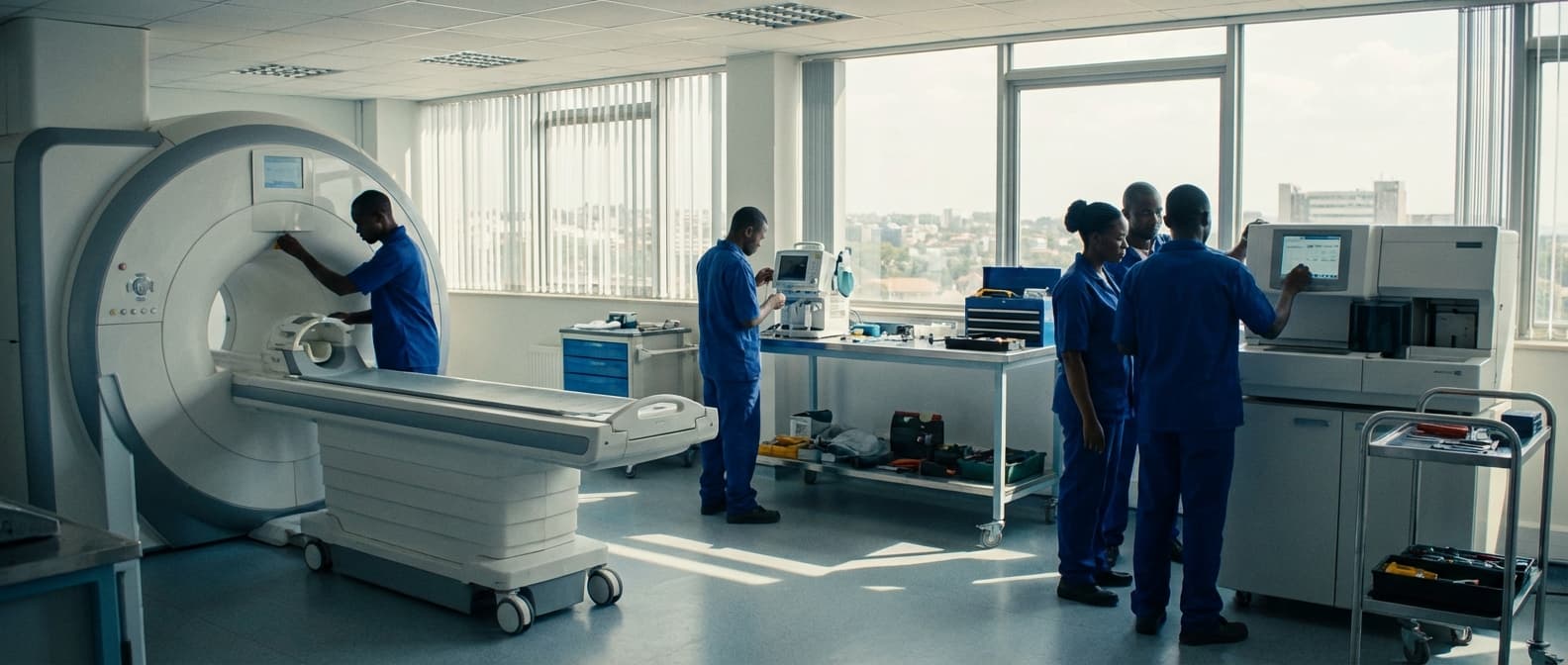
Comprehensive Maintenance Contract (CMC) Management Service (Parts & Labor) in Mali
Engineering Excellence & Technical Support
Comprehensive Maintenance Contract (CMC) Management Service (Parts & Labor) High-standard technical execution following OEM protocols and local regulatory frameworks.
Optimized Spare Parts Inventory
Leveraging advanced analytics, we ensure optimal stocking levels of critical spare parts for your machinery in Mali. This proactive approach minimizes downtime by guaranteeing immediate availability, reducing lead times, and preventing costly production stoppages due to part scarcity.
On-Demand Skilled Technician Deployment
Our CMC includes a network of certified and locally-trained technicians ready for rapid deployment across Mali. We guarantee prompt response times for scheduled and emergency repairs, ensuring your equipment is serviced by experts proficient in both parts replacement and intricate labor, minimizing operational disruption.
Predictive Maintenance & Lifecycle Management
Beyond reactive repairs, our service incorporates predictive maintenance strategies, utilizing sensor data and historical performance to anticipate potential failures. This proactive management extends equipment lifespan, optimizes labor allocation for preventative tasks, and provides transparent reporting on the overall health and cost-efficiency of your assets in Mali.
What Is Comprehensive Maintenance Contract (Cmc) Management Service (Parts & Labor) In Mali?
Comprehensive Maintenance Contract (CMC) Management Service (Parts & Labor) in Mali refers to a service that oversees and administers all aspects of maintenance agreements for equipment and assets, encompassing both the cost of spare parts and the labor required for their installation, repair, and preventative upkeep. This service acts as an intermediary or direct provider, ensuring that contractual obligations for maintenance are met efficiently and cost-effectively within the Malian operational context. It involves meticulous planning, execution, monitoring, and reporting of all maintenance activities as stipulated in the CMC, aiming to maximize asset uptime, extend equipment lifespan, and control operational expenditures.
| Category | Description | Relevance in Mali |
|---|---|---|
| Who Needs It? | Organizations operating critical infrastructure, heavy machinery, specialized medical equipment, IT systems, and other high-value assets that require ongoing and expert maintenance. This includes government entities, large industrial corporations, mining operations, healthcare providers, telecommunications companies, and international development agencies. | Mali's economic landscape often features reliance on imported machinery and infrastructure, making robust maintenance critical for operational continuity and to mitigate supply chain disruptions. The logistical challenges within Mali necessitate efficient and proactive maintenance strategies. |
| Typical Use Cases |
| Mali's primary economic drivers (mining, agriculture) and developing infrastructure (telecoms, energy) present significant demand for these use cases. The management of these contracts is crucial for sustained economic activity and service delivery, especially given the diverse geographical conditions and potential logistical hurdles. |
Key Components of CMC Management Service (Parts & Labor) in Mali
- Contractual Scope Definition and Negotiation
- Preventative Maintenance Scheduling and Execution
- Corrective Maintenance and Repair Management
- Spare Parts Procurement and Inventory Management
- Labor Resource Allocation and Supervision
- Performance Monitoring and Reporting
- Quality Assurance and Compliance
- Risk Management and Contingency Planning
- Budgetary Control and Cost Optimization
- Asset Lifecycle Management Integration
Who Needs Comprehensive Maintenance Contract (Cmc) Management Service (Parts & Labor) In Mali?
Comprehensive Maintenance Contract (CMC) Management Service (Parts & Labor) is crucial for organizations in Mali that rely heavily on specialized equipment and infrastructure. These services ensure the continuous operational efficiency, longevity, and cost-effectiveness of critical assets. By outsourcing the management of these complex contracts, businesses can focus on their core operations, minimize downtime, and optimize their maintenance budgets. The demand for such services is particularly high in sectors with significant capital investments in machinery, technology, and facilities.
| Customer Type | Key Departments Involved | Critical Equipment/Infrastructure |
|---|---|---|
| Mining & Extractive Industries | Operations, Maintenance, Engineering, Procurement | Excavators, haul trucks, crushers, drills, processing plants, generators |
| Telecommunications Companies | Network Operations, Technical Support, Infrastructure Management | Base stations, antennas, fiber optic cables, data centers, switches, routers |
| Energy & Utilities | Operations, Engineering, Grid Management, Maintenance | Turbines, generators, transformers, substations, transmission lines, control systems |
| Healthcare Sector | Biomedical Engineering, Facilities Management, IT Department | MRI/CT scanners, X-ray machines, anesthesia machines, ventilators, laboratory equipment, IT servers |
| Manufacturing & Industrial Plants | Production, Maintenance, Engineering, Quality Control | Assembly lines, CNC machines, packaging equipment, boilers, industrial pumps, HVAC systems |
| Government & Public Sector | Public Works, Transportation, Defense, IT, Facilities Management | Road construction equipment, public transport vehicles, communication systems, IT infrastructure, building systems |
| Agribusiness | Farm Operations, Processing Plant Management, Logistics | Tractors, harvesters, processing machinery, irrigation systems, cold storage units |
| Financial Institutions | IT Department, Operations, Facilities Management | Servers, networking hardware, ATMs, security systems, backup power generators |
| Logistics & Transportation | Fleet Management, Warehouse Operations, Maintenance | Trucks, forklifts, conveyor systems, refrigeration units, IT systems |
Target Customers and Departments in Mali Requiring CMC Management Service (Parts & Labor):
- {"title":"Mining and Extractive Industries","description":"Operating heavy machinery, processing plants, and specialized exploration equipment requires consistent and expert maintenance to prevent costly breakdowns and ensure safety. This sector is a primary beneficiary due to the sheer scale and complexity of its assets."}
- {"title":"Telecommunications Companies","description":"Maintaining extensive networks of base stations, data centers, and transmission equipment is vital for uninterrupted service delivery. Downtime in this sector directly translates to significant revenue loss and customer dissatisfaction."}
- {"title":"Energy and Utilities (Power Generation & Distribution)","description":"Reliable operation of power plants, transmission lines, and distribution grids is paramount. CMC management ensures the upkeep of turbines, transformers, and other critical components, preventing power outages and ensuring national energy security."}
- {"title":"Healthcare Sector (Hospitals and Clinics)","description":"Medical equipment, from diagnostic imaging machines to life support systems, requires rigorous and specialized maintenance to ensure patient safety and accurate diagnoses. The criticality of these assets makes CMC management indispensable."}
- {"title":"Manufacturing and Industrial Plants","description":"Automated production lines, specialized machinery, and industrial equipment need regular servicing to maintain output quality, efficiency, and prevent production stoppages. Sectors like food processing, textiles, and cement production are key."}
- {"title":"Government and Public Sector Agencies","description":"Agencies managing infrastructure, public transportation, defense equipment, and essential services require robust maintenance strategies for their assets to ensure operational continuity and public safety. This includes ministries and state-owned enterprises."}
- {"title":"Large-Scale Agriculture and Agribusiness","description":"Modern agricultural operations often involve sophisticated machinery, processing facilities, and irrigation systems that require specialized maintenance for optimal yield and efficiency."}
- {"title":"Financial Institutions (Large Banks and Data Centers)","description":"Maintaining secure and reliable IT infrastructure, including servers, networking equipment, and backup power systems, is critical for financial operations and data integrity."}
- {"title":"Logistics and Transportation Companies","description":"Managing fleets of vehicles, specialized cargo handling equipment, and warehousing infrastructure necessitates effective maintenance to ensure timely and efficient movement of goods."}
Comprehensive Maintenance Contract (Cmc) Management Service (Parts & Labor) Process In Mali
This document outlines the Comprehensive Maintenance Contract (CMC) Management Service (Parts & Labor) process for clients in Mali. The service ensures that equipment remains in optimal working condition through proactive and reactive maintenance, covering both necessary parts and skilled labor. The workflow is designed to be efficient, transparent, and customer-centric, from the initial inquiry to the successful execution and closure of maintenance activities.
| Stage | Description | Key Activities | Responsible Party | Expected Outcome |
|---|---|---|---|---|
| The client expresses interest in CMC services for their equipment. | Receive inquiry, understand client needs, discuss service scope, and provide preliminary information. | Client, Service Provider Sales/Account Manager | Client's interest confirmed, preliminary understanding of requirements. |
| Based on the consultation, a tailored CMC proposal is created. | Site survey (if needed), detailed assessment of equipment, cost estimation (parts & labor), service level agreement (SLA) definition, proposal submission, negotiation on terms and pricing. | Service Provider Technical Team, Service Provider Sales/Account Manager, Client | Mutually agreed upon proposal outlining services, costs, and SLAs. |
| The formal agreement for CMC services is established. | Review of the proposal, legal review, contract drafting, signing of the Comprehensive Maintenance Contract (CMC) by both parties. | Service Provider Legal Team, Client Legal Team, Authorized Representatives | Legally binding CMC signed by both parties. |
| A thorough understanding of the client's current equipment status is established. | Detailed inspection of all covered equipment, documentation of existing condition, creation of an equipment inventory, identification of potential risks or immediate needs. | Service Provider Technical Team, Client | Baseline condition report, complete equipment inventory, identified immediate maintenance needs. |
| Proactive measures to prevent equipment failures. | Development of a preventive maintenance schedule based on equipment type and manufacturer recommendations, notification to client, scheduling of technician visits, execution of scheduled maintenance tasks, documentation of work performed. | Service Provider Operations/Planning Team, Service Provider Technicians, Client | Reduced likelihood of breakdowns, extended equipment lifespan, documented preventive maintenance records. |
| Efficient response to unexpected equipment failures. | Client reports a breakdown, service request is logged, diagnosis of the issue, dispatch of a qualified technician, on-site repair, testing and verification of the repair. | Client, Service Provider Helpdesk/Call Center, Service Provider Technicians | Timely resolution of breakdowns, minimal downtime, documented corrective maintenance actions. |
| Ensuring availability of necessary spare parts. | Identification of required parts (for both preventive and corrective maintenance), sourcing from approved suppliers (local or international), managing inventory levels for critical spares, logistics and customs clearance in Mali. | Service Provider Procurement Team, Service Provider Warehouse Team, Local Suppliers | Availability of genuine and quality spare parts, optimized inventory costs, efficient delivery to the site. |
| Effective utilization of skilled maintenance personnel. | Recruitment and training of qualified technicians, assignment of technicians based on expertise and location, scheduling of technician availability, ensuring adherence to safety protocols. | Service Provider HR Team, Service Provider Operations/Planning Team, Service Provider Technicians | Skilled and available technicians, efficient deployment, adherence to safety standards. |
| Providing transparency and evaluating service effectiveness. | Generation of regular maintenance reports (e.g., monthly, quarterly) detailing performed activities, parts used, downtime, and overall equipment status. Conducting performance review meetings with the client to discuss service levels, address concerns, and identify areas for improvement. | Service Provider Account Manager, Service Provider Technical Manager, Client | Transparent service records, informed decision-making, continuous improvement of service delivery. |
| The conclusion or continuation of the CMC agreement. | Review of contract performance, discussion of renewal terms and conditions, negotiation for contract extension or modification, or formal termination process if required, final asset handover and documentation closure. | Service Provider Account Manager, Client | Successful contract renewal, mutually agreed upon modifications, or a clean and documented contract termination. |
Key Stages of the CMC Management Service Process
- Inquiry & Initial Consultation
- Proposal Development & Negotiation
- Contract Finalization & Signing
- Equipment Assessment & Baseline Establishment
- Preventive Maintenance Scheduling & Execution
- Corrective Maintenance (Breakdown) Management
- Parts Procurement & Inventory Management
- Labor Management & Technician Deployment
- Service Reporting & Performance Review
- Contract Renewal or Termination
Comprehensive Maintenance Contract (Cmc) Management Service (Parts & Labor) Cost In Mali
Managing Comprehensive Maintenance Contracts (CMCs) for equipment and machinery in Mali involves a detailed assessment of various cost factors to determine appropriate pricing for both parts and labor. These contracts are crucial for ensuring the operational longevity and efficiency of assets across diverse sectors, including manufacturing, agriculture, construction, and public services. The cost of CMC services in Mali is influenced by a combination of elements, making it essential for service providers and clients to understand these drivers for accurate budgeting and negotiation. Factors such as the type and complexity of the equipment, the criticality of its function, the geographic location within Mali, the required response times, and the specific scope of work (preventive maintenance, corrective maintenance, spare parts availability, and skilled labor pool) all play significant roles in the final pricing.
| Service Type | Estimated Range (Malian Franc CFA - XOF) | Notes |
|---|---|---|
| Basic Preventive Maintenance (Parts Estimate) | 50,000 - 250,000 XOF per year | Covers scheduled checks, lubrication, and minor adjustments. Parts cost highly variable based on equipment. |
| Comprehensive Preventive Maintenance (Parts & Labor) | 150,000 - 750,000 XOF per year | Includes detailed inspections, routine part replacements (filters, belts), and skilled technician time. Excludes major component failures. |
| Full-Service CMC (Parts & Labor - Including Major Repairs) | 500,000 - 5,000,000+ XOF per year | Extensive coverage, including unplanned repairs and replacement of major parts. Highly dependent on equipment value and risk profile. |
| On-site Labor Rate (Skilled Technician) | 20,000 - 80,000 XOF per day | Variable based on expertise, travel, and location. May be hourly for emergencies. |
| Common Spare Parts (e.g., Filters, Belts) | 5,000 - 50,000 XOF per item | Price varies significantly by part type, brand, and availability. Often purchased separately or with a markup within the CMC. |
| Specialized/Major Spare Parts (e.g., Engine Components, Control Systems) | 100,000 - 1,000,000+ XOF per item | Can represent a substantial portion of CMC costs. Importation and scarcity are key factors. |
Key Pricing Factors for CMC Services in Mali (Parts & Labor)
- Equipment Type and Complexity: Specialized machinery or advanced technological equipment generally incurs higher CMC costs due to the need for specialized technicians and potentially more expensive or harder-to-source spare parts. Standard machinery may have more competitive pricing.
- Age and Condition of Equipment: Older or poorly maintained equipment often requires more frequent and intensive maintenance, leading to higher labor and parts costs. A thorough initial assessment is key.
- Scope of Services: The breadth of services included in the CMC significantly impacts the price. This can range from basic preventive maintenance to full-service contracts including emergency repairs, on-site support, and guaranteed uptime.
- Spare Parts Availability and Cost: The accessibility and price of genuine spare parts for the specific equipment in Mali is a major determinant. Importation costs, customs duties, and local supplier markups will affect part pricing. Contracts often include provisions for the cost of spare parts, either as a fixed percentage, a separate line item, or built into the overall service fee.
- Labor Rates and Skill Level: The availability of skilled and certified technicians in Mali dictates labor costs. Highly specialized skills command higher wages. Labor costs are typically calculated on an hourly or daily basis, or as a fixed component of the contract.
- Geographic Location: Maintenance services provided in remote or less accessible regions of Mali may incur additional travel and logistical costs for technicians and parts, thus increasing the overall CMC price.
- Response Time Guarantees: Contracts that stipulate rapid response times for breakdowns or repairs (e.g., within 24 or 48 hours) will naturally be more expensive than those with more flexible schedules. This often involves maintaining a local presence or dedicated support teams.
- Frequency of Maintenance: The agreed-upon schedule for preventive maintenance visits (e.g., monthly, quarterly, annually) will directly influence the labor component of the CMC.
- Service Level Agreements (SLAs): Specific performance metrics, uptime guarantees, and penalties for non-compliance outlined in the SLA will shape the pricing structure.
- Contract Duration: Longer-term CMC contracts may offer economies of scale and potentially lower annual costs compared to shorter-term agreements.
- Risk Assessment and Insurance: The inherent risks associated with the equipment's operation and the level of insurance coverage included in the CMC will also be factored into the pricing.
Affordable Comprehensive Maintenance Contract (Cmc) Management Service (Parts & Labor) Options
Our Affordable Comprehensive Maintenance Contract (CMC) Management Service offers a streamlined approach to ensuring your equipment operates at peak performance while minimizing costs. We understand that unexpected repairs and parts replacement can strain budgets. Therefore, we've developed flexible value bundles and effective cost-saving strategies tailored to your specific needs, guaranteeing both comprehensive coverage and significant financial benefits.
| Value Bundle Name | Included Services | Ideal For | Key Cost-Saving Benefit |
|---|---|---|---|
| Essential Coverage | Scheduled Preventive Maintenance, On-Demand Repairs (Parts & Labor) | Businesses with standard equipment needs and predictable usage. | Reduces downtime by addressing issues proactively, preventing costly emergency repairs. |
| Proactive Plus | Essential Coverage + Priority Response, Annual Equipment Audit | Growing businesses requiring faster service and in-depth performance analysis. | Optimizes equipment lifespan and efficiency through detailed analysis, leading to longer equipment life and reduced energy consumption. |
| Total Peace of Mind | Proactive Plus + Extended Warranty on Parts, Guaranteed Uptime Service Level Agreement (SLA) | Mission-critical operations where downtime is unacceptable and maximum equipment reliability is paramount. | Minimizes financial impact of unexpected failures with guaranteed performance and long-term cost predictability. |
| Customizable | Tailored to specific equipment types, usage patterns, and budget constraints. | Organizations with unique or specialized equipment requirements. | Directly aligns costs with specific needs, eliminating unnecessary coverage and maximizing ROI. |
Key Features of Our CMC Management Service
- Proactive & Preventive Maintenance: Regular check-ups to identify and address potential issues before they escalate.
- On-Demand Repair Services: Swift response and expert technicians for all your breakdown needs.
- Genuine Parts Replacement: Access to high-quality, original parts at competitive prices.
- Labor Coverage: All on-site labor costs for repairs and maintenance are included.
- 24/7 Technical Support: Round-the-clock assistance for any urgent queries or issues.
- Performance Monitoring & Reporting: Regular updates on equipment health and maintenance activities.
Verified Providers In Mali
Ensuring access to quality healthcare in Mali hinges on identifying and engaging with verified healthcare providers. Franance Health stands out as a leading platform that rigorously vets and credentials its network of medical professionals, offering Malian citizens a reliable and trustworthy pathway to essential health services. This commitment to verification provides significant advantages, fostering confidence, improving health outcomes, and streamlining access to care.
| Benefit | Explanation | Franance Health's Contribution |
|---|---|---|
| Improved Health Outcomes | Access to qualified and experienced medical professionals leads to more accurate diagnoses, effective treatments, and better overall patient recovery. | Franance Health's rigorous credentialing ensures patients connect with providers capable of delivering high-quality care. |
| Increased Patient Confidence | Knowing that a provider has been thoroughly vetted by a reputable organization builds trust and encourages individuals to seek necessary medical attention. | The 'verified' status on Franance Health acts as a seal of approval, reducing patient anxiety. |
| Reduced Healthcare Disparities | By making verified providers more accessible, especially in underserved areas, Franance Health helps bridge gaps in healthcare access. | Franance Health's platform aims to connect patients with suitable providers regardless of their geographical location within Mali. |
| Efficient Healthcare System | A network of verified providers contributes to a more organized and efficient healthcare system, minimizing the burden on patients and the system itself. | Franance Health's curated list of professionals streamlines the patient's journey to receiving care. |
Why Franance Health is the Best Choice for Verified Providers in Mali:
- Rigorous Vetting Process: Franance Health employs a multi-faceted verification system that goes beyond basic licensing. This includes checking educational credentials, professional experience, certifications, and adherence to ethical standards.
- Focus on Quality and Expertise: The platform prioritizes providers who demonstrate a commitment to continuous learning and possess specialized skills, ensuring patients receive care from competent and up-to-date medical professionals.
- Enhanced Patient Safety and Trust: By presenting only verified providers, Franance Health significantly reduces the risk of patients encountering unqualified or fraudulent practitioners, fostering a sense of security and trust in the healthcare system.
- Streamlined Access to Care: The verified network simplifies the process of finding suitable healthcare providers, saving patients valuable time and effort in their search for quality medical attention.
- Commitment to Local Context: Franance Health understands the unique healthcare landscape in Mali and works to ensure its verified providers are accessible and relevant to the needs of the Malian population.
- Transparency and Accountability: The verification process fosters accountability within the healthcare sector, encouraging providers to maintain high standards of practice.
- Integration with Digital Health Solutions: Franance Health often integrates its verified provider network with user-friendly digital platforms, enabling easy booking, communication, and access to health information.
Scope Of Work For Comprehensive Maintenance Contract (Cmc) Management Service (Parts & Labor)
This document outlines the Scope of Work (SOW) for a Comprehensive Maintenance Contract (CMC) Management Service. This service will encompass the management of all aspects of maintenance for a defined set of assets, including the procurement and management of necessary spare parts and all associated labor costs. The objective is to ensure optimal performance, reliability, and longevity of the assets through proactive and reactive maintenance activities.
| Technical Deliverable | Description | Standard Specification/Requirement | Key Performance Indicators (KPIs) |
|---|---|---|---|
| Asset Register Database | A comprehensive, up-to-date database of all maintained assets, including their specifications, location, warranty status, maintenance history, and criticality. | Format: Secure, searchable database (e.g., CMMS, Excel with strict version control). Data fields to include: Asset ID, Name, Manufacturer, Model, Serial Number, Installation Date, Location, Criticality Rating, Supplier Information, Warranty Expiry. | Asset Register Completeness: >98%; Asset Register Accuracy: >99% |
| Preventive Maintenance (PM) Schedules | Detailed schedules for routine maintenance tasks designed to prevent equipment failure and ensure optimal performance. | Based on manufacturer recommendations, industry best practices, and asset criticality. Includes task descriptions, frequency, estimated labor hours, required parts, and safety procedures. Schedules to be documented and approved. | PM Schedule Adherence: >95%; PM Completion Rate: >90% |
| Corrective Maintenance (CM) Response Procedures | Defined protocols for responding to equipment breakdowns and malfunctions. | Includes emergency contact procedures, fault diagnosis guidelines, escalation matrix, repair procedures, parts requisition process, and post-repair verification. Response times to be clearly defined based on asset criticality. | Mean Time To Respond (MTTR): Within defined SLA (e.g., 2 hours for critical assets); Mean Time To Repair (MTTR): Within defined SLA (e.g., 8 hours for critical assets); CM Resolution Rate: >90% |
| Spare Parts Inventory Management Strategy | A systematic approach to managing spare parts inventory to minimize downtime and optimize costs. | Includes minimum/maximum stock levels, reorder points, lead time analysis, obsolescence management, and storage protocols. Strategy to include critical spares identification and stocking levels. | Inventory Accuracy: >98%; Stockout Rate (Critical Spares): <1%; Inventory Turnover Ratio: Within target range |
| Parts Procurement Process | Defined procedures for acquiring necessary spare parts. | Includes vendor qualification, competitive bidding (where applicable), quality checks, receiving and inspection protocols, and documentation. Emphasis on obtaining genuine/OEM parts or approved alternatives. | On-time Delivery Rate (Parts): >95%; Quality Acceptance Rate (Parts): >99% |
| Labor Resource Deployment Plan | Strategy for assigning and managing labor resources for maintenance activities. | Includes skills matrix, training requirements, scheduling optimization, and performance tracking for internal and external labor. Clear roles and responsibilities for technicians and supervisors. | Labor Utilization Rate: >85%; Technician Skill Compliance: >98% |
| Maintenance Performance Reports | Regular reports detailing the effectiveness and efficiency of maintenance operations. | Includes asset uptime/availability, PM/CM completion rates, MTTR, cost analysis (parts and labor), incident reports, and trend analysis. Reports to be delivered monthly/quarterly as agreed. | Report Submission Timeliness: 100%; Report Accuracy: >99% |
| Risk Management and Mitigation Plan | Proactive identification and management of potential risks impacting maintenance operations. | Includes failure mode and effects analysis (FMEA), safety hazard identification, contingency planning for critical equipment failures, and supplier risk assessment. | Identification of Critical Risks: 100%; Implementation of Mitigation Measures: 100% |
| Cost Tracking and Budget Adherence | Detailed tracking of all maintenance-related costs, including parts, labor, and external services. | Budget vs. Actual expenditure reporting, variance analysis, and recommendations for cost optimization. All costs to be categorized and reconciled. | Budget Variance: Within +/- 5%; Cost Savings Identified: >3% annually |
| Quality Assurance Procedures | Procedures to ensure that all maintenance activities meet defined quality standards. | Includes post-maintenance inspections, technician competency checks, adherence to SOPs, and root cause analysis for recurring issues. Compliance with relevant industry standards (e.g., ISO). | Quality Non-Conformance Rate: <2%; Customer Satisfaction (Internal/External): >90% |
Key Service Components
- Asset Inventory Management and Classification
- Preventive Maintenance (PM) Planning and Execution Oversight
- Corrective Maintenance (CM) Response and Resolution Management
- Spare Parts Management (Inventory, Procurement, Logistics, Stocking)
- Labor Resource Management (Internal/External Workforce Oversight)
- Performance Monitoring and Reporting
- Risk Assessment and Mitigation
- Cost Control and Budget Management
- Contractual Compliance and Administration
- Vendor/Technician Performance Management
Service Level Agreement For Comprehensive Maintenance Contract (Cmc) Management Service (Parts & Labor)
This Service Level Agreement (SLA) outlines the performance standards and guarantees for the Comprehensive Maintenance Contract (CMC) Management Service, encompassing both parts and labor. It defines response times for incident reporting and resolution, as well as uptime guarantees for critical systems covered under the CMC. This SLA aims to ensure the continuous and efficient operation of managed assets, minimizing downtime and maximizing service availability.
| Priority Level | Description | Response Time (Business Hours) | Resolution Time Target (Business Hours) | Uptime Guarantee |
|---|---|---|---|---|
| Critical (P1) | Complete system outage or severe impact on critical business functions. No workaround available. | 1 Hour | 4 Hours | 99.99% |
| High (P2) | Significant degradation of system performance or impact on key business functions. Potential workaround exists but is inconvenient. | 2 Hours | 8 Business Hours | 99.95% |
| Medium (P3) | Minor impact on system performance or non-critical business functions. Workaround readily available. | 4 Business Hours | 24 Business Hours | 99.90% |
| Low (P4) | Cosmetic issues, minor functional deviations, or requests for information. No impact on business operations. | 8 Business Hours | As per agreed schedule or best effort | N/A (Monitoring of general health) |
Key Performance Indicators (KPIs) and Guarantees
- Incident Prioritization Framework: Incidents will be classified into priority levels based on their impact on business operations and system availability.
- Response Time: The maximum time allowed for the Service Provider to acknowledge and begin working on an incident after it has been reported.
- Resolution Time: The maximum time allowed to fully resolve an incident, restoring the affected system or service to its operational state.
- Uptime Guarantee: The minimum percentage of time that critical systems are expected to be available and functioning correctly.
- Reporting and Monitoring: Regular reports on system performance, incident resolution times, and uptime statistics will be provided.
Frequently Asked Questions

Ready when you are
Let's scope your Comprehensive Maintenance Contract (CMC) Management Service (Parts & Labor) in Mali project in Mali.

Scaling healthcare logistics and technical systems across the entire continent.