
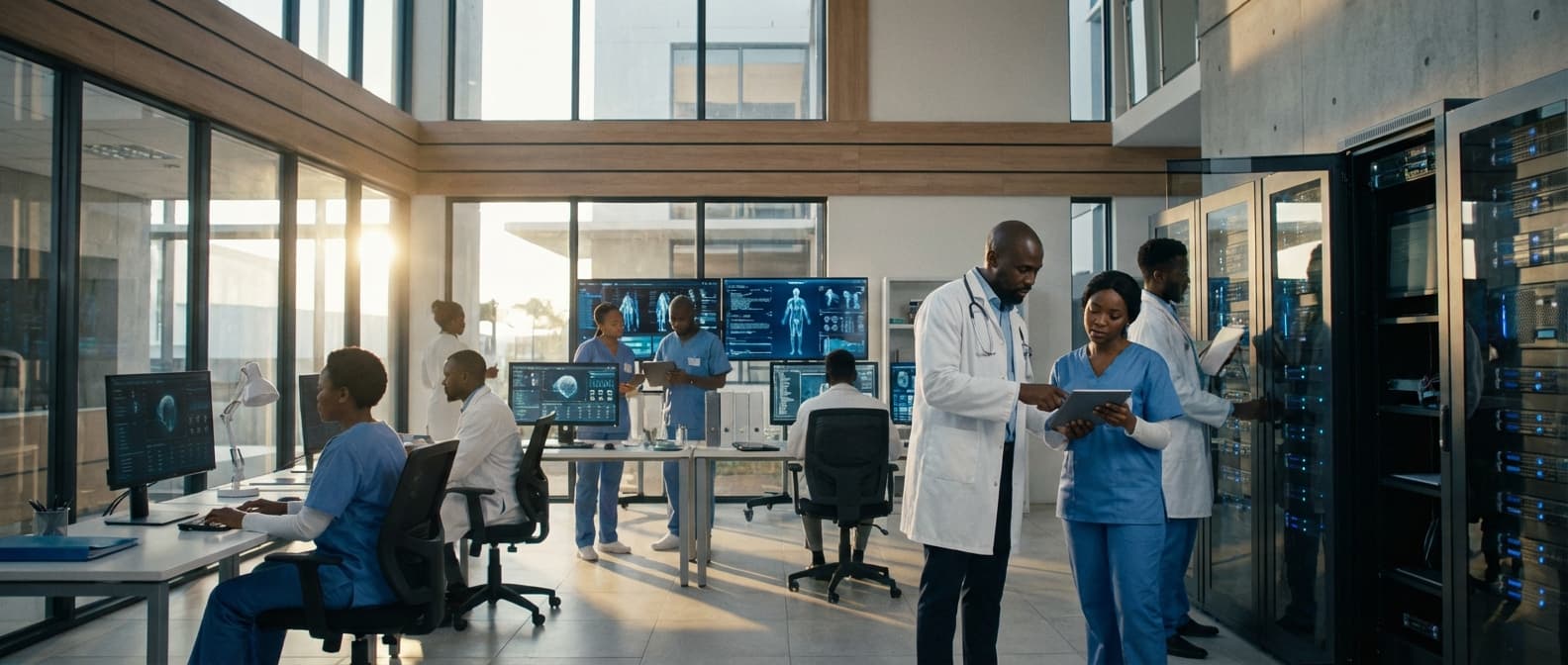
Tele-Radiology in Mali
Engineering Excellence & Technical Support
24/7 access to certified radiologists providing rapid, accurate remote interpretation of diagnostic imaging studies. High-standard technical execution following OEM protocols and local regulatory frameworks.
Remote Diagnostic Access
Enables specialists in urban centers or abroad to remotely access and interpret radiological images (X-rays, CT scans, MRIs) from rural clinics, bridging the gap in expert physician availability.
Digital Image Transmission Network
Establishes a secure and robust digital infrastructure for transmitting high-resolution medical images, overcoming geographical barriers and ensuring timely consultations for faster patient diagnoses.
AI-Assisted Interpretation Support
Leverages artificial intelligence algorithms to flag potential abnormalities in scans, acting as a second opinion tool for radiologists and improving diagnostic accuracy, particularly for complex or subtle findings.
What Is Tele-radiology In Mali?
Tele-radiology in Mali refers to the transmission of radiological images (such as X-rays, CT scans, and MRIs) from a healthcare facility in Mali to a radiologist located remotely, often in another country, for interpretation and reporting. This service leverages telecommunications technology to bridge the gap in radiologist availability and expertise, particularly in underserved or remote areas. It plays a critical role in enhancing diagnostic capabilities and improving patient care within the Malian healthcare system by overcoming geographical and logistical barriers.
| Who Needs Tele-Radiology in Mali? | Typical Use Cases |
|---|---|
| Hospitals and Clinics in Rural/Remote Areas: Facilities lacking on-site radiologists. | Emergency Room Consultations: Rapid interpretation of critical findings (e.g., trauma, stroke). |
| District and Regional Hospitals: Supplementing limited or non-existent radiology departments. | Routine Diagnostic Imaging: Interpretation of standard X-rays, CTs, and MRIs for outpatient and inpatient care. |
| Primary Healthcare Centers: Facilitating referral for advanced imaging and diagnosis. | Specialty Referrals: Access to sub-specialty interpretations (e.g., neuro-radiology, pediatric radiology, musculoskeletal radiology). |
| Disaster Relief Operations: Providing diagnostic support in areas with damaged infrastructure. | Teleradiology for Specific Modalities: Focused interpretation of mammography, ultrasound, or interventional radiology procedures. |
| Training and Educational Institutions: As a platform for radiologist training and remote learning. | Public Health Screening Programs: Supporting large-scale screening initiatives requiring expert interpretation. |
Key Components and Benefits of Tele-Radiology in Mali
- Image Acquisition: Radiographic equipment (X-ray, CT, MRI) within Malian healthcare facilities captures diagnostic images.
- Digital Transmission: Acquired images are digitized and securely transmitted over a network (internet or dedicated lines) to a remote workstation.
- Remote Interpretation: Board-certified radiologists, potentially located internationally, access and interpret the transmitted images.
- Report Generation: The remote radiologist generates a diagnostic report, which is then securely transmitted back to the referring physician in Mali.
- Workflow Integration: Tele-radiology platforms integrate with existing Picture Archiving and Communication Systems (PACS) and Electronic Health Records (EHR) where available.
- Access to Expertise: Provides access to specialized radiological sub-specialists not readily available within Mali.
- Reduced Turnaround Time: Expedites diagnosis, leading to quicker treatment initiation.
- Improved Healthcare Access: Extends diagnostic services to remote and underserved populations.
- Cost-Effectiveness: Can be more economical than establishing and maintaining on-site radiology departments in all locations.
- Continuous Medical Education: Facilitates knowledge sharing and training for local medical staff.
Who Needs Tele-radiology In Mali?
Tele-radiology offers a critical solution for improving diagnostic imaging services in Mali, a country facing significant challenges in medical infrastructure and specialist availability. The core need for tele-radiology stems from the severe shortage of radiologists and advanced imaging equipment, particularly in remote and underserved areas. By connecting local healthcare facilities with remote radiologists, tele-radiology can bridge this gap, providing timely and accurate diagnoses, enhancing patient care, and ultimately saving lives. This technology democratizes access to expert medical interpretation, ensuring that patients receive the best possible care regardless of their geographical location within Mali.
| Department/Specialty | Primary Need for Tele-Radiology | Impact on Patient Care |
|---|---|---|
| Radiology Department | Lack of qualified radiologists for interpretation; inability to cover 24/7 reporting; limited access to subspecialty expertise. | Faster diagnosis, improved accuracy, reduced patient travel for imaging interpretation, identification of critical findings. |
| Emergency and Trauma Services | Urgent need for immediate image interpretation to guide treatment decisions; limited availability of on-call radiologists. | Timely intervention for critical conditions like stroke, trauma, and acute abdomen, leading to better outcomes and reduced mortality. |
| Oncology Department | Need for accurate staging, treatment response monitoring, and follow-up imaging; scarcity of radiologists experienced in oncologic imaging interpretation. | Precise assessment of disease progression, effective treatment planning, and improved patient management for cancer care. |
| Pediatric Department | Requirement for specialized pediatric radiologists to interpret imaging in children; challenges in finding this expertise locally. | Accurate diagnosis of congenital anomalies, infections, and injuries in children, ensuring appropriate early intervention. |
| Neurology Department | Critical need for rapid interpretation of CT and MRI scans for stroke, head injuries, and neurological disorders; limited neurology specialists. | Prompt diagnosis of neurological emergencies, enabling swift administration of life-saving treatments and preventing long-term disability. |
| Orthopedics Department | Need for expert interpretation of X-rays, CT scans, and MRI for complex fractures, joint problems, and spinal conditions; limited orthopedic subspecialists. | Accurate assessment of injuries, precise surgical planning, and effective post-operative monitoring. |
| Internal Medicine/General Practice | Reliance on timely and accurate diagnostic imaging to confirm or rule out various conditions across a broad spectrum of diseases. | Improved diagnostic accuracy, leading to more effective treatment plans and better patient outcomes for common ailments. |
Target Customers for Tele-Radiology in Mali
- Public Hospitals and Referral Centers
- District and Regional Hospitals
- Private Clinics and Diagnostic Centers
- Missions and Non-Governmental Organization (NGO) Healthcare Facilities
- Mobile Clinics and Outreach Programs
Tele-radiology Process In Mali
The Tele-Radiology process in Mali, while still developing, aims to bridge the gap in access to expert radiological interpretation, especially in remote or underserved areas. It involves leveraging telecommunication technologies to transmit radiological images and reports between healthcare facilities and remote radiologists. The workflow typically starts with an inquiry from a referring physician, leading to image acquisition, secure transmission, expert interpretation, report generation, and finally, communication back to the referring physician. This process is crucial for improving diagnostic accuracy, timely patient care, and professional development for local healthcare providers.
| Stage | Description | Key Actors | Technology/Tools Used | Challenges/Considerations |
|---|---|---|---|---|
| Inquiry & Request Initiation | A physician at a local healthcare facility identifies the need for radiological interpretation for a patient. | Referring Physician, Local Healthcare Staff | Electronic Health Record (EHR) system (if available), Paper-based referral forms | Lack of standardized referral forms, potential for incomplete clinical information. |
| Image Acquisition | Radiological images (X-ray, CT, MRI, Ultrasound) are captured using available equipment at the originating site. | Radiology Technologist, Biomedical Engineer (for maintenance) | X-ray machines, CT scanners, MRI scanners, Ultrasound machines | Outdated equipment, lack of trained technologists, power outages, limited availability of advanced imaging modalities. |
| Secure Image Transmission | Acquired images are securely transmitted to a central tele-radiology hub or directly to remote radiologists. | IT Support Staff, Tele-radiology Platform Administrator | PACS (Picture Archiving and Communication System), VPN (Virtual Private Network), secure cloud-based platforms, internet connectivity | Limited and unreliable internet infrastructure, high bandwidth requirements, cybersecurity concerns, cost of tele-radiology platforms. |
| Radiologist Assignment & Review | A qualified radiologist, potentially located elsewhere in Mali or internationally, is assigned the case for interpretation. They review the images and patient history. | Tele-radiologist, PACS Administrator, Teleradiology Platform Scheduler | PACS workstation, tele-radiology viewing software, communication tools | Shortage of qualified radiologists in Mali, language barriers (if international radiologists are involved), varying levels of expertise. |
| Interpretation & Report Generation | The radiologist provides a detailed diagnostic report based on the image findings and clinical information. | Tele-radiologist | Radiology reporting software, voice recognition software, template-based reporting | Ensuring report quality and consistency, medico-legal aspects, turnaround time expectations. |
| Report Dissemination | The generated report is securely transmitted back to the referring physician and facility. | Tele-radiology Platform Administrator, Local Healthcare Staff | PACS, EHR integration, secure email, secure portal | Ensuring timely delivery of reports, accessibility for referring physicians, integration with existing systems. |
| Follow-up & Consultation | The referring physician may consult with the tele-radiologist for clarification, further discussion, or to discuss patient management based on the report. | Referring Physician, Tele-radiologist | Video conferencing, phone calls, secure messaging | Establishing clear communication protocols, managing expectations for consultations. |
Key Stages of Tele-Radiology Workflow in Mali
- Inquiry & Request Initiation
- Image Acquisition
- Secure Image Transmission
- Radiologist Assignment & Review
- Interpretation & Report Generation
- Report Dissemination
- Follow-up & Consultation
Tele-radiology Cost In Mali
Tele-radiology, the practice of interpreting medical images remotely, is a burgeoning field in Mali, offering potential solutions to address the shortage of radiologists in underserved areas. However, the cost of these services is a crucial factor for accessibility and adoption. Understanding the pricing factors and typical ranges in Malian currency (West African CFA franc, XOF) is essential for healthcare providers, patients, and policymakers.
| Service Type | Estimated Cost Range (XOF) | Notes |
|---|---|---|
| X-ray Interpretation | 15,000 - 40,000 | Standard X-rays (e.g., chest, limb). Complexity and urgency can affect the upper range. |
| CT Scan Interpretation | 40,000 - 100,000 | Covers basic CT scans. More complex scans (e.g., head, abdomen/pelvis with contrast) will be at the higher end or exceed this. |
| MRI Scan Interpretation | 70,000 - 180,000+ | MRI interpretation is typically the most expensive due to the detailed nature of the images and expertise required. Higher ranges for specialized MRI sequences. |
| Ultrasound Interpretation | 20,000 - 60,000 | Depends on the type of ultrasound (e.g., abdominal, obstetric, Doppler). Obstetrical ultrasounds may have different pricing structures. |
| Urgent/STAT Interpretation (per study) | +20-50% of standard fee | An additional surcharge is common for interpretations required within a few hours. |
| Subscription/Platform Fee (monthly) | Negotiable, often based on volume/users | This is usually for healthcare facilities utilizing a dedicated tele-radiology platform. |
Key Pricing Factors for Tele-Radiology in Mali:
- Technology Infrastructure and Equipment: The initial investment in high-quality imaging equipment (e.g., digital X-ray, CT, MRI) at the originating site, along with robust internet connectivity and specialized software for image transmission and viewing, significantly influences overall costs. Maintenance and upgrades of this infrastructure also contribute.
- Radiologist Fees: This is often the most substantial component. Fees are typically determined by the radiologist's expertise, sub-specialization, the complexity of the study, and the turnaround time required for reporting. Radiologists in Mali may charge based on the number of studies interpreted or a per-case fee.
- Platform and Software Costs: Many tele-radiology services utilize cloud-based platforms or proprietary software for managing image workflow, communication, and reporting. Subscription fees, licensing, and integration costs are passed on to the client.
- Turnaround Time (TAT) Requirements: Urgent or STAT interpretations will command higher fees due to the immediate allocation of a radiologist's time and the disruption to their usual workflow.
- Volume and Contractual Agreements: Healthcare facilities with a higher volume of studies or those entering into long-term contracts may negotiate discounted rates. Conversely, ad-hoc or low-volume requests might incur higher per-study charges.
- Geographic Location and Accessibility: While tele-radiology aims to overcome geographical barriers, the cost of setting up and maintaining infrastructure in remote or hard-to-reach areas of Mali might indirectly influence pricing.
- Type of Imaging Modality: Different imaging modalities have varying associated costs. MRI and CT scans are generally more expensive to interpret than X-rays due to their complexity and the time required for analysis.
- Ancillary Services: Some tele-radiology providers may offer additional services such as preliminary reports, follow-up consultations, or data storage, which can add to the overall cost.
Affordable Tele-radiology Options
Tele-radiology, the practice of interpreting medical images remotely, has become an indispensable tool in modern healthcare, offering numerous benefits including increased access to expert opinions, improved turnaround times, and enhanced efficiency. For healthcare providers seeking cost-effective solutions, understanding "value bundles" and implementing "cost-saving strategies" are crucial for maximizing the economic advantages of tele-radiology services.
| Cost-Saving Strategy | Description | Potential Benefits |
|---|---|---|
| Volume-Based Pricing | Negotiating rates based on the anticipated volume of studies. This often includes tiered pricing where higher volumes lead to lower per-study costs. | Predictable expenses, economies of scale, reduced per-study cost for high-volume facilities. |
| Tiered Service Levels | Opting for different levels of service based on urgency and subspecialty needs. For example, standard reads might be bundled at a lower cost than STAT reads requiring immediate turnaround. | Cost optimization by paying only for necessary services, better allocation of resources. |
| Extended Hours/Off-Peak Utilization | Leveraging tele-radiology services during off-peak hours for non-urgent cases, which can sometimes be offered at a reduced rate. | Lower costs for routine reads, better utilization of radiologist time. |
| Long-Term Contracts | Committing to a longer-term contract with a tele-radiology provider can often secure more favorable pricing and stable service levels. | Guaranteed pricing, long-term partnership benefits, potential for customized solutions. |
| Shared Services Models | Collaborating with other healthcare organizations to share tele-radiology services, spreading costs and increasing purchasing power. | Significant cost reduction through shared resources, access to a wider pool of expertise. |
| Focus on Core Competencies | Outsourcing radiology interpretation allows internal staff to focus on patient care and other core clinical functions, potentially reducing internal staffing overhead. | Improved staff efficiency, reduced recruitment and retention costs for radiologists. |
| Technology Integration and Optimization | Ensuring seamless integration of tele-radiology platforms with existing IT systems minimizes manual workarounds and data entry errors, leading to efficiency gains and reduced IT support costs. | Streamlined workflows, reduced administrative burden, improved data accuracy. |
Key Tele-Radiology Value Bundle Components:
- On-demand access to a pool of subspecialty radiologists.
- 24/7/365 coverage for urgent and routine reads.
- Advanced IT infrastructure and secure data transmission.
- Integration with existing Picture Archiving and Communication Systems (PACS).
- Quality assurance and peer review processes.
- Dedicated account management and reporting.
- Training and support for clinical staff.
Verified Providers In Mali
When seeking healthcare services in Mali, partnering with "Verified Providers" is paramount. This designation signifies a commitment to quality, ethical practices, and patient well-being. Franance Health, a leading organization in the Malian healthcare sector, stands out for its rigorous credentialing process. Their accreditation ensures that providers meet stringent standards, offering patients peace of mind and access to reliable medical care. Choosing Franance Health credentials means selecting healthcare professionals who have undergone thorough vetting, possess up-to-date qualifications, and adhere to best medical practices. This dedication to verification makes them the optimal choice for your health needs in Mali.
| Criteria | Franance Health Verification Standard | Benefit to Patient |
|---|---|---|
| Professional Licensing & Qualifications | Mandatory verification of all relevant medical licenses and academic credentials. | Ensures practitioners are legally qualified and have received appropriate training. |
| Experience & Competence | Assessment of clinical experience and demonstrated competence through peer review or performance metrics. | Access to skilled professionals with proven track records. |
| Adherence to Ethical Guidelines | Commitment to a strict code of medical ethics and professional conduct. | Protects patient rights and ensures respectful, transparent care. |
| Facility Standards (where applicable) | Ensures healthcare facilities meet safety, hygiene, and equipment standards. | Provides a safe and well-equipped environment for treatment. |
| Continuing Professional Development | Encourages and verifies ongoing training and education for healthcare professionals. | Guarantees that providers are up-to-date with the latest medical advancements. |
Why Choose Franance Health Verified Providers?
- Uncompromised Quality of Care
- Ethical Medical Practices
- Patient Safety and Well-being Prioritized
- Access to Qualified and Licensed Professionals
- Trustworthy and Reliable Healthcare Services
Scope Of Work For Tele-radiology
This Scope of Work (SOW) outlines the technical deliverables and standard specifications for the provision of Tele-Radiology services. The objective is to establish a robust, secure, and efficient tele-radiology platform that enables remote interpretation of medical imaging studies, enhancing diagnostic turnaround times and improving access to specialist radiological expertise.
| Deliverable/Specification | Description | Standard/Requirement | Verification Method |
|---|---|---|---|
| Tele-Radiology Platform Software/System | The core software enabling the transmission, storage, viewing, and interpretation of medical images remotely. | Must be HIPAA compliant (or equivalent local regulation), scalable, user-friendly, and support DICOM standards. | Demonstration, compliance audit, performance testing. |
| Image Acquisition and Transmission Interface | Software/hardware that facilitates the secure transfer of DICOM images from originating sites to the tele-radiology platform. | Supports DICOM send (C-STORE SCP/SCU), HL7 integration for patient demographics and orders. Secure transmission protocols (e.g., VPN, TLS). | Integration testing, network traffic analysis, security penetration testing. |
| Image Viewing and Reporting Workstation | High-resolution monitors and workstations for radiologists to accurately view and interpret images, and create reports. | Monitors with medical-grade resolution (e.g., 3MP/5MP), DICOM grayscale calibration, ergonomic design. Reporting software with templating and speech recognition capabilities. | Demonstration, visual acuity tests, user acceptance testing (UAT). |
| PACS/RIS Integration Module | Interface that allows seamless communication between the tele-radiology platform and the client's existing Picture Archiving and Communication System (PACS) and Radiology Information System (RIS). | Supports DICOM query/retrieve (C-FIND, C-MOVE), HL7 ADT (Admit/Discharge/Transfer), ORM (Order Entry), ORU (Observation Result) messages. | Integration testing, data synchronization verification, workflow simulation. |
| Security and Access Control Mechanisms | Measures to ensure the confidentiality, integrity, and availability of patient data. | Role-based access control, multi-factor authentication, audit trails, data encryption (at rest and in transit), regular security patching and vulnerability assessments. | Security audit, penetration testing, access log review. |
| Data Archiving and Retrieval System | System for long-term storage and efficient retrieval of medical images and reports. | Scalable storage capacity, adherence to retention policies (e.g., HIPAA, local regulations), fast retrieval times, disaster recovery plan. | Storage capacity testing, retrieval performance benchmarking, DR testing. |
| Auditing and Reporting Features | Functionality to track all system activities, user actions, and generate performance reports. | Comprehensive audit logs (who, what, when, where), reports on turnaround times, workload distribution, system uptime, and errors. | Report generation verification, log analysis. |
| User Training and Documentation | Comprehensive training materials and sessions for radiologists, IT staff, and referring physicians. | User manuals, online help, administrator guides, training sessions tailored to different user roles. Training effectiveness assessment. | UAT, post-training feedback surveys. |
| Ongoing Technical Support and Maintenance | Continuous support for system operation, troubleshooting, and updates. | 24/7 technical support availability, guaranteed response and resolution times, regular software updates and patches, system monitoring. | Service Level Agreement (SLA) adherence monitoring, incident response tracking. |
Key Technical Deliverables
- Tele-Radiology Platform Software/System
- Image Acquisition and Transmission Interface
- Image Viewing and Reporting Workstation
- PACS/RIS Integration Module
- Security and Access Control Mechanisms
- Data Archiving and Retrieval System
- Auditing and Reporting Features
- User Training and Documentation
- Ongoing Technical Support and Maintenance
Service Level Agreement For Tele-radiology
This Service Level Agreement (SLA) outlines the guaranteed response times and uptime for the tele-radiology services provided. It aims to ensure timely and reliable access to radiological interpretations for our clients. This SLA is effective as of [Start Date] and will remain in effect until superseded by a new agreement.
| Service Metric | Target Performance | Measurement Period | Service Credit |
|---|---|---|---|
| Platform Uptime | 99.9% monthly uptime, excluding Scheduled Maintenance | Monthly | 5% of monthly service fee for every 0.1% drop below 99.9% (maximum 25%) |
| Critical Study Response Time | Within 30 minutes of study upload | Per occurrence | 10% of the fee for that specific study |
| Routine Study Response Time | Within 4 hours of study upload | Per occurrence | 5% of the fee for that specific study |
| Report Availability | Final reports available within 24 hours of study upload (for routine studies) | Daily | 1% of the fee for that specific study for every 12-hour delay beyond 24 hours (maximum 10%) |
Key Definitions
- Uptime: The percentage of time the tele-radiology platform is operational and accessible to receive, process, and transmit radiological studies and reports.
- Response Time: The time elapsed between the successful upload of a study and the availability of the initial preliminary interpretation or report.
- Critical Study: A study identified by the client as requiring immediate attention due to potential life-threatening conditions or significant patient compromise.
- Routine Study: A study that does not meet the criteria for a Critical Study.
- Scheduled Maintenance: Planned downtime for system updates, upgrades, or repairs, communicated to the client in advance.
- Unscheduled Downtime: Any unplanned interruption to the service.
- Service Credit: A financial credit applied to the client's invoice as compensation for failure to meet SLA targets.
Frequently Asked Questions

Ready when you are
Let's scope your Tele-Radiology in Mali project in Mali.

Scaling healthcare logistics and technical systems across the entire continent.