
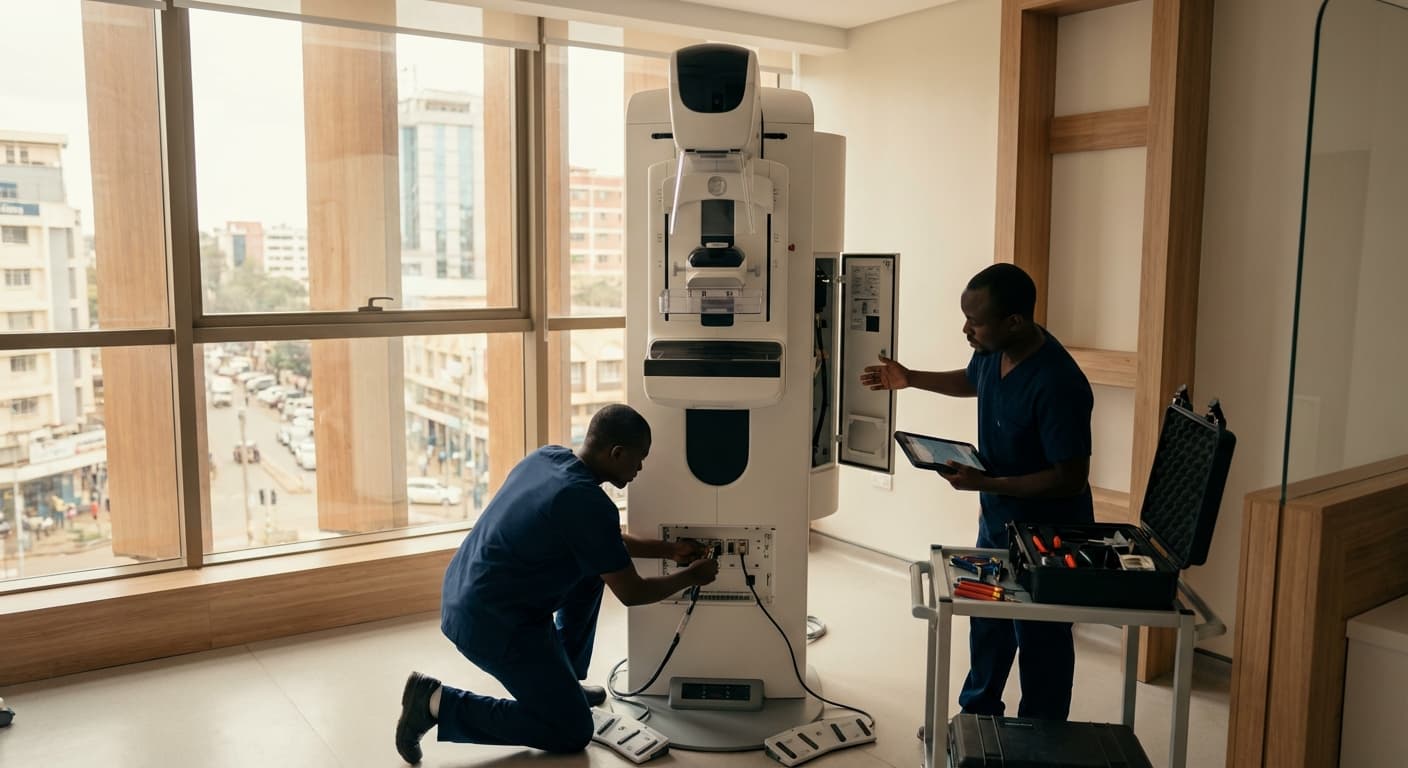
Mammography Installation Service in Mali
Engineering Excellence & Technical Support
Mammography Installation Service High-standard technical execution following OEM protocols and local regulatory frameworks.
Advanced Imaging System Integration
Seamlessly integrate state-of-the-art mammography units with existing hospital IT infrastructure in Mali, ensuring high-resolution imaging and efficient data management for early disease detection.
Expert Site Preparation & Calibration
Provide meticulous site preparation, including radiation shielding and power supply validation, followed by precise calibration of mammography equipment to meet international quality standards in diverse Malian healthcare settings.
Certified Technician Training & Support
Deliver comprehensive training for Malian radiology technicians on the operation, maintenance, and troubleshooting of newly installed mammography systems, ensuring sustained high-performance and minimal downtime.
What Is Mammography Installation Service In Mali?
Mammography installation service in Mali refers to the specialized process of setting up, calibrating, and integrating mammography equipment within healthcare facilities across Mali. This service is crucial for ensuring the proper functioning and diagnostic accuracy of these critical medical imaging devices, which are essential for breast cancer screening and diagnosis. The service encompasses a range of technical activities, from initial site preparation and equipment assembly to system testing, quality assurance, and end-user training.
| Stakeholder Group | Need for Service | Typical Use Cases |
|---|---|---|
| Public Hospitals and Health Centers: | To establish or upgrade breast imaging capabilities for population-level screening and diagnostic services. | Routine screening mammography for asymptomatic women, diagnostic mammography for women with suspicious symptoms or palpable lumps, follow-up imaging for patients with known breast conditions. |
| Private Clinics and Diagnostic Centers: | To offer specialized breast imaging services to a paying clientele or as part of broader diagnostic offerings. | Elective screening mammography, specialized diagnostic workups, second opinions, and integration into comprehensive health check-up packages. |
| Non-Governmental Organizations (NGOs) and Humanitarian Health Programs: | To provide access to essential breast cancer detection services in underserved or remote regions of Mali. | Mobile mammography units for outreach programs, establishing screening camps in rural areas, and supporting breast cancer awareness campaigns with diagnostic capabilities. |
| Research and Academic Institutions: | To equip facilities for research projects related to breast cancer epidemiology, imaging techniques, or treatment outcomes. | Acquisition of high-quality images for research studies, developing and testing new AI algorithms for mammogram analysis, and training future radiologists. |
| Manufacturers and Equipment Suppliers: | To fulfill contractual obligations for new equipment sales and ensure client satisfaction. | Initial installation of newly purchased mammography units, system upgrades, and replacement of outdated or non-functional equipment. |
Key Components of Mammography Installation Service:
- Site Assessment and Preparation: Evaluating the designated installation space for structural integrity, power requirements, radiation shielding compliance, environmental controls (temperature, humidity), and network connectivity.
- Equipment Delivery and Unpacking: Secure transportation of mammography units, including specialized components, from manufacturer or distributor to the installation site, followed by careful unpacking and inventory verification.
- Mechanical and Electrical Assembly: Assembling the physical components of the mammography system, connecting power supplies, grounding, and ensuring all mechanical parts are correctly positioned and secured.
- Radiation Shielding Verification: Confirming that the installation site meets all local and international radiation safety standards, including the integrity of lead shielding in walls, doors, and viewing windows.
- System Integration and Cabling: Connecting various sub-systems, such as the X-ray generator, detector, image acquisition workstation, and Picture Archiving and Communication System (PACS), via appropriate data and power cables.
- Software Installation and Configuration: Installing and configuring the mammography software, including image acquisition, processing, display, and reporting functionalities. This also involves setting up user profiles and access controls.
- Calibration and Quality Assurance (QA): Performing comprehensive calibration procedures to ensure accurate image acquisition, optimal signal-to-noise ratio, and precise dose delivery. This includes phantom imaging and performance testing according to established protocols (e.g., ACR, IAEA guidelines).
- Testing and Validation: Conducting rigorous functional tests of all system components and features to verify operational readiness and diagnostic performance. This may include simulated patient studies.
- Integration with Existing Infrastructure: Connecting the mammography system with hospital networks, HIS/RIS (Hospital Information System/Radiology Information System), and PACS for seamless workflow and data management.
- End-User Training: Providing comprehensive training to radiographers, technologists, and potentially radiologists on the operation, maintenance, and basic troubleshooting of the mammography equipment.
- Documentation and Handover: Furnishing all relevant technical documentation, including user manuals, service records, calibration certificates, and warranty information, followed by formal handover of the system.
Who Needs Mammography Installation Service In Mali?
Mammography installation services are crucial for ensuring the proper setup, calibration, and integration of mammography equipment. This ensures optimal performance, patient safety, and compliance with diagnostic standards. In Mali, where healthcare infrastructure is developing, these services play a vital role in enhancing breast cancer screening and diagnosis capabilities.
| Customer Type | Key Departments/Personnel Involved | Primary Need for Installation Service |
|---|---|---|
| Public Hospitals | Radiology Department, Biomedical Engineering, Procurement Department, Hospital Administration | Establishing new screening programs, replacing outdated equipment, ensuring adherence to national health standards, supporting public health initiatives. |
| Private Hospitals | Radiology Department, Clinical Engineering, Administration, Patient Services | Enhancing service offerings, maintaining competitive edge, ensuring high-quality patient care, integrating advanced imaging technology. |
| Diagnostic Imaging Centers | Radiologists, Imaging Technologists, Center Management, Technical Support Staff | Setting up new facilities, expanding capacity, optimizing workflow for screening and diagnostic mammography, ensuring accuracy and efficiency. |
| Maternity Clinics with Diagnostic Capabilities | Obstetricians/Gynecologists, Radiologists (if affiliated), Clinic Administrators | Integrating mammography as part of comprehensive women's health services, early detection of breast abnormalities in women of various ages. |
| NGO-operated Health Facilities | Project Managers, Healthcare Providers, Technical Officers, Community Health Workers | Implementing breast cancer awareness and screening campaigns, reaching underserved populations, ensuring reliable equipment for mobile or static screening units. |
| Research Institutions | Radiologists, Medical Physicists, Research Coordinators, IT Department | Setting up specialized imaging suites for research studies, ensuring precise calibration for image acquisition in research protocols, data integrity. |
| Government Health Ministries | Public Health Officials, Procurement Officers, Technical Advisors, National Health Program Managers | Overseeing national breast cancer screening strategies, standardizing equipment across public facilities, ensuring quality control and maintenance protocols. |
Target Customers for Mammography Installation Service in Mali
- Public Hospitals
- Private Hospitals
- Diagnostic Imaging Centers
- Maternity Clinics with Diagnostic Capabilities
- NGO-operated Health Facilities
- Research Institutions (for dedicated imaging labs)
- Government Health Ministries (for public health initiatives and procurement)
Mammography Installation Service Process In Mali
This document outlines the typical workflow for a mammography installation service process in Mali, from the initial inquiry to the successful execution of the installation. The process is designed to ensure efficient and compliant setup of medical imaging equipment, adhering to local regulations and best practices.
| Phase | Key Activities | Responsible Parties | Deliverables/Outcomes | Notes/Considerations (Mali Specific) |
|---|---|---|---|---|
| Client (hospital/clinic) contacts service provider with interest in mammography installation. Discussion of equipment needs, site requirements, and preliminary timelines. Site visit may be scheduled. | Client, Service Provider (Sales/Technical Team) | Understanding of client needs, preliminary site information, potential equipment selection. | Language barriers may require translators. Understanding of local healthcare infrastructure and budget constraints is crucial. |
| Detailed on-site evaluation of the installation location. Assessment of power supply, radiation shielding requirements, room dimensions, ventilation, IT infrastructure, and accessibility. Development of a detailed installation plan. | Service Provider (Technical Team, Project Manager) | Detailed site survey report, installation plan (including schematics, timelines, resource allocation), confirmation of space and environmental requirements. | Availability of adequate and stable power is critical. Radiation shielding regulations in Mali must be strictly adhered to, potentially requiring consultation with local health authorities. |
| Based on the site assessment and equipment selection, a formal quotation is prepared. This includes costs for equipment, installation, training, and any necessary site modifications. Upon agreement, a contract or service agreement is signed. | Service Provider (Sales/Contracts Team), Client | Formal quotation, signed service agreement/contract. | Payment terms and currency need to be clearly defined. Understanding of import duties and taxes for medical equipment is essential. |
| Ordering of the mammography equipment and any associated accessories. Coordination of international or domestic shipping, customs clearance, and transportation to the installation site. | Service Provider (Procurement/Logistics Team), Equipment Manufacturer | Ordered equipment, shipping documents, customs clearance certificates, delivery schedule. | Navigating Malian customs procedures can be complex and time-consuming. Local customs brokers may be necessary. Safe transportation of sensitive medical equipment is paramount. |
| Any required structural modifications to the installation room, such as radiation shielding installation, electrical upgrades, or HVAC adjustments, are completed according to the installation plan. | Client (or contracted local engineers), Service Provider (oversight) | Prepared installation site meeting all technical and safety specifications. | Ensuring qualified local contractors are used for any civil works. Regular communication with the client is key to ensuring timely preparation. |
| The mammography system is delivered to the site. The equipment is carefully unpacked and inspected for any damage during transit. Components are staged for installation. | Service Provider (Installation Team), Logistics Partners | Unpacked and inspected equipment at the installation site. | Ensuring appropriate handling equipment and trained personnel for lifting and moving heavy components. |
| The mammography system is assembled and connected to power, networking, and other necessary infrastructure. This includes mechanical, electrical, and software configuration. | Service Provider (Installation Engineers) | Fully assembled and physically installed mammography system. | Adherence to manufacturer's installation guidelines and local electrical standards. |
| Comprehensive testing of all system functions is performed. This includes image quality checks, dose calibration, and performance verification to ensure optimal operation and diagnostic accuracy. | Service Provider (Installation Engineers, Application Specialists) | Calibrated and tested mammography system, performance validation reports. | Ensuring compliance with international and any relevant Malian diagnostic imaging standards. |
| Training is provided to the radiographers, technologists, and potentially radiologists who will operate the mammography system. Training covers basic operation, image acquisition, quality control, and basic troubleshooting. | Service Provider (Application Specialists, Trainers), Client (End-Users) | Trained operational staff, training materials. | Language of training may need to be adapted. Cultural sensitivity in training delivery is important. |
| All relevant documentation, including installation reports, calibration certificates, user manuals, and maintenance logs, is provided to the client. A formal handover of the installed system is conducted. | Service Provider (Project Manager, Technical Lead), Client | Complete documentation package, signed handover certificate. | Ensuring documentation is accessible and understandable for the client. |
| Ongoing technical support, maintenance services, and troubleshooting are offered as per the service agreement. This may include scheduled preventive maintenance and emergency repair services. | Service Provider (Technical Support Team, Field Service Engineers) | Continued operational system, ongoing client satisfaction. | Establishing clear communication channels for support requests. Availability of spare parts and qualified service personnel in Mali is crucial for timely repairs. |
Mammography Installation Service Process Workflow in Mali
- Initial Inquiry and Consultation
- Site Assessment and Planning
- Quotation and Agreement
- Procurement and Logistics
- Pre-Installation Site Preparation
- Equipment Delivery and Unpacking
- Installation and Setup
- System Testing and Calibration
- User Training
- Documentation and Handover
- Post-Installation Support
Mammography Installation Service Cost In Mali
The cost of mammography installation services in Mali can vary significantly based on several key factors. These factors influence the overall price, from the initial equipment purchase and site preparation to the final setup and calibration. Understanding these elements is crucial for healthcare facilities budgeting for such an essential diagnostic service. The price is typically quoted in the local currency, the Malian Franc (XOF).
| Service Component | Estimated Price Range (XOF) | Notes |
|---|---|---|
| New Digital Mammography Machine (FFDM) | 15,000,000 - 50,000,000+ XOF | Excludes installation; price varies by brand and features. |
| Refurbished Digital Mammography Machine | 8,000,000 - 25,000,000 XOF | Depends on age, condition, and warranty. |
| Site Preparation & Radiation Shielding | 1,000,000 - 5,000,000+ XOF | Highly dependent on existing infrastructure and required modifications. |
| Installation & Calibration (Labor) | 500,000 - 2,000,000 XOF | Includes technician fees, travel, and on-site work. |
| Initial Training for Staff | 200,000 - 1,000,000 XOF | Per session or per team, depending on the provider. |
| Optional: PACS/HIS Integration | 500,000 - 3,000,000 XOF | If required and not included in the equipment package. |
| Estimated Total Installation Service Cost (excluding machine purchase) | 1,700,000 - 8,000,000+ XOF | This is a broad estimate; specific quotes are essential. |
Key Pricing Factors for Mammography Installation Services in Mali:
- Type and Brand of Mammography Machine: New digital mammography systems (FFDM) are generally more expensive than older analog models. Advanced 3D mammography (tomosynthesis) will command a higher price. Leading international brands often have higher price tags than lesser-known manufacturers.
- New vs. Used Equipment: Purchasing a new mammography machine will be considerably more costly than acquiring a refurbished or pre-owned unit. The condition and warranty of used equipment play a significant role.
- Installation Complexity and Site Requirements: The existing infrastructure of the healthcare facility is a major determinant. Factors include the need for specialized electrical wiring, cooling systems, radiation shielding (lead lining), and adequate space for the machine and associated equipment. Retrofitting older buildings can be more expensive.
- Geographical Location within Mali: Installation costs can differ between major urban centers like Bamako and more remote rural areas due to logistical challenges, transportation of equipment, and availability of skilled technicians. Travel and accommodation expenses for the installation team will be factored in.
- Included Services and Support: The quote may include or exclude services such as initial training for radiographers and technicians, calibration, testing, and post-installation maintenance packages. Comprehensive packages will naturally increase the overall cost.
- Third-Party Consultants or Project Managers: If a facility hires external consultants to oversee the installation process, their fees will add to the total expenditure.
- Customization and Integration: If the mammography system needs to be integrated with existing Picture Archiving and Communication Systems (PACS) or other hospital information systems (HIS), additional costs for software configuration and integration may apply.
- Import Duties and Taxes: For imported equipment, applicable import duties, taxes, and customs clearance fees in Mali will contribute to the final price.
Affordable Mammography Installation Service Options
Securing affordable mammography installation services is crucial for healthcare providers aiming to expand or upgrade their diagnostic imaging capabilities without overextending their budget. This involves understanding the various service options available, the benefits of value bundles, and implementing effective cost-saving strategies. Affordable installation is not just about the initial price tag; it encompasses efficient setup, minimal disruption to operations, and long-term reliability, all contributing to a lower total cost of ownership.
| Value Bundle Component | Benefit | Cost-Saving Potential |
|---|---|---|
| Equipment Purchase & Installation: | Streamlined procurement and setup from a single vendor. | Negotiated package pricing, reduced administrative overhead, and potentially faster deployment. |
| Installation & Initial Training: | Ensures staff competency with the new system from day one. | Reduces errors, minimizes initial operational inefficiencies, and avoids the cost of separate, ad-hoc training sessions. |
| Installation & Maintenance Contract: | Proactive maintenance to prevent costly breakdowns and ensure uptime. | Predictable service costs, extended equipment lifespan, and reduced emergency repair expenses. |
| Comprehensive Package (Equipment, Installation, Training, Maintenance): | The most integrated solution, offering end-to-end management. | Significant bulk discounts, simplified vendor management, and a holistic approach to long-term cost control. |
Key Factors in Affordable Mammography Installation
- Service Provider Expertise: Experienced installers understand workflow integration and can complete the job efficiently, reducing labor costs and downtime.
- Equipment Condition and Age: While newer equipment offers advanced features, consider certified refurbished or well-maintained used units which can significantly lower capital expenditure.
- Site Preparation Needs: Thorough assessment of the installation site to identify and address any structural, electrical, or environmental requirements beforehand prevents costly last-minute changes.
- Logistics and Transportation: Efficient planning for equipment delivery and removal of old units can impact overall service costs.
- Post-Installation Support and Training: Bundling these services can ensure smooth operation and reduce the need for external troubleshooting later.
Verified Providers In Mali
In Mali, ensuring access to reliable and high-quality healthcare is paramount. When seeking medical services, identifying verified providers is crucial. Franance Health stands out as a premier choice due to its rigorous credentialing process and commitment to excellence. This document outlines what it means to be a verified provider within the Franance Health network and why this verification signifies the best choice for your health needs in Mali.
| Franance Health Verified Provider | Benefits for Patients in Mali |
|---|---|
| Guaranteed Quality and Safety: Patients can be confident that they are receiving care from qualified professionals and accredited facilities, minimizing risks. | Peace of Mind: Eliminates the uncertainty of choosing a provider by offering a curated list of trusted medical professionals. |
| Access to Specialized Care: The network often includes specialists across various fields, ensuring access to the right expertise for complex health issues. | Efficient Healthcare Navigation: Franance Health simplifies the process of finding appropriate medical services, saving valuable time and effort. |
| Transparent and Ethical Practices: Verified providers operate with integrity, upholding patient rights and prioritizing their well-being. | Enhanced Patient Experience: Focus on patient satisfaction leads to better communication, more attentive care, and improved health outcomes. |
| Streamlined Health Management: For individuals or organizations working with Franance Health, it simplifies health insurance claims and management. | Commitment to Continuous Improvement: The ongoing auditing and feedback mechanisms ensure that verified providers are always striving for excellence. |
What Makes a Provider "Verified" by Franance Health?
- Strict Licensing and Accreditation Checks: Franance Health conducts thorough due diligence to confirm that all affiliated healthcare professionals and facilities hold valid and current licenses from Malian regulatory bodies. Accreditation status from recognized healthcare organizations is also a key factor.
- Professional Qualifications and Experience: Verification includes a detailed review of the medical credentials, educational background, and specialized training of each practitioner. Franance Health prioritizes providers with extensive experience and a proven track record of successful patient care.
- Adherence to Ethical Standards: All verified providers must demonstrate a commitment to the highest ethical principles in medicine, including patient confidentiality, informed consent, and professional conduct.
- Quality of Care Audits: Franance Health periodically audits its network providers to ensure they maintain consistently high standards of medical practice, patient safety, and facility hygiene.
- Patient Feedback and Reviews: Positive patient feedback and a history of patient satisfaction are integral components of the verification process. Franance Health actively monitors and considers patient experiences.
Scope Of Work For Mammography Installation Service
This Scope of Work (SOW) outlines the requirements for the installation of a new mammography system. It details the technical deliverables and standard specifications to ensure a successful and compliant implementation, adhering to all relevant regulatory standards and manufacturer guidelines. The primary objective is to provide a fully functional and operational mammography suite ready for clinical use.
| Section | Description | Technical Deliverables | Standard Specifications |
|---|---|---|---|
| Site Preparation and Infrastructure Assessment | Evaluation of the designated installation area to ensure it meets all physical, electrical, and environmental requirements for the mammography system. | Site readiness report, including power, grounding, ventilation, radiation shielding verification, and network connectivity assessment. | Adherence to manufacturer's site preparation guidelines, local building codes, and relevant radiation safety standards (e.g., NCRP, ICRP). |
| System Delivery and Unpacking | Receipt, inspection, and careful unpacking of the mammography system components at the designated installation site. | Inventory verification against the purchase order, and inspection for any shipping damage. | Manufacturer's recommended procedures for handling and unpacking sensitive medical equipment. |
| System Installation and Assembly | Physical installation and assembly of all mammography system components, including the X-ray generator, detector, gantry, control console, and workstations. | Proper connection of all cables, power supplies, and data interfaces. | Manufacturer's installation manual, best practices for safe and ergonomic component placement. |
| Electrical and Network Connectivity | Connection of the mammography system to the facility's power grid and network infrastructure. | Installation of dedicated power circuits, surge protection, and proper grounding. Network cabling and IP address configuration. | Compliance with facility's electrical standards, IT network policies, and cybersecurity protocols. DICOM standards for network communication. |
| Radiation Shielding Verification | Confirmation that existing or newly installed radiation shielding meets regulatory requirements for the mammography room. | Radiation survey report conducted by a qualified medical physicist to ensure dose limits for personnel and the public are met. | Regulatory requirements for radiation protection (e.g., 21 CFR Part 1020.30, relevant state regulations). |
| System Testing and Calibration | Comprehensive functional testing of all system components, including image acquisition, processing, and display. | Image quality assessment using phantom scans and diagnostic image verification. Calibration of radiation output, detector response, and display monitors. | Manufacturer's calibration protocols, ACR accreditation requirements for mammography, QC test procedures (e.g., SMPTE, AAPM TG18). |
| Integration with Existing Systems (PACS/RIS) | Seamless integration of the mammography system with the Picture Archiving and Communication System (PACS) and Radiology Information System (RIS). | Successful transmission and reception of patient demographics, exam orders, and images between systems. Verification of DICOM conformance. | DICOM standards for imaging, storage, and communication. PACS/RIS vendor integration specifications. |
| Quality Assurance (QA) and Acceptance Testing | Formal QA procedures and acceptance testing by the customer to verify that the system meets all specified requirements and performance benchmarks. | Signed acceptance certificate, documented test results, and performance validation reports. | Customer's internal QA protocols, agreed-upon performance criteria, and regulatory compliance checks. |
| User Training | Training for clinical staff (radiologists, technologists) on the operation, safety features, and basic troubleshooting of the mammography system. | Training manuals, hands-on sessions, and competency assessments for users. | Manufacturer's user training curriculum, best practices for mammography operation and patient care. |
| Technical Staff Training | Training for biomedical engineering and IT staff on system maintenance, troubleshooting, and basic repair. | Technical manuals, troubleshooting guides, and an overview of system architecture. | Manufacturer's technical service manuals and recommended maintenance schedules. |
| Documentation and Handover | Provision of all necessary documentation and a formal handover of the installed system. | Complete set of user manuals, service manuals, warranty information, installation reports, calibration certificates, and training records. | Project closure report, final sign-off by customer representatives. |
Key Objectives of the Mammography Installation Service
- Ensure the safe and efficient installation of the specified mammography system.
- Verify compliance with all applicable medical device regulations (e.g., FDA, CE marking).
- Integrate the mammography system with existing PACS and RIS infrastructure.
- Conduct thorough testing and calibration to guarantee optimal image quality and patient safety.
- Provide comprehensive training to designated clinical and technical staff.
- Document all installation, testing, and training activities.
Service Level Agreement For Mammography Installation Service
This Service Level Agreement (SLA) outlines the response times and uptime guarantees for the Mammography Installation Service provided by [Your Company Name] to [Client Name]. This agreement is effective as of [Start Date] and will remain in effect until [End Date], unless otherwise terminated according to the terms of the main service contract.
| Service Component | Response Time Target | Uptime Guarantee | Notes |
|---|---|---|---|
| Installation Scheduling & Confirmation | Within 2 business days of request submission. | N/A | Client to provide at least 10 business days' notice for scheduling. Subject to technician availability. |
| On-site Installation Execution | Within 1 business day of scheduled installation date. | N/A | Actual installation duration will vary based on system complexity. Technician will provide estimated completion time upon arrival. |
| Post-Installation Verification & Training | To be completed immediately following successful installation. | N/A | Duration depends on user familiarity and system features. |
| Technical Support During Installation | For critical installation issues, immediate remote support available during scheduled installation hours. On-site technician is the primary support. | N/A | Definition of 'critical installation issue' to be agreed upon by both parties. |
| System Uptime Guarantee | N/A (This SLA focuses on installation services) | 99.9% during the initial 30-day warranty period post-installation. | Uptime is defined as the mammography system being operational and available for use, excluding scheduled maintenance, power outages, or issues caused by client-owned infrastructure or third-party software not covered by this agreement. |
Key Service Components
- Installation Scheduling & Confirmation
- On-site Installation Execution
- Post-Installation Verification & Training
- Technical Support During Installation
- System Uptime Guarantee
Frequently Asked Questions

Ready when you are
Let's scope your Mammography Installation Service in Mali project in Mali.

Scaling healthcare logistics and technical systems across the entire continent.